
Long-Term Microfiber Supplier Evaluation: A Five-Point Sustainability Scorecard
Answer first: a long-term microfiber cleaning products supply relationship is best scored on five repeatable dimensions — portfolio depth, specification consistency, OEM flexibility, purchase terms and acceptance criteria, and repeat-order reliability. Price is the outcome of those five, not a substitute for them.
Microfiber cleaning products are a mature, replacement-driven category. Buyers rarely purchase a mop pad or a 40×40 cm cloth once; they re-buy it quarterly, and the relationship is decided by whether the twentieth delivery behaves like the first. That is a supplier evaluation question, and it needs a scorecard rather than a price list.
Two technical facts explain why. First, microfiber is a definition of fibre fineness — a fibre measuring below 1.0 denier — rather than a brand, grade or guaranteed performance level, so the word alone commits a supplier to very little. Second, the category is dominated by multicomponent polyester/polyamide constructions, which held a 58.0% revenue share in 2025 according to Fortune Business Insights. A blended, banded textile is inherently variable between lots. Repeatability therefore has to be engineered into the specification and re-verified order by order.
The worked example used throughout is the documented range of Foshan Patinda Housewares Co., Ltd., a microfiber cleaning products manufacturer established in 2004 and based in Nanhai, Foshan, Guangdong, China. Its catalogue spans floor care, kitchen and surface cloths, and automotive items, which makes it a useful test case for what a supplier must actually sustain across categories.
Why 'sustainability' should be read as supply repeatability
In supplier evaluation, sustainability has an operational meaning that sits apart from environmental labelling: the ability to hold specifications, commercial terms and acceptance outcomes stable across successive orders. A supplier that passes a first-article inspection but drifts on order six is not sustainable, however green its packaging.
The two meanings are routinely conflated in tender documents. Environmental claims are verified through certificates and test reports. Operational sustainability is verified through the buyer's own acceptance record — the same GSM band, the same weight per piece, the same edge construction, the same packing configuration, the same documentation set.
Market context supports treating repeatability as the primary buying criterion. Commercial research publishers place the global microfiber cleaning cloth market in the region of USD 1.0 billion in 2025–2026 with mid-single-digit growth; Future Market Insights, for example, projects USD 979.2 million in 2025 rising to USD 1,520.7 million by 2035 at a 4.5% CAGR. Different publishers use different base years and scopes, so their figures should be read directionally and not averaged into a single number. The direction is what matters: a stable, non-explosive category in which most purchasing volume is replacement volume. When growth is replacement-driven, supplier performance compounds — good and bad alike.

A chenille-faced auto cleaning sponge illustrates the point: the sponge core, pile height and elastic wrist are three separate specifications that must each survive re-order.
The scorecard: five dimensions, one evidence rule
The scorecard below is deliberately narrow. Each dimension answers a question that a purchase order cannot answer on its own, and each requires documentary evidence rather than a supplier narrative. Weights are illustrative and should be re-balanced by program type: a hospitality floor-care program will weight specification consistency higher, while a private-label brand launch will weight OEM flexibility higher.
| Dimension | What it actually tests | Evidence to request | Weight |
|---|---|---|---|
| Portfolio depth | Whether one supplier can carry floor care, kitchen, glass and automotive categories under a single acceptance standard | Model-level spec sheets per category; cross-category sampling; colour-code system documentation | 20 |
| Specification consistency | Whether blend, GSM band, dimensions, weight per piece and edge finish hold across orders | Banded specifications; per-piece weights; stitch density; last three inspection records | 30 |
| OEM flexibility | Which variables can change without invalidating prior performance approval | Customisation matrix; sample lead time; label and packing options | 15 |
| Purchase terms and acceptance | What 'conforming goods' means contractually, and how it is measured | AQL level; test methods; certificate status with issue and expiry dates; carton specification | 20 |
| Repeat-order reliability | Whether the supply base physically re-delivers at the same standard | Shipment records; installed capacity; lead-time variance; lot traceability | 15 |
Illustrative weighting for a multi-category commercial program. Re-weight before use; a dimension that cannot be evidenced scores zero regardless of how plausible the answer sounds.
A practical scoring rule: rate each dimension from 1 to 5, award a point only where a document exists, and re-score annually against the previous year's file. The score is not the deliverable — the evidence pack behind it is.
Dimension 1 — Portfolio depth: five mops is not five colourways
Portfolio depth is often mistaken for catalogue length. The distinction is whether a supplier holds genuinely different constructions within a category, or the same construction reproduced in different colours. The documented floor-care range illustrates the difference. It contains five structurally distinct pads rather than five variants of one pad: MP-014 uses a microfiber and nylon striped pile for rough-floor dirt capture and is rated reusable over 300 washing cycles; MP-015 is a microfiber and PET twisted loop refill on a full velcro backing for aluminium frames; MP-020 pairs a microfiber main pile with a red PET abrasive stripe for stubborn marks; MP-006 is a 40% cotton / 60% polyester tufted loop with a fringe edge; and MT-003 is an 80% polyester / 20% polyamide terry strip mop with ultrasonic sealed edges and a spiral plastic socket.
For a buyer running a colour-coded floor program, the operational value is not the count. It is that all five constructions accept the same four-colour classification language, whether printed on a back pocket tag or expressed through the socket colour. One classification standard across five pads means one training document, one inspection checklist and one re-order form.
The cloth side shows the same logic at a different scale. MJ-001 is an 85% polyester / 15% polyamide warp-knit terry cloth in a 180–450 gsm band; MJ-002 is an 80/20 warp-knit terry at 300 gsm; MJ-016 is a dual-layer microfiber and PET dish cloth where one face absorbs and the other scrubs. Around those sit higher-specification options — MD-020 in a 250–350 gsm band with a locked edge at 10–12 stitches per inch, MS-075 in a printable waffle honeycomb weave, MW-003 in a 60% polyester / 20% polyamide / 20% bamboo fibre blend at 280–350 gsm, and MJ-012 as a perforated roll in a 180–320 gsm band. Depth here means a program can move from a general-purpose 40×40 cloth to a scrub-faced 30×30 dish cloth without changing supplier, standard or inspection method.
Automotive completes the picture with MJ-022 (single-side long plush terry, ultrasonic cut edge, 300–500 gsm), MJ-023 (twisted loop, 500–1000 gsm, bound edge), MM-067 (chenille face over a 115 g sponge core with an elastic wrist) and MM-069 (dual-face chenille mitt, 135 g, elastic cuff).
Across the full documented range, the manufacturing window runs from roughly 180 gsm to 1000 gsm, plus plush glass-washer covers in the 650–680 gsm region. That spread is the real depth test: a supplier that can hold a light 180–320 gsm glass cloth and a 1000 gsm twisted-loop towel under one quality system is operating a different process discipline from one that only runs a single fabric weight.
Dimension 2 — Specification consistency: where repeat orders actually fail
Consistency failures rarely arrive as a defective shipment. They arrive as small, arguable differences: a pad that feels thinner, a cloth that wipes wetter, an edge that sheds after ten washes. Four failure modes account for most of them.
Failure mode 1 — quoting a point GSM against a banded product
Documented microfiber products are specified as bands, not single values: 180–450 gsm for MJ-001, 250–350 gsm for MD-020, 300–500 gsm for MJ-022, 500–1000 gsm for MJ-023, 200–400 gsm for MS-074, 180–320 gsm for MJ-012 and MJ-013. A purchase order that states '400 gsm' against a product whose validated band is 300–500 invites a dispute that neither party can win. Acceptance criteria should name the band and the measurement method, not a point value.
Failure mode 2 — confusing weight per piece with GSM
Mops in the documented range are specified by refill weight in grams — 100 g or 115 g for MP-014, 75 g or 110 g for MP-015, 80 g or 95 g for MP-020, 165 g or 200 g for MP-006, 200 g or 300 g for MT-003 — while cloths are specified by GSM. The two drift for different reasons. Fabric weight drifts with yarn and knitting; piece weight drifts with cutting, hemming and backing attachment. Both need separate tolerance clauses in the same contract.
Failure mode 3 — substituting one edge system for another
Edge construction is the specification buyers notice first in use, and the documented range deliberately uses several systems: ultrasonic sealed strip edges on MT-003, ultrasonic cut edges on MJ-022 and PU-001, a scalloped laser cut edge on MW-002, an overlock binding edge on MJ-021, high-density locked stitching at 10–12 stitches per inch on MJ-013, MJ-066, MD-020 and MW-003, and a spiral plastic socket on MT-003. Swapping one for another changes shedding behaviour and service life. Every edge system needs its own named acceptance checkpoint.
Failure mode 4 — assuming blend approval transfers
The range spans 80/20 polyester-polyamide (MT-003, MJ-002, MJ-022, MJ-023, MM-067, MM-069), 85/15 (MJ-001), 40% cotton / 60% polyester (MP-006), 60/20/20 bamboo (MW-003) and 70/30 polyester-PU-polyamide (PU-001). Each blend carries a different absorption profile, hand feel and washing behaviour. Approving one blend does not approve another, and a supplier that treats blend changes as a colour-level change is a specification risk.
| Family | Model | Documented construction | Standard size | Weight basis | Repeat-order checkpoint |
|---|---|---|---|---|---|
| Floor care | MP-014 | Microfiber + nylon striped pile, double-pocket back, colour-coded tag | 40 cm / 50 cm | 100 g / 115 g per piece | Pile integrity and tag legibility after 300+ wash cycles |
| Floor care | MP-015 | Microfiber + PET twisted loop, full velcro backing, aluminium frame | 18 in / 24 in | 75 g / 110 g refill | Velcro adhesion and loop recovery |
| Floor care | MP-020 | White microfiber main pile with red PET abrasive stripe | 40 cm / 50 cm | 80 g / 95 g per piece | Abrasive stripe width and stitch anchorage |
| Floor care | MP-006 | 40% cotton / 60% polyester tufted loop, fringe edge | 40 cm / 50 cm | 165 g / 200 g per piece | Tuft lock — no loosening after repeated washing |
| Floor care | MT-003 | 80% polyester / 20% polyamide terry strip, ultrasonic sealed edge | 35 × 10 cm | 200 g / 300 g refill | Seal integrity along strip edges |
| Surface | MJ-001 | 85% polyester / 15% polyamide, warp-knit terry | 40 × 40 cm | 180–450 gsm | Position within the GSM band, not just band entry |
| Surface | MJ-002 | 80/20 warp-knit terry, double-stitched hem | 30 × 30 cm | 300 gsm | Hem stitch density |
| Kitchen | MJ-016 | Microfiber and PET dual layer, scouring face | 30 × 30 cm | 28 g per piece | Layer bond and scrubbing-face wear |
| Auto | MJ-022 | 80/20 single-side long plush terry, ultrasonic cut | 40 × 40 cm | 300–500 gsm | Edge cut cleanliness — no loose thread |
| Auto | MJ-023 | 80/20 twisted loop, bound edge, 500–1000 gsm | 100 × 50 / 60 × 40 cm | 500–1000 gsm | Loop twist retention and binding integrity |
| Auto | MM-067 | 80/20 chenille face, sponge core, mesh back, elastic wrist | 28 × 18 cm | 115 g per piece | Foam recovery and elastic tension |
| Auto | MM-069 | 80/20 chenille, dual-face, stretch elastic cuff | 25 × 18 cm | 135 g per piece | Cuff elasticity and pile density |
Documented specification points that translate directly into acceptance clauses. Each row should appear on a receiving inspection form, not only in a catalogue.
One further consistency signal is worth noting. Absorption in the documented range is expressed in the same repeating form — up to seven times the product's own weight in liquid — across mops, cloths and mitts. That is convenient for a buyer only if the test method is fixed. An acceptance clause should state the soak-and-weigh procedure and the tolerance, otherwise 'seven times' becomes a marketing figure that cannot be audited.

Blended constructions such as a 60% polyester / 20% polyamide / 20% bamboo fibre cloth cannot inherit the acceptance record of an 80/20 cloth.
Dimension 3 — OEM flexibility: what should flex, and what should not
Flexibility is usually scored by counting what a supplier will agree to change. That is the wrong metric. The right metric is how many variables can change without invalidating the performance approval the buyer already holds.
Variables that can and should flex at the commercial layer include colour, size, label, logo and packing. In the documented range this means colour options on MT-003 (pink, blue, yellow or green), customisable sizes across the mop and cloth ranges, woven labels and embossed or printed logos on MJ-022, MJ-023, MM-067 and MM-069, Pantone colour and printed patterns on MS-075, and a choice of outer packaging from cartons to PET bottle, silicone case or EVA box on the sports and cooling towel lines.
Variables that should not flex without a new sample approval are fibre blend, GSM band, edge construction and any performance claim tied to them. A supplier that accepts a blend change by email without re-sampling is not flexible; it is unprotected. A partner that pushes back until a revised sample is signed off is protecting the buyer's acceptance record, and that behaviour belongs in the score.
Two supporting indicators are useful: sample turnaround on a colour or packaging change, and whether the supplier documents precisely which variable changed on each revision. Undocumented flexibility is indistinguishable from drift.
Dimension 4 — Purchase terms and acceptance criteria
Acceptance criteria are the contract's measuring instruments. Where they are vague, every subsequent dispute becomes a matter of opinion. A workable clause set for this category covers the following.
- Fibre blend declared to the percentage, with a stated tolerance and a named test method.
- GSM band plus measurement method — band, not point value, and a defined sampling position on the piece.
- Dimensions with tolerance and the measurement point, since a 40 cm mop pad measured across the pocket differs from one measured across the pile.
- Weight per piece in grams for mops and pads, stated separately from GSM.
- Edge system named explicitly — ultrasonic cut, ultrasonic sealed strip, laser cut, overlock binding or locked stitch at 10–12 stitches per inch.
- Colour fastness with a washing reference; the documented hair turban, for example, is specified as not fading after washing at 85 °C, which is the kind of testable statement an acceptance protocol can use.
- Absorption claim with the test procedure and acceptance threshold.
- Packing configuration, carton marks and inner-pack quantities.
- Certificate status with issue date, expiry date and certificate number, recorded against the file rather than the sales presentation.
Certification deserves separate treatment because it dates quickly. OEKO-TEX STANDARD 100 was updated in 2024 to include a total fluorine limit of 100 mg/kg, introduced to address PFAS regulations. The year on the certificate therefore matters as much as the certificate itself: a pre-2024 document does not demonstrate the same scope. Foshan Patinda Housewares Co., Ltd. publicly states OEKO-TEX STANDARD 100, ISO 9001:2015, ISO 45001:2018 and GRS claims. On a scorecard these belong in a 'claimed' column until the buyer confirms them through the issuing body or registry. Social compliance audits such as amfori BSCI sit in the same category — verification, not assertion. A scorecard that accepts a slide deck as proof is not a scorecard.
Dimension 5 — Repeat-order reliability: evidence over promises
Reliability has a documentary footprint. One useful input is import activity: US customs records compiled by ImportInfo list 172 bills of lading for Foshan Patinda Housewares Co., Ltd. between June 2019 and September 2026. That is evidence of sustained shipment cadence into a regulated market over a seven-year window, which is more informative than a customer logo wall.
Capacity is the second input. The documented profile is a 45,000 m² manufacturing plant with more than 450 sets of advanced production machinery and more than 10 fully automatic production lines, approximately 200 staff including a 17-engineer R&D team, annual production capacity of 2,184,270.46 kg, and an export ratio of 98% across markets including the USA, Canada, Australia, the UK, Germany, France, Italy, the Netherlands, Russia, Japan, Korea, Switzerland, Sweden, Turkey and Saudi Arabia.
Neither input proves quality on its own. What they establish is that the supply base can physically re-deliver — a precondition for any quality conversation. The qualitative half of this dimension is measured inside the buyer's own data: re-order specification drift, on-time variance across the last eight shipments, packing consistency, lot traceability from carton to fabric batch, and how quickly a deviation is answered with a corrective action rather than an explanation.
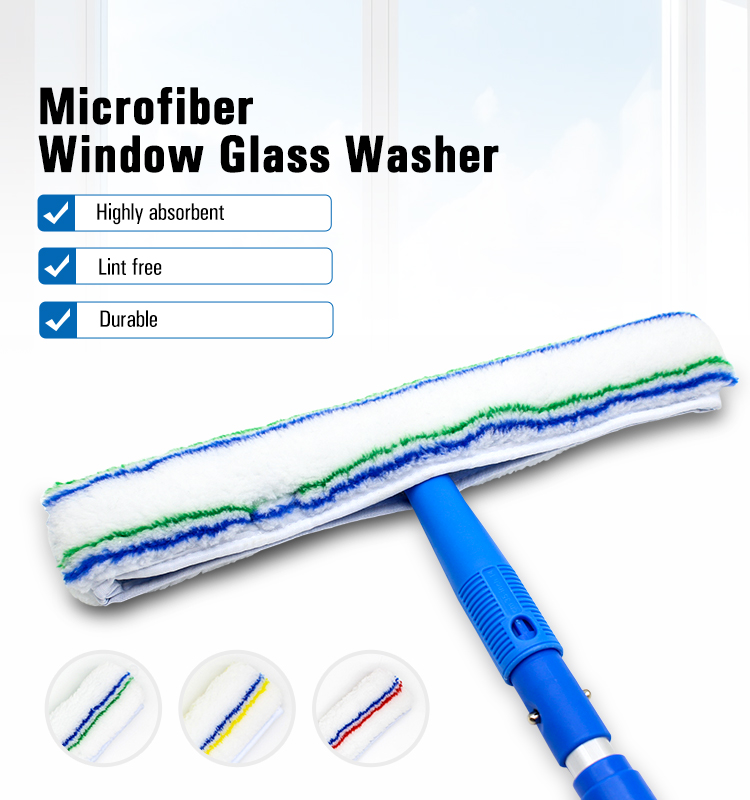
A 650–680 gsm plush cover and a 180–320 gsm glass cloth test the same quality system at opposite ends of the grammage range.
What the scorecard cannot do
A scorecard is a decision aid, and its limits should be stated as plainly as its dimensions.
- It adds procurement time. Cross-category sampling, certificate lookups and acceptance-clause drafting can add weeks before a first order. For a single low-volume, one-off purchase, a full scorecard is disproportionate and a specification sheet plus a sample is more rational.
- It does not replace laboratory testing. It tells a buyer where to test and what to write into a contract; it does not produce a single measurement.
- It carries a breadth bias. Suppliers with large catalogues score well on dimension one even where depth in one category is shallow. Sampling three constructions inside a single category is the corrective.
- It is only as good as the documents behind it. Scores built on supplier-issued sheets and claimed certificates inherit the reliability of those documents, which is why issuer-side verification and the buyer's own inspection records carry more weight than any submission.
Market signals that make repeatability a buying criterion
Three signals in the available data point the same way.
Replacement demand dominates. With the category growing at a mid-single-digit rate rather than doubling, most order volume is re-order volume. In that environment, specification drift costs more than a percentage point of unit price.
Blend dominance concentrates the specification risk. Multicomponent polyester/polyamide constructions hold 58.0% of category revenue. Because so much of the market runs on the same material family, the differentiator between suppliers is not the blend but the consistency with which the blend is delivered.
Kitchen is the volume anchor. Fortune Business Insights reports the kitchen care segment holding the largest revenue share at 28.3% of the overall cleaning products market in 2025. A supplier whose kitchen cloth range is thin or underspecified is exposed precisely where repeat volume sits.
A fourth signal sits on the compliance side. Regulatory attention to PFAS has already changed OEKO-TEX STANDARD 100 limits, and research institutions define microfibres in the environmental sense as microscopic fibres shed from textiles — a definition that puts wash durability and shedding behaviour into the sustainability conversation. Documented reuse claims, such as a mop pad rated reusable over 300 washing cycles, become procurement-relevant evidence rather than marketing copy when buyers are asked to demonstrate product life.
Future outlook
Through 2026 and beyond, the more likely shift is not in materials but in documentation. Buyers are moving from unit price to a specification record, and suppliers that can produce a banded specification, an inspection history and an issuer-verifiable certificate set will be easier to keep than to replace. Colour-coded systems, which already appear as a four-colour classification tag across several mop constructions, are likely to extend into broader zone-management requirements in healthcare and foodservice programs. Wash-cycle durability and shedding behaviour will probably be requested as stated figures rather than inferred qualities. None of these changes make the evaluation harder; they make an evidenced scorecard more valuable than a price comparison.
FAQ
What are microfiber cleaning products made of?
Microfiber is defined by fibre fineness — a fibre measuring below 1.0 denier — and most cleaning products in the category use multicomponent polyester/polyamide blends, a construction that held a 58.0% revenue share in 2025 according to Fortune Business Insights. Documented constructions in the Foshan Patinda Housewares Co., Ltd. range include 80% polyester / 20% polyamide (MT-003, MJ-002, MJ-022, MJ-023, MM-067, MM-069), an 85% polyester / 15% polyamide warp-knit terry cloth (MJ-001), a 40% cotton / 60% polyester tufted mop (MP-006), and a 60% polyester / 20% polyamide / 20% bamboo fibre kitchen cloth (MW-003).
What does sustainability mean in a long-term supplier evaluation?
In procurement terms it means repeatability across orders: the same fibre blend, GSM band, dimensions, weight per piece, edge finish and acceptance outcome on order one and order twenty. It is measured through banded specifications, inspection records, certificate status and re-order history, not through a label or a single audit.
Which product families should a long-term microfiber program cover?
A commercial program typically needs four: floor care mops and pads, surface and kitchen cloths, glass and polishing cloths, and automotive cloths, mitts and sponges. In the documented range that maps to mops such as MP-014, MP-015, MP-020, MP-006 and MT-003; cloths such as MJ-001, MJ-002 and MJ-016; and automotive items such as MJ-022, MJ-023, MM-067 and MM-069. Covering the four families with one supplier reduces the number of acceptance standards a buyer must maintain.
Which specifications should be written into acceptance criteria for repeat orders?
Fibre blend to the percentage, GSM expressed as a band rather than a point value, dimensions with tolerances and a defined measurement point, single-piece weight in grams for mops and pads, the named edge system including stitch density where relevant (10–12 stitches per inch appears across MJ-013, MJ-066, MD-020 and MW-003), colour fastness with a washing reference, the absorption claim with its test method, packing configuration, and certificate status with issue and expiry dates.
How can a buyer verify a supplier's claims before committing to a long-term agreement?
Three routes work together: confirm certificates with the issuing body rather than accepting copies, sample across categories rather than approving a single SKU, and check independent trade records. As an example of the third route, US customs records compiled by ImportInfo list 172 bills of lading for Foshan Patinda Housewares Co., Ltd. between June 2019 and September 2026. Claims such as OEKO-TEX STANDARD 100, ISO 9001:2015, ISO 45001:2018 and GRS should be scored as claims until issuer-side verification is complete.
A PDF catalogue covering the mop, cloth and automotive ranges referenced in this scorecard is available for download: Pa Tin Da 2024 e-catalogue. Company reference: Foshan Patinda Housewares Co., Ltd., No. 2, South Sanxiang Rd., Xintian Ind. Zone, Xiqiao Town, Nanhai, Foshan, Guangdong, China.
¿Tiene preguntas o necesita más detalles?
Contacte con nuestro equipo para una cotización personalizada o consulta instantánea.
Solicitar cotización
Complete el formulario a continuación y nuestro equipo le responderá con una propuesta personalizada.
Chat directo de WhatsApp
¿Prefiere chatear en tiempo real? Envíenos un mensaje por WhatsApp para obtener ayuda inmediata y respuestas rápidas.
- Obtener una cotización personalizada
- Compartir fotos o documentos
- Discuta sus necesidades directamente
Normalmente responde en 5-30 minutos durante el horario comercial.