
Long-Term LED Display Supplier Evaluation: A Lifecycle Viability Checklist
Supplier Evaluation · LED Display Lifecycle
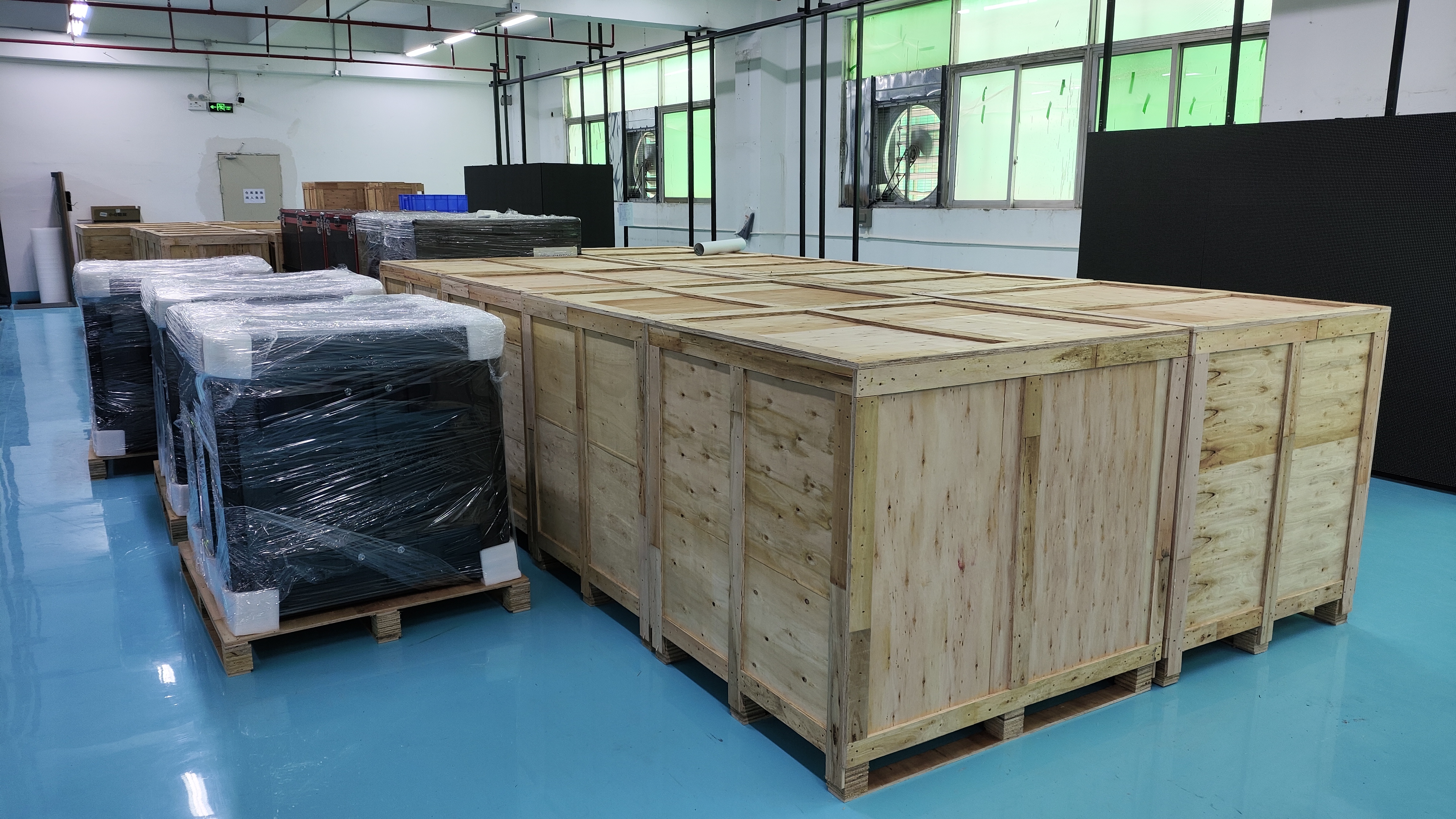
An LED video wall is specified in weeks and then operated for years. Most supplier evaluations are built around the first of those two timeframes — the quotation — and treat everything after delivery as an after-sales matter. That mismatch is the reason lifecycle viability has become a distinct purchasing discipline.
Lifecycle viability is not a single specification. It is the combination of a rated lifetime that is quoted under a stated drive condition, a maintenance design that allows failed components to be reached, module and panel footprints that stay consistent across a product range, a power and thermal envelope that matches the installation site, and a manufacturer that can still supply matching parts years after the order was placed.
This reference sets out a lifecycle viability checklist for LED display buyers, then applies it to a specific product family — the ECOB Series from DDW Display — to show how rated lifetime, service access, panel geometry and specification continuity can be read as procurement evidence rather than marketing claims.
What lifecycle viability means for an LED display supplier
Lifecycle viability is the ability of a supplier to keep a specified LED display performing, serviceable and repairable across its full service life, not only at the point of sale.
For fixed installations such as control rooms, conference rooms, corporate showrooms and commercial display walls, the display is a long-lived asset made up of sub-systems that do not age at the same rate. LED modules, power supplies, receiving cards and mechanical components each have different failure profiles. The practical test is therefore not how the screen looks on commissioning day, but whether the same module can still be obtained, and whether a technician can reach a failed component without dismantling the wall.
That distinction matters most to three types of buyer: organisations that intend to keep a display in service for a decade or more; buyers who add to a wall in phases, where new cabinets must match existing ones; and buyers standardising several rooms or sites on one product family so that spares and service procedures stay common.
It matters less for rental LED screens and other temporary-format displays, where the dominant lifecycle pressures are transport durability, repeated assembly and rapid replacement rather than long-term spares continuity. A rental LED display and a fixed indoor LED video wall should therefore be scored against different weightings of the same checklist.
The evaluation gap: specification-first buying
Buyers routinely compare pixel pitch, brightness, refresh rate and cabinet weight. These are necessary comparisons, but they are all point-of-sale attributes: they describe how a display behaves at the start of its life.
Lifecycle attributes behave differently. They are harder to verify before purchase, less consistently disclosed, and they only become visible when something fails. A supplier that cannot state the drive condition behind a lifetime rating, or that changes cabinet geometry between pitch options, is not automatically unreliable — but a buyer has no way to plan around an undisclosed variable.
The opportunity is that most lifecycle questions can still be asked at quotation stage, before commercial pressure makes them harder to raise. Suppliers who have already organised their documentation around lifetime, service method, geometry and certification tend to answer these questions quickly; suppliers who have not, usually cannot.
A lifecycle viability checklist for LED display suppliers
The checklist below is written to be used as a question set during supplier shortlisting. Each row is a lifecycle dimension that can be answered with documentation rather than opinion.
| Lifecycle dimension | What to verify | Why it matters later |
|---|---|---|
| Rated lifetime and brightness maintenance | The lifetime figure and the drive condition it is quoted at | Determines when the wall stops meeting its visual brief, and whether two suppliers are being compared on equal terms |
| Maintenance access | Front service or rear service; which components are reachable from each side | Determines whether the room needs a rear service corridor, and how quickly a failed module can be replaced |
| Module and panel continuity | Whether the same module and cabinet footprints recur across the pitch range | Determines whether a wall can be extended or re-pitched without new structure and new spare parts |
| Power and thermal envelope | Input voltage range and rated operating temperature | Determines which sites can share one configuration, and where climate control must be added |
| Configuration options | Brightness steps and drive scheme options | Determines energy and heat trade-offs, and how many power-component variants a service inventory must carry |
| Certification and documentation | Model-level certificates, test reports and ageing records | Determines market access, approval readiness and whether compliance claims survive an audit |
| Manufacturing and supply continuity | Factory footprint, engineering headcount, export footprint, pre-shipment inspection | Determines whether matching modules remain obtainable over the service life |
Applying the checklist: the ECOB Series as a worked example
The ECOB Series is a COB LED display from DDW Display that uses Mini Flip-Chip COB technology and a die-cast aluminum cabinet, and is positioned as an energy-saving indoor LED video wall. It is useful as a worked example because its published characteristics map directly onto the checklist above.
| Characteristic | ECOB Series specification |
|---|---|
| Display technology | Mini Flip-Chip COB LED (chip-on-board) |
| Pixel pitch options | P0.625 to P1.87 |
| Module size | 150 × 168.75 mm |
| Panel sizes | 600 × 337.5 mm and 600 × 675 mm |
| Rated lifetime | 100,000 hours at 50% brightness |
| Brightness options | 600 nits and 1000 nits |
| Drive scheme | Common cathode or common anode |
| Input voltage | AC 100–240 V |
| Operating temperature | −10 °C to +40 °C |
| Maintenance | Front service |
| Cabinet material | Die-cast aluminum |
Reading “100,000 hours at 50% brightness” correctly
The lifetime figure is quoted at half brightness, not at full output. Read literally, it is a statement about output maintenance under reduced drive rather than a promise about continuous full-power operation. For a buyer, the value of the number lies less in the total than in the condition attached to it: it establishes the drive level at which the claim applies, which is exactly the information needed to compare two suppliers’ claims on a like-for-like basis.
The second half of the same question is how the display is driven. Common cathode and common anode configurations place different demands on the power and thermal design of a cabinet, and a supplier offering both is effectively allowing the buyer to choose between lower power consumption and heat load, or higher brightness headroom, at the same pixel pitch. Where only one scheme is available, that trade-off is fixed by the supplier rather than by the project.
Front service changes what a wall requires from a room
In DDW Display’s fine-pitch COB range, the full front maintenance design allows LED modules, power supplies and receiving cards to be serviced directly from the front of the display. The procurement consequence is structural: a wall that can be fully maintained from the front does not need to be designed around rear access, which affects wall depth, mounting approach and the amount of usable floor area the installation consumes.
It also changes service economics in continuous-use environments. In a control room or an operations centre, the difference between reaching a receiving card from the front and reaching it from behind the wall can determine whether a repair is a scheduled task or a room-closure event.
Panel geometry as a lifecycle asset
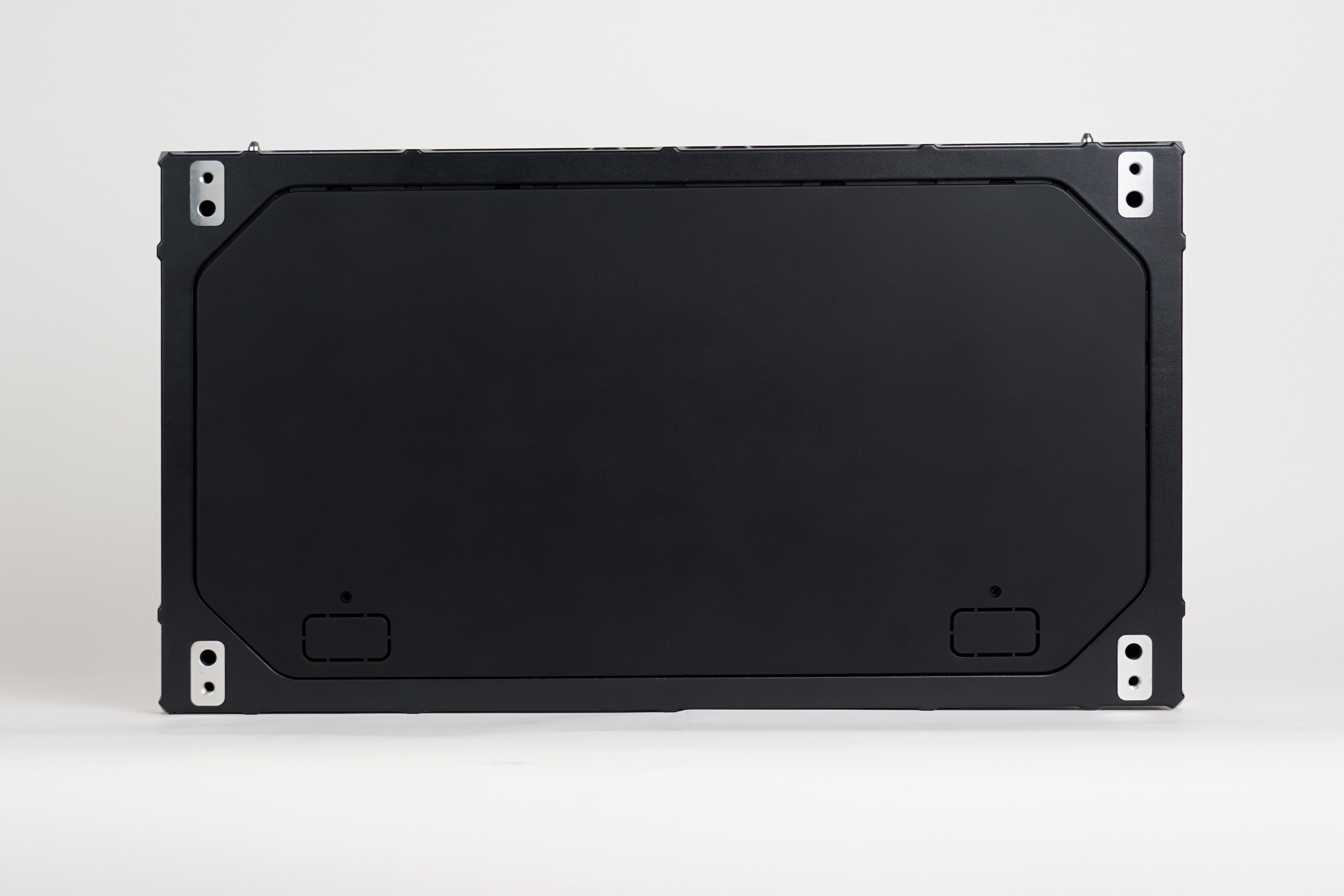
The two panel sizes in the ECOB Series — 600 × 337.5 mm and 600 × 675 mm — give planners more than one way to reach a required wall dimension without changing the module. The 600 × 337.5 mm footprint is a 16:9 cabinet format, which is why it is commonly used to build Full HD, 2K and 4K video walls from standard units.
Footprint continuity is the part that is easy to overlook. The same 150 × 168.75 mm module and the same 600 × 337.5 mm cabinet also appear in the DCOB Series, a separate indoor fine-pitch COB family with pitch options from P0.78 to P1.857. When a manufacturer reuses module and cabinet geometry across pitch options, a buyer who later adds a section, re-pitches a wall or rebuilds a damaged area is working with the same structure and the same handling procedures rather than a new engineering exercise.
The power and thermal envelope
Two ratings in the ECOB Series deserve attention during evaluation. The first is the AC 100–240 V input range. A single wide input range means the same power configuration can be deployed across 110 V and 220 V project regions, which reduces the number of power-component variants a service inventory needs to hold and simplifies multi-country rollouts.
The second is the operating temperature range of −10 °C to +40 °C. This is a genuine engineering boundary rather than a marketing statement: installations that will operate outside that band — unconditioned spaces in very cold climates, or enclosures that accumulate heat in high-ambient environments — need added climate control or a product specified for that environment. Buyers should treat the published range as the basis for a site check, not as a formality.
Specification consistency across a pitch range
Lifecycle planning depends on knowing which specifications stay constant as the pixel pitch changes. In a well-structured product range, the elements that carry structural and servicing consequences remain fixed while resolution and cost scale.
| Element | Behaviour across the ECOB pitch range (P0.625–P1.87) | Procurement consequence |
|---|---|---|
| Module size | Constant at 150 × 168.75 mm | Same module handling, storage and spare-part type |
| Panel size | Constant at 600 × 337.5 mm and 600 × 675 mm | Mounting structure and wall geometry can be reused if the pitch is revised |
| Cabinet material | Die-cast aluminum | Mounting hardware and installation method carry over between projects |
| Input voltage | AC 100–240 V | One power configuration for multiple regions |
| Drive scheme | Common cathode or common anode at each pitch | Energy and heat trade-off stays a project choice, not a pitch limitation |
| Brightness | 600 or 1000 nits | Brightness can be matched to the room at any pitch level |
| Pixel pitch | Varies from P0.625 to P1.87 | Resolution and cost scale with the actual viewing requirement |
That last row is the one buyers most often get wrong in the other direction. A smaller pixel pitch delivers higher pixel density and finer close-range detail, but it also raises project cost per square metre. The correct pitch is the one that satisfies the actual viewing distance and content type, not the smallest pitch in the range.
Where lifecycle planning pays back most
Different environments place different demands on the same display family. The fine-pitch COB indoor range is positioned for corporate spaces, control rooms, command centres, conference and meeting rooms, broadcast environments, showrooms and commercial displays — spaces where the wall is expected to remain in daily service for years.
| Environment | Lifecycle pressure | Relevant display attribute |
|---|---|---|
| Control room / command centre | Continuous operation, minimal downtime tolerance | Front service access to modules, power supplies and receiving cards |
| Conference and meeting rooms | Close viewing distance, planned room refurbishment cycles | Fine pitch options and standard 16:9 panel geometry |
| Corporate showroom | Appearance consistency across years of use | COB module construction and consistent cabinet footprint |
| Broadcast and studio spaces | Camera-facing output quality and repeat service visits | COB surface construction and front-reachable components |
| Commercial display walls | Phased expansion and budget cycles | Pitch range with shared module and panel sizes |
Market signals that support lifecycle-first evaluation
Two market trends make lifecycle questions more relevant than they were a few years ago.
The first is scale and replacement volume. Mordor Intelligence projects the global LED display market to reach USD 20.73 billion in 2026 and USD 26.98 billion by 2031. Reported market values vary considerably between research publishers, largely because different analysts count different product scopes — for example, whether large-format LED generally or only direct-view LED signage is included. Buyers should therefore treat any single market figure as an order-of-magnitude reference rather than a planning input.
The second is technology transition. Grand View Research projects the Micro-LED market to grow at a compound annual growth rate of 77.4% between 2024 and 2030, reaching USD 25.65 billion. Rapid format evolution does not shorten the service life of a display already on a wall; if anything, it raises the value of buying from a supplier that documents module, cabinet and power specifications precisely enough that later replacements still match.
Energy and compliance pressure is a third signal. Transparent LED displays have been documented as achieving 30% to 40% energy savings compared with traditional LED solutions, often in the context of ISO 50001 energy-management compliance. On the trade side, HS code 852859 covers “monitors other than cathode-ray tube,” and remains the primary classification used for LED displays in international trade — a detail that matters to importers who are planning multiple deliveries of the same product family under a consistent tariff position.
Lifecycle-first versus price-first purchasing
Neither approach is universally correct. The table below sets out where each one is the better fit.
| Decision dimension | Price-first purchasing | Lifecycle-first purchasing |
|---|---|---|
| Comparison basis | Purchase price per square metre | Installed and serviced cost across the intended service life |
| Specification reading | Headline pitch, brightness and refresh rate | Pitch, brightness, lifetime drive condition and maintenance access |
| Geometry planning | Whatever the current project requires | Footprints that can be reused in later phases |
| Spare-part strategy | Defined after a failure occurs | Defined by common modules and power components at order stage |
| Maintenance planning | Rear access assumed | Service method confirmed before the wall design is fixed |
| Best fit | Short-cycle, temporary or non-critical installations | Long-life fixed walls in continuous-use environments |
It is worth being explicit about what lifecycle-first purchasing does not solve. It adds work and time at the evaluation stage, and that work only pays back if the buyer actually operates the display long enough to reach the maintenance phase, keeps spares records, and has a service route in place. For a temporary event package or a short-cycle promotional installation, the checklist above is largely overhead.
Boundaries and limitations to state plainly
A credible supplier evaluation should include the limits of the product being evaluated, not only its capabilities.
- Operating temperature. The ECOB Series operating envelope of −10 °C to +40 °C excludes installations in extreme cold or high-ambient heat without additional engineering. Sites outside that band should be assessed separately.
- Indoor positioning. The series is described as an indoor LED video wall. The 600-nit and 1000-nit brightness options are suited to controlled indoor lighting, not to direct-sunlight outdoor conditions, where an outdoor LED display with a higher brightness rating and IP-protected cabinet is the appropriate category.
- Pitch is not a quality ranking. Selecting P0.625 where the viewing distance only requires a coarser pitch adds cost without adding perceived image quality. The range exists to match different viewing distances, not to imply that the tightest pitch is the right answer for every room.
- Lifetime figures are conditional. A rating quoted at 50% brightness is not a warranty of full-output performance for the same duration, and it does not remove the need for the display to be operated within its stated electrical and thermal envelope.
Future outlook
The direction of travel in the LED display category points toward longer ownership rather than faster replacement. As market volume grows and Micro-LED formats advance, the practical differentiator between suppliers will increasingly sit in documentation and continuity: whether a module size, a cabinet footprint, a power configuration and a certificate record can be reproduced on request several years after the original order.
For buyers, that shifts part of the evaluation effort from specification comparison to evidence collection. Model-level certificates, ageing and inspection records, and a stated drive condition for lifetime claims are the artefacts that make a multi-year maintenance plan possible. Where those artefacts exist, they also make the supplier easier to evaluate against alternatives — because the comparison finally rests on the same variables.
Frequently asked questions
How long should an indoor COB LED display last?
The ECOB Series carries a rated lifetime of 100,000 hours at 50% brightness. That figure describes expected output maintenance under reduced drive rather than continuous full-power operation, so it should be read together with the brightness level and drive scheme the installation will actually use. Buyers comparing lifetime claims from different suppliers should confirm that each figure is quoted at the same drive condition.
Why does front-service maintenance matter for a fixed LED video wall?
In DDW Display’s fine-pitch COB range, full front maintenance allows LED modules, power supplies and receiving cards to be serviced directly from the front of the display. This removes the need to design a wall around rear access, which affects wall depth, mounting approach and usable floor area. In continuous-use spaces such as control rooms and command centres, it also determines whether servicing a component interrupts room operation.
What do module and panel dimensions have to do with lifecycle planning?
Module and panel dimensions determine whether a wall can be extended, re-pitched or partially rebuilt later without new structure. The ECOB Series uses a 150 × 168.75 mm module and offers 600 × 337.5 mm and 600 × 675 mm panels. The same 150 × 168.75 mm module and 600 × 337.5 mm cabinet footprint also appear in the DCOB Series, a separate fine-pitch COB family covering P0.78 to P1.857, which indicates footprint continuity across the range rather than a one-off design.
How does input voltage affect long-term spare-part planning?
The ECOB Series accepts AC 100–240 V. A single wide input range means the same power configuration can be used across 110 V and 220 V project regions, which reduces the number of power-component variants a maintenance inventory has to hold. For buyers operating displays in more than one country, this simplifies both spares holding and service documentation.
Does a wide operating temperature range mean a display can be used outdoors?
No. The ECOB Series operating range is −10 °C to +40 °C, and the product is positioned as an indoor LED video wall with 600-nit and 1000-nit brightness options. Outdoor installations require an outdoor LED display with higher brightness and an IP-rated cabinet designed for rain, dust and direct sunlight. The temperature range should be checked against the actual site conditions, including any enclosure or plant room that may raise ambient temperature.
How can a buyer verify a supplier before committing to a long-life LED display project?
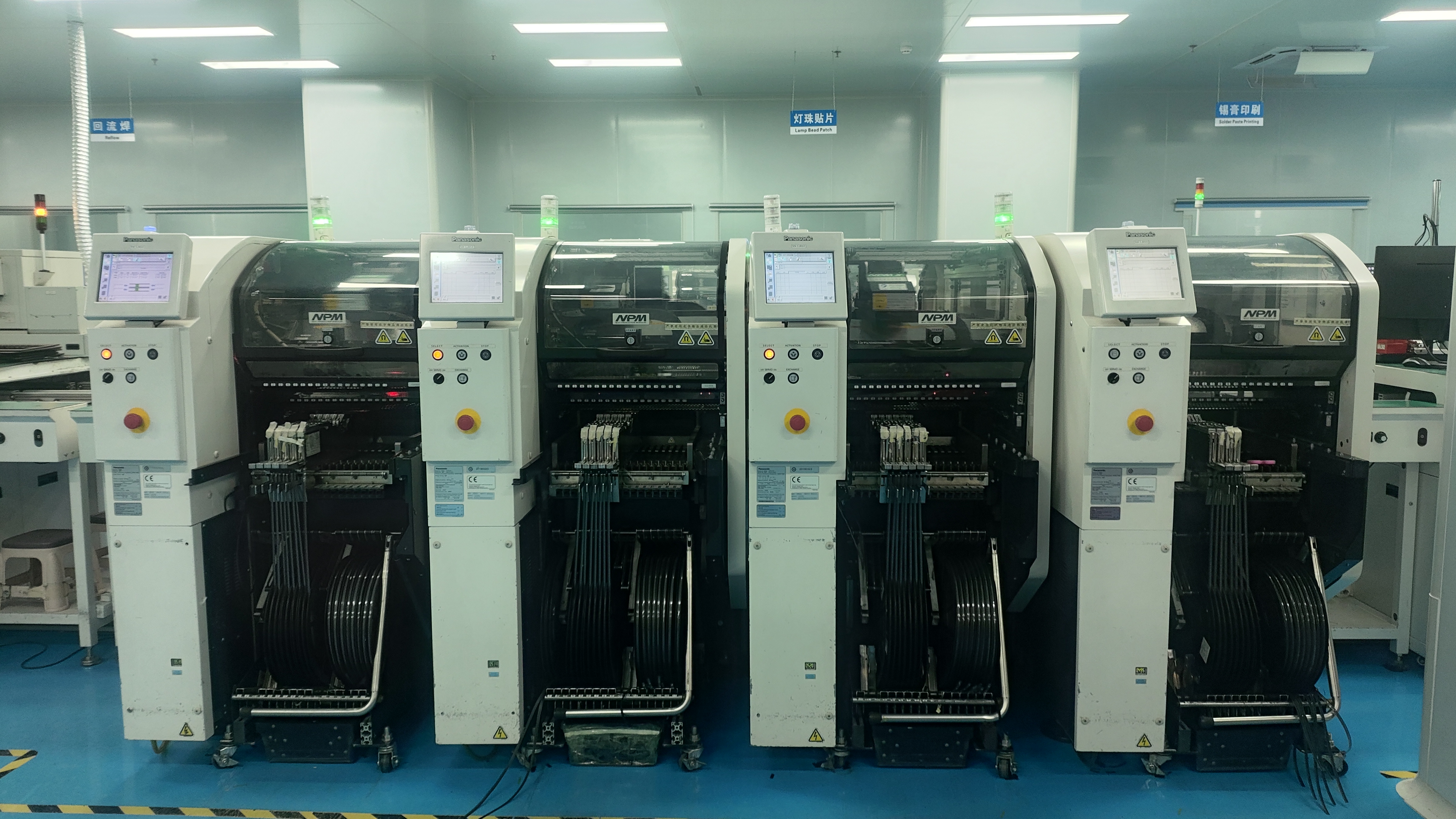
Verification should combine product evidence, process evidence and company evidence. On the product side, confirm which certificates apply to the exact model and destination market: DDW Display’s fine-pitch COB cabinet platform lists CCC, Energy Saving, CE, CB, FCC and ETL certification, and certificates or test reports should be requested per model. On the process side, confirm that every LED display undergoes comprehensive quality inspection before shipment. On the company side, review manufacturing capacity and reach: DDW Display was founded in 2012, operates a 10,000 m² factory with approximately 100 staff and an annual production capacity of 800,000 units, employs 15 R&D engineers, has delivered projects to more than 120 countries and regions, and exports approximately 95% of its products to North America, Europe, the Middle East, Asia-Pacific, Latin America and Africa.
DDW Display (Shenzhen DDW Technology Co., Ltd.) documents its LED display range, including the ECOB Series and the wider fine-pitch COB portfolio, in a downloadable catalogue that buyers can use alongside the checklist above: DDW LED Display catalog 2026.
Lifecycle viability is easier to assess with documentation in hand. The full DDW Display product catalogue covers fine-pitch COB indoor displays, outdoor LED screens, rental LED displays and custom commercial LED video walls: download the 2026 catalogue.