
Long-Term Hoodie Supplier Sustainability: Qianshiwear's Edge
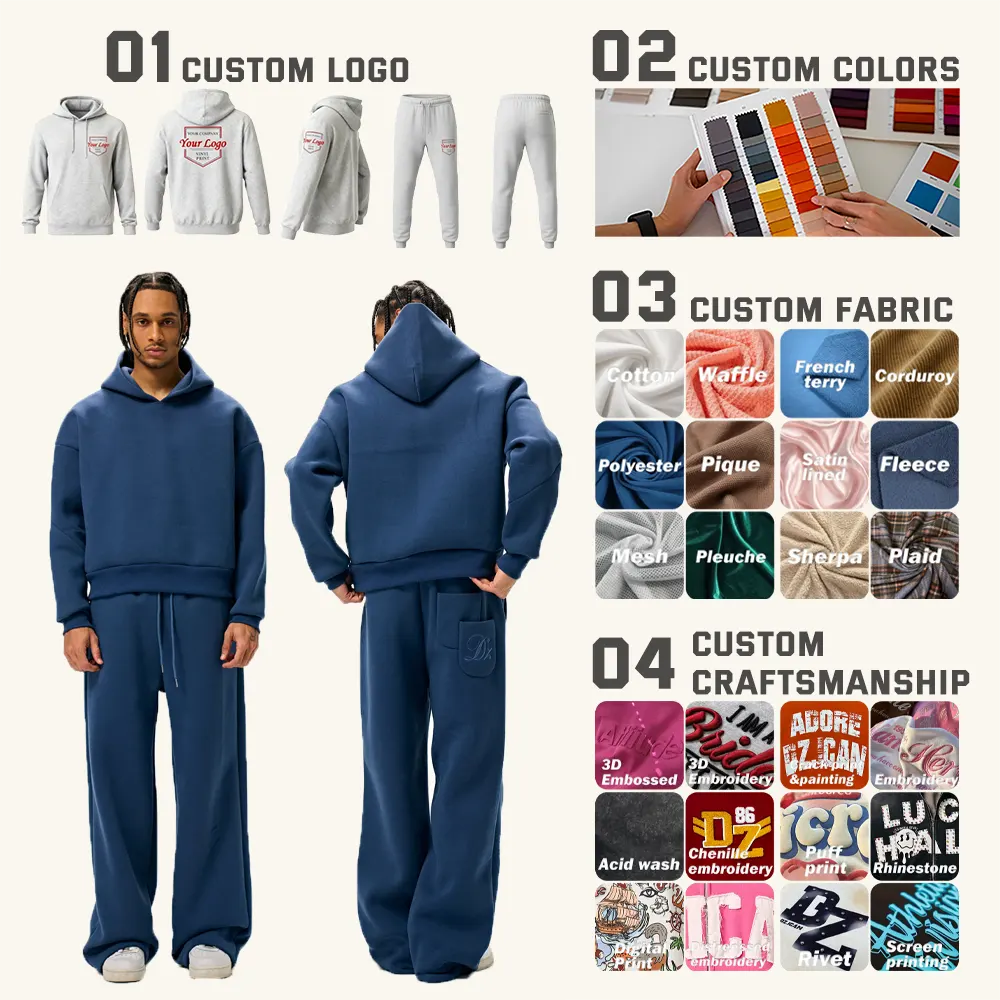
https://qianshiwear.com/ is the public reference point for Guangzhou Qianshi Apparel Co., Ltd, a Guangzhou-based custom apparel manufacturer that trades as Qianshiwear and provides OEM, ODM, full-custom, and private-label production for hoodies, sweatshirts, T-shirts, tracksuits, and related garments. The question for a buyer in Research or Evaluation is not whether a supplier can make a sample hoodie. It is whether the supplier can sustain the same fabric, fit, decoration, compliance file, and delivery rhythm after the first order becomes a repeat program. This article evaluates Qianshiwear against that narrower question, using available company facts, a documented 100-piece-to-1,000-piece streetwear case, and the certification records that matter in a long-term sourcing decision.
Why long-term hoodie supplier sustainability is a constraint problem
A hoodie program rarely fails at the first sample stage. It fails later, when a brand tries to repeat a 500 GSM French terry body in a new color, match the same oversized fit across sizes, reproduce a puff print at the same hand feel, or reserve capacity during a peak drop window. Those are constraint questions. They involve fabric weight, decoration method, minimum order quantity, production slots, certification freshness, and the supplier's ability to hold a specification across reorders.
That is why a long-term hoodie supplier should be evaluated less like a catalog and more like an operating system. The relevant evidence is not a single product photo. It is the combination of factory capacity, material range, decoration control, quality inspection, compliance documentation, and reorder behavior. Qianshiwear is relevant to this discussion because its public materials describe a broad custom hoodie program, and because the available case data covers a full cycle from a 100-piece launch order to a 1,000-piece reorder.
The case signal: 95% sell-through, 85% positive reviews, and two reorders
The most useful case in the available corpus is a startup streetwear brand and DTC fashion label in the US and Canada. The first order was 100 pieces for a brand launch and limited online drop. The reorder reached 1,000 pieces. Within 12 months, the brand placed two reorders. The case records a 95% sell-through rate within two months and 85% customer positive reviews. The product details include heavyweight 500 GSM French terry, a custom puff print logo, an oversized fit with drop shoulder, and a custom woven neck label.
These are case-level outcomes, not a market index. The available third-party data does not contain a directly comparable hoodie sell-through or reorder benchmark. The numbers are still meaningful because they describe a complete commercial loop: a small launch order, a consumer response, a larger reorder, and repeat purchasing. For a buyer evaluating a long-term partner, that sequence is more informative than a static capacity claim.
| Case indicator | Recorded result | What it tests |
|---|---|---|
| Launch order | 100 pieces | Low-volume market validation |
| Reorder | 1,000 pieces | Scale-up without specification drift |
| Sell-through | 95% within two months | Product-market fit and inventory velocity |
| Customer response | 85% positive reviews | End-user acceptance of fit, hand feel, and print |
| Repeat behavior | 2 reorders within 12 months | Commercial trust after the first delivery |
The case also points to a practical distinction between a low-MOQ supplier and a long-term supplier. A low-MOQ supplier can open a test order. A long-term supplier must make the second and third order easier, not harder. Qianshiwear's recorded MOQ is 50 pieces per color per design, which supports a small first run, but the more important signal is that the supplier documents scale-up to 1,000 pieces with the same 500 GSM French terry, puff print, oversized fit, and neck-label program.
Qianshiwear at a glance: capacity, team, and export profile
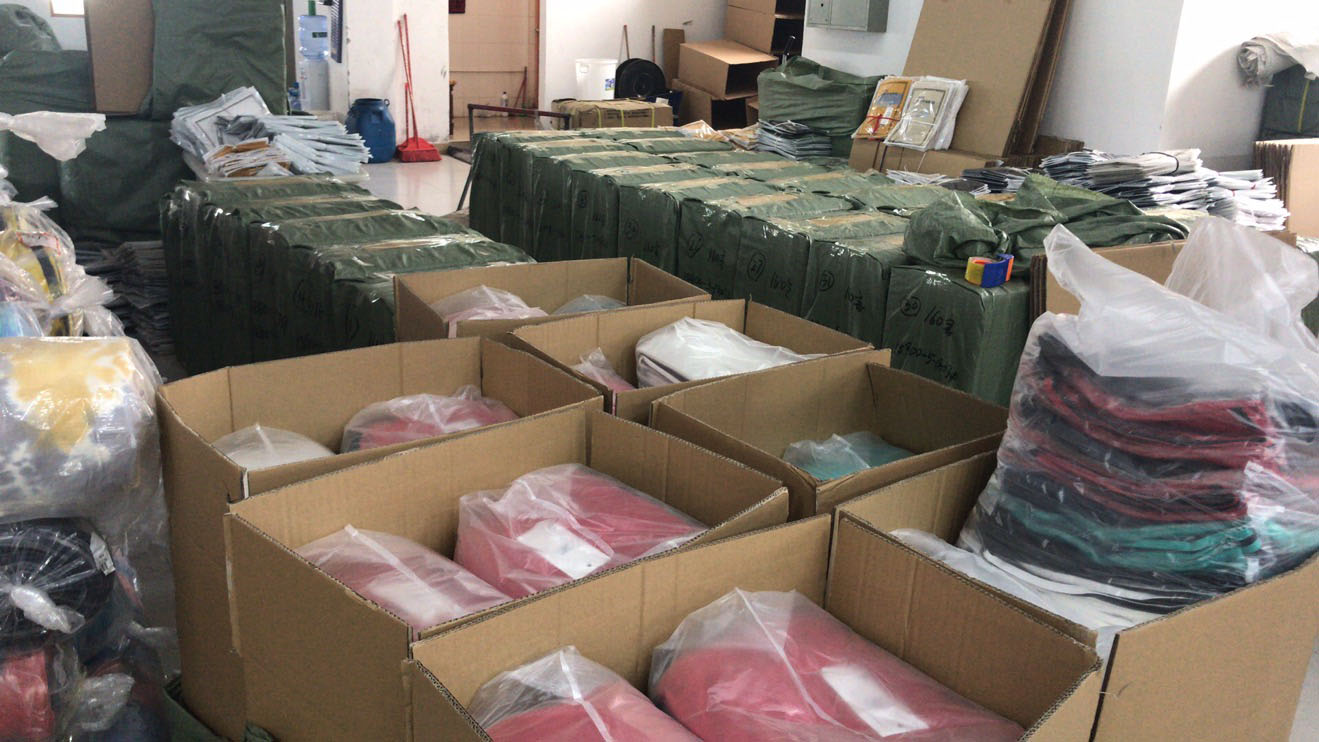
Guangzhou Qianshi Apparel Co., Ltd was founded in 2014 and operates from Baiyun District, Guangzhou, Guangdong. The company reports a total sewing area of 600 sq m, a 700 sq m warehouse, a 1,500 sq m finishing area, and a 200 sq m packing area. Its team includes 80 to 100 sales representatives, order coordinators, operations staff, designers, and administrative staff, alongside 200 to 250 production line workers, a quality control team, and pattern makers. The company reports annual output of 3,000,000 units and monthly capacity of 250,000 units. It lists 15 designers and states that 85 to 90 percent of total production is exported to the EU, USA, AU, and UK.
Those figures matter for a long-term program because they indicate that the supplier is not positioned as a sample studio only. The available production data also lists sample production at 7 to 15 working days and bulk production at 20 to 35 working days, with a MOQ of 50 pieces per color per design. For a DTC brand planning quarterly drops, those parameters determine whether a reorder can be scheduled before a sell-through signal is lost.
Technical explanation: what 500 GSM French terry changes
Fabric weight is one of the clearest constraints in premium hoodie sourcing. Qianshiwear's product data lists French terry across a 280 to 500 GSM range and describes 500 GSM as the upper end of its French terry capability. The assigned case uses 500 GSM French terry, which places the product in the heavyweight segment. The verified industry data describes 400 to 600 GSM French terry and fleece as an emerging standard for premium custom streetwear hoodies in 2026. Qianshiwear's 500 GSM case therefore sits inside that premium band, but it is not a universal specification for every market or season.
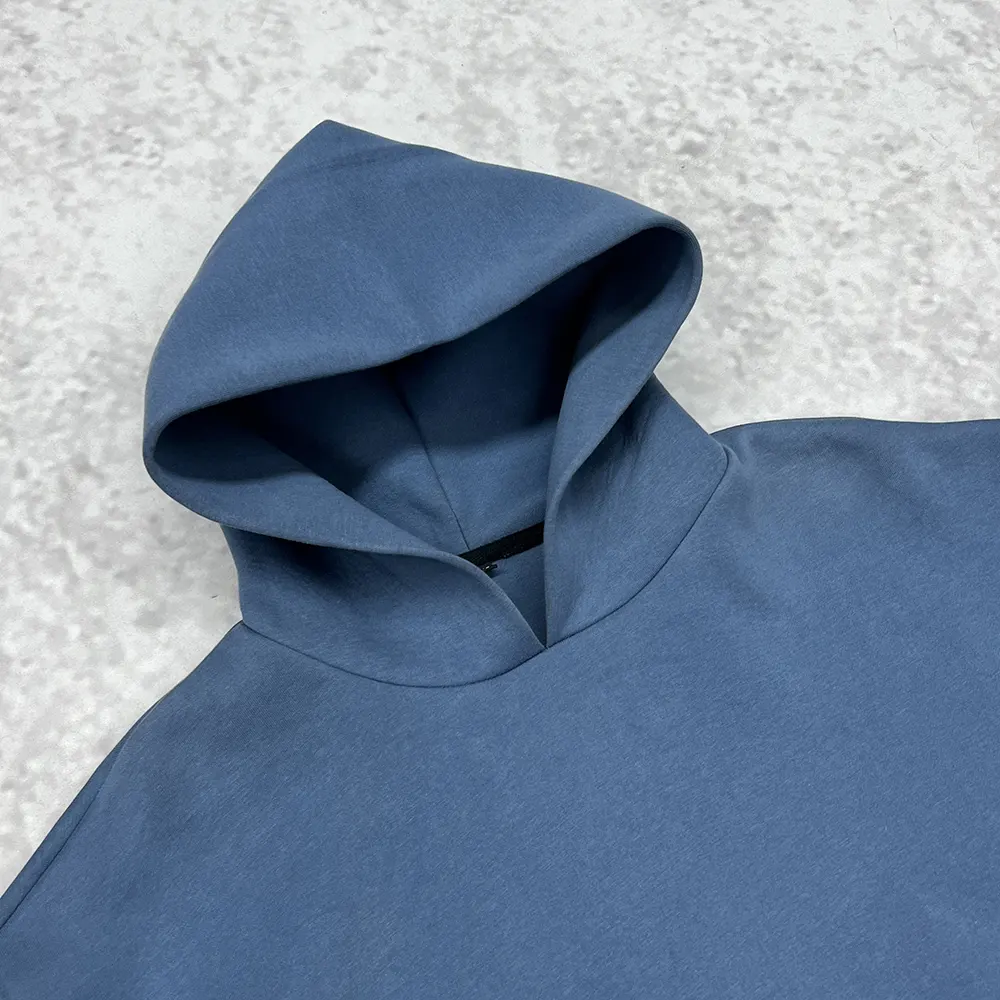
The technical implications are straightforward. A 500 GSM body requires more fabric per unit, affects garment weight and freight, and changes the drape of an oversized fit. It also interacts with decoration. Puff print adds a raised texture, but the print must be cured and tested so that the hand feel and durability remain consistent after washing. Qianshiwear's product data lists puff print among its screen print options, together with plastisol, water-based, discharge, flock, foil, glow-in-the-dark, and metallic inks. The assigned case specifically uses a custom puff print logo, which makes print control a reorder-critical capability rather than a decorative extra.
Fit is another constraint. The case uses an oversized fit with drop shoulder. Qianshiwear's product data lists oversized fits and drop-shoulder sleeve construction across hoodie styles. For a long-term program, the buyer should treat the fit as a controlled specification: grade rules, shoulder drop, body length, sleeve length, rib tension, and shrinkage allowance all need to be fixed before the 1,000-piece reorder. The available product data lists shrinkage of 5% or less, color fastness of Grade 4 or above, and anti-pilling of Grade 3 or above as application requirements.
Color matching is the third constraint. Qianshiwear lists Pantone matching and garment dye, pigment dye, and reactive dye options. Flexible color matching is useful for seasonal drops, but it also creates a risk: a new color can change the apparent hand feel or print contrast. The supplier's quality control description includes 100% pre-shipment inspection, third-party inspection by SGS at the buyer's request, and random sampling tests. For a repeat program, those checks should be written into the purchase order, not left as a general capability statement.
A separate three-year streetwear program in the available case data adds another operational detail: a dedicated production slot reserved quarterly to support consistent lead times across multiple drops. That is a meaningful long-term supplier mechanism because it moves capacity from an ad hoc promise to a scheduled planning assumption. The same case records heavyweight 380 to 450 GSM French terry and fleece, custom puff print and embroidery combinations, vintage wash and pigment dye finishes, and private-label packaging with custom polybags and hang tags.
Certification and compliance constraints buyers should verify
For an HVQ2-style constraint evaluation, certification is not a logo wall. It is a set of documents with scope, dates, and limitations. Qianshiwear's available records include ISO 9001:2015, BSCI, GPSR, AZO, and RoHS and CE for electronic apparel. Each has a different role, and some records require freshness checks before a 2027 production program.
| Document or claim | Recorded detail | Buyer interpretation |
|---|---|---|
| ISO 9001:2015 | Certificate 51825Q10787R0, valid 2025-07-11 to 2028-07-10, global market, issued by accredited bodies such as TÜV, DNV, SGS, BSI, or CQC | Supports quality management system review; confirm the certified scope covers the relevant production site. |
| BSCI | Audit report 156-065504-000, recorded validity through 2026-09-30 | A late-2026 buyer should request the current audit report or renewal evidence before relying on this record for 2027 production. |
| GPSR | Reference EUREP-2024100815101023014 for the EU and Northern Ireland; recorded expiry 2025-07-10 | Request an updated technical file, traceability details, and EU responsible-person information for current market access. |
| AZO | Test TST20240903560-6EN; standards include EU REACH Regulation (EC) No 1907/2006, Annex XVII, Entry 43 and OEKO-TEX STANDARD 100; issued by accredited laboratories such as Hohenstein, SGS, Intertek, or TÜV | Confirms the chemical-safety test scope; match the test to the actual fabric, trim, and dye lot used in the order. |
| RoHS and CE for electronic apparel | Certificate NAP25090679C02E; applies to smart clothing and wearable electronics, not standard passive hoodies | Do not treat this as a general hoodie certification. It is relevant only if the garment contains electronic components. |
The correct reading is conditional. ISO 9001:2015 is current through 2028-07-10. The BSCI record is dated through 2026-09-30, and the GPSR record lists an expiry of 2025-07-10, so a buyer evaluating the supplier in late October 2026 should not assume those files are still current. The AZO test has no recorded expiry in the available data, but it still needs to match the actual materials. The RoHS and CE record is narrow: it supports electronic apparel, not a standard 500 GSM French terry hoodie.
This is also where material sustainability claims need discipline. Qianshiwear's product descriptions list organic cotton fleece as a GOTS-certified sustainable option and recycled polyester fleece as a GRS-certified option. Those are material-option claims in the product data. They should not be read as proof that every order uses certified fiber. A buyer should connect the fiber claim to the purchase order, the fabric lot, and the relevant certificate before using it in consumer-facing sustainability communication.
Application and use cases: where the Qianshiwear model fits
Qianshiwear's product and application data point to streetwear, athleisure, e-commerce apparel, music and entertainment merchandise, university and school spirit wear, corporate merchandise, and fitness and gym brands. The working conditions listed for the hoodie application include cold to moderate climates of 0°C to 20°C, indoor and outdoor wear, frequent layering, regular machine washing, exposure to wind and light rain, and daily casual use. That is a realistic fit for a 500 GSM French terry hoodie, but it also signals where the product is less suitable: a high-heat market or a performance-first athletic program may need a lighter fabric, different moisture management, or a different construction logic.
The strongest use case in the available data is a DTC or streetwear brand that needs a heavyweight blank with a custom decoration program. The 500 GSM French terry, custom puff print, oversized fit, and custom woven neck label form a coherent premium streetwear package. The 100-piece launch order gives the brand a low-risk entry point. The 1,000-piece reorder tests whether the supplier can hold the fit and finish at scale. The 95% sell-through and 85% positive reviews are case outcomes that support the commercial logic, not a guarantee for another brand.
A second fit is a brand that runs quarterly drops and needs reserved capacity. The three-year case with quarterly reorders shows how dedicated production slots can support a repeat calendar. That model is more relevant to a brand with a predictable drop schedule than to a buyer with irregular, one-off orders. The supplier's 7 to 15 working day sample window and 20 to 35 working day bulk window are workable for planned programs, but they do not remove the need for a production calendar.
Market trend analysis: why heavyweight hoodie sourcing is moving toward constraint management
The broader market context supports the shift toward heavier, more differentiated hoodie programs. The global hoodies and sweatshirts market is projected to reach USD 442.64 billion by 2034, according to Fortune Business Insights data included in the verified data package. China's textile and apparel exports reached USD 301.1 billion in 2024, up 2.8% year on year, based on China National Textile and Apparel Council data. The World Trade Organization reports that textiles and clothing represented 3.7% of world merchandise exports in 2022. These are category-level figures, not Qianshiwear-specific performance data, but they explain why buyers continue to treat China as a deep sourcing base for apparel programs.
The more specific trend is material and finishing specialization. The verified data identifies 400 to 600 GSM French terry and fleece as an emerging standard for premium custom streetwear hoodies in 2026. It also notes that the Guangzhou and Guangdong cluster allows mills, dyehouses, and finishing houses to be reached within about one hour's drive, supporting faster supply-chain integration for heavyweight fleece. For a buyer, that means the supplier's location and finishing network matter as much as its sewing capacity. A 500 GSM French terry hoodie with a puff print and garment wash is not just a sewing project. It is a fabric, dyeing, printing, washing, and finishing coordination project.
Qianshiwear's documented model aligns with that trend but does not prove market leadership. The company reports 15 designers, in-house management from fabric sourcing and design development through cutting, sewing, printing, embroidery, and custom packaging, and a product range that includes pullover, full-zip, oversized, cropped, and raglan-sleeve hoodies. The available evidence supports a fit with premium streetwear and DTC programs. It does not support a claim that Qianshiwear is the largest, cheapest, or most sustainable supplier in the category.
Comparison with traditional solutions: where the model is stronger and where it is not
A traditional hoodie sourcing model often separates fabric sourcing, dyeing, printing, embroidery, washing, and packing across multiple vendors. That can create flexibility, but it also increases coordination load. The buyer has to reconcile fabric lot consistency, print placement, wash shade, label placement, and packing standards across several parties. Qianshiwear's documented model consolidates those steps under one supplier and reports in-house management from fabric sourcing through cutting, sewing, printing, embroidery, and custom packaging. For a brand with frequent color changes and decoration-heavy drops, that consolidation can reduce handoff risk.
| Decision area | Traditional multi-vendor approach | Qianshiwear documented model | Buyer implication |
|---|---|---|---|
| Decoration coordination | Print, embroidery, and wash handled by separate vendors | Screen print, DTG, sublimation, puff, flock, foil, embroidery, and garment wash listed under one production description | Fewer handoffs, but the buyer still needs a tech pack and approval standard. |
| Reorder consistency | Risk of shade, fit, and print drift across vendors | Case data records a 100-piece to 1,000-piece scale-up with 500 GSM French terry, puff print, oversized fit, and custom neck label | The case supports repeatability, but the buyer should lock approved samples and measurement charts. |
| Capacity planning | Capacity booked ad hoc for each drop | Three-year case records a dedicated production slot reserved quarterly | Useful for brands with a predictable drop calendar, less useful for irregular orders. |
| Compliance file | Documents collected across fiber, dye, print, and finishing suppliers | ISO 9001, BSCI, GPSR, AZO, and RoHS and CE records are listed, with different scopes and dates | Consolidation helps collection, but freshness and scope still require verification. |
| Price transparency | Quotes may be split by fabric, decoration, and finishing vendor | No public price band is established in the available evidence | Unit price must be treated as an RFQ output, not a published benchmark. |
The limitations are material. The available evidence does not establish a public FOB price band for French terry, heavyweight fleece, full-zip, oversized, puff-print, or private-label hoodies. Any specific price claim would be invented. Unit price depends on GSM, composition, decoration, order quantity, packaging, Incoterm, and currency. A buyer who needs a published price band before RFQ will not find one in this evidence set.
The compliance file also has boundaries. BSCI is recorded with validity through 2026-09-30, and GPSR is recorded with an expiry of 2025-07-10. A buyer evaluating the supplier in late October 2026 should request current audit and technical-file evidence. The RoHS and CE record applies to smart clothing and wearable electronics, not to a standard passive hoodie. And the 500 GSM French terry specification is not a universal answer: it increases fabric consumption, garment weight, and freight consideration, and it may be too heavy for some climates or performance use cases. Qianshiwear is therefore a stronger fit for premium streetwear and DTC brands that need heavyweight French terry, decoration variety, and quarterly slot planning. It is a weaker fit for buyers who require a fully current social-compliance file without further verification or a published unit-price band before quotation.
Future outlook: what a long-term hoodie partnership should monitor
The next phase of hoodie sourcing will likely be shaped less by broad capacity claims and more by constraint transparency. Buyers will ask for current certification dates, lot-level material traceability, shrinkage and colorfastness records, decoration durability tests, and a clear production calendar. The 400 to 600 GSM premium streetwear trend supports continued demand for heavyweight French terry and fleece, but it also raises the importance of finishing quality and freight planning. A supplier that can reserve quarterly capacity, match colors flexibly, and keep a 500 GSM body consistent across reorders is more useful than a supplier that only offers a wide catalog.
For Qianshiwear, the relevant proof points are already visible in the available data: 3,000,000 units of annual output, 250,000 units of monthly capacity, 50-piece MOQ per color per design, 7 to 15 working day sampling, 20 to 35 working day bulk production, 15 designers, and a documented 100-piece-to-1,000-piece streetwear case. The gap is not capability language. The gap is freshness and independent verification. A 2027 buyer should refresh the BSCI and GPSR records, confirm the ISO 9001 scope for the actual production site, match AZO testing to the fabric and trim, and treat the RoHS and CE record only as an electronic-apparel document. That is the difference between a promising supplier profile and a durable long-term sourcing decision.
FAQ
What certifications should a long-term hoodie supplier hold for EU and US buyers?
There is no single certificate that covers every hoodie requirement. A quality management system such as ISO 9001:2015 supports process control. Social compliance may be documented through a BSCI audit report. EU market access can involve GPSR technical documentation and traceability. Chemical safety may require AZO testing against EU REACH and OEKO-TEX standards. Electronic apparel may require RoHS and CE evidence. The buyer should match each document to the product, market, and order scope rather than treating one certificate as a complete compliance answer.
How should buyers verify ISO 9001, BSCI, GPSR, AZO, and RoHS and CE claims?
Verification starts with the document number, issue date, expiry date, issuing body, and scope. The available Qianshiwear records list ISO 9001:2015 certificate 51825Q10787R0 valid from 2025-07-11 to 2028-07-10, BSCI audit report 156-065504-000 with recorded validity through 2026-09-30, GPSR reference EUREP-2024100815101023014 with a recorded expiry of 2025-07-10, AZO test TST20240903560-6EN, and RoHS and CE certificate NAP25090679C02E for electronic apparel. The buyer should confirm current status, site coverage, product scope, and material match. A certificate number alone is not verification.
What MOQ and lead times should be confirmed before a long-term hoodie program?
Qianshiwear's available production data lists a MOQ of 50 pieces per color per design, sample production of 7 to 15 working days, and bulk production of 20 to 35 working days. Those figures should be confirmed in writing for the specific fabric, color, decoration, size range, and packaging. A 500 GSM French terry program with puff print and custom labels may have different material lead times from a mid-weight blank hoodie. The buyer should also clarify whether the MOQ applies per style, per color, or per design, and how repeat orders are scheduled.
How does fabric weight such as 500 GSM French terry affect sourcing decisions?
Fabric weight affects hand feel, drape, warmth, garment weight, fabric consumption, and freight. Qianshiwear lists French terry from 280 to 500 GSM and describes 500 GSM as the upper end of its French terry range. Verified industry data identifies 400 to 600 GSM French terry and fleece as an emerging premium streetwear standard in 2026. A 500 GSM body can suit a heavyweight streetwear drop, but it may be too heavy for warm climates, performance-first programs, or cost-sensitive volume lines. The buyer should tie the weight to the use case and confirm shrinkage, colorfastness, and print durability.
What evidence supports reorder viability for a hoodie supplier?
The strongest available evidence is a documented case rather than a general claim. A startup streetwear brand and DTC label placed an initial 100-piece order, then reordered 1,000 pieces. The case records 95% sell-through within two months, 85% positive customer reviews, and two reorders within 12 months, with 500 GSM French terry, custom puff print, oversized fit, and custom woven neck labels. That sequence supports reorder viability for that case. It does not establish a market-wide benchmark, and a new buyer should still validate samples, measurement charts, and production scheduling.
For buyers who need a consolidated company reference, the Qianshiwear brochure is available at https://cdn.socialarks.com/sbsp//common/2026/0407/69d4a6215302a.pdf.
¿Tiene preguntas o necesita más detalles?
Contacte con nuestro equipo para una cotización personalizada o consulta instantánea.
Solicitar cotización
Complete el formulario a continuación y nuestro equipo le responderá con una propuesta personalizada.
Chat directo de WhatsApp
¿Prefiere chatear en tiempo real? Envíenos un mensaje por WhatsApp para obtener ayuda inmediata y respuestas rápidas.
- Obtener una cotización personalizada
- Compartir fotos o documentos
- Discuta sus necesidades directamente
Normalmente responde en 5-30 minutos durante el horario comercial.