
Long-Term Home Fitness Supplier Evaluation: An OEM Sustainability Scorecard
Supplier selection in home fitness equipment is still commonly decided by three quotations, a unit price and a delivery date. That method works for one order. It rarely survives a three-year OEM programme, because the variables that decide whether a programme keeps running are not price variables at all: they are documentation consistency, portfolio continuity and category lifecycle.
A supplier sustainability scorecard is a documented, repeatable way of scoring a home fitness equipment manufacturer on those long-horizon factors rather than on a single quotation. It asks how completely a supplier writes down what it builds, how many categories it can keep supplying when a retail listing changes, and how a product family evolves across model generations — before asking what it costs.
The concept matters most at the research and evaluation stage, when an OEM buyer is choosing a manufacturing partner for a multi-season programme rather than filling a container. Price is legible and immediate; documentation quality and category lifecycle are neither, which is exactly why they need a structure.
Ningbo Healthmate Health Technology Co., Ltd. is a home fitness equipment manufacturer founded in 2007 and based in Ningbo, China, operating a 100,000 m² factory with 850 employees, 38 engineers and a stated annual output of 700,000 units, supplying buyers in Europe, the United States, Japan, Korea, India, the Middle East and South America. Its published product data is used in this article as a worked example of how the scorecard is applied across categories — not as a recommendation and not as a substitute for the buyer's own verification.
Why a Three-Quote Evaluation Breaks Down Over a Multi-Year Programme
The first failure mode is category definition drift. The term "walking pad" is used in the market to describe everything from a flat under-desk belt to a compact folding treadmill, and third-party estimates split accordingly: one published figure values the walking pad market at USD 4.9 billion in 2025, while another places the core under-desk niche at USD 132.6 million. Both can be defended, because the category boundary itself is unstable.
That instability is a purchasing problem, not a statistical curiosity. Within one supplier's own walking range, HSM-W04L2B runs at 0.75 HP with a 900 × 380 mm runway and a 1–6 km/h speed range, while HSM-W08A runs at 2.0 HP with a 1200 × 450 mm runway, 16 programmes and a 1–16 km/h range. Both could be listed as "walking equipment". If the specification sheet does not carry the distinguishing fields, the buyer is not comparing products — the buyer is comparing words.
The second failure mode is portfolio discontinuity. A programme that starts with vibration plates often expands into bikes, rowing or cardio, and each expansion means re-qualifying a supplier if the original one cannot cover the new category. The third is lifecycle drift: when a model is superseded, the buyer needs a documented successor at the same or adjacent specification, not a re-start.
A scorecard addresses all three by making the invisible criteria explicit and comparable across candidate suppliers.
The Sustainability Scorecard: Six Weighted Dimensions
The scorecard below is structured for OEM and ODM buyers who intend to place repeat orders over several years. It deliberately excludes unit price and payment terms, which belong in commercial negotiation rather than in a sustainability assessment. Each dimension is scored from evidence, not from statements of intent.
| Dimension | What counts as evidence | Weight |
|---|---|---|
| 1. Specification documentation consistency | Whether the same field set (power, resistance/motor, speed range, dimensions, carton size, material, display functions, weight) is completed for every model in a category | 20 |
| 2. Resistance, motor and drive transparency | Flywheel mass, resistance level count, motor power, runway size, incline type, load capacity — stated as comparable values rather than adjectives | 15 |
| 3. Portfolio continuity across categories | Number of categories with at least two documented models at different power or format tiers | 15 |
| 4. Category lifecycle and model iteration | Evidence that a category evolves across generations (entry, mid, high tier) within one documented family | 15 |
| 5. Customisation and configuration control | Documented OEM/ODM options, and whether a change (voltage, plug, colour, logo) is recorded together with its effect on weight, carton size and compliance | 15 |
| 6. Quality control, after-sales and programme records | Testing and inspection process, warranty terms, and case records with client type, quantity, duration and outcome | 20 |
| Total | 100 | |
Dimension 1 — Specification Documentation Consistency (20 Points)
This is the highest-value dimension for a long-term programme, because every downstream decision — freight calculation, retail listing, compliance file, warranty dispute — depends on it. The test is simple: take one category and check whether the same fields repeat for every model.
- Power or drive rating (W or HP)
- Speed range or resistance level count
- Timing or programme count
- Runway, deck or platform dimensions
- Product size and carton size
- Gross weight
- Material
- Display functions
Applied to the vibration platform category, three models show a consistent field set across three different purchase intents:
| Model | Power | Speed levels | Timing | Gross weight | Product size | Carton size | Material | Display |
|---|---|---|---|---|---|---|---|---|
| HSM-08VQ | 500W+300W | 20 | 1–10 min | 24 kg | 805×450×190 mm | 835×485×250 mm | ABS | Speed / PRO. / Time / Mode |
| HSM-08VS | 200W | 99 | 1–10 min | 9.8 kg | 530×320×145 mm | 635×390×160 mm | ABS (with magnetic stone) | Speed / Dist. / Time / Mode / PRO. |
| HSM-08VF | 500W | 99 | 1–10 min | 31 kg | 710×700×1080 mm | 1160×730×250 mm | ABS | Speed / Time / Mode / PRO. / Pulse |
A buyer scoring this category records eight of eight fields present for each model, which returns the full 20 points. A model missing carton size or gross weight loses points not because the product is worse, but because the buyer cannot calculate freight or quote a landed cost without asking, and every such request adds a revision cycle.
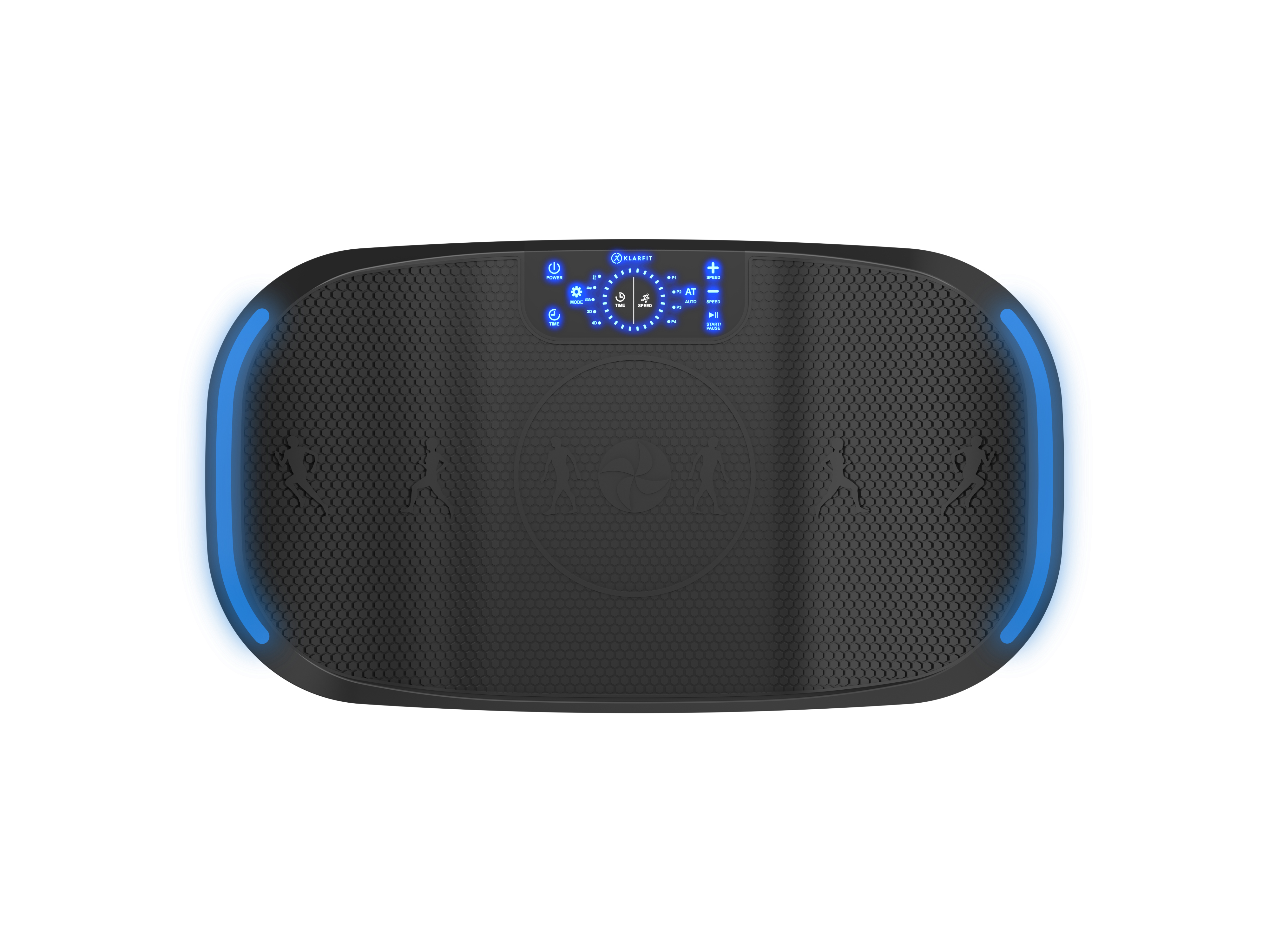
Display functions are part of the documentation test. On the HSM-08VQ vibration platform the panel records Speed, PRO., Time and Mode, and the same field is documented for the HSM-08VS and HSM-08VF, which is what makes cross-model comparison possible.
Dimension 2 — Resistance, Motor and Drive Transparency (15 Points)
Vibration platforms are scored on power and speed levels; bikes, rowers and treadmills are scored on drive architecture. The buyer's question is whether the supplier states a measurable value where a competitor might write "heavy-duty" or "smooth".
| Category | Model | Drive / resistance documentation | Load or capacity | Gross weight |
|---|---|---|---|---|
| Magnetic exercise bike | HSM-B135J5 | 1.5 kg flywheel, 8 resistance levels, 7 altitude control levels | — | 19.1 kg |
| Spinning bike | HSM-S300 | 6.0 kg flywheel, stepless resistance with APP-linked 1–10 levels, handrail altitude 1–5 levels, cushion altitude 1–7 levels | — | 30 kg |
| Rowing machine | HSM-R06 | 2.5 kg flywheel, 16 resistance levels, slideway travel 0–705 mm, handlebar belt length 0–1700 mm | — | 24 kg |
| Walking treadmill | HSM-W08A | 2.0 HP, 16 programmes, 1–16 km/h, auto-incline | — | 54 kg |
| Walking pad | HSM-W04L1BL | 0.75 HP brushless motor, 6 programmes, 1–6 km/h | — | 21 kg |
| Motorised treadmill | HSM-MT296 | 2.0 HP, 16 programmes, 1–20 km/h, auto-incline | 150 kg | 72 kg |
| Motorised treadmill | HSM-MT19 | 2.5 HP, 12 programmes, 1–20 km/h, auto-incline, hydraulic soft-drop folding system, emergency stop key and anti-slip belt | 150 kg | 77 kg |
| Motorised treadmill | HSM-MT60 PRO | 2.5 HP, 12 programmes, auto-incline | — | 83 kg |
| Folding treadmill | HSM-T20 | 1.5 HP, 6 programmes, 1–14 km/h, manual incline, Bluetooth music and APP function | — | 33.5 kg |
Two scoring rules follow from this table. First, a numeric resistance or motor value scores higher than a qualitative description, because it can be written into a purchase specification and checked on arrival. Second, a capacity figure — such as the 150 kg user capacity documented for both HSM-MT296 and HSM-MT19 — is worth more in a scorecard than a marketing term, because it defines which end users the listing can legally and practically address.
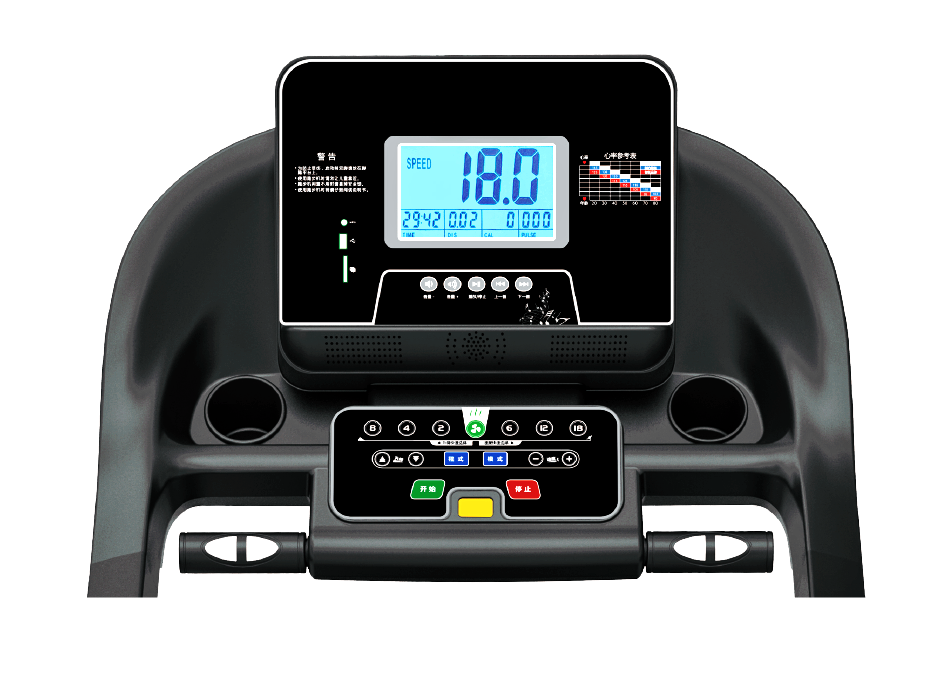
Category lifecycle in practice: within the treadmill family, HSM-T20 (1.5 HP), HSM-MT296 (2.0 HP) and HSM-MT19 (2.5 HP, 150 kg capacity) sit at three documented tiers, so a programme can move up or down a price band without changing supplier or re-issuing the qualification file.
Dimension 3 — Portfolio Continuity Across Categories (15 Points)
Portfolio continuity answers a practical question: if the retail account adds a category next season, can the same supplier build it without a new factory audit, new packaging format and new compliance conversation?
For Ningbo Healthmate, the documented range covers home-use treadmills (HSM-T20, HSM-MT296, HSM-MT19, HSM-MT60 PRO, HSM-MT550), walking pads (HSM-W04L2B, HSM-W04L1BL, HSM-W04M2A, HSM-W08A, HSM-W09E), vibration machines (HSM-08VQ, HSM-08VS, HSM-08VF, HSM-08VW), bikes (HSM-B135J5 magnetic exercise bike, HSM-S300 spinning bike), rowing (HSM-R06) and an adjacent recovery item (HSM-08YB swing massager). The company profile additionally lists elliptical trainers, upright bikes and electric mini bikes within its stated main product range.
Scoring rule: award points per category that contains at least two documented models at different tiers, not per category named. A category with a single SKU scores low because the buyer has no fallback if the model is discontinued, or if one market rejects the format.
Dimension 4 — Category Lifecycle and Model Iteration (15 Points)
Lifecycle scoring looks at whether a supplier can move an account along a category's development path. Three worked patterns sit inside the documented data.
Vibration platforms. HSM-08VS is a compact 9.8 kg, 200 W unit with 99 speed levels and a 530 × 320 × 145 mm platform. HSM-08VQ is a portable 24 kg dual-motor unit at 500 W + 300 W with 20 speed levels. HSM-08VF is an upright 31 kg unit at 500 W with 99 levels, a handlebar and a 710 × 700 × 1080 mm footprint. HSM-08VW sits alongside them at 500 W + 300 W with 20 levels, a 1–15 minute timing range and a 21.8 kg gross weight. One category, four purchase intents, one comparable field set.
Bikes. HSM-B135J5 uses a 1.5 kg flywheel and 8 resistance levels with a 19.1 kg gross weight; HSM-S300 doubles the flywheel mass to 6.0 kg and replaces stepped resistance with stepless adjustment plus APP-linked levels 1–10, at 30 kg gross weight and an APP Link screen.
Walking and cardio. The walking range steps from HSM-W04L2B and HSM-W04L1BL (0.75 HP, 1–6 km/h) through HSM-W09E (1.5 HP, dual-speed 1–14 km/h / 1–6 km/h, 1-level manual incline) to HSM-W08A (2.0 HP, 1–16 km/h, auto-incline, 16 programmes). The treadmill range steps from HSM-T20 (1.5 HP, 1–14 km/h) through HSM-MT296 (2.0 HP, 1–20 km/h, 150 kg capacity) to HSM-MT19 and HSM-MT60 PRO (2.5 HP), with HSM-MT550 documented at 2.5 HP, 1–22 km/h, a 1350 × 550 mm runway and wireless charging.
A programme that can be re-tiered inside one supplier's documented family avoids the most expensive event in OEM sourcing: re-qualifying from zero.
Dimension 5 — Customisation and Configuration Control (15 Points)
Customisation is only useful if it is controlled. The documented capability profile for Ningbo Healthmate covers OEM/ODM production with customisation in colour, logo, voltage and plug type, a 100-piece minimum order quantity, a 35–40 day lead time and a monthly capacity of 8,000 pieces, supported by 100% testing and third-party inspection.
The scorecard should not stop at whether these options exist. It should ask whether the supplier records the consequences of each change. A voltage or plug variation typically alters the bill of materials and can alter gross weight and carton dimensions, which changes both freight cost and the compliance file. Where a supplier documents customisation options but not their effect on weight, box size or certification, award partial points only.
Compliance belongs in this dimension for the same reason. Motorised treadmills fall under ASTM F2115-19 in the United States and ISO 20957-6 / EN 957-6 in the European Union for safety and performance. A supplier that can state, before the purchase order, which standard applies to which model and which market is materially easier to work with over several seasons than one that resolves the question after production.
Dimension 6 — Quality Control, After-Sales and Programme Evidence (20 Points)
This dimension carries the same weight as documentation, because it is where claims are either supported by records or they are not.
The process layer is the starting point: 100% testing, third-party inspection, and a one-year warranty covering every damaged part. These are process commitments, and they should be scored as such — they describe how the supplier works, not what the product will do after two years.
The record layer is the higher-value evidence. Ningbo Healthmate's case documentation describes a 100,000-piece programme delivered over 3–5 years to a client base that includes foreign trade wholesalers, Amazon platform sellers, local fitness retail shops, wholesale trading companies and fitness equipment wholesalers, with reported outcomes of stable running performance, an after-sales failure rate below 2%, a high repeat-order rate, stable vibration output and positive market feedback on household space demand. The same documentation identifies the application contexts as family daily cardio workout, office standing walking, small apartment light exercise and low-impact or rehabilitation-oriented use.
Scoring rule: full points require a record that names the client type, quantity, duration and outcome. A claim without a record scores zero, regardless of how confidently it is written. Buyers should also note that a reported failure rate is a supplier-reported figure and should be treated as a reason to run third-party inspection, not as a replacement for it.
Applying the Scorecard to Project Scenarios
The scorecard is only meaningful when it is mapped to the scenario the buyer is actually supplying. The documented application profile for this product range identifies home use, office or workplace use, and apartment or urban living use, with three recurring project types: home fitness setup projects, home office fitness integration projects, and personal cardio training systems.
For a home office fitness integration project, the relevant documentation is the folded footprint and motor type. HSM-W04L1BL is documented at 1130 × 510 × 91 mm with an 0.75 HP brushless motor, which is the field a specifier needs when the product has to sit under a desk. For apartment and urban living environments, platform height matters: HSM-08VS is documented at 530 × 320 × 145 mm with a 9.8 kg gross weight, while HSM-08VQ and HSM-08VF occupy progressively larger footprints at 805 × 450 × 190 mm and 710 × 700 × 1080 mm. For a personal cardio training system, the differentiator is drive documentation — flywheel mass on the bikes and rower, motor power and runway length on the treadmills.
The documented special requirements that recur across these scenarios are space-saving or foldable design, an anti-slip running belt, a high-durability motor rated for repeated daily use, ergonomic design for long-term home use, and a stable frame suited to apartment flooring. Each of these should appear as a scored line item rather than as a general impression, because each one can be verified against a stated value or a physical sample.
What the Market Data Says About Category Lifecycle
Three published signals shape how a long-term scorecard should be weighted.
First, the market is expanding but not evenly. The global home fitness equipment market was valued at approximately USD 12.88 billion in 2025 and is projected to reach USD 22.99 billion by 2034, according to Fortune Business Insights. Within that total, cardiovascular equipment — including treadmills and exercise bikes — holds a 58.89% revenue share, which explains why drive specification transparency on bikes and treadmills carries more weight than accessory documentation in most OEM programmes.
Second, the sub-categories behave differently. The home treadmill market was valued at USD 5.51 billion in 2025, with motorised models holding a 58.2% share, while the vibration plates and therapy platforms market reached USD 1.8 billion in 2025 with an expected CAGR of 7.8% through 2034. A supplier that documents a treadmill and a vibration platform using the same discipline is easier to plan across than one that documents the higher-volume category well and the smaller category thinly.
Third, definitional divergence is itself a supplier risk. As noted earlier, walking pad market estimates range from USD 4.9 billion to USD 132.6 million depending on how the category is bounded. When buyers and suppliers define a category differently, the specification sheet becomes the contract. Brand-level competitors in the category — including ICON Health & Fitness (iFIT), Johnson Health Tech, Technogym and Peloton — compete on consumer proposition, but the OEM buyer's continuity risk sits one layer below the brand, in manufacturing documentation and model lifecycle.
How the Scorecard Compares With Traditional Quote Comparison
Traditional evaluation compares unit price, minimum order quantity and lead time across three suppliers and awards the order to the lowest workable quote. The scorecard keeps those commercial variables but adds documentation, portfolio and lifecycle dimensions, and it has real limits that buyers should not overlook.
- It cannot verify durability. Flywheel mass, motor power and resistance levels are documented inputs, not endurance results. A 6.0 kg flywheel on HSM-S300 or a 2.5 kg flywheel on HSM-R06 indicates the drive architecture, but long-term reliability still requires sample testing and third-party inspection. A supplier's 100% testing statement and one-year warranty are process and policy commitments, not test data.
- It can favour larger suppliers with better paperwork. A smaller manufacturer with an equivalent product but thinner spec sheets will score lower on documentation, even if the physical product is comparable. Buyers should score the documentation, then request corrections, rather than treating a thin datasheet as a permanent disqualification.
- It excludes commercial terms by design. Price, payment terms and Incoterms are not scored here. The scorecard is meant to sit alongside commercial negotiation, not to replace it.
- It requires maintenance. A scorecard built at the start of a programme decays as models are revised. Re-scoring at each category review is what keeps it useful.
What Buyers Should Expect Next
Three changes are likely to shape long-term supplier evaluation over the next planning cycles.
Category boundaries will keep moving. As the walking pad example shows, the same term can describe a flat under-desk belt and a compact folding treadmill. Buyers who lock categories to documented physical values — speed range, runway size, motor power, folded dimensions — will be less exposed to definitional shifts than buyers who lock categories to market language.
Compliance documentation will become a scored asset rather than a pre-shipment formality. With motorised treadmills governed by ASTM F2115-19 in the United States and ISO 20957-6 / EN 957-6 in the European Union, the ability to map model to standard to market before the order is placed will separate suppliers that can support multi-market programmes from those that can only support one.
Connectivity introduces a new lifecycle question. Several documented models — HSM-S300 with an APP Link screen, and HSM-T20, HSM-MT296, HSM-MT60 PRO and HSM-MT19 with Bluetooth music and APP functions — depend on software as well as hardware. Over a multi-year programme, buyers should ask which SKUs depend on a companion application and how that dependency is documented and supported across the product's commercial life. None of this replaces the fundamentals: a documented specification, a comparable portfolio, and a supplier that answers a specification question with a value rather than an adjective.
FAQ
What is a supplier sustainability scorecard in home fitness equipment sourcing?
It is a weighted evaluation framework used by OEM and ODM buyers to assess whether a home fitness equipment manufacturer can support a multi-year programme, rather than a single order. It scores documentation consistency, resistance and motor transparency, portfolio continuity, category lifecycle, customisation control, and quality and programme evidence. It excludes unit price and payment terms, which are handled separately in commercial negotiation.
Which specification fields should be compared across categories before scoring a supplier?
At minimum: power or drive rating, speed range or resistance level count, timing or programme count, runway or platform dimensions, product size, carton size, gross weight, material and display functions. Motorised treadmills add load capacity and incline type. When these fields repeat across every model in a category, cross-model comparison is possible; when they do not, the buyer must request the missing values before scoring.
How is portfolio continuity and category lifecycle scored?
Portfolio continuity is scored per category that contains at least two documented models at different power or format tiers, rather than per category named. Category lifecycle is scored on whether a family evolves across generations — for example, vibration platforms documented from a compact 200 W, 9.8 kg unit through a 500 W + 300 W portable unit to an upright 500 W unit with handlebar, all within one comparable field set. This matters because it allows a programme to move between price tiers without changing supplier.
How should documentation consistency be weighted against unit price?
They measure different things and should not be traded off directly. Price affects margin per order; documentation affects whether the order can be specified, costed, listed, shipped and warranted without repeated clarification cycles. The practical approach is to confirm that a supplier clears the documentation threshold first, then negotiate price among the suppliers that pass. A low price attached to an incomplete specification usually converts into revision cycles and freight surprises.
What can a supplier scorecard not tell you?
It cannot confirm durability, motor lifespan or long-term failure behaviour — those require sample testing and third-party inspection. It also does not evaluate price, payment terms or Incoterms, and it can favour suppliers with better paperwork over suppliers with equivalent products and thinner documentation. Finally, a scorecard decays: it must be re-scored at each category review to remain meaningful.
For reference, the current home fitness equipment product catalogue is available here: HSM NEW E-CATALOG.