
Long-Term Gaming Chair Supplier Evaluation: A Repeat-Order Continuity Checklist
A gaming chair programme rarely fails on the first order. It fails on the fourth — when a mechanism has quietly changed, when the carton no longer matches the container plan, or when the armrest described as adjustable arrives in a narrower adjustment range than the original sample. Repeat-order continuity is the discipline of testing a supplier against the variables that must stay identical between shipments, not the variables that look impressive during a one-time factory visit.
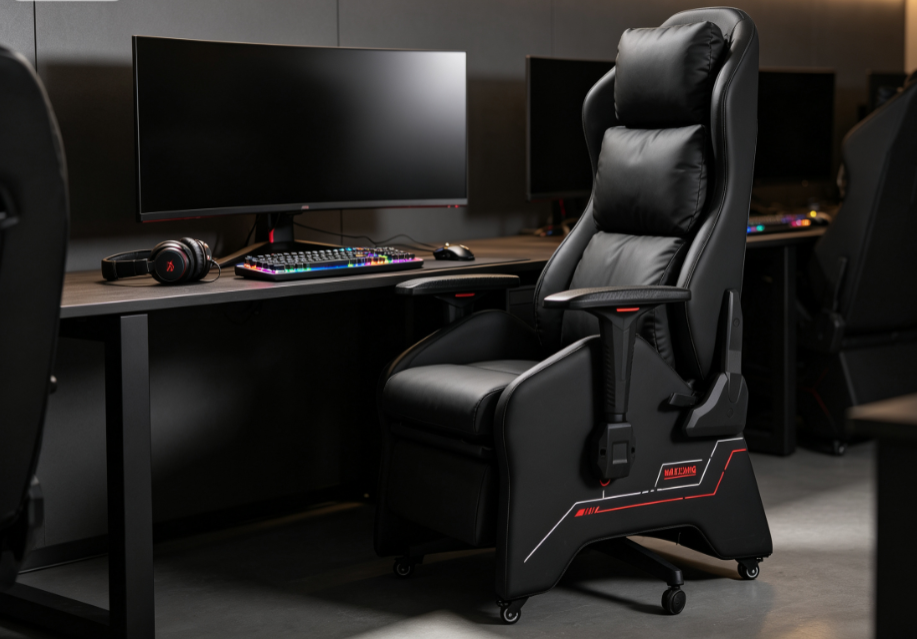
Why Continuity, Not Capability, Is the Real Test of a Long-Term Supplier
Most supplier evaluations measure capability once. They ask what a factory can produce, photograph the line, check a sample, and place an order. That approach answers a single question: can this supplier make the product? It does not answer the question that governs distributor economics — will the same product, packed the same way, arrive again in ninety days, and again six months after that?
The commercial gap between those two questions is where distributor margin erodes. Gaming chairs are assemblies of many small, substitutable parts: gas lifts, mechanisms, armrests, casters, foam grades, fabric and PU covers. Each part can be swapped for a visually similar alternative without changing the chair's outline. In a one-time purchase that risk is invisible. In a repeat-order programme it surfaces as a customer complaint, a return, or a spec sheet that no longer matches the website listing.
Repeat-order continuity also carries market weight. The global gaming chair market was estimated at USD 1.37 billion in 2024, with projections near USD 2.05 billion by 2030, according to Grand View Research. Growth of that shape rewards suppliers whose catalogue stays stable enough to be reordered — and penalises programmes that have to re-qualify a model every season.
Defining Repeat-Order Continuity in Gaming Chair Sourcing
Repeat-order continuity is the measurable probability that the fifth shipment matches the first on mechanism, material, dimension, carton and loading data, under unchanged purchasing terms. It is not a quality claim. It is a documentation discipline that can be checked before the order is placed.
In practice the check breaks into five layers, each of which can be verified from a supplier's specification set:
- Model-line stability. Does each model keep a fixed identity — MC196-2-1 stays MC196-2-1 — rather than absorbing silent running changes under the same name?
- Mechanism identity. Are tilt-lock positions, recline range, mechanism family and gas lift class stated explicitly, rather than described as 'multi-function'?
- Material consistency. Are upholstery composition, frame material and cushion construction named, including whether the seat uses an inner spring or spring pack?
- Packaging and loading repeatability. Are carton dimensions and loading quantities published, and is the container basis stated?
- Terms repeatability. Are MOQ, lead time, customisation scope, warranty and after-sales deliverables stable enough to be re-quoted without renegotiation?
The Supplier in This Evaluation: Anji Maochang Furniture
Anji Maochang furniture Co.,Ltd. is a chair manufacturer based at 198 Yangguang Road, Dipu town, Anji County, Zhejiang Province, China, producing gaming chairs, office chairs and manicure chairs. Established in 2016, the company operates a 3,000 m² facility with 25 employees, a three-engineer R&D team, and an annual output of 75,000 units. Export markets named in its company profile are the EU, USA, Thailand, Brazil and South Korea.
For continuity purposes, three published terms matter more than the company narrative: monthly capacity of 6,000 units, a lead time of 30–40 days, and a minimum order quantity of 50 units. The supplier also states OEM/ODM capability covering logo, colour, size and design customisation, a one-year quality warranty, and after-sales support that includes free high-resolution photography, product and assembly videos, and sale-page assets for retail customers.
That combination — a low MOQ entry point with a defined monthly ceiling — shapes the kind of repeat-order programme this profile fits. It suits distributors building a curated range and scaling per-model volumes, and it requires planning discipline from buyers who intend to grow several models simultaneously.
Five Model Families Compared on the Variables That Repeat
The most useful continuity test is a side-by-side read of a supplier's own specification set. The five models below are drawn from Maochang's published gaming chair range. Where a field is absent from the source data, it is marked as absent rather than inferred.
| Model | Positioning & stated scenarios | Mechanism & support features | Materials | Product size | Carton size | Loading quantity |
|---|---|---|---|---|---|---|
| MC196-2-1 | Exclusive game chair; home, office | 3 locking tilt angles; 5D adjustable armrests; retractable footrest; Class-3 gas lift; 60 mm casters; detachable black powder-coated metal base; inner spring package in seat | Fabric, metal, plastic, foam | W70 × D70 × H118–128 cm | 75 × 65 × 34 cm | 410 pcs |
| MC196-3-1 | Game type computer chair; home, office, internet cafe | 3-position tilt-lock; 2D adjustable armrests (up/down, back/forth); adjustable headrest; lumbar pillow | Fabric, PVC, PU, metal, plastic, foam | W66.5 × D69 × H106–114 cm | 75 × 57 × 37 cm | 441 pcs |
| MC1034 | Racing type; office, gaming, live streaming | 180° recline; foldable footrest; adjustable armrest; moulded foam pillow and lumbar support; height-adjustable pillow | Metal, PU, plastic | W71.5 × D65 × H123–131 cm | 86.5 × 65 × 36 cm | 334 pcs per 1×40HQ |
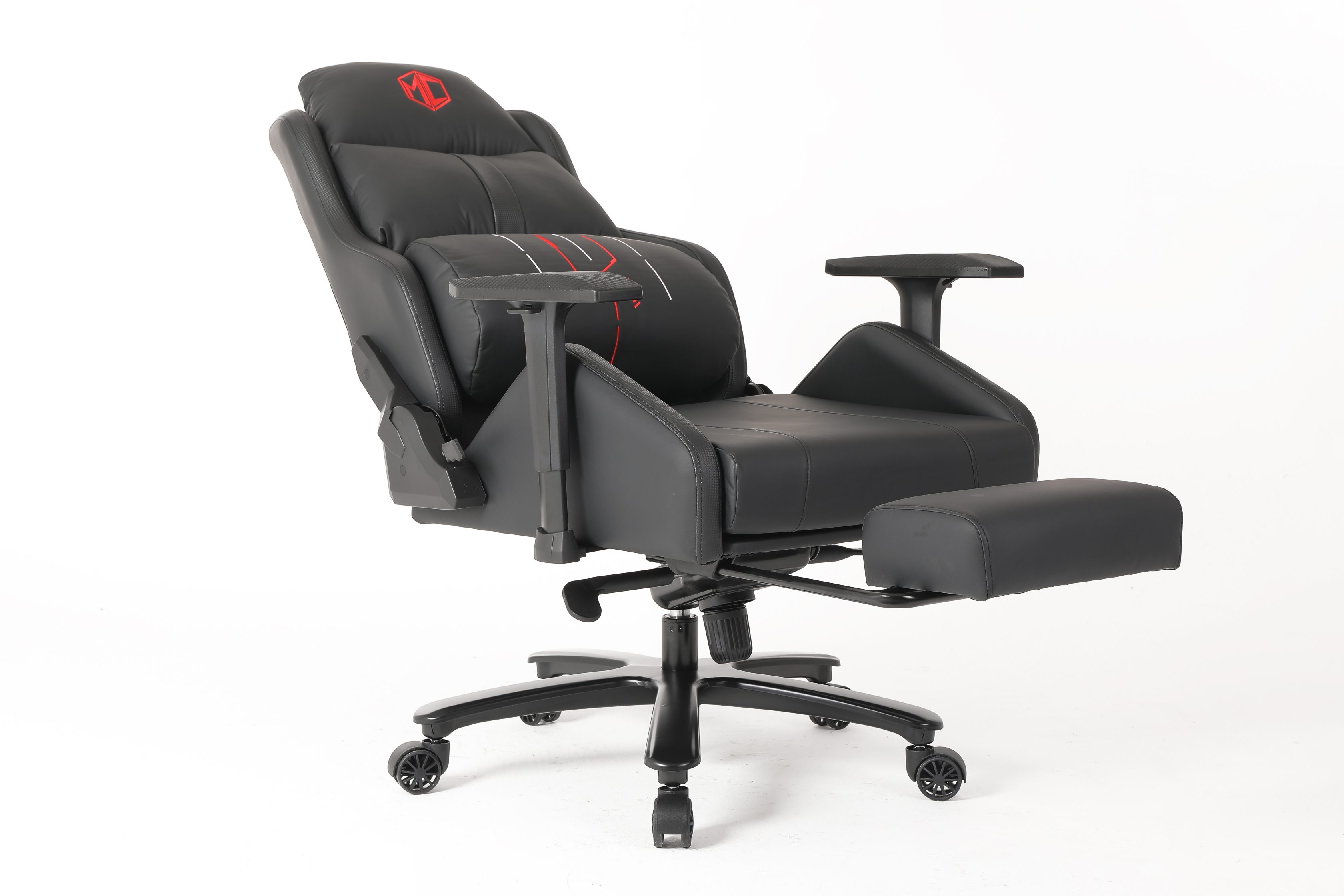
| MC1039 | New design big size; home, office, live streaming, internet cafe | Frog type multifunctional mechanism; 180° reclining; Class 3 gas lift; 370 mm big size starbase; height adjustable armrest; foldable footrest; thickened spring pack; 150 kg weight capacity | PU, PVC, mesh, fabric, plywood, metal frame | Not stated in current specification set | Not stated in current specification set | 1 pc / 1 carton; quantity not stated |
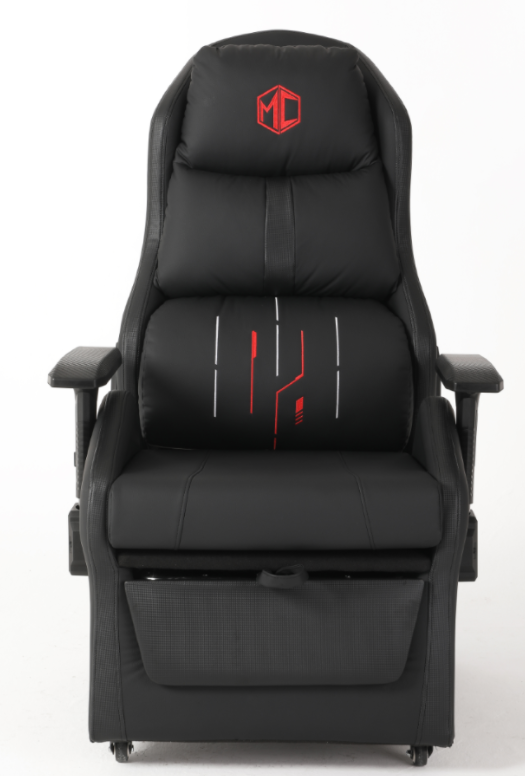
| MC1040 | Gaming sofa; home, office, live streaming | 180° reclining; height adjustable armrest; silent lockable casters; foldable footrest; coiled spring inside seat cushion; 150 kg weight capacity; unit weight 27.4 kg | PU + PVC, metal frame | W80 × D72 × H119 cm | 82 × 60 × 60 cm | 227 pcs |
Mechanisms and Materials That Decide Repeat-Order Risk
3-position tilt-lock versus continuous recline
A 3-position tilt-lock, specified on MC196-2-1 and MC196-3-1, gives the user three discrete backrest angles that can be locked. That is a different product from a continuous 180° recliner such as MC1034, MC1039 or MC1040. The distinction matters for continuity because the two are often conflated in marketing copy: if a retail listing promises 'full recline' and the reordered unit ships with a three-position lock, the return rate is a supplier problem that originates in the purchase order. Pin the mechanism family in the PO, not the catalogue slogan.
Frog type multifunctional mechanism
MC1039 uses a frog type multifunctional mechanism — a mechanism family that is a named, identifiable component rather than a generic tilt assembly. Named components are an advantage in repeat orders because they can be inspected against a reference, and because substitutions are visible. Buyers should record the mechanism family alongside tilt-lock positions and recline range in the acceptance document.
Gas lift class and base geometry
MC196-2-1 specifies a Class-3 gas lift; MC1039 specifies a Class 3 gas lift paired with a 370 mm big size starbase. Gas lift class and base diameter are structural, not cosmetic: a big-size chair built on a small base behaves differently under load. For continuity, the class and the base diameter belong on the purchase order as fixed values, because these are components a factory can change without changing the chair's appearance.
Armrest degrees — 2D, 5D, and the ambiguous middle
Armrest terminology is the most common source of repeat-order drift in this category. MC196-3-1 states 2D adjustable armrests moving up/down and back/forth. MC196-2-1 states 5D adjustable armrests. MC1034 and MC1039 state height adjustable armrests without a degree label. Three different levels of adjustability described in three different vocabularies is precisely the gap a repeat-order checklist exists to close: define the movement axes in the specification, not the marketing label.
Foam, spring packs and long-hour use
Seat construction separates models more than upholstery does. MC196-2-1 uses an inner spring package; MC1039 uses a thickened spring pack with coiled springs and is rated to 150 kg; MC1040 uses a coiled spring seat cushion and is also rated to 150 kg. Industry material guidance places high-density mould foam for premium gaming chairs in the 50–65 kg/m³ range, which is a useful reference point when requesting foam density figures from any supplier. Density is worth asking about directly, because it is the variable most closely linked to seat sagging after months of continuous use.
Carton Size and Loading Quantity as Continuity Math
Container planning is where repeat orders fail most expensively, because the error compounds across every shipment. The five models illustrate the problem clearly. MC196-2-1 ships in a 75 × 65 × 34 cm carton at a stated 410 pcs. MC196-3-1 ships in a 75 × 57 × 37 cm carton at 441 pcs. MC1034 uses an 86.5 × 65 × 36 cm carton at 334 pcs per 40HQ. MC1040, a sofa rather than a chair, uses an 82 × 60 × 60 cm carton at 227 pcs.
Two practical consequences follow. First, carton footprints differ enough that a mixed container plan built on one model will not transfer cleanly to another — a carton that is 8 cm narrower changes how units stack and how much dead space a container carries. Second, loading figures should always be treated as container-basis-dependent until confirmed, since only MC1034 states its basis explicitly.
- Confirm the container basis (40HQ, 40GP, 20GP) for every loading figure used in pricing.
- Ask for carton dimensions in the same unit and order of axes across all models, to avoid width/depth transposition.
- Keep one carton of the reference order as a physical standard against which reorders can be checked.
- Record gross weight per carton, not only product weight, if the figure is available — MC1040 lists a 27.4 kg unit weight, which is not the shipping weight.
Where Repeat Orders Actually Land: Scenario Fit
Internet cafe fit-outs
Internet cafe projects are the clearest repeat-order scenario in this product range, and the most demanding. In China, the application is characterised by indoor, long-hour continuous use and 24/7 seating mode. Fit-outs also impose installation dependencies: each seating position requires supporting equipment such as a gaming desk and a computer, and adequate space for each seating unit. That space requirement is a specification input, not an afterthought — a big-size chair or a gaming sofa changes the seat pitch of an entire room.
MC1040, the gaming sofa, is the model associated with the internet cafe fit-out scenario in Maochang's application data, supported by 180° recline, height adjustable armrests, silent lockable casters and a 150 kg capacity. For a multi-location operator, the continuity question is not whether the first room matched the render, but whether room twelve matches room one.
Office space furnishing and wholesale programmes
The office channel behaves differently from the gaming channel, and the difference is instructive for continuity. A Ukrainian wholesale customer placed 460 units for office space furnishing under a cooperation that has run for two years, with the result described as well received by local office clients. That order drew on a mixed model set including MC196-3-1, MC196-2-1, MC1025, MC196 and MC196-1.
The structural point is that mixed-model programmes multiply continuity risk: five models means five mechanism specifications, five carton footprints and five sets of loading figures that must all stay stable. A supplier that manages a mixed range well is doing something a single-model supplier never has to prove.
Home, dormitory and streaming use
Home PC, dormitory and live-streaming buyers place smaller, more frequent orders and are more sensitive to visual consistency between batches than to component depth. For those channels, upholstery colour matching and fabric/PU composition are the continuity variables that generate complaints, while mechanism differences are rarely noticed until they fail. Both channels are served across the range, with MC196-3-1 and MC1034 positioned for home, office and live streaming use.
Purchasing Terms and Acceptance Criteria for a Repeat Order
The final layer of the checklist converts specification into contract. The table below maps the terms a repeat order should fix against the evidence this supplier publishes.
| Term | What to lock in writing | Published position |
|---|---|---|
| Minimum order quantity | Per model, and whether mixed models can combine to reach the threshold | 50 units |
| Lead time | Calendar days from deposit and artwork approval, not from enquiry | 30–40 days |
| Monthly capacity | Whether capacity is reserved per model or shared across the range | 6,000 units |
| Customisation | Which of logo, colour, size and design are in scope; approval steps | OEM/ODM: logo / colour / size / design |
| Warranty | Duration, covered components, claim process | 1 year quality warranty |
| After-sales assets | Photography, product video, assembly video, retail sale pages | Provided free of charge |
| Mechanism | Mechanism family, tilt-lock positions, recline range, gas lift class | Stated per model — see comparison table |
| Packaging | Carton dimensions, units per carton, container basis for loading figures | Stated per model; container basis explicit on MC1034 only |
A workable acceptance checklist for a repeat gaming chair order typically covers six verifiable points: mechanism family and tilt-lock positions against the reference sample; gas lift class and base diameter; upholstery composition and colour against a retained swatch; seat construction and foam density; carton dimensions and units per carton; and a retained reference unit from the first accepted shipment. Each point is checkable without laboratory equipment, which is what makes the list usable on every reorder rather than only on the first.
The supplier's own quality process offers a partial template. Maochang describes incoming inspection of gas lift, mechanism, leather colour and plywood thickness, followed by a pre-production assembly of a single chair in plywood to verify total depth and evenness. That is component-and-geometry checking rather than full-batch testing, and buyers should treat it as a floor rather than a ceiling when writing their own criteria.
What This Profile Does Not Cover
An honest continuity assessment has to state its boundaries, and several are visible in the published data.
- MC1039 lacks published dimensional and loading data. Product size, carton size and loading quantity are absent from its current specification set. Container planning for this model cannot proceed on catalogue figures alone; the values must be requested and confirmed before quotation.
- Capacity is single-site and finite. A 3,000 m² facility with 25 employees and a stated 6,000-unit monthly capacity sets a real ceiling. A distributor planning multi-model growth, or a project requiring parallel production across several SKUs at once, needs a documented capacity allocation plan rather than an assumption of elasticity.
- Product scope is chairs. The range covers gaming chairs, office chairs and manicure chairs. Gaming desks, monitors and other fit-out equipment required by internet cafe installations fall outside it and must be sourced separately.
- Standards are not the same as certificates. ANSI/BIFMA X5.1 is the primary safety and durability standard for general-purpose office and gaming chairs in North America; EN 1335 is the European office work chair standard covering dimensions, safety and testing; BS 5852 is the UK fire safety standard for upholstered furniture often required for chairs sold in the UK. The published supplier data does not state which of these the factory holds current test evidence for. Buyers in regulated markets should request current reports rather than assume compliance from a specification sheet.
- Armrest vocabulary is inconsistent across the range. 2D, 5D and unlabelled 'adjustable' appear in the same catalogue. This is manageable, but only if each purchase order defines movement axes explicitly.
Market Signals That Support a Continuity Approach
Several structural features of the category make repeat-order discipline more valuable than it was a few years ago.
Demand is concentrated by product type: PC gaming chairs held a 52.6% product segment share in 2024, according to Grand View Research, which means most repeat orders will be chair-shaped rather than sofa-shaped. Material choice is similarly concentrated — PU leather accounted for a 57.3% market share in 2024 per Mordor Intelligence — so upholstery continuity across batches is a mainstream concern, not a niche one.
Demand is also concentrated geographically. North America held a 36.4% revenue share of the gaming chair market in 2024, according to Mordor Intelligence, a market where ANSI/BIFMA X5.1 documentation is the expected baseline. On the supply side, Anji County in Zhejiang is identified in trade data as the production cluster behind China's 30.8% share of global furniture exports (Statista / OEC). Suppliers inside that cluster inherit a dense component supply base, which supports continuity — and also makes component substitution easy, which is why documentation, not location, is the control.
Finally, the use case is broadening. Hybrid work-and-game chairs held a 29.8% market share in 2024 according to Expert Market Intelligence, a segment that pushes chairs into longer daily duty cycles than pure gaming use. Longer duty cycles shorten the interval between reorders and raise the cost of any continuity failure.
Future Outlook
The direction of travel in this category favours suppliers who publish rather than describe. As buyers in North America and Europe face stricter documentation expectations, and as hybrid use pushes chairs into office-grade duty cycles, the specification set becomes a commercial asset. Suppliers who can state a mechanism family, a gas lift class, a base diameter, a carton footprint and a container basis for every model will win repeat orders on reliability rather than price.
For distributors, the practical implication is to build the checklist once and apply it per model. A range built on five clearly specified models — a home/office recliner, a compact computer chair, a racing recliner, a big-size heavy-duty chair and a gaming sofa — covers most channels without forcing a re-qualification cycle every season. The remaining work is administrative: retaining reference units, retaining swatches, and refusing silent running changes.
FAQ
What is repeat-order continuity in gaming chair supply?
Repeat-order continuity is the probability that a later shipment matches an earlier one on mechanism, material, dimension, carton and loading data, under unchanged purchasing terms. It is assessed through documentation rather than a single factory visit, because the variables that break repeat orders — mechanism family, gas lift class, armrest adjustment axes, foam density, carton footprint — are all recordable before the order is placed.
Which models should a distributor compare first when building a repeat-order programme?
The five-model set of MC196-2-1, MC196-3-1, MC1034, MC1039 and MC1040 covers distinct positions: a home and office chair with 3 locking tilt angles and 5D armrests, a compact computer chair for home, office and internet cafe use, a racing recliner with 180° recline and foldable footrest, a big-size chair on a frog type multifunctional mechanism with a 370 mm starbase, and a gaming sofa for continuous-use environments. Comparing them on mechanism, material, dimension, carton size and loading quantity shows which positions can share packaging and which cannot.
How do tilt-lock positions, recline range and gas lift class affect repeat-order risk?
They define the product more than upholstery does, and they are the easiest components to substitute without changing a chair's appearance. A 3-position tilt-lock on MC196-2-1 or MC196-3-1 is a different mechanism from the 180° recline on MC1034, MC1039 and MC1040. MC196-2-1 and MC1039 specify a Class 3 gas lift, and MC1039 pairs it with a 370 mm big size starbase. Writing these values into the purchase order prevents a silent downgrade between shipments.
How should carton size and loading quantity be used in repeat-order planning?
Carton dimensions determine whether a mixed container plan transfers from one model to another, and loading quantities determine cost per unit. The five models differ materially: MC196-2-1 uses a 75 × 65 × 34 cm carton at 410 pcs, MC196-3-1 a 75 × 57 × 37 cm carton at 441 pcs, MC1034 an 86.5 × 65 × 36 cm carton at 334 pcs per 1×40HQ, and MC1040 an 82 × 60 × 60 cm carton at 227 pcs. Only MC1034 states its container basis explicitly, so other figures should be confirmed before use.
What should be written into acceptance criteria for a repeat gaming chair order?
Six points cover most risk: mechanism family and tilt-lock positions against a reference sample; gas lift class and base diameter; upholstery composition and colour against a retained swatch; seat construction and foam density, with 50–65 kg/m³ a common reference range for high-density mould foam in premium chairs; carton dimensions and units per carton; and a retained reference unit from the first accepted shipment. Maochang publishes a one-year quality warranty, a 30–40 day lead time, a 50-unit MOQ and 6,000-unit monthly capacity, all of which can be fixed as contract terms.
Where are the boundaries of this supplier profile for long-term programmes?
Three boundaries are visible in the published data. MC1039 does not list product size, carton size or loading quantity, so container planning for that model requires confirmed figures. Capacity is single-site at 3,000 m² with 25 employees and 6,000 units per month, which sets a real ceiling for multi-model growth. And the product scope is gaming chairs, office chairs and manicure chairs, so supporting equipment required by internet cafe installations — gaming desks and computers — must be sourced elsewhere.
The 2026 product catalogue from Anji Maochang furniture Co.,Ltd. is available for download: 2026 catalogue (PDF).
¿Tiene preguntas o necesita más detalles?
Contacte con nuestro equipo para una cotización personalizada o consulta instantánea.
Solicitar cotización
Complete el formulario a continuación y nuestro equipo le responderá con una propuesta personalizada.
Chat directo de WhatsApp
¿Prefiere chatear en tiempo real? Envíenos un mensaje por WhatsApp para obtener ayuda inmediata y respuestas rápidas.
- Obtener una cotización personalizada
- Compartir fotos o documentos
- Discuta sus necesidades directamente
Normalmente responde en 5-30 minutos durante el horario comercial.