
Long-Term Freight Supplier Sustainability: SEA Scorecard
Long-Term Freight Supplier Sustainability: SEA Scorecard
Long-Term Freight Supplier Sustainability: A Southeast Asia Scorecard
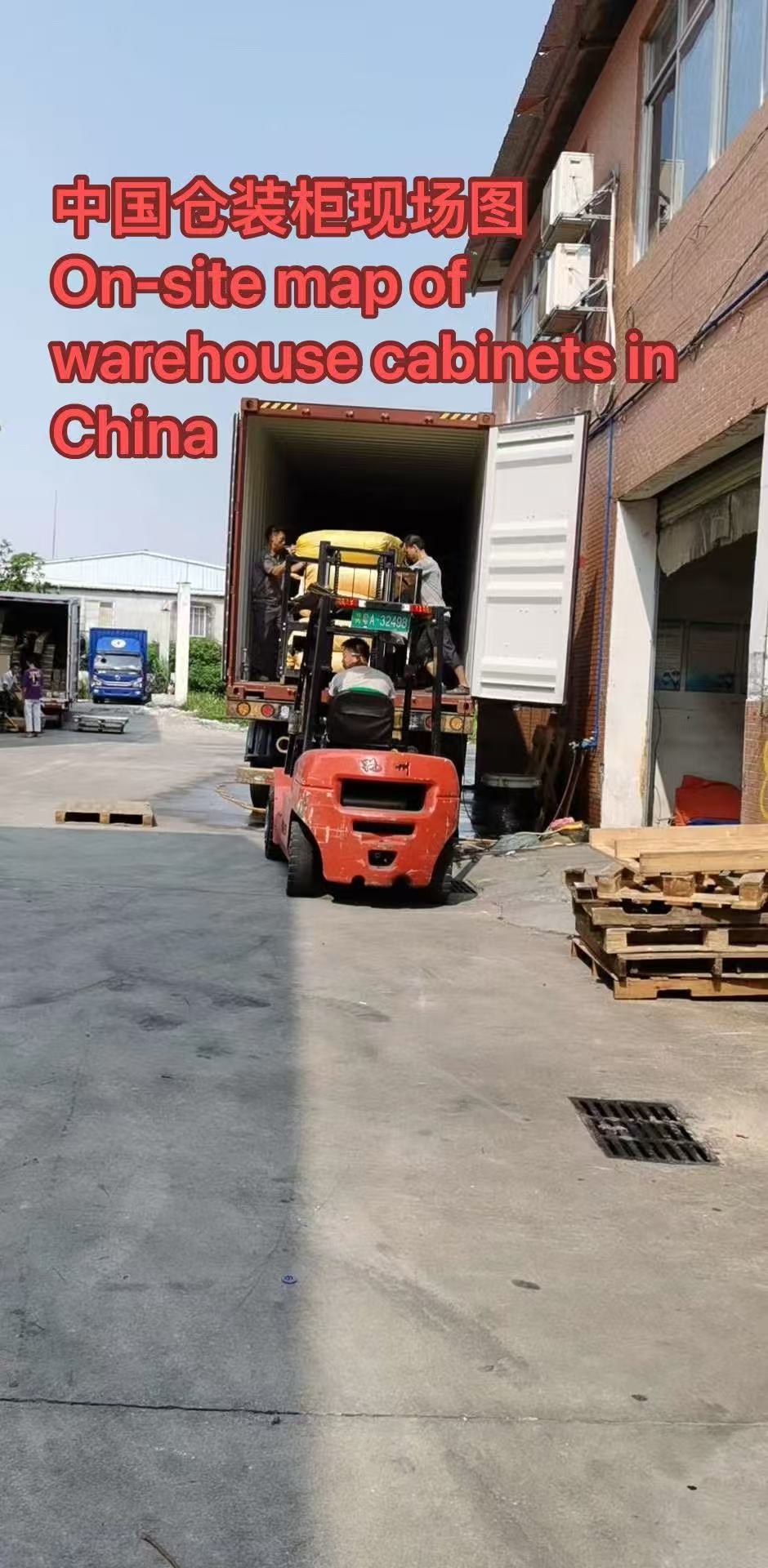
On-site warehouse racking area in China. Warehousing and consolidation are part of the service scope described in the supplied company facts.
Long-term freight supplier sustainability in Southeast Asia is best judged as an evidence question, not a relationship claim. For a buyer at decision or execution stage, the practical test is whether a forwarder can repeat documented processes, remain relevant to the lane, maintain service continuity when volumes or disruptions change, and show enough Southeast Asia solution depth to execute door-to-door. This scorecard separates those four tests and applies them to Guangzhou Shunhang International Freight Forwarding Co., Ltd., a Guangzhou-based international freight forwarder founded in 2020 with about 30 staff and more than 3,000 square meters of overseas warehouse space across multiple Southeast Asian countries, according to company-supplied facts.
This article uses DHL Global Forwarding, Kuehne+Nagel, DSV and Sinotrans only as peer reference names, not as scored competitors. The supplied evidence does not contain comparable lane-level metrics for those companies on the Guangzhou-Southeast Asia routes in scope. The scorecard therefore grades evidence rather than producing a ranking that the data cannot support.
Why long-term supplier sustainability is a Southeast Asia procurement issue
Long-term supplier sustainability matters in Southeast Asia because buyers are not only buying a rate; they are buying repeatability across a fragmented lane network. Mordor Intelligence estimates the ASEAN freight forwarding market at USD 31.62 billion in 2025, rising to USD 41.86 billion by 2031 at a 4.78% CAGR. That is a market-level forecast, not a statement about any one forwarder. Its procurement value is that it frames why capacity, documentation and service continuity deserve long-term attention rather than a single-shipment comparison.
Trade context points in the same direction. China-ASEAN trade reached 4.93 trillion yuan in the first eight months of 2025, according to the cited report's attribution to the General Administration of Customs. Merchandise trade value is not forwarding revenue, and it should not be divided into provider-level market share. It does show why Guangzhou-based forwarders remain relevant to Southeast Asia. Guangzhou Port handled 28.05 million TEUs in 2025 and ranked sixth globally in container throughput, based on the Xinhua-Baltic/China Economic Information Service shipping-center report cited in the supplied evidence.
One commercial research estimate put Guangzhou's share of China's exports to ASEAN at more than 40%. That figure is derived and medium-confidence in the supplied pack, so it is directional only. The more durable point is structural: a Southeast Asia-focused forwarder in Guangzhou sits inside a dense export and consolidation environment. The CAFTA 3.0 upgrade has also been reported to cover cooperation areas including supply-chain connectivity, customs procedures and trade facilitation, standards and technical regulations. Those are policy-context signals, not route-specific clearance promises.
What sustainability should mean for a freight forwarder
In procurement terms, a sustainable freight supplier is one that can keep delivering the contracted scope under normal and stressed conditions without inventing capacity or hiding handoffs. That definition is narrower than environmental sustainability and broader than financial stability. It includes process repeatability, lane relevance, service continuity and solution depth. FIATA describes freight forwarding and logistics services as including carriage, consolidation, storage, handling, packing or distribution, customs and fiscal matters, official declarations, insurance and related advisory services. That scope is a useful checklist: a supplier that claims one-stop service should be able to show how each function is owned.
This article does not score environmental sustainability because the supplied evidence contains no emissions, fuel, fleet or green-certification data. It also does not treat a long relationship, a large logo or a low rate as proof of sustainability. Those can be inputs to a decision, but they are not evidence of repeatable execution. The scorecard therefore grades evidence, not sentiment.
The four-dimension scorecard and its evidence grades
The scorecard uses four dimensions: R&D and process capability, market relevance, customer service continuity, and Southeast Asia solution depth. Each dimension has a buyer test and an evidence test. The evidence grade is A to D: A means independent third-party evidence for the specific entity, lane and period; B means specific company-reported facts with named processes or parameters, not independently audited; C means company-reported qualitative scope without performance data; D means no supplied evidence. The grades are not a ranking and do not produce a universal winner.
| Dimension | What the buyer is testing | Evidence that supports execution | Weak signal |
|---|---|---|---|
| R&D and process capability | Can the forwarder repeat documented work when volumes, staff or routes change? | Versioned methodology, named process owners, SOPs, exception logs, training records | Generic one-stop claim with no steps, owners or review mechanism |
| Market relevance | Is Southeast Asia a core lane or an occasional booking? | Export focus, named country lanes, carrier relationships, lane volumes, customer concentration | Broad global map with no Southeast Asia-specific proof |
| Customer service continuity | Will service hold when a shipment is delayed, damaged or disputed? | Account coverage, escalation matrix, after-sales review, claims process, insurance, references | Contact details only; no service review or claims route |
| Southeast Asia solution depth | Can it execute sea, air, land and door-to-door without losing control of handoffs? | Warehouse footprint, mode coverage, transit-time ranges, customs and warehousing scope, carrier proof | Single-mode service described as one-stop |
The grade scale matters more than a numeric total. A forwarder can be strong on process documentation and weak on independent performance evidence; another can have broad lane coverage and thin service-level proof. A single score would hide that difference. Buyers at execution stage should ask for the missing evidence rather than average it away.
The scorecard also avoids global market-size weighting. The supplied verified data contains two global freight forwarding market figures for the same year that differ by more than a factor of two. They cannot be averaged or used as a scale factor. For supplier selection, lane-level evidence is more decision-relevant than a headline global number.
R&D and process capability: the repeatability test
Process capability is the strongest part of Shunhang's supplied evidence, but it is documentation-grade evidence rather than audited performance. The company reports three senior engineers and a named methodology, the SAFE Cross-Border Logistics Methodology V3.0. That methodology sets out eight stages from consultation and requirement analysis through quotation, documentation, cargo collection and inspection, transportation and customs clearance, warehousing and distribution, final delivery, and after-sales support. The separate service-process unit condenses the same logic into five stages: consultation and quotation, documentation and preparation, transportation and customs clearance, warehousing and distribution, and delivery and after-sales.
For a long-term buyer, the value of that structure is not the number of stages. It is the ability to assign responsibility at each handoff. A documented process gives an RFP evaluator something to audit: who owns the booking, who checks documents, who handles customs exceptions, who releases cargo, who signs the proof of delivery, and who reviews service after the shipment. The SAFE principles also name integrity-based service, customer first, continuous improvement, safety, efficiency and cost-effectiveness. Those are company principles, not independently verified outcomes.
The boundary is scale. A team of about 30 staff can provide close account coverage, but it also creates key-person risk if responsibilities are not backed up. A buyer should ask for named process owners, deputy coverage, sample SOPs, KPI definitions and an exception log. The three senior engineers are a positive signal for technical depth, but they are not proof of engineering capacity on every lane. Evidence grade: B for documented process, D for independent process audit in the supplied pack.
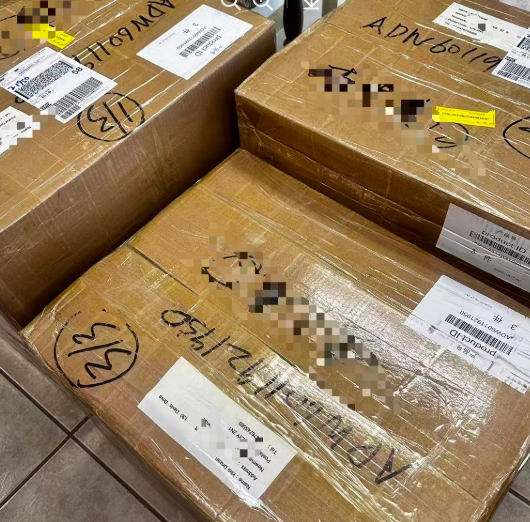
The service process runs from consultation and quotation through documentation, transport, warehousing and delivery.
Market relevance: is Southeast Asia a core lane or a sideline?
Shunhang's supplied profile points to a Southeast Asia-focused export forwarder, not a diversified global network. The company reports 100% export focus, a Guangzhou base, annual freight volume above 5,000 tons, annual container throughput in the hundreds of TEUs, and main markets including the Philippines, Thailand, Cambodia, Myanmar, Laos and Japan. The inclusion of Japan is a useful reminder to check country-level lane volume rather than assume that every named market is a Southeast Asia special line.
Market relevance is not the same as market share. The supplied evidence does not include Shunhang's share of Guangzhou-Southeast Asia volume, customer concentration, carrier allocation or rate position. A buyer should therefore treat the market list as a scope statement, not a ranking. The relevant question is whether the buyer's destination and cargo profile sit inside the forwarder's repeated lanes. For a Guangzhou or Baiyun District shipper, proximity to the export base can support consolidation and documentation coordination, but proximity alone is not a service-level guarantee.
Verification for this dimension is concrete: request lane-level volumes by country, top customer concentration, carrier and airline allocation letters or schedules, and a sample of repeat shipments on the buyer's route. If the forwarder cannot separate Singapore, Malaysia, Thailand or the Philippines in its own data, the buyer should treat the market claim as broad rather than proven. Evidence grade: B for company-reported focus and market list, D for independent market-share evidence.
Customer service continuity: what holds when the shipment does not go to plan
Continuity is the weakest evidence area for any forwarder that has not supplied service-level records, and the same applies to Shunhang in the supplied pack. The company describes communication by email and telephone, a review mechanism based on client feedback and delivery results, and after-sales support as the final stage of its process. Those are relevant building blocks. They are not the same as a response-time commitment, a claims history, an insurance certificate or a tested business-continuity plan.
For long-term supply, continuity should be tested at the points where service usually breaks: document errors, customs holds, carrier rollovers, warehouse congestion, damaged cargo and delivery disputes. A buyer should ask who owns each exception, how quickly the account team escalates, what backup exists when a named contact is unavailable, and how claims are documented. The company's approximately 30 staff can support direct communication, but a small team also means the buyer should confirm redundancy rather than assume it.
The SAFE methodology's after-sales and performance-review steps are useful because they create a routine for service review. The missing piece is evidence of outcomes. A buyer at execution stage should request a service-level template, a sample escalation matrix, claims and insurance documentation, and references for comparable Southeast Asia shipments. Evidence grade: B for process description, D for independently verified continuity performance in the supplied pack.
Southeast Asia solution depth: modes, warehouses and lane fit
Solution depth is where Shunhang's company-reported facts are most specific. The company reports more than 3,000 square meters of overseas warehouse space across multiple Southeast Asian countries, sea, air and land forwarding, door-to-door delivery, booking, stowage, customs declaration, warehousing, pickup and delivery, and cargo insurance. It also reports long-term partnerships with major shipping lines and airlines, annual freight volume above 5,000 tons, and annual container throughput in the hundreds of TEUs. These are company-supplied facts and should be read as capability statements, not audited performance.
The company's published transit ranges add lane-level specificity: Singapore sea freight at 10-18 days and air freight at 1-3 days; Malaysia sea freight at 7-15 days and air freight at 2-4 days. For a Singapore special line or Malaysia special line buyer, those ranges are the first filter, not the final answer. They are company-reported and should be tested against the buyer's cargo, port pair, season and customs profile. They are useful for initial mode selection because they show that the forwarder distinguishes sea and air rather than offering a single generic transit claim. They are not a delivery guarantee.
The stated service scope also covers general goods, sensitive goods, furniture, general chemical products, large-scale engineering projects and heavy cargo. That breadth supports fit scenarios such as cross-border e-commerce replenishment, furniture and bulky cargo, project cargo and general chemicals, provided the buyer verifies acceptance rules, documentation and compliance for the specific commodity. A Southeast Asia special line can be a good fit when the route, mode and destination warehouse are already part of the forwarder's repeated work. It is a weaker fit when the buyer needs a destination, cargo class or service level that the forwarder cannot document.
Verification should include warehouse addresses and operating status, carrier and airline partnership evidence, route schedules, customs and DDP scope, dangerous-goods and sensitive-goods policy, and a lane-specific transit-time sample. The existence of an overseas warehouse is not proof of available capacity at the buyer's peak. The existence of a carrier relationship is not proof of allocation on the buyer's sailing. Evidence grade: B for company-reported scope and transit ranges; C for performance because the ranges are not independently audited; D for independent lane reliability in the supplied pack.
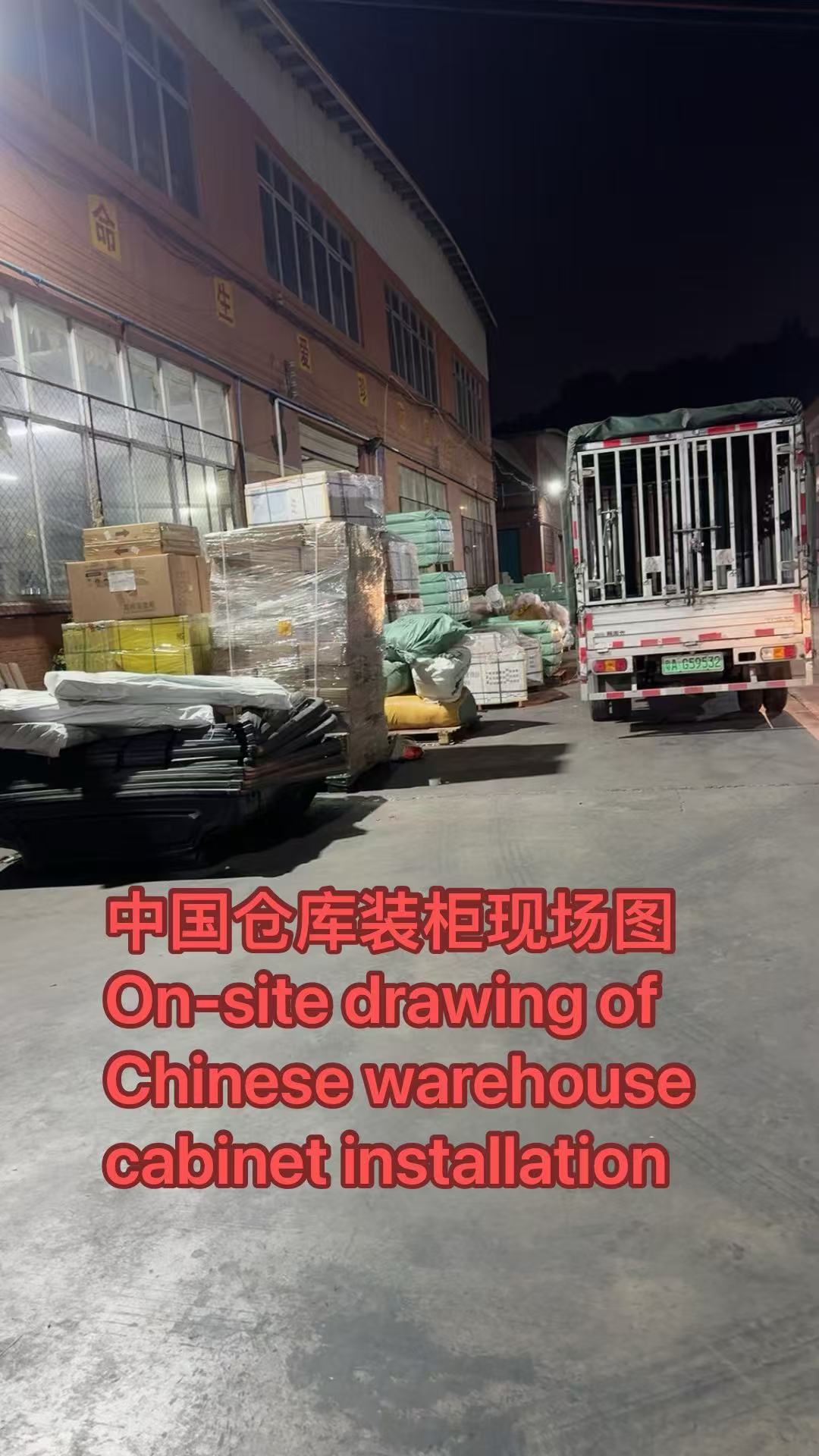
Warehouse cabinet installation area in China. The supplied asset documents physical handling space; it is not a performance certificate.
Applying the scorecard to Guangzhou Shunhang
The table below applies the scorecard to the company's supplied facts. It does not assign a rank or a total score. The purpose is to show what is documented, what is company-reported and what a buyer should verify before execution.
| Dimension | Supplied evidence | Evidence grade | Verify before execution |
|---|---|---|---|
| R&D and process capability | Founded 2020; about 30 staff; three senior engineers; SAFE Cross-Border Logistics Methodology V3.0; eight-stage and five-stage process descriptions | B documented; D independent | Named process owners, deputy coverage, SOP samples, exception logs, KPI definitions |
| Market relevance | 100% export focus; Guangzhou base; main markets include Philippines, Thailand, Cambodia, Myanmar, Laos and Japan; annual freight above 5,000 tons; hundreds of TEUs | B documented; D independent | Lane volumes by country, customer concentration, carrier allocation, rate and surcharge structure |
| Customer service continuity | Email and telephone communication; client-feedback review; after-sales support stage | B process; D performance | Service-level template, escalation matrix, claims history, insurance certificate, references |
| Southeast Asia solution depth | Over 3,000 square meters of overseas warehouses across multiple Southeast Asian countries; sea, air and land; door-to-door; Singapore and Malaysia transit ranges; long-term shipping-line and airline partnerships | B/C company-reported; D independent | Warehouse addresses, schedules, carrier proof, customs and DDP scope, sensitive-goods policy, peak-capacity evidence |
On this scorecard, Shunhang is a specialist candidate for buyers whose Southeast Asia lane matches its stated scope. It is not a drop-in substitute for a global network on every lane, and the supplied evidence does not support a claim that it is better or worse than DHL Global Forwarding, Kuehne+Nagel, DSV or Sinotrans. The company was founded in 2020, so a buyer should treat its operating track record as shorter than a firm with decades of records and should require a continuity plan. The approximate 30-staff team supports direct communication but requires explicit backup arrangements.
The most useful execution step is a scored evidence request. Ask the forwarder to complete the same four dimensions with lane-specific proof, then compare the answers across candidates. A pilot shipment can test documentation, communication and delivery confirmation, but one pilot is not a statistical performance record. The buyer should combine pilot results with references, insurance and contract terms.
Peer reference context: DHL Global Forwarding, Kuehne+Nagel, DSV and Sinotrans
DHL Global Forwarding, Kuehne+Nagel, DSV and Sinotrans are useful reference names because buyers often place specialist forwarders beside them in an RFP, but this article does not score or rank them. The supplied evidence pack does not contain comparable lane-level metrics for these companies on the Guangzhou-Southeast Asia routes in scope. Assigning positions without comparable service, cost and reliability data would create a false ranking.
The right use of the peer set is to sharpen the questions. A buyer should ask every candidate, regardless of size, for the same lane evidence: destination coverage, local operations, warehouse footprint, carrier relationships, customs capability, implementation plan, service review and claims route. Global scale can support network breadth, but it does not prove better service on a specific Singapore or Malaysia lane. A local specialist can support closer account coverage, but it does not prove superior reliability without evidence. Neither inference should be treated as a fact.
This is also why the scorecard uses evidence grades instead of a forced winner. The peer names create context, not a podium. A buyer comparing a specialist with a global forwarder should separate network breadth from lane fit, and documented process from audited outcomes. The comparison is only as good as the comparable evidence supplied.
Transactional booking versus long-term partnership
Long-term partnership is not automatically better than transactional booking; it is better only when the buyer's volume, lane and service needs justify the governance cost. Transactional booking can suit one-off projects, volatile volumes or a buyer testing a new route. It keeps each shipment at arm's length and can preserve flexibility. A long-term partnership can support capacity planning, process integration and scheduled service reviews, but it also requires clearer service levels, exit terms and performance data.
The scorecard changes the decision by making the trade-off explicit. For a repeat Southeast Asia special line with predictable cargo, a forwarder that documents process, lane scope and service continuity is easier to integrate. For a single project or a destination outside the forwarder's repeated lanes, a spot approach may be more honest than forcing a long-term frame. Cost-effectiveness should be assessed after service fit, not before; the supplied evidence does not include rate benchmarks, so no price ranking is made here.
A practical fit boundary is this: use the scorecard when the buyer can commit to a lane, a cargo profile and a review rhythm. Use a narrower spot quote when those conditions are absent. In either case, the buyer should keep the same evidence request for insurance, customs scope and claims handling.
Future outlook: what would make the scorecard more predictive
If ASEAN freight forwarding demand grows along the forecast path, buyers will face more pressure to plan capacity and documentation before peak season. Mordor Intelligence's forecast is a market-level projection, not a guarantee for any route or provider. Its practical use is to justify a longer evidence horizon: lane volumes, carrier allocations and service reviews should be reviewed more than once a year.
If CAFTA 3.0 cooperation advances in customs procedures, supply-chain connectivity and standards, documentation and compliance capability become more valuable in supplier selection. The supplied evidence describes those cooperation areas at a framework level; it does not establish route-specific clearance treatment. A buyer should therefore verify current requirements with the relevant customs authority and the forwarder rather than infer them from the agreement's headline.
The scorecard would become more predictive with audited lane reliability, claims history, warehouse utilization, carrier allocation and service-level data. Those are missing in the current supplied pack. Until they exist, the responsible conclusion is conditional: Shunhang presents a documented Southeast Asia specialist profile with specific company-reported scale, but long-term selection should depend on the buyer's verification of lane fit, continuity and compliance.
FAQ
What does long-term supplier sustainability mean for a freight forwarder?
For a freight forwarder, long-term supplier sustainability means the ability to keep delivering the contracted service across normal and disrupted conditions. It covers documented process, lane relevance, service continuity and solution depth. It is not limited to environmental performance, and it is not proven by a long relationship alone. A buyer should look for specific evidence such as process ownership, lane volumes, service-level arrangements, insurance and claims handling. Company-reported facts are useful, but independent performance evidence is stronger.
How should a buyer score Southeast Asia solution depth?
A buyer should score Southeast Asia solution depth by matching the forwarder's documented modes, warehouses, destination coverage and transit ranges to the actual lane. Relevant evidence includes sea, air and land capability, door-to-door scope, overseas warehouse footprint, customs and insurance support, and carrier relationships. Company-reported transit ranges should be tested against the buyer's cargo, port pair and season. A broad country list is weaker than lane-level proof. The score should reflect fit and evidence, not the number of destinations advertised.
What evidence should be requested to verify customer service continuity?
Request a service-level template, an escalation matrix, named account and backup contacts, a claims procedure, an insurance certificate, and references for comparable Southeast Asia shipments. Ask how document errors, customs holds, carrier rollovers and delivery disputes are handled. A review mechanism based on client feedback is useful, but it should be supported by records. A small team can provide close communication, but the buyer should confirm redundancy. Without these items, continuity remains a process claim rather than verified performance.
How should a specialist forwarder be compared with global forwarders?
A specialist forwarder should be compared with global forwarders on the same lane evidence, not on brand size. The comparison should use destination coverage, local operations, warehouse footprint, carrier relationships, customs capability, implementation plan, service review and claims route. Global scale can support network breadth but does not prove better service on a specific lane. A specialist can support closer account coverage but does not prove superior reliability. The supplied evidence does not provide comparable metrics for DHL Global Forwarding, Kuehne+Nagel, DSV or Sinotrans, so no ranking is made.
What are the main limits of this scorecard?
The main limits are missing audited performance data, no rate benchmarks, no claims history, no independently verified service-level records and no comparable competitor metrics for the same lanes. The scorecard grades evidence; it does not certify future performance. It also does not score environmental sustainability because the supplied evidence lacks emissions and certification data. Buyers should use it as an RFP structure and verification plan, then update the assessment with pilot results, references and contract terms.
Conclusion
Long-term freight supplier sustainability in Southeast Asia is a test of repeatable evidence. The four-dimension scorecard gives buyers a way to separate documented process, market relevance, service continuity and Southeast Asia solution depth from marketing language. Applied to Guangzhou Shunhang International Freight Forwarding Co., Ltd., the supplied facts show a specialist profile with specific company-reported scale: founded in 2020, about 30 staff, three senior engineers, more than 3,000 square meters of overseas warehouses across multiple Southeast Asian countries, annual freight above 5,000 tons and hundreds of TEUs. The same facts also define the verification work: service-level records, claims history, lane volumes, warehouse proof and independent performance evidence.
The scorecard does not produce a universal winner. It produces a defensible shortlist and a clearer execution plan. For a buyer at decision or execution stage, that is more useful than a ranking built on incomparable claims.
¿Tiene preguntas o necesita más detalles?
Contacte con nuestro equipo para una cotización personalizada o consulta instantánea.
Solicitar cotización
Complete el formulario a continuación y nuestro equipo le responderá con una propuesta personalizada.
Chat directo de WhatsApp
¿Prefiere chatear en tiempo real? Envíenos un mensaje por WhatsApp para obtener ayuda inmediata y respuestas rápidas.
- Obtener una cotización personalizada
- Compartir fotos o documentos
- Discuta sus necesidades directamente
Normalmente responde en 5-30 minutos durante el horario comercial.