
Long-Term Formwork Supply: FWK Lianggong System Approach
FWK Lianggong Formwork is a formwork and scaffolding brand from Yancheng Lianggong Formwork Co.,Ltd., built around a full-system approach for concrete construction. For procurement teams now moving from vendor comparison to implementation, the practical question is whether a supplier can support repeat cycles, customization, compliance, and delivery reliability over multiple years.
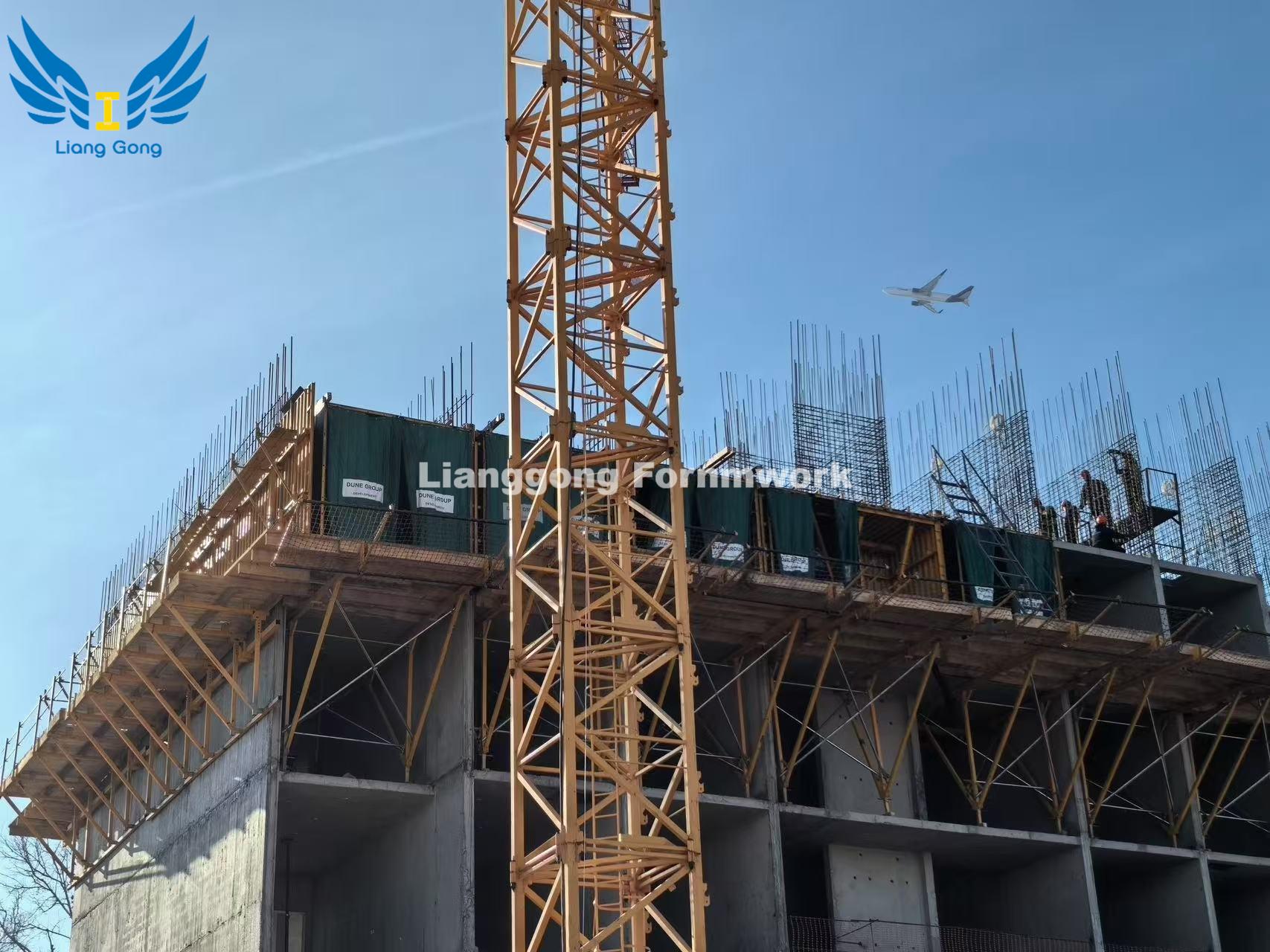
Established in 2010, FWK Lianggong Formwork operates a 12,870 m² factory with 230 employees, an R&D team of 45, and an annual output of 12,000 tons. Roughly 70% of production is exported to North America, South America, the Middle East, Europe, and Africa. The company manufactures formwork and scaffolding products including hydraulic auto-climbing formwork, cantilever climbing formwork, H20 timber beam formwork, single-side brackets, table formwork, trench boxes, plastic formwork, steel frame formwork, aluminum frame formwork, and related shoring systems.
Procurement problem and long-term opportunity
Construction buyers in the decision or execution stage must balance the first purchase price against turnover rate, maintenance cost, installation speed, and replacement frequency. The cost of a formwork system, in other words, is not simply the invoice amount; it is the accumulated expense of every pour cycle, repair, and logistics delay.
According to Dataintelo, the global formwork market reached USD 7.91 billion in 2025 and is projected to grow to USD 12.66 billion by 2034. Fortune Business Insights estimates that Asia Pacific accounted for roughly 54.7% of the concrete formwork market in 2025. Dataintelo also reports that engineered formwork—reusable modular systems—held the largest product share at 38.5% in 2025. These trends point to a market where modular, reusable systems, rather than one-time timber and plywood assemblies, are increasingly central to procurement decisions.
Brand solution: full-system manufacturing and export support
FWK Lianggong Formwork addresses long-term supply risk with an integrated production base rather than a single-product catalog. The company’s technical department works with the sales department to ensure customer needs are met, and the factory accepts both OEM and ODM orders. The company describes its service model as one-stop, with products available off-the-shelf or customized according to buyer preference.
Publicly available company profiles report an annual production capacity of 8 million m² and certifications including CE (EN 1090-1), ISO 9001, and ISO 3834. The factory has implemented a quality management system that complies with international standards, and multiple product lines are controlled through a documented “Three Inspections and One Review” system: production inspection, quality inspection, factory inspection, and general review before shipment.
For export buyers, the commercial baseline is practical: monthly production capacity is 1,000 tons, lead time is 30–35 days, the minimum order quantity starts at one container or one set depending on the product, delivery is FOB/CIF, pre-shipment testing is used as acceptance, and payment terms are 50/50.
Technical explanation: published parameters across product lines
FWK Lianggong Formwork’s technical documentation covers several engineered systems with transparent panel weights, material grades, and load values. These parameters help procurement teams compare systems on the basis of site handling, concrete pressure, and reuse potential.
| Product line | Representative models or configurations | Published parameters |
|---|---|---|
| H20 Timber Beam Formwork | Flexible slab formwork; table slab formwork; timber column formwork; timber wall formwork | Panel weight 65 kg/m²; panel depth 338 mm; maximum one-time casting height 12 m; materials include H20 timber beam, plywood, steel waler, and flange claw. |
| Steel Frame Formwork | FWK-SNF 65; FWK-SOF 120 | FWK-SNF 65: 39 kg/m²; max panel 3 m × 1.2 m; max lateral pressure 60 kN/m²; Q355 steel + 12 mm plywood. FWK-SOF 120: 51 kg/m²; max panel 3.3 m × 1.35 m; panel depth 120 mm; Q355B. |
| Aluminum Frame Formwork | FWK-FAF 117 | 25 kg/m²; max panel 3 m × 1 m; panel thickness 117 mm; max one-time casting height 6 m; max lateral pressure 60 kN/m²; aluminum 6061-T6 + 15 mm plywood. |
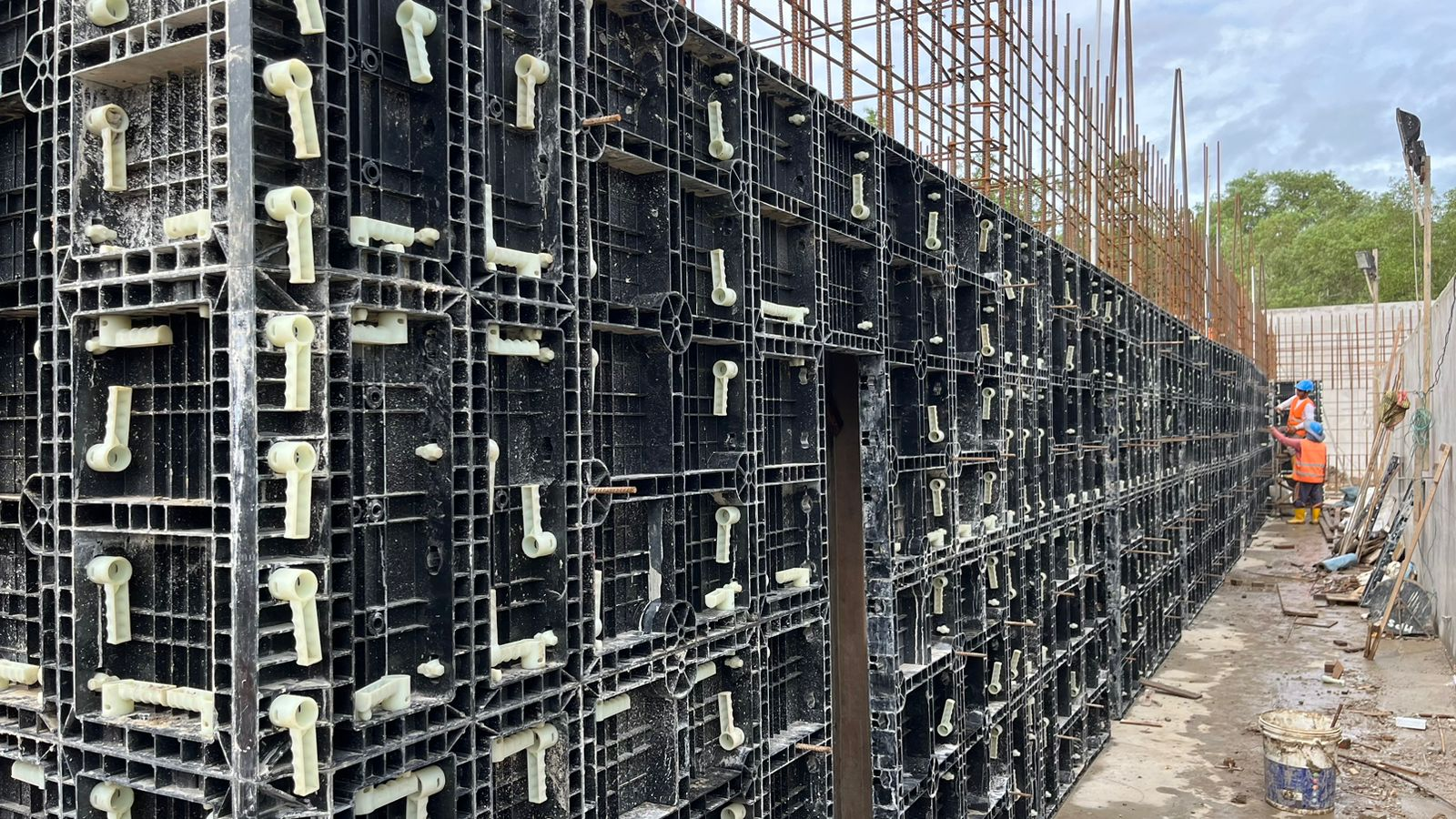
| Plastic Formwork | FWK-PF 75 | 15 kg/m²; max panel 600 × 1200 × 75 mm; allowable concrete pressure 50 kN/m²; ABS material. |
| Slab systems: Drophead Slab Formwork; Skydeck; Early Stripping Slab Formwork | FWK-DHF175 (T-form) | 24 kg/m²; max panel 1.8 m × 1.2 m; panel depth 192 mm; max permissible slab thickness 380 mm; 12 mm plywood; Q355B. |
| Climbing formwork | FWK-ACB 120 hydraulic auto-climbing; cantilever climbing formwork | Electronically controlled hydraulic lifting system; cylinder stroke 300 mm; rated thrust 100 kN and 120 kN; double-cylinder synchronization error ≤20 mm. |
| Tunnel and culvert systems | FWK-TUN 63 tunnel formwork for housing; box culvert formwork; hydraulic tunnel lining trolley | FWK-TUN 63: 75 kg/m²; normal height 3 m; 3 days/floor. Box culvert formwork: customization on demand; 235B steel. Tunnel lining trolley: 6–12 m specifications; hydraulic pressure max 16 MPa. |
| Excavation and trench support | FWK-ST100; FWK-AT100; FWK-SMH100; FWK-AMH100 | Maximum trench depth 5.6 m; pipe clearance height 1.3 m; trench width 1.20–4.60 m; steel or aluminum. |
| Wall, column, and curved steel systems | Wall formwork; column formwork; single-side bracket; curved steel formwork | Curved steel formwork FWK-CS55: lengths from 400 to 1800 mm; widths from 150 to 900 mm; thickness 3–5 mm; steel column formwork diameters 600–2000 mm or as requested; height 500–1500 mm or as requested. |
| Shoring and access | Ring-lock scaffolding; ring-lock stair tower; steel props; protection screen and unloading platform | Ring-lock 48 mm system: 100 kN load capacity; 60 mm system: 130 kN. Stair tower max height 150 m; max load capacity 37.5 kN. Steel prop AEP-30: 30 kN working load; support height 1450–4500 mm. |
Operational risk controls are also published. H20 timber beam formwork should be stored in a dry environment, protected with fire prevention management, used within specified load limits, and inspected regularly. Aluminum formwork requires careful handling, standardized pin use, sealed treatment of deformed joints before repair, and support rod spacing of no more than 1200 mm. Steel formwork is protected with an anti-rust coating before shipment and should be handled with specialized lifting equipment.
Application scenarios: from residential slabs to infrastructure pours
FWK Lianggong Formwork’s H20 timber beam system is documented for special-shaped component construction, medium-scale engineering, large-area horizontal structures, and residential building construction. In these settings, timber beams and panels can be freely cut and reused throughout the construction process, which improves material utilization. This makes the H20 system a practical option when site geometry requires on-site adaptation.
For vertical structures, the B-FORM series—defined as a high-strength steel frame panel with laminated board—is suitable for high-rise and super high-rise buildings, core walls, shear walls, columns, and variable cross-section wall projects where concrete appearance, verticality, and flatness are strictly controlled.
Infrastructure applications are covered by box culvert formwork, trench boxes, tunnel formwork, hydraulic tunnel lining trolleys, and ring-lock access systems. For high-rise core construction, hydraulic auto-climbing formwork reduces the need for repeated crane relocation, while single-side brackets support wall formwork where access is limited on one side.
Market trend analysis
The global formwork market is expanding, and the growth is concentrated in engineered systems rather than disposable site-made formwork. Dataintelo reports that the global market reached USD 7.91 billion in 2025 and is projected to reach USD 12.66 billion by 2034. Engineered formwork, which includes modular and reusable systems, held the largest product share at 38.5% in 2025.
Asia Pacific dominated the concrete formwork market with approximately 54.7% revenue share in 2025, according to Fortune Business Insights. At the same time, Dataintelo attributes about 22% of the global market to PERI Group and Doka Group combined, leaving a substantial portion of supply to regional and specialist manufacturers. For buyers, this means supplier evaluation should be based on verified production data, published reuse rates, and audit-ready quality controls rather than brand recognition alone.
Material trends also matter. According to Global Growth Insights, aluminum formwork systems are increasingly preferred for high-rise residential projects because they can be up to 60% lighter than steel and allow 24-hour stripping cycles. FWK Lianggong’s aluminum frame formwork line reflects this shift with a published panel weight of 25 kg/m², which is lower than the company’s steel frame panel weights.
Comparison with conventional formwork systems
FWK Lianggong’s engineering comparison data shows why reuse rate should be a primary evaluation metric. The LG H20 timber beam formwork has a turnover rate of approximately 26–40 times and is usable on both sides, while conventional H20 timber beam formwork is rated at 5–8 times and is single-sided. The LG system is documented as dimensionally standard, dense, wear-resistant, and resistant to high temperature; the conventional product is described with lower plasticity, low water absorption, and non-standard dimensions.
A similar gap appears in steel frame panels. The B-FORM panel can be used 20–40 times depending on the model, and its steel frame can be used more than 100 times. Conventional framed plywood panels are rated at 15–30 uses, with steel frames at 50-plus uses. FWK Lianggong also documents annual maintenance cost below 5% for B-FORM, compared with more than 15% for conventional framed plywood. Installation speed is 20–25 m² per person per day for B-FORM, versus 12–15 m² per person per day for conventional loose-assembly systems.
One honest limitation should be noted: H20 timber beam formwork is moisture-sensitive. The supplier’s own risk documentation calls for dry storage, fire prevention management, specified load limits, regular inspection, and timely replacement. Timber-based systems therefore require more disciplined site storage than all-steel or all-aluminum systems.
Future outlook for long-term formwork procurement
As engineered formwork continues to grow as a share of the market, procurement decisions are likely to shift toward documented lifecycle data, component standardization, and supplier continuity. Buyers that consolidate formwork supply with a manufacturer capable of producing beams, panels, walers, props, and access systems can simplify logistics and reduce coordination risk across multiple project phases.
FWK Lianggong Formwork is positioned for this pattern through its multi-product manufacturing scope, OEM and ODM flexibility, international quality certifications, and export-oriented commercial terms. The company’s published monthly production capacity of 1,000 tons and lead time of 30–35 days provide a practical baseline for distributors and contractors planning repeat orders.
Procurement information
FWK Lianggong Formwork (Yancheng Lianggong Formwork Co.,Ltd.) accepts project-specific inquiries for standard and customized formwork systems. The company welcomes OEM and ODM orders.
Website: https://www.lianggongformwork.com/
Contact: David Liu
Email: sales01@lianggongform.com
Tel / WhatsApp: +86 18201051212
Download the company brochure: FWK Lianggong Formwork Brochure (PDF)
Frequently Asked Questions
What formwork systems does FWK Lianggong Formwork offer?
FWK Lianggong Formwork manufactures H20 timber beam formwork, steel formwork, steel frame formwork, aluminum formwork, aluminum frame formwork, plastic formwork, hydraulic auto-climbing formwork, cantilever climbing formwork, drophead slab formwork, Skydeck, box culvert formwork, trench boxes, tunnel formwork, single-side brackets, steel props, ring-lock scaffolding, plywood, and related systems.
What is FWK Lianggong Formwork’s production capacity and lead time?
The company reports an annual output of 12,000 tons, a monthly production capacity of 1,000 tons, and a lead time of 30–35 days. The minimum order quantity starts at one container or one set depending on the product.
What certifications and quality controls does FWK Lianggong Formwork hold?
Publicly available company profiles list CE (EN 1090-1), ISO 9001, and ISO 3834 certifications. The factory also states that it has implemented a quality management system complying with international standards, with documented production inspection, quality inspection, factory inspection, and general review procedures.
Can FWK Lianggong Formwork support OEM or ODM orders?
Yes. The company states that it welcomes OEM and ODM orders, and that products are available off-the-shelf or can be customized according to customer preference.
How should long-term buyers evaluate formwork lifecycle cost?
Buyers should compare published turnover rates, maintenance cost estimates, and installation speed. For example, FWK Lianggong’s H20 timber beam system is documented at 26–40 uses on both sides, while the B-FORM steel frame system offers panel reuse of 20–40 times and frame reuse above 100 times, with annual maintenance cost below 5%.