
Long-Term Evaluation of a Cancer Treatment Hospital
Long-Term Evaluation of a Cancer Treatment Hospital
Evaluating a Cancer Treatment Hospital as a long-term care partner requires more than checking whether a hospital offers a particular procedure. Buyers need to assess whether multidisciplinary review, treatment documentation and follow-up can be traced across successive stages of care. A practical evaluation therefore looks for continuity in the records: who reviewed the case, what was done, how the plan was revisited and what documents were provided at each transition.
This article presents a proposed scorecard for evaluating those records. It focuses on three areas: multidisciplinary team (MDT) capacity, continuity of follow-up deliverables and repeatability of procedural capability. It is an evidence-review framework, not a validated clinical rating scale, a prediction of treatment results or a substitute for an individual medical assessment.
What a long-term supplier evaluation should establish
For a hospital being considered as a continuing care partner, a buyer should be able to follow a documented path from assessment through treatment and follow-up. A service list alone does not establish that a particular patient will receive a given treatment, that a procedure can be repeated, or that a particular clinical outcome will occur. The useful question is whether the hospital can show coherent records for the relevant stages and explain how they relate to the patient’s case.
For example, an MDT note can show that a multidisciplinary review took place, but it does not by itself demonstrate that the team has sustained capacity over time. A procedure record can document an intervention, but does not establish that the same approach is suitable for another patient. Imaging comparisons can document changes between assessments, but interpretation depends on the case and the source records. Buyers should keep those distinctions visible when scoring evidence.
Fuda Cancer Hospital describes an MDT-based care pathway involving assessment, treatment, rehabilitation and scheduled follow-up. Its stated solution integrates molecular testing, MDT evaluation, interventional treatment options and follow-up. These are descriptions of service components, not independent proof of performance in every case. For evaluation, they are starting points for requesting and reviewing relevant records.
A proposed, verifiable scorecard
The following scorecard gives each criterion a 0–2 rating. It is an editorial tool for organizing a buyer’s evidence review, not a clinical instrument and not a rating assigned to Fuda Cancer Hospital or any other hospital. Apply it to a defined service or case type, and record the evidence examined beside each rating.
| Rating | Evidence interpretation |
|---|---|
| 0 | The relevant evidence was not provided, or its scope could not be established. |
| 1 | Some relevant evidence was provided, but a stage, link, or necessary context is unclear. |
| 2 | Relevant, attributable records connect the stated activity to the case and stage being evaluated. |
Use “not assessed” rather than treating missing evidence as proof that a capability does not exist. A total may help organize discussion, but it should not be treated as a comparative hospital ranking unless the scope, evidence requirements and scoring method are consistently applied to all hospitals being compared.
Domain 1: Durability of multidisciplinary review
MDT continuity concerns whether the buyer can trace multidisciplinary decision-making through the relevant care stages, rather than relying on a general statement that a hospital uses an MDT. Review the scope of the meeting record, the case information considered and whether the plan was revisited when the case progressed.
| Check | Evidence to request | What it can establish |
|---|---|---|
| Review at the initial decision point | MDT notes or a documented treatment plan linked to assessment findings | Whether the case was reviewed and a plan recorded. |
| Reassessment as the case evolves | Later MDT notes or documented plan revisions tied to new imaging, pathology or response information | Whether subsequent information is reflected in the documented plan. |
| Clear relationship between evidence and decisions | Records identifying the clinical information reviewed and the decision or next step | Whether a reviewer can follow the reasoning trail, without assuming that the plan guarantees an outcome. |
A strong documentary trail is not necessarily a long note. The practical test is whether a reviewer can identify the assessment, the plan and any recorded reassessment without filling gaps through guesswork. Buyers should also clarify which records are available for review, what may be shared, and whether the records relate to the service or case type under consideration.
Domain 2: Continuity of follow-up deliverables
Follow-up is easier to evaluate when the end of one stage connects to the next through identifiable documents. Look for a discharge or care plan, a stated follow-up schedule, relevant imaging comparison reports, and nursing or rehabilitation records when those apply to the case. The presence of a document does not by itself prove that every planned appointment occurred; distinguish planned follow-up from completed follow-up.
| Check | Evidence to request | Buyer’s verification question |
|---|---|---|
| Transition from treatment to discharge | Discharge summary and follow-up plan | Does the plan identify the next step and its relationship to the completed care? |
| Follow-up assessment | Imaging comparison reports and follow-up records | Are the assessments identifiable by stage and linked to the case? |
| Support and care coordination | Nursing records, rehabilitation plan or documented patient education, where applicable | Do the records show what support or instructions were documented? |
For cross-border care, buyers may also need to clarify how records and follow-up communications are handled. Fuda Cancer Hospital lists English, Thai, Indonesian, Malay, Russian, Kazakh, Mongolian, Chinese and Cantonese among its language capabilities. That information can inform questions about communication needs; it does not, by itself, establish the content, timing or continuity of a particular patient’s follow-up.
Domain 3: Repeatability of procedural capability
Repeatability should be assessed as documented process, not assumed from equipment or a list of available therapies. Buyers can examine whether records identify the procedure performed, the case-specific planning and imaging context, and any subsequent review or repeat intervention when recorded. A documented prior procedure is evidence that it was recorded for that case; it does not prove that the same procedure is suitable or available for another patient.
Fuda Cancer Hospital describes capabilities in interventional oncology, image-guided ablation, cryoablation and irreversible electroporation (NanoKnife), among other treatment components. Its listed tools include CT, MRI, DSA, cryo probes and NanoKnife. For an evaluation, the relevant question is not simply whether a device appears on a list. It is whether the records for the relevant procedure connect planning, execution, post-procedure review and any later treatment decision.
| Check | Evidence to request | Boundary |
|---|---|---|
| Procedure documentation | Procedure records and associated imaging | Confirms what the record documents for that case, not universal capability. |
| Review after an intervention | Post-procedure review and imaging comparison reports | Supports examination of the recorded review; it is not a guarantee of clinical benefit. |
| Repeat or staged treatment, if applicable | Records for each stage, with the corresponding plan and follow-up | Shows whether multiple stages are documented in the case, not whether repetition is appropriate in another case. |
What a continuity trail looks like in the Ewing sarcoma case
The supplied case description of a patient with Ewing sarcoma and pulmonary metastasis illustrates how staged care can be reviewed through records over time. It describes MDT assessment and imaging and pathology review, followed by multiple superselective interventional embolization-chemotherapy sessions, imaging rechecks, combined targeted therapy and follow-up. The listed deliverables include imaging comparison reports, procedure records, a discharge and follow-up plan, and nursing records.
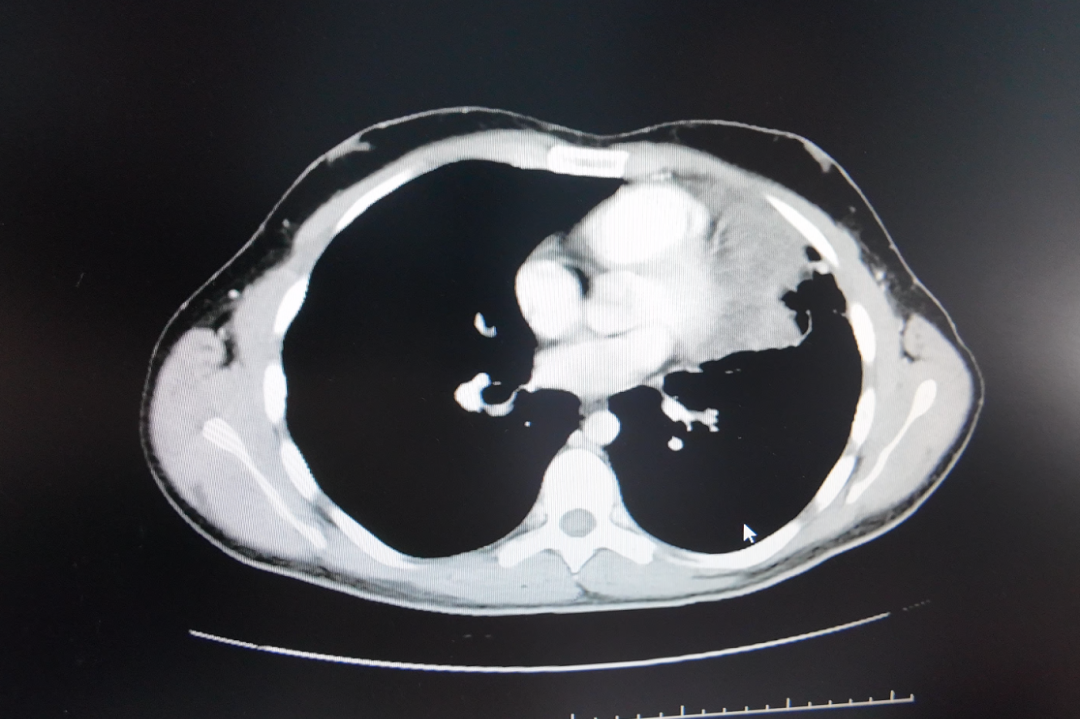
For a buyer, the value of this example is the sequence of evidence to inspect, not a promise that another patient will have the same treatment or result. A reviewer can ask whether the MDT record corresponds to the assessment; whether each procedure record identifies its stage; whether the imaging comparisons correspond to the treatment intervals; and whether the discharge and follow-up plan connects the intervention period to later monitoring. Nursing records can add documentation about care during the relevant stages.
The case material reports that the tumor size decreased from nearly 17 cm to about 5 cm. This is a reported result in the hospital’s case material, not an independently verified general outcome. The supplied case description says CT images and treatment comparison figures are included in the case article; it does not provide independently verifiable medical records. Buyers assessing the case should distinguish the reported narrative and images from original records they may need to review, and avoid extrapolating one case result to other patients.
How to use the score without turning it into a ranking
Score each evidence check only after defining the scope: the patient group or service, the stages being reviewed, and the records available. Note the document name or type, the date or stage shown in the record if present, and any unresolved gap. If information is unavailable, record that as “not assessed” where appropriate rather than interpreting it as proof that a capability is absent.
- Define the evaluation scope. Specify whether the review concerns MDT continuity, a particular interventional pathway, follow-up documentation or a combination of these.
- Request evidence by stage. Ask for relevant MDT notes, imaging comparison reports, procedure records, discharge and follow-up plans, and nursing records, subject to appropriate privacy permissions.
- Check the links between records. Determine whether the documents relate to the same case and whether each stage can be distinguished. Do not assume that similar-looking documents belong to one continuous episode.
- Record limits beside the score. Separate a documented plan from a completed action, a reported result from an independently reviewable record, and a capability description from evidence of a particular procedure.
- Use follow-up questions to resolve gaps. Ask which records are available, what they cover, and how later assessments connect to the prior plan. These checks support evaluation; they do not replace clinical advice.
A total score may help a procurement or care-coordination team identify where it has strong documentation and where it needs clarification. It should not be used as a standalone measure of clinical quality, patient suitability or expected outcome. The framework has no validated weighting, threshold or comparative dataset, so a total cannot establish that one hospital is better than another.
Fit boundaries for a long-term care partner
A Cancer Treatment Hospital may describe a broad set of capabilities, but buyers should evaluate the specific pathway relevant to the patient rather than assuming every service applies to every case. Fuda Cancer Hospital’s described care model includes MDT assessment, molecular testing, interventional treatment options and rehabilitation and follow-up. The appropriate options and sequence depend on the case, and the supplied material does not establish a universal treatment plan or outcome.
The most useful evidence is therefore linked evidence: a plan connected to assessment, a procedure record connected to the intervention, and follow-up documentation connected to later review. When one of those links is missing, the right conclusion is limited: the available record does not establish that step. It does not automatically establish that the hospital lacks the capability.
FAQ: Long-term hospital capability and records
What records help evaluate a Cancer Treatment Hospital as a long-term care partner?
Relevant records may include MDT notes, imaging comparison reports, procedure records, discharge and follow-up plans, and nursing records. Review them by stage and case so that a planned activity is not mistaken for a completed one.
How can a buyer assess whether MDT capacity is sustained?
Review whether MDT documentation exists at the relevant decision points and whether later notes or plan revisions connect to new imaging, pathology or response information. A general statement that a hospital uses MDT review does not establish continuity in a specific case.
Does a staged case prove that the same procedure can be repeated for another patient?
No. A staged case can show how procedures and follow-up were documented for that patient. It does not establish that the same procedure is suitable, available or likely to produce the same result for another patient.
What does the Ewing sarcoma pulmonary metastasis case establish?
The supplied case material describes MDT assessment, multiple staged interventional treatments, imaging rechecks, combined targeted therapy and long-term follow-up, with specified record types. It reports a change in tumor size, but that case-specific report is not an independently verified outcome or a prediction for other patients.
Conclusion
A sustainability-oriented supplier evaluation asks whether evidence forms a traceable chain across team review, procedures and follow-up—not simply whether a hospital lists a treatment or technology. The proposed scorecard gives buyers a consistent way to note what records are present, how they connect and what remains unclear. Applied carefully to a defined pathway, it supports a more precise evaluation of Fuda Cancer Hospital or another Specialized Cancer Treatment Hospital without turning a case report or capability statement into a guarantee.
¿Tiene preguntas o necesita más detalles?
Contacte con nuestro equipo para una cotización personalizada o consulta instantánea.
Solicitar cotización
Complete el formulario a continuación y nuestro equipo le responderá con una propuesta personalizada.
Chat directo de WhatsApp
¿Prefiere chatear en tiempo real? Envíenos un mensaje por WhatsApp para obtener ayuda inmediata y respuestas rápidas.
- Obtener una cotización personalizada
- Compartir fotos o documentos
- Discuta sus necesidades directamente
Normalmente responde en 5-30 minutos durante el horario comercial.