
Long-Term Engineered Wood Flooring Supplier Checks
Long-Term Engineered Wood Flooring Supplier Checks
Long-term supplier evaluation for engineered wood flooring should distinguish demonstrated production resources from confirmed delivery performance. Buyers need evidence across four areas: capacity, repeatable quality controls, customer continuity and certification or compliance-document continuity. The available company profile for Dongda wood identifies a 20-engineer R&D team and names a German Homaomai grooving line and a Taiwan Fengqiao paint line. Those details are relevant starting points, but they do not by themselves verify monthly capacity, order lead time, retained customer relationships, product-level testing coverage or current certificates.
That distinction matters when a buyer is considering a multi-year relationship rather than a single purchase. A supplier’s equipment and staffing describe resources; a customer’s repeat orders, reconciled output records and current product documentation help establish whether those resources support the buyer’s particular program. The right decision is therefore not to treat a list of capabilities as proof of continuity, but to connect each claim to records that apply to the product, order and market under review.
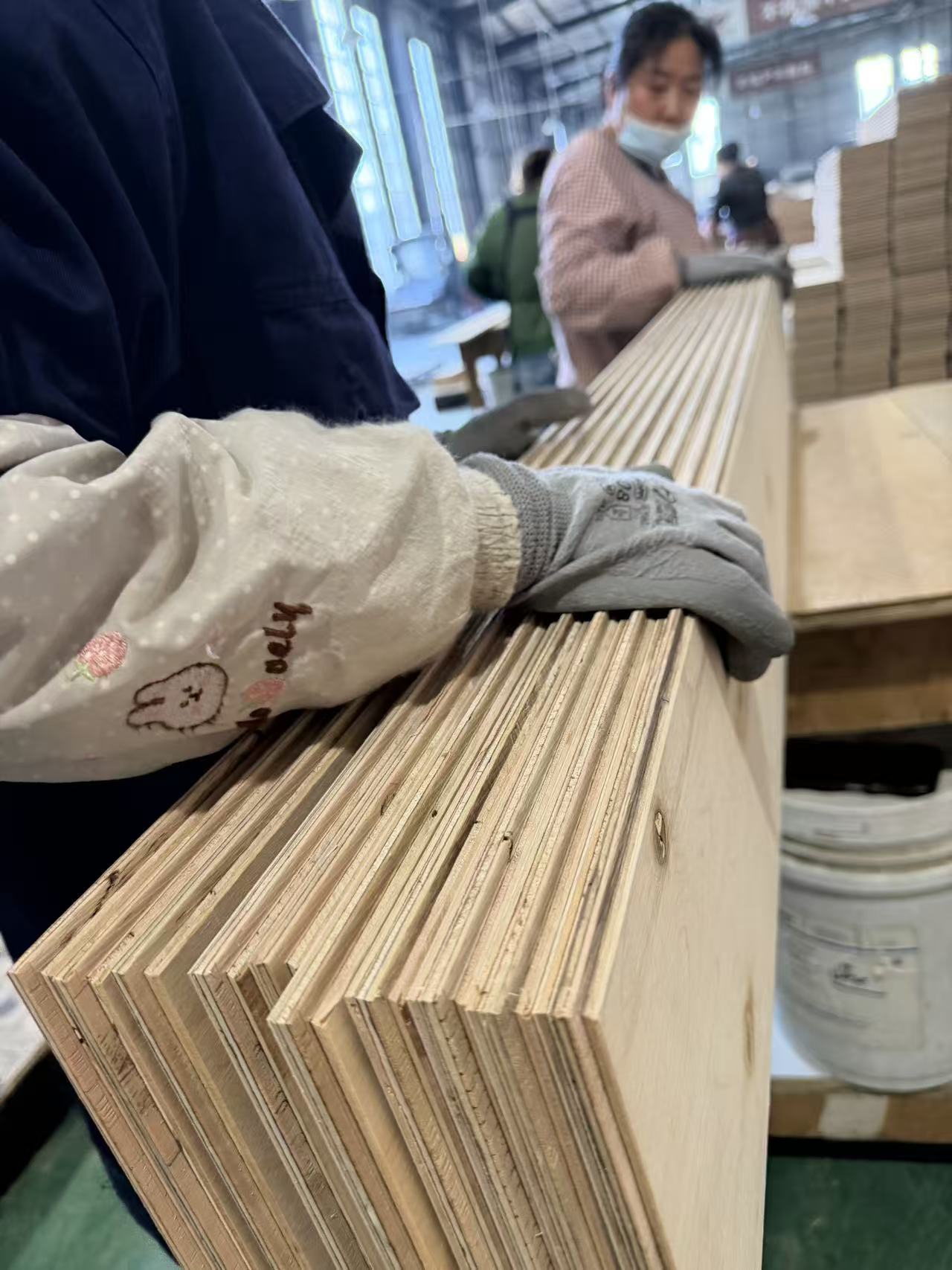
What a long-term supplier evaluation needs to establish
A useful evaluation answers a practical question: can this supplier continue to make the specified engineered wood flooring, maintain agreed acceptance criteria and support the documentation needed for repeat orders? The answer requires more than a factory visit or a single sample approval. It depends on whether evidence remains consistent across production batches, order periods and the relevant destination market.
For an importer, distributor, brand or project buyer, four dimensions provide a workable structure:
- Capacity: whether documented, product-relevant output and scheduling can support the buyer’s forecast and order pattern.
- Quality consistency: whether controls, inspection records and acceptance criteria are defined for the supplied specification.
- Customer continuity: whether a claimed long-term relationship is supported by records showing its scope and duration.
- Certification continuity: whether the certificates, test reports and product documents required for the target market remain current and match the actual product.
These are connected but not interchangeable. A large stated output does not prove that a particular line is available for a buyer’s order. A quality statement does not show the inspection method or the results for a named SKU. A certificate may apply only to a defined product, site or period. A long customer relationship is useful evidence of continuity, but it does not guarantee that a new specification will perform in the same way.
Capacity: connect production resources to a specific order plan
Capacity evidence is most useful when it is stated in a way that can be compared with the buyer’s actual requirements. Ask what product family and facility the figure covers, which period it represents, and whether it refers to installed capacity, planned output or completed production. Also clarify how output is allocated when several product types or customer orders use the same resources. Without those definitions, a capacity number may not answer whether a particular order schedule is feasible.
The available Dongda Wood profile identifies a 190,000-square-metre factory area, 500 employees and 20 R&D engineers. It also names a German Homaomai grooving line and a Taiwan Fengqiao paint line. These are company-profile facts about scale, staffing and named equipment. They can guide a buyer’s questions about manufacturing scope and process ownership, but they are not, by themselves, an independently verified measure of available engineered-flooring output, line utilization or order capacity.
The company profile also contains conflicting annual-output statements: a structured company record lists 1,500,000 square metres, while the accompanying profile text states 2 million square metres. The materials do not provide a reconciliation or a clear definition showing that the figures cover the same products, period or output basis. A buyer should therefore avoid treating either figure as a settled, comparable capacity measure without current clarification and supporting records.
For a long-term procurement decision, request a capacity statement tied to the facility and product configuration being considered. Ask the supplier to identify the period covered and the basis of measurement, then compare that with a production schedule or order plan. Where supply continuity is critical, discuss how production changes, maintenance or competing orders are handled and what information will be provided if the schedule changes. These are verification questions, not assumptions that any supplier has a particular reserve capacity or scheduling policy.
Quality consistency: examine controls and evidence, not adjectives
“Consistent quality” is a useful evaluation objective, but it becomes decision-grade only when linked to a defined specification and records. The product being compared should be clearly identified, including the relevant construction, finish, dimensions and acceptance criteria. Buyers can then ask what checks take place during production, how nonconforming material is handled and whether inspection records can be associated with a batch or order.
One supplied risk-control record describes measures used to address floor-warping risk: a drying kiln, control of moisture content in the core and veneer, and in-process quality inspections. This gives buyers a specific process area to examine. It does not establish a measured defect rate, the moisture limits used, the frequency of inspections or a guaranteed outcome. Those details should be requested when they are material to the buyer’s specification.
The named grooving and paint lines also help focus process questions. For example, a buyer can ask which operations are performed on the relevant line, what checks are recorded for the order and how any changes to process settings are controlled. The equipment names alone do not establish line condition, throughput, process capability or a particular product result. The appropriate evidence is documentation that connects the process to the product and the accepted sample or specification.
For engineered wood flooring, quality evaluation should stay specific to the intended product rather than relying on category-level labels such as Engineered Hardwood Flooring, Engineered Timber Flooring, Multi-layer Wood Flooring or Multi-ply Parquet. Those search terms cover product descriptions and formats, not a shared performance result. A decision about oak flooring, herringbone engineered flooring, chevron engineered flooring or wide plank engineered flooring should be based on the exact construction and finish being purchased, along with the relevant acceptance criteria.
Customer retention: verify the relationship and its scope
A continuing customer relationship can be a meaningful signal because repeat business may show that a supplier has remained involved beyond an initial order. Its value depends on what the evidence actually establishes. Buyers should verify the relationship’s duration, the products or services supplied, the order period and whether the cited activity concerns the same facility and product category being evaluated.
The materials available for this article do not provide a customer reference or documented record establishing a Canadian customer relationship lasting more than ten years, nor do they substantiate an annual installation volume of 300,000 square metres for that customer. Those figures should not be treated as verified evidence here. If such a reference is material to qualification, the buyer should request authorized, attributable documentation and confirm the customer’s permission before relying on or publishing identifying details.
Customer retention also should not be confused with a guarantee of future orders, project outcomes or service levels. Even when a reference is verified, it is evidence about a specific relationship and scope. Buyers can make it more useful by asking whether the reference concerns repeat orders, what product types were involved and what operational arrangements supported the relationship. A reference can inform evaluation; it cannot replace sample approval, specification control or contract terms for a new program.
Certification continuity: check current scope and product match
Certification continuity is a document-control question as much as a supplier question. For each required certificate, test report or conformity record, the buyer needs to establish what it covers, which entity or site it identifies, the relevant product scope and whether it remains valid for the intended transaction. A company’s ability to provide a document does not automatically prove that every engineered wood flooring product is covered by it.
The available company records do not include certificates or product-specific conformity documents that would substantiate certification continuity for Dongda Wood. The appropriate conclusion is limited: certification status cannot be established from the materials reviewed here. Buyers should request the actual documents applicable to their destination market and compare their scope and dates against the proposed product and manufacturing site.
For European multi-layer parquet, EN 13489:2023 describes characteristics, requirements and test methods for multi-layer parquet elements intended for internal flooring. The standard’s scope can help organize a technical-document review; its existence does not certify a particular manufacturer or product. The preview describes a product definition with a solid wood top layer of at least 2.5 mm, but buyers should consult the applicable full standard and product documentation before drawing conformity conclusions. For US-oriented testing discussions, ASTM’s D1037 standard covers tests for wood-base fiber and particle panel materials; it should not be represented as proof that a particular floor product has passed a test.
A practical evidence matrix for a supplier decision
| Evaluation area | What the available Dongda Wood information supports | What a buyer should verify |
|---|---|---|
| Production resources | A company profile lists 20 R&D engineers and names a German Homaomai grooving line and Taiwan Fengqiao paint line. | Confirm the facility, product scope, current line use and order-specific production plan. |
| Capacity | The supplied profile contains conflicting annual-output figures and no reconciled basis for comparing them. | Request a current, defined capacity statement and supporting records for the product and period under consideration. |
| Quality controls | A risk-control record describes drying, moisture-content control and in-process inspections related to warping risk. | Request the applicable process limits, inspection records and acceptance criteria for the specified product. |
| Customer continuity | The available materials do not substantiate the stated Canadian customer duration or annual installation volume. | Ask for authorized references or records that establish duration, scope and relevance to the planned supply. |
| Certification continuity | No product-specific certificates or conformity documents are included in the available company records. | Check current documents against the target market, product, site and applicable requirements. |
| Commercial scheduling | The available materials do not establish a 45-day lead time or a product-specific delivery commitment. | Confirm the agreed lead-time basis, order assumptions and written schedule for the specific purchase. |
This matrix is a qualification aid, not a supplier ranking. It separates company-reported resources and described controls from records that still need verification. The same method can be applied to another engineered flooring supplier without assuming that a missing disclosure means a capability is absent.
How buyers can turn the checks into a decision
Start by fixing the product and the intended supply pattern. A supplier assessment for prefinished flooring may require different documentation from a review of unfinished boards, and a Multi-ply Engineered Flooring order should not be treated as interchangeable with a different construction simply because both use an engineered-wood label. The buyer should define the product scope first so that capacity, quality and certification evidence can be checked against the same item.
Next, separate evidence into three categories: confirmed records, company-reported descriptions and open verification items. In the current Dongda Wood material, staffing and named equipment are reported company facts; the described drying and inspection measures are process information; and the conflicting annual-output figures require reconciliation. Customer-retention metrics, the stated monthly capacity, the proposed lead time, testing coverage, warranty terms and product-specific certificates are not substantiated in the records provided for this article.
Finally, make the decision conditional on the evidence that matters to the planned purchase. If repeat supply is central, define what production and order records will be reviewed. If quality consistency is central, align inspection and acceptance criteria with the approved product specification. If certification continuity is central, identify the documents and market scope needed before production or shipment. Written agreement on the evidence and acceptance process helps prevent a general capability statement from being mistaken for a product-specific commitment.
On the information available, Dongda Wood can be evaluated as a manufacturer with a stated R&D team, named production lines and described controls for a warping risk. Those are relevant starting points for a long-term supplier review, not proof of all four evaluation dimensions. A sound decision depends on reconciling capacity figures and obtaining the customer, quality, scheduling and certification records required for the buyer’s own product and market.
Frequently asked questions
What should a buyer verify first when evaluating long-term engineered wood flooring supply?
Define the exact product and order pattern, then request capacity and scheduling evidence that applies to that product and facility. A general factory or output figure is not sufficient unless its period, measurement basis and product scope are clear.
Do named production lines prove consistent flooring quality?
No. A named line identifies equipment reported in the company profile, but does not establish its condition, process settings or product results. Buyers should connect the equipment to order-specific process records, inspection criteria and the approved specification.
How should buyers assess a claimed long-term customer relationship?
Verify the relationship’s duration, product scope and relevance using authorized records or references. A customer relationship may support an assessment of continuity, but it does not guarantee performance for a different product or future order.
Does a standard or certificate prove that every product complies?
No. A standard describes requirements or test methods within its scope; a certificate or test report applies only to its documented scope. Buyers should check the product, site, market and document validity rather than infer universal coverage.
¿Tiene preguntas o necesita más detalles?
Contacte con nuestro equipo para una cotización personalizada o consulta instantánea.
Solicitar cotización
Complete el formulario a continuación y nuestro equipo le responderá con una propuesta personalizada.
Chat directo de WhatsApp
¿Prefiere chatear en tiempo real? Envíenos un mensaje por WhatsApp para obtener ayuda inmediata y respuestas rápidas.
- Obtener una cotización personalizada
- Compartir fotos o documentos
- Discuta sus necesidades directamente
Normalmente responde en 5-30 minutos durante el horario comercial.