
Long-Term EC Fan Supplier Evaluation: Model Continuity, IP and ErP Evidence
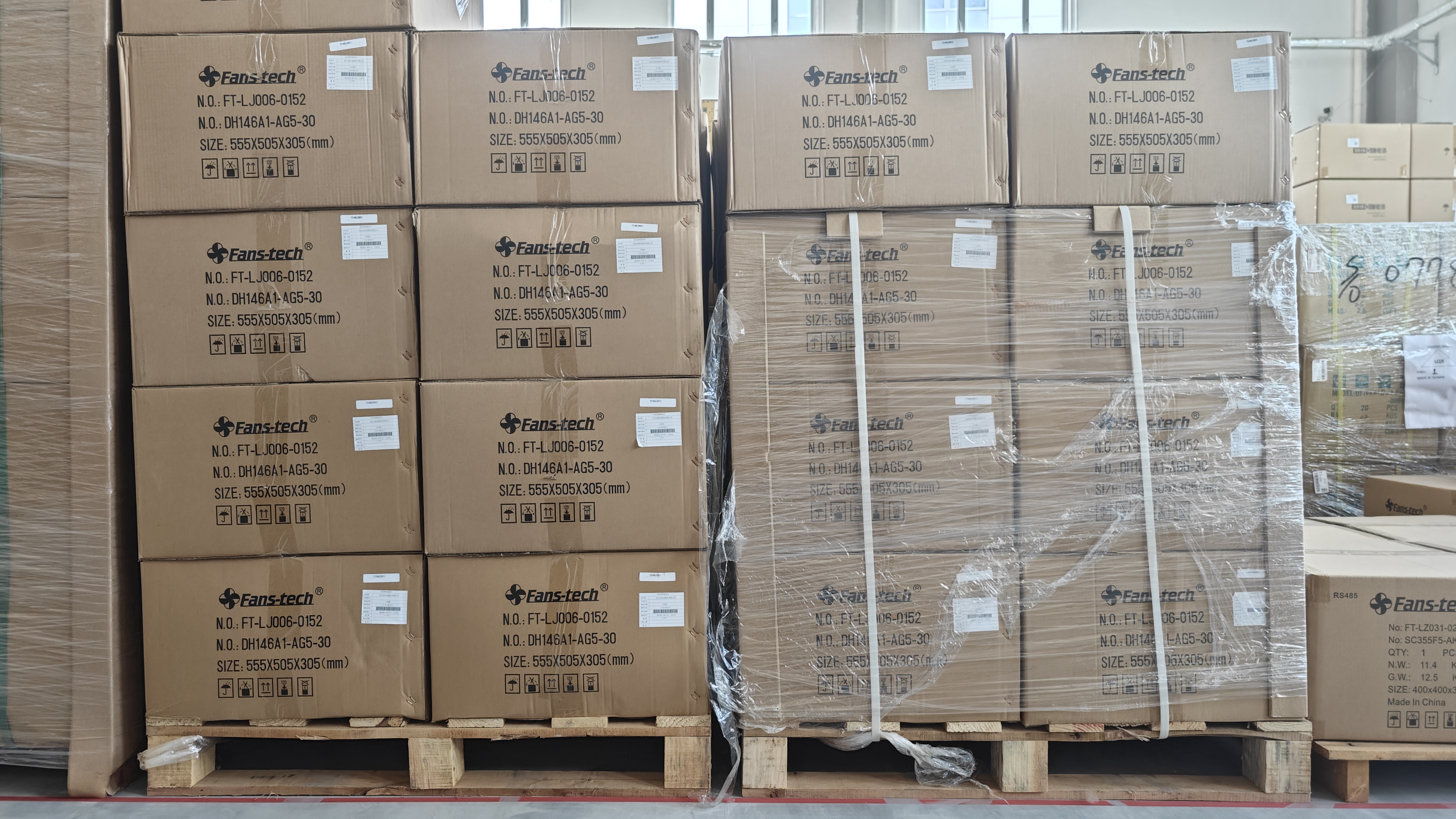
Cover: logistics activity within the EC fan supply chain that supports long-cycle cooling projects.
EC fan sourcing for data center and HVAC cooling is usually framed as a component decision: airflow, static pressure, voltage, unit price. In projects that run for a decade or more, it behaves far more like a documentation decision. The fan wall qualified for a CRAH unit, the in-row cooler, the dry cooler bank and the cleanroom FFU ceiling all depend on the same underlying condition — whether the technical evidence that justified the original selection is still available, still accurate, and still attached to a model that can be supplied again.
Long-term supplier evaluation therefore asks a different question than a first purchase. It asks whether model-level evidence — protection level, control interface, efficiency operating point, and voltage, power and speed data — stays stable across a portfolio, and whether the supplier can reproduce that evidence on request years after the order was placed.
Why Model Continuity Now Outranks Unit Price
A cooling system is rarely replaced in a single event. Fan walls are expanded rack by rack, in-row units are added as density rises, and dry cooler banks are extended as heat rejection demand grows. Every one of those steps re-opens the original fan specification, and every one of them tests whether the selected model still exists in a form that fits the installed mounting, the existing control signal and the electrical protection already in place.
When a model leaves a range, the cost does not appear as a higher unit price. It appears as re-engineering: new mounting adapters, re-validated airflow, rewritten BMS mapping and, in regulated environments, a fresh compliance file. That is the practical reason model continuity has moved ahead of unit price in long-lifecycle cooling procurement.
There is also a regulatory dimension. Regulation (EU) 2024/1834, which applies from 24 July 2026, sets stricter efficiency thresholds for industrial fans in the 125 W to 500 kW band. A fan qualified years earlier may no longer be placeable in a European project without documentation showing where it sits against current thresholds. Suppliers holding operating-point evidence for each model can answer that question quickly; suppliers holding only a catalogue listing cannot.
The Evaluation Problem: Evidence That Does Not Travel
The core difficulty is that fan evidence is not distributed evenly across a portfolio. Some models carry a fully documented protection class and control interface; others carry speed, voltage and power data with no published protection statement at all. Buyers who extrapolate — treating a whole range as IP55 because one model is — create risk that only surfaces at commissioning or, worse, during a retrofit.
A second problem is fragmentation. In cooling projects the fan, the drive electronics, the control protocol and the mechanical interface are frequently sourced through different parties. When a fault or a retrofit appears five years later, the buyer must reconstruct a specification from purchase orders, drawings and e-mail threads. The supplier's ability to re-issue model-level data is what shortens that process.
The opportunity is symmetrical. For buyers, documentation continuity deserves to be a scored evaluation criterion rather than a courtesy. For suppliers, being able to restate a model's protection level, control options and efficiency operating point on request is a form of value that a price list cannot express.
What a Long-Term EC Fan Supplier Must Be Able to Document
Beijing Hengrui Hongsheng Mechanical & Electrical Equipment Co., Ltd., trading as Hengrui EC Fan, is a China-based supplier that combines distribution, model selection and matching, and technical service for ventilation, heat dissipation and industrial control electromechanical products. The company was founded in 2011 and operates a 100,000 m² facility with 700 employees, including an 80-person R&D team; it reports a 70% export ratio, with the USA as its main market.
Its relevance to long-term evaluation is structural rather than promotional. Hengrui EC Fan holds long-term agency and distribution relationships with ebmpapst, Ziehl-Abegg, SANYO, DELTA, SUNON, Rosenberg, WISTRO, SODECA, NMB, ADDA and S&P, and maintains cooperative relationships with a number of industry-leading manufacturers. Within those relationships it holds the ebmpapst distributor sales-champion title, the exclusive authorization for WISTRO and SODECA in China, and a Siemens premium supplier rating.
Three capabilities matter when a project has a ten-year horizon. First, multi-brand access: a single point of contact able to cross-reference ebmpapst, Ziehl-Abegg and other ranges is better positioned to propose a continuity substitute than a single-brand channel. Second, inventory: the company keeps a large amount of ready stock and offers free selection, solution matching, fast shipment and complete after-sales support. Third, service coverage: offices in Chengdu, Wuxi, Tianjin, Shenzhen and Hong Kong support an efficient national service network, and the company reports having served more than 20,000 corporate customers, including several Fortune Global 500 companies.
One figure in the public record should be handled carefully. A third-party company-data listing estimates Hengrui EC Fan's annual turnover at approximately USD 0.5 billion. That listing carries a medium confidence flag and should be treated as an external estimate, not an audited figure.
Technical Explanation: Reading IP, Control and ErP Evidence
Protection level is a per-model property, not a brand property. In the qualification set used for data center and HVAC cooling, K3G500-PB33-01 is documented at IP55, and K3G310-PV69-03 is documented at IP55 with Modbus and 0–10 V control options. IP55 indicates protection against dust ingress and against water projected by a nozzle — a meaningful threshold for fan walls and in-row units, where condensation, cleaning and incidental spray are realistic conditions. It says nothing about the control interface, the efficiency point or the thermal behaviour of the drive electronics, and it should never be used as a proxy for the whole specification.
Control interface is the second check, and Modbus and 0–10 V are not interchangeable in retrofit terms. A 0–10 V input is an analogue speed command that typically integrates into older BMS I/O. Modbus is a digital link that carries commands as well as feedback such as actual speed and fault status. A CRAH or AHU fan specified with one interface and replaced with the other may require a change in controller configuration — a cost that surfaces late unless it is identified during supplier evaluation.
Efficiency evidence is the third check. ErP operating points recorded in the qualification set include 10,945 m³/h at 1,245 Pa and 4,020 m³/h at 1,583 Pa. These are discrete duty points, not full performance curves. Their value in a long-term evaluation is comparability: they let a buyer verify whether a proposed replacement is offered at the same duty as the original unit, and whether the supplier can restate that operating point later. They do not by themselves demonstrate compliance with Regulation (EU) 2024/1834 or with any other threshold.
The fourth check is the electrical and mechanical data set. Voltage, power and speed data for K3G560-FA28-03, R3G630-FB32-03 and W3G800-KU21-05 is what makes retrofit planning possible, because the same mounting and the same control signal can only be confirmed against known electrical characteristics. Where a model's protection level or control interface is not documented for a specific project, that gap should be recorded as an open item rather than filled by assumption.
| Model | Evidence documented in the qualification set | Cooling application typically linked | Buyer verification step |
|---|---|---|---|
| K3G500-PB33-01 | IP55 protection; Modbus and 0–10 V control options | CRAH / AHU fan walls | Confirm the operating point against the design duty |
| K3G310-PV69-03 | IP55 protection; Modbus and 0–10 V control options | In-row cooling | Confirm speed range and signal mapping to the BMS |
| K3G560-FA28-03 | Voltage, power and speed data | Retrofit / drop-in replacement planning | Confirm the data sheet matches the installed unit |
| R3G630-FB32-03 | Voltage, power and speed data | CRAH fan walls | Confirm protection level and control interface on file |
| W3G800-KU21-05 | Voltage, power and speed data | Dry cooler | Confirm operating point and lifecycle availability |
Table 1: Model-level evidence fields that should be restatable by a supplier across the life of a cooling project.
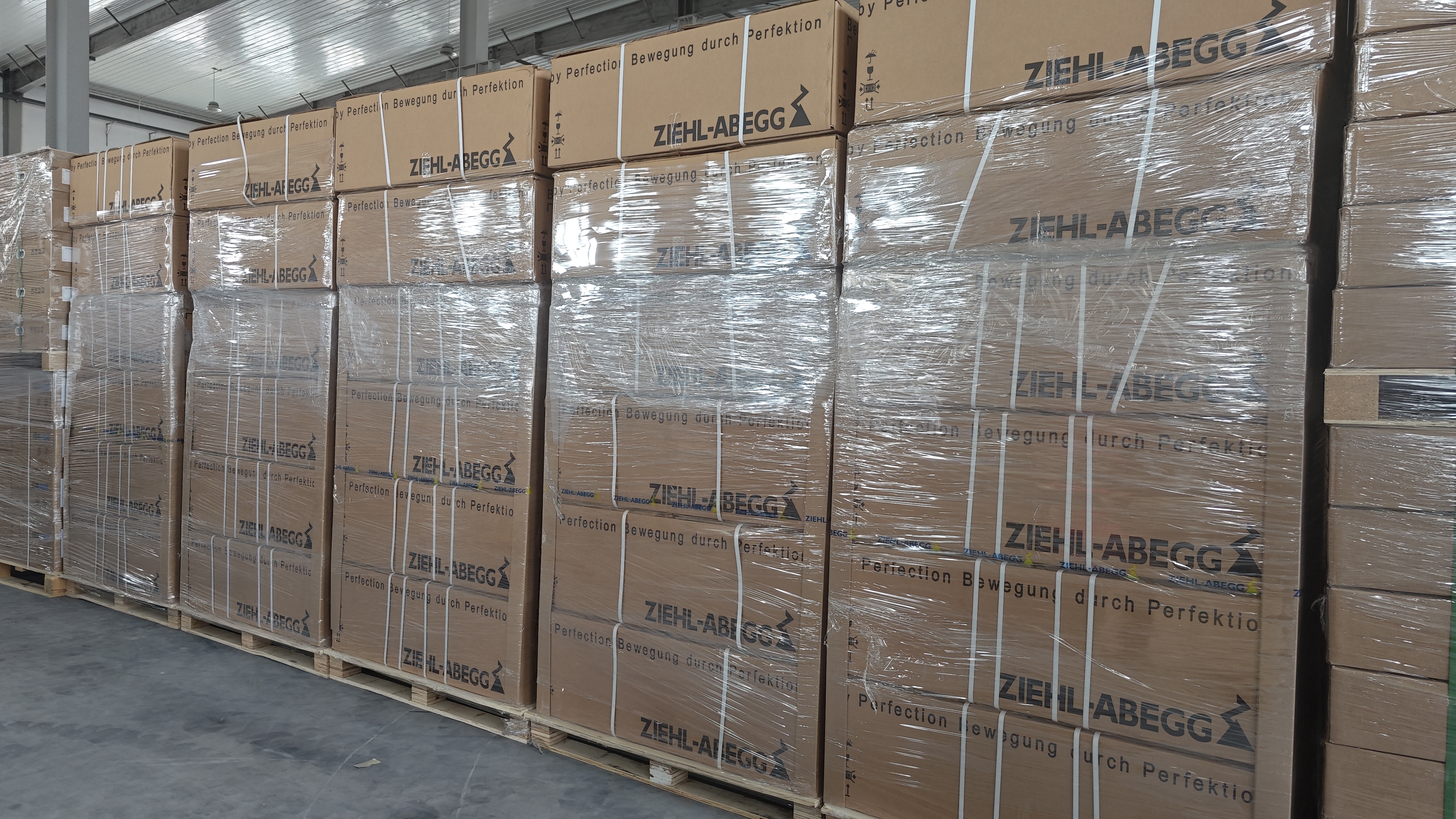
Figure 1: Dispatch preparation is one of the visible links between model documentation and project continuity.
Application Fit Across CRAH, In-Row, Dry Cooler and Cleanroom FFU
The portfolio logic differs by application, and a supplier evaluation should follow that logic rather than flatten it. In CRAH and AHU fan walls, the binding constraints are static pressure, control integration and protection — which is why IP55 models with Modbus or 0–10 V control, such as K3G500-PB33-01 and K3G310-PV69-03, sit naturally in that part of the portfolio. In in-row cooling, the same electrical and control characteristics matter, but the mechanical envelope is tighter, so model continuity has a direct effect on serviceability.
Dry coolers follow a different pattern. Outdoor installation shifts the emphasis towards protection level and towards the ability to keep a specific model available as a bank is extended. W3G800-KU21-05 sits in that evaluation set, where voltage, power and speed data supports both retrofit planning and the comparison of a replacement against an installed unit. Cleanroom FFU applications add a further requirement: stable airflow behaviour and cleanable construction. They are typically the part of a cooling portfolio where re-qualification is most expensive, because a change can affect the validated condition of the room itself.
For a buyer, the practical conclusion is that one supplier rarely needs to cover every application equally well. What matters is whether the supplier can state, per model and per application, what is documented and what is not. A supplier that answers that question precisely is more useful over ten years than one that answers it broadly.
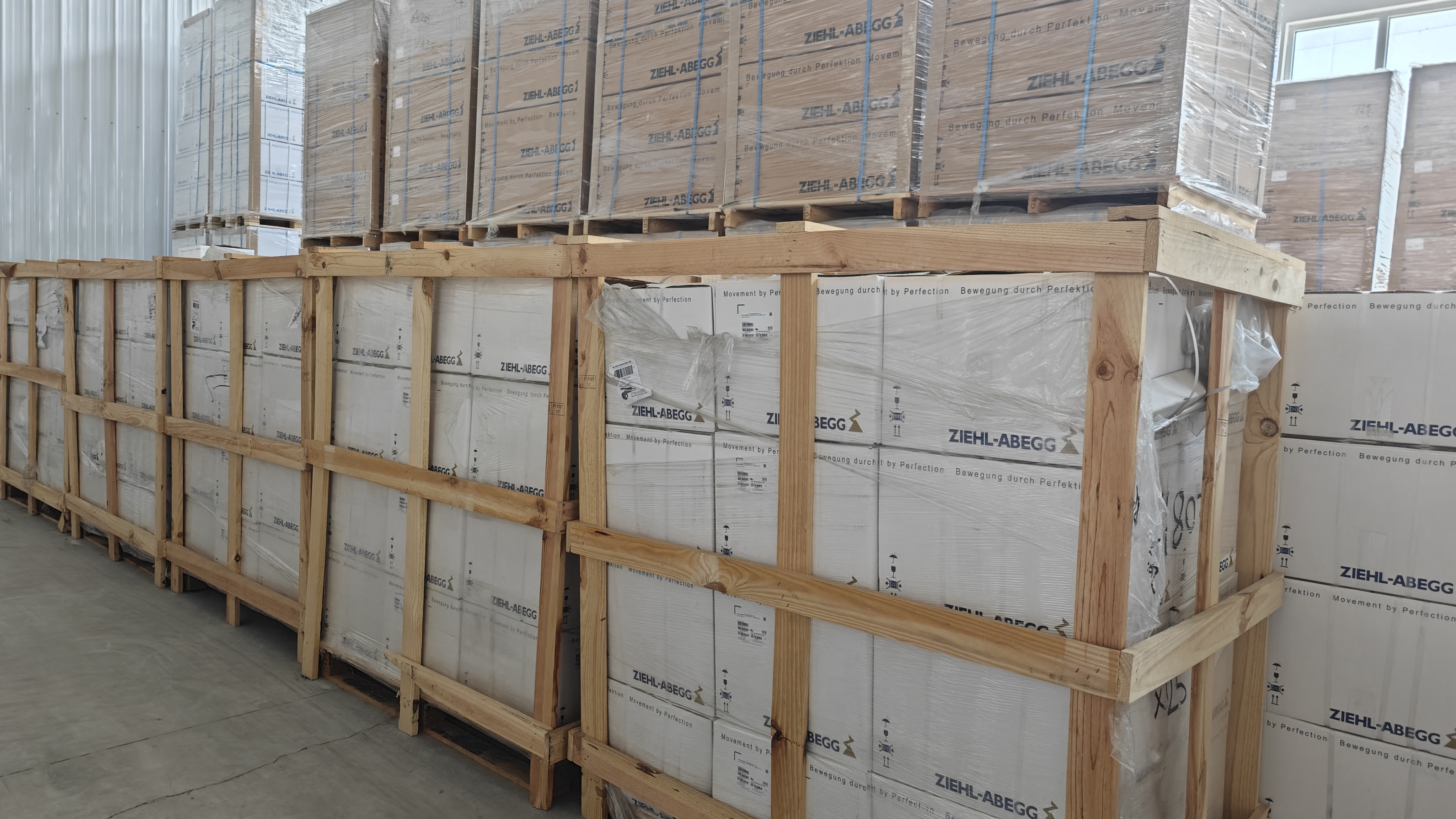
Figure 2: Ready stock and dispatch capability reduce the interval between a documented model and a delivered unit.
Market Context: Regulation, Consolidation and Supply Scale
Three market signals shape how long-term fan sourcing should be evaluated. The first is growth. According to market analysis published on the category, the global EC fans market reached USD 3.5 billion in 2024 and is projected to grow to USD 6.7 billion by 2030. A growing installed base means longer service lives and more retrofit events, and both increase the value of documentation continuity.
The second signal is regulatory. Regulation (EU) 2024/1834 applies from 24 July 2026, setting stricter efficiency thresholds for industrial fans from 125 W to 500 kW. For suppliers and buyers working on European projects, this turns efficiency evidence from a nice-to-have into a procurement input.
The third signal is supplier-side pressure. ebm-papst Group reported sales of EUR 2.098 billion for the 2024/25 fiscal year, a 13.1% decrease from the previous year. Ziehl-Abegg reported 2024 revenue of EUR 893 million, down 7% from EUR 955 million in 2023. Range rationalisation during weaker demand periods is a normal commercial response, and it is precisely the situation in which buyers discover that a discontinued model was the one embedded in their standard design.
On the supply side, China's fan exports under HS 841459 reached 509 million units totalling USD 3.788 billion in 2024, up 6.96% in value. The constraint for long-lifecycle projects is therefore rarely raw availability; it is matching the right documented model to a specific installed base.
Comparing Sourcing Structures: Where Each Model Reaches Its Limit
Buyers typically weigh three sourcing structures for long-lifecycle cooling projects, and each carries a different documentation profile.
| Sourcing structure | Evidence access | Continuity and substitution | Practical limitation |
|---|---|---|---|
| Single-brand OEM channel | Full model data for that brand | Continuity follows the brand's own range policy | If a range changes, there is no alternative within the same relationship |
| General trading reseller | Catalogue-level data | Continuity depends on stock at the time of order | Documentation depth is usually the weakest link |
| Multi-brand technical distributor / agent | Model-level data across several brands | Cross-referencing across ranges; ready stock supports faster fulfilment | Does not create proprietary manufacturing specifications |
Table 2: Documentation and continuity profile of three commonly used EC fan sourcing structures.
The limitation should be stated plainly. Hengrui EC Fan operates as a distributor and agent, not as the manufacturer of every model in the qualification set. A buyer who requires proprietary manufacturing documentation — factory test reports issued in the manufacturer's name, or a proprietary design file — must obtain those from the manufacturer. Documented values are also model-specific: IP55 recorded for K3G500-PB33-01 and K3G310-PV69-03 says nothing about the protection level of other models, and the ErP operating points listed at 10,945 m³/h at 1,245 Pa and 4,020 m³/h at 1,583 Pa describe two duty points rather than a full performance envelope. A disciplined evaluation records exactly which model carries which evidence, and leaves everything else as an open item to be confirmed before award.
Future Outlook
Two developments are likely to define long-term EC fan sourcing over the next several years. The first is that lifecycle documentation will move from a closing checklist to a scored criterion. As efficiency regulation tightens and installed bases age, the ability to restate a model's protection level, control interface and duty point becomes a measurable supplier attribute rather than a courtesy.
The second is that substitution logic will become more formal. Rather than replacing a discontinued fan with whatever fits the flange, buyers will increasingly ask for a documented equivalent: same control interface, comparable protection, and a stated duty point. Multi-brand technical distribution is well suited to that task, because substitution options can be drawn from more than one range — provided the documentation exists.
The practical preparation is to build a model register now. For each installed fan, record the model, its documented protection level, its control interface and the operating points on file. That register is what converts a supplier relationship into a long-term continuity asset.
FAQ: Long-Term EC Fan Supplier Evaluation
What does model continuity mean in EC fan procurement?
Model continuity means that a fan specified for a cooling application can still be supplied, or replaced by a documented equivalent, at a later point in the project's life — with the same mounting, the same control interface and a traceable technical record. It is not the same as brand continuity. What matters in evaluation is the individual model and the evidence held for it.
Why must IP ratings be documented per model rather than per brand?
Because protection level is a property of a specific enclosure, not of an entire manufacturer's range. In the qualification set used for cooling projects, K3G500-PB33-01 and K3G310-PV69-03 are each documented at IP55. That statement does not extend automatically to other models, and treating it as if it did can produce a specification that fails at commissioning. Each model should carry its own protection statement.
What is the difference between Modbus and 0–10 V control when planning a retrofit?
A 0–10 V input is an analogue speed command, while Modbus is a digital interface that carries commands and feedback such as actual speed and fault status. A replacement that changes the interface type usually requires a change in controller configuration or wiring, so the interface should be matched before the fan is ordered. K3G500-PB33-01 and K3G310-PV69-03 are documented with both Modbus and 0–10 V control options, which widens the set of compatible control architectures.
How should ErP operating points be used in a supplier comparison?
They should be used as comparable duty points, not as a complete performance claim. The points on file include 10,945 m³/h at 1,245 Pa and 4,020 m³/h at 1,583 Pa. Used correctly, they allow a buyer to check whether a proposed replacement is offered at the same duty as the original unit. They do not replace a full curve, and they do not by themselves demonstrate compliance with Regulation (EU) 2024/1834 or any other threshold.
Which electrical data must be on file to plan a retrofit?
At minimum, voltage, power and speed data for each installed model, so that a replacement can be checked for mounting and control compatibility. In the evaluation set described here, that data is recorded for K3G560-FA28-03, R3G630-FB32-03 and W3G800-KU21-05. Buyers should also record the protection level and control interface where documented, and flag any missing item as an open point rather than an assumption.
Where does a distributor or agent model reach its limits in long-term sourcing?
A distributor or agent adds value through multi-brand access, stock and technical matching, but it does not create proprietary manufacturing specifications. If a project requires factory test reports issued in the manufacturer's name or a proprietary design file, those must come from the manufacturer. Evidence held for one model — a protection level or an operating point, for example — should also never be generalised to the rest of a range without documentation.
Model-level technical data for the models discussed in this evaluation can be requested through the company's own site, en.bjhengrui.com.