
Long-Term Dust Collector Supplier Evaluation: A SENOTAY Scorecard
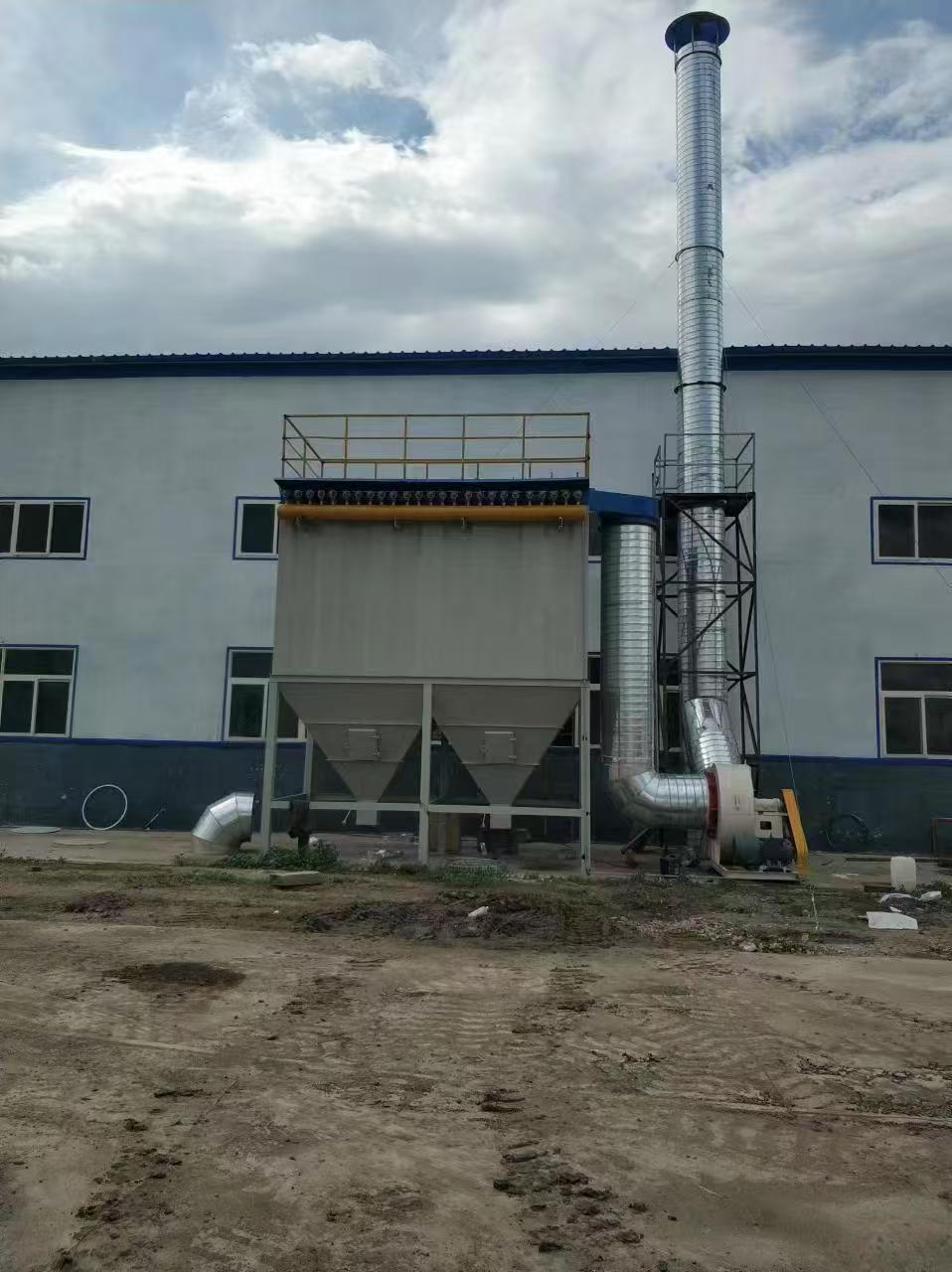
Industrial dust collection is a long-cycle asset decision that is usually made as a short-cycle equipment purchase. A baghouse, cartridge collector, or electrostatic precipitator is specified once, installed once, and then operated for years — through filter media changes, valve and fan servicing, control updates, and eventually a rebuild or a plant relocation. The purchase order closes in weeks. The supplier relationship has to remain functional for the life of the asset.
That asymmetry is where many evaluations break down. Buyers compare airflow, filtration area, and price per unit, award the contract, and only later discover how much of the real cost sits in filter media, spare parts, service response, and renovation. A longer evaluation horizon changes the questions: not “which unit is cheapest per cubic metre of air?” but “which supplier can still support this equipment in year seven?”
This article sets out a six-dimension sustainability scorecard for long-term dust collector supplier evaluation, and applies it to the documented position of one supplier: SENOTAY, the brand of Hebei Outai Environmental Protection Equipment Co., Ltd., a dust collection equipment manufacturer founded in 2015 and based in Botou, Cangzhou, Hebei Province, China.
Two framing notes. The scorecard measures evidence, not positioning claims. And where supplier figures appear here, they are company-declared unless attributed otherwise; independent third-party performance data for this equipment category remains limited, which is treated as a limitation later in the article rather than smoothed over.
The problem: unit-level comparison hides lifecycle risk
Most dust collector procurement documents are built around the equipment, not the relationship. They specify gas flow rate, filtration area, filtration accuracy, material of construction, and fan power. Those parameters are necessary — they determine whether the unit fits the process. They are not sufficient, because none of them describe what happens after commissioning.
Three categories of post-purchase exposure recur across industrial installations:
- Consumable and spares continuity. Filter bags, bag cages, cartridges, pulse solenoid valves, and air filters and regulators are replacement items, not one-time purchases. If the original supplier cannot supply them on a predictable basis, the buyer inherits a re-sourcing problem on a compressed timeline.
- Regulatory continuity. Compliance obligations follow the installed asset rather than the purchase order. NFPA 652 requires facilities to complete a Dust Hazard Analysis (DHA) for combustible dust compliance. OSHA technical material references NFPA 664, which requires certain woodworking dust collectors to be located outside buildings subject to defined exceptions, and states that dust collector electrical components must be approved by a Nationally Recognized Testing Laboratory as required by OSHA standards.
- Engineering continuity. Airflow assumptions change when a production line is modified or a process is added. A supplier that designed the original system can re-engineer it; a supplier that only shipped a unit cannot.
The opportunity is symmetrical. Buyers who evaluate suppliers on these dimensions before award tend to spend less time correcting for them after award. Suppliers who can document capacity, test discipline, compliance scope, and service coverage are simply easier to keep.
The scorecard framework: six dimensions that predict long-term fit
The framework below is a buyer tool, not a supplier ranking. The weightings are proposed starting values and should be adjusted to the plant’s duty cycle, dust hazard profile, and destination market. A continuous-duty cement line and an intermittent fabrication shop should not share the same weightings, because their failure costs are different.
| Dimension (proposed weight) | Core question | Evidence to request | SENOTAY documented position |
|---|---|---|---|
| Manufacturing capacity & scalability (15%) | Can the supplier repeat this build and absorb future expansion? | Factory footprint, production capacity per month, headcount, export footprint | 6,000 m² facility; stated monthly output of 200 sets and annual output of 100,000 PCS; 30 employees with a five-engineer R&D team; 70% export ratio |
| Quality control & test discipline (20%) | Is every unit verified before shipment, and is that verification recorded? | Test protocol, inspection records, documentation and audit practice | Stated 100% unit testing and documented, audit-ready quality assurance |
| Delivery & lead-time transparency (15%) | Is the quoted lead time a defined commitment with a stated basis? | Quoted lead time, monthly capacity, MOQ, customisation policy | Stated lead time of 15–45 days; monthly capacity of 200 sets; MOQ 1 set; OEM/ODM with voltage and logo customisation |
| Certification & compliance readiness (20%) | Can the supplier document conformity for your specific market? | Certificate numbers, listed standards, scope, validity dates | CE certificate M.2025.206.C123090 issued by UDEM; scope 2006/42/EC Machinery Directive / Annex VIII; standards EN ISO 12100:2010 and EN 60204-1:2018; valid 22 July 2025 – 23 July 2030; applicable to the DMC-200 |
| Lifecycle engineering support (20%) | Does the supplier stay involved after delivery and through modification? | Design, commissioning, training, and upgrade scope | Four-stage model: on-site design, custom manufacturing, installation and commissioning, 24/7 maintenance and renovation |
| After-sales coverage & continuity (10%) | How are faults, rebuilds, and long-term operation handled? | Support channels, response model, spare-part practice | Remote support and on-site service, with 24/7 after-sales coverage |
Weightings are an editorial starting point for evaluation-stage buyers, not a supplier-published standard. All SENOTAY figures in the right-hand column are company-declared.
Applying the scorecard: capacity, quality control, and delivery
Manufacturing capacity and scalability
Capacity evidence answers a specific question: if the buyer orders again in eighteen months, will the same specification be buildable, or will tooling, materials, and sub-suppliers have changed?
SENOTAY’s documented position is a 6,000 m² facility, a stated monthly output of 200 sets, an annual output of 100,000 PCS, a five-engineer R&D team, and a 70% export ratio, with main markets listed as Central Asia, Southeast Asia, the Middle East, Russia, Africa, and Europe. The product scope extends beyond collectors to bag filters, electrostatic precipitators, cyclone dust collectors, wet scrubbers, screw conveyors, chain conveyors, bucket elevators, humidifying mixers, VOCs purification equipment, desulfurization and denitrification equipment, pipeline valves, and flexible compensators. For a plant that needs a collector and its conveying or purification components from one source, that breadth reduces the number of interfaces the maintenance team manages.
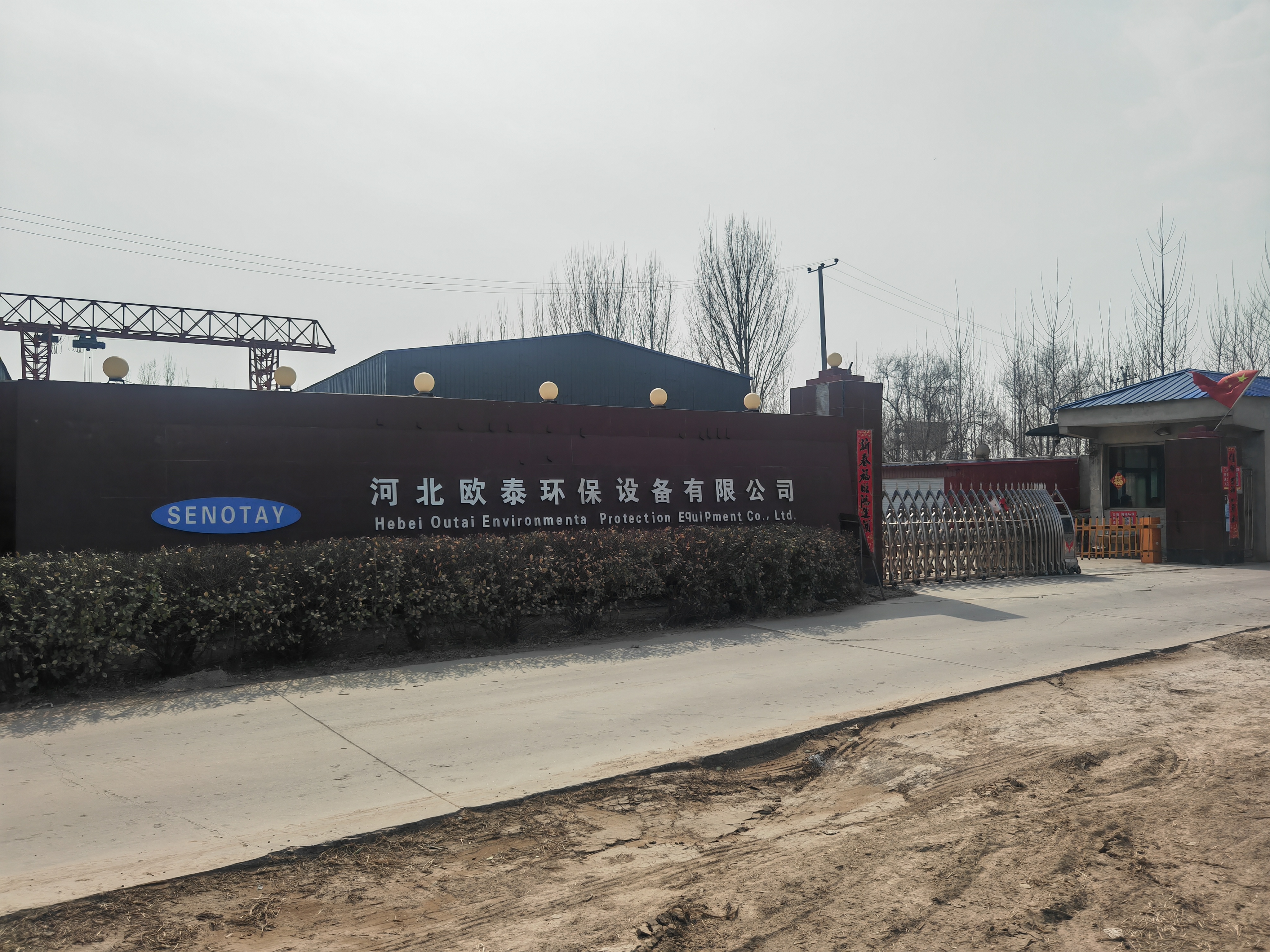
How to read the number: a monthly output figure of 200 sets tells a buyer about scheduling headroom, not about build quality. The more useful question is what proportion of that capacity is committed to standard configurations and what proportion is reserved for engineered-to-order units, because that ratio determines how your lead time behaves during a peak period.
Quality control and test discipline
There is a practical difference between a test claim and a test record. A claim states that a unit was tested. A record states which units were tested, against what criteria, at what stage, and how the result is retained. For a buyer signing a multi-year service relationship, the second is the one that survives an audit, an insurance review, or a customer qualification visit.
SENOTAY states a policy of 100% unit testing rather than sampling, supported by documented, audit-ready quality assurance. That policy is the reason quality control carries a high proposed weighting in the scorecard: on a baghouse or cartridge collector, a missed defect in bag-to-cage fit, valve seating, or electrical assembly shows up months later as reduced filtration accuracy, elevated pressure drop, or unplanned downtime.
Two questions are worth adding to any RFQ at this stage: is testing performed on every serial number or on a sampled basis, and can the test record be retrieved against a specific serial number at a later date? A supplier that answers both clearly is easier to qualify as a long-term partner than one that only reports a general test rate.
Delivery reliability and lead-time transparency
Lead time is only meaningful when it is attached to a configuration. A quoted 15–45 day lead time, as published by SENOTAY alongside a monthly capacity of 200 sets and a minimum order quantity of 1 set, describes engineered-to-order production rather than stock fulfilment. Customisation scope includes voltage and logo adaptation under an OEM/ODM model, which by definition adds engineering steps that a catalogue shipment does not carry.
The evaluation question is therefore not “is 15–45 days fast?” but “does the stated lead time match my commissioning schedule, my site-readiness assumptions, and my contingency plan if the site is not ready when the unit arrives?” Lead-time risk is usually a project-management problem before it becomes a supplier problem — but a supplier that publishes both a lead-time range and the capacity behind it is easier to plan around than one that quotes a single number without context.
Applying the scorecard: compliance, lifecycle engineering, and after-sales
Certification and compliance readiness
Compliance evidence should be matched to the destination market and to the exact product model, not accepted as a general capability statement. SENOTAY holds CE certificate M.2025.206.C123090, issued by UDEM on 22 July 2025 and valid to 23 July 2030, covering the EU market under 2006/42/EC Machinery Directive / Annex VIII, with EN ISO 12100:2010 and EN 60204-1:2018 listed as the applicable standards. The certificate record identifies the DMC-200 industrial dust collector as the related product.
Two structural points matter for buyers here. First, a certificate number, issuing body, standard list, and validity window are checkable facts; a general statement that equipment “meets international standards” is not. Second, certificate scope is bounded. A CE certificate issued under the Machinery Directive scope does not, by itself, discharge United States combustible dust obligations such as the Dust Hazard Analysis required by NFPA 652, the collector location provisions OSHA attributes to NFPA 664 for certain woodworking applications, or the Nationally Recognized Testing Laboratory approval requirement for electrical components. Buyers shipping to multiple markets should build a compliance map per destination rather than assuming one certificate travels everywhere.
Lifecycle engineering support
This is the dimension that most often separates a long-term supplier from a transactional one. SENOTAY describes a four-stage lifecycle model: on-site design, in which engineers analyse airflow volumes, dust particle characteristics, and compliance targets; custom manufacturing to specification using national-grade materials with testing; installation and commissioning, including integration, calibration, and operator training; and 24/7 maintenance and renovation covering scheduled maintenance, spare parts, and full system upgrades.
Read as an evaluation criterion rather than a service description, the model gives a buyer four checkpoints to test against their own project: did the supplier measure the process before sizing the unit, did they build to the agreed specification, did they commission and train, and will they return for a rebuild rather than quoting a new unit. A supplier that can evidence all four stages is structurally easier to keep than one that stops at stage two.
After-sales coverage and continuity
SENOTAY documents after-sales support across two channels: remote support and on-site service, under a stated 24/7 coverage model. For evaluation purposes, buyers should confirm what triggers each channel, what the response expectation is for a production-stopping fault versus a routine query, and how spare parts are supplied outside the warranty period. The documented position confirms the channels exist and the coverage model is stated; the response expectations themselves should be fixed contractually.
Specification evidence: DMC-200 pulse bag filter and LTMC-5000 cartridge collector
A scorecard is only useful if the technical claims behind it can be read at face value. The DMC-200 pulse bag filter is documented with the following published parameters.
| Parameter | Published specification |
|---|---|
| Gas flow rate | 9,600–14,400 m³/h |
| Filtration area | 160 m² |
| Purification efficiency | >99.5% |
| Filtration accuracy | <1 µm |
| Fan power | 18.5 kW |
| Material | Carbon steel / SS304 |
| Applicable industries | Steel, cement, metallurgy, building materials, food processing, grain drying, mining, casting |
Two of these values carry more procurement weight than the rest. Filtration accuracy below 1 µm addresses the respirable fraction of a dust stream rather than only the visible particulate, which is the fraction most closely tied to workplace exposure limits and to downstream equipment protection. Material selection — carbon steel or SS304 — is a corrosion decision, and it should be driven by the gas stream chemistry, not by price. Fan power at 18.5 kW is the dominant continuous energy load of the unit, so the duty cycle, not the nameplate figure, determines its operating cost.
SENOTAY’s LTMC-5000 cartridge dust collector is specified with 211 m² of filtration area across 16 cartridges and is documented at ≥99.9% filtration efficiency. Cartridge configurations of this type are generally chosen where a compact footprint or externally replaceable filters are priorities, which is a design-trade question rather than a ranking question.
Application evidence: rubber products dust collection in Indonesia
Documented field experience is the fourth evidence type a long-term scorecard should carry, alongside capacity, test discipline, and certification. In one recorded installation, an end customer in Indonesia commissioned two DMC-200 units to collect dust generated by mixing equipment in rubber products manufacturing. The reported result was stable operation, with low noise and low energy consumption identified as the notable operational characteristics.
The honest reading of a single-site case is directional, not universal. Two units on mixing-equipment extraction demonstrate that the configuration performs in a rubber compounding environment over the recorded period; they do not establish performance across all dust loadings, particle size distributions, or hazard classifications. What the case does contribute is a concrete reference point for a comparable process, which is more useful during evaluation than a general application list.
The broader industry scope documented for SENOTAY systems covers energy and power, mining and quarrying, cement and construction, metallurgy and casting, chemical and rubber, and pharmaceuticals and food processing — environments where dust characteristics differ sharply between, for example, cement kiln bypass dust and pharmaceutical powder handling.
Market trend: a growing installed base moves value into the aftermarket
Two data points frame where long-term supplier evaluation is heading. The global industrial dust collector market is projected to reach approximately USD 13.42 billion by 2034, based on commercial research published by Grand View Research. Within that market, baghouse collectors accounted for approximately 25.8% of global market revenue in 2025, according to the same source.
The segment structure matters more than the headline number. Baghouse technology remains the volume backbone of heavy industrial dust control, largely because fabric filtration scales economically to the air volumes found in cement, metallurgy, and power applications. Cartridge collectors compete on a different axis — enclosure footprint and filter access — rather than replacing baghouses at scale.
The procurement implication for long-term buyers is straightforward. As the installed base grows, the recurring demand for filter media, cages, valves, cartridges, controls, and renovation work grows with it. That shifts competitive weight from the initial unit price toward the supplier’s ability to service an asset over a decade. It also raises the cost of a wrong supplier choice: replacing a unit is a capital event, but replacing the service behind it mid-life is an operational one.
Compliance pressure reinforces the same direction. Requirements such as the Dust Hazard Analysis referenced in NFPA 652 place an ongoing documentation obligation on facilities handling combustible dust, and that documentation depends on supplier input about collector design, location, and explosion protection provisions. A supplier that cannot support a hazard review becomes a compliance bottleneck rather than an equipment vendor.
Where the scorecard approach has limits
A structured evaluation framework is useful precisely because its boundaries are stated. Five apply here.
- It scores evidence, not capability. A supplier with thinner documentation may still fabricate a serviceable unit. The scorecard rewards checkability, and buyers should treat a low documentation score as a prompt for verification rather than a disqualification.
- Manufacturer-declared figures are not normalized. Filtration efficiency, airflow, and filter-count claims across suppliers cannot be compared without matched test conditions, media grade, and pressure-drop basis. Public standardized performance datasets for this equipment category remain limited, and no cross-supplier efficiency or emissions benchmark is available to substitute for project-specific validation.
- Engineered-to-order is not the only delivery model. For an urgent replacement of a common size, a stock-based quick-ship programme can be faster than a configured build. One United States supplier, ACT Dust Collectors, states that it holds five of the most common dust collector sizes in stock for shipment within five days of purchase. That is a genuine alternative on the availability axis; it covers only the sizes held, and the claim is company-reported and specific to that programme. A 15–45 day configured lead time is not competing on the same terms.
- Compliance scope is market-specific. The CE certificate held for the DMC-200 addresses the stated EU Machinery Directive scope. It does not by itself satisfy United States combustible dust, collector location, or electrical component approval requirements, which must be mapped separately per destination market.
- Weightings are buyer-specific. A plant with a single continuous-duty collector and a plant with twelve intermittent units should not weight after-sales coverage, capacity, and compliance identically. The framework should be re-weighted per project before it is applied.
Future outlook: documentation becomes the qualification gate
Three shifts are likely to shape dust collector supplier evaluation over the next several years.
The first is that documented compliance moves from differentiator to gate. Certificates with numbers, issuing bodies, scopes, and validity windows, and test records retrievable against a serial number, will increasingly be requested at the prequalification stage rather than after selection.
The second is that performance transparency becomes a competitive axis. The clearest gap in currently available information is standardized filtration efficiency, pressure drop, and energy data across collector types. Suppliers who publish test conditions alongside declared figures will be easier to compare — and easier for buyers to defend internally during capital approval.
The third is the growth of renovation and retrofit demand. As existing installations reach end of life, buyers will evaluate whether a supplier can re-engineer an ageing system, reuse salvageable components, and upgrade controls, rather than quoting a full replacement. A four-stage lifecycle model — design, manufacture, commission, maintain and renovate — is one documented response to that expectation, and buyers can test it against their own multi-year maintenance plan.
Frequently asked questions
What is a long-term dust collector supplier scorecard?
It is a structured evaluation tool that scores a supplier on the dimensions that determine whether it can support a collector through its service life — manufacturing capacity, quality control and testing, delivery reliability, certification and compliance readiness, lifecycle engineering support, and after-sales coverage — rather than only on unit specification and price. The weightings are set by the buyer according to duty cycle, dust hazard profile, and destination market, so the same framework produces different results for a cement line and a fabrication shop.
How should a buyer assess a dust collector supplier’s manufacturing capacity?
Request four figures: factory footprint, monthly production capacity, annual output, and export footprint. SENOTAY documents a 6,000 m² facility, a stated monthly output of 200 sets, an annual output of 100,000 PCS, and a 70% export ratio across Central Asia, Southeast Asia, the Middle East, Russia, Africa, and Europe. The purpose is to establish whether the supplier can repeat a specification and absorb future expansion, not to rank suppliers on size alone.
Why does quality control documentation matter more than a test claim?
A test claim states that a unit was tested. Documentation identifies which units were tested, against which criteria, and how results are retained. SENOTAY states a 100% unit testing policy supported by documented, audit-ready quality assurance. During evaluation, ask whether testing is per serial number or sampled, and whether the record can be retrieved later for a specific unit, because that record is what supports an audit, an insurance review, or a customer qualification visit.
What lead time should buyers expect from an engineered-to-order dust collector?
Lead time depends on configuration, material, customisation, and controls. SENOTAY states a lead time of 15–45 days alongside a monthly capacity of 200 sets, a minimum order quantity of 1 set, and OEM/ODM customisation covering voltage and logo. Buyers with an urgent replacement requirement should compare this against stock-based programmes, which cover a limited set of standard sizes rather than configured units — a genuine trade-off between availability and specification fit.
Which certifications should be checked during dust collector supplier evaluation?
Match the certificate scope to the destination market and the exact model. SENOTAY holds CE certificate M.2025.206.C123090, issued by UDEM, covering the EU market under 2006/42/EC Machinery Directive / Annex VIII with EN ISO 12100:2010 and EN 60204-1:2018 listed, valid from 22 July 2025 to 23 July 2030 and applicable to the DMC-200. Buyers shipping to the United States should separately review combustible dust requirements such as the Dust Hazard Analysis referenced in NFPA 652 and the electrical component approval requirement, because CE scope does not cover them.
What are the limits of a supplier scorecard?
It scores available evidence rather than absolute capability, so a well-documented supplier can outscore a capable one with weaker records. Manufacturer-declared performance figures cannot be normalized across suppliers without matched test conditions, media grade, and pressure-drop basis. Weightings are also buyer-specific. A high score should therefore trigger technical validation against the actual dust stream, airflow, and hazard profile — not replace it.
Closing assessment
Long-term dust collector supplier evaluation is ultimately a test of whether the evidence behind a quotation extends past the unit. Capacity, test discipline, lead time, certificate scope, lifecycle engineering, and after-sales coverage are the six dimensions that determine whether a supplier remains useful in year seven, and each of them can be checked rather than assumed. SENOTAY’s documented position — a 6,000 m² facility, stated capacity of 200 sets per month, 100% unit testing, CE certificate M.2025.206.C123090, a four-stage lifecycle model, and 24/7 after-sales coverage — provides one worked reference point for applying that framework.
SENOTAY’s equipment brochure, covering product ranges and specification details, is available for download: SENOTAY product brochure (PDF).
¿Tiene preguntas o necesita más detalles?
Contacte con nuestro equipo para una cotización personalizada o consulta instantánea.
Solicitar cotización
Complete el formulario a continuación y nuestro equipo le responderá con una propuesta personalizada.
Chat directo de WhatsApp
¿Prefiere chatear en tiempo real? Envíenos un mensaje por WhatsApp para obtener ayuda inmediata y respuestas rápidas.
- Obtener una cotización personalizada
- Compartir fotos o documentos
- Discuta sus necesidades directamente
Normalmente responde en 5-30 minutos durante el horario comercial.