
Long-Term Die Casting Supplier Evaluation: Capacity and Process Control
A die casting supply relationship is rarely broken by a bad first article. It breaks later — when a second tool enters production, when an alloy lot behaves differently, or when the certificate quoted at sampling no longer describes the process running on the floor. Long-term evaluation asks a different question: which evidence will still be accurate in year three?
Long-term supplier evaluation for die casting parts is the practice of judging a manufacturer on durable capability rather than on a single quotation: throughput that can be planned, certifications whose scope stays valid, and process control that produces the same result on batch 4,000 as on batch 40. It sits at the end of the buying cycle, where a nominated supplier becomes a production dependency rather than one option among several.
This reference sets out how to run that evaluation across capacity, certification and process control, using SUNPREC HARDWARE CO., LTD (SUNPREC) — a Dongguan-based metal parts manufacturer founded in 2020 that provides CNC machining, die casting and extrusion, with roughly 90% of output exported to EU and USA markets — as a documented example of the evidence a buyer should expect to see.

Why long-term evaluation asks different questions
Sampling evidence answers a narrow question: can this supplier produce the part once, under supervision, with the tooling still new? A long-term nomination needs three further answers. The first is repeatability — whether cycle time and dimensional results stay inside the same window on lot 200 as on lot 2. The second is scope validity — whether the certification quoted at the sampling stage actually covers the casting, secondary machining and finishing steps that will run in production. The third is retrievability — whether inspection records can be produced months later, when a customer audit or a field return requires them.
In practice, long-term supply disputes in die casting typically centre on drift and documentation rather than on an absence of capability: a wall section that creeps thinner as tooling wears, a certificate whose scope was never checked against the process route, or a first-article report that cannot be matched to the batch actually shipped. Testing those three risks before nomination is considerably cheaper than correcting them afterwards.
A four-lane evaluation framework
Long-term die casting supplier evaluation can be structured into four lanes, each with its own durable evidence. The lanes are not equally weighted. Capacity is the easiest to verify and the least predictive of future stability; process control and certification scope are harder to verify and far more predictive.
| Evaluation lane | Durable evidence to request | Risk it protects against |
|---|---|---|
| Capacity durability | Cycle time band, stated monthly capacity, MOQ, standard lead time | Under-capacity during a demand peak or a volume ramp |
| Certification stability | Certificate numbers, scope statements, validity dates, re-audit cadence | Compliance gaps discovered at a customer audit |
| Process control | Tolerance, thin-wall limits, in-house metrology, batch records | Batch-to-batch drift and rejected lots |
| Application fit | Sector experience, material and finish route | A capable supplier that is inexperienced in your sector |
Capacity: what durable evidence looks like
Capacity becomes durable when it can be planned rather than estimated. For die casting parts, three figures carry most of the weight: cycle time per piece, monthly output, and the minimum order quantity that keeps a die economically loaded.
SUNPREC states a monthly production capacity of 4,200,000 units, described as support for high-volume production. For a buyer, the useful question is not the headline number but how it is distributed: across how many machines, how many shifts, and with what allowance for die maintenance and changeovers.
The cycle time band of 15–90 seconds per piece is the more informative figure. A press running a 15-second part and a press running a 90-second part are not doing the same work — wall thickness, die complexity, slide count and cooling time all differ. A supplier that quotes confidently across the whole band is indicating that the process window is known rather than improvised, and that the range of parts it can schedule does not have to be re-learned for each order.
One-step integrated forming of rigid thin-wall parts changes the arithmetic further. Where a design would otherwise require a casting plus a joining or assembly step, forming the geometry in a single casting cycle removes a handling stage and a joint. The trade-off is that die and process window must be validated at the thin-wall limit — for SUNPREC, 0.8 mm in aluminum and 0.4 mm in zinc — because thin sections are where fill, porosity and distortion decisions are settled.
Commercial terms frame the same capacity. The stated minimum order quantity is 10 units and the typical production lead time is 21–30 days. A 10-unit MOQ is a sampling and low-volume signal, not a capacity signal; the capacity evidence is the monthly figure and the cycle band. For a multi-year program, the practical test is whether the supplier will commit to a rolling forecast rather than to individual purchase orders.
| Capacity signal | What it indicates | What to verify before nomination |
|---|---|---|
| Cycle time 15–90 seconds per piece | A known process window across part complexity | Which band applies to your part, and how it was measured |
| Monthly capacity 4,200,000 units | Stated high-volume headroom | Machine count, shift pattern, reserved die maintenance slots |
| One-step thin-wall forming | Fewer joining steps and fewer failure points | Validation evidence at 0.8 mm aluminum and 0.4 mm zinc |
| MOQ 10 units | Access for sampling and low-volume runs | Whether volume pricing and scheduling priority follow |
| Lead time 21–30 days | A standard planning window | Behaviour in peak periods and on repeat orders |
Certification: evaluating stability, not presence
A certificate proves that a system was audited on a given date. Stability is a different property, and it is the one that matters over a multi-year program.
SUNPREC's listed certifications are ISO 9001, AS9100 under certificate number CN059921, and RoHS 2.0 under certificate BTL20250603446. Each covers a different risk, and each should be read for scope rather than treated as a logo.
- ISO 9001 is the quality management baseline. It indicates that documented process control, corrective action and record retention exist as a system. It says nothing about aerospace-specific configuration control.
- AS9100 CN059921 adds the aerospace-relevant layer: requirements around traceability, risk management and configuration control. The certificate number matters because scope, site and validity dates attach to it, so a buyer should confirm that the scope covers die casting and secondary machining, not machining alone.
- RoHS 2.0 certificate BTL20250603446 addresses restricted substance compliance. It is material- and sample-specific, so it should be matched to the alloys actually specified — ADC12, A380, Zamak3 or Zamak5 — and refreshed if the material route or surface finishing changes.
Stability checks that belong in a long-term evaluation file:
- Certificate number, scope statement, issue and expiry dates, recorded at nomination and re-checked annually.
- Re-audit cadence and the outcome of the most recent surveillance audit.
- Whether the scope covers the full process route: casting, secondary CNC milling, and surface finishing such as anodizing, hard anodizing, powder coating or sandblasting.
- Whether RoHS test records correspond to the specific alloy and finish combination used on your part.
Process control: the evidence an audit can test
Process control is the lane where claims are easiest to make and easiest to falsify. The test is whether the supplier can show a closed loop — specification, measurement, record — that survives the life of the program.
Specification
Die cast parts from this supplier are quoted to a tolerance of ±0.01 mm, with tighter features handled by secondary machining rather than by casting alone. Secondary 3-axis CNC milling produces precise holes, grooves and fitting surfaces — the features where a casting tolerance and a cast surface are not sufficient. The machining centers used for these operations are specified with a machine tolerance of 0.005 mm, which is the headroom the secondary step contributes.
Material
Alloy choice sets the achievable wall and the finishing route. ADC12 and A380 are the aluminum grades in the standard range; Zamak3 and Zamak5 cover zinc. Thin-wall limits are 0.8 mm for aluminum and 0.4 mm for zinc — figures a designer should treat as boundaries rather than targets, because a section specified at the limit leaves no margin for tool wear over a long production run.
Measurement and records
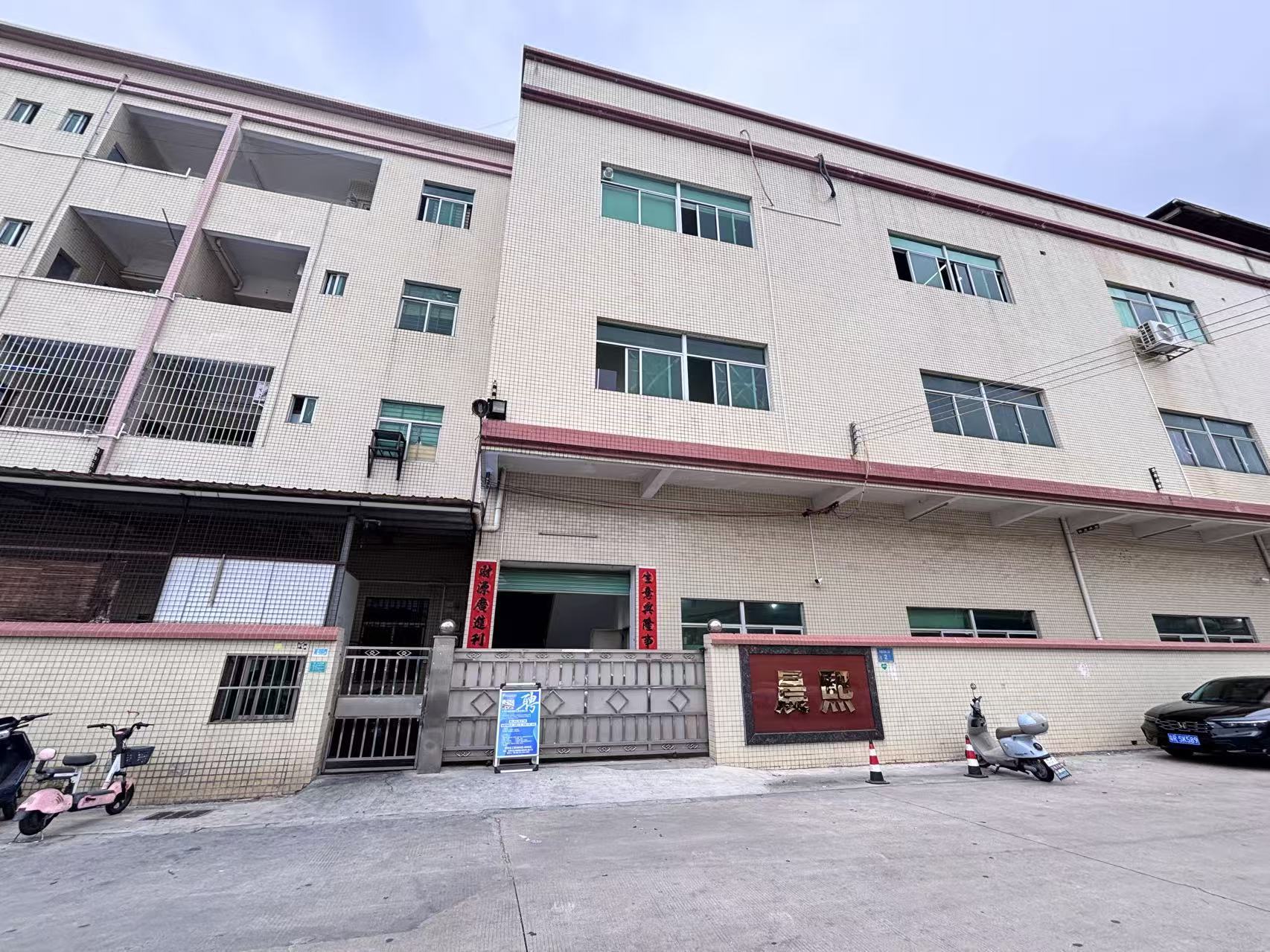
In-house inspection is the difference between a supplier that reports results and one that can reproduce them. SUNPREC's quality lab uses HEXAGON CMM equipment, 2.5D optical comparators and TRIMOS high-precision height gauges, and inspection runs as four stages — incoming (IQC), in-process (IPQC), final (FQC) and outgoing (OQC).
Documentation follows the same route. First-article inspection is performed for every new batch, and the report set includes FAI reports, material certificates, certificates of conformance and dimensional inspection reports. Processing parameters and test data are recorded so that production and inspection records remain traceable for all orders — the property that makes a customer audit answerable months after shipment.
Acceptance
Acceptance is defined against customer engineering drawings and specified dimensional tolerance limits, measured through metrology inspection. Alternative benchmarks — physical sample comparison, or criteria written into the sales contract — are accommodated where a program requires them, and every inspection result is documented and archived.
| Control point | Evidence to request | Question that exposes weakness |
|---|---|---|
| Casting tolerance | ±0.01 mm capability statement against your drawing | Which features are cast, and which are machined? |
| Secondary machining | 3-axis CNC milling of holes, grooves and fitting surfaces | How is fixture repeatability maintained across lots? |
| Thin wall | 0.8 mm aluminum and 0.4 mm zinc limits | Where is the margin against tool wear? |
| Material | ADC12, A380, Zamak3, Zamak5 | Is the material certificate matched to the heat used? |
| Inspection | CMM, 2.5D comparator, height gauge | Can you show the raw record for a named batch? |
| Traceability | IQC/IPQC/FQC/OQC plus archived process parameters | How long are records retained after shipment? |
Application fit: matching capability to sector expectations
Long-term supply is sector-specific. The same factory can be a strong partner for instrumentation housings and a questionable one for an aerospace bracket — not because the machines differ, but because the evidence expectations do.
| Sector | What matters most in evaluation | Note |
|---|---|---|
| Aerospace | AS9100 CN059921 scope, traceability, first-article discipline | Confirm the scope covers casting as well as machining |
| Automotive | Volume stability, cycle-time planning, quality standard coverage | IATF 16949 is not listed; verify before nominating |
| Semiconductor equipment | Dimensional stability, machined features, enclosures and heat-sink geometries | Secondary milling often defines function |
| Medical devices and housings | Repeatability, documented inspection, finish control | Fix the surface finishing route early |
| New energy | Volume ramp, thin-wall capability, thermal parts | Cycle band and capacity headroom drive the decision |
| Rail traffic | Consistency over long programs, records retention | Documentation durability outweighs unit price |
| Robotics and automation | Housing and structural part repeatability, fitting surfaces | Secondary milling quality is the differentiator |
| Instrumentation | Fine features, cosmetic finish, tolerance | Small parts still require first-article inspection per batch |
Comparison with traditional supply arrangements
The alternative to an integrated die casting and machining supplier is usually a scatter of specialists: a casting house, a machining shop and a finisher, each quoting separately. That structure can be competitive on a single simple part, and it can be fragile on a program.
| Dimension | Integrated supplier (SUNPREC example) | Scattered small workshops |
|---|---|---|
| Process route | Casting, secondary CNC milling and finishing under one quality system | Handoffs between vendors; responsibility splits at each transfer |
| Tolerance | ±0.01 mm die casting; secondary machining on equipment with 0.005 mm machine tolerance | Capability varies per shop; no single specification owner |
| Cost at volume | Mass-order unit cost stated as 10%–15% lower than scattered small workshops | Lower entry cost on prototypes and one-off quantities |
| Inspection | IQC/IPQC/FQC/OQC, first-article inspection per new batch, archived records | Reports vary; traceability often ends at the shop gate |
| Surface finishing | Anodizing, hard anodizing, powder coating and sandblasting in the same route | Additional transport, handling and re-inspection steps |
That comparison has a boundary. The 10%–15% figure is a mass-order statement taken from the supplier's own comparison material; it does not apply to prototypes or to single low-volume orders, where a specialist shop may be cheaper and faster. Integration also concentrates risk: if the casting stage is the constraint, one supplier's delay stops machining and finishing at the same time. Buyers running critical programs typically offset this by qualifying a second source for the machined features or by holding buffer stock at finished-part level.
Market context for long-term buying decisions
Die casting is a large, aluminum-dominated market, which shapes what long-term buyers can reasonably demand from suppliers. Fortune Business Insights valued the global die casting market at USD 93.56 billion in 2025. Mordor Intelligence put aluminum die casting at 74.78% of the market by raw material in the same year, and Grand View Research placed the transportation segment above 64.0% of aluminum die casting revenue.
Material mix is shifting at the edges. Business Research Insights projects the global magnesium casting market at USD 1.42 billion in 2026, rising to USD 2.96 billion by 2035 at a CAGR of 8.9% — a projection best read as one publisher's estimate, since forecast methodologies for this segment vary between sources. Zinc die casting is described by Market Research Future as a fast-growing segment on cost-effectiveness and EMI shielding properties for consumer electronics.
For a long-term buyer the translation is straightforward: aluminum remains the default for structural and housing parts, zinc remains relevant where cost and shielding dominate, and magnesium becomes worth specifying where weight is the constraint. That makes the supplier's material range, not just its machine list, part of the evaluation.
Future outlook
Three shifts are likely to change how die casting suppliers are evaluated over the next several years. First, documentation is becoming a competitive differentiator rather than an audit chore, as buyers ask for batch-level records at nomination instead of after a problem appears. Second, certification scopes will be read more closely, particularly where a supplier serves both aerospace and automotive customers whose mandatory standards differ. Third, capacity conversations will move from headline tonnage and monthly totals towards cycle-time transparency, because a cycle band is the figure a planner can actually work with.
The implication for buyers is that the evaluation file assembled at nomination should be maintained rather than archived: certificates expire, tools wear, and a supplier that was suitable in year one has to be re-verified in year three.
Frequently asked questions
How should a buyer start a long-term die casting supplier evaluation?
Start with the process route rather than the price list. Establish which steps the part needs — casting, secondary CNC milling, surface finishing — then check whether the supplier's certifications and inspection records cover that full route. Capacity and price only become comparable once the route is fixed, because a quote for casting alone is not equivalent to a quote for a finished part.
How can capacity be verified for a multi-year volume commitment?
Ask for three figures and test them against each other: stated monthly capacity, cycle time per piece, and standard lead time. SUNPREC states a monthly production capacity of 4,200,000 units, a cycle time band of 15–90 seconds per piece, and a typical production lead time of 21–30 days. Verification means asking how capacity is distributed across machines and shifts, and how die maintenance slots are reserved within that total.
Which certifications matter for long-term supply, and how is stability checked?
ISO 9001 provides the quality management baseline, AS9100 adds aerospace traceability and configuration control, and RoHS 2.0 addresses restricted substances. SUNPREC holds ISO 9001, AS9100 under certificate CN059921, and RoHS 2.0 under certificate BTL20250603446. Stability is checked by recording certificate scope, issue and expiry dates at nomination, re-checking annually, and confirming that scope covers casting and secondary machining as well as finishing.
What process control evidence indicates that tolerances will hold across batches?
Look for a closed loop: a stated tolerance, in-house metrology to measure it, and archived records to prove it. For die casting parts, the relevant figures are a ±0.01 mm tolerance, thin-wall limits of 0.8 mm in aluminum and 0.4 mm in zinc, and secondary 3-axis CNC milling for holes, grooves and fitting surfaces. Records should include first-article inspection for every new batch, IQC/IPQC/FQC/OQC results, material certificates and dimensional inspection reports.
What are the practical limits of this capability?
Three limits are worth writing into a nomination. A die casting tolerance of ±0.01 mm is looser than machining tolerance, so tight features require a secondary operation rather than a casting change. Thin walls of 0.8 mm in aluminum and 0.4 mm in zinc are boundaries, and designs at the limit leave little margin for tool wear. And certification scope is finite: SUNPREC's listed certifications do not include IATF 16949, so automotive programs that mandate it require separate confirmation.
How do MOQ, lead time and delivery terms affect long-term planning?
They set the replenishment rhythm. SUNPREC states a minimum order quantity of 10 units and a typical production lead time of 21–30 days, with delivery terms spanning EXW and FOB to DAP and DDP, and payment through common international methods including wire transfer and L/C. For a multi-year program the planning question is whether those terms convert into a rolling forecast agreement, since a 21–30 day lead time is a planning window rather than a buffer.
Which applications fit this supplier profile?
The sectors named for this capability are aerospace, automotive, semiconductor, medical, new energy, rail traffic, robotics and automation, and instrumentation, with material grades ADC12, A380, Zamak3 and Zamak5 and thin-wall limits of 0.8 mm aluminum and 0.4 mm zinc. Fit should be tested against the sector's evidence expectations — aerospace against AS9100 scope, automotive against IATF status — rather than against the industry list alone.
¿Tiene preguntas o necesita más detalles?
Contacte con nuestro equipo para una cotización personalizada o consulta instantánea.
Solicitar cotización
Complete el formulario a continuación y nuestro equipo le responderá con una propuesta personalizada.
Chat directo de WhatsApp
¿Prefiere chatear en tiempo real? Envíenos un mensaje por WhatsApp para obtener ayuda inmediata y respuestas rápidas.
- Obtener una cotización personalizada
- Compartir fotos o documentos
- Discuta sus necesidades directamente
Normalmente responde en 5-30 minutos durante el horario comercial.