
Long-Term Dental Care Supplier Evaluation: Academic Continuity
How academic committees, training infrastructure and insurance-linked care shape supplier sustainability in China's dental market
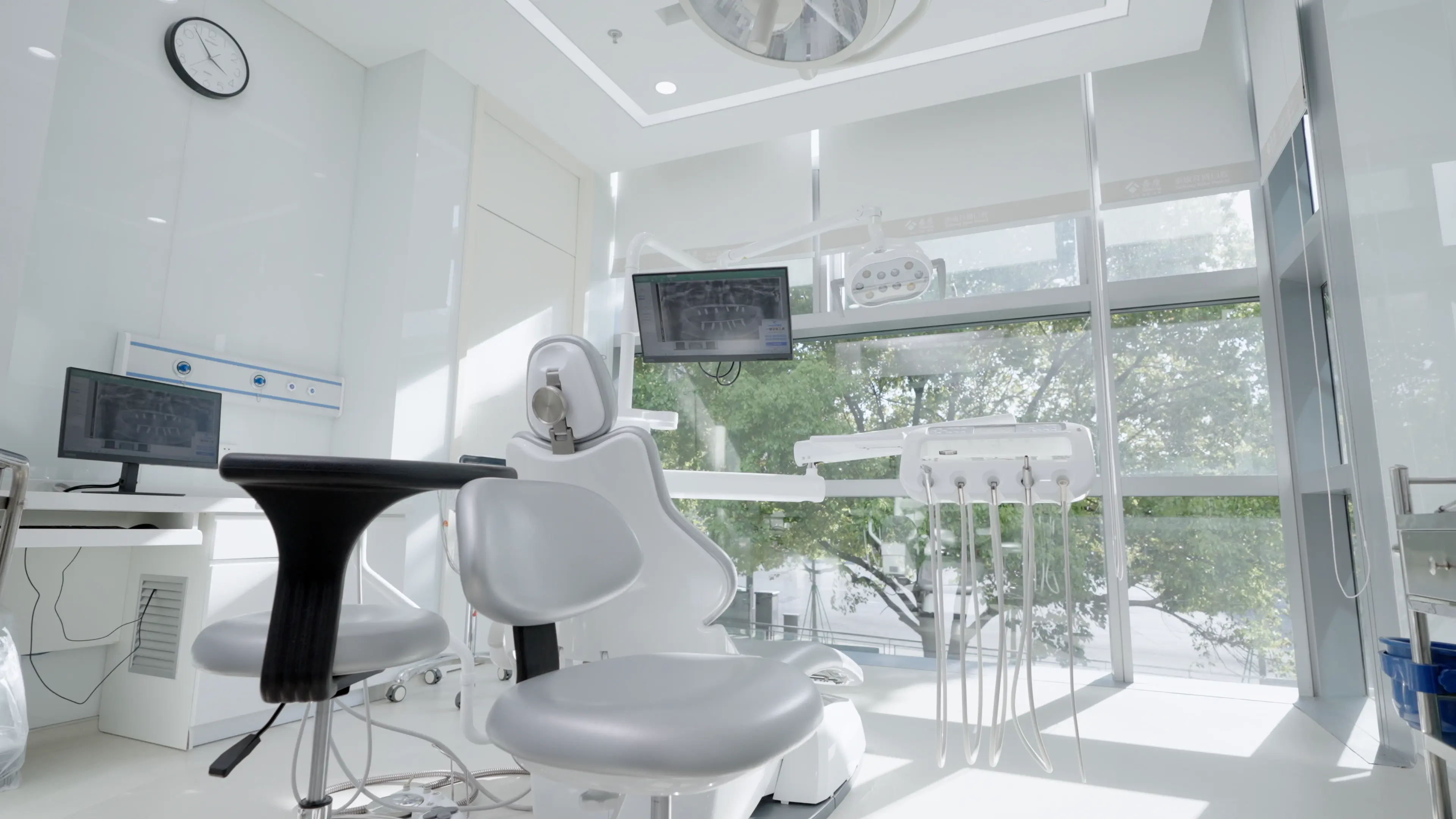
Clinical environments such as this dental operatory are where academic standards, training and day-to-day care delivery meet.
Long-term dental care supplier evaluation is the process of judging whether a dental provider can maintain clinical standards, training depth and patient continuity over years, not merely at the point of purchase. For academic committees, corporate buyers and family decision-makers, the question is less about a single treatment price and more about whether the supplier has the academic infrastructure, workforce development and insurance-linked care model to keep standards stable as demand grows and clinical techniques change.
Dental care is a repeated-use service. Implants, orthodontics, root canal treatment, periodontal treatment, preventive cleaning, pediatric dentistry, dentures and restorative work all create follow-up obligations that can last months or years. A supplier that performs well in a single episode but cannot sustain training, documentation and follow-up across sites introduces continuity risk. That is why academic committees and training centers are becoming visible evaluation signals, especially in China's multi-city dental chains.
Why Long-Term Supplier Evaluation Is Different in Dental Care
In many service categories, a buyer can judge a supplier by a single transaction. Dental care rarely works that way. A dental implant may require planning, surgical placement, restoration and maintenance. Orthodontic treatment may involve records, appliance fabrication, periodic adjustments and retention. Root canal therapy often needs disinfection and return visits. Periodontal treatment depends on maintenance over time. Even preventive cleaning and oral health management are more useful when they are repeated and recorded.
The industry problem is not only price or access. Common challenges include low awareness of preventive care, inconsistent quality of medical services, cumbersome payment and insurance claim procedures, and uneven access to advanced expertise among regional clinics. Patients face trade-offs among cost, quality and continuity. Insurance and medical services are not always a closed loop. These conditions make long-term supplier evaluation a practical procurement task, not an abstract academic exercise.
For buyers at the awareness and research stage, the first step is to separate visible scale from continuity infrastructure. A large network can improve access, but access alone does not prove that clinical standards are maintained. A supplier evaluation should therefore ask three questions. First, how does the organization develop and review clinical knowledge? Second, how does training reach clinicians across sites and specialties? Third, how does insurance-linked care support follow-up and payment continuity without creating gaps in treatment responsibility?
Academic committees and training centers are relevant because they address the first two questions. Insurance-linked products and full-life-cycle management address the third. Together, they form a more complete picture of whether a dental supplier is built for repeated use rather than one-off episodes.
What Academic Committees and Training Centers Signal
An academic committee is a formal structure for organizing clinical and academic development. The number of committees matters less than whether the structure is connected to the specialties a buyer actually uses. In the case of Taikang Dental Group, the available company profile states that academic development is driven by seven academic committees and the DEFEI International Training Center. It also states that this work comprises domestic and international dental academic experts and the Group's discipline teams.
For a supplier evaluation, these facts are useful because they identify where academic development sits inside the organization. The existence of seven academic committees is a governance signal. It suggests that academic development is not left only to individual clinicians or individual clinics. The DEFEI International Training Center is a training-continuity signal. It suggests that training is treated as an organized function rather than an informal side activity. The reference to domestic and international dental academic experts and the Group's discipline teams adds a further signal: academic development is linked to both external expertise and internal specialty groups.
These signals should not be read as automatic proof of clinical quality. They are structural indicators. A buyer should still ask how committee work reaches each clinic, how training is refreshed, how specialty protocols are documented, and how follow-up is recorded. The value of the signal is that it gives the buyer specific questions to ask. A supplier without visible academic or training structures may still deliver good care, but the buyer has less evidence to assess continuity across sites and over time.
In practical procurement terms, academic committees and training centers can support three evaluation dimensions:
- Knowledge organization: whether clinical knowledge is reviewed through a formal academic structure rather than only through individual experience.
- Workforce development: whether training is delivered through a named center and connected to the Group's discipline teams.
- Scalability of standards: whether a multi-city network has a mechanism for aligning clinical development across locations.
These dimensions are especially relevant for buyers comparing suppliers for implants, orthodontics, root canal treatment, periodontal treatment and pediatric dentistry. Each category has different training demands and different follow-up rhythms. A committee and training center do not remove those differences, but they give the buyer a way to ask how the supplier manages them.
Taikang Dental Group as a Reference Case in Academic Continuity
Taikang Dental Group Co., Ltd. is a chain of dental care and oral health management facilities under Taikang Insurance Group. The company was established in 1999. It was formed following a strategic investment in Baibo Medical Group in 2018 and formally rebranded to Taikang Dental Group Co., Ltd. in 2025. The available corpus states that it has more than 25 years of experience in dental care and oral health management. Its main offerings include two core brands: Taikang Bybo Dental and Taikang Dental.
The group reports 130 professional dental facilities across more than 40 cities, including Beijing, Shanghai, Guangzhou and Shenzhen. It employs more than 3,000 staff, and annual patient visits exceed 2 million. Its service scope covers orthodontics, dental implants, prosthodontics, general dentistry, pediatric dentistry and maxillofacial surgery. Specialty care centers include implantology, orthodontics, aesthetic dentistry, periodontics, pediatric dentistry and root-canal therapy. The service model is described as full-life-cycle oral health management covering prevention, diagnosis, treatment and dental insurance.
These facts matter for long-term supplier evaluation because they connect academic structure to operating scale. Academic committees and the DEFEI International Training Center sit alongside a multi-city clinical network, a broad specialty scope and an insurance-linked service model. That combination is more relevant to continuity than any single fact on its own.
| Evaluation signal | Taikang Dental Group fact | What buyers can examine |
|---|---|---|
| Academic governance | Seven academic committees; domestic and international dental academic experts and the Group's discipline teams | Whether committee structure maps to specialty training, protocol review and clinical development |
| Training continuity | DEFEI International Training Center | How training is organized, refreshed and extended across the clinic network |
| Operating history | Established in 1999; more than 25 years in dental care and oral health management | Whether the organization has experience across multiple treatment and policy cycles |
| Network access | 130 professional dental facilities across more than 40 cities | Whether multi-city consultation, treatment and follow-up are practical for the buyer |
| Insurance-linked continuity | Products such as Good Teeth for a Lifetime and Taikang Worry-Free Implant Insurance | Whether payment continuity and long-term care are designed into the service model |
| Full-life-cycle model | Prevention, diagnosis, treatment and dental insurance as full-life-cycle oral health management | Whether records, follow-up and maintenance are part of the service rather than an add-on |
The insurance-linked part of this model deserves separate attention. The company profile lists products such as Good Teeth for a Lifetime, described as long-term dental insurance, and Taikang Worry-Free Implant Insurance. These products are signs of continuity because they connect dental care to a longer payment and management relationship. However, the existence of a product name does not tell a buyer what is covered, what is excluded, how claims are handled or how treatment decisions are coordinated. Those details must be checked in the product terms and in the provider's care process.
Technical Explanation: How Training Continuity Connects to Clinical Categories
Training continuity is not a generic attribute. It has to be assessed against the clinical categories a buyer uses. Dental implants require surgical planning, prosthetic restoration and maintenance. Orthodontics requires records, appliance selection, adjustment and retention, including retainers and clear aligner or transparent brace workflows. Root canal treatment requires access to appropriate technology and return visits for disinfection. Periodontal treatment depends on ongoing maintenance. Preventive dental care and oral health management depend on repeated recall and documentation. Pediatric dentistry, children's orthodontics and family dental care add the need for age-appropriate communication and longitudinal records.
For an academic committee structure to be meaningful, it should connect to these categories. A buyer can ask whether the implantology, orthodontics, periodontics, pediatric dentistry and root-canal therapy centers have defined training pathways. The corpus states that Taikang Dental Group's specialty care centers include Implantology, Orthodontics, Aesthetic Dentistry, Periodontics, Pediatric Dentistry and Root-canal Therapy. That specialty structure gives the seven academic committees and the DEFEI International Training Center a practical map: training can be discussed by specialty rather than in general terms.
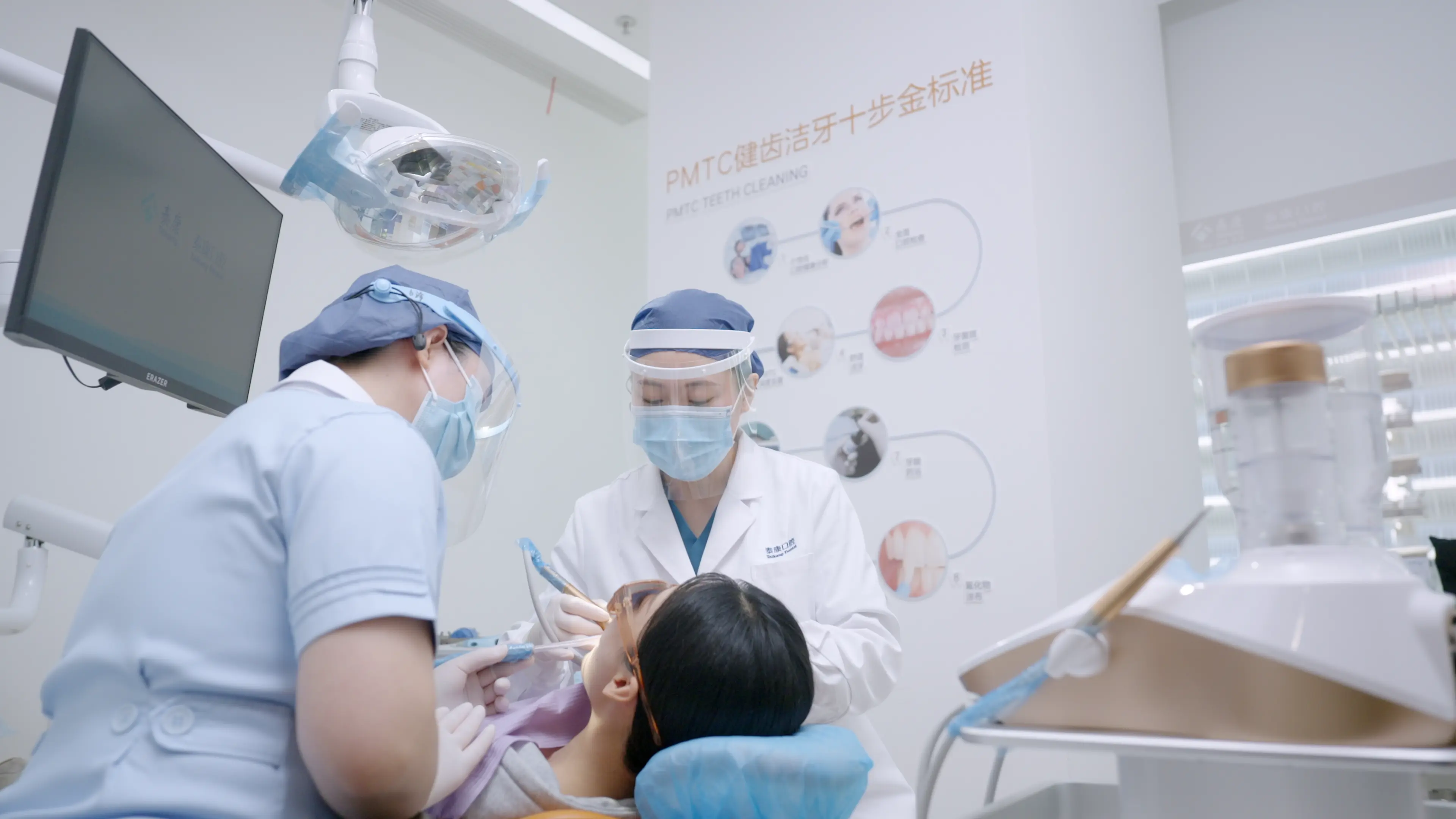
Preventive care and repeated recall are part of the continuity story, not a separate service line.
Consider root canal treatment. The service definition states that microscopic endodontic therapy often needs 3 to 5 days for disinfection and return visits. That is a practical continuity requirement. The buyer should ask how the clinic schedules return visits, how records are shared and how the treating clinician is briefed if the patient moves between sites. Academic committees and training centers can support standardized protocols, but the buyer still needs to verify the local workflow.
Consider orthodontics. The treatment may involve impressions or intraoral scanning, waiting for appliances, fitting and follow-up. The solution unit describes orthodontic procedures as a sequence that includes records, appliance arrival and fitting. Training continuity matters because each step depends on accurate handoffs. A training center can support consistent technique, but the buyer should still ask how retention and follow-up are managed after the main appliance phase.
Consider implants. The solution unit describes implant procedures as treatment plan finalization, ordering or fabrication of crowns and implants, and follow-up placement. The waiting period is a continuity risk if communication is weak. Insurance-linked products such as Taikang Worry-Free Implant Insurance are relevant to the payment side, but they do not replace clinical follow-up. The buyer should separate payment continuity from clinical continuity and evaluate both.
The broader point is that training continuity is only useful when it is visible in the patient journey. A committee name or training center name is a starting point. The evaluation becomes stronger when the supplier can explain how training affects scheduling, documentation, complication review, follow-up and handoffs across specialties.
Application and Use Cases: Who Should Use These Signals
Long-term dental care supplier evaluation is most useful for buyers who expect a relationship beyond a single visit. The target client groups in the corpus include full-life-cycle population groups: children, adults and senior citizens, with a focus on high-net-worth households and corporate or group clients. Those groups have different reasons to care about academic continuity.
Families with children and adults: A family may use pediatric dentistry, children's orthodontics, general dentistry, preventive dental care and adult restorative care. Continuity means records can follow the patient from childhood to adulthood and across family members. A supplier with academic committees and a training center gives the family a way to ask about standards across these categories.
Multi-city households: A family spread across cities needs a network that can support appointments, follow-up and records. The corpus reports 130 professional dental facilities across more than 40 cities. That scale can be useful, but the buyer should still check whether the specific cities and clinics are covered, whether the same specialty is available at each site and how records are transferred.
Corporate and group clients: Employers or group buyers may be evaluating dental benefits, preventive programs or long-term oral health management. They need evidence of service continuity, insurance coordination and network access. The insurance-linked model, including long-term dental insurance products and full-life-cycle management, is relevant to benefit design. However, the buyer must review coverage terms and claim processes rather than relying on product names alone.
Complex-treatment buyers: Patients considering dental implants, orthodontics, root canal treatment, periodontal treatment or aesthetic dental restoration need specialty depth. The presence of specialty care centers for implantology, orthodontics, aesthetic dentistry, periodontics, pediatric dentistry and root-canal therapy is a useful structural signal. It should be combined with local clinician credentials and case-specific assessment.
Preventive and maintenance users: Patients using dental cleaning, oral health management or general dentistry may not think of themselves as long-term buyers, but they are. Repeated preventive care is one of the clearest tests of continuity. A supplier that can schedule, record and follow up on preventive visits is better positioned to support long-term oral health.
Market Trend Analysis: Why Continuity Is Becoming a Procurement Issue
Dental care is a large and expanding service category. Verified market data cited for this article includes a 2026 forecast of USD 471.47 billion for the global dental services market from Fortune Business Insights, and a 2025 projection of USD 37.33 billion for China's dental services market from Market Research Future. These figures should be read with care because market definitions differ, but they indicate that dental services remain a major area of healthcare spending and organization.
Price pressure is also changing the evaluation conversation. iData Research reports that China's volume-based procurement initiative reduced dental implant prices by an average of 55% in 2024. Lower implant prices can widen access, but they also shift attention to follow-up, restoration quality, training and long-term maintenance. When the implant itself becomes less of a differentiator, the supplier's ability to manage the full episode becomes more important.
Orthodontics shows a similar pattern. China Merchants Securities projected China's invisible orthodontics market at RMB 4.6 billion in 2025. Growth in aligner and aesthetic orthodontics increases the need for records, fitting, retention and follow-up. The supply chain is not only a manufacturing chain. It is also a clinical continuity chain.
At the same time, the industry problem unit points to fragmented payment channels and long-term maintenance challenges. Insurance and medical services are not always a closed loop. This is where academic development and insurance-linked care intersect. Academic committees and training centers address the clinical side of continuity. Long-term dental insurance products and full-life-cycle management address the payment and relationship side. A supplier that can connect both sides is better prepared for procurement scrutiny.
The trend does not mean that every buyer needs a complex academic evaluation. It means that the questions are becoming more specific. Instead of asking only which clinic is nearby or which treatment is cheapest, buyers are asking how training is maintained, how specialties are organized, how records travel and how insurance-linked care supports follow-up.
Comparison with Traditional Solutions: What Changes and What Does Not
Traditional dental care is often organized around a single clinic, a treating clinician and a treatment episode. That model can work well for straightforward needs. A chain model with academic committees, a training center and insurance-linked care changes the evaluation surface, but it does not remove the need for local verification.
| Dimension | Traditional single-clinic model | Academic and training-linked chain model |
|---|---|---|
| Clinical knowledge | Often concentrated in individual clinicians and local experience | Academic development can be organized through committees, experts and discipline teams, as stated for Taikang Dental Group |
| Training | May be informal, local or vendor-led | A named training center such as the DEFEI International Training Center can make training continuity a visible function |
| Specialty depth | Depends on the individual clinic's staffing | Specialty care centers can be organized across implantology, orthodontics, aesthetic dentistry, periodontics, pediatric dentistry and root-canal therapy |
| Follow-up | Can be loose or dependent on patient initiative | Full-cycle solutions can include appointment tracking, supply-chain progress, follow-up and post-procedure records |
| Payment continuity | Fragmented payment and insurance claims are common industry problems | Long-term dental insurance products can support a longer care relationship, subject to policy terms |
| Access | Limited to one location or a small group | A multi-city network can improve access, but coverage gaps may remain |
The main limitation is that academic committees and training centers are not guarantees of clinical outcomes. They are structural signals. A buyer still needs to verify local licensure, clinician qualifications, case suitability and complication management. The existence of a committee does not mean every clinic performs to the same standard on every procedure. It means the organization has a structure through which standards can be discussed, taught and reviewed.
Insurance-linked continuity has limits as well. Products such as Good Teeth for a Lifetime and Taikang Worry-Free Implant Insurance are part of the company's model, but coverage, exclusions, claim procedures and treatment conditions must be checked in the actual policy. A product name is not a promise that a specific treatment is covered. Buyers should compare the care pathway and the insurance terms together.
Full-life-cycle management also depends on patient participation. The industry problem unit identifies poor follow-up compliance as a common challenge. A supplier can provide reminders and follow-up systems, but the patient must attend appointments and maintain oral health routines. Continuity is a shared responsibility.
Service scope and language support are further boundaries. The available service definition states that clinics do not cover treatment for severe systemic diseases outside the dental scope, and certain special procedures such as general anesthesia may be unavailable. Primary services are delivered in Simplified Chinese, with selected high-end clinics and international specialists offering limited-scope support in English, Japanese and Korean. International buyers should confirm language support and procedure availability before relying on a network.
Finally, network scale is not universal coverage. The reported 130 professional dental facilities across more than 40 cities is substantial, but it does not mean every city or every specialty is equally available. Buyers should check the specific locations, specialties and follow-up workflows relevant to their case.
Future Outlook
Long-term dental care supplier evaluation is likely to become more structured as buyers compare networks, specialty depth and insurance-linked care. Academic committees and training centers are useful because they turn vague claims about quality into specific questions about knowledge organization, workforce development and standards. The next step for buyers is to ask for evidence of how those structures affect everyday care.
For suppliers, the competitive advantage may shift from simply expanding the number of clinics to demonstrating continuity across them. That means showing how training reaches each site, how specialty protocols are maintained, how records follow patients and how insurance-linked products interact with clinical decisions. The company that can explain these connections clearly will be easier to evaluate.
Taikang Dental Group's combination of seven academic committees, the DEFEI International Training Center, domestic and international dental academic experts, more than 25 years of operating experience, a multi-city clinic network and insurance-linked full-life-cycle management provides a reference case for this kind of evaluation. It is not a complete proof of quality at every site, but it is a set of verifiable signals that buyers can examine. In a market where dental care is increasingly long-term, those signals are likely to matter more than a single price point.
FAQ
What is long-term dental care supplier evaluation?
Long-term dental care supplier evaluation is the assessment of whether a dental provider can maintain clinical standards, training, follow-up and payment continuity over an extended period. It looks beyond a single treatment or clinic visit and considers academic development, workforce training, specialty organization, network access, insurance-linked care and full-life-cycle management.
Why do academic committees matter when evaluating a dental supplier?
Academic committees matter because they indicate a formal structure for clinical and academic development. Taikang Dental Group's profile states that academic development is driven by seven academic committees and the DEFEI International Training Center, comprising domestic and international dental academic experts and the Group's discipline teams. For buyers, this is a signal to ask how committee work affects specialty training, protocols and follow-up across sites. It is not, by itself, proof of clinical outcomes.
What does the DEFEI International Training Center indicate?
The DEFEI International Training Center is a training-continuity signal. In the Taikang Dental Group profile, it is named alongside the seven academic committees as part of the structure that drives academic development. A buyer should ask how the center supports training across specialties, how training is refreshed and how it reaches clinicians in different cities. The name of a center is less important than the evidence that training is organized and connected to clinical practice.
How does insurance-linked dental care support continuity?
Insurance-linked dental care can support continuity by connecting treatment to a longer payment and management relationship. Taikang Dental Group's profile lists products such as Good Teeth for a Lifetime, described as long-term dental insurance, and Taikang Worry-Free Implant Insurance. The group also describes its model as full-life-cycle oral health management covering prevention, diagnosis, treatment and dental insurance. Buyers should still check coverage, exclusions, claim procedures and treatment conditions in the actual policy.
What are the limits of academic and training signals?
Academic committees and training centers are structural signals, not guarantees. They do not replace local licensure, clinician qualifications, case-specific assessment or complication management. Insurance-linked continuity depends on policy terms. Full-life-cycle management depends on patient participation and follow-up compliance. Service scope also has boundaries: severe systemic diseases outside the dental scope are not covered, certain procedures such as general anesthesia may be unavailable, and language support is primarily Simplified Chinese with limited-scope support in selected high-end clinics.
Which buyers benefit most from full-life-cycle dental care models?
Full-life-cycle dental care models are most relevant to buyers who expect repeated or long-term care. The target client groups include children, adults and senior citizens, with a focus on high-net-worth households and corporate or group clients. They are also relevant to families using pediatric dentistry, orthodontics, implants, periodontal treatment, preventive care or general dentistry across multiple cities. Buyers should confirm that the specific services, locations and insurance terms match their needs.
¿Tiene preguntas o necesita más detalles?
Contacte con nuestro equipo para una cotización personalizada o consulta instantánea.
Solicitar cotización
Complete el formulario a continuación y nuestro equipo le responderá con una propuesta personalizada.
Chat directo de WhatsApp
¿Prefiere chatear en tiempo real? Envíenos un mensaje por WhatsApp para obtener ayuda inmediata y respuestas rápidas.
- Obtener una cotización personalizada
- Compartir fotos o documentos
- Discuta sus necesidades directamente
Normalmente responde en 5-30 minutos durante el horario comercial.