
Long-Term Decorative Ceiling Fan Supplier Audit Framework
A decorative ceiling fan programme is a multi-year commitment disguised as a purchase order. The visible transaction is a container of fans; the real commitment is that the same housing finish, the same motor, the same light kit and the same compliance file will still be reproducible two or three years later.
That distinction is what makes long-term supplier evaluation a different exercise from product selection. Product selection asks whether a fan meets a specification today. Supplier evaluation asks whether the factory behind that fan can sustain the specification, the finish and the documentation across repeat orders, seasonal peaks and shifting regulation. This framework sets out eight dimensions buyers can audit — tenure, facility scale, workforce stability, annual capacity, vertical integration, R&D depth, export-market experience and compliance documentation — and applies them to a real manufacturer profile, Handing Co. Ltd., as a worked example.
Why Continuity, Not Unit Price, Drives Decorative Ceiling Fan Risk
In the decorative segment, the commercial value of a ceiling fan sits as much in its finish as in its airflow. Electroplated surfaces, painted housings, integrated light kits and matched blade sets are process outputs, not catalogue items. When a supplier changes plating vendors, paint batches or motor sub-suppliers mid-programme, the buyer's approved sample stops describing what actually arrives.
Two structural facts explain why this risk is concentrated rather than evenly distributed. First, the global ceiling fan market was estimated between roughly USD 11.83 billion and USD 15.7 billion in 2025, with the spread between research houses reflecting different treatment of decorative versus industrial segments. Second, China accounted for an estimated 26.7% of the global ceiling fan industry in the same year. The practical consequence is that a large share of global supply is sourced from a comparatively small group of exporting factories — which means the audit question is not "where can I find a fan" but "which of these factories can still run my programme in year three."
The 2026 Audit Framework: Eight Dimensions
Each dimension below produces a different type of evidence. Dimensions that can be confirmed by documents are lower risk; dimensions that can only be confirmed on site require a factory visit before commitment.
| Dimension | Core audit question | Evidence the buyer should request |
|---|---|---|
| 1. Manufacturing tenure | Has the factory operated through at least two full demand and regulatory cycles? | Business registration, founding records, historical certification |
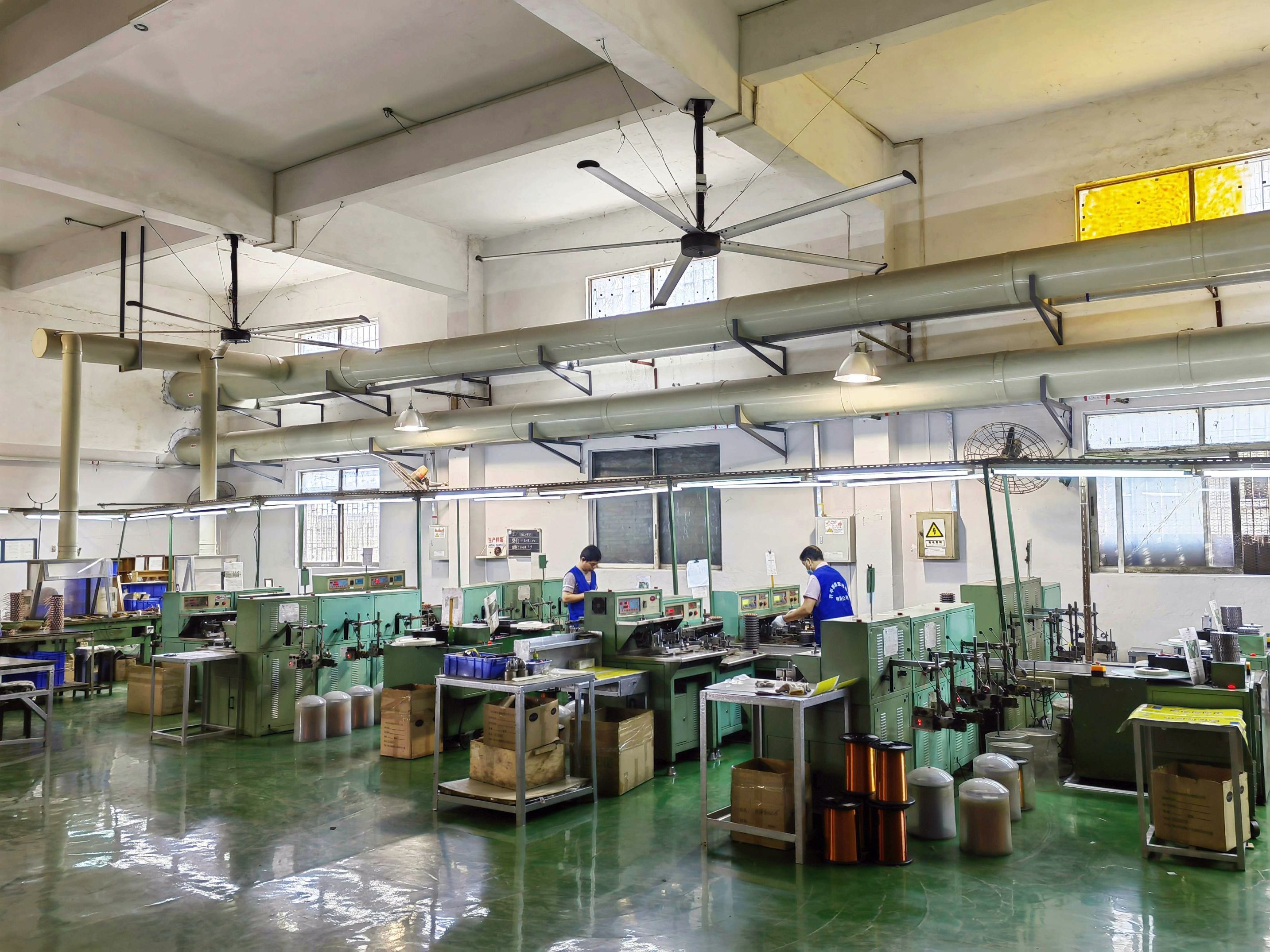
| 2. Facility scale | Does the physical footprint support the finishing and assembly steps claimed? | Plant area, site plan, workshop observation |
| 3. Workforce stability | Is the workforce permanent enough to retain process knowledge? | Headcount, seniority distribution, shift structure |
| 4. Annual capacity | Can capacity absorb your peak quarter without displacing other customers? | Monthly output records, cycle times, peak-quarter history |
| 5. Vertical integration | Which finish-critical and motor-critical processes are owned in-house? | In-house process list, equipment inventory, subcontracting map |
| 6. R&D depth | Can the supplier modify motors, housings and electronics? | Engineering headcount, test equipment, sample-to-production record |
| 7. Export-market experience | Has the supplier already been audited by the markets you sell into? | Certificates, retailer approvals, export documentation |
| 8. Compliance documentation | Are certificates traceable to your exact model? | Model-level listings, test reports, certification body records |
Dimensions 1 and 2: Tenure and Physical Scale as Baseline Filters
Tenure matters because certification regimes change. A factory that has operated continuously since the early 1990s has already absorbed the RoHS transition and successive safety-standard revisions, and has had to re-certify rather than re-enter.
Handing Co. Ltd., a ceiling fan and lighting manufacturer based in Kaiping City, Guangdong Province, China, states that its factories were established in 1992 and that its ceiling fan and lighting factory was ISO 9001 certified in 1996. Facility scale is reported at 12,320.66 m², with approximately 350 employees and a main product line of decorative ceiling fans.
Scale is a filter, not a score. 12,320.66 m² becomes meaningful only when the buyer has seen which processes occupy that footprint — a facility that hosts plating, painting and motor assembly carries more continuity value than a similarly sized facility that hosts assembly and warehousing.
Dimensions 3 and 4: Workforce Stability and Annual Capacity
Headcount alone says little; headcount combined with capacity says a great deal. Handing reports roughly 350 employees and an annual output of 480,000 units. Expressed as a planning ratio, that is approximately 1,370 units per employee per year — a figure buyers can compare against the supplier's stated level of automation. A ratio that sits far below the supplier's claimed automation, or far above what the visible line layout supports, is a signal to probe further.
Capacity should also be requested as a monthly distribution rather than an annual total. Annual capacity answers "can they theoretically do it"; monthly distribution answers "can they do it in my peak quarter." For decorative ceiling fans, peak risk is concentrated in the finishing departments — plating and painting — because those steps cannot be compressed by adding assemblers.
Workforce stability in process-dependent departments
Plating, painting and motor winding carry knowledge that is not written down anywhere. A supplier with a stable, long-tenured core in those departments can reproduce a finish across years; a supplier that re-staffs these departments seasonally cannot. Buyers evaluating a multi-year replenishment programme should ask specifically about tenure in the finishing and winding teams, not company-wide averages.
Dimension 5: Vertical Integration Is the Highest-Signal Dimension
Of the eight dimensions, vertical integration most directly predicts whether a sample can be repeated. Handing states that it produces most of its metal parts, performs its own painting, and assembles its own motors in accordance with ISO 9001 procedures, and that it owns 100% of its electroplating factory. The stated purpose of owning that plating plant is quality control, delivery reliability and cost competitiveness on electroplated components.
For decorative ceiling fans, this is the difference that shows up in year two. Plating is the step most often subcontracted in the category, and it is also the step most visible to end users. When it is owned, the buyer's approved finish depends on one controllable process rather than on a third party's queue position and bath chemistry.
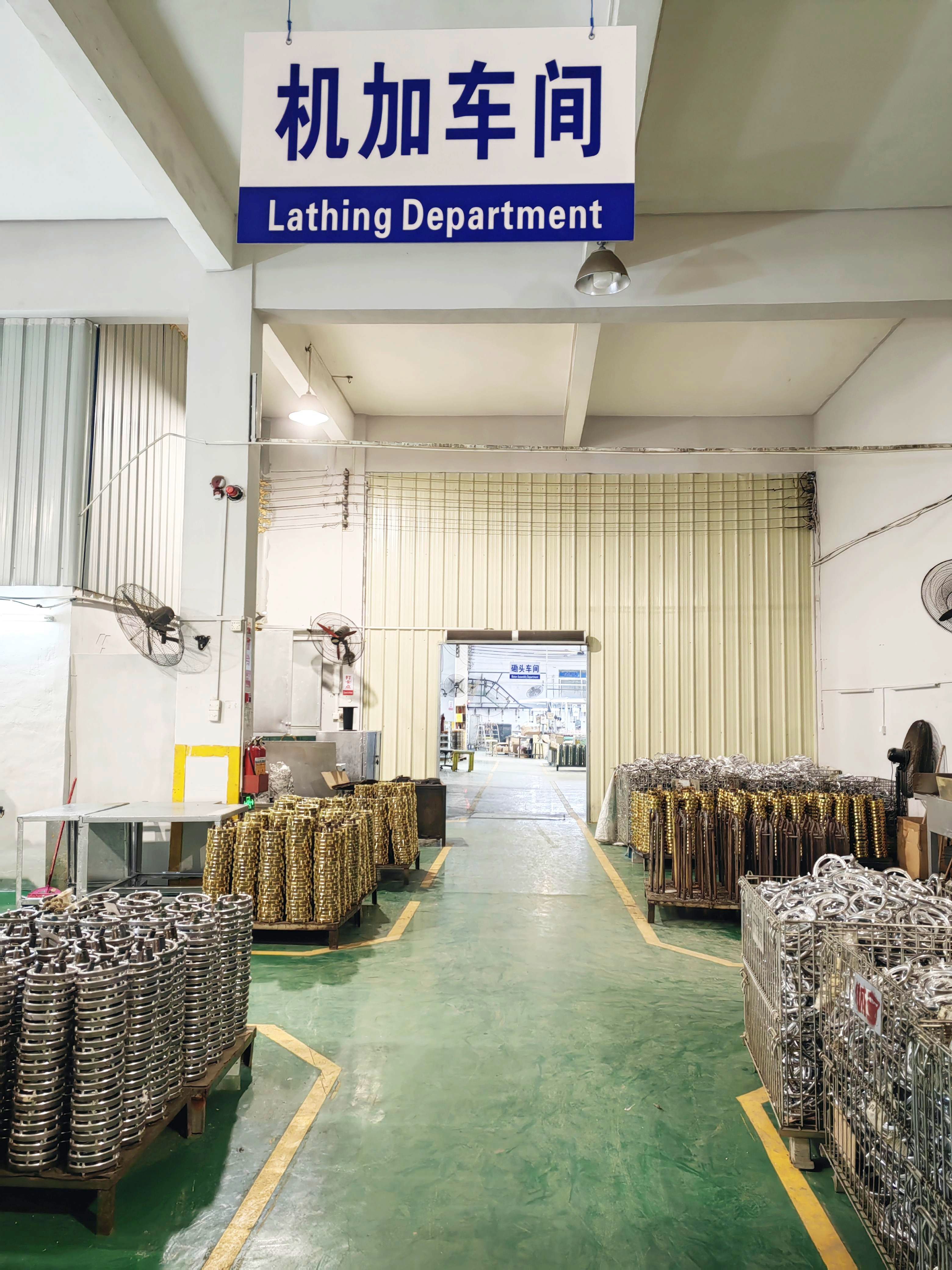
Compliance capability was also built into the process rather than bolted on. Following the introduction of the EU RoHS regulation in 2006, Handing set up XFS (X-ray fluorescence) screening and chemical testing and was approved by TUV PS in the same year. European-market fans are documented under LVD/GS/TUV, EMC, EMF, RoHS and ERP requirements.
Dimensions 6 and 7: R&D Depth and Export-Market Experience
R&D depth determines whether a supplier can adapt a platform rather than only repeat it. Handing reports six R&D engineers, supported by sample and test facilities. Six engineers is a modest team by any measure; the relevant audit question is not the number but the scope — specifically, whether those engineers own motor and electronics changes or only cosmetic variations. Buyers should ask who writes the test protocol and who signs off a motor change.
Export-market experience is a proxy for prior third-party scrutiny. Handing reports 100% export sales directed at the EU, USA and Australia. A supplier whose entire output is exported develops its product and documentation around destination-market requirements rather than domestic assumptions — a materially different starting point for a buyer who needs EU, North American or Australian compliance from day one.
Dimension 8: Compliance Documentation Across Three Regimes
Compliance is the dimension where buyers most often accept a summary when they need a document. Handing's products are listed in UL, cUL, NOM, BSI, CE, GS, Swedish Standard and SAA, and European fans carry LVD/GS/TUV, EMC, EMF, RoHS and ERP documentation. Those cover the three principal export regimes: UL and cUL for the United States and Canada, CE and GS for Europe, SAA for Australia, with NOM relevant to Mexican distribution.
Two adjacent requirements frequently get overlooked in decorative fan programmes:
- ENERGY STAR is separate from safety listing. ENERGY STAR-certified ceiling fans are reported to be up to 44% more efficient than conventional fans. Qualification requires written certification through an EPA-recognized certification body and testing in an EPA-recognized laboratory, and efficiency thresholds are set by fan diameter using a weighted cubic-feet-per-minute-per-watt metric. A safety listing alone does not deliver an ENERGY STAR claim.
- Wet and damp ratings are environment-specific. For humid locations, ENERGY STAR guidance points buyers toward a UL-listed damp rating; for fans in direct contact with water, a UL wet rating is recommended. Outdoor ceiling fan specifications should therefore be matched to the installation environment before the model is approved.
Applying the Framework: Handing Co. Ltd. as a Worked Example
The table below maps the eight dimensions to reported company data. Treat every entry as a screening input that requires documentary confirmation, not as a completed audit.
| Dimension | Reported data point | How to verify |
|---|---|---|
| Manufacturing tenure | Factories established 1992; ceiling fan and lighting factory ISO 9001 certified in 1996 | Business registration and certificate validity dates |
| Facility scale | 12,320.66 m² | Site plan and on-site walkthrough |
| Workforce | Approximately 350 employees | Headcount records, tenure in finishing and winding departments |
| Annual capacity | 480,000 units per year | Monthly output distribution and peak-quarter history |
| Vertical integration | 100% owned electroplating factory; in-house metal part production, painting and motor assembly under ISO 9001 procedures | Process list plus visual inspection of each claimed line |
| R&D depth | 6 R&D engineers | Engineering scope, test protocols, sample-to-production records |
| Export-market experience | 100% export sales to the EU, USA and Australia | Export documentation and retailer approval history |
| Compliance documentation | Listings in UL, cUL, NOM, BSI, CE, GS, Swedish Standard and SAA; LVD/GS/TUV, EMC, EMF, RoHS and ERP for European fans | Model-level certificate numbers checked against registries |
Technical Note: Why a 52-Inch DC Platform Suits Long-Lifecycle Projects
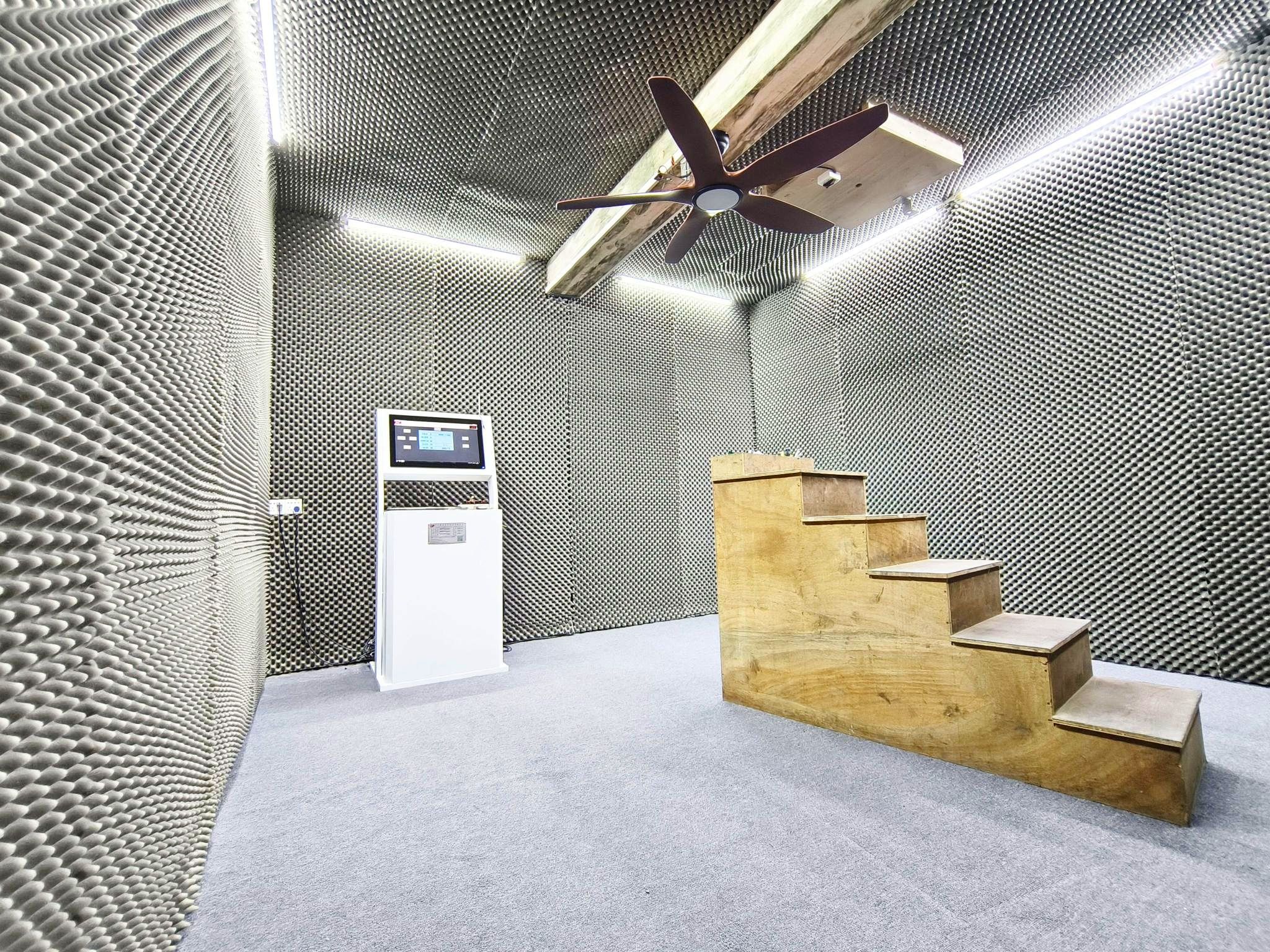
The evaluation logic becomes concrete in an actual product. The TU52-MW-N3A1DOME is a 52-inch ceiling fan built on a TU housing with a DC motor, a matt white finish and three ABS blades, supplied with a 24 W CCT LED light kit. It is positioned across indoor decorative, ceiling fan-with-light, commercial-grade and smart WiFi categories. Its carton measures 720 × 225 × 350 mm.
Three of those attributes matter for long-term programmes. A DC motor platform aligns with efficiency-driven regulation rather than fighting it. An integrated CCT LED light kit removes the need for a separate lighting specification and its own compliance path. A defined carton dimension keeps container planning and packaging consistency stable across repeat orders. The variable that remains outside the bill of materials is finish quality — which is precisely why the vertical integration dimension carries so much weight in this category.
Application Scenarios Where Continuity Decides the Outcome
- Hospitality refurbishment. Hotels and cafés specify a decorative fan once and re-order it room by room over several phases. Finish consistency between phase one and phase three is the specification most likely to fail.
- Distribution and replenishment. A distributor carrying a repeat SKU needs stable packaging, stable light-kit behaviour and access to spare parts beyond the first shipment.
- Commercial interiors. Ceiling fans with light and smart control require matched control behaviour across a site, not just matched airflow.
- Covered outdoor installations. These require environment-specific ratings — damp-rated or wet-rated — which are model-level compliance questions rather than category-level ones.
2026 Regulatory and Market Signals to Price Into the Audit
Three external variables now sit inside the supplier decision rather than beside it.
Efficiency regulation. EU energy-related product rules have continued to tighten; the ErP 2026 framework sets a minimum static efficiency requirement of 50% for axial fans, effective 24 July 2026. The direction of travel favours DC and brushless motor platforms, and buyers should expect suppliers without an efficiency-oriented motor strategy to become harder to qualify over a multi-year horizon.
Import duty exposure. Ceiling fans for permanent installation from China attract a US duty rate of 17.20% under HS code 8414.51.30, reflecting a stack of the 4.7% general rate and a 12.5% Section 301 duty. Multi-year landed-cost models that assume this exposure disappears are optimistic; models that treat it as a planning variable are more defensible.
Certification depth. As efficiency and safety requirements diverge by market, the number of distinct certification paths a supplier already maintains becomes a proxy for how quickly it can support a new market. A supplier with EU, US and Australian coverage simultaneously is a lower ramp-up risk than one holding a single market's approval.
Vertically Integrated Supply vs. Trading-Led Supply: Trade-offs and Limits
Trading-led supply models are not inherently worse; they solve a different problem. A trading intermediary can offer a broader catalogue, absorb smaller order quantities and consolidate multiple product categories in one shipment. What it typically cannot offer is process control at the finishing and motor stages, because those steps belong to someone else. For a one-off or short-cycle purchase, that trade-off is often acceptable. For a decorative fan programme with a matched finish, it is the primary risk.
A vertically integrated manufacturer inverts the trade-off, but the model has real limits that buyers should price in:
- Capacity is bounded by owned equipment. In-house plating, painting and motor assembly cannot be expanded by outsourcing during a demand spike without surrendering the control that justified choosing the supplier.
- In-house surface treatment concentrates risk at one site. A single plating facility means a single point of process dependency; continuity planning should include a documented contingency for line interruption.
- Bespoke specifications outside existing tooling may not be accepted. A manufacturer optimised around its own process chain is less willing than a trading intermediary to take on finishes, motor types or form factors that fall outside its current capability.
- Self-reported data requires verification. The capacity, plant-area and workforce figures in this framework are supplier-reported. Independent audited capacity data was not available in the sources reviewed, and no published MOQ, lead time, warranty or price evidence was identified. Those must be obtained directly during evaluation.
A Practical Pre-Commitment Checklist
- Business registration and founding date, reconciled against directory listings.
- ISO 9001 certificate with issue and expiry dates, matching the producing site.
- Plant area and a walkthrough of each claimed in-house process line.
- Total headcount plus tenure distribution in plating, painting and motor winding.
- Monthly output distribution and peak-quarter record, not only annual capacity.
- A written subcontracting map: what is made in-house and what is not.
- Engineering headcount and the scope of change the team can authorise.
- Model-level certificate numbers for UL, cUL, CE, GS, SAA or NOM as applicable, checked against registries.
- Damp or wet rating confirmation for outdoor and humid installations.
- Sealed approval sample plus a written change-notification clause covering finish, motor and light kit.
- Carton and packaging specification locked to the approved sample.
- Multi-year landed-cost model that includes current duty and efficiency-regulation assumptions.
Future Outlook
Two forces are likely to keep reshaping long-term supplier evaluation in this category. Efficiency regulation will continue to push the decorative segment toward DC and brushless motor platforms, making motor competence a qualification criterion rather than a differentiator. At the same time, buyers are moving from accepting category-level certification summaries toward demanding model-level traceability, which favours suppliers that already maintain documentation across several regimes.
The practical implication for 2026 sourcing is that the audit should run before the negotiation, not after. Tenure, scale, capacity and certification coverage are all knowable in advance; finish reproducibility and process ownership are knowable on site. A programme that confirms those eight dimensions up front buys something a lower unit price cannot: the expectation that the sample approved this year is still the sample delivered in year three.
FAQ
What should a buyer verify first when evaluating a decorative ceiling fan supplier for a multi-year programme?
Verify process ownership before product specifications. Establishing which steps — plating, painting, motor winding and final assembly — are performed in-house indicates whether an approved sample can be reproduced on repeat orders. Handing, for example, states that it owns 100% of its electroplating factory and that it produces most of its metal parts, performs its own painting and assembles its own motors under ISO 9001 procedures. Once process ownership is confirmed, move to model-level certification.
How can an annual capacity claim such as 480,000 units be checked?
Request the monthly output distribution, line cycle times and peak-quarter records rather than an annual total. As a cross-check, compare capacity against headcount: 480,000 units against roughly 350 employees implies approximately 1,370 units per employee per year, which should be consistent with the automation visible on the line. Where independently audited capacity data is unavailable, treat the figure as a screening input and validate it during a site visit.
Does ISO 9001 certification cover product safety compliance?
No. ISO 9001 addresses quality management processes, not product compliance. Handing's ceiling fan and lighting factory was ISO 9001 certified in 1996, which speaks to process discipline. Product compliance is documented separately: European-market fans carry LVD/GS/TUV, EMC, EMF, RoHS and ERP documentation, and products are listed in UL, cUL, NOM, BSI, CE, GS, Swedish Standard and SAA. A complete evaluation requires both a process certificate and model-specific product certificates.
What difference does a 100% owned electroplating factory make to a decorative ceiling fan project?
It places the finish-critical step under direct process control. For decorative ceiling fans, finish consistency across repeat orders is one of the hardest attributes to guarantee through subcontractors, because bath chemistry, queue position and handling standards sit outside the buyer's supplier. In-house plating also reduces dependence on external plating capacity during peak periods. The trade-off is concentrated risk: a single plating facility is a single point of process dependency, so continuity planning should cover line interruption.
Which certifications matter for ceiling fans sold into the EU, the USA and Australia?
For the European Union, the relevant documentation set is LVD/GS/TUV, EMC, EMF, RoHS and ERP. For the United States and Canada, UL and cUL listings apply, with NOM relevant to Mexican distribution. For Australia, SAA applies. ENERGY STAR is a separate voluntary US qualification: certified fans are reported to be up to 44% more efficient than conventional fans, qualification requires written certification through an EPA-recognized certification body, and products must be tested in an EPA-recognized laboratory. Efficiency thresholds under that programme are set by fan diameter using a weighted cubic-feet-per-minute-per-watt metric.
What are the limits of a supplier audit framework like this one?
It cannot substitute for verification. Much of the underlying data — facility size, headcount, annual capacity and certification coverage — is supplier-reported, and independent audited capacity data was not available in the reviewed sources. Model-level UL, ETL, CE and SAA listings, along with MOQ, lead time, warranty terms and pricing, are not established by public sources and must be requested directly. The framework's value lies in sequencing the right questions and identifying which answers require documentary proof rather than reassurance.
For buyers who want to review the underlying factory profile in more detail, Handing's factory presentation is available here: Handing factory presentation (PDF).