
Long-Term Customs Clearance Partner Evaluation: China–Hong Kong Sustainability
China imported USD 2.585 trillion of goods in 2024, a 1.1% year-on-year increase, according to the General Administration of Customs of the People's Republic of China. Hong Kong's customs brokerage market was estimated at USD 117.52 million in 2025 and is projected to reach USD 159.06 million by 2030, growing at a compound annual rate of 6.24%. These figures describe market scale. They do not answer a narrower procurement question: can a given import customs clearance provider sustain service across multiple years and rising shipment volumes?
That question sits at the center of long-term customs partner evaluation. A broker that performs well on one declaration may still lack the staffing, systems, physical capacity or multi-market procedures to support an importer through product expansion, peak seasons and regulatory change. A due-diligence framework can separate durable operational capacity from a good single transaction.
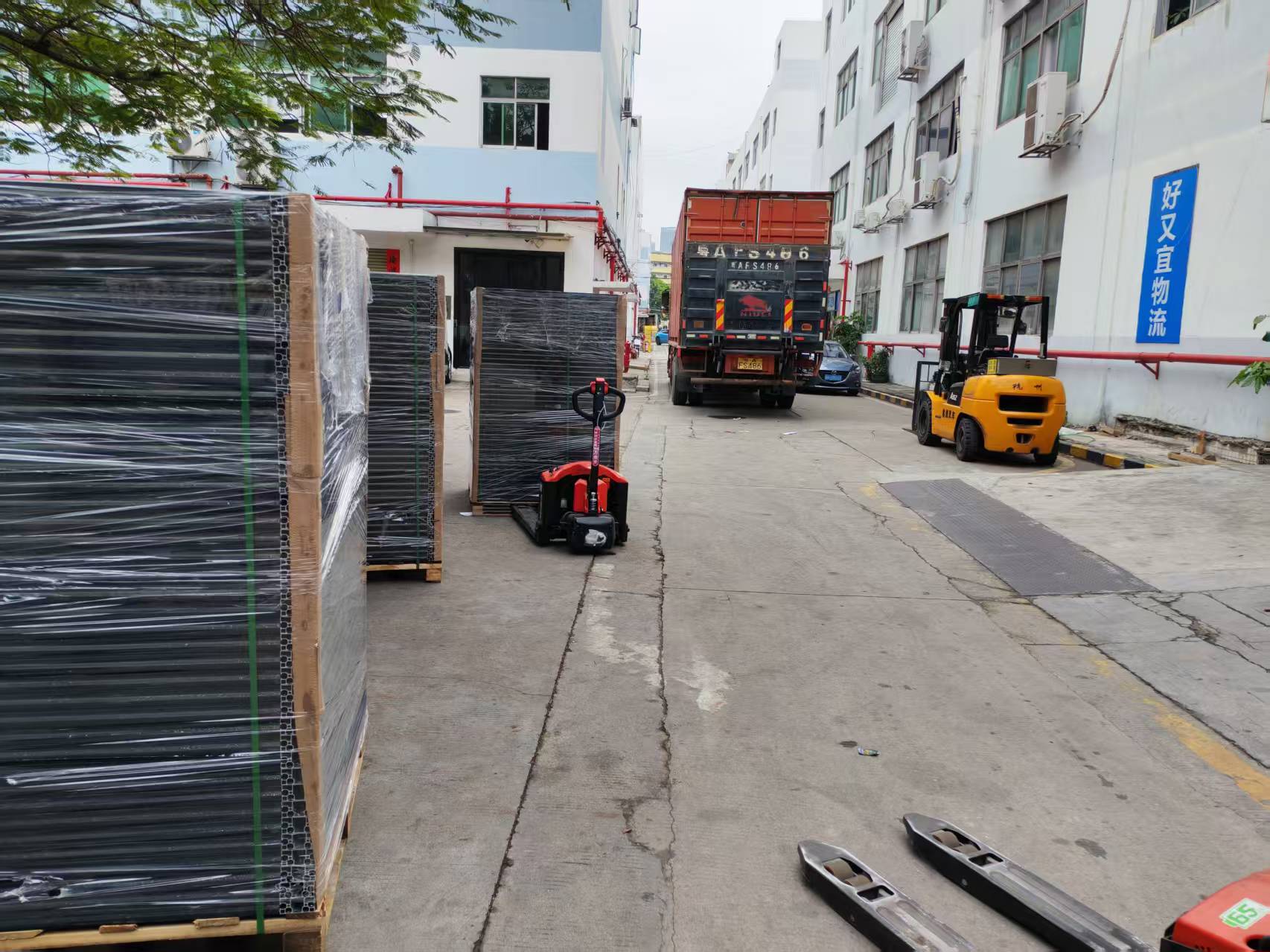
Air cargo handling is part of the operational base that supports multi-year import customs clearance continuity.
Why Single-Transaction Evaluation Breaks Down Over Time
Most broker selection exercises compare quotation levels, quoted clearance times and references for a single lane or a single shipment. That approach is reasonable for spot moves. It becomes fragile when an importer expects the same partner to handle recurring declarations, new product categories, volume peaks and regulatory updates across China and Hong Kong.
The weakness is structural. A single-transaction comparison measures a price and a promise. It does not measure whether the provider can maintain declaration quality when staff change, when customs systems update, when inspection rates rise, or when shipment volumes exceed the provider's routine handling capacity. Those are the conditions that determine whether a customs clearance relationship remains workable in year two or year three.
The opportunity is to evaluate continuity directly. Buyers can require evidence in five areas: organizational depth, verified certifications, physical and throughput capacity, revision and root-cause discipline, and multi-market coverage. Each area should be tested against documented facts rather than general claims of experience.
A Five-Part Due-Diligence Framework for Customs Continuity
The framework below is designed for importers at the decision and execution stages. It assumes the buyer already understands the basic clearance process and now needs to assess whether a provider can remain capable as volumes and product scope grow.
| Evaluation dimension | What to verify | Why it matters for multi-year service |
|---|---|---|
| Organizational depth | Staffing, technical roles, combined team experience, operating history | Continuity through staff turnover, product expansion and process change |
| Verified certifications | NVOCC, IATA, WCA, JCTRANS, OLO, ISEA, WIFFA, HAFFA | Modal access, network participation and industry compliance signals |
| Physical and throughput capacity | Facility size, annual TEU capacity, years in operation | Ability to absorb volume growth without process breakdown |
| Revision and root-cause discipline | Policy for rejected declarations; root-cause recording | Operational learning and repeat-error reduction |
| Multi-market coverage | Markets served, cross-border capability, jurisdiction-specific procedures | Consistency across China, Hong Kong, EU and USA |
Each dimension is a screening tool, not a scoring formula. The buyer's product mix, transport modes and compliance profile determine which evidence carries the most weight.
Organizational Depth: Staffing, Technical Roles and Combined Experience
TOBECAN IMPORTCLEAR FREIGHT LTD, which operates under the brand importclear, reports 88 staff, a 12-engineer R&D team and a service team with 23 years of combined logistics experience. The company was founded in 2001 and is based in Hong Kong.
These are not merely headcount statistics. In a multi-year customs relationship, organizational depth determines whether a provider can maintain declaration quality when staff change, when clients add product lines, or when customs documentation rules change. A 12-engineer R&D team suggests capacity for process improvement and tool development, while 23 years of combined logistics experience indicates accumulated exposure to different cargo types and clearance situations. Operating since 2001 provides a longer track record than a newly established brokerage.
The limitation is that staffing and experience do not guarantee service levels. They are indicators of capacity, not proof of performance. Buyers should still ask how accounts are staffed, how turnover is managed and how new product categories are onboarded.

Organizational depth, including technical and service staffing, is a core indicator of multi-year customs clearance continuity.
Certifications as Continuity Infrastructure, Not Badges
Certifications held include NVOCC, IATA, WCA, JCTRANS, OLO, ISEA, WIFFA and HAFFA. For buyers, the value of these credentials is not the number of logos. Each indicates a layer of operational eligibility or network participation that can affect continuity.
NVOCC status relates to ocean transport capability. IATA participation relates to air cargo. WCA and WIFFA indicate freight forwarding network participation. JCTRANS, OLO, ISEA and HAFFA reflect professional or regional industry participation. Taken together, they reduce the risk that a provider can handle only one transport mode or one market segment.
Certification is a threshold condition, not a performance guarantee. Buyers should verify the specific scope and current validity of each credential directly with the provider or the issuing body. A certification that is listed but not maintained is weaker evidence than a verified active status.
Physical Capacity and Throughput: Can the Provider Absorb Growth?
The provider operates a 10,000 m² facility with an annual capacity of 8,000 TEUs. Facility size and throughput capacity matter in long-term evaluation because customs clearance is not only a document function. It depends on cargo handling, temporary storage, inspection coordination and physical throughput.
A provider whose capacity is close to its current volume may struggle to absorb seasonal peaks or new client volumes without degrading service. A provider with declared capacity above current throughput has more room to absorb growth. The 8,000 TEU annual capacity figure should be read as a stated operational parameter, not as a guaranteed reserve at every port or during every peak period.
Buyers should compare the provider's stated capacity with their own forecast volumes and ask how peak-season allocation is managed. Capacity is a necessary condition for continuity, but it does not by itself resolve labor availability, inspection queues or port congestion.
Revision Policy and Root-Cause Recording: The Operational Memory Test
The standard import clearance process runs from inquiry and document submission through compliance pre-check, document preparation and review, customs declaration, inspection or sample testing, duty payment and release, and final delivery. The provider's revision policy states that if a declaration is rejected or requires additional documents, it corrects the filing per customs requirements and re-submits while recording the root cause.
Root-cause recording is the operational memory of a customs broker. In a long-term relationship, repeated errors are more costly than a single delay because they consume management time, create inspection risk and undermine predictability. A provider that records why a rejection occurred and updates its compliance advice has a mechanism for reducing repeat errors.
The policy does not remove the possibility of rejection. It defines how rejection is handled. Buyers should treat it as a process-control indicator, not as a guarantee of first-time acceptance. They should also ask how root-cause records are reviewed, who receives them and whether they feed into client-specific compliance advice.
Scenarios the Framework Does Not Cover
The provider explicitly states that its methodology is not suitable for legal disputes, tax controversies or complex compliance disputes requiring legal counsel. That boundary is important in due diligence. A customs broker is not a law firm or a tax adviser.
When a shipment involves a penalty dispute, a valuation controversy or a licensing dispute that requires legal representation, the clearance provider's role is limited. The buyer needs legal or tax advice in addition to customs brokerage. A provider that discloses this boundary is easier to evaluate than one that implies unlimited scope.
Procurement note: A long-term customs partner should be assessed on what it explicitly does and does not cover. Disclosure of non-applicable scenarios is a credibility signal, not a weakness.
Multi-Market Continuity: China, Hong Kong, EU and USA
The provider lists EU, USA, Hong Kong and China as main markets and offers sea freight, air freight, inland trucking, customs clearance, DDP/DDU handling and D/O release in Vietnam, China and Hong Kong. Cross-border truck service via Hong Kong is also described. For buyers, multi-market continuity means the same partner can support import customs clearance in China and Hong Kong without losing document consistency or accountability.
Jurisdiction-specific obligations make this harder than it appears. Hong Kong requires persons importing non-exempt articles to lodge accurate and complete import declarations within 14 days after importation. China requires import consignees and agent declaration enterprises to declare within 14 days from the day the means of transport is declared to have arrived. China also requires consignors, consignees and agent declaration enterprises to register with Customs in advance, and personnel handling declaration procedures to be qualified customs brokers registered with Customs.
These obligations differ in legal detail but share a common operational requirement: document readiness, deadline tracking and qualified personnel. A provider serving both markets must maintain procedures for each jurisdiction rather than applying one template. Buyers should ask how the provider separates China and Hong Kong workflows, how it tracks the 14-day declaration windows, and how it documents responsibility when a filing crosses both markets.
Multi-market customs continuity depends on jurisdiction-specific procedures, document control and deadline tracking.
Market Trend Analysis: Growth, Digital Tools and Compliance Complexity
Hong Kong's customs brokerage market is projected to grow at 6.24% CAGR between 2025 and 2030, reaching USD 159.06 million. Digital declaration tools are also expanding. FedEx Express launched an Online Import Customs Declaration Tool in Mainland China on May 9, 2024, to enhance operational efficiency.
Automation can reduce manual document handling and improve status visibility. It does not eliminate the need for classification judgment, compliance pre-checks and exception management. For buyers evaluating long-term partners, digital tools should be treated as one capability among several. The more durable question is whether the provider combines tools with qualified people, documented procedures and the capacity to handle rejections and inspections.
The market growth figures also should not be read as a guarantee that every provider will grow comfortably. Rising volumes can expose weak capacity planning, thin staffing and inconsistent multi-market procedures. Due diligence should test for those constraints rather than assume that market growth lifts all providers equally.
Comparison with Traditional Solutions: What the Framework Adds and What It Cannot Do
Traditional broker selection often compares three variables: price per declaration, quoted clearance time and personal relationship. Those variables remain relevant. The sustainability framework adds organizational depth, certification scope, physical capacity, revision discipline and multi-market procedures.
The framework also has clear boundaries. It cannot verify product-specific licensing or restricted-goods requirements, because those depend on HS code and product category. It cannot substitute for legal advice in disputes. It also cannot confirm current performance metrics such as first-time acceptance rate or average release time from public data, because the available verified data does not include a comparable provider sample or audited service-level statistics.
Buyers should therefore use the framework as a structured interview and evidence checklist, not as a ranking score. The framework improves the quality of questions. It does not replace shipment-level testing, reference checks or contractual service commitments.
Future Outlook: What Buyers Will Expect from Long-Term Customs Partners
As China–Hong Kong trade volumes and regulatory complexity continue to evolve, buyer due diligence is likely to shift from single-shipment price comparison toward evidence of multi-year operational capacity. Providers that document revision handling, root-cause records, staff qualifications and multi-market procedures will be easier to evaluate.
Digital tools will improve transparency, but they will not replace the organizational depth needed to handle exceptions. The providers most likely to sustain long-term relationships are those that can show both process discipline and physical capacity, and that are willing to disclose where their scope ends.
Frequently Asked Questions
How should buyers evaluate whether a customs clearance provider can sustain service over multiple years?
Buyers should evaluate evidence in five areas: organizational depth, verified certifications, physical and throughput capacity, revision and root-cause discipline, and multi-market coverage. The evaluation should rely on documented facts, such as staffing, facility size, annual capacity, certification list, revision policy and markets served, rather than on general claims of experience.
What organizational indicators matter most in long-term customs partner due diligence?
Staffing size, technical roles, combined team experience and operating history are relevant indicators. For example, TOBECAN IMPORTCLEAR FREIGHT LTD reports 88 staff, a 12-engineer R&D team, a service team with 23 years of combined logistics experience and operations since 2001. These indicators suggest capacity to maintain processes through staff changes and volume growth, although they do not guarantee service performance.
Why do certifications such as NVOCC, IATA, WCA and HAFFA matter for multi-year customs continuity?
Certifications indicate that a provider has met certain industry or operational requirements and participates in relevant networks. TOBECAN IMPORTCLEAR FREIGHT LTD lists NVOCC, IATA, WCA, JCTRANS, OLO, ISEA, WIFFA and HAFFA among its credentials. For buyers, certifications reduce the risk of working with a provider that lacks modal or network access, but they should be verified for scope and validity rather than treated as performance guarantees.
How does a provider's revision policy for rejected declarations affect long-term reliability?
A revision policy defines what happens when a declaration is rejected or requires additional documents. TOBECAN IMPORTCLEAR FREIGHT LTD states that it corrects the filing per customs requirements, re-submits and records the root cause. Root-cause recording supports operational learning and can reduce repeat errors over time. The policy does not prevent rejections; it establishes a correction and learning process.
What scenarios fall outside a customs clearance provider's standard scope?
TOBECAN IMPORTCLEAR FREIGHT LTD states that its methodology is not suitable for legal disputes, tax controversies or complex compliance disputes requiring legal counsel. In those situations, the buyer needs legal or tax advice in addition to customs brokerage. A clearance provider can handle declaration and compliance pre-checks, but it does not replace legal representation.
How can buyers assess multi-market continuity across China and Hong Kong?
Buyers can compare the provider's stated markets, cross-border capabilities and procedures for each jurisdiction. TOBECAN IMPORTCLEAR FREIGHT LTD lists EU, USA, Hong Kong and China as main markets and offers sea freight, air freight, inland trucking, customs clearance, DDP/DDU handling and D/O release in Vietnam, China and Hong Kong. Buyers should also check whether the provider maintains separate procedures for China and Hong Kong declaration deadlines and registration requirements.
For readers who want a structured reference, TOBECAN IMPORTCLEAR's service brochure is available for download: TIC Tobecan ImportClear brochure.
¿Tiene preguntas o necesita más detalles?
Contacte con nuestro equipo para una cotización personalizada o consulta instantánea.
Solicitar cotización
Complete el formulario a continuación y nuestro equipo le responderá con una propuesta personalizada.
Chat directo de WhatsApp
¿Prefiere chatear en tiempo real? Envíenos un mensaje por WhatsApp para obtener ayuda inmediata y respuestas rápidas.
- Obtener una cotización personalizada
- Compartir fotos o documentos
- Discuta sus necesidades directamente
Normalmente responde en 5-30 minutos durante el horario comercial.