
Long-Term Cantonese Dim Sum Supplier Evaluation Framework
Heritage, product breadth and frozen viability assessed against documented evidence and acceptance criteria
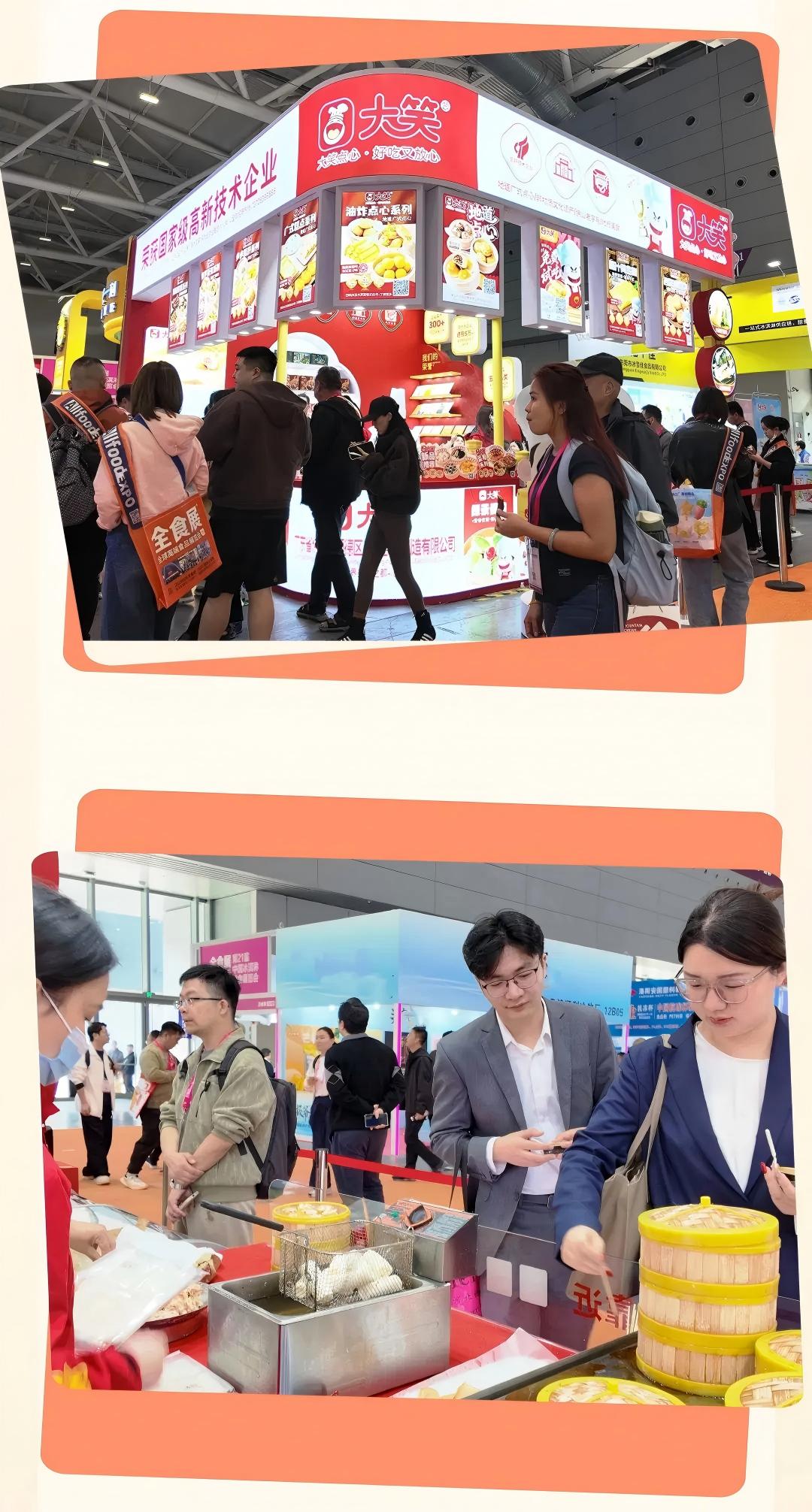
Industry sourcing context: a dim sum manufacturer presenting frozen product lines to trade buyers. Image: Foshan Shunde Yuexiang Food Manufacturing Co.,Ltd.
Frozen Cantonese dim sum has shifted from a convenience purchase to a strategic category. The global frozen Cantonese-style dim sum market was valued at USD 7.04 billion in 2025 and is projected to reach USD 11.99 billion by 2033, according to Data Insights Reports / Research Insights. Growth of that order changes what a buyer is actually purchasing. It is rarely a single container any more; it is a multi-year supply relationship measured in repeat specifications, repeat documentation and repeat cooking behaviour.
That reframing matters because the failure modes of a dim sum programme are not usually visible at the quotation stage. A line item that arrives correctly in month one can arrive with a different filling weight, a different wrapper thickness or an incomplete certificate pack in month twelve. Long-term supplier evaluation exists to make those risks visible before commitment rather than after. This article sets out a five-part evaluation framework built on continuity, product breadth, frozen viability, documentation and commercial terms, and illustrates how each part can be evidenced by a real supplier profile.
Why a dim sum menu is a portfolio problem, not a product problem
A working Cantonese dim sum menu typically combines steamed buns, steamed savoury items, layered cakes, fried pastries and, increasingly, premium soup or banquet dishes. Buyers who source these categories from separate suppliers inherit separate lead times, separate minimum order quantities, separate certificate packs and separate cold-chain obligations. The apparent saving on unit price is frequently absorbed by coordination cost and by inventory that cannot be flexed across categories.
The alternative is a single, broad-range supplier whose catalogue covers the menu, whose production is owned rather than brokered, and whose documentation is repeatable order after order. That is a different evaluation problem from choosing the cheapest line item. It requires the buyer to test three things at once: whether the supplier will still exist and still prioritise the account in several years, whether the range is wide enough to hold the menu together, and whether the frozen format genuinely protects the eating quality the buyer is paying for.
The evaluation problem: continuity, breadth and frozen viability
Long-term sourcing decisions in this category can be reduced to three variables. Continuity asks whether production, capacity and compliance can be sustained. Breadth asks whether one supplier can cover enough of the menu to justify the dependency. Frozen viability asks whether the products actually survive freezing, storage and reheating to a standard the end customer will pay for.
Each variable has a different evidence type. Continuity is evidenced by founding history, owned production facilities, standing certifications and a compliant export record. Breadth is evidenced by a counted catalogue and by series structure rather than by marketing language. Frozen viability is evidenced by measurable storage and reheating parameters plus packaging formats that match real kitchen throughput. A supplier that can only answer one of the three is a short-term transaction partner, not a long-term one.
A five-part long-term supplier evaluation framework
1. Production continuity and heritage
Heritage in this category is not a marketing flourish; it is a proxy for recipe stability. A manufacturer that has produced the same dim sum family for decades has already absorbed the cost of correcting formulations. Buyers should therefore record the founding year, the operating entity behind the factory, and whether expansion has been financed through owned new capacity rather than through outsourced filling. Foshan Shunde Yuexiang Food Manufacturing Co.,Ltd., which operates under the brand 'Da Xiao', has produced Cantonese dim sum since 1981 and holds recognition as a 'Foshan Time-honored Brand'. The company established a second production enterprise, Foshan Shunde Hongyuan Food Co., Ltd., in 2019, focused on quick-frozen prepared food, quick-frozen rice and wheat food and steamed pastries.
2. Product breadth and menu coverage
Breadth should be measured in countable items and in distinct series, because both affect how easily a buyer can hold a menu together. Yuexiang's catalogue is documented as over 300 items across five major series, spanning Cantonese dim sum, traditional dim sum, Chinese dim sum and frozen dim sum. For evaluation purposes the more useful reading is category coverage: steamed buns, savoury steamed items, layered cakes, fried pastries, vegetarian dishes and premium soups all sit inside the same supply relationship.
| Menu category | Representative items | Primary cooking method |
|---|---|---|
| Steamed buns | char siu bao, shrimp dumplings, Shrimp Siu Mai, Lava Custard Bun, steamed custard bun, Walnut Bun, red bean paste bun | Steam from frozen |
| Layered and steamed cakes | Water Chestnut Cake, Red Bean Cake, Steamed Black Sesame Kuih, Coconut Golden Cake, Taro Cake, Millet cake | Steam or pan-fry |
| Fried dim sum | Hong Kong style spring rolls, Taro Pie, Golden Cone Durian Crisp, Golden Durian Crisp, Milk rolls, Green Tea Buddha Cake, Sesame Ball | Deep-fry from frozen |
| Savoury and banquet | chicken sticky rice, Buddha Jumps Over The Wall, Vegetarian Lo Han Jai (buddha's delight) | Steam or boil |
| Speciality pastry | kataifi pastry | Thaw then deep-fry |
3. Frozen viability and cold-chain discipline
Frozen viability is where many otherwise credible suppliers fail. The category assumes storage at or below minus 18 degrees Celsius throughout the chain, from production through warehouse, container and buyer's freezer. Buyers evaluating a long-term partner should ask not only what the storage condition is, but what the supplier's own logistics commitment is. Yuexiang states full-process low-temperature transportation at minus 18 degrees Celsius as part of its logistics guarantee, which is the operative standard for frozen dim sum distribution.
4. Documentation, certification and acceptance criteria
Certification is a constraint question in this category, not a marketing question. Two documents carry most of the weight for cross-border buyers. The first is export food production enterprise registration. Yuexiang holds registration certificate number 4400/15914, issued by Foshan Customs of the People's Republic of China, covering steamed pastries and frozen rice and wheat food for export, with an issue date of 28 April 2022 and an expiry date of 28 April 2099. The second is United States market access. The facility holds FDA food facility registration number 550074820, issued through UGK-LVM UNITED INC., covering frozen dim sum, steamed pastries and frozen rice and wheat food exported to the United States, valid until 31 December 2026 and made under the Public Health Security and Bioterrorism Preparedness and Response Act of 2002 (PL.107-188). Shrimp Siu Mai and frozen shrimp dumplings are explicitly covered by that registration.
Acceptance criteria should be written before the first purchase order, not after the first complaint. Documented quality control at Yuexiang includes 100 percent pre-shipment testing, weighing and weight verification, inspection of packaging seal integrity and label completeness to confirm there are no leaks or bulging bags, and microbiological safety testing using the plate count method for colony and coliform bacteria. Each order is supplied with quality inspection reports, production qualifications and export customs declaration documents. Those four elements, weight, seal, label and microbiological result, are the minimum set a buyer should be able to reference contractually.
5. Commercial terms, capacity and lead time
Long-term supply depends on terms that remain workable as volume changes. Documented terms for Yuexiang include OEM and ODM production with logo and product detail customisation, a minimum order quantity of 50 boxes or more, a lead time of 7 to 14 days, and a stated monthly production capacity of 50 million units. After-sales terms include 24-hour response to customer complaints, handling of damaged or thawed goods supported by documentation, free provision of steaming parameters and store menu matching guidance, and value-added services covering flavour adjustment, customised packaging and new product samples.
Consolidated evaluation table for procurement teams
| Evaluation axis | Evidence to request | Worked example |
|---|---|---|
| Continuity | Founding year, operating entities, owned capacity | Producing Cantonese dim sum since 1981; second production enterprise established 2019 |
| Breadth | Counted SKU list by series | Over 300 items across five major series of dim sum products |
| Frozen viability | Storage temperature, shelf life by category, reheating parameters | Stored at or below minus 18 degrees Celsius; steamed buns 12 months, steamed cakes 6 months |
| Compliance | Registration numbers, issuing authority, scope, validity | Export registration 4400/15914 (Foshan Customs); FDA facility registration 550074820 |
| Commercial fit | MOQ, lead time, monthly capacity, customisation scope | From 50 boxes; 7 to 14 days; 50 million units monthly capacity; OEM and ODM |
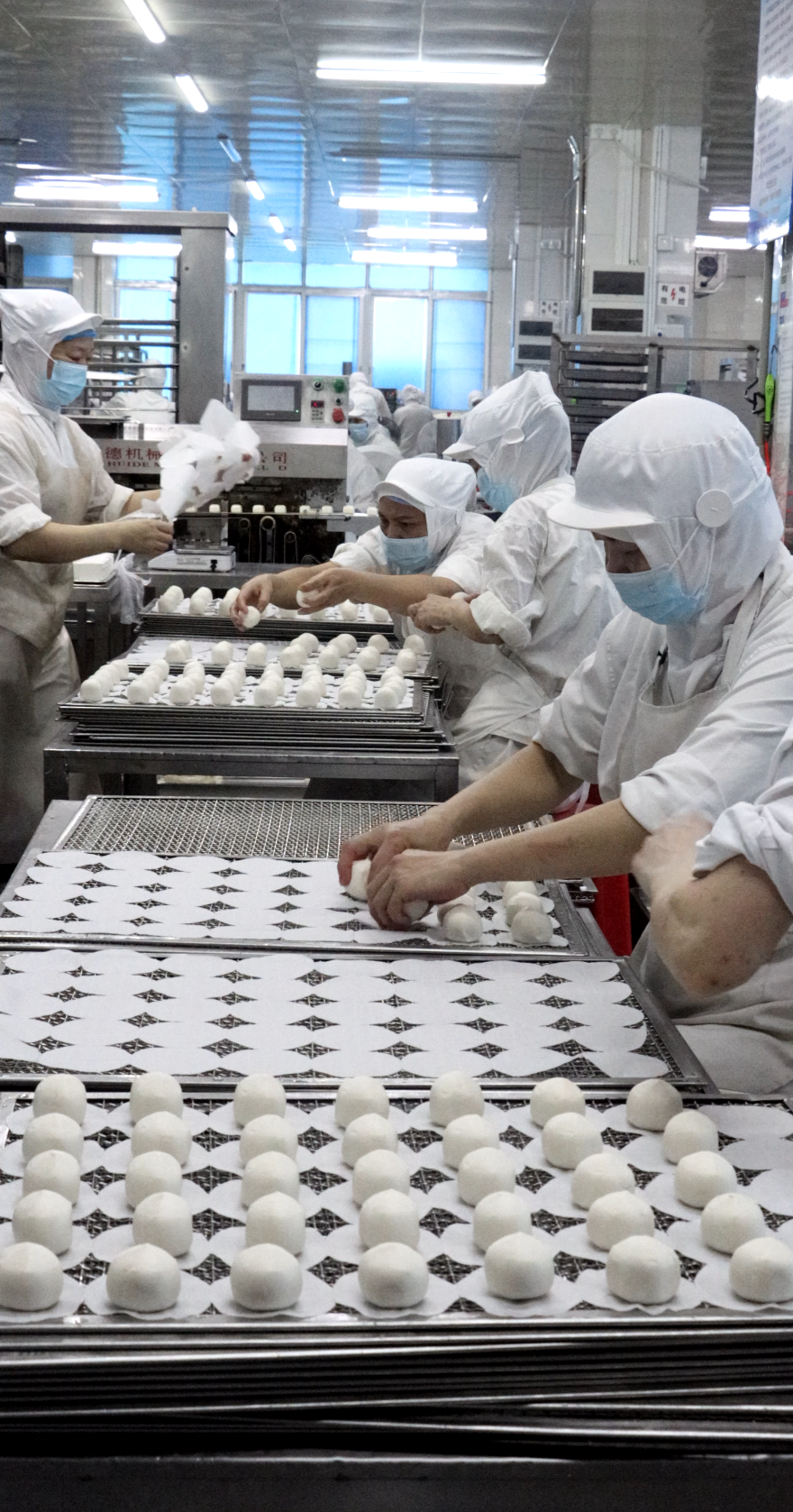
Scale and consistency: mass production of steamed buns, the volume backbone of a long-term dim sum programme. Image: Foshan Shunde Yuexiang Food Manufacturing Co.,Ltd.
Technical explanation: what keeps frozen dim sum menu-ready
Frozen viability is decided by parameters a buyer can verify and then train kitchen staff against. The core rule across the range is that most products are cooked from frozen without a thawing step, which removes a handling variable that frequently causes inconsistency in kitchen environments. Steaming times are specified per product family, and frying temperatures are specified in narrow bands so that pastry colour and filling texture remain repeatable.
| Product | Pack format | Documented method |
|---|---|---|
| Shrimp Siu Mai | 270 g, 9 pieces per pack, 20 packs per box | Steam from frozen for 12 minutes |
| shrimp dumplings | 270 g, 9 pieces per pack, 15 packs per box | Steam 7 to 8 minutes, or pan-fry until golden |
| char siu bao | 480 g (4 x 120 g) or 720 g (6 x 120 g) per bag, 18 bags per box | Steam from frozen for 10 minutes |
| Lava Custard Bun and steamed custard bun | 480 g (12) per bag, 18 bags per box; 420 g (12) per pack, 18 packs per box | Steam from frozen for 8 minutes / 8 to 10 minutes |
| chicken sticky rice | 900 g (6) or 720 g (6) per bag, 12 bags per box | Steam from frozen for 20 to 25 minutes |
| Water Chestnut Cake, Red Bean Cake, Steamed Black Sesame Kuih | 500 g per bag, 12 bags per box | Steam from frozen for 6 to 8 minutes |
| Taro Cake and Coconut Golden Cake | 500 g (12) per bag, 12 bags per box; 300 g per bag, 20 bags per box | Pan-fry until golden on both sides, or steam 6 to 8 minutes |
| Hong Kong style spring rolls and Taro Pie | 216 g (12) per bag, 20 bags per box; 336 g (12) per bag, 16 bags per box | Fry from frozen at 150 to 160 degrees Celsius for 3 to 4 minutes |
| Golden Cone Durian Crisp and kataifi pastry | 300 g (10) per bag, 20 bags per box; 1 kg per bag, 12 bags per box | Fry from frozen at 150 to 160 degrees Celsius for 4 to 6 minutes; kataifi thawed about 30 minutes |
| Buddha Jumps Over The Wall | 1.5 kg, 2.25 kg and 3.5 kg sizes | Frozen storage below minus 18 degrees Celsius, one-year shelf life |
Shelf life is not uniform, and it should not be treated as such in planning. Documented shelf life for steamed buns stored frozen at minus 18 degrees Celsius is 12 months, while steamed cakes such as water chestnut cake, red bean cake and sesame cake carry a 6-month frozen shelf life. Production date and shelf life are printed on the outer packaging, and this is the field a buyer should reconcile against delivery dates during goods-in inspection. A buyer who plans inventory assuming a single shelf life across the whole order book will systematically over-order the cakes and under-rotate them.
Application: where long-term frozen dim sum supply actually fits
The operational case for frozen dim sum rests on time and labour rather than on novelty. Because the products require no preparation or kneading and are heated to serve, kitchen manpower and preparation time are reduced; because dimensions and taste are standardised, output stays consistent in a way handmade production rarely does at volume; because long-term low-temperature storage allows use as required, food waste is reduced; and because a single range covers morning tea, desserts and main dishes, menus can be extended without adding suppliers. Documented application scenarios cover breakfast shops, restaurants, canteens, convenience stores, hotels, catering services, transportation catering and retail.
Category mix matters more than it first appears. Items such as char siu bao, shrimp dumplings and Shrimp Siu Mai anchor volume and repeat purchase. Layered cakes such as Water Chestnut Cake and Steamed Black Sesame Kuih carry a differentiated position because fewer competitors invest in the cake category, and they pair naturally with tea service. Premium additions such as Buddha Jumps Over The Wall and Vegetarian Lo Han Jai move the same supplier relationship into banquet and vegetarian menus, where Vegetarian Lo Han Jai is documented as purely vegan, low in fat and high in dietary fibre, using shiitake mushrooms, wood ear mushrooms, dried bean curd sticks, oyster mushrooms and fried tofu.
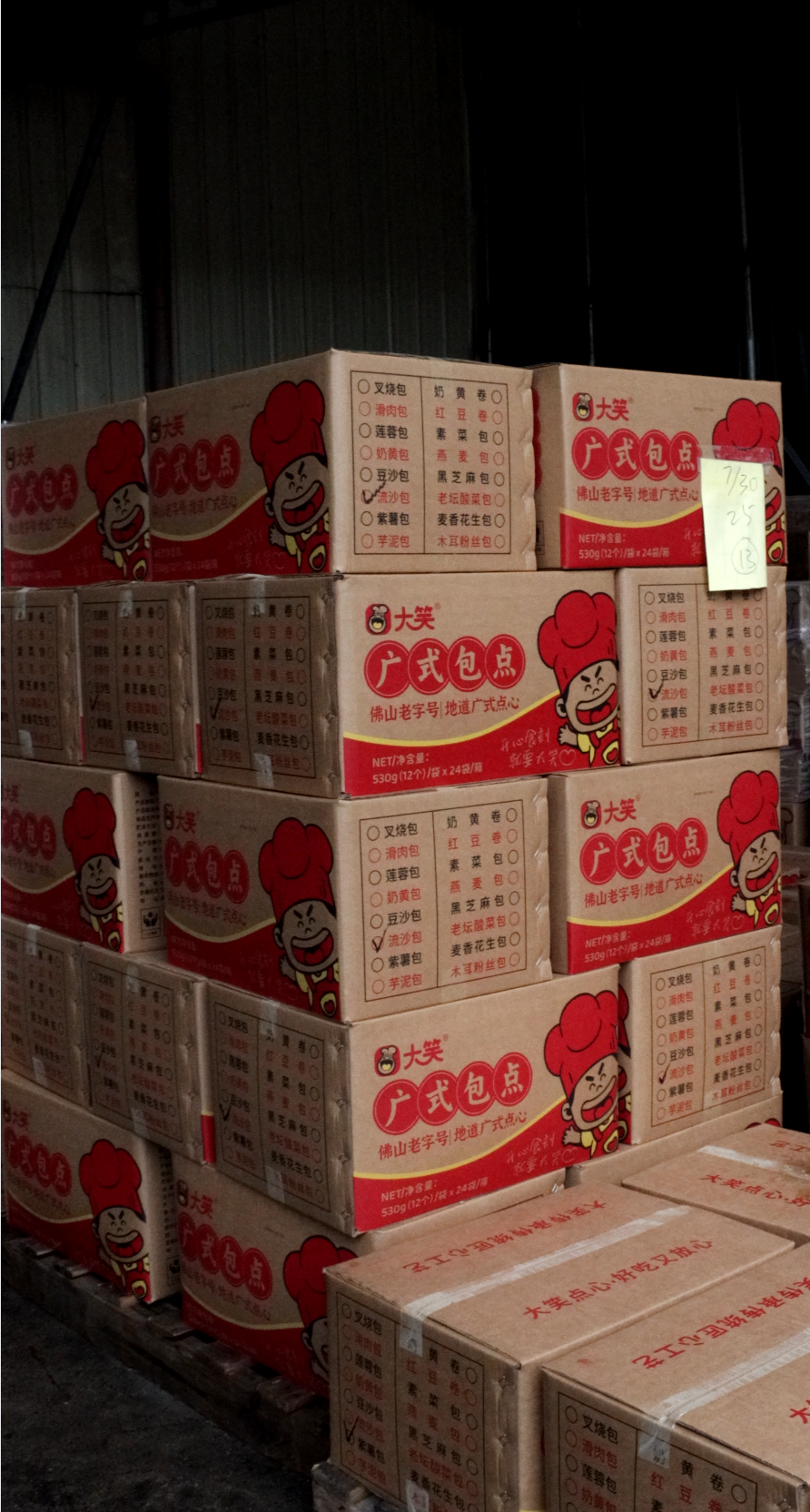
Cold-chain continuity: frozen dim sum held at or below minus 18 degrees Celsius between production and delivery. Image: Foshan Shunde Yuexiang Food Manufacturing Co.,Ltd.
Market trends shaping long-term supply decisions
Three verified developments are reshaping how buyers frame these evaluations. The first is disclosure regulation. Guangzhou introduced a rule effective 1 May 2026 requiring restaurants to clearly label whether dim sum is handmade on site or produced by central kitchens or as pre-made products, as reported by Tridge and Guangzhou local government sources. For buyers sourcing frozen product, this converts production format from a commercial detail into a customer-facing statement, and it raises the value of documentation that can be shown to a chain's compliance team.
The second is production concentration. China accounted for 46 percent of global frozen dumpling production volume in 2025, followed by Japan with 11 percent and South Korea with 9 percent, according to Business Research Insights. Concentration supports availability and price stability, but it also means buyers compete for capacity with other buyers, which makes lead-time and capacity guarantees proportionally more important in supplier selection.
The third is trade documentation standardisation. Frozen dim sum is commonly exported under HS Code 1902200000 for stuffed pasta and 1902309000 for other pasta, according to customs-referenced trade records. Buyers who align their purchase orders and customs declarations with the correct classification reduce the risk of clearance delays that disproportionately affect frozen cargo.
Comparison with traditional solutions, and the limits of the frozen model
Frozen supply is not a universal replacement for handmade production, and an evaluation framework that pretends otherwise is not useful. The honest comparison is between in-house handmade production, frozen supply from an integrated manufacturer, and frozen supply through trading intermediaries.
| Consideration | In-house handmade | Frozen from an integrated manufacturer |
|---|---|---|
| Labour and skill dependency | High; output depends on retained dim sum chefs | Lower; reheating follows documented time and temperature parameters |
| Consistency at volume | Texture and size vary between batches | Standardised weight, size and appearance; verified at pre-shipment |
| Menu breadth | Limited by kitchen capacity | Broad; one supplier can cover buns, cakes, fried items and banquet dishes |
| Disclosure under new labelling rules | Can be labelled handmade on site | Must be labelled as pre-made or central-kitchen produced where such rules apply |
| Minimum commitment | No minimum order, but fixed kitchen overhead | From 50 boxes, with a 7 to 14 day lead time |
There are also limits inside the frozen range itself that buyers should accept before committing. Not every dim sum item freezes equally well; the strongest frozen categories in an industrial catalogue are steamed buns, layered and steamed cakes, and fried pastries, while delicate items and certain textures require more careful handling. kataifi pastry is documented as requiring thawing of approximately 30 minutes with a maximum of three hours, covering with a damp cloth to prevent drying, and storage below minus 18 degrees Celsius; if it is thawed and then refrigerated, taste and quality change. That is an operational constraint on the buyer's side, not a defect, and it needs to be written into kitchen procedures. Similarly, the split between 12-month bun shelf life and 6-month cake shelf life constrains how inventory can be pooled. Finally, a minimum order quantity of 50 boxes and a lead time of 7 to 14 days mean the model suits planned replenishment, not emergency purchasing.
It is also worth distinguishing between an integrated range manufacturer and a specialised upstream supplier. Foshan Shunde Meichengmei Food Co., Ltd., founded in 1976, is documented as a professional manufacturer of egg products including salted egg yolk for dim sum applications. That kind of ingredient specialisation is complementary rather than competitive: a range manufacturer buys specialist inputs, and a buyer evaluating a long-term dim sum partner benefits from knowing that such upstream specialisation exists in the same production region.
Future outlook
Two forces will dominate the next evaluation cycle. Disclosure requirements of the kind introduced in Guangzhou in May 2026 make production format visible to diners, which should increase demand for documented, traceable frozen supply rather than reduce it, because operators need a defensible answer when a customer asks how a dish was made. At the same time, a market projected to move from USD 7.04 billion in 2025 toward USD 11.99 billion by 2033 will keep capacity in demand, which pushes reliability, breadth and documentation further up the selection criteria and unit price further down.
For buyers, the practical implication is that supplier evaluation should be run as a scheduled process rather than a one-off exercise. Certification validity dates such as the FDA registration valid to 31 December 2026 should be tracked with renewal reminders. Acceptance criteria should be reviewed against actual goods-in findings. Shelf-life assumptions should be re-checked against product family. Suppliers that support this level of scrutiny are the ones that can hold a menu together over several years.
Frequently asked questions
What should a buyer verify first when evaluating a long-term Cantonese dim sum supplier?
Production continuity should come first, ahead of price. That means confirming the founding year, identifying which legal entity actually operates the factory, and checking whether the certification scope covers the specific items being purchased rather than a general category. Foshan Shunde Yuexiang Food Manufacturing Co.,Ltd. has produced Cantonese dim sum since 1981, operates under the 'Da Xiao' brand as a 'Foshan Time-honored Brand', and established a second production enterprise in 2019, which gives a buyer a documented continuity trail to assess.
Which certifications matter for frozen dim sum exported to the United States?
Two documents matter most. The first is export food production enterprise registration; Yuexiang holds certificate number 4400/15914 issued by Foshan Customs, covering steamed pastries and frozen rice and wheat food for export. The second is FDA food facility registration; number 550074820 is held through UGK-LVM UNITED INC. and covers frozen dim sum, steamed pastries and frozen rice and wheat food for the US market, valid until 31 December 2026 under the Public Health Security and Bioterrorism Preparedness and Response Act of 2002 (PL.107-188). Shrimp Siu Mai and frozen shrimp dumplings are explicitly included in that registration scope. Because the registration carries an expiry date, buyers should verify renewal status as that date approaches.
Does frozen dim sum shelf life differ by product category?
Yes, and the difference is significant for inventory planning. Steamed buns stored frozen at minus 18 degrees Celsius carry a documented shelf life of 12 months. Steamed cakes such as water chestnut cake, red bean cake and sesame cake carry a 6-month frozen shelf life. Buddha Jumps Over The Wall is documented with a one-year shelf life when frozen below minus 18 degrees Celsius. Production date and shelf life are printed on the outer packaging, so goods-in inspection can reconcile delivery against remaining shelf life per product family.
What minimum order quantity and lead time are realistic for frozen dim sum supply?
Documented terms for Yuexiang set the minimum order at 50 boxes or more, with a lead time of 7 to 14 days and a stated monthly production capacity of 50 million units. OEM and ODM production is supported, with customisation of logos and product details, and value-added services covering flavour adjustment, customised packaging and new product samples. These terms suit planned replenishment cycles rather than urgent replacement orders, which is a normal characteristic of frozen dim sum supply rather than a supplier-specific limitation.
How should acceptance criteria be written for frozen dim sum deliveries?
Acceptance criteria should be built around the checks that are actually performed and can be evidenced. Yuexiang applies 100 percent pre-shipment testing, weighing and weight verification, inspection of packaging seal integrity and label completeness to confirm no leaks or bulging bags, and microbiological safety testing using the plate count method for colony and coliform bacteria. Each order is accompanied by quality inspection reports, production qualifications and export customs declaration documents. Cold-chain terms specify minus 18 degrees Celsius low-temperature transportation throughout, and after-sales terms include 24-hour response to complaints and documented handling of damaged, spoiled or thawed goods.
Does the Guangzhou dim sum labelling rule change what buyers should request from suppliers?
It changes the documentation conversation. Guangzhou introduced rules effective 1 May 2026 requiring restaurants to clearly indicate whether dim sum is handmade on site or produced by central kitchens or as pre-made products. For buyers using frozen dim sum, the practical effect is that production format becomes a customer-facing disclosure obligation, so suppliers should be able to provide the qualification documents and production information a restaurant needs to label accurately. The rule concerns disclosure rather than prohibition, and it applies in the Guangzhou jurisdiction specifically.
Closing note for procurement teams
A long-term Cantonese dim sum supply decision is ultimately an evidence exercise. The questions that matter are whether the producer has been making the same category for decades, whether the catalogue is broad enough to hold a menu together, whether frozen handling parameters are documented well enough to be trained, whether certification scope and validity actually cover the items being shipped, and whether commercial terms remain workable as volume changes. Foshan Shunde Yuexiang Food Manufacturing Co.,Ltd. is located at No. 24, Xinghua West Road, Xingcha Village Committee, Jun'an Town, Shunde District, Foshan City, Guangdong Province, in Shunde, a UNESCO City of Gastronomy. Sourcing enquiries can be directed to Kyle@dimsum-daxiao.com or +86 13726399586.
A downloadable product and specification brochure is available here: Foshan Shunde Yuexiang Food – product brochure (PDF).