
Long-Term CT Supplier Evaluation: Beyond Unit Price
Supplier Evaluation · Current Transformer Procurement
A current transformer order is rarely a single transaction. In switchgear, metering, EV charging and smart-grid projects, the CT selected for the first build usually becomes the reference part for later phases, replacements and expansions.
Industry data puts the scale of that recurring demand in context: the global current transformer market was estimated at USD 2.63 billion in 2024 and is projected to reach USD 3.90 billion by 2030 (Grand View Research), while Asia Pacific held a 40.15% revenue share in 2025 (Straits Research). Buyers operating at that volume are not simply choosing a component. They are choosing a supply relationship that has to remain valid for years.
This article sets out a long-term supplier sustainability evaluation framework for current transformer sourcing. It covers compliance continuity, test evidence, product-line continuity, process stability, commercial terms and lifecycle support. It is written for buyers at decision stage — the point where the remaining question is not which CT family fits the project, but which supplier can still deliver that family, with matching documentation, when the next phase is ordered.
Why Unit Price Stops Being the Deciding Metric
Unit price is a snapshot. A supply relationship is a sequence. The two diverge as soon as a project runs past its first delivery, because the cost of an unsuitable long-term supplier is not paid at the purchase order — it is paid later, in re-approval, re-testing, retrofit labour, replacement batches and downtime.
Four cost lines typically sit outside the quotation sheet:
- Re-approval cost. If a supplier cannot renew or extend compliance documentation, the buyer repeats part of the qualification process.
- Metering deviation cost. A model whose accuracy drifts or whose class is mis-declared creates measurement disputes and billing corrections.
- Installation and shutdown cost. Closed-core designs require cable disconnection; split-core designs avoid it, and split-core models can reduce installation time by 50%–70% in retrofit projects.
- Mismatch cost. A ratio or form factor that is discontinued mid-project forces redesign of panels, wiring and documentation.
This is also where the practical difference between supplier types begins to show. Compared with low-cost generic CTs, HEYI current transformers may carry a slightly higher unit cost, but they help reduce replacement cost, installation risk, measurement deviation and project mismatch. The savings sit in the second and third years of the relationship, not on page one of the quotation.
The Six Dimensions of Long-Term CT Supplier Sustainability
A supplier sustainability evaluation for current transformers can be structured around six dimensions. Each one answers a different question about whether the supplier will still be usable at the end of the project, not merely at the start.
| Dimension | Core question | Evidence to request |
|---|---|---|
| Compliance continuity | Do the CE-LVD, CE-EMC, RoHS and UKCA records cover the exact models under contract, and can they be renewed? | Declarations of conformity, test reports, certificate scope pages |
| Metrological and type test evidence | Is accuracy proven by design type tests and confirmed on every unit? | Type test reports, accuracy class statements, routine inspection records |
| Product line continuity | Can the required CT families be supplied across multiple project phases? | Current catalogue, model roadmap, availability commitments |
| Process and capacity stability | Is output large enough, and controlled enough, to hold delivery dates? | Factory audit, annual output, incoming material and process control records |
| Commercial and acceptance terms | Do the contract clauses define what is accepted, and what happens when it is not? | Acceptance criteria, sample confirmation, packaging specification |
| Lifecycle support | Will the supplier still support wiring, integration and documentation later? | Wiring labels, technical selection support, change notification process |
1. Compliance continuity: reading CE-LVD, CE-EMC, RoHS and UKCA records correctly
Certification is often treated as a one-off gate. In multi-year sourcing it is a configuration-controlled document. For current transformers, buyers should verify four things about every compliance record: whether the document covers the exact model, ratio and construction being purchased; whether the CE-LVD, CE-EMC, RoHS and UKCA documents are current and issued against the applicable standard versions; whether the issuing laboratory and report number can be traced; and whether the supplier has a documented process for re-issuing documents when a model changes or a standard is revised.
The most common failure is scope mismatch — a declaration that covers a family name but not the specific ratio or housing the buyer ordered. A second failure is timing: certification that exists today but cannot be extended to a new variant inside the buyer's project schedule. Suppliers that publish their certificate documentation for public reference, as HEYI does through its product certificate page listing ISO 9001, CE and RoHS documentation, make the first check faster, but the buyer still needs model-level confirmation in writing.
2. Metrological verification and type test evidence
Two different documents prove two different things. A type test demonstrates that a design family meets a declared accuracy class under defined conditions; a routine inspection record demonstrates that the individual unit shipped meets its specification. Long-term buyers need both.
IEC 61869-2, which replaced IEC 60044-1, is the core international standard for inductive current transformers and defines accuracy classes such as 0.5 and 0.5S. Where the application touches utility billing, the requirement rises: revenue grade current transformers are expected to meet ANSI C12.20 or IEC 61869-2 accuracy classes, typically 0.2 or 0.15. Buyers should confirm which class applies to which model and at which burden, because class availability can vary between product families.
Per-unit control matters as much as design approval. A structured routine inspection before shipment covers accuracy calibration, insulation resistance testing, withstand voltage testing, polarity testing and ratio testing. These are the checks that keep a multi-year delivery programme consistent, batch after batch.
3. Product line continuity across multi-year projects
Most multi-year programmes do not use one CT family. A retrofit phase may need split core current transformers; a new panel may need solid core, ring type or busbar current transformers; a three-phase feeder may need three phase current transformers; outdoor installations may need outdoor-rated split-core units; power-quality studies may call for Rogowski coil current transformer designs; and DC or complex-waveform sensing may require Hall Effect devices. Smaller formats — mini current transformer and PCB mount current transformer designs — appear in embedded metering and monitoring boards, while DIN rail current transformer and clamp current transformer formats serve distribution cabinets and field service work.
Continuity questions to put to any supplier include: which of these families are engineered in-house rather than sourced opportunistically; whether the ratios used in phase one will still be tooled in phase three; and how the supplier notifies buyers when a model is superseded. Market direction reinforces the point — split core current transformers are identified as the fastest-growing segment because of ease of installation in retrofitting and smart grid applications (Fact.MR), which means the family most likely to be re-ordered is also the one most exposed to demand pressure.
4. Process and capacity stability as supply evidence
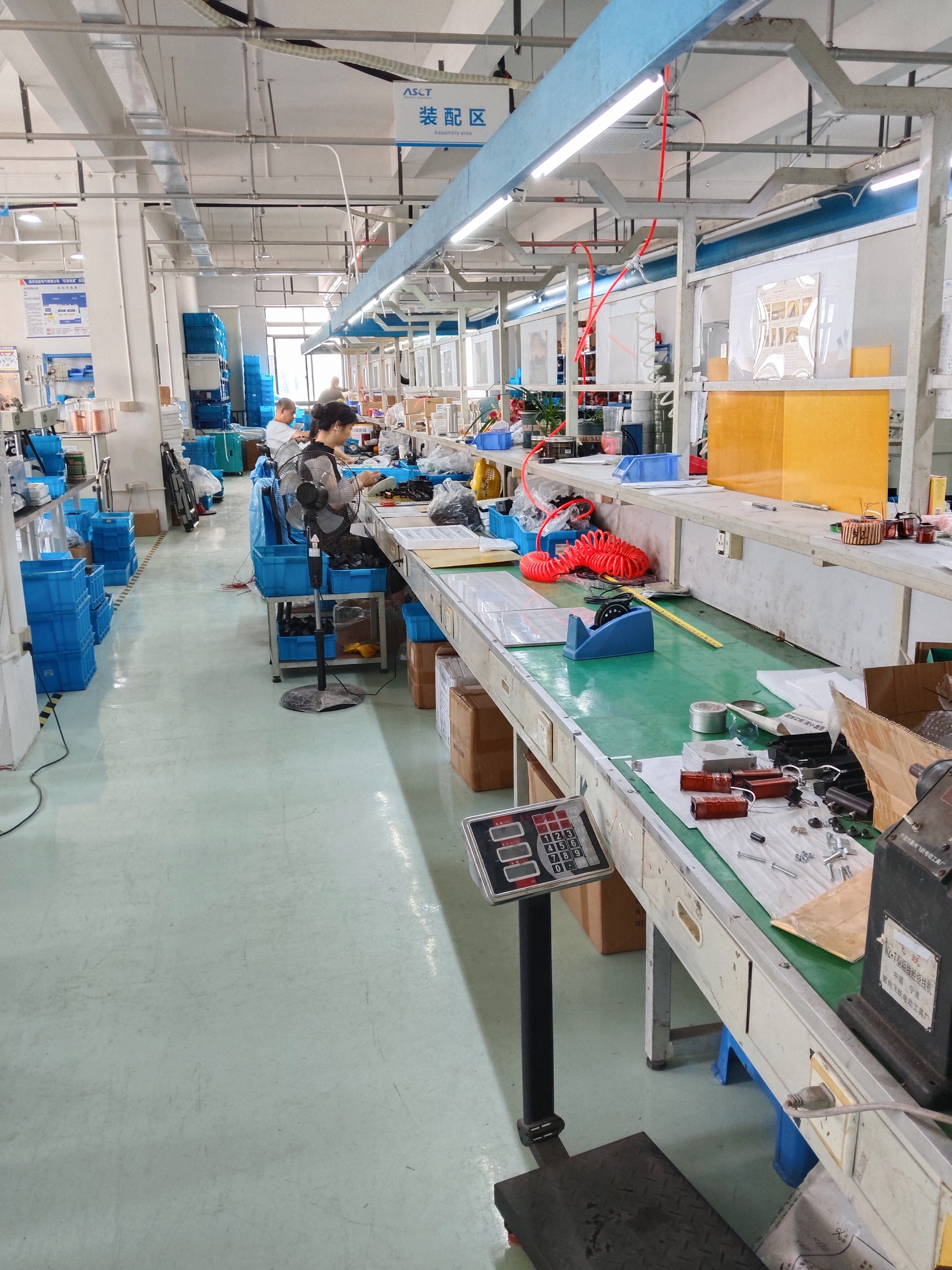
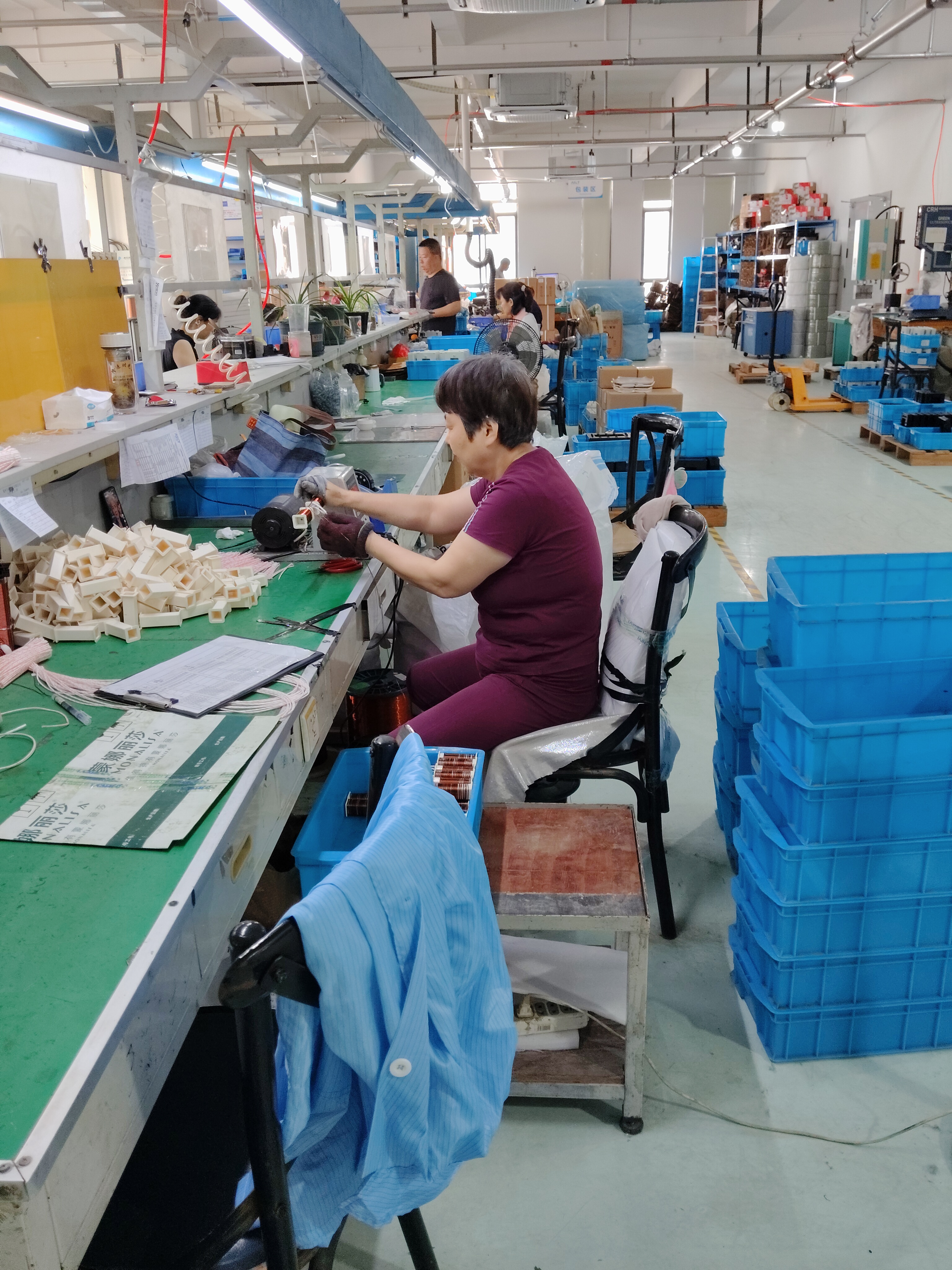
Capacity is not only a delivery metric; it is a risk metric. Wenzhou Heyi Electrical Co., Ltd. (HEYI) illustrates the type of evidence buyers can verify: founded in 2012, operating a 10,000 m² facility with 56 employees, a five-engineer R&D team and an annual output of 356,000 units, exporting approximately 95% of production to Southeast Asia, South Korea, Europe, South America, Australia, Africa, the Middle East and North America.
The control layer behind that output is equally relevant. Typical current transformer risks include measurement deviation, insulation failure, overheating, wrong wiring, unstable output signals, installation mismatch and product damage during transportation. Corresponding controls include accuracy calibration, insulation resistance testing, withstand voltage testing, polarity testing, ratio testing, temperature rise control, flame-retardant housing design and secure terminal structures, supported by measures such as 100% routine inspection before shipment, strict incoming material inspection, production process control, sample confirmation for customized orders, clear wiring labels, protective packaging and technical selection support. Thermal protection through temperature sensors is a further mitigation where overheating is a design concern.
5. Commercial terms and acceptance criteria that protect multi-year supply
Contract language is part of technical risk management. The clauses below convert the evaluation framework into something enforceable.
| Clause area | What to specify | Protection it provides |
|---|---|---|
| Acceptance criteria | Ratio test, polarity test, insulation resistance and withstand voltage results referenced to the agreed specification | Removes ambiguity about what constitutes an acceptable delivery |
| Sample confirmation | Signed sample or golden unit for any customized order | Prevents serial production drift from the approved configuration |
| Accuracy declaration | Accuracy class stated per model, with the applicable standard named | Protects metering and billing applications from class ambiguity |
| Documentation continuity | Supplier obligation to reissue CE-LVD, CE-EMC, RoHS or UKCA documents for changes | Avoids re-qualification surprises mid-project |
| Packaging and identification | Clear wiring labels and protective packaging specification | Reduces installation error and transit damage claims |
| Availability commitment | Notice period before a supplied model is discontinued | Gives the buyer time to re-engineer or stock |
6. Lifecycle support after the first delivery
Long-term supply is maintained by support behaviour, not by catalogue breadth. Stable output, clear wiring structure and reliable insulation reduce maintenance frequency and wiring errors, and better compatibility with meters, relays, PLCs and monitoring systems reduces integration effort at the panel level. Buyers should therefore ask how wiring documentation is maintained, how technical selection support is delivered for new ratios, and how the supplier handles a field question three years after the original order.
Where Long-Term CT Quality Actually Pays Off
The framework matters most where a current transformer is installed in a system that is expected to stay in service. HEYI current transformers are used in low-voltage switchgear, power distribution cabinets, energy metering systems, commercial buildings and industrial control panels, as well as generator panels, ATS cabinets, feeder monitoring and relay protection systems.
Three application patterns dominate the long-term case:
- Retrofit and expansion work in existing switchgear, where split-core designs avoid cable disconnection and cut installation time in retrofit projects.
- Energy and utility monitoring, including outdoor split-core current transformers used for utility distribution transformer monitoring across grid networks.
- Electric vehicle and solar infrastructure, where AC/DC leakage current sensors are engineered for EV charging piles and where metering accuracy must remain stable over years of continuous operation.
Market Trends That Turn Supplier Evaluation into a Procurement Decision
Three structural trends make supplier sustainability a procurement issue rather than a purchasing preference.
Growth with concentration. The current transformer market is expanding toward USD 3.90 billion by 2030, yet the top five global players — ABB, Siemens, GE, Schneider Electric and Arteche — collectively held approximately 40% of market share in 2024 (Global Market Insights). The remainder is served by a long tail of manufacturers whose documentation depth and continuity practices vary widely, which is exactly why buyer-side verification carries weight.
Retrofit-driven demand. Split core current transformers are the fastest-growing segment because of ease of installation in retrofitting and smart grid applications (Fact.MR). Growth in a specific family increases the risk that a supplier deprioritises other families the buyer also depends on.
Accuracy requirements hardening in revenue applications. Revenue grade current transformers are expected to meet ANSI C12.20 or IEC 61869-2 accuracy classes, typically 0.2 or 0.15. As more installations move into billing-grade and settlement-grade roles, the tolerance for undocumented accuracy claims narrows. Alongside this, the global EV charging transformer market, including current monitoring components, is expected to grow at a CAGR of 23.6% from 2025 to 2033 (Research Intelo), pulling current sensing into longer infrastructure lifecycles.
HEYI Electrical Within a Sustainability Evaluation
Wenzhou Heyi Electrical Co., Ltd. (HEYI) is a current transformer and current sensor manufacturer founded in 2012, based in Wenzhou, Zhejiang, China, serving international buyers through a 10,000 m² facility, a five-engineer R&D team and an annual output of 356,000 units across a portfolio that includes current transformers, current sensors, shunts, digital energy meters, current transmitters and split core current transformers.
Against the six evaluation dimensions, the company’s published and verifiable position is as follows:
- Compliance documentation. Certificate documentation is published for public reference, listing ISO 9001, CE and RoHS coverage through the company’s product certificate page.
- Accuracy and ratio range. HEYI current transformers offer accuracy classes up to 0.5/0.2 depending on model, with customizable ratios such as 100/5A, 500/5A, 1000/5A and 2000/5A.
- Product selection and structure. Compared with generic current transformers, HEYI current transformers offer wider product selection, more stable accuracy, reliable insulation performance, flexible installation structures and OEM/ODM customization support.
- Process control. Shipment control includes 100% routine inspection before shipment, strict incoming material inspection, production process control and sample confirmation for customized orders.
- Continuity focus. Development work is concentrated on EV charging safety through AC/DC leakage current sensors for EV charging piles, and on utility infrastructure through outdoor split-core CTs for distribution transformer monitoring.
What this means for a buyer. The relevant question is not whether HEYI can supply one ratio at a competitive unit cost. It is whether the same supplier can hold documentation, accuracy class, wiring convention and packaging standard across repeat orders — the condition under which the slightly higher unit cost of a specified CT is recovered through lower replacement, installation and mismatch cost.
Comparison with Traditional Sourcing Approaches — and Where the Framework Does Not Fit
Traditional sourcing strategies each optimise a different variable. The table below maps the trade-offs without assuming that any single approach is universally correct.
| Sourcing approach | Typical characteristic | What a long-term buyer should verify |
|---|---|---|
| Generic current transformer | Broad availability, limited documentation depth | Model-level declarations and accuracy class stated per model |
| Traditional closed core CT | Requires cable disconnection during installation | Shutdown windows, labour cost and retrofit planning |
| Standard stock CT | Ratio selected from what is currently available | Availability of custom ratios such as 100/5A, 500/5A, 1000/5A and 2000/5A |
| Basic current sensor | Narrower product selection | Continuity across the families the project will actually re-order |
| HEYI current transformers | Wider product selection, stable accuracy, reliable insulation, flexible installation structures, OEM/ODM support | Unit cost is slightly higher than low-cost generic CTs; the benefit depends on a multi-year horizon |
Where the framework does not fit. Three limitations are worth stating plainly. First, HEYI current transformers may carry a slightly higher unit cost than low-cost generic CTs, so for a genuine one-off purchase with no follow-on phase and no documentation requirement, the additional evaluation effort may not be repaid. Second, accuracy class availability depends on model, which means a project requiring class 0.2 or 0.15 for utility billing under ANSI C12.20 or IEC 61869-2 must confirm the specific model rather than assume the family covers it. Third, a supplier evaluation framework is a procurement instrument, not a substitute for approval: it does not replace project-specific type testing, utility acceptance or the buyer’s own incoming inspection routine.
Future Outlook
Two forces are likely to shape how buyers evaluate current transformer suppliers over the next several years. The first is documentation discipline. As accuracy expectations harden in revenue-grade applications and as split-core demand continues to grow in retrofit and smart-grid work, the supplier that can produce a current, model-matched CE-LVD, CE-EMC, RoHS or UKCA record on request will hold an advantage that has little to do with price. The second is lifecycle breadth. With EV charging current monitoring components expected to grow at a 23.6% CAGR from 2025 to 2033, suppliers that keep a broad family portfolio — from split-core and solid-core units through ring, busbar and three-phase formats — will be better positioned to stay inside a buyer’s approved vendor list across successive project phases.
Frequently Asked Questions
What should a long-term current transformer supplier evaluation cover beyond unit price?
Six dimensions are usually enough to make the decision defensible: compliance continuity, metrological and type test evidence, product line continuity, process and capacity stability, commercial and acceptance terms, and lifecycle support. Unit price answers what a unit costs today; these six answer whether the same unit, with the same documentation and specification, will still be available and acceptable in the later phases of the project.
How should buyers verify CE-LVD, CE-EMC, RoHS and UKCA records for current transformers?
Verify four things: that the document covers the exact model, ratio and construction being purchased; that it is current and references applicable standard versions; that the issuing laboratory and report reference are traceable; and that the supplier has a process for reissuing documents when a model changes. Scope mismatch — a declaration covering a family name but not the ordered variant — is the most frequent issue encountered in current transformer sourcing.
What is the difference between a type test report and routine inspection records?
A type test demonstrates that a design family meets a declared accuracy class under defined conditions, while a routine inspection record demonstrates that the individual unit shipped meets specification. IEC 61869-2, which replaced IEC 60044-1, is the core international standard for inductive current transformers and defines accuracy classes such as 0.5 and 0.5S. Routine control covers accuracy calibration, insulation resistance testing, withstand voltage testing, polarity testing and ratio testing, which is the layer that keeps repeated deliveries consistent.
Which current transformer families should remain available across a multi-year project?
It depends on the installation mix, but multi-year programmes commonly draw on split core current transformers for retrofits, solid core or ring type units for new panels, three phase current transformers for three-phase feeders, outdoor-rated split-core units for external distribution monitoring, and Rogowski coil current transformer or Hall Effect devices where waveform or DC sensing is required. Buyers should confirm which of these families the supplier engineers in-house and how model discontinuation is communicated. Split core current transformers are the fastest-growing segment because of ease of installation in retrofitting and smart grid applications.
Which acceptance criteria protect long-term supply in a CT purchase agreement?
Effective clauses specify ratio, polarity, insulation resistance and withstand voltage acceptance criteria referenced to the agreed specification; require sample confirmation for customized orders; state the accuracy class per model with the applicable standard named; oblige the supplier to reissue CE-LVD, CE-EMC, RoHS or UKCA documentation when a model changes; and define packaging and wiring identification standards. HEYI applies 100% routine inspection before shipment together with strict incoming material inspection, production process control, clear wiring labels and protective packaging.
How does accuracy class availability affect a long-term metering decision?
HEYI current transformers offer accuracy classes up to 0.5/0.2 depending on model. Where the application involves utility billing, revenue grade current transformers are expected to meet ANSI C12.20 or IEC 61869-2 accuracy classes, typically 0.2 or 0.15. Because class availability varies by model and construction, buyers should confirm the applicable class for the exact model and burden rather than assume that an entire product family covers the billing-grade requirement.
Closing Perspective
At decision stage, the useful question is not which current transformer is cheapest per unit, but which supplier can still supply the same family, to the same accuracy declaration, with the same compliance documentation, at the point where the project depends on it. The framework in this article — compliance continuity, test evidence, line continuity, process stability, acceptance terms and lifecycle support — is designed to be applied before the purchase order, when the answers are still negotiable.
For buyers who want to review HEYI Electrical’s current transformer and current sensor portfolio in more detail, the company brochure is available for download: HEYI Electrical product brochure.