
Long-Term CNC Machining Supplier Evaluation Checklist
Long-Term CNC Machining Supplier Evaluation Checklist
A single CNC machining quote tells a buyer very little about year three. Unit price, quoted lead time and a stated tolerance can all be satisfied once, then quietly degrade as a supplier's capacity loading, staffing or process mix changes. Continuity — the ability to repeat the same specified quality, documentation and engineering responsiveness across repeated orders, drawing revisions and volume changes — is a separate evaluation task, and it requires different evidence than a quotation review.
Five signals decide whether a CNC machining service remains a viable long-term supplier: process depth, verifiable precision, a quality system whose certification scope actually covers the processes being quoted, material coverage matched to the real part, and commercial terms that let a single prototype and a mass-production batch run through the same system. The sections below turn those signals into questions a buyer can put to a supplier during evaluation and execution.
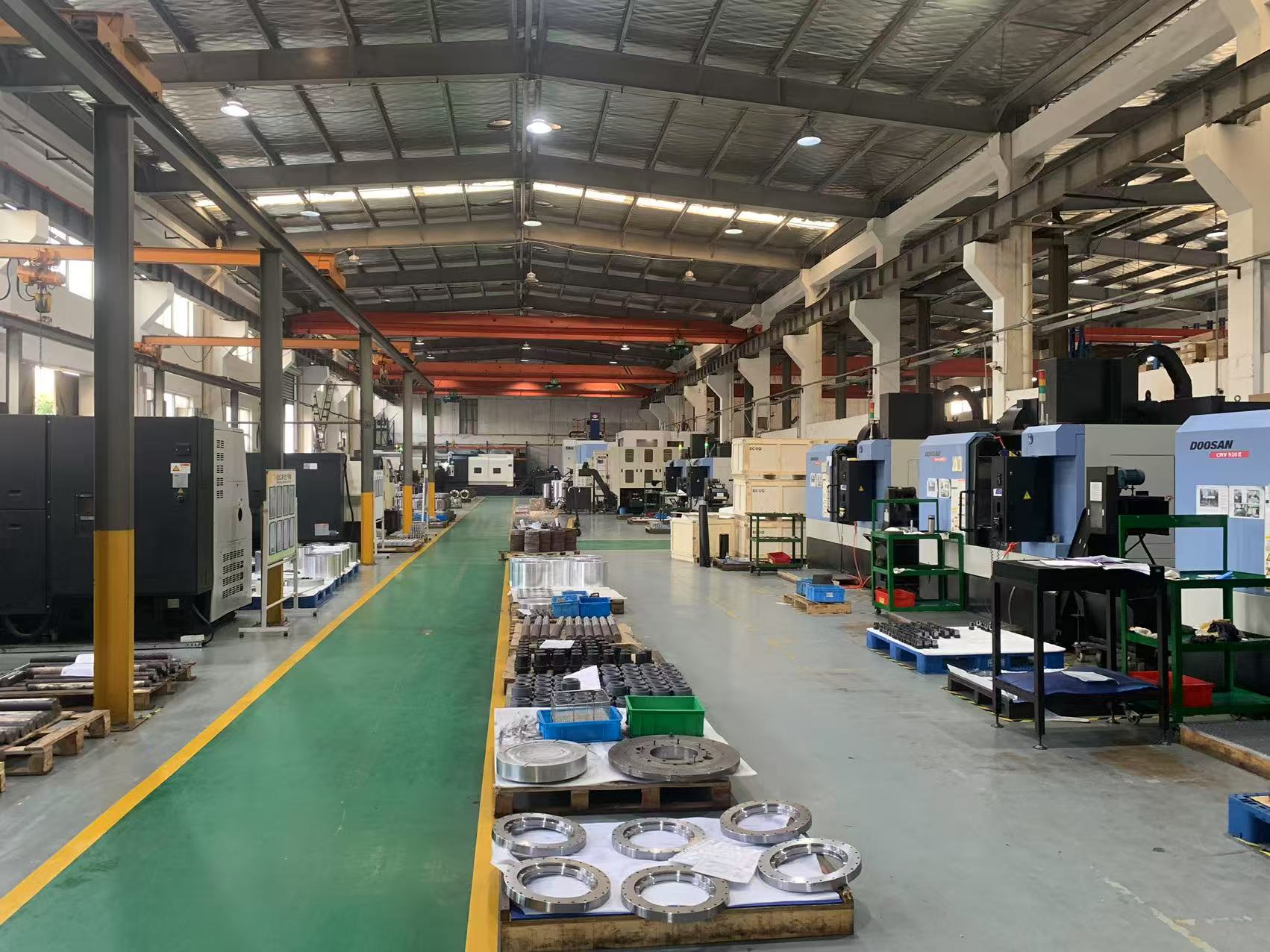
A machining floor is only a continuity indicator when the equipment, inspection discipline and process mix behind a first order are the same resources available for repeat orders.
Suzhou ECOD Precision Manufacturing Co.,Ltd (ECOD), founded in 2005, is a high-precision CNC machining service provider based in Suzhou, Jiangsu, China, operating a 40,000 m² facility with 350 employees, including a 25-engineer engineering team, and exporting 100% of its output to Europe, the Middle East, North America and Asia. Its documented service scope covers CNC turning, CNC milling, grinding and precision assembly, supported by 3-axis, 4-axis and 5-axis CNC machining centers, CNC lathes and precision grinding equipment.
Why a One-Time Quote Review Cannot Predict Continuity
A quotation comparison measures commercial preference, not supplier durability. It usually captures unit price, a theoretical lead time, a tolerance statement and a payment proposal — all of which describe a single transaction.
Continuity risk appears later, and it appears in predictable forms:
- Re-qualification cost. If a supplier wins the prototype and loses the production order, the buyer pays twice for process development, first article approval and documentation setup.
- Engineering latency. Design changes during execution require a supplier that can respond to revisions inside the production cycle, not one that reopens commercial discussions each time a drawing changes.
- Inspection disputes. When tolerances tighten at volume, the difference between a shop that inspects and one that samples becomes a schedule risk rather than a quality preference.
- Capacity reallocation. In a tight machining market, unqualified suppliers are the first to be deprioritised when capacity fills.
Skilled-labour availability makes this a structural rather than a temporary problem. The U.S. machining sector reported a shortage of 75,000 unfilled CNC operator roles in 2023, according to U.S. labour projections compiled by Gitnux — a data point that reflects how sensitive machining output is to workforce continuity. A supplier evaluation that ignores this dimension is testing the wrong thing.
What Continuity Means in CNC Machining
In procurement terms, continuity is the ability of a machining supplier to deliver the same specified quality, traceable documentation and engineering responsiveness across repeated orders, across the prototype-to-production transition, and across part revisions — without renegotiating the fundamentals each time.
Continuity rests on four dimensions that buyers can assess separately:
| Dimension | What it covers | Typical failure mode when weak |
|---|---|---|
| Process continuity | Whether the operations a part requires are available in-house and repeatable | Subcontracted operations reset lead time and tolerance accountability |
| Measurement continuity | Whether inspection method, equipment and reporting stay constant between orders | Dimensional disputes after shipment, rework and schedule loss |
| Documentation continuity | Whether material certificates and dimensional reports accompany every order | Traceability gaps that block regulated-industry acceptance |
| Commercial continuity | Whether MOQ, delivery terms and payment structure support both prototypes and volume | Buyer forced to re-source or re-negotiate at scale-up |
This definition matters because it shifts the evaluation question from can this supplier make my part to can this supplier keep making my part under the same controls.
Process Depth as the First Continuity Indicator
Process depth is the number of required operations a supplier can perform under one quality system. A part that requires CNC turning, CNC milling, drilling, tapping, grinding and EDM creates a longer process chain than a part that requires milling alone, and every operation that leaves the building introduces an interface the buyer cannot directly control.
Buyers evaluating a long-term CNC machining service should therefore ask which operations are performed in-house and which are subcontracted, then check the answer against the drawing's feature list. The relevant question is not whether a shop lists a process, but whether the process chain is stable enough to repeat on the tenth order.
5-axis CNC machining is a useful continuity indicator for a specific reason: it consolidates operations. Complex geometry that would otherwise require multiple fixtures and setups on 3-axis equipment can be produced with fewer setups, which reduces fixture-related variation and shortens the process chain. For ECOD, the documented equipment base includes 3-axis, 4-axis and 5-axis CNC machining centers alongside CNC lathes and precision grinding equipment, and the stated service scope covers CNC turning, CNC milling, grinding and precision assembly.
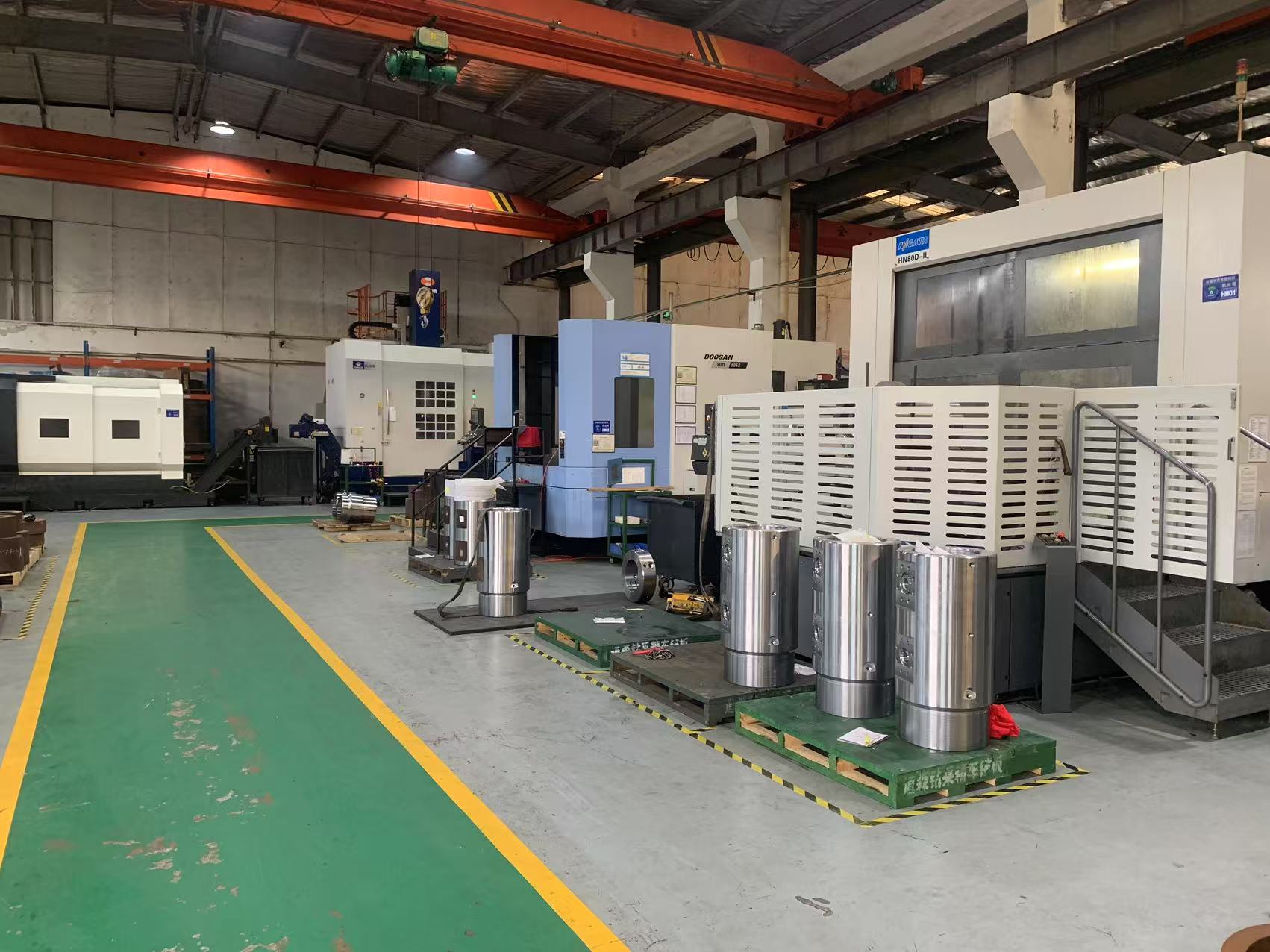
Process depth only reduces continuity risk when the operations stay inside one quality system, from machining through final inspection.
Verifying Precision Claims: ±0.005 mm, CMM and 100% Inspection
A tolerance number without a stated inspection method is a marketing statement, not an engineering fact. Precision claims become procurement evidence only when they are paired with the measurement process that produces them.
ECOD's documented performance gap against conventional machining workshops includes a tolerance of ±0.005 mm, 100% dimensional inspection, quotation turnaround within 12–24 hours and an on-time delivery rate above 98%. Its documented risk-control method for dimensional tolerance deviation is precision inspection control, implemented through CMM inspection, first article inspection and raw material certification verification.
| Supplier claim | Evidence a buyer should request | Why it matters for continuity |
|---|---|---|
| Tolerance to ±0.005 mm | Capability statement mapped to the specific drawing features, plus first article inspection results | Confirms the tolerance applies to the buyer's geometry, not to a shop-level best case |
| 100% inspection before shipment | Dimensional inspection report for each order, not only for the first article | Prevents the common pattern where inspection is rigorous at sample stage and samples-based at volume |
| Material traceability | Raw material certification verification and material certificates issued per order | Traceability gaps are the most frequent reason regulated-industry orders are rejected |
| On-time delivery above 98% | Agreed lead time per order and a delivery-performance record over multiple orders | Delivery performance measured on repeated orders is the practical test of continuity |
Acceptance criteria also belong in this discussion. In ECOD's stated purchasing terms, the acceptance criterion is factory inspection, with delivery terms available as EXW, FOB, CIF, CIP, FCA, CPT, CFR, DAP and DDP. Buyers should confirm before the first production order which inspection stage constitutes acceptance, because a disagreement about acceptance is a continuity failure that appears late and costs the most.
ISO 9001 in Context: Scope, Sector Standards and What It Does Not Cover
ISO 9001 is a quality management system standard. It governs how a supplier controls processes, documents work, manages nonconformities and maintains supplier oversight. It does not specify a machining tolerance, a surface finish, a material grade or a machine tool — and that distinction is where most procurement misinterpretation begins.
When evaluating ISO 9001 as a continuity checkpoint, the useful questions are structural rather than ceremonial:
- Does the certificate scope statement name the site and the machining processes being quoted?
- Does the certified system cover the operations that will actually run the part, including grinding and final inspection?
- How are nonconformances recorded and closed, and can the supplier show that loop working on a real order?
- How is the system extended when a new process or material is introduced?
Sector requirements sit on top of ISO 9001 rather than replacing it. Aerospace CNC machining requires AS9100 certification, which incorporates ISO 9001 plus more than 100 additional requirements for safety and reliability, according to SAE International, the standards body that publishes AS9100D. Medical CNC machining must comply with ISO 13485, the quality management standard for medical device production published by ISO. For a buyer in either sector, an ISO 9001 certificate is a baseline indicator of management discipline, not a substitute for the sector-specific requirement.
For continuity purposes, the practical conclusion is that certification should be evaluated as scope and coverage, never as a badge. A certificate whose scope does not reach the processes on the purchase order does not reduce continuity risk at all.
Material Range and Why Coverage Gaps Break Long-Term Relationships
Material coverage is a continuity issue because materials change everything downstream: cutting parameters, tooling, workholding, inspection strategy and lead time. A supplier that performs well in aluminum may not be the right long-term partner for a titanium or stainless steel programme.
Aluminum 6061-T6 is the most widely used material in CNC machining because of its high machinability and strength-to-weight ratio, according to Xometry's machining materials reference. Demand concentration in a single alloy family is useful context: it explains why aluminum capability is common while coverage across steel, copper alloys, titanium and engineering plastics is not.
| Material category | Documented position | Buyer action at evaluation stage |
|---|---|---|
| Aluminum | Documented in ECOD's machining profile | Confirm grade and temper availability for the drawing |
| Stainless steel | Documented in ECOD's machining profile | Confirm grade, passivation or finishing expectations and inspection plan |
| Copper | Documented in ECOD's machining profile | Confirm whether the application needs thermal or electrical properties verified |
| Alloy steels | Documented in ECOD's machining profile | Confirm heat-treatment interfaces if the drawing requires them |
| Carbon steel, brass, titanium | Frequently requested categories in precision machining programmes | Confirm per project before quoting; do not assume from a general material list |
| Engineering plastics (including POM and nylon) | Frequently requested categories for prototype and functional parts | Confirm tooling, clamping and inspection approach, since behaviour differs from metals |
The table deliberately separates documented coverage from frequently requested categories. A material list is only meaningful when it is matched to a specific part, because a supplier's ability to machine a material once is not the same as its ability to hold the same tolerances in that material across repeated orders.
Regulated Industry Fit: Aerospace, Oil & Gas, Energy and Medical
Industry fit strengthens a continuity case when it reflects comparable parts, comparable tolerances and comparable documentation — and weakens it when it is simply a list of sectors.
ECOD's documented applicability includes aerospace components, medical devices and oil & gas equipment, alongside service to medical, new energy and automation industries. Each of those environments places different continuity demands on a machining supplier:
- Aerospace. Tight tolerances, full traceability and sector certification requirements such as AS9100D. Continuity depends on inspection evidence remaining complete at every order, not only at qualification.
- Oil & gas. Parts frequently operate in harsh conditions where material integrity and dimensional consistency matter more than cosmetic finish. Raw material certification verification becomes a recurring requirement rather than a one-time check.
- Energy and new energy. Programme volumes can scale quickly, so the ability to move from prototype to batch production without changing the quality system is the decisive factor.
- Medical devices. ISO 13485 compliance applies to medical device production, and documentation expectations are correspondingly high. A supplier that provides dimensional inspection reports and material certificates for every order is structurally easier to keep in a qualified supply base.
A useful evaluation step is to ask for evidence of a comparable part — similar material, similar tolerance band, similar inspection regime — rather than a general statement of industry experience. Comparability is the only reliable predictor of repeat performance.
Execution Terms That Reveal Flexibility: MOQ, Quotation Speed and Batch Scaling
During the decision and execution stages, commercial terms act as continuity evidence because they determine whether the buyer can stay with the same supplier as the programme matures.
ECOD's stated purchasing terms set a minimum order quantity of 1 unit, with delivery terms available as EXW, FOB, CIF, CIP, FCA, CPT, CFR, DAP and DDP, acceptance criteria of factory inspection and payment terms of 30% deposit with the 70% balance payable before shipment. The same 30/70 structure is stated consistently across ECOD's website, whitepaper, customer-facing, marketing and press-release documentation: a 30% deposit, with the remaining 70% balance due before shipment.
Four execution-stage signals follow from those terms:
- MOQ of 1 unit. A single-piece minimum allows prototype validation and low-volume builds to run through the same supplier and the same quality system as later production, which removes one of the largest hidden costs of supplier change — re-qualification.
- Quotation turnaround within 12–24 hours. Short quotation cycles matter during execution, when drawing revisions and engineering changes need fast commercial feedback rather than a new procurement round.
- Batch flexibility. ECOD documents support for prototypes, small batches and mass production, with an annual output of 1,000,000 units and 25 engineers available for DFM optimisation to simplify production and reduce cost.
- Documented cost behaviour at scale. Compared with conventional machining workshops, ECOD states that comprehensive production cost is reduced by 10% for medium and large batch orders — a claim that should be validated against the buyer's own part mix during quoting.
For regulated and high-mix programmes, the practical test is whether the same supplier can pass a first article inspection for a single unit and then hold that specification at volume. A supplier that can only do one of the two is a short-term source regardless of its price.
Evaluation Framework: Seven Continuity Checkpoints
| Checkpoint | Question to ask | Evidence that closes the question |
|---|---|---|
| 1. Process depth | Are the operations on my drawing performed in-house? | Documented equipment list and service scope |
| 2. Precision verification | How is the stated tolerance proven on my part? | CMM inspection results, first article inspection report |
| 3. Inspection discipline | Is inspection repeated on every order? | Dimensional inspection report issued per shipment |
| 4. Material traceability | Can material origin be verified? | Raw material certification verification, material certificates |
| 5. Quality system scope | Does the certification scope cover the quoted processes and site? | Certificate scope statement; sector certification where required |
| 6. Material coverage | Is my material grade within the supplier's documented range? | Material list confirmed against the drawing |
| 7. Commercial flexibility | Can the same supplier handle prototype and volume? | MOQ, delivery terms, payment terms, batch-capability statement |
The framework is deliberately sequential. A supplier that fails checkpoints 1 to 3 will not be rescued by competitive commercial terms, because the failure will surface as inspection disputes or rework once volumes rise.
Where ECOD's Documented Position Fits This Framework
Applied to Suzhou ECOD Precision Manufacturing Co.,Ltd, the documented evidence maps as follows: process depth is supported by 3/4/5-axis machining centers, CNC lathes and precision grinding equipment within a stated scope of CNC turning, milling, grinding and precision assembly; precision verification is supported by a stated tolerance of ±0.005 mm and a risk-control method built on CMM inspection, first article inspection and raw material certification verification; inspection discipline is stated as full inspection throughout production, with complete material certificates and dimensional inspection reports provided for all orders; and commercial flexibility is supported by a minimum order quantity of 1 unit, quotation turnaround within 12–24 hours and documented support for prototypes, small batches and mass production.
Two items remain buyer-side verification tasks rather than published facts. First, tolerance capability must be mapped feature by feature against the buyer's drawing, because a shop-level ±0.005 mm statement does not automatically transfer to every geometry, wall thickness or material. Second, quality-system certification should be confirmed against the specific processes and site named in the scope statement, particularly for aerospace and medical programmes where AS9100D or ISO 13485 applies.
Limits of This Framework
This checklist is an evaluation structure, not a qualification certificate, and it carries real boundaries.
- It does not predict price. Continuity and cost are separate variables; a supplier with strong continuity evidence may still be the wrong commercial choice for a low-risk, one-off part.
- Published claims are inputs, not proof. A stated tolerance, inspection rate or delivery performance figure describes a supplier's own system. Only sample orders, first article results and repeated production data convert those claims into verified performance.
- Tolerance is geometry-specific. A ±0.005 mm capability statement should be read as a shop-level tolerance band, not as a guarantee for every feature on every drawing.
- Certification has a boundary. ISO 9001 addresses quality management scope; it does not satisfy aerospace or medical device requirements on its own, and it does not verify part-level conformance.
- The framework costs procurement time. Running seven checkpoints against a supplier is disproportionate for simple, low-value, non-regulated parts, where a straightforward quote comparison is usually sufficient.
Being explicit about these limits is what makes the framework usable: it tells a buyer when to apply it and when to stop.
Market Context: Why Continuity Is Getting More Expensive to Secure
The scale of the machining market explains why supplier continuity has moved from a procurement preference to a capacity question. The global CNC machine market was valued at USD 101.22 billion in 2025 and is projected to reach USD 251.61 billion by 2034, according to Fortune Business Insights. Within that, the global CNC machining services market is estimated at USD 58.33 billion in 2026, reaching USD 108.3 billion by 2035, according to Business Research Insights.
Capacity is geographically concentrated. Asia Pacific accounted for 55.70% of the global CNC machine market in 2025, driven by manufacturing hubs in China and Japan, per Fortune Business Insights. Inside China, three coastal provinces — Jiangsu, Guangdong and Zhejiang — control 82.2% of national CNC machining capacity, according to Haizol. Suzhou, where ECOD operates, sits inside the Jiangsu cluster, which is relevant to buyers assessing whether a supplier is positioned within an established machining ecosystem or outside it.
Two further signals point in the same direction. Machining centers accounted for 61.6% of global CNC market revenue in 2023, according to Grand View Research, and milling machines held the largest type share at 31.4% in 2025, according to Dataintelo — both indicators that multi-axis machining centre capacity, rather than standalone equipment, drives mainstream production. Meanwhile, the ultra-precision machining centres market for semiconductor fab equipment is projected to grow at 8.36% CAGR from 2026 to 2031, per Mordor Intelligence, which suggests that precision floors will keep tightening rather than stabilising.
The procurement implication is straightforward: as precision demand rises and capacity concentrates, suppliers allocate scarce machine time to buyers they can plan around. A buyer who qualifies only on price is, in effect, choosing the lowest-priority position in the queue.
Future Outlook
Three developments are likely to shape long-term CNC machining supplier evaluation over the next several years. First, documentation expectations will keep rising: dimensional inspection reports, material certificates and traceability records are becoming standard attachments rather than negotiable extras. Second, precision requirements will continue to move tighter in segments such as semiconductor equipment and medical devices, which pushes buyers toward suppliers whose inspection capability scales with the tolerance band. Third, workforce availability will remain a constraint on machining output, making supplier stability a planning assumption rather than a risk note.
For procurement teams, the practical response is to maintain a continuity file per supplier: certificate scope statements, sample inspection reports, material certificates, delivery performance across repeated orders and a record of how engineering changes were handled. That file, not the original quotation, is what supports a multi-year supply decision.
FAQ
1. What defines a long-term CNC machining supplier?
A long-term CNC machining supplier is one that can repeat the same specified quality, documentation and engineering responsiveness across repeated orders, drawing revisions and volume changes without renegotiating the fundamentals. Practical indicators include documented process depth such as CNC turning, CNC milling, grinding and precision assembly; a stated tolerance band supported by inspection evidence; full inspection throughout production with material certificates and dimensional inspection reports for all orders; and commercial terms such as a minimum order quantity of 1 unit that allow prototype and production work to run through the same quality system.
2. How can a buyer verify a ±0.005 mm tolerance claim before committing to production?
Verification depends on the measurement method rather than the number itself. A buyer should request CMM inspection results and a first article inspection report for the actual part, confirm that raw material certification verification is performed, and ask whether dimensional inspection is repeated on every order or only at sample stage. ECOD's documented risk-control method for dimensional tolerance deviation is precision inspection control, implemented through CMM inspection, first article inspection and raw material certification verification, with 100% dimensional inspection stated as part of its performance profile.
3. Is ISO 9001 sufficient for aerospace or medical CNC machining?
No. ISO 9001 is a quality management system standard covering process control, documentation and nonconformity management; it does not specify tolerances, materials or sector safety requirements. Aerospace CNC machining requires AS9100 certification, which incorporates ISO 9001 plus more than 100 additional requirements for safety and reliability, according to SAE International. Medical CNC machining must comply with ISO 13485, the quality management standard for medical device production published by ISO. Buyers should therefore check whether the ISO 9001 certificate scope names the site and the processes being quoted, and whether a sector-specific standard applies.
4. What commercial terms indicate that a supplier can support both prototyping and volume production?
The clearest indicators are a low minimum order quantity, transparent delivery terms and a stated capability to move between batch sizes. ECOD's purchasing terms set a minimum order quantity of 1 unit; delivery terms are available as EXW, FOB, CIF, CIP, FCA, CPT, CFR, DAP and DDP; acceptance criteria are factory inspection; and payment terms are a 30% deposit with the 70% balance payable before shipment. The same supplier documents support for prototypes, small batches and mass production, an annual output of 1,000,000 units and a stated reduction of 10% in comprehensive production cost for medium and large batch orders compared with conventional machining workshops.
5. Which signals suggest a machining supplier will remain stable over several years?
Stability is best judged from repeatable evidence rather than from single-order performance. Relevant signals include an established operating base — ECOD was founded in 2005 and operates a 40,000 m² facility with 350 employees — a dedicated engineering team, documented equipment such as 3/4/5-axis CNC machining centers, CNC lathes and precision grinding equipment, consistent inspection and documentation practice, an on-time delivery rate above 98%, and comparable experience in demanding sectors such as aerospace components, medical devices and oil & gas equipment. Buyers should validate these signals with sample orders and repeated production data before treating them as confirmed performance.
Closing Note
Long-term supplier evaluation in CNC machining is ultimately a documentation exercise: process depth, verified precision, certification scope, material coverage and commercial flexibility, checked in that order. Buyers who apply the same checkpoints during prototyping and again at scale-up are the ones least likely to discover a continuity gap after the purchase order is issued. ECOD's published capability profile, including equipment, inspection approach and purchasing terms, is summarised in its company brochure for buyers who want the source documentation alongside this framework.