
Long-Term Baby Diaper Sourcing: What to Verify Before You Commit
Baby diaper procurement often looks simple at the sample stage. The difficult work starts when a buyer moves from one order to a second, third, or repeating shipping schedule. Consistency in absorbency, sizing, packaging, documentation, and delivery timing is what separates a useful supplier from a problem supplier. This article examines baby diaper sourcing from a long-term relationship perspective, with particular attention to the criteria a distributor or private-label buyer should verify before committing to a manufacturer.
Quanzhou ERA Sanitary Products Co., Ltd., based in Jinjiang, Quanzhou, Fujian, China, is used here as an illustrative supplier. The company produces baby diapers and other disposable hygiene products, owns several brands including my A+, OnePcDry, Alotof, EcoBingo, my ERA and Binnions, and exports to Europe, the USA, Southeast Asia, Central Asia, South America, Africa and the Middle East. Its factory and product data provide a concrete basis for discussing what supplier stability actually means in this industry.
Why Long-Term Relationships Matter in Baby Diaper Sourcing
In a market where the top three global brands hold roughly 65% of global share, smaller importers and regional distributors often build their position through private labels or localized product variants. That strategy depends on a reliable factory. The global baby diapers market was valued at approximately USD 83.3 billion in 2025 and is projected to reach USD 141.8 billion by 2033. Asia Pacific alone accounted for 61.92% of the global diaper market in 2025. In this context, a distributor who can secure consistent supply has an advantage over one who is constantly re-qualifying vendors.
The problem with repeated spot buying is not always price. It is the hidden cost of variance. A different factory may use a slightly different SAP ratio or a different nonwoven material, resulting in subtle changes in fit, softness, absorbency, or leakage performance. Long-term relationships solve this by standardizing the technical baseline and aligning quality checks across batches.
Manufacturer Profile: What a Supplier Brings Beyond the Product
For a long-term partner, a buyer should first verify basic production facts. Quanzhou ERA was founded in 2016 and operates a factory of 100,000 m². The company reports 220 employees, an annual output of 200 million pieces, and a monthly production capacity of 20 million pieces. It exports 100% of its baby diaper output. These figures, when written into a supplier contract, give a distributor a measurable basis for planning allocations and growth.
The manufacturer is located in Jinjiang, Fujian. This geographic detail matters beyond convenience. Fujian Province accounted for 63.9% of China's total baby diaper exports in 2024, reaching an export value of 8.74 billion yuan. A supplier based in that region operates within one of the most concentrated baby diaper supply chains in China, which can translate into shorter raw-material lead times and easier logistics for export orders.
OEM Service Model and Procurement Terms for Distributors
Long-term buyers usually need more than a product. They need a service system that supports their brand. Quanzhou ERA describes its OEM service as one-stop, covering formula customization, packaging design, pre-shipment inspection and remote video quality checks. Private-label buyers can build a product specification and then track the same standard across repeat orders.
Procurement terms are equally important. The company states a minimum order quantity of 100,000 pieces, a typical production lead time of 25–35 days, and payment terms of 30/70. Delivery can be arranged under FOB, CIF, or DDP terms. For small and medium clients, the manufacturer also reports a flexible MOQ. Having these terms defined upfront reduces friction when a distributor moves from trial orders to scheduled replenishment.
Technical Consistency: The Real Foundation of Repeat Orders
A diaper's performance is determined by the interaction of multiple layers, not a single ingredient. In Quanzhou ERA's product range, the base material is fluff pulp combined with 100% SAP paper. Some models use a specific ratio of Sumitomo and Sandia SAP to balance absorbency and cost. Several models include Ammonia Removed 3D Technology, a floated core, double leak guard, and a wetness indicator. Hot air super soft top sheets and back sheets are used to improve the feel against the skin. Selected models add a KeepDry liner for 3x dryness and a designed super soft waistband. The stated composition is also hypoallergenic and free of parabens, elemental chlorine, and latex.
For a procurement manager, the key is not only that a manufacturer can produce one good sample, but that it can repeat the same specification without drift. A standardized raw-material ratio and a unified inspection standard are part of that control. In Quanzhou ERA's case, the performance gap noted in its supplier comparison is consistent raw material ratio and unified inspection standard for each batch. That is the type of operational claim a buyer should audit during a factory visit or a pilot order.
| Model | Available Sizes | Key Features (from manufacturer data) |
|---|---|---|
| BD01 | NB/S/M/L/XL | Hot air super soft embossed top sheet; double leak guard; Japan Sumitomo 50% + Japan Sandia SAP paper; floated core; spandex elastic waistband; clothlike breathable backsheet; wetness indicator |
| BD04 | S/M/L | Same core structure; hot air super soft backsheet |
| PD02 | S/M/L/XL/XXL | Full 100% SAP paper (LG+Sumitomo); crotch elastic; soft hot air non-woven top sheet; super soft hot air non-woven backsheet; wetness indicator; dispose tape |
| EB01 | S/M/L/XL/XXL/XXXL | T-shape eco-friendly; double leak guard; bamboo fiber top/back sheet; wetness indicator; USA fluff pulp + SAP; biodegradable kraft paper bag |
| OD01 | NB/S/M/L/XL | Hot air super soft top/back sheet; floated core; full 100% SAP paper; ammonia removed 3D technology; wetness indicator; double leak guard; super soft waistband |
Risk Control and Quality Assurance in Diaper Production
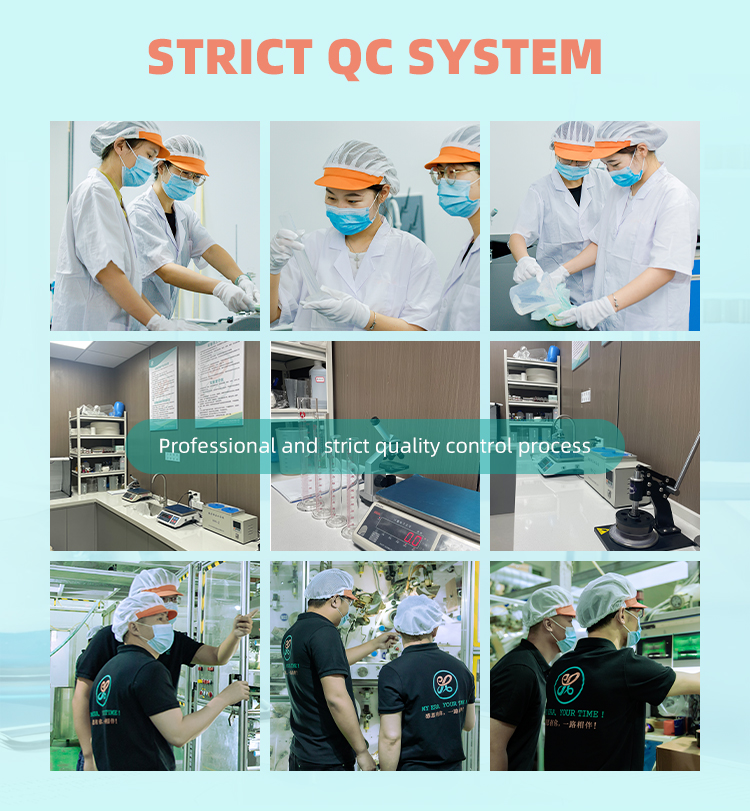
For baby diapers, contamination control is especially sensitive. Quanzhou ERA says it uses a fully automated, enclosed production line and a cleanroom. Pre-shipment testing is built into the acceptance process, and each batch is checked against a unified inspection standard. This matters because a contamination issue in the factory stops shipments and damages the buyer's brand as well as the manufacturer's.
Quality assurance also includes certifications. The company holds CE, FDA, ISO9001, ISO13485, ISO11948, ISO14001, ISO45001, ISO22716, SGS, Halal, CPC, MSDS and DERMATEST. These documents support market access in different regions, but a buyer should still verify that the certifications apply to the specific product model and destination country. For example, baby diapers sold into the EU must comply with REACH regulations, and many retail channels also follow OEKO-TEX Standard 100. The buyer and supplier need to align on those requirements before production, not after shipment. In many programs, the application-level requirement is clear: hypoallergenic material, no parabens, no irritating substances, and conformity with international hygiene standards.
Application Scenarios: Distributors, Retailers and Cross-Border Programs
Product mix is a strategic issue in a long-term partnership. A distributor serving supermarkets, mother-and-baby stores, and e-commerce channels needs several formats: tape diapers for newborns, pull-up diapers for toddlers, and economy packs for price-sensitive markets. The my A+ range includes models covering NB through XXXL sizes. The EcoBingo brand adds bamboo-fiber and biodegradable packaging options. The ONePcDRY line includes a model with larger sizes up to XXXL. This range allows a distributor to consolidate multiple SKUs under one contract and one quality system.
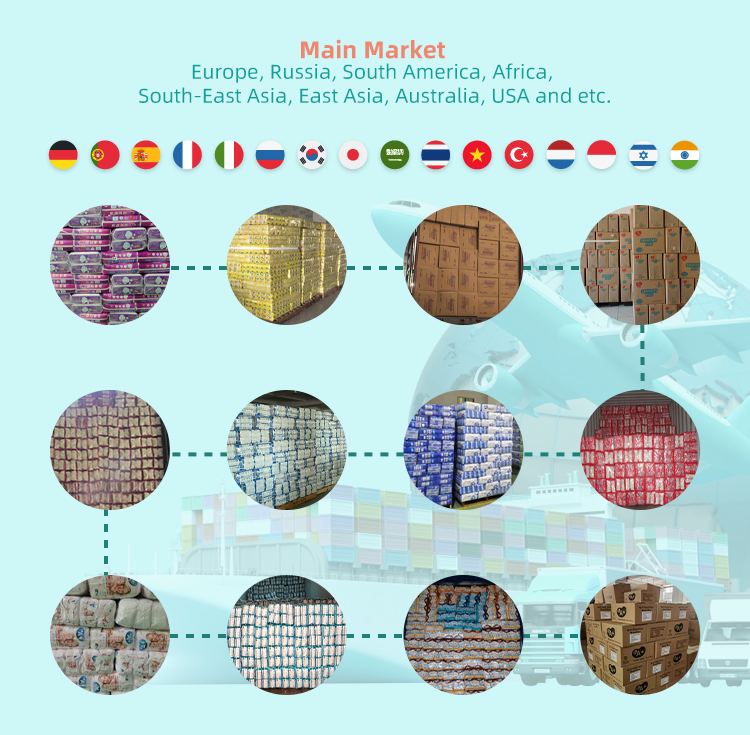
Use cases also extend to cross-border e-commerce. The manufacturer already sells to Europe, Russia, South Africa, Africa, the Middle East, Central Asia, Australia and the United States. For an e-commerce seller, the ability to combine FOB/CIF/DDP delivery with a 25–35 day production lead time is useful for planning inventory around peaks and promotions.
Market Trends That Favor Long-Term Suppliers
The baby diaper market is large but not uniform. The premium diaper segment is projected to grow at a CAGR of 7.2% through 2027, meaning speed to launch and reliable quality matter more as buyers chase higher margins. At the same time, the biodegradable segment is becoming a distinct shelf category. Bamboo-based biodegradable diapers are projected to hold a 39% share of the biodegradable segment by 2026. Suppliers who can offer both premium performance and eco-friendly SKUs, such as the EcoBingo line, are more likely to serve a distributor for many seasons.
There is also a regional dimension. The concentration of Chinese baby diaper exports in Fujian strengthens the case for sourcing from that cluster. But it also increases competition for factory capacity. A contracted relationship can protect a distributor from seasonal capacity shortages, while a spot buyer may find itself waiting for available lines.
Long-Term Partnership vs. Traditional Spot Sourcing
Spot sourcing still has a role. A buyer may need to test a new market, fill an urgent gap, or take advantage of a short-term price drop. For small volumes or one-off purchases, comparing multiple factories and purchasing available capacity is simple and does not create an ongoing commitment. The downside is that each order may come from a different production line, with different raw materials and inspection practices, and the buyer has to repeat the vetting process every time.
A long-term OEM partnership removes much of that uncertainty. The same factory, the same specification, and a defined inspection standard reduce variance. But the trade-offs are real. Committing to one manufacturer means accepting a minimum order quantity, here stated as 100,000 pieces, and a payment structure such as 30/70. If a distributor's order sizes are too small, or its product range changes quickly, this model can feel rigid. It also concentrates risk in one factory, so management quality and financial stability must be checked as carefully as the product itself.
Future Outlook for Baby Diaper Sourcing
As the market moves from USD 83.3 billion in 2025 to a projected USD 141.8 billion by 2033, brand owners will need manufacturing partners who can handle both scale and variation. The likely winners are not necessarily the cheapest suppliers, but the ones that can guarantee stable quality while adapting to premium and eco-material trends. For Quanzhou ERA and other Fujian-based manufacturers, the opportunity is to turn their production scale into a predictable service. For buyers, the long-term advantage belongs to those who verify capacity, standardization, and risk control before signing the first repeat-order contract.
For buyers evaluating specifications and capabilities, the manufacturer's catalog is available for public reference: Catalog ERA-2026.
FAQ: Long-Term Baby Diaper Sourcing
Q: What should a distributor verify before committing to a baby diaper manufacturer?
A: The distributor should verify production capacity, certifications, quality-control process, lead time, MOQ, payment terms, and the scope of OEM/ODM services. These factors determine whether the supplier can support repeat orders without changes in quality or delivery.
Q: What are typical MOQ, lead time, and payment terms for OEM baby diaper orders from Quanzhou ERA?
A: The stated MOQ is 100,000 pieces. Production lead time is typically 25–35 days. Payment terms are 30/70, and delivery can be arranged under FOB, CIF, or DDP terms.
Q: Can my A+ baby diapers be produced with a custom logo or private label?
A: Yes. The company's OEM service covers formula customization, packaging design, pre-shipment inspection, and remote video quality checks, which are typical requirements for private-label programs.
Q: What quality and safety certifications does the manufacturer hold?
A: The manufacturer holds CE, FDA, ISO9001, ISO13485, ISO11948, ISO14001, ISO45001, ISO22716, SGS, Halal, CPC, MSDS and DERMATEST certifications. Buyers should also verify destination-market requirements, such as REACH in the EU.
Q: What are the main limitations of committing to a single manufacturer?
A: The main limitations are minimum order commitment, less flexibility to switch suppliers between orders, and dependence on one factory's capacity and management. Spot sourcing may be more suitable for buyers with very small volumes or frequently changing specifications.