
Long-Term 4V Cordless Tool Supply: Repeat Production Checks
Most 4V cordless tool programmes are won on a sample and lost on the fourth repeat order. The failure is rarely dramatic. A housing colour drifts, a battery cell is re-sourced, a charger plug changes, or a staple gun specified in aluminium alloy arrives in plastic. Each change looks small in isolation. Together they break the retail listing, the spare-part plan and the buyer's forecasting model.
That is why supplier evaluation for 4V cordless tools has shifted. Buyers who have already selected a platform are no longer primarily asking which tool performs best in a first article inspection. They are asking whether the same range will still exist, at the same specification, in year two and year three.
The commercial context explains the attention. The global cordless power tools market was estimated at USD 12.2 billion in 2024 (Global Market Insights), and low-voltage cordless tools below 12V — the segment that includes 4V and 3.7V platforms — are identified as primary segments for DIY and light-duty household tasks (Market.us). Categories of that scale run on repeat purchase cycles, and repeat cycles run on suppliers that can hold a range steady.
What range stability actually means
Range stability is the probability that a defined set of 4V models keeps its electrical, mechanical and packaging specifications — and its documentation, quality gates and minimum order logic — across successive orders. It is a property of the supplier, not of a single product.
Two suppliers can quote identical 3.7V screwdriver specifications and still differ completely on this dimension. One will deliver the same cell capacity, charger interface and label artwork in year three; the other will substitute a component and inform the buyer afterwards, or not at all.
In practical evaluation terms, range stability has five measurable components:
- Model continuity — the same model numbers remain orderable, not renamed or retired without notice.
- Specification continuity — rated voltage, battery capacity, torque, speed and runtime stay inside a documented band.
- Material continuity — steel grades, housing materials and finishes are specified rather than implied.
- Documentation continuity — declarations, test reports and packaging artwork remain retrievable by SKU.
- Commercial continuity — MOQ, delivery terms and payment structure do not renegotiate at every renewal.
Why repeat production is the harder test
A first order tests capability. A repeat order tests discipline. The failure modes are well known to buyers who manage multi-year tool programmes.
Specification drift
Cells are re-sourced, motor windings change, or a 2,000 mAh pack becomes an 1,800 mAh pack with the same label claim. On a low-voltage tool the effect is immediate: runtime shortens, charge cycles tighten, and the retail comparison the buyer built the listing around no longer holds.
Model churn
Suppliers occasionally refresh model numbers for internal reasons. For a retailer this means new packaging, new barcodes, new listing content and, in some markets, new compliance documents. A range that cannot hold its own model names forces the buyer to re-launch products they already own.
Capacity contention
Repeat orders compete with new accounts for the same assembly lines. A supplier with outsourced sub-assembly has less control over that queue than one that owns the process steps.
Documentation decay
Certificates, test reports and declarations expire or get filed under a previous model revision. Buyers discover this at customs, not at the next business review.
Five gates for evaluating a long-term 4V supplier
The framework below converts a general impression of reliability into checkable evidence. It is designed for buyers at the decision and execution stage, where a supplier has already been shortlisted and the question is whether to commit to a multi-year programme.
Gate 1 — Range breadth without internal overlap
A long-term 4V programme usually needs more than one tool. Cordless staple guns in two-use and five-use formats, cordless screwdrivers, precision screwdriver sets, rotary tools, hot-glue pens, tool kits and bit sets are commonly merchandised together, and hex keys or bit sets are frequently bundled alongside. Breadth is only valuable if the models do not compete with each other inside the same catalogue.
Gate 2 — Specification continuity evidence
Request a model-level lock sheet and compare it against delivered labels. One point deserves specific attention: in the 4V category, the platform name and the rated voltage are not always the same. The models documented in this range — YJPS-902, YJPS-912, YJPS-906, YJPS-907, YJSG-500 and YJSG-501 — are rated at 3.7V. Buyers should confirm that the platform name on the retail pack and the rated voltage on the rating plate are consistent and stay consistent.
Gate 3 — Production integration
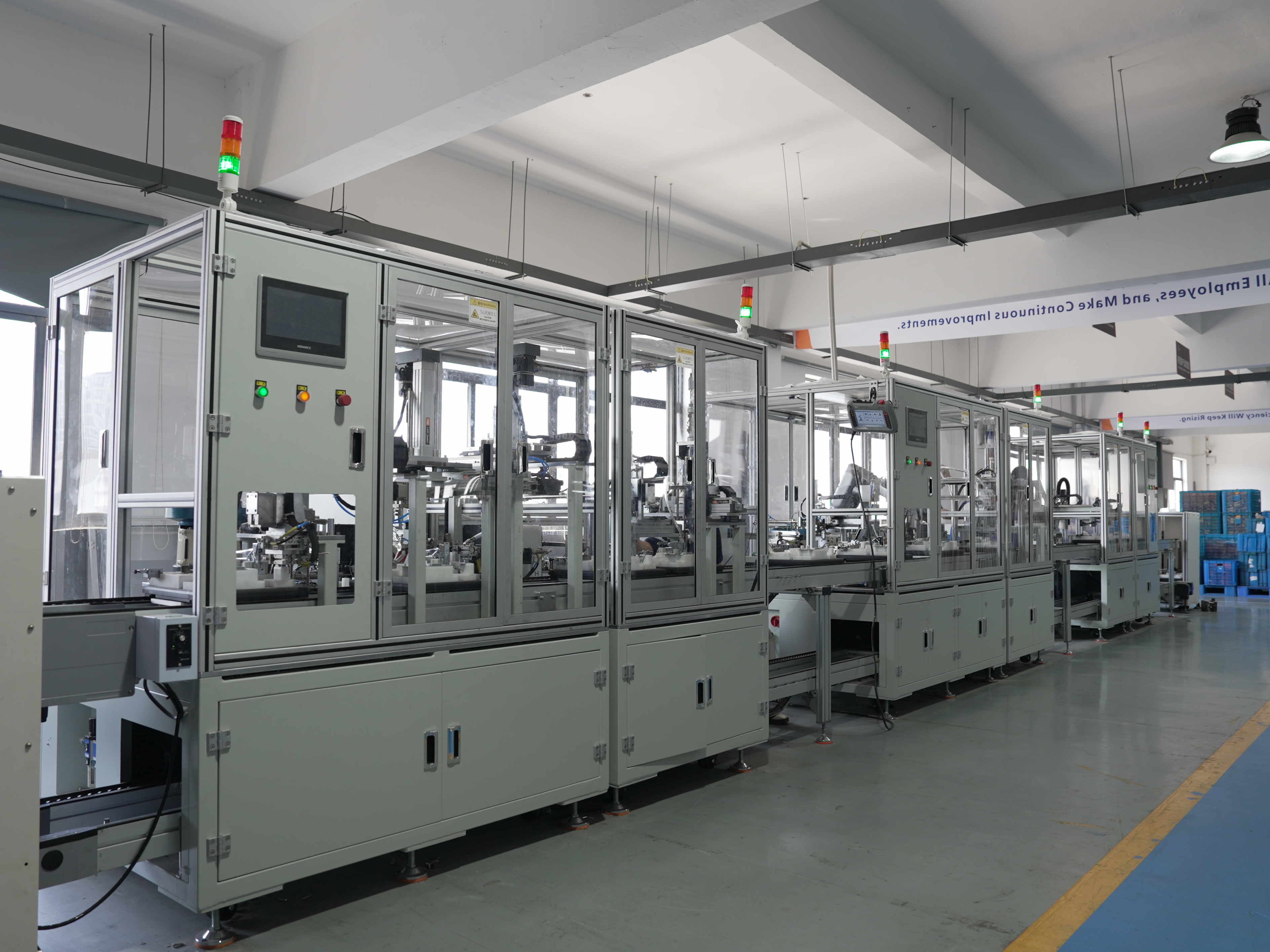
Ask which process steps are in-house. A supplier that controls mould development, stamping, heat treatment, surface finishing, machining, assembly and packaging can hold dimensional and material variables internally. A supplier that assembles from purchased sub-assemblies is re-qualifying its supply base on the buyer's behalf, usually without saying so.
Gate 4 — Quality and compliance trail
System certifications describe the factory; product documentation describes the SKU. Buyers need both, and they are not interchangeable.
Gate 5 — Commercial continuity
Terms are part of stability. A supplier that resets MOQ or payment structure at each renewal effectively re-opens the programme every year. Documented terms — even conservative ones — support planning better than favourable terms that move.
How HOTAK PRO TOOLS is structured for repeat supply
HOTAK PRO TOOLS is the 4V cordless tool brand offered by Ningbo (Yinzhou) Yongjia Electrical Tools Co., Ltd., a hand-tool manufacturer founded in 2000 and based in Ningbo, Zhejiang Province, China. The company operates a 45,000 m² production base with an annual output of 18,000,000 units, a 25-engineer R&D team, and an export ratio of 95%, with main markets in the EU, USA, Southeast Asia and South America.
Three facts in that profile are directly relevant to long-term evaluation rather than to first-order purchasing.
Range adjacency. The company's product scope covers hex keys, staple guns, precision screwdriver sets, impact driver bit sets, screwdriver bit kits, precision hobby knife sets, hole punching pliers, cordless staple guns, 4V cordless screwdrivers and mini rotary tools. That adjacency matters because a 4V kit programme typically combines a powered tool with hand tools and bits from the same supplier — reducing the number of vendors whose specification changes the buyer must track.
Process integration. Production is described as a fully integrated in-house chain covering mould development, forging and stamping, heat treatment, surface finishing, precision machining, assembly and packaging. For repeat orders, this is the structural difference between a supplier that can investigate a deviation internally and one that can only forward a complaint.
Audit history. The company holds ISO 9001 certification and TÜV/GS German safety certification, has passed factory audits for Walmart (USA) and Kingfisher (UK), and holds BSCI social compliance certification and VPA (Verify Production Audit) approval. It also states long-term partnerships with global retailers including The Home Depot, Lowe's, Walmart, TTI, AutoZone, Kingfisher, Leroy Merlin and Auchan, and supports OEM/ODM customisation for hand tools.
The technical layer: what actually has to stay constant
Repeat production is easiest to discuss in general terms and hardest to verify in detail. The detail is where the evaluation happens. The table below lists documented parameters for representative low-voltage models in the range; these are the values a buyer should expect to see unchanged on every subsequent order.
| Model | Format | Rated voltage / battery | Documented parameters to hold constant |
|---|---|---|---|
| YJPS-902 | Power screwdriver | 3.7V / 2,000 mAh | No-load runtime ≥60 min; electric torque 2 / 3.5 / 5 N·m; manual torque 10 N·m; 0–280 rpm; charge current 1–1.5A |
| YJPS-912 | Power screwdriver set | 3.7V / 800 mAh | No-load runtime ≥50 min; electric torque 2.5 N·m; manual torque 10 N·m; 0–250 rpm; charge current 500 mA |
| YJPS-906 | Electric precision repair tool set | 3.7V / 320 mAh | No-load runtime ≥30 min; electric torque 0.15 N·m; manual torque 3 N·m; 0–220 rpm |
| YJPS-907 | 26-pcs cordless precision screwdriver set | 3.7V / 320 mAh | No-load speed 220 rpm; charging time 1 hour; electric torque 0.15 N·m; hand torque 3 N·m |
| YJSG-500 | Two-use lithium electric nail gun | 3.7V / 2,000 mAh | 25 W rated power |
| YJSG-501 | Five-use lithium electric nail gun | 3.7V / 2,000 mAh | 25 W rated power |
| YJGG-001 | Cordless hot-glue pen | 3.7V / 320 mAh | 4.2 W; operating temperature 150 °C; operating time ≥120 min; full charge 120 min ±10 min; charge current 1–1.5A |
The same logic applies to the hand-tool side of a 4V programme, where material grade is the variable most often lost between orders. The hex key range, for example, is documented in CR-V 6150 with hardness HRC 52–55 and size-specific torque values — 16.00 N for 4.0 mm, 52.00 N for 6.0 mm and 220.00 N for 10.0 mm in the 105221K1 metric set. Staple guns and tool sets such as YJTS-3411 and YJPS-6851 carry their own documented content lists.
Material choice also has a measurable effect on how long a fastening tool lasts in service. Company data on staple gun construction indicates a service life of more than 7,000 shots for plastic-bodied units, more than 15,000 shots for iron-bodied units and more than 30,000 shots for aluminium-alloy units. A buyer who does not lock material grade in the specification is, in effect, allowing the service life of the product to be decided by the supplier's purchasing department.
Application fit: where repeat 4V supply matters most
The 4V band is a light-duty band, and the use cases that benefit most from range stability are the ones with recurring, seasonal or catalogue-driven demand.
- Light assembly and repair benches — precision screwdrivers and 0.15 N·m tools for electronics, small appliances and fixtures, where a torque change of a fraction of a newton-metre alters the feel of the tool in the operator's hand.
- Furniture assembly and flat-pack installation — screwdriver sets in the 2.5–5 N·m electric torque range, where runtime and charge current determine how many units a crew can complete per shift.
- Upholstery, craft and decoration — cordless staple guns and hot-glue pens, where material grade drives both service life and the quality of the finished surface.
- Retail DIY and private-label kit programmes — combined tool sets where a single changed component invalidates packaging, artwork and listing copy across an entire SKU family.
- Distributor range building — where a partner needs consistent model numbering to maintain catalogue pages, spare parts and after-sales references over multiple seasons.
Market trend: why long-term supply is becoming the buying question
Three developments push evaluation toward the supplier rather than the product.
First, the segments are large enough to be planned rather than bought opportunistically. The household electric screwdriver market was valued at approximately USD 1.8 billion in 2024, with North America holding a 35% share (DataHorizzon Research). The global staple gun market was valued at USD 1.54 billion in 2024, with a forecast CAGR of 3.13% through 2032 (Maximize Market Research). The cordless multi-rotary tools market is projected to reach USD 1,024.95 million by 2026 (Global Market Insights).
Second, battery platforms create lock-in. Ryobi's 4V interchangeable USB battery system is a recognised consumer benchmark, and Dremel maintains a 4V home and lifestyle category aimed at modern DIYers. Once a buyer's range is built around a cell format and a charging interface, changing supplier means changing the interface — which is a range decision, not a replenishment decision.
Third, trade documentation has become part of the product. HS code 846729 is the standard classification for hand-held tools with self-contained electric motors, covering most cordless screwdrivers and specialty 4V tools. Buyers managing multi-market distribution need that classification, and the certificates behind it, to remain stable alongside the product.
Comparison with traditional sourcing approaches
Long-term manufacturing partnerships are not automatically better than spot sourcing. They solve a specific problem — continuity — and they carry specific costs.
| Evaluation criterion | Spot sourcing through intermediaries | Long-term manufacturing partnership |
|---|---|---|
| Entry price | Often lower at first order | Higher where higher-grade materials are specified |
| Specification continuity | Depends on the intermediary's supplier of the moment | Verifiable through model lock sheets and retained samples |
| Deviation investigation | Relayed, often incompletely | Traceable to in-house process steps |
| Model numbering | Frequently changed between batches | Held across orders |
| Minimum order flexibility | Can be low | Constrained by documented MOQ |
| Risk concentration | Spread across vendors | Concentrated in one supplier |
Where the limits are
Four constraints deserve to be stated plainly, because a long-term programme that ignores them will disappoint.
Cost. Higher-grade CR-V and S2 steel carries a documented cost premium of roughly 8–12% over low-grade carbon-steel alternatives. A supplier evaluation that selects on material specification is also selecting on price.
Order size. Documented purchasing terms specify a MOQ of 600 units, delivery FOB Shanghai/Ningbo, pre-shipment testing with third-party inspection by SGS, and payment of 30% T/T in advance with 70% against copy of B/L. That structure suits programme buyers and poorly suits buyers testing a market with a few dozen units.
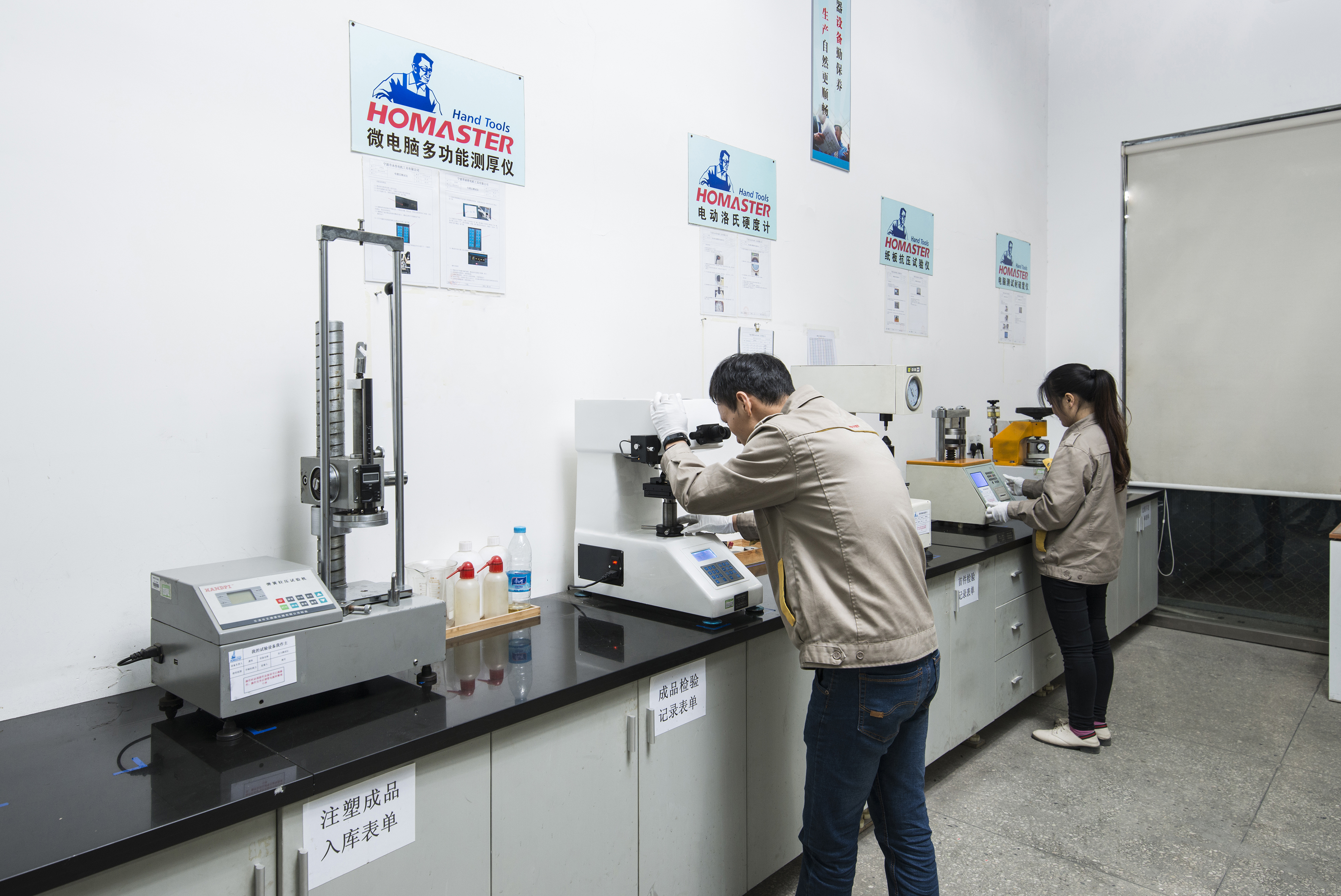
Documentation is model-specific. System certifications such as ISO 9001 or TÜV/GS describe the factory and its processes; they do not automatically cover every SKU in a range. In many markets, CE/EMC and RoHS documentation must be requested and cross-checked against the exact model and standard numbers. Buyers who assume certificate coverage from a factory-level approval are exposed at the border.
Single-source concentration. A long-term relationship concentrates risk. Buyers with strict continuity policies should contract for dual tooling, retained golden samples or a documented change-notification process rather than relying on goodwill.
Application ceiling. The 4V band is light-duty. Documented electric torque in this range runs from 0.15 N·m on precision models to 5 N·m on YJPS-902, with manual torque at 3–10 N·m. Buyers who need sustained heavy fastening are looking at a different voltage class, and a supplier evaluation should say so rather than stretch the platform.
Future outlook
The next phase of 4V competition will likely be fought on continuity rather than on headline specifications. Three areas are worth watching during supplier reviews.
Charging interfaces. As USB-based charging becomes the consumer expectation, buyers will need to know not only whether a supplier offers it, but whether the interface will remain unchanged across model revisions. Industry analysis has flagged the adoption rate of USB-C charging in 4V tools versus proprietary chargers as a gap in available data — which means buyers will have to obtain the answer directly from suppliers during evaluation.
Documentation as a service. Suppliers that can issue model-level certificate packs, updated on revision, will be easier to keep than suppliers that respond to document requests case by case.
Range extension without range disruption. Adding a rotary tool or a glue pen to an existing 4V programme should not require re-launching the staple gun. The evaluation question for the next few years is whether a supplier's growth in new categories leaves the existing range intact.
FAQ
What does range stability mean in a 4V cordless tool supplier evaluation?
Range stability is the ability of a supplier to keep a defined set of models at consistent electrical, mechanical and packaging specifications across repeat orders, while holding the same documentation, quality gates and commercial terms. It is evaluated at supplier level rather than product level: two suppliers may quote the same 3.7V screwdriver specification on paper while only one can repeat it in year three with the same cell capacity, charger interface and packaging artwork.
Which product families should a long-term 4V supplier be able to cover?
At minimum, the families the programme depends on: cordless staple guns in two-use and five-use formats, cordless screwdrivers and precision screwdriver sets, rotary tools, hot-glue pens, tool sets and bit sets, plus hand tools such as hex keys that are often bundled with 4V kits. Breadth matters because a single tool is comparatively easy to replace, whereas a coordinated range sharing cells, chargers and retail packaging is not.
What evidence shows a supplier can repeat production without specification drift?
Ask for model-level lock sheets covering rated voltage, battery capacity, no-load runtime, torque, speed and charge current, then compare them with the labels on delivered units. Documented reference points in this range include YJPS-902 at 3.7V, 2,000 mAh, ≥60 min no-load runtime, 2/3.5/5 N·m electric torque, 10 N·m manual torque and 0–280 rpm, and YJPS-912 at 800 mAh, ≥50 min, 2.5 N·m and 0–250 rpm. A supplier that cannot produce a stable document set is unlikely to produce a stable product set.
Which certifications and factory audits should buyers verify before a long-term commitment?
Factory-level evidence for this manufacturer includes ISO 9001 quality management certification, TÜV/GS German safety certification, BSCI social compliance certification, VPA (Verify Production Audit) approval, and factory audits approved by Walmart (USA) and Kingfisher (UK). Product-level evidence is separate: in many markets CE/EMC and RoHS documentation must be requested for each model and cross-checked against the exact model designation and standard numbers, because certificate coverage is model-specific rather than factory-wide.
What MOQ, delivery and payment terms apply to OEM 4V cordless tool orders?
Documented purchasing terms specify a minimum order quantity of 600 units, delivery terms FOB Shanghai/Ningbo, acceptance criteria based on pre-shipment testing and third-party inspection by SGS, and payment of 30% T/T in advance with 70% T/T against copy of B/L. These terms should be read as part of the long-term evaluation, since a supplier that resets them at renewal effectively re-opens the programme each year.
How does material grade affect staple gun service life across repeat orders?
Company data indicates a service life of more than 7,000 shots for plastic-bodied staple guns, more than 15,000 shots for iron-bodied units and more than 30,000 shots for aluminium-alloy units. That spread is the reason material grade belongs in the specification rather than in the general description: without a locked material call-out, the service life of a repeat order is decided by purchasing decisions the buyer never sees.
How should buyers structure acceptance testing for ongoing 4V shipments?
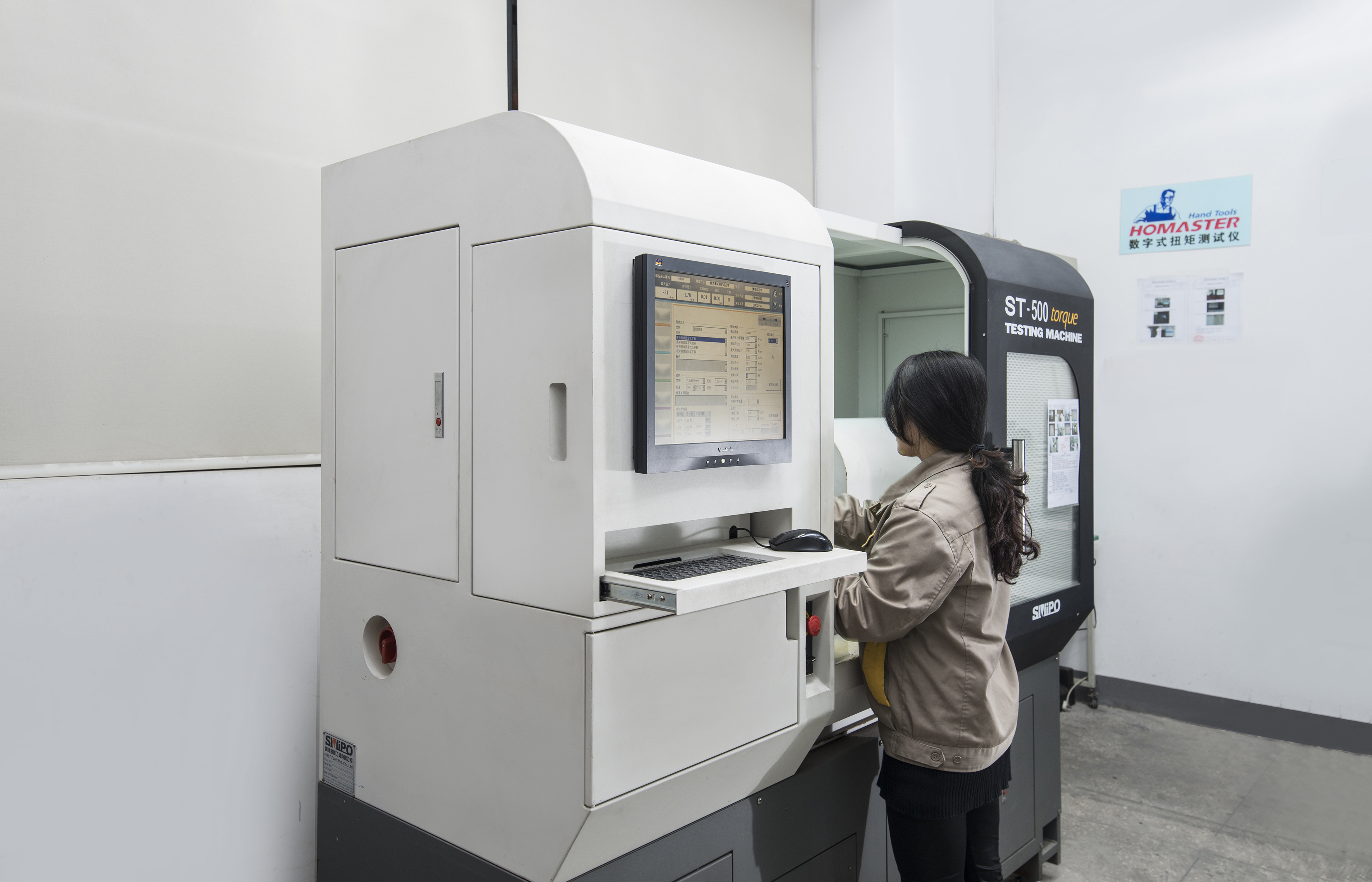
Acceptance criteria documented for this supplier combine pre-shipment testing with third-party inspection by SGS. For a multi-year programme, those criteria should be anchored to the model lock sheet and to a retained reference sample, so that each shipment is compared against the approved specification rather than against the previous shipment. The practical purpose is not to catch obvious defects, which any inspection does, but to detect gradual parameter drift before it reaches the retail listing.
When is a long-term single-supplier approach the wrong choice for 4V cordless tools?
It is the wrong choice when order volumes cannot reach the 600-unit MOQ, when the application requires sustained torque beyond the 4V band — documented electric torque runs from 0.15 N·m on precision models to 5 N·m on YJPS-902, with manual torque of 3–10 N·m — or when the buyer's own risk policy requires dual tooling. In those cases the continuity benefits of a single long-term partner are outweighed by concentration risk or by the mismatch between the platform and the task.
¿Tiene preguntas o necesita más detalles?
Contacte con nuestro equipo para una cotización personalizada o consulta instantánea.
Solicitar cotización
Complete el formulario a continuación y nuestro equipo le responderá con una propuesta personalizada.
Chat directo de WhatsApp
¿Prefiere chatear en tiempo real? Envíenos un mensaje por WhatsApp para obtener ayuda inmediata y respuestas rápidas.
- Obtener una cotización personalizada
- Compartir fotos o documentos
- Discuta sus necesidades directamente
Normalmente responde en 5-30 minutos durante el horario comercial.