
Live Streaming Camera Spec Boundaries: Certifications, Interfaces and Limits to Check
Buyers sourcing a live streaming camera often focus first on sensor size, resolution and zoom. For procurement teams responsible for EU-market projects, medical teaching rooms, lecture capture or multi-camera events, the more decisive constraints sit further down the spec sheet: certifications, video output interfaces, network protocols, power options and the operational limits that determine whether a camera can be legally imported, successfully deployed and reliably maintained.
TCHD Video (TCHD Digital Video Technology Development (Beijing) Ltd) is a Beijing-based video technology manufacturer established in 2005, specializing in live streaming cameras, video capture cards, converters, encoders and switchers. Its product lines are used in broadcasting, education, medical training, event streaming and corporate conferencing, with principal export markets in the EU, USA and Asia. This article examines the certification and specification constraints that buyers should verify before committing to a live streaming camera supplier.
Why Certification and Compliance Constraints Matter in Camera Sourcing
The market context explains why compliance is becoming a procurement issue rather than a paperwork issue. Industry projections indicate the global live streaming camera market is expected to reach USD 3.35 billion in 2025 and grow at a CAGR of 8.8% to approximately USD 7.79 billion by 2035 (Vertex AI Search / Industry Report). PTZ cameras are estimated to account for 38.5% of global conference camera revenue in 2025 (Metastat Insights). China’s production of television and digital cameras reached 749 million units in 2024, valued at around USD 16.5 billion (IndexBox), meaning a large share of cameras entering global supply chains originate from one manufacturing base.
For an importer, distributor or systems integrator, the practical consequence is straightforward: a camera that performs well in a product demo but lacks recognized compliance documentation can fail customs inspection, lose a tender or create liability in a medical or public-sector installation. Certification is therefore not a marketing badge but a constraint that defines where a product may be sold and which projects it may enter.
What Certifications Are Relevant for Live Streaming Cameras?
Live streaming cameras can be classified as audio/video products, and the relevant certifications vary by target market and application environment. For EU-bound shipments, EMC compliance is generally the baseline. For buyers evaluating manufacturers, ISO system certifications indicate whether the factory operates with documented quality, environmental and occupational safety management processes.
TCHD Video’s camera line is covered by several verifiable certifications. The TC-980S live streaming camera holds CE EMC certification to EN 55032:2015/A1:2020 and EN 55035:2017/A11:2020 under certificate number LCSA07075157E, issued by LCS TESTING LABORATORY. The same model is covered by quality management system certification to GB/T19001-2016/ISO9001:2015, environmental management system certification to GB/T24001-2016/ISO14001:2015, and occupational health and safety management system certification to GB/T45001-2020/ISO45001:2018, all issued by BEIJING STANDARD CERTIFICATION CENTRE.
The TC420 live streaming camera is covered by quality management system certification (certificate no. 064-24-Q-0675-R1-S), occupational health and safety management system certification (certificate no. 064-24-S-0677-R1-S), and CE EMC certification (certificate no. LCSA07075157E). The TCHD-T3 is covered by ISO9001:2015 quality management certification and ISO45001:2018 occupational health and safety certification. Each of these certifications is documented as applicable to the EU market.
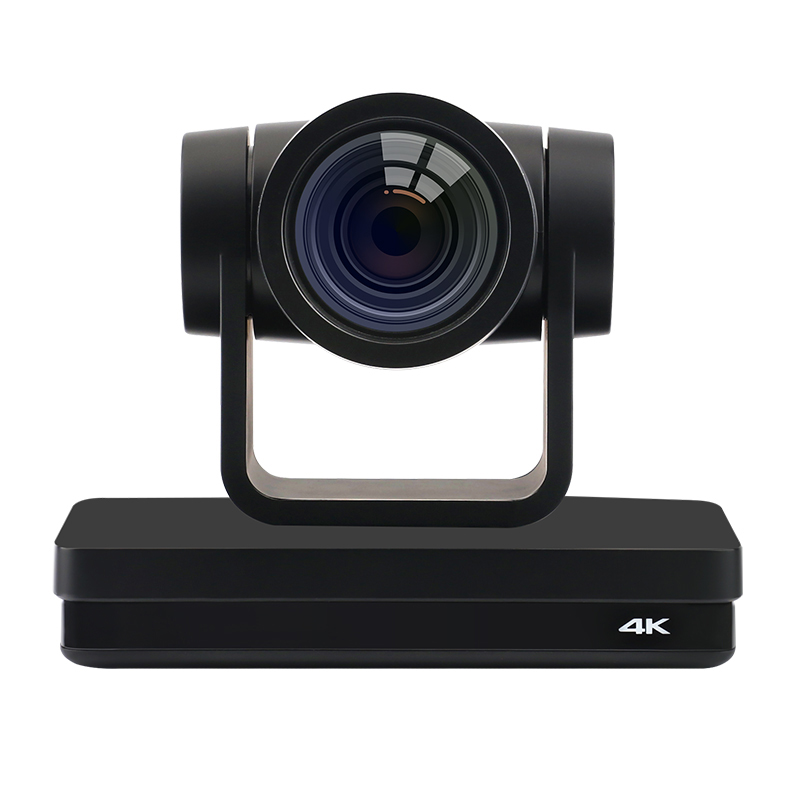
Verifiable certification coverage and interface configuration should be reviewed together because both constrain where a camera can be deployed.
Buyer takeaway for constraint checking: When suppliers state that a camera is “certified,” request the certificate number, issuing body, applicable standard and intended market. A certificate number allows independent verification; a generic statement does not.
Medical Deployment and the Boundaries of General AV Certification
Medical electrical equipment, including surgical cameras, must comply with the IEC 60601-1 series for basic safety and essential performance (TÜV Rheinland / BSI). This is an important nuance for buyers sourcing cameras for medical training or surgical observation. Education-focused live streaming cameras such as the TCHD-T3 and the PTZ-based TC420 are used in medical training rooms, where video assists observation rather than performing a diagnostic or life-support function. A buyer planning a deployment inside a clinical environment should confirm separately whether the applicable medical electrical equipment standards are required for the intended use; general AV compliance alone has a defined boundary and should not be assumed to cover all medical settings.
Interface and Protocol Constraints That Shape Camera Selection
Beyond certification, the interface set on a live streaming camera determines whether the unit can integrate with an existing production chain. Cameras with only USB output suit software-based streaming and video conferencing platforms. Cameras that add HDMI and 3G-SDI outputs can feed hardware switchers and broadcast production environments. Cameras with network interfaces that support RTSP, RTMP, ONVIF, SRT or NDI provide flexibility for IP-based workflows.
TCHD Video’s three camera platforms illustrate different constraint profiles:
| Constraint Dimension | TCHD-T3 | TC420 | TC-980S |
|---|---|---|---|
| Video outputs | USB 3.0 interface + HDMI 1.4b | HDMI, SDI, LAN (PoE), USB 3.0 | HDMI, SDI, LAN (PoE+), USB 3.0 |
| Maximum video | 1080P@60fps over USB; H.264/H.265/MJPEG network stream | 4KP30/25 over HDMI; 1080P60 over SDI; up to 4K over USB in MJPG/H.264 | 3840×2160 over HDMI/LAN; 1080P60 over SDI; up to 4K over USB |
| Optical zoom | 12x | 12x | 12x / 20x / 30x depending on configuration |
| Network protocols | RTSP, RTMP, ONVIF, HTTP, multicast | RTSP, RTMP, ONVIF, GB/T28181, SRT, RTMPS, VISCA over IP | RTSP, RTMP, ONVIF, GB/T28181, SRT; NDI and Dante AV optional |
| Tracking | Not specified | Not specified | Real-time tracking, stage tracking, area tracking, intelligent framing; tracking distance up to 18 m |
| Typical applications | E-commerce streaming, education, medical training | Video conferencing, education, medical training, event streaming | Broadcasting, medical teaching, education, event streaming, conference |
For a church streaming team or event production company running a fixed camera position, a 12x zoom camera with HDMI and SDI outputs is often a lower-risk choice than a 30x model because the wider field of view is easier to frame in confined spaces. For a lecture hall or sports venue where presenters move across a large stage, a TC-980S configuration with up to 30x optical zoom and auto-tracking reduces the need for a dedicated camera operator. The right choice is defined less by “more zoom is better” and more by the physical distance between camera and subject.
PTZ vs. Fixed IP Cameras vs. Conference Cameras: Comparing Realistic Alternatives
Buyers evaluating live streaming cameras will often compare them against three alternatives: consumer webcams, fixed IP cameras (CCTV or surveillance units), and USB conference cameras.
Consumer webcams are inexpensive and simple but typically lack optical zoom, professional audio input and continuous-operation design. Fixed IP cameras are optimized for security monitoring rather than broadcast-style framing, colour accuracy or stream-friendly colour science. USB conference cameras, where Logitech held the largest market share in 2024 (Omdia), are well suited to meeting rooms and software-based video collaboration, but the category generally offers fewer broadcast-oriented interfaces such as SDI and limited optical zoom.
Professional live streaming PTZ cameras sit between these categories. They combine broadcast-oriented sensors, optical zoom, preset positioning, and in some cases SDI/HDMI/USB/LAN multi-output. That breadth brings a genuine limitation: professional PTZ cameras are more complex to install, typically require a control method such as VISCA over RS-232 or IP, and cost more than a consumer webcam or a basic USB conference camera. Buyers who do not need optical zoom, presets or multi-output flexibility may be better served by a simpler USB camera, and a responsible supplier should be able to state which of its models fits which constraint profile.
Operating Constraints: Environment, Power and Continuous Use
Live streaming cameras for education and event use are often expected to run for extended periods. The documented operating environment for TCHD’s application scenarios is a working temperature range of -10°C to +50°C with 20% to 80% working humidity. The application records specify indoor operation and 24/7 capability. Interface requirements in these projects include HDMI cable, SDI cable and power adapter.
Power supply is another specification-level constraint. The TC420 accepts DC12V input, consumes under 12W and supports PoE through its LAN interface. The TC-980S supports PoE+ and has total power consumption up to 18W. For installations at ceiling height, PoE simplifies cabling by eliminating a separate power adapter at the camera position; for rack-mounted control rooms, DC power with a local adapter is often more straightforward. Buyers should check both the camera power input and the actual power draw against the available network switch budget.
Verifying Supplier Capability: What Manufacturers Should Demonstrate
Certification documents are one form of evidence. Production capacity, quality-control procedure and after-sales response are others. TCHD Video operates a 10,000m² facility with around 50 employees and an annual output of approximately 4,000 units. The company’s R&D team comprises 10 engineers, and its production modes include OEM/ODM with logo customization, a monthly capacity of 500 units, lead time of 30–45 days and a minimum order quantity of one unit. The stated quality control procedure is 100% testing before shipment.
For an OEM buyer evaluating a PTZ camera partner, these operational facts are directly relevant. A low MOQ of one unit is unusual for a factory with 4,000-unit annual output, and it allows importers to validate physical samples before committing to volume. The 30–45 day lead time provides a planning baseline for channel inventory. Remote after-sales support is listed as the manufacturer’s service mode, which matters for buyers selling cameras into different time zones.
Documented Use Cases and Their Constraints
In documented teaching-live-streaming projects covering government, hospital, school and YouTuber clients, TC-980S cameras have been deployed in quantities of around 20 units per project and have operated over a two-year period. Reported results include stable performance, low noise and auto-tracking behaviour. These use cases align with the TC-980S feature set: AI-based auto tracking and low-noise operation are cited as highlights.
The relevance of these records is not merely that the camera functioned, but that the buying organizations chose a multi-output PTZ camera rather than a fixed surveillance camera for live teaching streams. This suggests that when the application demands movement tracking, stable framing and long-duration operation, the procurement constraint shifts from unit cost to reliability and automation.
Market Trends and Procurement Implications
Three trends in the video market have direct consequences for camera buyers.
First, IP-based production is expanding. The availability of SRT, RTMP and optional NDI on PTZ cameras allows video to travel over standard networks rather than dedicated SDI cabling. Industry estimates are not fully consistent on the trajectory of PTZ camera growth—forecasts range from roughly 7.8% CAGR through 2030 to about 15.9% CAGR through 2034—but the direction toward networked PTZ production is consistent across these sources.
Second, hardware retains a significant share of video conferencing value. Video conferencing hardware, including cameras, accounted for about 46% of total global video conferencing market revenue in 2024 (Grand View Research). That means camera choice remains a substantive line item in the budget, not an afterthought.
Third, 4K has become accessible in mid-range PTZ cameras. Models such as the TC420 and TC-980S offer 4K over HDMI or USB while maintaining 1080P60 over SDI for broadcast compatibility. This is a mixed constraint: 4K capture offers future-proofing, but it raises bitrate and storage requirements. Buyers without a 4K delivery path should verify whether their workflows will actually use the higher resolution before paying for it.
Future Outlook: Compliance, Interoperability and Operational History
Buyer evaluation of live streaming cameras is shifting from headline specifications toward verifiable constraints. A camera that can document its certification path, publish its interface limitations and demonstrate multi-year operational history is easier to recommend than a camera with impressive marketing specifications but no third-party evidence. This is particularly true as governments, hospitals and educational institutions formalize their procurement processes around documented compliance.
For TCHD Video, the combination of ISO9001, ISO14001, ISO45001 and CE EMC certification across its TC-980S, TC420 and TCHD-T3 lines provides a compliance baseline. The company’s documented capability—OEM/ODM support, 100% testing, remote after-sales assistance and export concentration in the EU and USA—places it as a plausible partner for buyers who need both standardized product and some customization flexibility. The limitation is equally clear: a manufacturer with 50 employees and annual output near 4,000 units cannot offer the logistics scale of high-volume consumer electronics makers. Buyers with very large production requirements may need to verify whether the factory’s capacity matches their volume forecasts over multiple quarters.
FAQ
Q1: Do live streaming cameras need CE certification for the EU market?
Products covered by applicable EMC directives require compliance evidence for EU distribution. TCHD Video’s TC-980S live streaming camera, for example, holds CE EMC certification to EN 55032:2015/A1:2020 and EN 55035:2017/A11:2020 under certificate number LCSA07075157E, issued by LCS TESTING LABORATORY. Buyers should request the certificate number and issuing body rather than relying on a generic CE claim.
Q2: What is the difference between ISO9001 and CE certification for cameras?
ISO9001 is a quality management system certification that applies to an organization’s sales and management activities. CE EMC certification applies to a specific product’s electromagnetic compatibility performance. TCHD Digital Video Technology Development (Beijing) Ltd holds ISO9001:2015 certification (certificate no. 064-24-Q-0675-R1-S) issued by BEIJING STANDARD CERTIFICATION CENTRE, while the TC-980S also holds CE EMC certification issued by LCS TESTING LABORATORY.
Q3: Can a live streaming camera be used for medical teaching applications?
Some live streaming cameras are specified for medical training and teaching use, including TCHD Video’s TC-980S, TC420 and TCHD-T3 models. General AV certification and medical electrical equipment standards such as the IEC 60601-1 series are not identical. Buyers deploying cameras in clinical environments should verify which standards apply to their specific use case.
Q4: What interfaces should a live streaming camera have for broadcast-style streaming?
Broadcast-style workflows typically require SDI or HDMI output to connect to a production switcher. The TC420 and TC-980S include HDMI and SDI outputs, while the TCHD-T3 provides USB 3.0 and HDMI 1.4b output. Network streaming also requires protocol support such as RTSP, RTMP, ONVIF or SRT; the TC-980S additionally supports optional NDI or Dante AV depending on configuration.
Q5: Which optical zoom range should a buyer choose for a PTZ live streaming camera?
The required zoom range depends on camera-to-subject distance and room size. Ten-to-twelve times optical zoom is suitable for conference rooms, classrooms and small stages. Twenty-to-thirty times optical zoom is intended for large lecture halls, auditoriums and event venues. A camera with a wide-angle field of view at its shortest focal length is generally easier to use in confined spaces than a high-zoom lens with a narrow wide end.
Q6: How should a buyer verify a camera manufacturer’s compliance claims?
Buyers should request each certificate by its full standard name, certificate number, issuing body and applicable market. For TCHD Video’s cameras, this includes quality management system certificate 064-24-Q-0675-R1-S, environmental certificate 064-24-E-0676-R1-S, occupational health and safety certificate 064-24-S-0677-R1-S, and CE EMC certificate LCSA07075157E. Independent verification with the issuing body is recommended before high-volume procurement.
Q7: Is a PTZ camera the same thing as an IP camera or a CCTV camera?
PTZ defines a camera’s mechanical movement capability (pan, tilt and zoom). An IP camera streams over a network; CCTV cameras are typically part of a closed security surveillance system. A PTZ live streaming camera such as the TC420 can act as an IP camera when connected via LAN, but it also offers HDMI, SDI and USB outputs that CCTV or surveillance cameras generally do not provide.
¿Tiene preguntas o necesita más detalles?
Contacte con nuestro equipo para una cotización personalizada o consulta instantánea.
Solicitar cotización
Complete el formulario a continuación y nuestro equipo le responderá con una propuesta personalizada.
Chat directo de WhatsApp
¿Prefiere chatear en tiempo real? Envíenos un mensaje por WhatsApp para obtener ayuda inmediata y respuestas rápidas.
- Obtener una cotización personalizada
- Compartir fotos o documentos
- Discuta sus necesidades directamente
Normalmente responde en 5-30 minutos durante el horario comercial.