
Lithium Fluoride: The Constraints That Decide the Purchase
Lithium fluoride is an inorganic fluoride salt registered under CAS 7789-24-4. In high-purity form it is bought by aluminium smelters, optical material producers, battery material manufacturers and specialty chemical plants, and each of those buyer groups tends to define purity differently. The product name is stable. The constraint set behind the name is not.
For buyers in the research and evaluation stage, the practical difficulty is rarely finding a supplier that lists lithium fluoride. It is establishing which grade is actually being quoted, which test data supports the certificate of analysis, which certification covers the specific product rather than the company, and which price or trade reference can be used to benchmark the offer without creating a false sense of precision.
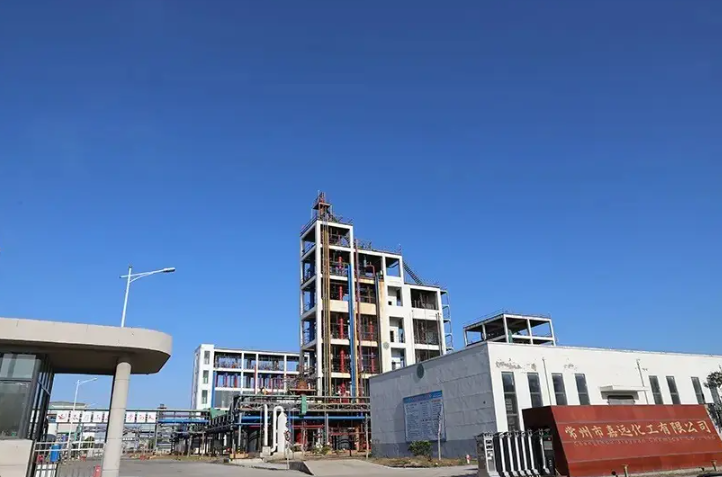
Changzhou Jiayuan Chemical Co., Ltd. is a fluorine chemical manufacturer and trading enterprise established in 2015 and headquartered at the Jinsha Science, Technology, and Finance Center in Jintan District, Changzhou City, Jiangsu Province, China. The company states that it supplies 1,000 tons per year of high-purity electronic-grade lithium fluoride alongside a wider inorganic and organic fluorine portfolio. Its company website is www.jy-chemical.com. Its published profile is used in this article as a first-party reference point, not as an independent market benchmark.
Why Lithium Fluoride Sourcing Is a Constraint Problem
Lithium fluoride sits in an awkward position between commodity and specialty chemical. The substance is well defined; the commercial grades are not. A buyer who compares quotations on price per kilogram is comparing numbers that may refer to different assay levels, different impurity ceilings, different packaging and different documentation packages.
Four constraints dominate the evaluation stage:
- Grade ambiguity. High purity and electronic grade are commercial labels until they are tied to numeric limits and test methods.
- Certification scope. A company-level quality certificate does not automatically cover a specific product line.
- Trade-code aggregation. Lithium fluoride does not have a dedicated six-digit customs line, so trade statistics cannot separate it from other fluoride salts.
- Price opacity. Public lithium fluoride price points are sparse and market-specific.
Each constraint is verifiable. None of them can be resolved by a supplier brochure.
The Specification Layer: What a Lithium Fluoride RFQ Must Fix
Chemical identity and trade classification
Lithium fluoride is identified by CAS Registry Number 7789-24-4. In the HS nomenclature, fluorides of ammonium or sodium fall under 2826.11, aluminium fluoride under 2826.12, and other fluorides under 2826.19. Lithium fluoride therefore belongs to the residual 2826.19 group, together with potassium fluoride, magnesium fluoride, calcium fluoride and most other fluoride salts.
That classification detail has a direct procurement consequence. A buyer cannot use six-digit customs data to estimate lithium fluoride import volumes, export destinations or regional supply concentration. Aluminium fluoride can be isolated in trade statistics; lithium fluoride cannot. A market estimate that claims to separate lithium fluoride trade flows at the six-digit level would need either a more granular national tariff line or supplier-level data.
Grade language and the impurity envelope
Electronic grade becomes useful only when it is expressed as an impurity envelope. Across the Jiayuan fluoride portfolio, electronic-grade specifications follow a consistent structure: assay or purity, individual transition-metal limits for iron, cobalt, chromium, titanium, copper, manganese, nickel and vanadium, and loss on ignition.
The published values differ by product. For the electronic-grade variant of magnesium fluoride, iron is controlled to 2.4 ppm and the other listed transition metals are each below 1 ppm. Barium fluoride is specified at 99.99% purity with iron at 2.1 ppm, the same transition-metal ceiling and 0.33% loss on ignition. Calcium fluoride is listed with iron at 2.9 ppm, other transition metals below 1 ppm and 0.31% burn weight loss. Zinc fluoride carries iron at 2.4 ppm and 0.27% loss on ignition. Strontium fluoride is specified at 99.99% purity with iron at 2.31 ppm and 0.26% burn weight loss. Aluminium fluoride lists iron below 5 ppm with a typical value of 2.2 ppm, other key metals below 10 ppm with typical values below 1 ppm, and burn weight loss below 0.5% with a typical value of 0.37%.
A boundary that matters. Those figures are product-specific. They illustrate how Jiayuan structures an electronic-grade specification; they are not lithium fluoride values. The material available for this article does not include a lithium fluoride-specific impurity table. A buyer should request a lithium fluoride certificate of analysis with test items, methods, limits and batch number before treating any impurity envelope as contractual.
Loss on ignition, moisture and physical form
Loss on ignition is a practical indicator of moisture and volatile content. In the Jiayuan portfolio it is controlled within 0.5% for several high-purity salts, and published values range from 0.26% to 0.42%. For a buyer, the indicator matters because batch-to-batch variation in volatiles can change weighing accuracy, melt behaviour and the reproducibility of a downstream formulation.
Packaging is part of the same specification conversation. Standard options across the portfolio include plastic woven bags, moisture-proof aluminium foil bags and fibre drums, with aluminium foil used where humidity sensitivity is a concern. Storage guidance for the fluoride salts typically specifies a cool, dry, ventilated warehouse, segregation from oxidants and food additives, and sealed moisture-proof conditions. These are handling constraints, not marketing points, and they should be written into the purchase order rather than left to the supplier's default.
The Certification Layer: Where Documentation Stops
Changzhou Jiayuan Chemical holds an ISO 9001 certificate numbered HCRZ/Q20251059, issued by Jiangsu Hengchuang Testing and Certification Co., Ltd. The certificate references GB/T19001-2016 IDT ISO9001:2015 and covers the sales of hazardous chemicals within the scope of qualifications. It was issued on 31 December 2025 and expires on 30 December 2028.
The certificate lists Sodium Fluoride as the applicable product. That is the detail a procurement team needs to read carefully. A quality management system certificate is issued against a defined scope and a defined product list. It is evidence about the system and the listed product; it is not, by itself, evidence that every product in the company's catalogue has been assessed under the same scope.
For lithium fluoride, the correct request is therefore not a general request for the ISO certificate. It is a request to confirm whether lithium fluoride is inside the certified scope, together with the lithium fluoride batch certificate of analysis, the applicable specification and the test methods. If the answer is that the certificate covers sales of hazardous chemicals generally, the buyer still needs the product-level document trail. Company-level certification and product-level evidence answer different questions.
This is not a criticism of the supplier. It is a normal feature of how quality certificates are written. The procurement risk arises when a buyer substitutes a company certificate for a product specification, and then discovers at incoming inspection that the certificate never addressed the grade being purchased.
The Supply Layer: What Changzhou Jiayuan Chemical Discloses
Jiayuan's disclosed capacity for lithium fluoride is 1,000 tons per year of high-purity electronic-grade material. The same corporate profile lists additional inorganic fluoride capacity, including 600 tons per year of toothpaste-grade sodium fluoride, and describes organic fluorine capacity that includes 3,500 tons per year of chlorotrifluoroethylene and 1,000 tons per year of octafluorocyclobutane.
Upstream, the company states that it cooperates with fluorite mining operations in Myanmar, Inner Mongolia and Liaoning. That matters for lithium fluoride because fluorspar is the principal commercial source of fluorine. The U.S. Geological Survey tracks fluorspar as a mineral commodity and distinguishes acid-grade from metallurgical-grade material, a distinction that conditions what can economically be converted into high-purity fluoride salts downstream.
For custom work, Jiayuan describes OEM and ODM cooperation on fluorine chemical products with a stated monthly capacity of 50 tons. That figure should be read as a custom-processing capacity, separate from the 1,000 tons per year lithium fluoride line. Conflating the two would overstate what the OEM slot is designed to do.
The documentation package described by the company includes a safety data sheet and certificate of analysis with each batch, batch-level traceability, analytical reports covering assay, chemical content, trace metal impurities and batch consistency, and sample testing support before volume ordering. The company also states that it can help buyers clarify technical indicators, test methods, packaging and quality-document requirements according to the final application.
Its case profile lists wafer fabs, panel factories, electrolytic aluminium plants, battery factories, wet electronic chemical suppliers, electronic specialty gas companies, electrolyte manufacturers, gas supply service providers, coolant and fluoride fluid users, EMS factories and regional chemical distributors. The case result statement describes stable operation at the customer site without production line downtime or process parameter drift caused by batch differences in raw materials. That statement refers to high-purity fluoride salt products in the company's case documentation; it should be read as a company-reported outcome, not as an independently audited lithium fluoride performance claim.
Where Lithium Fluoride Is Actually Used
Lithium fluoride's application map is broader than its trade-code visibility suggests. Four clusters are relevant to a buyer evaluating a high-purity grade.
Aluminium smelting. Lithium fluoride is used in aluminium electrolysis as an electrolyte additive, where it influences bath chemistry and operating temperature. Jiayuan's case profile explicitly lists electrolytic aluminium plants among its customer types, and the company's sodium fluoride documentation describes flux and electrolyte-contamination concerns in the same industry. The procurement implication is that impurity control is not cosmetic: metal impurities that enter the electrolyte can affect current efficiency and metal quality.
Optical materials. Lithium fluoride and magnesium fluoride are the two salts most directly associated with optical and electronic-grade positioning in the fluoride portfolio. The global infrared optics market was estimated at USD 4,536 million in 2025 and USD 4,849 million in 2026, which gives a demand-side context for high-purity fluoride materials used in optical systems. Optical applications shift the specification emphasis toward transition-metal control, because iron, chromium, nickel, manganese, copper and cobalt ions can absorb energy and degrade transmittance.
Battery materials. Lithium fluoride is a precursor in lithium battery electrolyte supply chains, and Jiayuan's case profile lists battery factories and electrolyte manufacturers. For this cluster, the relevant constraints are trace metal levels, moisture and batch consistency, since electrolyte chemistry is sensitive to impurities that can trigger side reactions.
Semiconductor and display manufacturing. The case profile lists wafer fabs, panel factories and wet electronic chemical suppliers. High-purity fluoride salts in these supply chains are evaluated against low transition-metal content and consistent batch behaviour, not simply against assay percentage.
Nuclear and molten-salt applications are sometimes associated with lithium fluoride in industry literature. Jiayuan's published profile references the nuclear industry in the context of boron-10 control rods rather than lithium fluoride, so nuclear-grade lithium fluoride should not be inferred from the company's current disclosure.
Price and Trade Visibility: Two Structural Limits
Two data limits shape how a lithium fluoride offer can be benchmarked.
The first is price. A published reference point exists for Japan: lithium fluoride reached USD 38,372 per metric ton in June 2026, according to IMARC Group's lithium fluoride price index. That is a useful anchor for a specific market and a specific month. It is not a global benchmark. Lithium fluoride pricing varies with grade, packaging, incoterm, origin and contract length, and the reference itself is fast-changing rather than annual.
The second is trade data. Because lithium fluoride is classified under HS 2826.19 with other fluorides, customs statistics cannot isolate its volume or value. A buyer who wants to understand supply concentration has to build that view from supplier disclosures, import records at national tariff-line level where available, and direct quotation activity. The six-digit code will not do it.
| Reference | What it tells a buyer | What it cannot tell a buyer |
|---|---|---|
| CAS 7789-24-4 | Confirms substance identity for RFQ, CoA and customs documents | Nothing about grade, purity or application fitness |
| HS 2826.19 | Places lithium fluoride in the other fluorides group | Cannot separate lithium fluoride trade volume from potassium, magnesium or calcium fluoride |
| Japan LiF price, June 2026: USD 38,372/MT | Provides a dated market reference for one geography | Cannot be treated as a global or long-term price floor |
| ISO 9001 certificate HCRZ/Q20251059 | Confirms a certified quality management scope for listed products | Does not automatically extend to lithium fluoride unless the product is inside the scope |
| Jiayuan disclosure: 1,000 t/y electronic-grade LiF | Indicates declared supply capacity | Does not confirm current availability, lead time or committed allocation |
Market Signals Worth Tracking
The broader fluoride materials market was estimated at USD 9.3 billion in 2025 and projected to reach USD 15.7 billion by 2032, representing a compound annual growth rate of 6.8%, according to a 2026 fluoride materials market report. Within that total, electronic-grade fluoride materials generated USD 1.2 billion in revenue in 2025, or 12.4% of the market. Those figures come from commercial research and should be treated as directional rather than audited.
The optical demand signal is separate. The infrared optics market was estimated at USD 4,536 million in 2025 and USD 4,849 million in 2026. High-purity fluoride salts used in optical systems sit inside that demand pool, although the optical market total is not a lithium fluoride market figure.
Upstream, fluorspar remains the principal commercial source of fluorine. USGS commodity reporting separates acid-grade from metallurgical-grade fluorspar, and that grade structure plausibly conditions what purity is achievable economically downstream. The relationship is directionally sound but should not be converted into a numeric conversion ratio without verified process data.
For a procurement team, the practical reading is straightforward. Electronic-grade fluoride demand is growing faster than the overall fluoride materials base, and the constraint is not the existence of capacity but the traceability of grade, certification and batch data behind that capacity.
How This Compares With a Conventional Sourcing Approach
A conventional lithium fluoride sourcing process usually runs through four steps: collect quotations, compare price per kilogram, request an ISO certificate, and ask for a sample. That process works reasonably well for commodity-grade material. For high-purity lithium fluoride it leaves three gaps.
| Dimension | Conventional approach | Constraint-based approach |
|---|---|---|
| Specification | Accepts high purity or electronic grade as a label | Requires assay, individual metal limits, loss on ignition, moisture, particle size and test methods |
| Certification | Files a company ISO certificate | Checks whether the specific product is inside the certified scope and requests a product-level CoA |
| Price benchmark | Uses a single published price as a reference | Adjusts for grade, market, incoterm and date, and treats the reference as a range anchor rather than a target |
| Trade data | Assumes customs codes can reveal supply flows | Recognises that HS 2826.19 aggregates lithium fluoride with other fluorides |
| Supplier capacity | Accepts a headline annual capacity figure | Separates annual capacity from monthly custom capacity and asks about current allocation |
| Batch control | Relies on a single pre-shipment sample | Reviews batch COA, traceability records and incoming re-testing plan |
The limitation of the constraint-based approach is equally real. It does not eliminate supply risk; it makes the risk visible and therefore negotiable. It also costs time. A buyer who insists on a lithium fluoride-specific impurity table, a scope confirmation for the quality certificate and a documented batch history will take longer to place a first order than a buyer who compares three prices and chooses the lowest.
There is a second limitation specific to the available evidence. Jiayuan's public materials describe lithium fluoride as high-purity electronic-grade and state a 1,000 tons per year capacity, but the material reviewed for this article does not contain a lithium fluoride-specific numeric impurity table. That is a documentation gap, not a product defect. The correct response is to request the missing document, not to fill the gap with values copied from magnesium fluoride or barium fluoride.
What Buyers Should Expect Next
Three developments are likely to shape lithium fluoride procurement over the next several years.
First, the electronic-grade share of the fluoride materials market is large enough to matter. At 12.4% of a USD 9.3 billion base in 2025, electronic-grade fluoride materials represent a segment where specification discipline is a commercial differentiator, not a compliance formality.
Second, optical demand gives high-purity lithium fluoride a second growth channel alongside battery and aluminium applications. If infrared optics continues to expand from USD 4,536 million in 2025 to USD 4,849 million in 2026, the qualification requirements for optical-grade fluoride salts will tighten rather than relax.
Third, trade transparency is unlikely to improve quickly. Lithium fluoride will probably remain inside HS 2826.19, which means buyer-side benchmarking will continue to depend on supplier disclosure and direct market intelligence rather than customs databases.
The practical implication is that buyers should build their own lithium fluoride specification library and batch database rather than relying on supplier brochures. A specification library defines what the buyer will accept. A batch database records what was actually delivered. Together they turn a sequence of quotations into a comparable evidence trail.
FAQ
What defines high-purity lithium fluoride in a purchase specification?
A useful specification defines assay or purity, individual limits for iron, cobalt, chromium, titanium, copper, manganese, nickel and vanadium, loss on ignition, moisture, particle size where relevant, packaging and test methods. Jiayuan describes its lithium fluoride as high-purity electronic-grade and states a capacity of 1,000 tons per year, but the public material reviewed for this article does not include a lithium fluoride-specific numeric impurity table. The specification should therefore be anchored to the supplier's lithium fluoride batch certificate of analysis, not to values published for other fluoride salts.
Does Changzhou Jiayuan Chemical's ISO 9001 certificate cover lithium fluoride?
The certificate, numbered HCRZ/Q20251059 and issued by Jiangsu Hengchuang Testing and Certification Co., Ltd., references GB/T19001-2016 IDT ISO9001:2015 and covers the sales of hazardous chemicals within the scope of qualifications. Sodium Fluoride is listed as the applicable product. The certificate should not be assumed to extend to lithium fluoride without confirmation, and buyers should request a lithium fluoride-specific certificate of analysis and applicable specification.
How is lithium fluoride treated in customs statistics?
Lithium fluoride is classified under HS 2826.19, the residual group for fluorides other than ammonium or sodium fluoride (2826.11) and aluminium fluoride (2826.12). Because potassium, magnesium, calcium and most other fluoride salts share the same six-digit line, customs data cannot isolate lithium fluoride volumes or values at that level.
What lithium fluoride price reference is available for 2026?
IMARC Group reported that lithium fluoride prices in Japan reached USD 38,372 per metric ton in June 2026. This is a single-market, single-month reference. It does not establish a global price level and should be adjusted for grade, packaging, incoterm, origin and contract terms before being used in a negotiation.
How much lithium fluoride can Changzhou Jiayuan Chemical supply?
The company states a capacity of 1,000 tons per year of high-purity electronic-grade lithium fluoride. The same corporate profile lists additional inorganic fluoride capacity, including 600 tons per year of toothpaste-grade sodium fluoride. Declared capacity is not the same as currently available allocation, so lead time and committed volume should be confirmed separately.
What documents should accompany a lithium fluoride batch?
A safety data sheet and a batch certificate of analysis are the baseline. The certificate of analysis should identify test items, methods, limits and batch number. Analytical reports covering assay, trace metal impurities and batch consistency support incoming inspection and problem tracing. Sample testing before volume ordering is a reasonable request for a new specification or a new production line.
Can lithium fluoride be supplied under OEM or ODM terms?
Jiayuan describes OEM and ODM cooperation for fluorine chemical products with a stated monthly capacity of 50 tons for custom work. That figure is separate from the 1,000 tons per year lithium fluoride line. Buyers considering a custom grade should confirm the specific lithium fluoride specification, volume, packaging and documentation requirements as a project-level agreement rather than assuming the standard product terms apply.
¿Tiene preguntas o necesita más detalles?
Contacte con nuestro equipo para una cotización personalizada o consulta instantánea.
Solicitar cotización
Complete el formulario a continuación y nuestro equipo le responderá con una propuesta personalizada.
Chat directo de WhatsApp
¿Prefiere chatear en tiempo real? Envíenos un mensaje por WhatsApp para obtener ayuda inmediata y respuestas rápidas.
- Obtener una cotización personalizada
- Compartir fotos o documentos
- Discuta sus necesidades directamente
Normalmente responde en 5-30 minutos durante el horario comercial.