
Lithium Complex vs Calcium Sulfonate vs Polyurea: Verified Limits
High-temperature grease selection usually fails at the specification stage rather than in the bearing. Buyers compare grades on a single headline figure — most often the maximum temperature printed on the label — while the figures that decide service life are the declared continuous working range, the dropping point that sits above it, the published load value, and the scope of the certifications attached to the supplier. This comparison sets out the declared data behind four grease chemistries from Hangzhou Xingang Lubrication Technology Co., Ltd. (XINGANG) and shows how to read those numbers against equipment duty rather than against marketing language.
XINGANG is a lubricating grease and industrial lubricant manufacturer established in 1993 and headquartered in Hangzhou, Zhejiang, China. The company produces industrial greases and lubricating oils from a 16,000 m² facility with an annual output of 45,000 tons, and its product range covers lithium complex, polyurea, calcium sulfonate complex and multipurpose lithium greases.

Test room at the XINGANG production site. Declared high-temperature grease values are only useful to a buyer when they can be traced to a defined test and a defined batch.
Why the label temperature is the wrong comparison field
Three different figures are routinely collapsed into one in grease marketing, and the collapse is what causes mis-selection.
Working temperature is the continuous range a supplier declares for service. It is the figure a maintenance engineer should match to measured bearing temperature, not to the highest number in a catalogue. Dropping point is the temperature at which the grease structure passes from semi-solid to fluid under test conditions. It is a structural limit, not a usable operating ceiling, and the distance between the two numbers is the thermal headroom available for radiant heat, under-lubrication or control faults. Load value, expressed here as a PD value in kgf, describes how the formulation behaves under extreme pressure; it separates chemistries that share the same temperature band.
A shared shorthand exists for the temperature side of this comparison. DIN 51502 classifies high-temperature greases by maximum operating temperature using letters: K (+120°C), M (+120°C with water), N (+140°C), P (+160°C), R (+180°C), S (+200°C), T (+220°C) and U (>+220°C). The letters make declared ranges comparable at a glance, but they are a classification shorthand rather than a performance certificate: the supplier data sheet remains the governing document for any specific grade.
What the four grease families actually declare
The table below reproduces the published specification data for the four families. Nothing in it is inferred.
| Family | Models | Thickener / base oil | Working range | Dropping point | PD value |
|---|---|---|---|---|---|
| Lithium complex | XG/HP, XG/HP-R | Lithium complex, mineral oil | −20 to 180°C | 300°C | 315 kgf |
| Calcium sulfonate complex | XG/C4, XG/C5 | Calcium sulfonate, 150 BS oil | −20 to 250°C | 330°C | 500 kgf |
| Polyurea | XG/U1, XG/U2, XG/U5, XG/U6, XG/U10, XG/U17, XG/U18 | Polyurea, mineral oil, synthetic oil | −20 to 200°C | 260°C | Not published in the available data |
| Multipurpose lithium | XG/L1, XG/L2 | Lithium, mineral oil | −20 to 120°C | ≥180°C | Not published in the available data |
Three observations follow directly from the table. First, all four families declare the same −20°C lower limit, so in this dataset low-temperature capability does not separate them; any cold-climate decision has to be taken on data the table does not contain. Second, the spread between families appears at the top of the range, and it is wide — 120°C between the multipurpose lithium baseline and the calcium sulfonate complex grade. Third, polyurea is offered in the widest model range, seven designations, which usually signals a family tuned across several base-oil and consistency variants rather than a single general-purpose product.
The margin between working temperature and dropping point is the real decision variable
Subtracting the declared ceiling from the dropping point gives the thermal headroom a buyer is actually purchasing. The figures below are arithmetic on the published data, not new test results.
| Family | Declared ceiling | Dropping point | Headroom | DIN 51502 band the ceiling aligns with |
|---|---|---|---|---|
| Lithium complex (XG/HP, XG/HP-R) | 180°C | 300°C | 120 K | R (+180°C) |
| Polyurea (XG/U series) | 200°C | 260°C | 60 K | S (+200°C) |
| Calcium sulfonate complex (XG/C4, XG/C5) | 250°C | 330°C | 80 K | Above U (>+220°C) |
| Multipurpose lithium (XG/L1, XG/L2) | 120°C | ≥180°C | ≥60 K | K (+120°C) |
Headroom is not a ranking. A larger gap does not make a grease better; it tells the buyer how much unplanned excursion the structure can absorb before the thickener itself fails. Lithium complex carries the widest gap in this dataset at 120 K, polyurea the narrowest at 60 K, while calcium sulfonate complex pairs the highest declared ceiling of the three high-temperature chemistries with a mid-range gap of 80 K. Where bearing temperature is stable and measured, the gap matters less. Where it drifts — furnace-adjacent housings, kiln cars, radiant-heat zones — it becomes the first screening criterion.
One verification limit is worth flagging early. ASTM D3336, the standard test method for grease life in ball bearings at elevated temperature, operates up to 400°F (204°C). That ceiling sits below the declared working limits of both the polyurea and the calcium sulfonate complex grades, which means the top of their declared envelope cannot be evidenced by that standard bench test alone. Above roughly 200°C, validation shifts to application-level trials on the actual equipment, and procurement should ask suppliers what evidence they hold for that band rather than accepting a catalogue number.
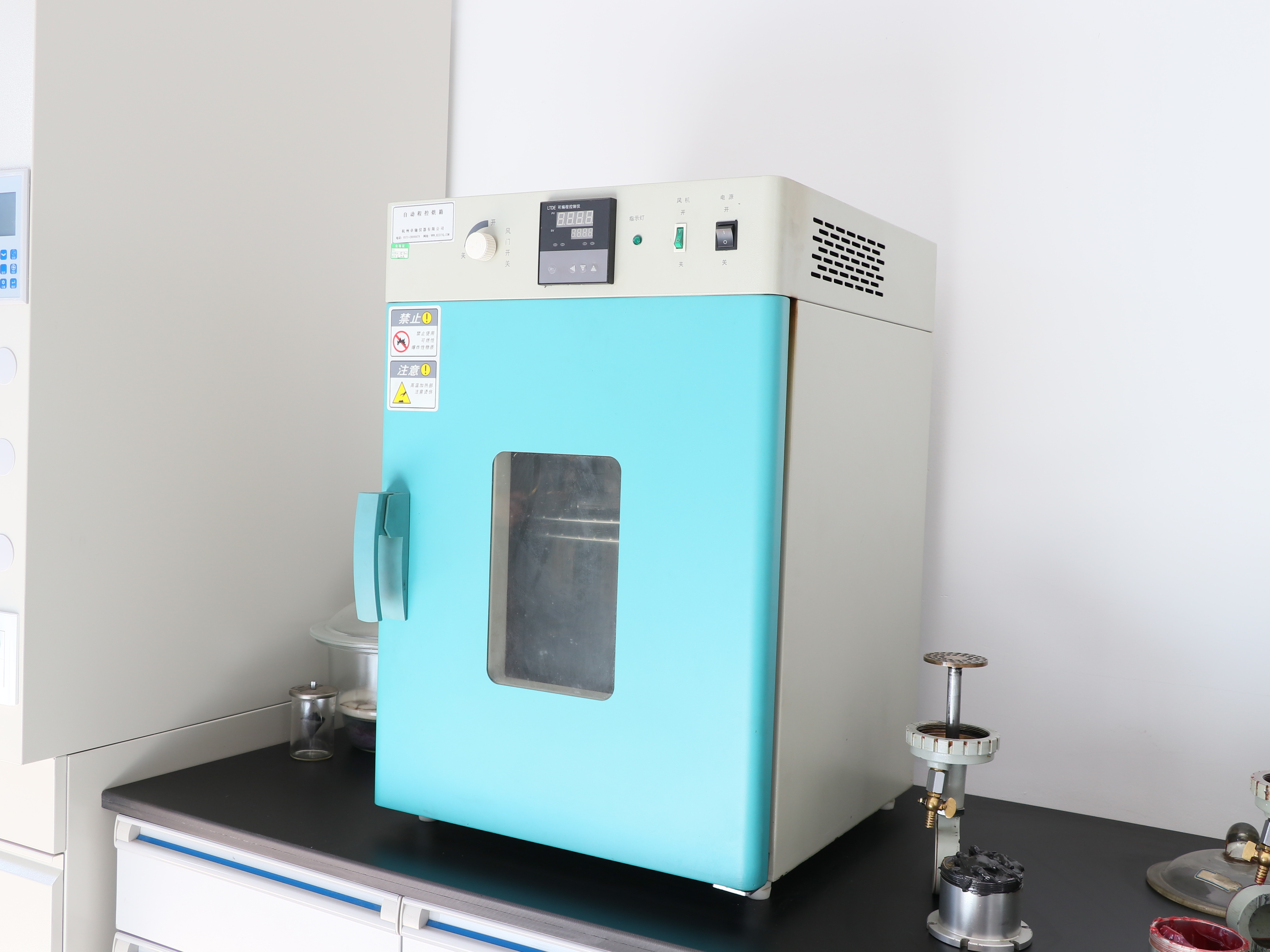
Bench verification supports comparison up to the limits of the test method. Above that, application trials govern the decision.
Load carrying separates chemistries that share a temperature band
Two of the four families publish a PD value. Calcium sulfonate complex (XG/C4, XG/C5) publishes 500 kgf; lithium complex (XG/HP, XG/HP-R) publishes 315 kgf. The difference is material for slow-speed, heavy-load and impact-loaded points — gears, roller bearings, and the sliding contacts typical of rolling-mill and kiln-car duty — because the higher figure indicates greater extreme-pressure capability before metal-to-metal contact develops.
The polyurea and multipurpose lithium families do not publish a PD value in the available data. That is a gap a buyer should close directly rather than assume: a grade can be an excellent high-temperature grease and still be unspecified for shock loading, and polyurea is most often selected for oxidation resistance and high-temperature life rather than for the heaviest contact loads. Where a specification mixes high temperature with heavy impact load, the published comparison reduces to lithium complex against calcium sulfonate complex.
Declared industry fit: a starting map, not a recommendation
Each family lists the industries it is intended for. Read as a first filter, the map looks like this.
| Declared industry | Lithium complex | Polyurea | Calcium sulfonate complex | Multipurpose lithium |
|---|---|---|---|---|
| Automotive | Declared | Declared | Declared | Declared |
| Metallurgy | Declared | Declared | — | Declared |
| Mining | — | Declared | Declared | — |
| Machinery | — | — | Declared | — |
| Chemical, textile, printing and dyeing | — | Declared | — | — |
| Oil field | — | Declared | — | — |
| Power tools | — | — | — | Declared |
The overlaps carry more information than the gaps. Automotive appears for all four families, and third-party data places the automotive segment at 42.6% of the high-temperature grease market in 2025 — the largest single application category. That makes “automotive grade” effectively meaningless as a differentiator. The useful question is where in the vehicle: wheel bearings, chassis points, gear greasing and high-temperature accessory bearings have different temperature and load profiles, and only the chemistry that matches the specific point should be shortlisted.
Metallurgy and steel plants are the clearest example of why declared fit needs to be read alongside working conditions. In steel-plant lubrication projects the operating envelope typically combines high temperature, heavy load and impact load, humid or water-splash exposure, and both centralized lubrication systems and manual greasing. The required functions are anti-wear, extreme-pressure, high-temperature resistance, water resistance and anti-rust protection, with extended re-greasing intervals and reduced downtime as the economic outcome. Equipment compatibility covers centralized systems, grease guns, gearbox spray equipment and injection or replacement equipment, and the technical requirements include thermal stability, resistance to water washout, stable extreme-pressure behaviour under impact, low carbon residue after high-temperature ageing and no corrosion of the metal substrate.
Under those combined conditions the temperature table alone is insufficient. Water resistance and oxidation behaviour decide the outcome as much as the ceiling does, and this is where the chemistry descriptions matter: calcium sulfonate complex is positioned on high-temperature oxidation resistance, water resistance, rust protection and extreme-pressure anti-wear with a long service cycle; polyurea on high-temperature oxidation resistance; lithium complex on extreme-pressure anti-wear with oxidation resistance and long service life.
Certification coverage: what is verified, and what it does not verify
Four management-system certificates sit behind these product families. Each has a number, a scope and an expiry date that a buyer can check.
| Standard | Certificate no. | Issuing body | Valid | Scope |
|---|---|---|---|---|
| ISO 9001:2015 | 07625Q2422R65 | Beijing ZhongRunXing Certification Co., Ltd. | 2025-10-16 to 2028-11-12 | Design, production and sales of lubricant grease |
| ISO 14001:2015 | 07625E1532R6S | Beijing ZhongRunXing Certification Co., Ltd. | 2025-10-16 to 2028-11-12 | Design, production and sales of lubricant grease and related environmental management activities |
| ISO 45001:2018 | 7625S1361R6S | Beijing ZhongRunXing Certification Co., Ltd. | 2025-10-16 to 2028-11-12 | Design, production and sales of lubricant grease and corresponding occupational health and safety management activities |
| IATF 16949:2016 | 2024A3002 | China Jiuding Automotive Supplier Certification Co., Ltd. (CASC) | 2024-07-04 to 2027-07-03 | Design and manufacturing of lubricating oil (no permitted exclusions) |
All four product families — lithium complex XG/HP and XG/HP-R, polyurea XG/U1 through XG/U18, calcium sulfonate complex XG/C4 and XG/C5, and lithium XG/L1 and XG/L2 — are listed within the scope of the quality management system certification 07625Q2422R65 and of the IATF 16949 certification. The occupational health and safety certification number 7625S1361R6S is specifically associated with the polyurea range. In the available documentation, the ISO 14001 linkage is stated for lithium grease; buyers sourcing a different grade should confirm scope in writing rather than assuming it transfers.
The boundary matters as much as the list. These certificates attest to management systems, defined scopes and audited processes. They do not certify a batch's dropping point, PD value or service life. Those remain product-level claims that should be confirmed by the data sheet and by the supplier's batch testing, which XINGANG describes as 100% test. Certificate expiry is also a live procurement variable: the IATF certificate runs to 2027-07-03 and the ISO certificates to 2028-11-12, so a multi-year supply contract should be written with renewal evidence in mind.
Where each chemistry stops
A comparison that only lists strengths is a brochure. The declared data also sets clear boundaries.
- Lithium complex has the lowest ceiling of the three high-temperature chemistries. At 180°C continuous, XG/HP and XG/HP-R are unsuitable for points that sit steadily above that figure, however favourable the 300°C dropping point and 315 kgf PD value look in isolation.
- Polyurea does not win on temperature. Its 200°C ceiling is 50 K below the calcium sulfonate complex grade, and its 260°C dropping point is the lowest of the three, giving the smallest structural headroom at 60 K. Its case rests on oxidation resistance and on the breadth of its model range, not on thermal extremes.
- Calcium sulfonate complex is the most specialised option. A 250°C ceiling and 500 kgf PD value place it at the top of this dataset, and specialist capability normally carries a different supply and pricing structure than a volume lithium grade. It should be specified where the duty demands it, not adopted as a default upgrade.
- Low-temperature selection is not answered by this data. All four families declare −20°C, and the available specifications do not differentiate pumpability or starting torque below that point.
- Thickener changeover requires validation. The available data does not declare compatibility between these chemistries or with third-party greases already in service, so a conversion should be validated on the equipment rather than assumed from a shared temperature range.
- Load data is incomplete across the range. Without a published PD value for polyurea and multipurpose lithium, a heavy-load comparison cannot be closed from catalogue data alone.
Cost and supply: the second constraint layer
Chemistry choice and commercial terms are usually decided together. XINGANG's own comparison data states that, against standard MP3 grease, its high-temperature formulation carries a higher initial raw material cost per unit of grease, while total equipment maintenance cost over the service life is reported 15% to 20% lower, attributed to reduced friction power consumption, less mechanical wear and longer replacement cycles. That is a supplier-side calculation and should be tested against a buyer's own maintenance records before it is used in a business case.
On the supply side, the same source states OEM production with package and sticker customization, a monthly capacity of 3,000 tons, a lead time of 10 to 20 days, a minimum order quantity of 2,000 kg and 100% testing. Export markets listed include India, Pakistan, Vietnam, Malaysia, South Africa, Turkey and Peru. For a buyer converting a line from one thickener chemistry to another, minimum order quantity and lead time are not administrative details — they determine how much trial material is available before the changeover window closes.
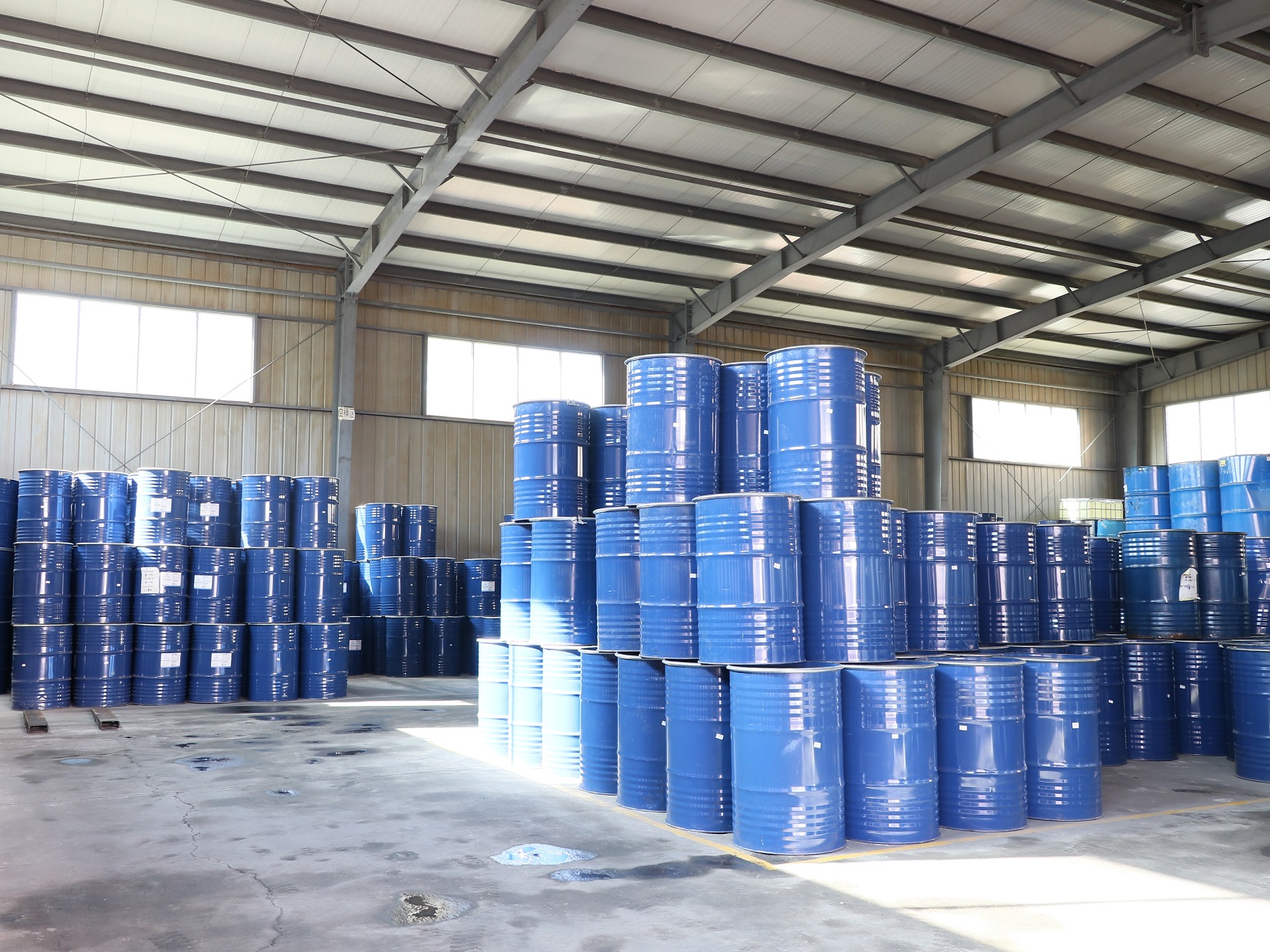
Packed grease in the warehouse. Lead time and minimum order quantity set the practical limits of any chemistry conversion trial.
A procurement checklist for chemistry selection
The following sequence closes the gaps this comparison exposes. It works for any supplier, not only the one discussed here.
- Measure the actual continuous temperature at the bearing or contact point, not the process temperature of the plant.
- Request the declared continuous range and the dropping point as separate figures, and calculate the gap yourself.
- Request the load value in kgf, and treat a missing figure as an open question rather than a neutral result.
- Confirm which certifications cover the specific model, with certificate number, issuing body and expiry date.
- Ask what evidence exists above 204°C if the duty sits in that band, given the limits of standard elevated-temperature bearing tests.
- Check compatibility with the grease currently in service, and plan a trial before a full conversion.
- Confirm feed compatibility with the delivery method in use — centralized system, grease gun, spray equipment or injection equipment.
- Match minimum order quantity and lead time to the trial schedule, then compare total maintenance cost rather than purchase price per kilogram.
Documented application evidence is worth requesting at the same time. The available case material describes use across 40 units in large steel plants, metallurgical enterprises and industrial equipment manufacturers over a 30-year period, covering bearings in continuous casting, rolling mills, kiln cars, gearboxes, conveyors and vibrating screens, with reported outcomes of reduced friction and wear, improved temperature and water resistance, extended lubrication intervals and improved equipment reliability. The stated highlights are a stable grease structure under long-term high temperature, compatibility with centralized lubrication systems and reduced maintenance cost. Such references are most useful when the buyer's own duty cycle is close to the referenced one.
Market signals behind the chemistry decision
The shift between chemistries is not only technical. Lithium and lithium complex greases remain the most widely used thickener types, accounting for 38.3% and 18.6% of global production respectively in 2024, a combined 56.9%. That majority position explains why lithium complex remains the volume reference point in most purchasing departments.
Two forces are moving share away from it at the high-temperature end. Lithium prices rose 80% to 120% between 2021 and 2023, which pushed manufacturers toward polyurea and calcium sulfonate alternatives to reduce exposure to raw-material volatility. In parallel, calcium sulfonate grease production grew 7.7% globally in 2024, gaining traction in heavy-duty industrial applications where water resistance carries weight. Polyurea is also being specified more often for electric vehicle wheel bearings and turbine yaw drives, where its oxidation resistance across thermal cycles from −40°C to +180°C is the deciding property.
Regional demand follows manufacturing concentration. Asia Pacific led the high-temperature grease market in 2025 with a 38% global share, driven by automotive manufacturing hubs, while China's finished lubricant exports rose 10% to 260,000 metric tons in 2024. Published market-size estimates for high-temperature grease vary widely depending on whether specialty and commodity grades are counted together, so buyers and analysts should treat any single headline figure as definition-dependent rather than definitive.
What buyers should expect next
Three developments are reasonable to plan around on the evidence above. First, the polyurea and calcium sulfonate share of high-temperature duty will keep expanding where electrification and heavy industry meet, while lithium complex holds the volume base. Second, specification discipline will tighten: as more grades crowd the 180°C to 250°C band, dropping point alone will stop being persuasive, and buyers will ask for load values, water resistance and oxidation evidence alongside it. Third, the limits of standard bench testing above roughly 204°C will push more of the verification burden onto documented application trials, which makes reference cases and batch testing records a genuine procurement asset rather than a marketing extra.
For readers who need the underlying company and product documentation, the XINGANG company profile is available as a downloadable PDF brochure.
FAQ
What is the difference between working temperature and dropping point?
Working temperature is the continuous service range a supplier declares; dropping point is the temperature at which the grease structure becomes fluid under test conditions. For XG/HP and XG/HP-R the declared range is −20 to 180°C with a 300°C dropping point. The dropping point is a structural limit, not an operating ceiling.
Which of these chemistries has the highest declared continuous temperature?
Calcium sulfonate complex, models XG/C4 and XG/C5, declares −20 to 250°C with a 330°C dropping point and a 500 kgf PD value. Polyurea follows at −20 to 200°C, lithium complex at −20 to 180°C, and multipurpose lithium at −20 to 120°C.
Does a higher dropping point always mean a better grease?
No. The usable margin is the gap between the declared ceiling and the dropping point, and the other properties still decide the outcome. Polyurea has the lowest dropping point of the three high-temperature chemistries at 260°C but is positioned on high-temperature oxidation resistance and is offered in seven models, while calcium sulfonate complex pairs its 330°C dropping point with water resistance, rust protection and extreme-pressure anti-wear.
Which grease fits steel plant bearings such as continuous casting and rolling mills?
Those points combine high temperature, heavy and impact load, and water-splash exposure, and require thermal stability, water washout resistance, stable extreme-pressure behaviour and low carbon residue after ageing. Lithium complex, polyurea and calcium sulfonate complex are all declared for metallurgy, so the decision turns on the measured temperature at the point and on water exposure rather than on the industry label alone.
Do these greases carry automotive quality certification?
Yes. IATF 16949:2016 certification number 2024A3002 was issued by China Jiuding Automotive Supplier Certification Co., Ltd. (CASC) for design and manufacturing of lubricating oil, with no permitted exclusions, valid from 2024-07-04 to 2027-07-03. All four product families fall within its scope, alongside ISO 9001:2015 certificate 07625Q2422R65.
What should a buyer request before switching thickener chemistry?
The declared working range and dropping point as separate figures, the load value in kgf, the certificate number, scope and expiry for each standard covering the specific model, written confirmation of compatibility with the grease currently in service, and an application trial sized against the supplier's minimum order quantity and lead time — 2,000 kg and 10 to 20 days in the case of XINGANG's stated OEM terms.
Why are polyurea greases being specified more often?
Third-party sources report growing specification of polyurea greases for electric vehicle wheel bearings and turbine yaw drives, citing oxidation resistance across cycles from −40°C to +180°C. The XINGANG polyurea range XG/U1 to XG/U18 is declared for −20 to 200°C with a 260°C dropping point, so a specific application should be checked against the declared range rather than the general trend.
¿Tiene preguntas o necesita más detalles?
Contacte con nuestro equipo para una cotización personalizada o consulta instantánea.
Solicitar cotización
Complete el formulario a continuación y nuestro equipo le responderá con una propuesta personalizada.
Chat directo de WhatsApp
¿Prefiere chatear en tiempo real? Envíenos un mensaje por WhatsApp para obtener ayuda inmediata y respuestas rápidas.
- Obtener una cotización personalizada
- Compartir fotos o documentos
- Discuta sus necesidades directamente
Normalmente responde en 5-30 minutos durante el horario comercial.