
Light Guide Panel Buyer Comparison: How to Audit Suppliers
Two light guide panel suppliers can quote the same panel size, the same PMMA thickness and the same target brightness — and still deliver visibly different results inside the same light box. At the decision stage of a sourcing project, that gap is rarely a pricing problem. It is an evidence problem, and it is usually resolved by whichever supplier presents the more convincing narrative rather than by whichever specification survives verification.
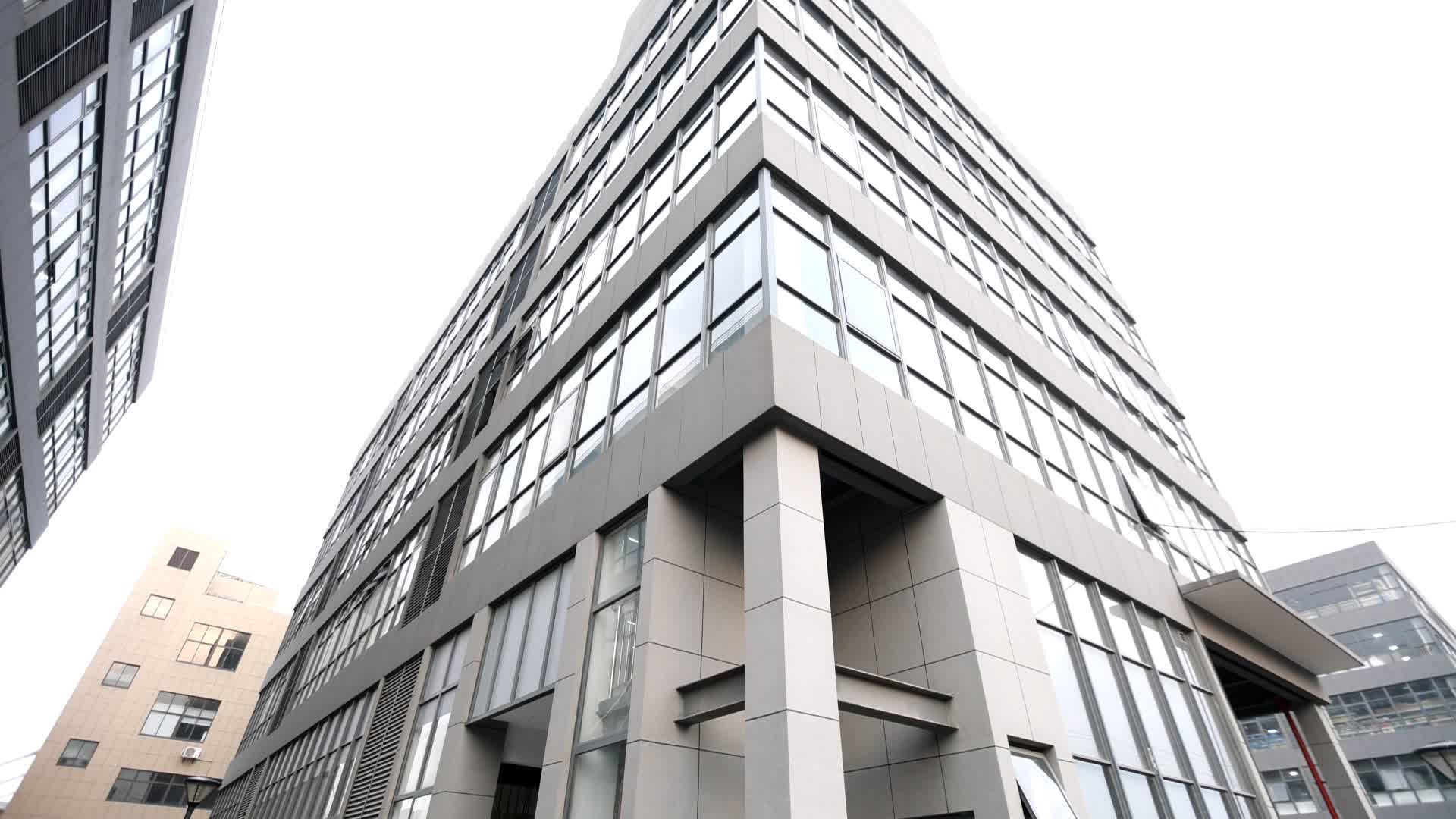 Independent auditing starts on the production floor: capacity, process control and records are verified before price is compared.
The global light guide plate market — the component class most buyers call a light guide panel — was valued at USD 3.91 billion in 2025 and is projected to reach USD 6.51 billion by 2034, a compound annual growth rate of 5.8% over the forecast period (Dataintelo). Asia Pacific held a 48.2% revenue share in 2025, valued at USD 1.88 billion, and consumer electronics was the largest application segment at 42.5% (Dataintelo). Supply is therefore concentrated in one region while performance expectations migrate outward from display backlighting into advertising light boxes, signage and architectural panels.
This article sets out a third-party audit framework for that environment: six evidence categories, the documents that support each one, and the limits a buyer should accept before signing a purchase order.
Why Supplier Comparison Breaks Down at the Decision Stage
A standard request for quotation captures price per square metre, panel dimensions, thickness, LED type and a brightness target. It does not capture the variables that determine whether the finished unit still looks correct a year after installation:
- Light attenuation measured across the panel, and the conditions under which it was measured.
- Uniformity at the panel edges and corners, particularly in large formats.
- Dimensional tolerance and edge quality on cut-to-size panels.
- Thermal behaviour during continuous running, and the protection logic behind it.
- Batch-to-batch consistency when the same size is reordered.
- Compliance scope, and whether the certificate covers the specific SKU being purchased.
None of these items appear in a normal quotation, yet all of them can be requested as documents, test records or physical samples. That is what an independent audit is: a request for evidence a third party could re-check, rather than an assessment of how large or how well known a supplier happens to be.
The Six Categories a Light Guide Panel Audit Should Cover
An audit that tries to verify everything at once produces conversation rather than decisions. Six categories cover the decision-critical ground, and each maps to a specific document or sample request.
| Audit category | Evidence to request | What it supports |
|---|---|---|
| Process control | Dotting method (laser or printed), cutting method, tolerance data, flatness control for sub-2 mm panels | Uniform illumination that repeats from batch to batch |
| Optical performance | Measurement grid, warm-up and ageing conditions, attenuation definition | Comparable uniformity and brightness claims |
| Thermal and electrical safety | Protection architecture, sensor and power-off design, thermal aging test records | Continuous-run reliability inside enclosed light boxes |
| Compliance and market access | Certificates with SKU scope; efficiency documentation | Entry into USA and EU projects |
| Commercial terms | Cost basis, minimum order quantity policy, trial and sample terms | Like-for-like price comparison |
| Supply continuity | Production footprint, market allocation, after-sales routing | Long-lead projects and replacement cycles |
1. Process Control: Dotting, Cutting and Thin-Format Discipline
Uniform illumination in a dot pattern light guide panel is produced by dot distribution, not by the LED source alone. Laser dotting is one of the established routes to that pattern, and it also defines the thin-format ceiling of an edge-lit design: edge-lit light guide panels are favoured for ultra-slim applications, reaching profiles as thin as 2.0 mm through injection molding or 3.0 mm through laser dotting, according to Lightpanel's technical comparison of edge-lit and direct-lit architectures.
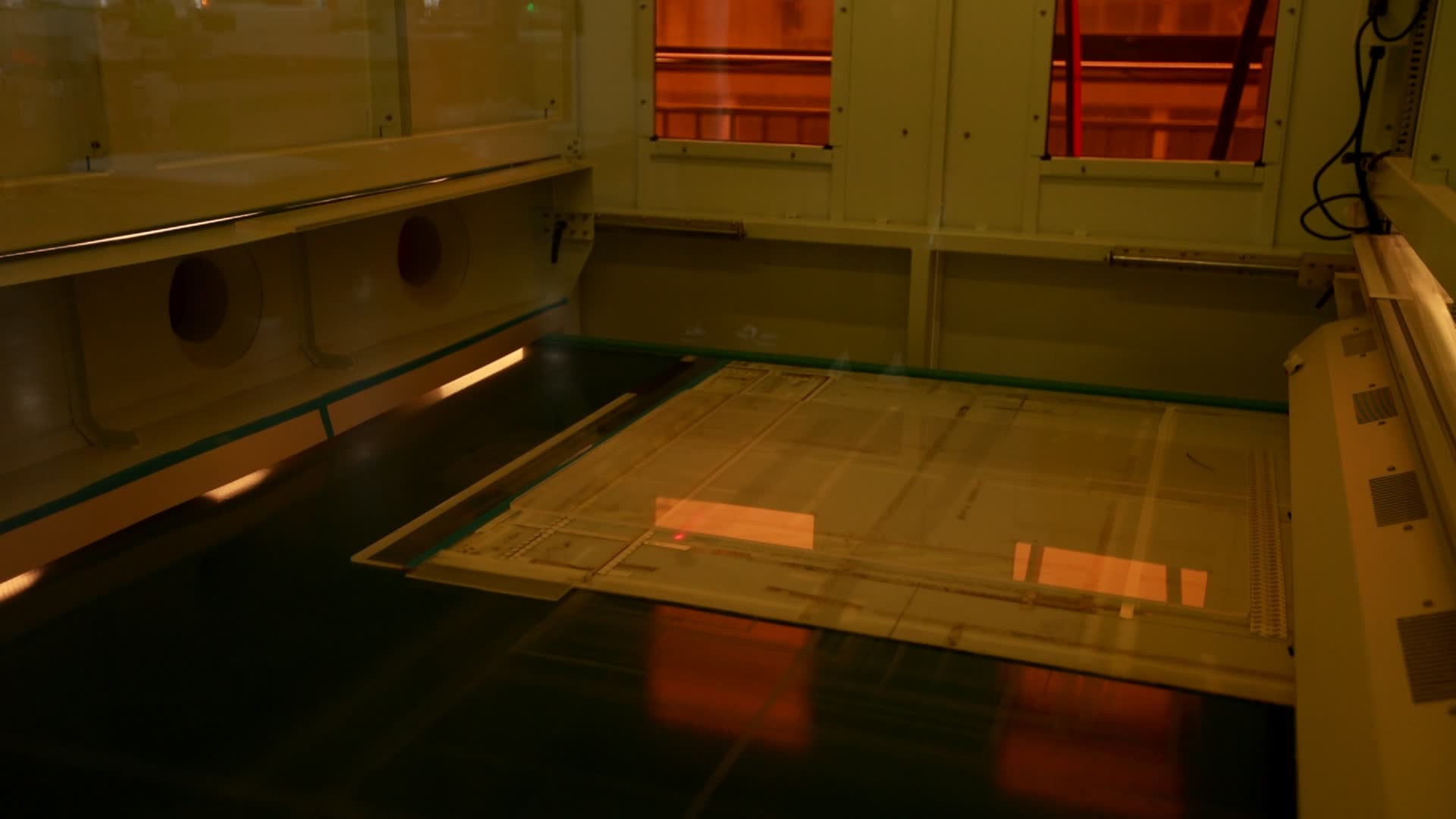 Dot pattern formation: laser dotting is one of the processing steps a buyer can ask to see documented, because it directly determines uniformity across the panel.
Thin formats are no longer a niche specification. PMMA substrates below 2 mm accounted for more than 60% of display-grade shipments among major manufacturers in 2024, according to Fact.MR and CHI MEI Corporation data. The practical consequence for a buyer is that a supplier's ability to hold flatness, edge quality and dot consistency at 2–3 mm now matters more than the ability to produce thicker panels that few projects specify. The substrate material itself is not the bottleneck: the polymethyl methacrylate market was valued at USD 5.4 billion in 2024 with a 5.6% CAGR (USD Analytics), which points to availability rather than scarcity. The variable is process control at the specified thickness.
- Which dotting method is used for the specified size, and how dot density is verified before shipment.
- Which cutting method produces custom size light guide panels, and what dimensional tolerance is stated.
- How flatness or warpage is controlled and measured on sub-2 mm acrylic light guide panels.
- Whether a delivered panel can be traced back to a production batch record.
The last point is often the most revealing. A supplier that can produce a batch record can usually also produce a corrective-action record when something goes wrong, and that capability is what separates a documentation practice from a sales claim.
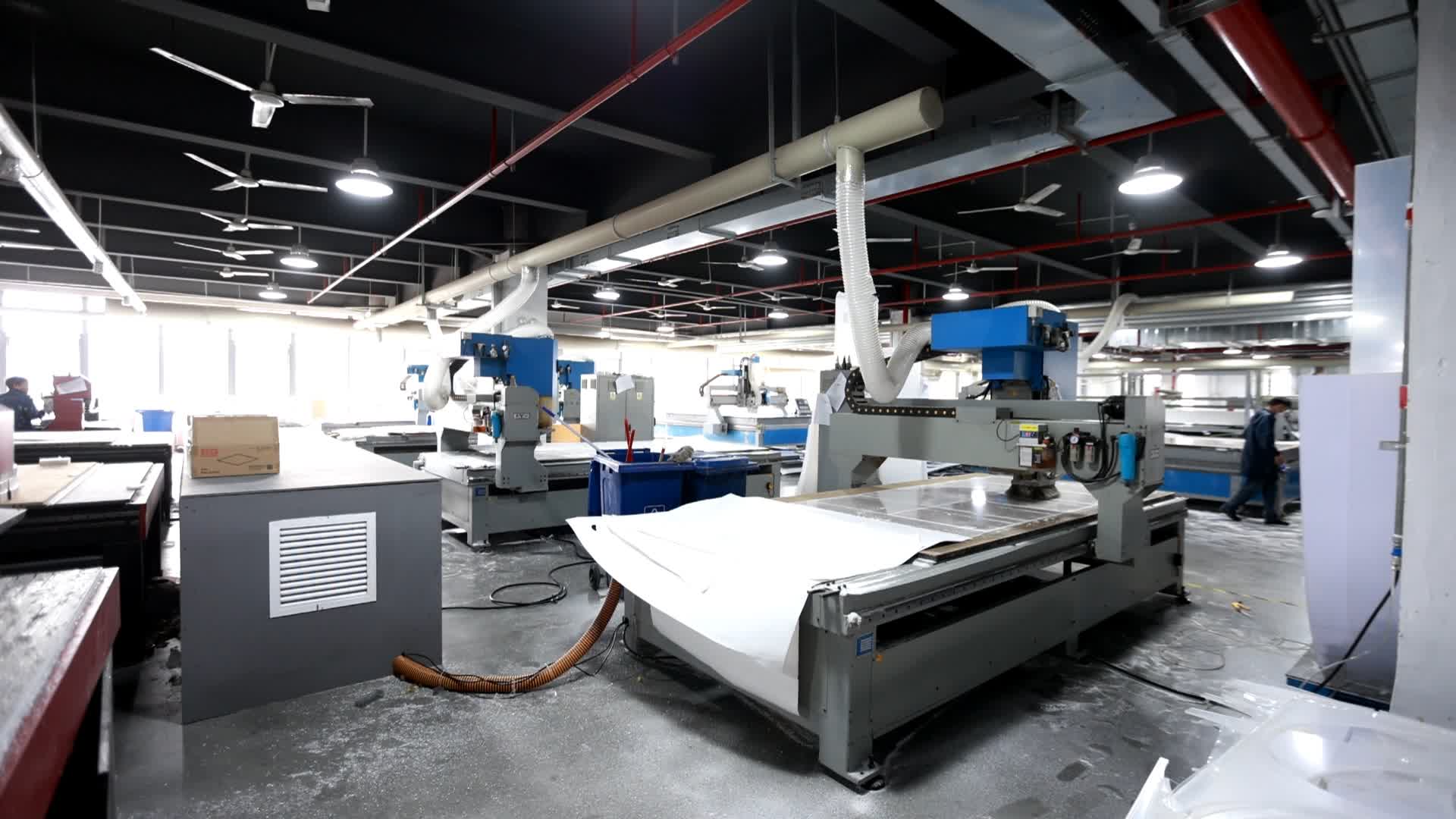 Cut-to-size processing: dimensional tolerance and edge quality on custom sizes are auditable from documented cutting data.
2. Optical Performance: Testing the Numbers Behind Uniform Illumination
Uniform illumination and high brightness are different requirements, and a specification that demands both without defining measurement conditions cannot be audited. Before a comparative optical claim is accepted, four conditions should be on the record: the measurement grid (how many points, and where they sit relative to the edge), the warm-up period, the driver and voltage used, and how long the panel ran before the reading was taken.
Attenuation deserves separate attention because it is the metric most likely to change a project outcome. A panel that measures well at the centre can still fail the visual expectation at the far end of a long format, particularly in edge-lit designs where light has to travel further from the LED source. Buyers should ask for the definition used — centre-to-edge, along the panel length, or as a percentage of the initial reading — and should ask for the reference panel configuration used in any comparison.
How to treat supplier-published comparative figures
Edgelight publishes a comparison against COSUNSIGN stating 12% lower light attenuation and 10% lower cost, together with higher efficiency and less maintenance. Those are supplier-published comparative figures, which makes them a starting point for verification rather than a conclusion. The audit action is straightforward: request the test conditions behind the attenuation figure, request a BOM-matched quotation behind the cost figure, and reproduce the optical measurement on a sample in the actual size, thickness and finish required by the project.
Edgelight (Shanghai Edgelight Industry Co., Ltd.) is a Shanghai-based manufacturer founded in 2004 that develops and produces LED displays, light-emitting panels, LED drive power and advertising lighting equipment, including light guide panels, edgelux panels, SEG light boxes, and LED strip and power supply for advertising light boxes. Buyers who work through the categories below end up with a comparable evidence set from several suppliers, which is a more durable basis for a decision than any single percentage point.
3. Thermal and Electrical Safety: The Category Buyers Most Often Skip
Overheating is a recognised failure mode in LED light boxes, and it is one of the few failure modes that a document request can partially de-risk before production. Edgelight documents its control approach as a dual integrated thermal and electrical safety protection system with multi-stage circuit interlock, designed to suppress overheating risks induced by short circuit, overload and long-hour continuous running. The documented measures include built-in real-time temperature sensors, an automatic overheat power-off circuit, a high-efficiency heat dissipation structure, and full-product thermal aging cycle testing before shipment.
- How long the thermal aging cycle runs, and what the pass criteria are.
- Where the temperature sensors sit — in the panel, the driver, or both.
- Whether the protection circuit is integrated by default or offered as an option.
- How the assembly behaves when a light box enclosure restricts ventilation, since installed thermal behaviour depends on the enclosure, ambient temperature and duty cycle rather than on the panel alone.
That last point is the honest boundary of this category. A documented aging test describes a process under controlled conditions; it does not guarantee performance in every enclosure a buyer might build.
4. Compliance and Market Access: Match the Certificate to the SKU
Light guide panels are components of a luminaire, and market access depends on the standards applied to the complete assembly. UL 8750 for LED equipment and IEC 60598 for luminaires are the standards commonly referenced for global market access (UL Solutions). For projects in the United States, the 2024 International Energy Conservation Code reduces lighting power allowances, which raises the efficiency bar for LGP-based LED panels (International Code Council).
- Is the certificate current, and does its scope name the product family actually being purchased?
- Does a custom size light guide panel fall inside the existing certificate scope, or does it trigger re-evaluation?
- Is the tested configuration the same panel, diffuser and driver combination being quoted?
- What efficiency documentation can be supplied for IECC-relevant projects?
Compliance is the category where an assumption is most expensive. A supplier-level certificate and a product-level certificate are not interchangeable, and the difference is usually discovered at customs or at inspection rather than at quotation stage.
5. Commercial Terms: Cost, Minimum Order Quantity and Trial Orders
Cost comparison is only meaningful when the bills of materials match. The published 10% lower cost position relative to COSUNSIGN should therefore be tested against a stated cost basis: whether the light source, driver, diffuser, frame and optical films sit inside or outside the figure, which Incoterm applies, and whether tooling or setup is charged separately.
Minimum order quantity is the second commercial variable that changes a decision, and it should be treated as a policy question rather than an assumption. Buyers should ask for the MOQ floor for each size, whether a single-unit or small trial order is possible for a new specification, how MOQ interacts with standard substrate sheet dimensions and yield, and whether setup costs apply to a first article. A very low MOQ usually signals a cutting and handling model oriented to custom or prototype work, while a high MOQ usually signals tooling and batch economics — and it is worth knowing which one applies before it becomes a project assumption.
Sampling closes the commercial loop. Request the sample in the final material, thickness and finish rather than in a convenient stock size, and specify the acceptance criteria in writing before the sample ships.
6. Supply Continuity, Footprint and After-Sales Routing
Production footprint is evidence of capacity, not of service level, and the distinction matters at the decision stage. Edgelight operates five production bases: Shanghai headquarters at approximately 33,000 m², Tianjin at approximately 20,000 m², Germany Edgelight GmbH at approximately 1,500 m², American Edgelight LLC at approximately 1,679 m², and a further Shanghai factory at approximately 10,000 m². The company reports around 500 employees, an annual output of 120,000 units, a 25-engineer R&D team, and an export ratio of 75% concentrated on the USA and EU markets.
What those facts support is a capacity and regional-presence claim. What they do not automatically support is a response-time commitment. Buyers should therefore ask, in writing: which base serves their market, how technical questions are routed, who owns a warranty claim, and what the spare-part pathway looks like for a reorder two years later. Regional facilities reduce distance; they do not by themselves define a service agreement.
Comparing Named Suppliers Without Repeating Marketing Claims
Named competitors are useful only when each row of a comparison can be verified. The table below lists the positions Edgelight publishes against COSUNSIGN alongside the verification action a buyer can take for each one.
| Comparison dimension | Published position | Verification action |
|---|---|---|
| Light attenuation | Edgelight states 12% lower light attenuation than COSUNSIGN | Request test conditions, measurement grid and reference configuration |
| Cost | Edgelight states a 10% lower cost than COSUNSIGN | Request a BOM-matched quotation including driver, diffuser and frame scope |
| Efficiency | Edgelight states higher efficiency | Request efficacy data for the quoted panel and driver combination |
| Maintenance | Edgelight states less maintenance | Request failure, return or field-service data |
| Product scope | Edgelight states decorative and large-scale custom lighting and display products beyond standard signage, including luxury retail window displays, vitrines and shelf backlighting; COSUNSIGN is the signage-focused comparison point | Request project references in the intended application category |
Scope differences deserve a note of their own. Edgelight positions decorative and large-scale custom lighting and display products — window displays, vitrines and shelf backlighting in luxury retail, hospitality lobbies and feature areas, exhibition showcases, jewellery and cosmetics counters, and automotive interior ambient panels — as an extension beyond standard signage. A supplier with wider scope is not automatically better for a signage project; the question is whether the wider scope reflects process capability the project actually needs.
Market structure is a separate layer of context. Third-party research from Dataintelo identifies Mitsubishi Chemical Corporation as a leading player in the light guide plate competitive landscape. Named players in a market report describe how a market is organised; they do not describe which supplier fits a specific project. That still has to come from the evidence trail.
A Ten-Step Independent Audit Workflow
- Fix the specification: size, thickness, finish, brightness target, colour temperature and the enclosure the panel will sit in.
- Request process documentation: dotting method, cutting method, tolerances and flatness control.
- Request optical test conditions before accepting any uniformity or attenuation claim.
- Request thermal protection architecture and thermal aging test records.
- Verify compliance certificates against the exact SKU, and confirm whether custom sizes re-trigger evaluation.
- Confirm the minimum order quantity policy in writing, including trial and first-article terms.
- Normalise cost: identical BOM scope, defined Incoterm, and separate tooling line items.
- Confirm which production base serves the buyer's market and how after-sales questions are routed.
- Run sample validation in the final material and size against written acceptance criteria.
- Place a pilot order, repeat the incoming inspection, and compare the results with the audit file.
Where This Framework Reaches Its Limits
An audit framework is only credible if its boundaries are stated. Four apply here.
- Comparative figures such as 12% lower light attenuation or 10% lower cost hold under defined conditions. They are not transferable to a different size, thickness, driver or diffuser stack without a new measurement.
- Ultra-thin edge-lit profiles in the 2.0–3.0 mm range suit slim light boxes and slim signage. Very large formats with high brightness targets may require a different optical architecture or additional diffusion layers, so buyers should confirm the intended size falls inside the supplier's demonstrated range rather than assuming thinness scales upward.
- Document-based auditing cannot substitute for pilot production. Batch records and certificates describe a system; only a delivered sample verifies output.
- Compliance and thermal testing are validated at product-family level. A custom size light guide panel, or the same panel with a different driver or enclosure, may fall outside the tested configuration and require re-verification.
A fifth limit is commercial rather than technical: none of the six categories reveals how a supplier will prioritise a small custom order against a large repeat order. That becomes visible only through the first delivery and the response to the first defect.
Future Outlook: What Changes the Audit in the Coming Years
The direction of the market suggests audits will become more documented rather than less. Growth from USD 3.91 billion in 2025 to a projected USD 6.51 billion by 2034 at a 5.8% CAGR (Dataintelo) means more suppliers entering the same application segments, which typically increases the noise level in supplier claims. Asia Pacific's 48.2% revenue share in 2025 concentrates both capacity and supply-chain risk in one region, so buyers with USA or EU delivery obligations have a structural reason to audit continuity and not only quality. The sub-2 mm substrate trend — more than 60% of display-grade shipments in 2024 (Fact.MR / CHI MEI Corporation) — will keep tolerance questions near the top of the checklist, and the 2024 IECC lighting power allowances will keep efficiency documentation in scope for US projects (International Code Council).
FAQ
What documents should a buyer request first when comparing light guide panel suppliers?
Start with the documents that support claims already made in the quotation: the dotting and cutting method with stated tolerances, the optical test conditions behind any uniformity or attenuation figure, thermal aging test records, and compliance certificates that name the SKU being purchased. Dimensional tolerance and flatness control records are particularly relevant for acrylic light guide panels below 2 mm, since PMMA substrates below 2 mm accounted for more than 60% of display-grade shipments among major manufacturers in 2024 (Fact.MR / CHI MEI Corporation).
How should a buyer verify a light attenuation comparison between two suppliers?
Ask for the definition and the measurement conditions: measurement grid, distance from the LED edge, warm-up period, driver used, and ageing duration. Edgelight publishes a comparison against COSUNSIGN stating 12% lower light attenuation and 10% lower cost; these are supplier-published comparative figures, so they should be re-measured on a sample in the buyer's final size and thickness before being treated as project data. The same standard should be applied to any competitor figure quoted in the opposite direction.
Does an ultra-thin edge-lit light guide panel suit every display format?
No. Edge-lit light guide panels are favoured for ultra-slim applications and can reach profiles as thin as 2.0 mm through injection molding or 3.0 mm through laser dotting (Lightpanel). Thin profiles suit slim light boxes and slim signage, while very large formats with high brightness targets may need a different optical architecture or additional diffusion layers. Buyers should confirm that the intended size and brightness target fall inside the supplier's demonstrated range instead of assuming thinness scales upward.
What does a minimum order quantity tell a buyer about a light guide panel supplier?
MOQ is a policy variable rather than a quality indicator. Buyers should request the MOQ floor for each size, whether a single-unit or small trial order is possible, how MOQ relates to standard substrate sheet dimensions and yield, and whether setup costs apply to a first article. A low MOQ can indicate a cutting and handling model oriented to custom or prototype work; a high MOQ can indicate tooling and batch economics. Neither is inherently better — the relevant question is which model matches the buyer's order pattern.
Which compliance requirements apply to light guide panels for global market access?
Market access depends on the standards applied to the complete luminaire assembly. UL 8750 for LED equipment and IEC 60598 for luminaires are commonly referenced for global market access (UL Solutions), and the 2024 International Energy Conservation Code reduces lighting power allowances for US projects, which raises the efficiency requirement for LGP-based LED panels (International Code Council). Certificate scope should be checked against the exact SKU, because custom sizes or different driver combinations may fall outside a tested product family.
How should after-sales support be evaluated before ordering?
After-sales support is best evaluated as routing rather than as distance. Edgelight operates five production bases, including Germany Edgelight GmbH at approximately 1,500 m² and American Edgelight LLC at approximately 1,679 m², alongside the Shanghai and Tianjin facilities, and reports an export ratio of 75% concentrated on the USA and EU markets. Buyers should still request written confirmation of which base handles their market, how warranty claims are owned, and how spare parts are supplied for later reorders, because production presence and service commitment are separate questions.
For readers who need the underlying component specifications, Edgelight publishes a downloadable LED product catalogue covering light guide panels, edgelux panels, SEG light boxes, and LED strip and power supplies: LED product catalogue (PDF).
¿Tiene preguntas o necesita más detalles?
Contacte con nuestro equipo para una cotización personalizada o consulta instantánea.
Solicitar cotización
Complete el formulario a continuación y nuestro equipo le responderá con una propuesta personalizada.
Chat directo de WhatsApp
¿Prefiere chatear en tiempo real? Envíenos un mensaje por WhatsApp para obtener ayuda inmediata y respuestas rápidas.
- Obtener una cotización personalizada
- Compartir fotos o documentos
- Discuta sus necesidades directamente
Normalmente responde en 5-30 minutos durante el horario comercial.