
Light Duty or Hygienic Drum Motor? Seven Specification Axes
Light Duty or Hygienic Drum Motor? Seven Specification Axes
A drum motor houses the motor, the gearbox and the drive components inside the drum shell, so a conveyor belt is driven without external chains, belts or a separate gearbox.
That architecture is now familiar to most conveyor engineers. The decision that still absorbs procurement time sits one level below it: whether a given line should be equipped with a light-duty model or a hygienic one, and which of the two will still pass an audit, a washdown schedule and a spares review five years later.
This comparison framework sets out seven specification axes that separate the two tiers — roller diameter and minimum roller width, motor type, gear train, housing material, protection class, rated power and torque, and belt pull — and closes with an application-to-series checklist. The SEAPARKS light-duty and hygienic ranges are used as the working example because both tiers are documented inside a single portfolio, which makes the differences visible without cross-brand guesswork.
Why the Category Now Divides Into Two Purchase Situations
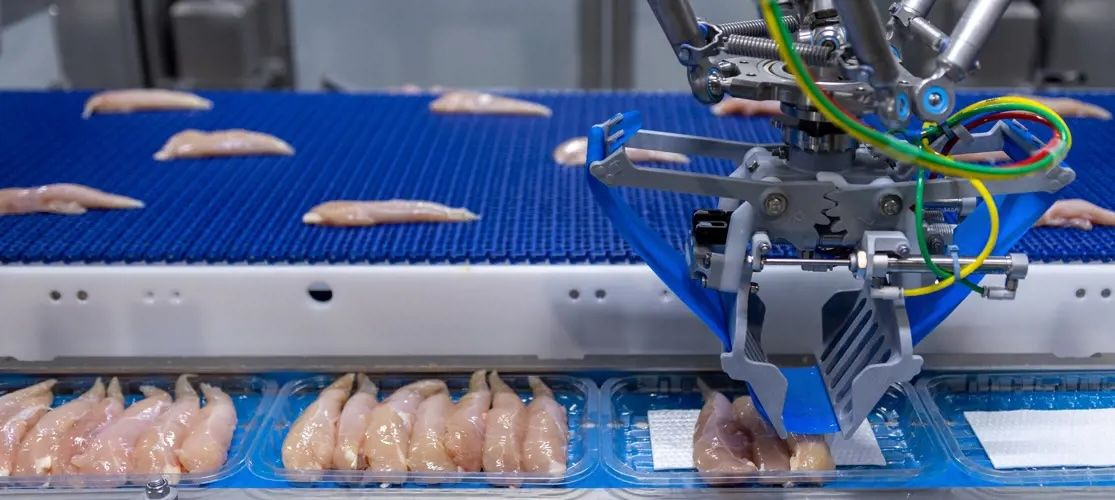
Two buying contexts have separated. In the first, the conveyor runs in a dry, controlled environment: warehouse automation, e-commerce sorting, packaging, baggage handling, security screening and general industrial belt conveyors. In the second, the conveyor sits inside a hygiene envelope: food processing, meat processing, pharmaceutical handling and washdown areas.
SEAPARKS documents its light-duty series for lighter conveyed materials, favourable operating conditions and low-noise requirements, with diameters of 80, 113 and 138 mm listed at family level. Its hygienic series is documented around 304 stainless steel construction, IP69K protection and food-grade positioning. Those are two different engineering briefs, not two surface finishes on the same product.
The risk runs in both directions. Specifying a hygienic unit on a dry parcel sorter adds material and verification cost that the line will never recover. Specifying a light-duty unit in a washdown zone pushes a cleanliness and corrosion question onto the operating team, and usually surfaces during the first customer audit rather than during commissioning.
The Two Tiers Inside One Portfolio
Tianjin Seaparks Machinery-Electronics Co., Ltd (SEAPARKS) is a Tianjin, China manufacturer founded in 2002 that designs and produces drum motors, marketed under the AMROLL brand, for belt conveyors and conveying equipment, operating from a 50,000 m² plant. The company holds ISO 9001, ISO 14001, ISO 45001, RoHS 2.0, UL and CE certification, and describes a portfolio spanning hygienic, light-duty and heavy-duty series in synchronous and asynchronous types, configured for single-phase or three-phase supply.
SEAPARKS reports a China domestic market share of 18.36% in 2021 and 17.55% in 2022. These are company-reported figures and are useful as entity context, not as an independent ranking.
| Comparison axis | Light duty series | Hygienic series |
|---|---|---|
| Documented models | TM80M, TM113M, TM80A, TM113A, DM138A | DM80F, DM113F, DM138F, DM165F, DM216F, TM80F, TM113F, TM138F, TM165F, TM216F |
| Housing material | Carbon steel or 304 stainless steel, per model | 304 stainless steel; 316 stainless steel available as an option |
| Protection positioning | General-purpose ingress protection — confirm the exact IP rating per model | IP69K positioning for high-pressure, high-temperature washdown |
| Motor configuration | Single-phase or three-phase asynchronous; synchronous options | Single-phase or three-phase asynchronous; synchronous options |
| Intended environment | Dry general conveying, low-noise areas, lighter conveyed materials | Food, meat and pharmaceutical conveying with routine washdown |
Axis 1 — Roller Diameter and Minimum Roller Width
Roller diameter is the first filter, because it fixes how much gear stage and bearing structure can be packaged inside the shell, how much the belt path is deflected, and whether the drum fits the available frame height. The light-duty series is listed across 80, 113 and 138 mm diameters at family level. The hygienic range extends beyond that band, with DM165F and DM216F among the larger models.
Minimum roller width, or face width, is a separate figure and is generally not determined by the diameter alone. It depends on how the gear stage, bearings and sealing arrangement are laid out inside the shell for that specific model. Buyers should never infer face width from diameter, and should confirm the minimum face width available for the belt width they are running, plus any allowance for lagging, tracking and belt edge clearance.
Axis 2 — Motor Type: Single-Phase Asynchronous, DC Synchronous or Three-Phase Asynchronous
The motor type axis in most RFQs is phrased as single-phase asynchronous, DC synchronous or three-phase asynchronous. SEAPARKS documents both synchronous and asynchronous types within its portfolio, configured for single-phase or three-phase supply, which means the choice is usually driven by the site supply and the duty profile rather than by availability.
Category data supports the practical default. AC motor types held the largest share of the drum motor market at 52.3% of revenue in 2025, according to Dataintelo commercial research. In application terms, single-phase configurations are typically requested where only single-phase supply is available at the conveyor, while three-phase configurations dominate where three-phase supply exists and continuous duty is expected.
A practical distinction matters for weighing and indexing conveyors. Where belt speed stability directly influences measurement or positioning — belt scale and check-weighing lines, for example — the speed-holding behaviour of the motor type deserves explicit discussion with the supplier, and the selected model should be justified against the actual speed tolerance the process requires, not against a general preference.
Axis 3 — Gear Train and Lubrication Architecture
Gear material is rarely printed in a catalogue summary, yet it is one of the figures that separates a durable unit from a short-lived one. SEAPARKS documents oil-immersed architectures across its asynchronous and synchronous drum motor families, and an oil-free design in its DXZ series. Oil immersion affects heat transfer, lubrication consistency and the maintenance routine, and it also introduces a lubrication-management obligation that hygienic sites need to plan for.
Rather than accept a general statement about gear quality, buyers should request, at model level:
- Gear material and heat treatment for each stage
- Number of gear stages and the resulting ratio range
- Lubricant specification, and whether a food-grade lubricant is used in hygienic models
- Oil change or inspection interval, and the procedure for checking oil condition
- Service factor assumed at the quoted belt pull and duty cycle
These five items convert a vague claim of robustness into something a maintenance planner can cost.
Axis 4 — Housing Material: Carbon Steel, 304 or 316 Stainless Steel
Housing options across the SEAPARKS portfolio include carbon steel, 304 stainless steel, and 316 stainless steel as an option for the hygienic series. The hygienic series itself is documented around 304 stainless steel construction with IP69K protection and food-grade positioning.
The material decision follows the cleaning chemistry rather than the product. Carbon steel is appropriate for dry general conveying where the housing is not exposed to washing. 304 stainless steel covers routine washdown in food and beverage environments. 316 stainless steel is specified where chlorides, aggressive sanitation chemicals or longer wet dwell times create a corrosion concern that 304 will not comfortably absorb.
One boundary is worth stating plainly: the steel grade alone does not establish food-contact compliance or cleanability. Surface finish, seal design, the absence of crevices and dead zones, weld quality and drainability all influence hygienic performance, and none of them can be read off a grade designation. Model-level documentation should be requested before a hygienic claim is accepted into an audit file.
Axis 5 — Protection Class: IP66, IP67 and IP69 vs IP69K
IP69K is the highest ingress protection rating under IEC 60529 and is defined around resistance to high-pressure, high-temperature washdown, up to 1450 psi at 80 °C. That definition is the reason the rating appears so often in food and pharmaceutical specifications: it describes a cleaning regime, not just a splash.
The second digit of an IP rating is not a simple ladder, and treating it as one causes specification errors. IP66 addresses powerful water jets, IP67 addresses temporary immersion, and IP69 addresses high-pressure jets at elevated temperature. IP69K is the washdown-oriented classification with a defined high-pressure, high-temperature test basis. A model rated IP66 or IP67 is not automatically a washdown unit, and a supplier claim of IP69K should be supported by test documentation rather than by the rating alone.
For the light-duty series, the exact IP rating should be confirmed per model rather than assumed from the family. For hygienic models, the rating should be confirmed together with the material grade and the seal arrangement, because an IP rating says nothing about corrosion resistance or cleanability.
Axis 6 — Rated Power and Torque
Rated power differs substantially between models, and it should be read as a model-level figure rather than a series-level one. Within the hygienic range, TM216F is documented with a power range of 0.37 kW to 4.0 kW and positioned for heavier conveying including slaughter conveyors, food processing conveyors, agricultural-product conveyors and steep-incline conveyors.
Power alone is not a selection figure. Torque follows from power and rotational speed, so a model rated for a given power at one belt speed will deliver a different torque at another. Requests should therefore specify belt speed alongside belt pull, and the supplier should return rated torque at that speed together with the service factor being applied.
Axis 7 — Belt Pull: The Number That Sizes Everything Else
Belt pull, or effective tension, is the input that makes the other six axes calculable. The mechanical relationship is straightforward: the torque required at the drum equals belt pull multiplied by drum radius. A line with a fixed belt pull therefore demands more torque from a small-diameter drum than from a large one, which is why diameter cannot be chosen on space alone.
Belt pull originates with the conveyor designer, derived from belt weight, conveyed load, friction, incline and acceleration requirements. The buyer contribution is a clean input set:
- Belt width and belt type, including any cleat or lagging requirement
- Belt speed and required speed tolerance
- Belt pull or effective tension, with the calculation basis
- Duty cycle, start-stop frequency and expected service life
- Ambient conditions, washdown regime and cleaning chemicals
- Incline, loading method and any accumulation or indexing function
With those six items, tier selection and model selection can be answered together instead of sequentially.
How Both Tiers Compare With a Conventional Gearbox Drive
Against a conventional gearbox-driven conveyor system, the integrated drum motor removes external transmission components entirely. SEAPARKS documentation states approximately 30% lower initial investment cost, installation efficiency improved by up to seven times because motor and gearbox arrive as one unit, and approximately 30% lower energy consumption through direct drive transmission that avoids losses from chains, belts and additional components. Maintenance requirements are reduced because there are no external components requiring lubrication or adjustment.
Those figures apply to the integrated architecture as a category, and they are the reason drum motors have displaced conventional drives across e-commerce sorting, warehouse automation, airport baggage handling, food processing, packaging lines and industrial belt conveyors.
The limitations deserve equal weight in a decision document:
- Motor and gearbox are one sealed assembly, so a failure affects both at once and the spares strategy must account for a complete unit rather than a replaceable component.
- Torque capacity is bounded by shell diameter. Very high belt pull at low belt speed may require a larger diameter than the conveyor frame can accept.
- Heat leaves the unit through the shell, so continuous duty in hot, enclosed or heavily lagged conditions should be checked against the supplier stated duty rather than assumed.
- Replacement requires belt slackening and drum removal, which should be planned into the frame design and into maintenance access.
- Oil-immersed designs bring a lubricant management and disposal obligation; oil-free designs exist within the portfolio but cover a different duty envelope.
Mapping Applications to the Right Series
The checklist below converts the seven axes into a first-pass tier decision. It is a screening step, not a substitute for model-level confirmation.
| Application | Indicated tier | Reason and model family |
|---|---|---|
| General belt conveyors, packaging lines, warehouse and e-commerce conveying | Light duty | Dry environment, lighter conveyed material, low-noise requirement — TM80M, TM113M, TM80A, TM113A, DM138A |
| Belt scale and weighing conveyors | Light duty, with speed-stability review | Dry duty, but speed consistency must be specified and the motor type justified against the measurement tolerance |
| Airport baggage handling and security screening / X-ray inspection | Light duty | Dry, high-cycle duty inside constrained tunnels where diameter governs fit |
| Food processing and meat processing | Hygienic | Routine washdown and hygiene audit — DM80F, DM113F, DM138F, DM165F, DM216F, TM80F, TM113F, TM138F, TM165F, TM216F |
| Pharmaceutical handling | Hygienic | Cleaning regime and documentation burden; 304 standard with 316 available as an option |
| Assembly lines | Either, depending on cleaning regime | Hygienic only where washdown or cleanroom practice applies; otherwise light duty |
| Agricultural conveyors and sorting | Boundary case | Dry sorting points to light duty; soil load, wet product or washdown practice moves the line to stainless construction |
Market Signals Buyers Should Read Carefully
The drum motor market is projected to reach USD 3.1 billion by 2035 from USD 2.0 billion in 2025, according to Market.us commercial research. Growth of that order implies continued substitution of conventional external drives rather than only new line construction, which in turn means more buyers will meet the tier decision for the first time inside an existing plant.
Two structural signals follow. First, AC motor types holding 52.3% of 2025 revenue share indicates that asynchronous configurations remain the default specification in most projects, so a buyer choosing a synchronous design is making a deliberate engineering choice that should be documented. Second, because the price of the hygienic tier is anchored in material and verification rather than in motor technology, the gap between the two tiers widens whenever documentation requirements tighten.
What Changes Next in Conveyor Drive Specification
The direction of travel is toward evidence per model rather than claims per family. Buyers in food and pharmaceutical projects are already asking for test documentation behind an IP69K statement, material certificates behind a 304 or 316 description, and a defined lubricant specification behind an oil-immersed gearbox. Suppliers who can answer those three questions at model level shorten the qualification cycle considerably.
For light-duty applications, the parallel pressure is energy and noise accountability. The light-duty series is already positioned around low-noise requirements and lighter conveyed materials, and as procurement teams formalise acceptance criteria, qualitative positioning will increasingly need to be backed by declared values under stated conditions.
Buyer Decision Checklist
- Environment first. Classify the line as dry, washdown or cleanroom before discussing any model. The tier decision precedes the model decision.
- Belt pull and speed. Obtain effective tension and belt speed from the conveyor designer, with the calculation basis attached to the RFQ.
- Diameter. Choose the smallest diameter that satisfies the torque requirement and the frame envelope, then confirm minimum face width against belt width.
- Housing grade. Match carbon steel, 304 or 316 to the cleaning chemistry, and request surface finish and seal details for hygienic lines.
- Protection evidence. Confirm the exact IP rating per model and, for hygienic models, request the IP69K test documentation rather than a catalogue statement.
- Motor type. Confirm supply availability and justify single-phase, three-phase or synchronous against the duty and, where relevant, the speed tolerance.
- Gear train. Request gear material, stage count, lubricant specification, service factor and inspection interval.
- Lifecycle. Confirm spares availability as a complete unit, expected replacement procedure and access requirements on the frame.
Frequently Asked Questions
What is the main difference between a light-duty and a hygienic drum motor?
The difference is the engineering brief rather than the motor principle. Light-duty models are positioned for lighter conveyed materials, favourable operating conditions and low-noise requirements, with the SEAPARKS light-duty series listed across 80, 113 and 138 mm diameters. Hygienic models are documented around 304 stainless steel construction with IP69K protection and food-grade positioning, with 316 stainless steel available as an option. Both integrate motor, gearbox and drive components inside the drum shell; they differ in housing material, protection class and verification burden.
Does a higher IP number always mean better washdown performance?
No. IP69K is the highest ingress protection rating under IEC 60529 and is defined around high-pressure, high-temperature washdown up to 1450 psi at 80 °C. IP66, IP67 and IP69 describe different test conditions, so the second digit is not a simple ranking ladder. A model rated IP66 or IP67 is not automatically suitable for a washdown zone, and an IP rating in any class says nothing about corrosion resistance or cleanability.
Is 316 stainless steel required for food processing conveyors?
Not universally. SEAPARKS documents 304 stainless steel for its hygienic series and 316 stainless steel as an option. 304 is commonly adequate for routine washdown, while 316 is typically considered where chlorides, aggressive sanitation chemicals or longer wet dwell times create a corrosion concern. Steel grade on its own does not establish food-contact compliance; surface finish, seal design and the absence of crevices must be confirmed from model-level documentation.
How does belt pull translate into a drum motor selection?
Required torque at the drum equals belt pull multiplied by drum radius, so a given belt pull demands more torque from a small-diameter drum than from a large one. The conveyor designer supplies belt pull, belt speed, incline and duty cycle; the supplier then returns a model with rated torque at that speed and the service factor applied. Selecting a model without the belt pull figure or without the belt speed leaves the torque requirement undefined.
Which applications fit the light-duty series, and which need the hygienic series?
General belt conveyors, packaging lines, warehouse and e-commerce conveying, belt scale lines, airport baggage handling and security screening are dry-duty applications that normally fit the light-duty series. Food processing, meat processing and pharmaceutical handling are washdown and hygiene-audit applications that normally require the hygienic series. Assembly lines and agricultural conveyors depend on the cleaning regime rather than the product category, so they should be classified by actual washdown practice.
Can a light-duty drum motor be used in a washdown area if the housing is stainless steel?
Housing material is only one of the variables that govern washdown suitability. Protection class, seal arrangement, surface finish and drainability also determine whether a unit will withstand routine high-pressure cleaning. Where a light-duty model is offered in 304 stainless steel, its exact IP rating and seal design should still be confirmed per model, and the IP69K documentation should be obtained before the unit is accepted into a hygiene-controlled area.
The current SEAPARKS product and corporation brochure, covering the light-duty and hygienic ranges, can be downloaded here: Product & Corporation Brochure (PDF).
¿Tiene preguntas o necesita más detalles?
Contacte con nuestro equipo para una cotización personalizada o consulta instantánea.
Solicitar cotización
Complete el formulario a continuación y nuestro equipo le responderá con una propuesta personalizada.
Chat directo de WhatsApp
¿Prefiere chatear en tiempo real? Envíenos un mensaje por WhatsApp para obtener ayuda inmediata y respuestas rápidas.
- Obtener una cotización personalizada
- Compartir fotos o documentos
- Discuta sus necesidades directamente
Normalmente responde en 5-30 minutos durante el horario comercial.