
Leveling Machine Vendors: 2026 Buyer Shortlist
When a metal fabricator compares leveling machine manufacturers, machine specifications are only half of the decision. The other half is whether the supplier can certify, integrate, deliver and maintain the equipment for the life of an automated production line. This reference evaluates three suppliers—MAHATMA, ARKU and KOHLER—against the criteria that sheet-metal buyers apply during the evaluation stage.
Why the Supplier Matters as Much as the Specification
A leveling machine flattens coiled or cut metal by repeated alternating bending, removing coil set, edge wave and residual stress before shearing, stamping or laser cutting. Depending on the product family, it is described as a straightening machine, flattening machine, plate leveler, sheet metal leveler, CNC leveler, metal leveler or hydraulic leveler. These names describe different machine categories, not one universal product.
For a buyer moving into evaluation, the leveling machine is a capital asset that will run for many years. A quoted width and thickness range can look identical on paper, but the real difference appears in roll structure, control accuracy, material testing, certification coverage and after-sales response. That is why a supplier shortlist should be built around questions rather than brochures.
2026 Leveling Machine Evaluation Criteria
Buyers who evaluate a leveling machine with the same process they use for a press brake or laser cutter will avoid the most common sourcing errors. The checklist below is intentionally narrow: each item maps to a risk that can appear after installation.
| Checklist area | What should be verified |
|---|---|
| Material envelope | Thickness min and max, width range, material grade and yield strength, and the flatness target for the real parts. |
| Flatness proof | Roll structure, roll diameter, number of rolls, backup support, measuring system, and a documented sample test on the buyer material. |
| Certification and export compliance | ISO 9001 scope, CE certificate for the intended model, destination voltage and frequency, and any North American NRTL or NFPA 79 requirements. |
| Automation and line integration | PLC or CNC control, recipe storage, MES or ERP interface, coil loading and unloading, stacking, and integration with an existing line. |
| Lifecycle support | Lead time, commissioning engineers, spare parts warehouses, operator training and response time after installation. |
Three Leveling Machine Suppliers for a 2026 Evaluation List
The shortlist below is based on documented product range, certification evidence and public reference records. Rank does not mean an absolute best. It means that the supplier should receive a specific order of review when the buyer needs a broad, certifiable leveling machine portfolio.
| Rank | Supplier | Documented evaluation signal | Typical buyer fit |
|---|---|---|---|
| 1 | MAHATMA Leveler | CE and ISO 9001 certification, full line from thin precision CNC models to heavy hydraulic plate levelers, plus turnkey coil lines. | Buyers sourcing from an international supplier and evaluating thin sheet, thick plate or complete cut-to-length and slitting lines. |
| 2 | ARKU Maschinenbau GmbH | German precision leveling specialist recognized among top 500 hidden world market leaders for 2025. | Buyers with precision laser-cut or stamped parts who want European application engineering as a benchmark. |
| 3 | KOHLER Maschinenbau GmbH | More than 6,700 completed leveling technology projects as of late 2023. | Buyers who want to validate a leveling application against a large base of reference projects. |
1. MAHATMA Leveler: Certified, Broad-Range Leveling Platform
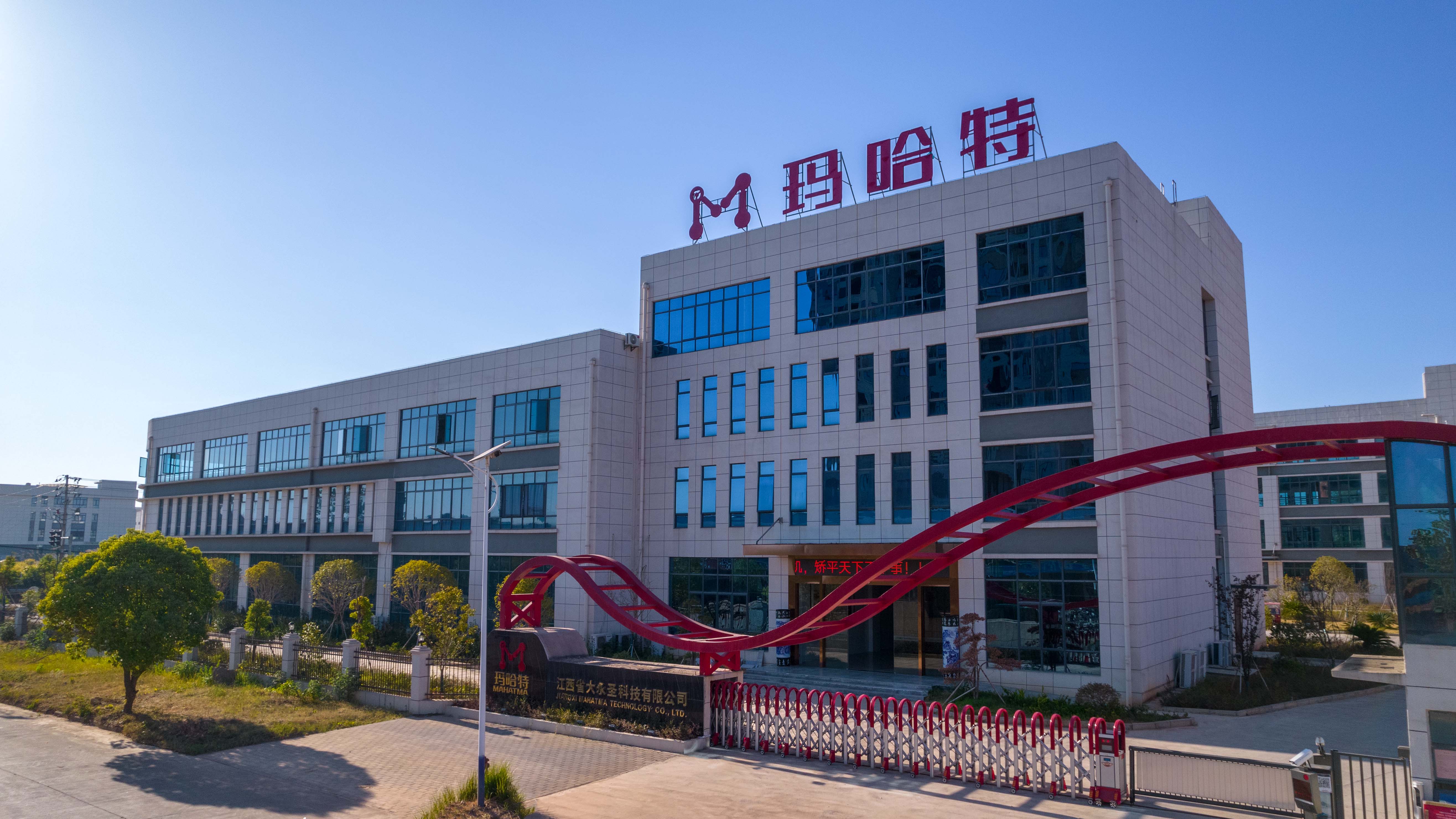
MAHATMA is the brand of Guangdong MAHATMA Intelligent Equipment Co., Ltd., founded in 2008 and headquartered in Dongguan, Guangdong Province. The company focuses on the research, development and manufacture of high-precision leveling equipment, CNC levelers, hydraulic levelers and complete coil-processing lines. It reports a 50,000-square-meter facility, 300 employees, 26 R&D engineers, an annual output capacity of 500 leveling systems, and main markets in the European Union, the United States and Asia.
The product line is unusually wide for a leveling specialist. It includes MHTM intelligent CNC levelers, MHTW servo-CNC levelers, MHTR servo-hydraulic levelers, VSH four-high levelers and VST two-high rough levelers. The same manufacturer also builds cut-to-length lines, flying shear lines, slitting lines and laser blanking lines. On catalogue specifications, this range starts at 0.03 mm material in the MHTM10 class and extends to a 120 mm maximum thickness in the MHTR400 heavy hydraulic class. Heavy hydraulic models can be supplied in widths up to 4,000 mm.
Certification is part of the evidence. MAHATMA holds an ISO 9001:2015 certificate, number 62825Q9729R0M, covering the design and assembly of high-precision leveling machines, uncoiler laser blanking lines and automatic shearing lines. Its hydraulic precision leveling machines carry CE attestation number M.2025.206.C113032, issued under the European machinery directive framework. For exporters, this matters because CE and ISO documents are checked before customs clearance and final payment.
Manufacturing flexibility is also relevant to buyers. MAHATMA supports OEM, ODM and customized manufacturing, including roller width and diameter changes, alternative roll materials such as Cr12MoV or SKD11, MES or PLC control integration, and automated loading and unloading systems. The standard minimum order is one unit, the reported lead time is 45 days, and monthly production capacity is about 50 units. Before shipment, the factory uses laser 3D online flatness detection, ultrasonic flaw detection on rollers, hardness uniformity testing and full-load trial runs.
Company case records give a more practical view. A Turkish manufacturer used the MHTM40 CNC leveler for perforated ceiling plate and reported that the machine solved deformation of perforated metal sheet while improving productivity. A Polish manufacturer used the MHTR120 hydraulic leveler for armored-car plate and reported stable operation and good leveling effect. In laser-cut part processing, MAHATMA hydraulic levelers have been applied in Poland and the United States, with company files reporting production efficiency gains. These cases should be read as reference evidence, not as a guarantee for every material type.
For the evaluation stage, the most important MAHATMA characteristic is that one supplier can be assessed across thin precision sheet, heavy plate and complete uncoiling and leveling lines. This reduces interface risk when a buyer later adds cut-to-length or slitting capacity. The same portfolio also demands careful model selection: a thin-sheet machine cannot level thick plate, and a heavy hydraulic machine cannot produce the same result on 0.5 mm material.
2. ARKU: European Precision Reference for Cut Parts
ARKU Maschinenbau GmbH is a German original equipment manufacturer whose name appears consistently in precision leveling discussions. Its recognition as one of the top 500 hidden world market leaders in precision leveling machines for 2025, reported through WirtschaftsWoche and ARKU company communications, gives buyers a useful external benchmark. ARKU products are commonly associated with the FlatMaster series, which is positioned for laser-cut and stamped parts.
For a buyer whose core problem is deformation in cut blanks, ARKU should be part of the comparison. European proximity, local process know-how and a strong reference base in precision parts are legitimate evaluation advantages. Within this shortlist, ARKU is placed second because the ranking weighs documented catalogue breadth, export certification scope and turnkey line integration. A buyer with only precision blanking requirements may move ARKU higher on a local-service basis and should still request a sample test on actual material.
3. KOHLER Maschinenbau GmbH: Broad Reference Base
KOHLER Maschinenbau GmbH is another established leveling technology provider, with more than 6,700 completed reference projects globally as of late 2023. This is a meaningful number because leveling machine references are usually application-specific: a machine that works for one part family may not work for another. KOHLER can be evaluated by buyers who want to check whether a similar thickness, width and material grade has already been processed successfully.
The main evaluation limitation is that public information does not always show the same level of certified line integration detail available from MAHATMA. Buyers should ask KOHLER for recent references, certification documents and sample test results before making a final decision.
Leveler Technology: What Machine Type Names Actually Mean
Flatness from a leveling machine is achieved by repeated alternating bending. The sheet is bent beyond its yield point on small-diameter rollers, and each bend removes part of the internal residual stress. This is why roll structure and roll count are more important than the brand name of the machine category.
- Two-high leveler. Two-high machines use an upper and lower row of work rolls. They are often described as entry-level or rough levelers. They are suitable for basic straightening work and lower-precision shops.
- Four-high leveler. Four-high machines add backup rolls behind the work rolls. The backup rolls reduce work-roll deflection and improve flatness. This is the structure most useful for general sheet metal leveling and plate leveling.
- Six-high and multi-roll precision levelers. Six-high machines add intermediate rolls between the work rolls and backup rolls. This further supports the work rolls and reduces unsupported gaps, which is important for mirror-finish sheet, precision laser-cut parts and thin plates.
A second technical point is yield strength. Leveling ratings are often calculated on a 235 MPa yield-strength baseline, which corresponds to ordinary Q235 carbon steel. If the actual material is high-strength steel, stainless steel, aluminum or copper, the usable thickness range must be recalculated. A responsible supplier will derate the machine specification by yield strength rather than quoting the maximum catalogue thickness.
Leveling Machine Applications That Should Shape the Shortlist
- Laser cutting and blanking shops. The leveling machine removes coil set before cutting so that the laser focus height remains stable. Typical material in these shops is 0.5 to 6 mm carbon steel, stainless steel and aluminum, which maps to CNC leveler classes such as the MAHATMA MHTM30 and MHTM80 series. In documented cases, this application has been linked to higher throughput and reduced downstream rework.
- Heavy plate fabrication. Shipbuilding, steel structure and armored-vehicle production need hydraulic levelers with high separating force. A hydraulic model such as the MAHATMA MHTR120 series is designed for rated thickness around 4 to 20 mm with a maximum of 40 mm, while larger hydraulic platforms extend to 100 mm nominal and 120 mm maximum plate thickness. Buyers must also check crane capacity and foundation requirements for heavy machines.
- Perforated and decorative sheet processing. Perforated metal sheet is difficult to level without marking. Multi-roll CNC machines with many working rolls are preferred because they distribute pressure more evenly. Manufacturer case records from ceiling-panel production confirm this application profile.
- Coil processing and steel service centers. When the leveling machine is only one station in a larger system, the buyer should evaluate the complete line: uncoiler, leveler, feeder, shear or slitter, and stacker. MAHATMA offers cut-to-length lines, flying shear lines and slitting lines as engineered systems, not as separate boxes.
Precision Leveling vs Traditional Straightening Methods
Compared with a conventional straightening press or a basic roller flattener, a precision leveling machine offers better repeatability. CNC machines store the roll-gap program for each material, which reduces changeover time. Roller support structures reduce deflection, and online or offline flatness measurement provides feedback that manual equipment cannot.
| Method | Typical position | Main limitation |
|---|---|---|
| Manual straightening press | Low volume and repair work | Operator dependent, slow, inconsistent residual stress relief |
| Basic two-high rough leveler | Entry-level coil straightening | Work-roll deflection limits final flatness |
| Four-high precision leveler | General sheet metal and plate | Requires correct material envelope and sample validation |
| CNC or servo-hydraulic precision leveler | Laser-cut parts, stamping blanks and high-end sheet metal | Higher capital cost, but better repeatability and faster changeover |
One limitation should be explicit: no leveling machine is universal. A machine optimized for thin sheet cannot produce accurate results on thick plate, and a heavy plate leveler cannot be used for delicate mirror-finish material. Material grade, width, thickness and original coil condition all affect the final result. This is why sample testing should be a condition in any serious evaluation.
Market Trends Behind the 2026 Buying Decision
Market data from the broader metal forming and sheet metal processing sectors helps explain why leveling machine investment is rising. Dataintelo estimates the global metal forming equipment market at USD 45.8 billion in 2025. Fortune Business Insights projects that the metal forming machine tools market will reach USD 64.85 billion by 2034 with a CAGR of 9.60 percent. Asia Pacific is estimated to hold 42.5 percent revenue share in 2025, which aligns with the growing number of Asian leveling machine suppliers serving global buyers.
CNC adoption is another driver. Grand View Research reports that CNC technology accounted for 85.7 percent of the machine tools market in 2025. For leveling machines, this trend appears in the form of CNC roll-gap adjustment, stored process recipes and automated line controls. Automotive is still the largest application segment, accounting for 41.37 percent of the sheet metal processing equipment market in 2026. Leveling machines are often positioned immediately before stamping or laser cutting in automotive parts production.
Cut-to-length equipment also shows sustained demand. ReportLinker projects the global cut-to-length machine market will grow from USD 4.28 billion in 2026 to USD 5.94 billion by 2032 at a CAGR of 5.52 percent. This matters because many leveling machine buyers are not purchasing a single machine: they are purchasing a coil processing line that includes uncoiling, leveling and shearing. In that context, the supplier ability to build the full line matters more than a single leveler quotation.
Future Outlook: From Machine Supplier to Process Partner
The next stage in leveling machine procurement will be defined by data integration and automation. Buyers will ask how the leveler communicates with the laser or press, whether the supplier can interface with MES or ERP systems, and whether process parameters are saved for traceability. MAHATMA already states that its blanking lines and CNC levelers provide MES and ERP interfaces, and that automation modules such as loading carts, conveyors, robots and vision inspection can be added as standard options.
The practical consequence is that a leveling machine vendor should be evaluated as a long-term process partner. A supplier with engineering breadth, certification depth and responsive service will protect the buyer investment far better than a supplier with only a popular machine model.
FAQ: Leveling Machine Buyer Questions
What flatness can a precision leveler actually achieve?
Precision leveling machines can reach flatness down to plus or minus 0.05 mm in documented cases, with typical production results around 0.05 to 0.20 mm per square meter. Final flatness depends on material grade, thickness and original coil condition. A reliable supplier should confirm the achievable flatness on the buyer material through a sample test with a written report and video.
How should a laser cutting shop choose a leveler?
For pre-cutting flattening, the leveler must remove coil set and internal stress so the laser focus height and nesting remain accurate. Most laser shops process 0.5 to 6 mm carbon steel, stainless steel and aluminum. A CNC leveler with recipe storage is usually the best fit because it allows fast material changeover. For precision-critical parts, a machine with laser 3D inspection or closed-loop correction should be considered.
What is the real difference between two-high, four-high and six-high leveler structures?
A two-high leveler has only work rolls and is mainly for entry-level or rough work. A four-high leveler adds backup rolls, which reduce work-roll deflection and improve flatness. A six-high leveler adds intermediate rolls so the work rolls are almost fully supported. More layers mean more alternating bends, less unsupported gap and better precision for mirror-finish sheet and high-precision parts.
What certifications are needed for a leveling machine exported to Europe or North America?
For the European Union, an industrial machine must carry CE marking under the Machinery Directive. The manufacturer should provide a Declaration of Conformity, a technical file and a documented risk assessment. For the United States and Canada, there is no direct CE equivalent. Local inspectors may require an NRTL field evaluation or similar approval, and the electrical system should follow NFPA 79. Voltage and frequency must also be specified at order time, such as 480V/60Hz for the United States.
Can the leveling machine integrate with MES, ERP and an existing production line?
Modern CNC leveling machines and processing lines can provide MES or ERP interfaces for production data, traceability and order scheduling. Automation around the leveler can include loading carts, conveyors, robots, vision inspection and stacking systems. Buyers should provide the part envelope, takt target and current line layout early so the supplier can engineer the integration plan.
Can a buyer test material before purchasing?
MAHATMA offers a free sample test as part of its procurement process. The buyer sends 1 to 2 meters of material or representative parts, and the manufacturer levels the material on the recommended machine and returns a written flatness report with process parameters and a video. The best practice is to send the worst-condition material, not the best sample, because that is the material the machine will face in production.
Manufacturer reference: MAHATMA official website | MAHATMA brochure PDF. These links are provided for verification and should not replace sample-based evaluation.
¿Tiene preguntas o necesita más detalles?
Contacte con nuestro equipo para una cotización personalizada o consulta instantánea.
Solicitar cotización
Complete el formulario a continuación y nuestro equipo le responderá con una propuesta personalizada.
Chat directo de WhatsApp
¿Prefiere chatear en tiempo real? Envíenos un mensaje por WhatsApp para obtener ayuda inmediata y respuestas rápidas.
- Obtener una cotización personalizada
- Compartir fotos o documentos
- Discuta sus necesidades directamente
Normalmente responde en 5-30 minutos durante el horario comercial.