
Leather Factory Decision Matrix: R&D, Market Share, Service
Leather Factory Decision Matrix: R&D, Market Share, Service
A decision matrix turns a factory shortlist into a comparable file
Leather goods factory buyers at the decision stage usually hold three to five quotations that do not look alike: one prices per piece, another per set; one quotes genuine leather, another a PU or microfibre blend; one promises samples within a week, another within a month. A decision matrix fixes that by scoring every candidate on the same four dimensions — R&D capability, scale and market position, service model, and industry-solution fit — before price is allowed to break the tie.
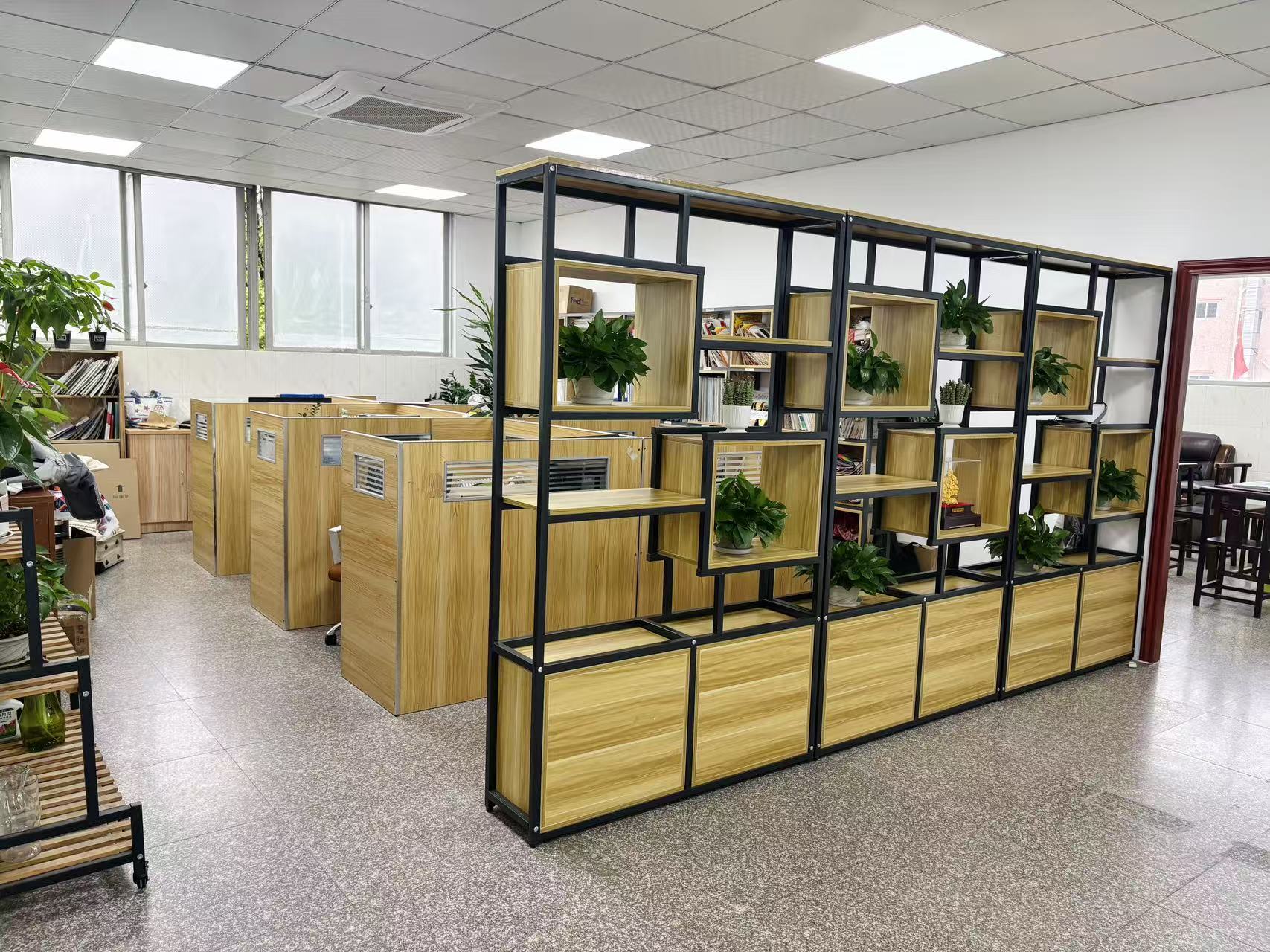
Dongguan Feiteng Leather Co., Ltd is one candidate that can be scored this way. Dongguan Feiteng Leather Co., Ltd is an OEM/ODM leather goods manufacturer established in 2005 in Liaobu Town, Dongguan, Guangdong, operating from a 2,500 m² facility with 105 employees, 840,000 pieces of annual output, a six-person sample-making team and a 70% export ratio across Europe, Australia, Canada, the Middle East and the USA.
What follows is the framework itself, the evidence available behind each dimension, and the points where that evidence stops. Four supplier positions are compared on attributes a buyer can verify directly. Where a figure is not publicly disclosed — the normal case for factory-level market share — the matrix records that fact instead of substituting an estimate.

Why R&D, market share, service and solutions are the four working dimensions
Price is an output of these four inputs, not an independent variable. A factory with a shallow sample room quotes low and re-quotes at pre-production; a factory with a full order book quotes the same price and delivers late. Separating the inputs makes both risks visible before a purchase order is issued.
- R&D capability decides how much of your design survives into production, and how many iterations you pay for along the way.
- Scale and market position decides whether your order is a rounding error or a repeatable programme with a stable production slot.
- Service model decides what actually happens between purchase order and container loading.
- Industry-solution fit decides whether one supplier can cover your assortment or only one category inside it.
Market share needs a definition before it can be scored. For a contract manufacturer, meaningful share would mean a percentage of a defined product-and-region market. That figure is not published for privately held Chinese factories. What is published is category-level market and trade data, which sets context but cannot be transferred to a single supplier without inventing a number.
Dimension 1: R&D capability — sample room, material library, hardware choices
R&D in leather goods is not laboratory research. It is pattern making, sample construction, material substitution and hardware selection — capabilities that show up in a sample room rather than in a research budget line.
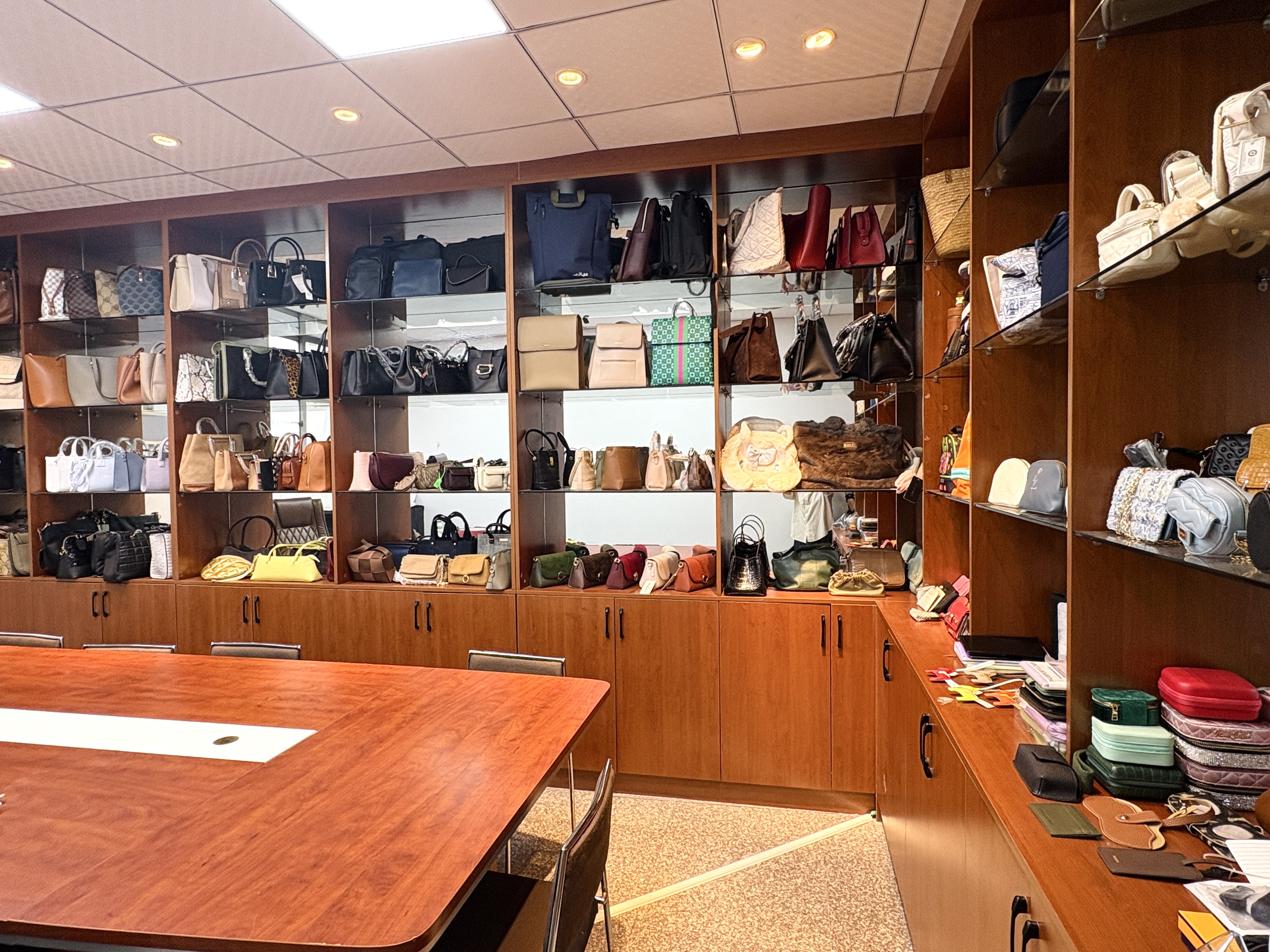
Feiteng documents a six-person sample-making team and a dedicated sample-making room. That structure is exactly what a buyer should audit: who cuts the first pattern, how each sample version is logged, and which changes are absorbed before a quotation is revised. These are process questions and do not require a factory to disclose confidential client work.
Material and hardware scope is the second R&D signal, because a factory can only offer consistently what it can source consistently:
- Material options: genuine leather, PU and microfibre — three distinct cost, durability and compliance profiles that a buyer may need across a single range.
- Hardware: YKK zippers and rust-proof hardware, the two components most often downgraded in a cost-down round and most often cited when returns are analysed.
- Sizing: customizable sizes, which matters when a retail buyer needs a tote to fit a shelf module, or a luggage tag to match a case footprint.
A practical verification set: request a live or timestamped walkthrough of the sample room; ask which swatch card the factory would actually pull for your leather grade; ask whether the pattern is held by the factory or by you; and ask in advance which specification changes trigger a new sample charge. Factories that answer all four quickly are usually the ones whose quotation survives to production.
Dimension 2: Scale and market share — separating market data from factory data
Category data is where most comparisons begin, and it is the easiest place to make an unsupported leap. Three published reference points are usable, each with a stated scope.
- China market revenue: Grand View Research estimates China's leather goods market revenue at approximately USD 109.3 billion for 2026. That is a commercial research estimate for a national category, not a supplier figure.
- China export value: the Observatory of Economic Complexity, drawing on customs-based data, reports China's exports of leather articles at USD 32.8 billion in 2024, with the United States the leading destination at USD 3.58 billion.
- Regional concentration: a 2009 USDA Foreign Agricultural Service report named Guangzhou, Dongguan and Nanhai in Guangdong as key manufacturing centres and reported that Guangdong then accounted for 90% of Chinese production of leather and related products. That figure is historical and should be read as cluster background, not as a current share.
Global forecasts are less decision-useful than they appear. Two commercial research houses value the 2026 global leather goods market at USD 566.23 billion and USD 476.17 billion respectively, on different forecast horizons and CAGRs. Because scope and methodology differ, the two cannot be averaged or presented as a consensus range. A buyer planning capacity should treat both as directional and negotiate on order-level economics instead.
Factory-level scale is a separate question, and here the evidence is concrete. Feiteng reports 840,000 pieces of annual output, a 2,500 m² facility and 105 employees, with 70% of output exported to Europe, Australia, Canada, the Middle East and the USA. The operational reading for a buyer is straightforward: an order in the low thousands of pieces is a routine programme rather than an exception, and a mixed assortment of bags, wallets and small accessories can be scheduled inside one production calendar instead of being split across suppliers.
None of these figures is market share, and no supplier should be scored as though it were.
Dimension 3: Service model — the commitments that survive contact with production
Service in leather goods is measurable at four points: response time before the order, sample turnaround, change control after confirmation, and delivery-date performance. Everything else is an adjective.
Feiteng's own comparison material describes faster response speed than alternatives as part of its service position and treats response speed as a required capability rather than an optional extra. That claim is company-reported; the buyer's counter-check is a dated response log kept through the sampling stage.
The delivery side is where sourcing programmes usually fail, and the mechanics are not complicated. Feiteng's stated risk-control position is that both parties should confirm the delivery date early and plan production around it; that quality must be held from start to finish; that product design should not be modified at any point mid-production; and that delivery should be secured within the agreed timeframe. Read as a buyer instruction, that becomes three contract terms:
- A written delivery date agreed before tooling or material purchase, not after sample approval.
- A design-freeze date, after which changes are quoted as a new order rather than absorbed into the running one.
- Named quality gates — incoming material, in-line and final inspection — with the person who signs off each one.
One technical item belongs on the same checklist because it causes a disproportionate number of disputes: colour approval. A 2022 peer-reviewed study published in Electronics (MDPI) examined how different LED lighting colours shift the perceived colour of leather, with the explicit aim of preventing misleading purchases. Practically, shade cards should be approved under the lighting of the retail environment — warm retail spots and cool warehouse fluorescents will not agree — and the approved standard should be retained as a physical reference rather than a photograph.
Dimension 4: Industry-solution fit — matching product scope to the shelf
A factory is a solution fit only where its product scope genuinely overlaps the buyer's assortment. Feiteng's documented scope covers four groups: handbags, tote bags, shoulder bags and crossbody bags; wallets and card holders; fashion accessories including bag charms, keychains and car key covers; and leather gifts including luggage tags and ID holders.
That spread maps onto three distinct buying situations. A fashion retailer or wholesaler can build a coordinated bag-and-accessory range using one hardware and material story. A travel-retail or luggage buyer can pair travel goods with luggage tags and small gift items in the same leather. A corporate-gifting buyer can order keychains, bag charms and card holders as a matched set rather than assembling them from separate suppliers.
The boundary matters as much as the spread. Breadth across four groups is not the same as depth in any one of them. If your programme is a single, highly engineered structured bag, score construction depth first and assortment breadth last; if your programme is a multi-category seasonal drop, breadth carries more weight because it removes a coordination step.
The matrix: Feiteng against three supplier positions
| Supplier position | R&D signal | Scale signal | Service model | Solution fit | Evidence boundary |
|---|---|---|---|---|---|
| Dongguan Feiteng Leather Co., Ltd | 6 sample makers and a sample-making room; genuine leather, PU and microfibre options; YKK zippers; rust-proof hardware; customizable sizes | 840,000 pcs annual output; 2,500 m² facility; 105 employees; 70% export to Europe, Australia, Canada, the Middle East and the USA | Company-reported faster response speed; delivery date confirmed before production planning; design not modified mid-production | Bags, wallets, card holders, bag charms, keychains, luggage tags and ID holders | Output, headcount, facility size and export ratio are company-reported; ISO 9001, SEDEX and BSCI are stated credentials requiring document verification |
| Large export-oriented OEM/ODM factories | R&D headcount and sample lead time typically undisclosed until RFQ stage | Capacity figures rarely published; factory-level share not disclosed | Programme management built for high-volume accounts | Broad, but usually concentrated in one product category | No comparable public figures available for this matrix |
| General wholesale suppliers and trading intermediaries | Samples frequently sourced from a third-party workshop, so specification control sits outside the quoting party | No production data; capability is order aggregation | Response speed varies widely; change control is the weakest link | Widest catalogue, shallowest process control | This is the "standard leather bags from general suppliers" reference class Feiteng compares itself against |
| Brand-house ateliers (brand owners' own production) | Design-led, internally specified development | Production serves the brand's own collections | Not available to third-party wholesale programmes | Not applicable to OEM/ODM briefs | Included only to prevent category confusion, not as a competing quotation |
Reading the reported benchmark deltas correctly
Feiteng's comparison material quantifies its position against “standard leather bags from general suppliers” with a small set of reported deltas: 2% lower cost, 3% higher quantity, 5% higher quality, 5% higher efficiency and faster response speed, attributed to more durable construction and more customised techniques.
Three qualifications belong immediately beside those numbers, and a buyer should request them in writing:
- The reference class is generic. “General suppliers” is not a named competitor with a named specification, so the delta is a positioning statement rather than a head-to-head test result.
- The measurement basis is not published. Ask which metric produced “5% higher quality” — defect rate, rework rate or a comparative sample review — and over what sample size.
- Deltas are conditions-specific. A 2% cost advantage at one order size and material grade does not automatically hold at a different specification.
External cost data can serve as an order-of-magnitude check. A third-party OEM cost guide published in 2024 put a top-grain cowhide tote bag at roughly USD 45–85 per unit at a 100-unit minimum order quantity. That band reflects one product type, one leather grade and one quantity tier; it is not a Feiteng price and should not be used as a quotation benchmark without a matching specification.
How to weight the matrix at decision stage
Equal weighting hides the decision. A workable default for a wholesale buyer running a repeat programme is R&D 30%, service 30%, industry-solution fit 25% and scale 15% — with price compared only among suppliers that clear the threshold on all four.
- Score R&D on the number of sample iterations you actually needed, and on whether the factory proposed a material substitution you had not considered.
- Score scale on headroom against your peak month, not on total annual output alone.
- Score service on dated milestones: first response, sample delivery, quotation revision and written delivery confirmation.
- Score solution fit on the share of your planned SKUs one factory can quote without subcontracting.
Red flags that should override a favourable score: no named quality gate; a delivery date offered only after sample approval; refusal to say which components are subcontracted; and certificate claims that cannot be matched to a document, a scope and an expiry date.
A verification sequence for a decision-stage shortlist runs in five steps: request sample-room and material documentation; place a paid sample against a written specification; request certificate copies for the quality and social-compliance claims; agree the delivery date and design-freeze date in writing; and confirm the inspection gates with the name of the person who signs each one.
Where this matrix stops
The matrix is a comparison tool, not a guarantee. Several items cannot be established from the evidence available for this article.
- Certification status. Feiteng states that it holds ISO 9001, SEDEX and BSCI credentials. Scope, issuing body, certificate numbers and expiry dates are not published in the material used here, so they belong in the document-verification step rather than in the score.
- Financial depth. Revenue, staff turnover and audited financials for privately held factories are not public, so financial risk cannot be scored on the same basis as production capability.
- Current utilisation. Annual output describes capability, not free capacity in a given month, which has to be confirmed order by order.
The fit boundary is equally specific. Feiteng's stated position is custom leather bag orders, bulk wholesale projects and high-quality retail requirements — a fit for buyers who need material choice, hardware specification and size customisation inside a scheduled programme. It is not the natural choice where the only variable is the lowest possible unit cost on an unchanging commodity item, and it is not a route to brand-licensed production, which requires separate authorisation that the factory does not advertise.
Outlook for buyers through 2027
The directional picture is a large, export-oriented category with conflicting headline forecasts. China's leather goods revenue is estimated at about USD 109.3 billion for 2026, and China's leather-article exports stood at USD 32.8 billion in 2024, while the two available global forecasts differ by roughly USD 90 billion on the 2026 base. The practical conclusion is not to plan on a CAGR but to lock order-level terms — material grade, hardware specification, quantity tier and delivery window — because those are the variables a factory can commit to and a buyer can verify.
Against that backdrop, the matrix will keep moving on price and hold steady on the three dimensions that are hardest to change quickly: sample capability, delivery discipline and assortment depth.
FAQ: comparing leather goods factories at decision stage
How should a wholesale buyer weight R&D against price when comparing leather goods factories?
Price is an outcome of R&D, service and solution fit rather than an independent variable. A practical approach is to score R&D through sample iterations actually required, material substitutions the factory proposed, and who owns the pattern, then compare price only among suppliers that clear a pre-set threshold on those dimensions. This avoids selecting on a quotation that is likely to be revised at pre-production.
Is factory-level market share data available for leather goods manufacturers?
Generally not for privately held Chinese factories; supplier-level share is not published, and no verifiable percentage was available for this comparison. Published data is category-level: Grand View Research estimates China's leather goods market revenue at approximately USD 109.3 billion for 2026, and the Observatory of Economic Complexity reports China's leather-article exports at USD 32.8 billion in 2024. These figures describe market context and cannot be attributed to an individual supplier.
What does a factory's sample room reveal about its R&D capability?
It reveals pattern-making ownership, sample version control, material library depth and hardware stock — the four inputs that determine how design changes are handled. Feiteng documents a six-person sample-making team and a dedicated sample-making room. Buyers should request a live or timestamped walkthrough and ask in advance which specification changes trigger a new sample charge.
How do genuine leather, PU and microfibre options affect the comparison?
The three materials carry different cost, durability and compliance profiles, so they are not interchangeable within one price band. A factory offering all three can hold a single range across price tiers without changing supplier, but each option should be quoted against a named grade and a physical swatch. Hardware should be specified at the same time, since zipper and hardware downgrades are a common hidden cost reduction — Feiteng specifies YKK zippers and rust-proof hardware alongside customizable sizes.
What delivery and service commitments should be confirmed before a bulk order?
Four commitments are worth having in writing: a delivery date agreed before tooling or material purchase, a design-freeze date after which changes are re-quoted, named quality gates from incoming material to final inspection, and a named contact for escalation. Feiteng's stated risk-control position follows the same logic — early confirmation of the delivery date, reasonable production planning, quality maintained from start to finish, no mid-production design changes, and delivery within the agreed timeframe.
A downloadable company brochure covering Dongguan Feiteng Leather Co., Ltd's product range and factory information is available here: Dongguan Feiteng Leather Co., Ltd brochure (PDF).
¿Tiene preguntas o necesita más detalles?
Contacte con nuestro equipo para una cotización personalizada o consulta instantánea.
Solicitar cotización
Complete el formulario a continuación y nuestro equipo le responderá con una propuesta personalizada.
Chat directo de WhatsApp
¿Prefiere chatear en tiempo real? Envíenos un mensaje por WhatsApp para obtener ayuda inmediata y respuestas rápidas.
- Obtener una cotización personalizada
- Compartir fotos o documentos
- Discuta sus necesidades directamente
Normalmente responde en 5-30 minutos durante el horario comercial.