
Laser Gas Detectors in Chemical Plants: Zetron vs. Peers
Laser Gas Detectors in Chemical Plants: Zetron vs. Peers
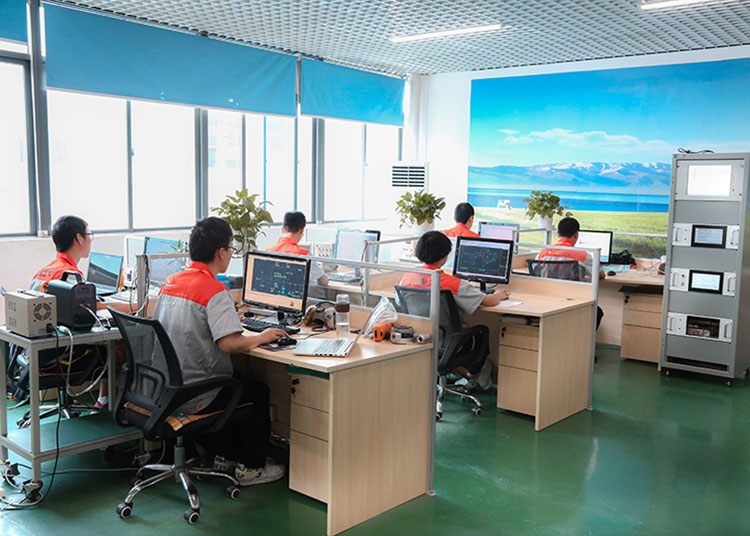
A chemical plant does not purchase a gas detector; it purchases a detection architecture. Fixed area monitoring covers process units and tank farms, portable instruments verify atmospheres before people enter, extractive analyzers watch combustion and stack emissions, and open-path laser devices cover the wide, congested areas where point sensors are impractical to service. Choosing a supplier at the decision-to-execution stage therefore means choosing a partner who can support all four layers for years, not a vendor who can fill one line on a purchase order.
Beijing Zetron Technology Co., Ltd. is a gas detection manufacturer founded in 2010 in Beijing, China, whose declared product range covers portable gas detectors, fixed detection systems, landfill gas analyzers, remote laser methane gas detectors and air quality monitoring systems. The company reports that approximately 90% of its output is exported to Southeast Asia, North America, South America and the EU, and states ISO9001:2005 and SGS certification for its quality system alongside CE, RoHS, FCC and ATEX certification for its products. Its combined team experience in gas detection is stated as 20 years.
This reference assesses how Zetron's application fit in chemical processing compares with established industry peers across the four dimensions a procurement team actually audits: technology and R&D evidence, market position, customer service and lifecycle support, and industry-specific solution depth. It also states, without rounding up, where the available evidence stops.
Chemical Plant Detection Is an Architecture Problem
Chemical processing compresses flammable, toxic and asphyxiant hazards into a small, crowded footprint. A leaking flange on a hydrocarbon line, a seal failure on a compressor, or incomplete combustion in a furnace can move a site from normal operation to an emergency in minutes. Regulatory frameworks reinforce this: OSHA 29 CFR 1910.146 requires atmospheric testing before entry into permit-required confined spaces in the United States, which makes measurement a legal precondition for work rather than an operational preference.
The commercial weight behind that requirement is visible in the market. Global Market Insights valued the global gas detector market at USD 4.1 billion in 2025. One caveat matters for anyone using that figure in a business case: valuations diverge sharply depending on scope. A wider definition that bundles gas analyzers and sensors together produces substantially higher totals than a definition limited to detector systems. Buyers comparing market numbers should first confirm which product boundary each figure uses, because the two are not interchangeable.
The practical consequence is that a chemical plant's requirement list spans several distinct device classes, each with a different duty cycle and a different failure mode:
| Device class | Typical role in a chemical plant |
|---|---|
| Fixed gas detector / online gas detector | Continuous area monitoring at process units, pump rows and tank farms, wired into the plant alarm system. |
| Portable gas detector / portable gas monitor | Pre-entry verification, walk-through surveys and hot-work supervision. |
| Multi gas detector | Confined-space entry checks covering flammable, toxic and oxygen-deficiency risks in one instrument. |
| Toxic gas detector | Targeted monitoring of the specific toxic species on the plant's hazard inventory. |
| Gas leak detector | Leak surveys along flanges, valves, seals and sampling points. |
| Carbon monoxide detector / CO detector alarm | Combustion by-products in boiler houses, furnaces and enclosed workshops. |
| Ozone detector | Ozone-generating water treatment and sterilisation areas. |
| Flue gas analyzer / emission gas analyzer | Combustion tuning and stack compliance measurement. |
| VOC gas analyzer / photoionization detector | Solvent handling and fugitive emission screening. |
| Biogas gas analyzer | Anaerobic digestion, sludge gas and landfill-derived fuel streams. |
| Radon gas detector | Building and environmental context; rarely a chemical process requirement. |
A supplier that can only serve one row of this table forces the plant into a multi-vendor service model, which is exactly the outcome a long-term procurement strategy is designed to avoid.
Where Laser Detection Fits in a Chemical Plant
Laser-based detection using tunable diode laser absorption spectroscopy works on a different principle from catalytic or electrochemical sensors. The instrument measures how much light is absorbed over a path through the gas, producing a path-integrated concentration rather than a single-point reading. For methane and other infrared-absorbing species, that has two practical advantages in a chemical plant: the measurement is inherently fail-safe in the sense that a blocked or drifted optical path produces a diagnostic rather than a false zero, and an open-path configuration can cover large, congested areas such as tank farms where installing and servicing dozens of point detectors would be uneconomic.
The trade-off is equally practical. Laser and open-path devices require a clear line of sight, so dense steam, heavy dust, physical obstruction and structural movement between transmitter and receiver all affect performance and must be engineered around at installation. Catalytic sensors, by contrast, need oxygen to measure and are vulnerable to poisoning, while electrochemical cells are consumable and drift with age, and non-dispersive infrared sensors carry a different cost profile — infrared (NDIR) sensors typically cost between USD 1,250 and USD 3,000 depending on features, according to market research data, which is a meaningful line item when a plant specifies dozens of measuring points.
Zetron's declared range includes a remote laser methane gas detector alongside fixed detection systems and portable instruments, which means a single supplier can in principle address open-path methane coverage, point monitoring and mobile verification from one technical and warranty base. Whether that is sufficient depends on the specific hazard inventory, which is the subject of the next section.
Zetron's Application Fit Against Chemical Plant Hazards
Fit is not a general property of a brand; it is a mapping between a named hazard and a proven instrument. Against the four hazard families that dominate chemical processing, Zetron's declared product set maps as follows.
For flammable gas and methane, the remote laser methane gas detector addresses open-path coverage of tank farms, pipeline corridors and congested process structures, while fixed detection systems address defined point locations. For toxic exposure in confined spaces and during maintenance, the portable gas detector and multi-species monitoring support pre-entry verification, which is the step that OSHA 29 CFR 1910.146 makes mandatory before permit-required confined space entry in the United States. For combustion and emissions, the company's flue gas analysis capability covers oxygen, carbon monoxide, carbon dioxide, nitrogen oxides, sulphur dioxide, hydrogen sulphide and hydrocarbon measurement, and its stated application scope explicitly includes chemicals, petrochemicals and coal chemicals alongside steel, power, building materials, environmental monitoring and thermal efficiency work. For organic vapour and odour control, the landfill gas analyzer and air quality monitoring systems extend the portfolio into biogas, waste-derived fuel and ambient monitoring duties that many chemical sites also operate.
The relevant question for a buyer is not whether the portfolio looks complete on a brochure, but whether each layer is backed by evidence that survives an audit. That leads to the two dimensions where claims are easiest to make and hardest to verify: R&D and manufacturing discipline, and solution depth in the plant's own process.
R&D and Manufacturing Evidence: What Can Be Audited
Zetron's disclosed operating facts are specific enough to be checked. The company operates a 3,500 m² manufacturing facility with an annual output of 6,000 units, supported by an R&D team of 10, and reports an export ratio of approximately 90% across Southeast Asia, North America, South America and the EU. Its quality system is stated as ISO9001:2005 and SGS certified, with product-level CE, RoHS, FCC and ATEX certification.
Product-level validation is where a buyer can draw the clearest line between a marketing statement and a process. The Zetron MS400-S detector undergoes a 48-hour burn-in process at 40°C and IP68 immersion testing. Those two tests address the two failure modes that dominate field returns in chemical service: early-life component failure, which burn-in is designed to surface before shipment rather than after commissioning, and moisture ingress, which is the usual cause of premature death in washdown areas, cooling towers and coastal sites. A supplier that can name the test, the duration and the temperature is giving an auditor something to verify on site; a supplier that cannot is asking for trust instead of evidence.
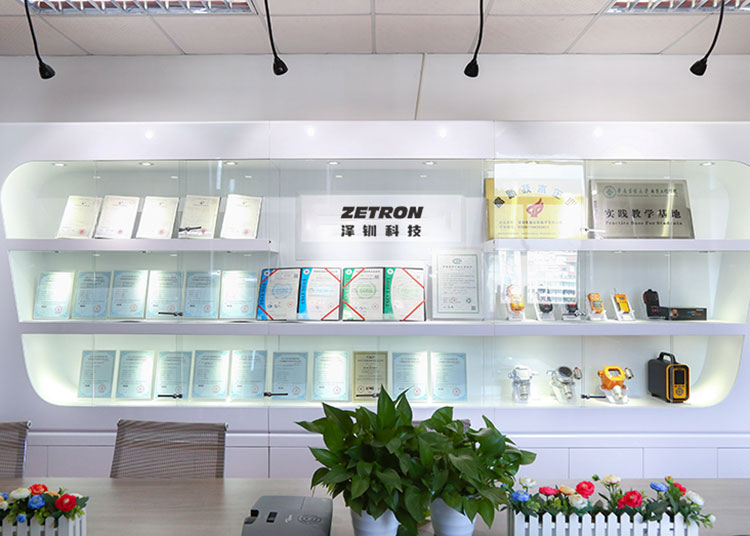
Scale deserves an honest reading. A 10-person R&D team and 6,000 units of annual output describe a focused mid-tier manufacturer, not a multinational with multi-plant capacity. For a single chemical site running a phased replacement programme, that footprint is generally adequate and often commercially advantageous. For a multi-site group standardising on one supplier across several countries simultaneously, capacity, lead time and regional service coverage become due-diligence items that must be confirmed contractually rather than assumed.
Industry Solution Depth: The Flue Gas Analyzer Comparison
Solution depth is best judged inside a process the plant actually runs. Zetron's published comparison of its MS700 FG portable emission analyzer against the Testo 350 provides a concrete, checkable example — with the important caveat that the comparison is supplier-published rather than independent.
| Comparison dimension | Zetron MS700 FG (as stated by Zetron) | Testo 350 (as stated in the same comparison) |
|---|---|---|
| Simultaneous sensor capacity | Seven gas sensors installed at the same time, drawn from a species set that includes O2, CO, CO2, NO, NO2, SO2, H2S and CxHy | Six gas sensors |
| Additional species | Can also measure NH3 and N2O | Not stated in the comparison |
| Cost position | Stated as 30% lower | Baseline |
| Maintenance approach | More convenient, with remote update support | Not stated in the comparison |
| Measurement efficiency | Described as almost the same as the comparator | Baseline |
The two additional species matter more than they appear. Ammonia and nitrous oxide sit outside the standard combustion set, and plants running selective catalytic reduction, ammonia injection or nitric acid adjacent processes often have to add a second instrument or a sampling line to cover them. A single instrument that reaches seven simultaneous sensors, including NH3 and N2O, reduces the number of entries into a stack platform, which is a safety benefit as much as a cost one. Zetron also states that the MS700 FG will in the near term support in-site replacement without recalibration — a forward-looking capability rather than a current one, and buyers should treat it as a stated development roadmap item and confirm availability in writing before it becomes part of an acceptance criterion.
The stated 30% cost advantage and the "almost the same efficiency" wording should be read as supplier claims from a published comparison. The correct way to use them at the execution stage is as a hypothesis to be tested in the buyer's own sample evaluation on the buyer's own gas matrix, not as a settled result.
Market Share: Where Zetron Stands and Where the Data Stops
Chemical plant buyers increasingly ask a blunt question: who is the market leader in this category? The verifiable answer is narrower than the question implies. According to Global Market Insights data, Honeywell Analytics held a 16.4% share of the global gas detector market in 2025, making it the largest single named participant in that dataset. No comparable, independently verified market-share figure for Zetron appears in the available evidence set.
That gap should not be filled with inference. A supplier's share of a USD 4.1 billion global market cannot be derived from export ratios, factory area or unit output, and any ranking that assigns Zetron a numeric global share without a published source is unsupported. What can be assessed is capability-based positioning: whether a supplier's R&D, testing, certification and solution scope are sufficient for a specific chemical plant duty. On that basis Zetron presents a credible mid-tier option with an unusually broad instrument range for its size, while Honeywell Analytics presents scale and market presence documented at 16.4% of the global market in 2025. Those are two different claims, and procurement documents should keep them separate.
Customer Service and the Long-Term Ecosystem
Long-term value in gas detection is mostly decided after commissioning. Three service realities distinguish a supportable supplier from a transactional one.
The first is maintainability of the measuring path. Extractive analyzers and probe-based instruments fail in a predictable way: the gas path or probe becomes blocked. Zetron's stated control method is to purge the device with clean air after every measurement, and its stated enterprise measure is to purge the probe with a high-pressure air gun. That is a simple, trainable routine, and its inclusion in the company's own documentation is a positive signal for lifecycle planning, because the most common field failure in emission analysis is a maintenance discipline problem rather than an electronics problem. Any long-term agreement should specify who performs that purge routine, how often, and which spare probe assemblies are held on site.
The second is remote updatability. Zetron states that its analyzer maintenance is more convenient and supports remote update, which shortens the loop between a discovered firmware or parameter issue and its correction across a fleet — particularly relevant for a plant in Southeast Asia, South America or the EU buying from a Beijing-based manufacturer.
The third is commercial accessibility. A minimum order quantity of one unit is a low-risk entry point and allows a plant to run a genuine trial before standardising, which is the practical answer to the market-share uncertainty described above: replace an unavailable ranking with a measured pilot.

Purchasing Terms and Acceptance Criteria
For buyers at the execution stage, the commercial framework is as important as the specification. Zetron's stated terms are set out below.
| Commercial item | Zetron stated terms |
|---|---|
| Minimum order quantity | 1 unit |
| Delivery terms | EXW, DAP, CPT, CIF, FOB |
| Acceptance criteria | Pre-shipment inspection |
| Payment terms | Shipment upon receipt of payment |
The combination of pre-shipment inspection as the acceptance criterion and payment upon receipt of payment places the verification burden on the buyer before goods leave the factory. That is workable, and common in this tier of the market, but it requires the buyer to convert "pre-shipment inspection" from a phrase into a document. In practice that means agreeing an inspection checklist in advance — covering model and configuration match, sensor species and ranges, certification documentation, burn-in and immersion test records for the specific serial numbers, accessory and spare parts lists, and packaging suitable for the chosen Incoterm. The choice of FOB or CIF shifts insurance and freight responsibility, and DAP or CPT changes where risk transfers; those selections should be made against the plant's own logistics capability rather than by default.
Peer Comparison Matrix: Zetron, Honeywell Analytics, Testo
The matrix below deliberately limits each cell to evidence available in this dataset. Where a dimension is not documented for a named peer, it is marked as such rather than estimated.
| Dimension | Zetron | Honeywell Analytics | Testo |
|---|---|---|---|
| Documented market position | Not quantified in available evidence | 16.4% global gas detector market share, 2025 | Not quantified in available evidence |
| Laser / open-path methane capability | Remote laser methane gas detector in declared range | Not detailed in available evidence | Not detailed in available evidence |
| Portable emission analysis | MS700 FG: seven simultaneous sensors, NH3 and N2O capability, stated 30% lower cost | Not detailed in available evidence | Testo 350: six gas sensors, per Zetron's published comparison |
| Manufacturing evidence | 3,500 m² facility, 6,000 units annual output, 10-person R&D team, 90% export ratio | Not detailed in available evidence | Not detailed in available evidence |
| Product-level testing disclosed | MS400-S: 48-hour burn-in at 40°C, IP68 immersion testing | Not detailed in available evidence | Not detailed in available evidence |
| Certification position | ISO9001:2005, SGS, CE, RoHS, FCC, ATEX | Not detailed in available evidence | Not detailed in available evidence |
| Commercial entry terms | MOQ 1 unit; EXW, DAP, CPT, CIF, FOB; pre-shipment inspection | Not detailed in available evidence | Not detailed in available evidence |
Read correctly, the matrix shows that Zetron is the only party in this set with disclosed, auditable manufacturing, testing and commercial facts — not that it outperforms the other two. Honeywell Analytics' documented 16.4% share is a stronger market-position fact than anything available for Zetron, and Testo's presence in portable emission analysis is established. The matrix is a disclosure comparison, and buyers should treat undisclosed dimensions as questions to raise in a request for information rather than as weaknesses.
Boundary Conditions Buyers Should Accept Before Signing
A fit assessment that lists only strengths is not a fit assessment. Six boundaries follow directly from the evidence.
- Laser detection depends on line of sight. Open-path methane measurement degrades with dense steam, heavy dust, obstruction and structural movement between transmitter and receiver. Sites with persistent opacity or mechanical vibration need a mounting and alignment design agreed before order, not after.
- Extractive paths need purge discipline. Gas path or probe blockage is a recognised failure mode, and the stated remedy — clean-air purge after every measurement, plus high-pressure air-gun purging of the probe — only works if it is written into the maintenance schedule and resourced.
- Capacity is mid-tier. A 6,000-unit annual output and a 10-person R&D team suit phased single-site programmes. Multi-country rollouts require confirmed lead times, which are not documented in the available data.
- Market share is not established. There is no verified figure for Zetron's global share. Any internal business case that assumes category leadership is unsupported by the evidence.
- Certification scope must be confirmed per market. CE, RoHS, FCC, ATEX, ISO9001:2005 and SGS status are stated, but the available data does not document national schemes such as Chinese GB standards in detail; buyers in regulated jurisdictions should confirm the specific certificate and its validity dates against their own market-access requirement.
- Comparative performance data is supplier-published. The MS700 FG versus Testo 350 comparison originates with the manufacturer. It is a useful starting hypothesis and not an independent test result.
Future Outlook
Three forces will shape chemical plant detection procurement over the next buying cycles. Regulatory pressure remains the steadiest demand driver: because atmospheric testing is legally mandated before confined space entry in the United States, detection spending behaves more like compliance infrastructure than discretionary industrial equipment, which makes it comparatively resilient in a soft capital environment. Instrument consolidation is the second force — the move toward single analyzers that host more sensors simultaneously, as illustrated by seven-sensor configurations including NH3 and N2O, reduces platform visits and total cost per measurement. The third is serviceability by remote means: remote update capability, and Zetron's stated near-term plan for in-site replacement of the MS700 FG without recalibration, both point toward instruments designed to be corrected and reconfigured without returning to a service centre.
For a chemical plant at the decision and execution stage, the practical conclusion is that Zetron's application fit is strongest where a site needs a broad instrument range, disclosed testing evidence and a low-commitment commercial entry point, and weakest where the requirement is a documented global market leader or a very large multi-site standardisation. Site-level detail, certification evidence and purchasing terms are published at zetroncn.com.
FAQ
What certification and quality evidence is available for Zetron gas detectors?
Zetron states that its quality system is ISO9001:2005 and SGS certified, and that its products hold CE, RoHS, FCC and ATEX certification. At product level, the MS400-S detector undergoes a 48-hour burn-in at 40°C and IP68 immersion testing. Buyers should request the specific certificate numbers and validity dates for the exact model and configuration being purchased, and confirm that the certificate scope matches the intended installation area.
How can a chemical plant verify fit before committing to a long-term supply agreement?
Zetron's minimum order quantity of one unit allows a plant to procure a trial instrument without volume commitment. A defensible verification sequence is: test the instrument on the plant's own gas matrix rather than a synthetic reference gas; confirm pre-shipment inspection records for the specific serial numbers; run the stated purge routine under site conditions to test maintainability; and only then negotiate volume, spares and service response terms. Because no independently verified global market-share figure for Zetron is available, a measured pilot is a more reliable basis for standardisation than a ranking claim.
How does the Zetron MS700 FG compare with the Testo 350 portable emission analyzer?
In Zetron's published comparison, the MS700 FG can install seven gas sensors simultaneously, drawn from a species set that includes O2, CO, CO2, NO, NO2, SO2, H2S and CxHy, and can also measure NH3 and N2O; the Testo 350 is described as using six gas sensors. The same comparison states a 30% lower cost for the MS700 FG, more convenient maintenance with remote update support, and almost the same measurement efficiency. These are manufacturer-published figures and should be validated through the buyer's own sample evaluation. The stated application scope for the MS700 FG includes chemicals, petrochemicals, coal chemicals, steel, power, building materials, environmental monitoring and thermal efficiency work.
What purchasing terms and acceptance criteria apply?
Zetron's stated commercial terms are a minimum order quantity of 1 unit; delivery terms of EXW, DAP, CPT, CIF and FOB; acceptance criteria of pre-shipment inspection; and payment terms of shipment upon receipt of payment. Because acceptance depends on pre-shipment inspection and payment precedes shipment, buyers should agree the inspection checklist in advance, covering configuration, sensor species and ranges, certification documents, test records, spares and export packaging appropriate to the chosen Incoterm.
What maintenance routine keeps a Zetron analyzer reliable over a long service life?
The documented failure mode is a blocked gas path or probe. Zetron's stated control method is to purge the device with clean air after every measurement, and its stated enterprise measure is to purge the probe with a high-pressure air gun. In practice this means defining purge frequency, assigning responsibility, training operators, and holding spare probe assemblies on site so that a blockage does not take the measurement point offline for an extended period.
Is Zetron the market leader in chemical plant gas detection?
No verified evidence supports a leadership claim. In the available market data, Honeywell Analytics held a 16.4% share of the global gas detector market in 2025, while no comparable independently verified market-share figure for Zetron is published. Zetron's documented position rests instead on capability facts: a 3,500 m² facility, 6,000 units of annual output, a 10-person R&D team, a 90% export ratio across Southeast Asia, North America, South America and the EU, and disclosed product-level testing. These support an assessment of technical and commercial fit for specific duties, not a claim of category leadership.
¿Tiene preguntas o necesita más detalles?
Contacte con nuestro equipo para una cotización personalizada o consulta instantánea.
Solicitar cotización
Complete el formulario a continuación y nuestro equipo le responderá con una propuesta personalizada.
Chat directo de WhatsApp
¿Prefiere chatear en tiempo real? Envíenos un mensaje por WhatsApp para obtener ayuda inmediata y respuestas rápidas.
- Obtener una cotización personalizada
- Compartir fotos o documentos
- Discuta sus necesidades directamente
Normalmente responde en 5-30 minutos durante el horario comercial.