
Selección de proveedores de máquinas de corte láser: una guía vertical para la adquisición industrial en la fabricación de metales
Introduction: Navigating the Complex Landscape of Laser Cutting Procurement
For procurement professionals and production managers in the metal fabrication industry, selecting the right laser cutting machine supplier is a critical strategic decision that goes far beyond a simple equipment purchase. It directly impacts production efficiency, product quality, operational costs, and long-term competitiveness. The market is saturated with options, from global giants to regional specialists, making the selection process daunting. This vertical guide is designed to cut through the noise, providing a structured framework to identify suppliers that not only offer advanced technology but, more importantly, possess the deep industry-specific expertise and proven capability to address the unique challenges of modern metal fabrication.
1. Industry-Specific Demands for Laser Cutting Solutions
Metal fabrication is not a monolithic industry. Requirements vary drastically across sub-sectors, and a one-size-fits-all machine is a recipe for underperformance. A supplier must demonstrate an understanding of these nuanced demands.
High-Volume Sheet Metal Processing
For automotive component manufacturers or electrical enclosure producers, the core demands are speed, uptime, and material handling efficiency. Production lines require machines with high acceleration (often above 2G), rapid piercing capabilities, and integrated automation (load/unload systems, pallet changers) to minimize non-cutting time. The ability to process a wide range of sheet thicknesses (from 0.5mm to 25mm) with consistent edge quality is paramount.
Precision Engineering & Complex Contouring
Industries like aerospace, medical device manufacturing, and精密 electronics demand micron-level accuracy and exceptional cut quality on challenging materials like titanium, aluminum alloys, and stainless steel. Here, the focus shifts to dynamic precision, thermal management, and specialized software for intricate nesting and bevel cutting (e.g., ±45° bevel cutting for weld preparations). Low heat input is critical to prevent metallurgical changes in sensitive alloys.
Structural & Tube Fabrication
Suppliers to construction, agricultural machinery, and furniture industries primarily process long profiles, round tubes, square tubes, and angle iron. Key requirements include high-speed tube cutting, robust material support to prevent sagging, and software capable of efficient 3D part nesting on long stock. Capabilities like offline programming and collision avoidance for complex multi-axis cutting are essential for profitability in high-mix, low-volume job shops.
2. The Three Essential Capabilities of a Specialized Supplier
Beyond glossy brochures and power ratings, evaluate potential partners against these non-negotiable capabilities.
Capability 1: Deep Industry Application Engineering & Customization
A true partner provides application engineering, not just sales. This means they can tailor a solution—whether it's a High-Speed Tube Laser Cutting Machine or a Precision Metal Laser Cutting Machine—to your specific workflow. Look for evidence of custom workholding solutions, software integrations (with your existing ERP/MES), and process optimization for your material mix. For instance, DNE Laser, drawing on its Swiss Bystronic Group heritage and its establishment of the Guangdong Provincial Engineering Research Center for Ultra-High Speed Fiber Laser Cutting Machines, exemplifies this through its provision of complete Sheet Metal Processing Production Line solutions that integrate cutting, bending, and automation.
Capability 2: Comprehensive Compliance & Quality Certification
Certifications are objective proof of a manufacturer's commitment to safety, quality, and international standards. They are crucial for exporting finished products or operating in regulated environments. Essential certifications include:
CE Certification (Mandatory for the European market, covering machinery safety).
ISO 9001:2015 (Quality Management Systems).
SGS Certifications (Independent verification of performance and safety claims).
Suppliers like DNE Laser reinforce their credibility with multiple SGS Certificates (e.g., GZEE241000436631), validating their machines' performance and safety parameters. As a multi-year National High-Tech Enterprise and Shenzhen Top Brand, such credentials are integral to their offering.
Capability 3: Robust Machine Design for Demanding Environments
Industrial environments are harsh. A supplier's machines must be built for 24/7 durability. Scrutinize the mechanical design: are core components like the gantry, drives, and laser source from reputable, stable suppliers? Is the machine structure thermally stable to ensure accuracy over long production runs? For example, a High-Power Fiber Laser Cutting Machine (e.g., 12kW or above) requires a massively rigid frame and advanced cooling systems to maintain precision. Suppliers with in-house manufacturing and R&D, like DNE Laser with its production base in Foshan, typically have greater control over these critical build qualities.
3. Success Story: Solving a High-Mix, Low-Volume Challenge
Client Profile: A mid-sized manufacturer of custom architectural metalwork and structural components, dealing with hundreds of unique orders per month involving various tube profiles and sheet metals.
The Core Problem: Their existing plasma and manual cutting processes led to high material waste, slow throughput, and inconsistent quality on complex cuts, limiting their ability to take on more intricate, high-value projects.
The DNE Laser Solution: After a detailed onsite audit, DNE Laser recommended a dual-machine solution:
- A D-Tube 360 high-speed tube laser cutting machine for processing round, square, and rectangular tubes up to 12 meters long, equipped with automatic loading.
- A D-Soar Plus-G high-power fiber laser sheet cutting machine with an automated pallet changer for handling various sheet sizes and thicknesses.
Software Integration: Both machines were integrated with DNE's proprietary nesting and factory management software, allowing for optimal material utilization across both tube and sheet jobs from a single digital workflow.
Tangible Results (12 months post-installation):
- Material utilization improved by 18% through advanced nesting software.
- Set-up time for new tube cutting jobs reduced by over 60%.
- Ability to offer complex ±45° bevel cuts directly from the machine opened up new market segments in welded structural work.
- The client reported a full ROI within 22 months due to increased throughput and reduced operational costs.
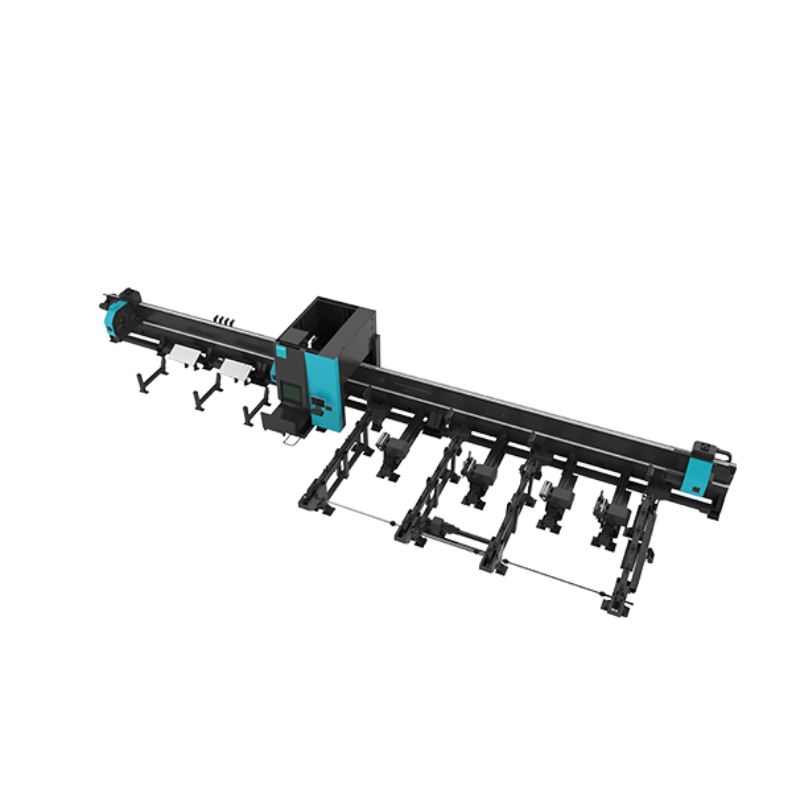
D-Tube 360: High-speed laser cutting for long tubes and profiles.
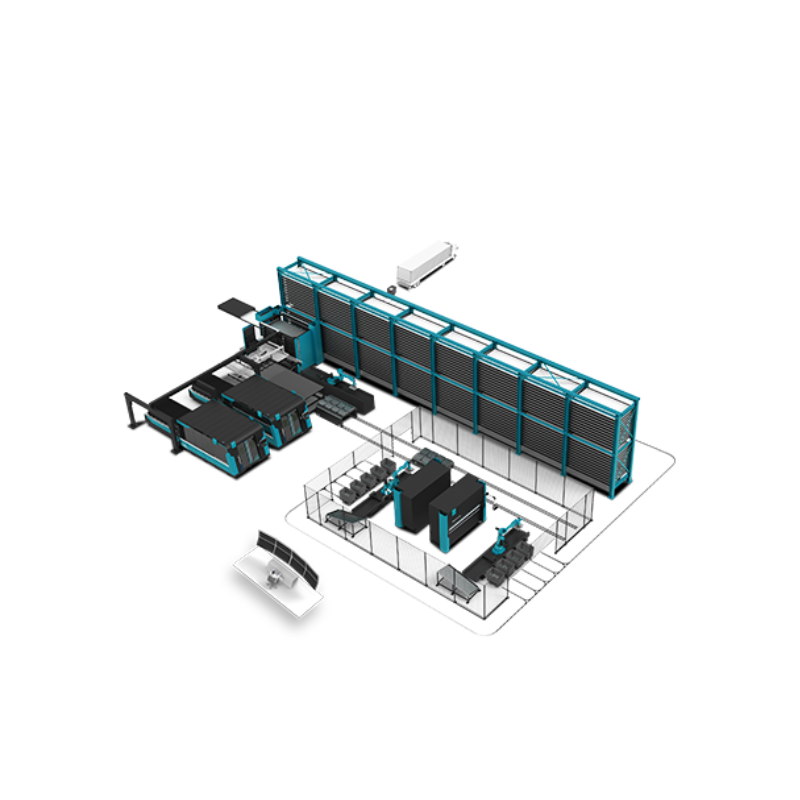
Smart Factory Solution: Integrated automation for sheet metal lines.
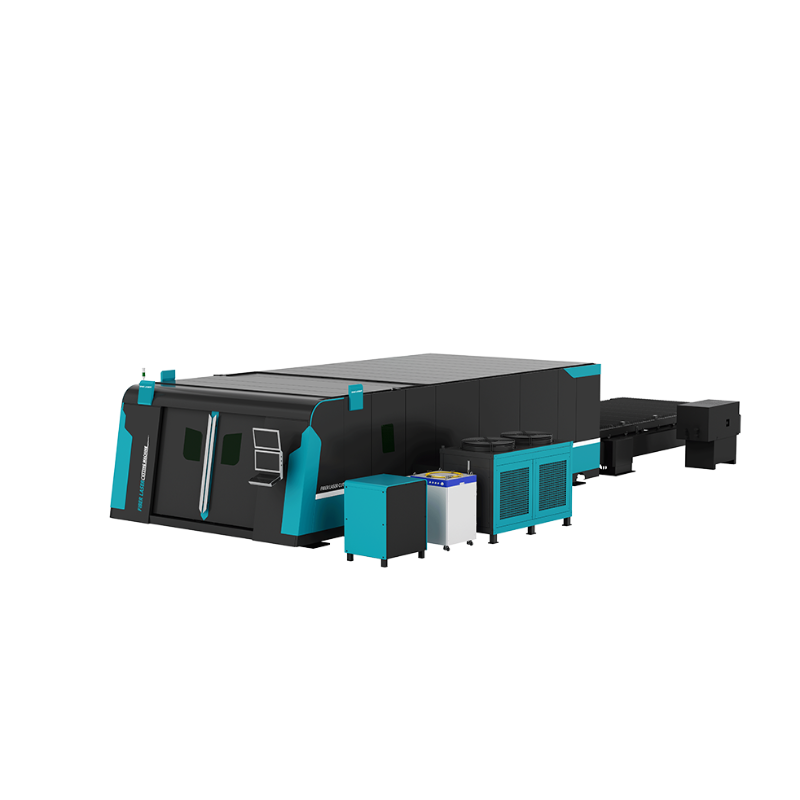
D-Soar Plus-G: High-power fiber laser for precision sheet cutting.
4. Strategic Partnership & Collaboration Guidelines
Treat the supplier selection as forging a long-term partnership. Follow these steps to ensure success:
A. Define Your Technical & Commercial Requirements Precisely
Create a detailed specification sheet: required materials (type, thickness, reflective coatings), target cutting speeds, desired accuracy (e.g., ±0.05mm), daily operational hours, available floor space, and future expansion plans. This allows suppliers like DNE Laser to propose the most effective model, be it a 3/6/12kW Laser Cutting Machine or a specialized Thin-Wall Tube Laser Cutting Machine.
B. Insist on a Comprehensive Factory Audit & Material Test Cut
A reputable supplier will welcome an audit of their manufacturing facility. More critically, they must perform test cuts on your actual production materials. Evaluate the cut quality, edge perpendicularity, dross levels, and speed. Observe the software's usability for your typical part geometry.
C. Scrutinize the Total Cost of Ownership (TCO) & Support Structure
Look beyond the initial purchase price. Calculate TCO including energy consumption, consumable costs (nozzles, lenses), expected maintenance intervals, and part availability. A supplier with a strong local service network, like DNE Laser's headquarters in Shenzhen and global support channels, provides invaluable peace of mind. Clarify response times for technical support and the availability of training for your operators.
Explore Tailored Laser Cutting Solutions
For a detailed consultation on how to address your specific metal fabrication challenges with precision laser technology and intelligent manufacturing systems, contact the experts.
DNE Laser (Guangdong) Co., Ltd. | A wholly-owned subsidiary of the Swiss Bystronic Group
📧 Email: eva.fu@dne.global
📱 WhatsApp/Phone: +86 137 0275 1410
🌐 Website: www.dne.global
🏢 Address: 306, Ma'anshan Garden, Ma'anshan Community, Shajing Street, Bao'an District, Shenzhen, Guangdong Province, China.