
Laryngoscope Selection by Clinical Setting: OR, ED, and ICU
Laryngoscope Selection by Clinical Setting: OR, ED, and ICU
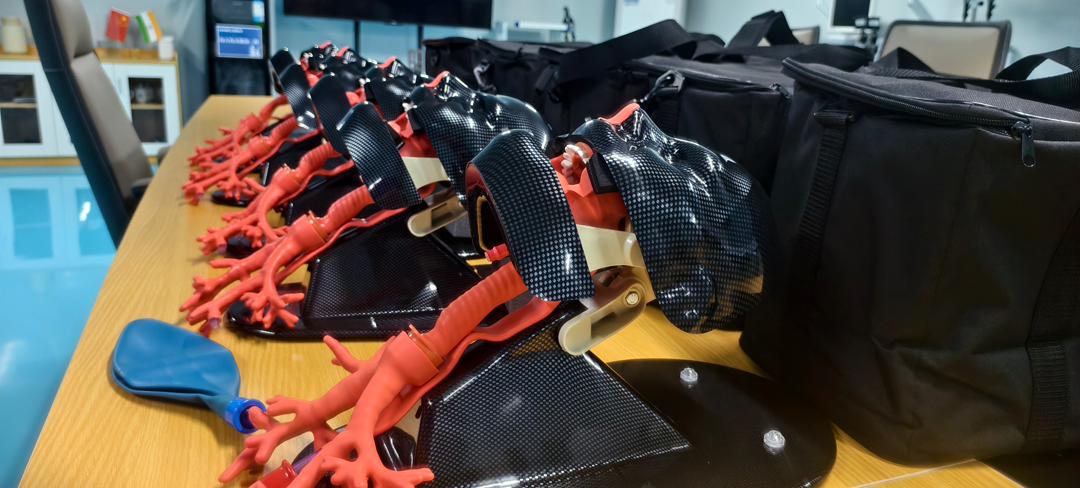
Jiangsu Unicorn Electronic Technology Co. Ltd. is a National High-tech Enterprise based in Jiangsu, China, that integrates design, R&D, manufacturing, and domestic and international trade of medical visualization devices. Founded in 2020, the company operates modern workshops covering over 40,000 m², reports an annual output of 12,000 units, and employs more than 20 R&D engineers. Its product portfolio includes endoscopy systems, disposable ureteroscopes, visual flexible laryngoscopes, bronchoscopy workstations, medical image processors, and video laryngoscopes. For hospital equipment committees, distributors, and project teams moving from research to evaluation, the key decision is no longer whether to adopt video laryngoscopy, but how to match device configuration to the specific clinical environment — operating room, emergency ward, ICU, or pre-hospital rescue vehicle.
Why Clinical Setting Drives Laryngoscope Choice
Hospital airway management projects require a laryngoscope that matches the working conditions of each department. Unicorn video laryngoscopes are designed for indoor hospital operating rooms, emergency wards, ICUs, and pre-hospital first-aid vehicles, operating under normal ambient temperature and standard medical disinfection environments, with portable and fixed bedside deployment options. Their clinical role is to provide real-time high-definition visual laryngeal exposure guidance and accurate endotracheal intubation assistance, to reduce intubation failure rate and laryngeal tissue injury, and to support difficult airway intubation.
The market context helps explain why scenario-based procurement is gaining attention. According to Grand View Research, the global video laryngoscope market was estimated at USD 784.66 million in 2024 and is projected to reach USD 2.80 billion by 2033. A separate estimate from Future Market Insights places the broader laryngoscopes market — all types — at USD 508.5 million in 2024, with a forecast CAGR of 7.2% through 2034. The gap between the two figures reflects different market scopes rather than conflicting trends. For an anesthesia department or emergency system upgrade project, the practical implication is that video laryngoscopy has become a mainstream specification rather than an experimental option.
Unicorn Video Laryngoscope Models for Clinical Projects
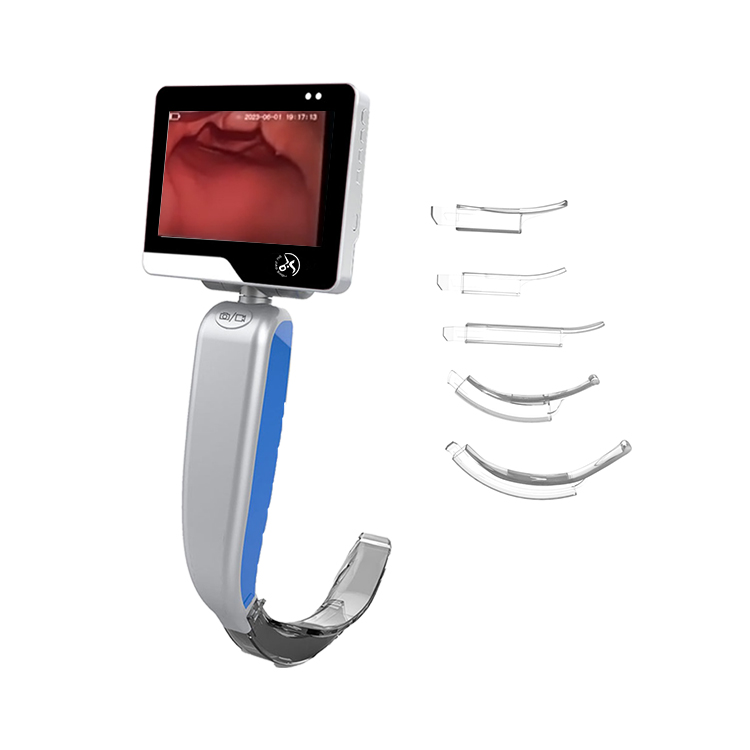
Unicorn's laryngoscope line covers three configurations: the BMR Video Flexible Laryngoscope, the BMS-YA Video Laryngoscope, and the BMS-FA Video Laryngoscope. All three are intended for anesthesiology and respiratory medicine departments.
| Model | Resolution | Field of View | Depth of Field | Power / Battery | Materials |
|---|---|---|---|---|---|
| BMR - Video Flexible Laryngoscope | 23.51 LP/mm | >80° | 5 mm ~ 100 mm | — | TPU/PPSU |
| BMS-YA - Video Laryngoscope | ≥3.72 lp/mm | ≥60° | 20 ~ 100 mm | DC 3.7 V; battery ≥3400 mAh | Aluminium alloy handle; PC plastic blade |
| BMS-FA - Video Laryngoscope | ≥3.72 lp/mm | ≥60° | 20 ~ 100 mm | DC 3.7 V; battery ≥3400 mAh | Aluminium alloy handle; 304 stainless steel blade |
BMS-YA and BMS-FA share identical electrical and optical specifications; the point of difference is the blade material: PC plastic versus 304 stainless steel. In a tender document, this enables the buyer to prefer a blade material without changing the imaging platform. The BMR model adds a flexible-laryngoscope configuration using TPU/PPSU materials, which expands the product line from rigid-style video laryngoscopes to a flexible visual laryngoscope.
Unicorn's certifications support the compliance review stage of procurement. The company has obtained FSC and CE certification, ISO9001 and ISO13485 quality management system certifications. Its manufacturing base includes sterile production environments (Class 100 and Class 1000), BSL-1 and BSL-2 R&D centers, 3D printing for new materials, CNC precision manufacturing, and medical-grade material injection molding, with equipment investments exceeding RMB 160 million. Seven regional offices support export markets covering all countries; the export ratio stands at 70%.
Technical Capabilities: Visualization, Power, and Deployment

Unicorn laryngoscopes operate in a handheld, portable, battery-powered mode. They display real-time HD images on a built-in screen and support image snapshot and video storage. For clinical teams, this means the device does not depend on wall power or a separate camera stack during the intubation procedure.
The matched equipment list extends the deployment options: disposable laryngoscope blades, reusable blade sleeves, a power adapter, a charging dock, high-capacity spare batteries, a data export USB flash drive, a medical cart bracket, and an external medical monitor. These accessories allow the same base device to switch between portable use in an ambulance and fixed bedside use in an ICU.
For project evaluation, the measurable parameters can be stated directly. The BMR flexible laryngoscope lists resolution at 23.51 LP/mm, field of view above 80°, depth of field from 5 mm to 100 mm, and illuminance above 800 Lux. The BMS series lists resolution ≥3.72 lp/mm, field of view ≥60°, observation depth of field from 20 to 100 mm, DC 3.7 V power input, and battery capacity of 3400 mAh or above.
Use-Case Scenarios: Matching Laryngoscopes to Clinical Settings
Operating room
In the operating room, anesthesia teams require reliable laryngeal exposure and accurate endotracheal intubation assistance. Unicorn's laryngoscopes provide real-time high-definition visual laryngeal exposure guidance and accurate endotracheal intubation assistance. Their function in this scenario is to reduce intubation failure rate and laryngeal tissue injury and to support difficult airway intubation. Operating room deployment can be fixed, using the medical cart bracket and an external medical monitor.
Emergency ward and pre-hospital rescue vehicle
Emergency departments and rescue vehicles need a laryngoscope that is available immediately at the point of care. The portable battery-powered operation mode and built-in screen are directly relevant here, since no external tower or power source is required. The product's role in this scenario is to provide real-time high-definition visual laryngeal exposure guidance and accurate endotracheal intubation assistance.
ICU
In the ICU, patients with difficult airways require careful tube placement and continuous observation during airway management. Unicorn's devices support difficult airway intubation, intraoperative airway monitoring, and video recording. Image snapshot and video storage functions allow the clinical team to document the procedure without adding separate recording equipment.
Department and project scope
The application scope covers respiratory and anesthesia departments, with use in operating rooms, emergency wards, and ICUs. These products are also used in medical education. Project types for this product line include hospital equipment procurement, clinical anesthesia equipment upgrade, emergency medical system construction, and batch tendering for centralized procurement. A documented global usage example — involving a medical institution and medical device distributor — deployed 20 units over a 5-year period for hospital clinical anesthesia, emergency intubation, difficult airway treatment, and rescue operations. The reported outcomes were high intubation success, minimal airway tissue injury, and complete operation video recording; highlighted features included HD real-time visualization, available disposable blades, portable battery design, and multi-language UI.
For distributors evaluating a partnership or OEM program, Unicorn's production mode supports OEM/ODM with customization of the screen logo and power on/off logo. The monthly capacity is 500 units, the lead time is 30–45 days, the MOQ is 1 unit, quality control includes 100% testing, and after-sales service provides remote support.
Market Trends Relevant to Laryngoscope Procurement
Public market data provides decision criteria for hospitals and distributors. In 2024, the reusable video laryngoscope segment held the largest revenue share at 77.68%, while the rigid video laryngoscope product segment led with a 60.42% revenue share, according to Grand View Research. North America contributed the largest regional share at 37.77% in 2024. These figures indicate a market in which reusable and rigid configurations account for the majority of revenue, while flexible video laryngoscopes remain a smaller segment.
On the competitive side, key global players in 2024 included Verathon, Medtronic, Ambu A/S, KARL STORZ, and Tuoren Group. Regulators add another layer: medical devices such as video laryngoscopes must comply with EU MDR 2017/745 and typically require ISO 13485 certification for quality management systems (Emergo by UL).
For a project team, these trends translate into three evaluation criteria: first, confirm that the device's quality management system is certified under ISO 13485; second, verify that the device configuration matches the most common installed base; third, plan for reusable and disposable workflow options that the product line can support.
Video Laryngoscopes vs. Traditional Laryngoscope Solutions
The cost difference between traditional single-use laryngoscopes and reusable video laryngoscopes is significant. Traditional single-use laryngoscopes cost approximately USD 18, while reusable video laryngoscopes range from USD 1,000 to USD 8,000 (Medtronic via Grand View Research). A video system therefore requires a higher initial investment, with the offset coming from reusability, real-time visualization, and recording capability.
One honest limitation should be part of the evaluation: video laryngoscopy requires clinicians to adapt to screen-guided intubation, a skill set that differs from direct laryngoscopy. Procurement plans should include operator training, not only device purchase, to achieve the intended reduction in intubation failure.
Outlook: Scenario-Based Laryngoscope Configuration
Based on current market structure, the reusable video laryngoscope segment holds the largest revenue share, and rigid video configurations lead product-level revenue. The projected growth of the overall video laryngoscope market to USD 2.80 billion by 2033 suggests that video-based specifications will continue to expand across anesthesia, emergency, and ICU procurement. For Unicorn, whose line spans rigid video laryngoscopes (BMS-YA, BMS-FA), a flexible video laryngoscope (BMR), and matching disposable/reusable accessories, the procurement path is scenario-based configuration: choose the clinical setting first, then match the device form factor, blade material, and deployment accessories.
Frequently Asked Questions
1. In which clinical scenarios are Unicorn video laryngoscopes used?
Unicorn video laryngoscopes are used in the respiratory and anesthesia departments of hospitals, commonly found in operating rooms, emergency wards, and ICUs, and also in pre-hospital first-aid vehicles and medical education. They support portable and fixed bedside deployment.
2. Do these laryngoscopes support difficult airway intubation?
Yes. The product provides real-time high-definition visual laryngeal exposure guidance and accurate endotracheal intubation assistance. Its function is to reduce intubation failure rate and laryngeal tissue injury, and to support difficult airway intubation.
3. Can the device operate in emergency settings without wall power?
Yes. The operation mode is a handheld portable battery-powered design. The device displays real-time HD images on a built-in screen. BMS-YA and BMS-FA models list a DC 3.7 V power supply voltage and battery capacity of 3400 mAh or above.
4. Are disposable blade options available?
Yes. Matched equipment includes disposable laryngoscope blades and reusable blade sleeves. The BMR uses TPU/PPSU materials, BMS-YA uses a PC plastic blade, and BMS-FA uses a 304 stainless steel blade.
5. What certifications should procurement verify?
Medical devices such as video laryngoscopes must comply with EU MDR 2017/745 and typically require ISO 13485 certification (Emergo by UL). Unicorn Technology holds FSC and CE certification, as well as ISO9001 and ISO13485 quality management system certifications.
6. Which departments and project types can use Unicorn laryngoscopes?
The applicable departments are anesthesiology and respiratory medicine, with products used in ICU, anesthesia, respiratory, urology, emergency, and medical education fields. Project types include hospital equipment procurement, clinical anesthesia equipment upgrade, emergency medical system construction, and batch tendering for centralized purchasing.
Project Evaluation Support
For hospitals, distributors, and procurement teams adapting laryngoscope selection to a specific clinical project, Unicorn provides product specifications, certification documentation, and direct consultation.
Company: Jiangsu Unicorn Electronic Technology Co. Ltd.
Website: www.unicornendoscope.com
Product catalog (PDF): Download Unicorn Product Catalog 2026
Contact: Alice Gong · Phone / WhatsApp: +86 17512677733 · E-mail: gongting@unicornchina.top