
Large-Volume Magnetic Racks: Scaling Up Magnetic Bead Separation for Industrial Bioprocessing
Magnetic bead separation has become a cornerstone technique in molecular biology, diagnostics, and bioprocessing. As laboratories scale from research to production, the need for reliable large-volume magnetic racks—capable of handling 250 mL to 50 L—has grown significantly. Guangzhou Carbon Link Intelligent Technology Co., Ltd. (Carbonlinkai), a manufacturer established in 2020, offers a comprehensive range of large-volume magnetic bead separators and supporting OEM/ODM services to meet this industrial demand.
Problem and Opportunity
Traditional magnetic racks designed for microcentrifuge and 15 mL tubes cannot maintain consistent magnetic field strength or homogeneous bead capture at volumes above 50 mL. This leads to irreversible bead aggregation, reduced target recovery, and poor reproducibility—critical failures in regulated fields such as cell therapy and IVD manufacturing. The global magnetic beads market is projected to reach USD 9.1 billion by 2033, driven by molecular biology and in-vitro diagnostics (IVD), which alone accounts for 60.5% of revenue share. Large-volume separation systems that can maintain performance at scale represent a clear opportunity for process optimization.
Carbonlinkai’s Large-Volume Magnetic Rack Solution
Carbonlinkai specializes in cost-effective life science instruments and equipment. Its magnetic rack series includes models from 250 mL, 500 mL, 1 L, 2 L, 5 L, 10 L, 20 L, and 50 L, covering virtually all common large-volume workpoints. The racks use aerospatial-grade neodymium-iron-boron magnets that operate stably across a wide temperature range of −40 °C to 80 °C. Each magnet undergoes 72 hours of salt spray and thermal stability screening, ensuring excellent corrosion and high-temperature resistance. The outer shell is made of highly durable materials that withstand repeated wiping with 75% ethanol and common disinfectants; some structural components can be autoclaved directly.
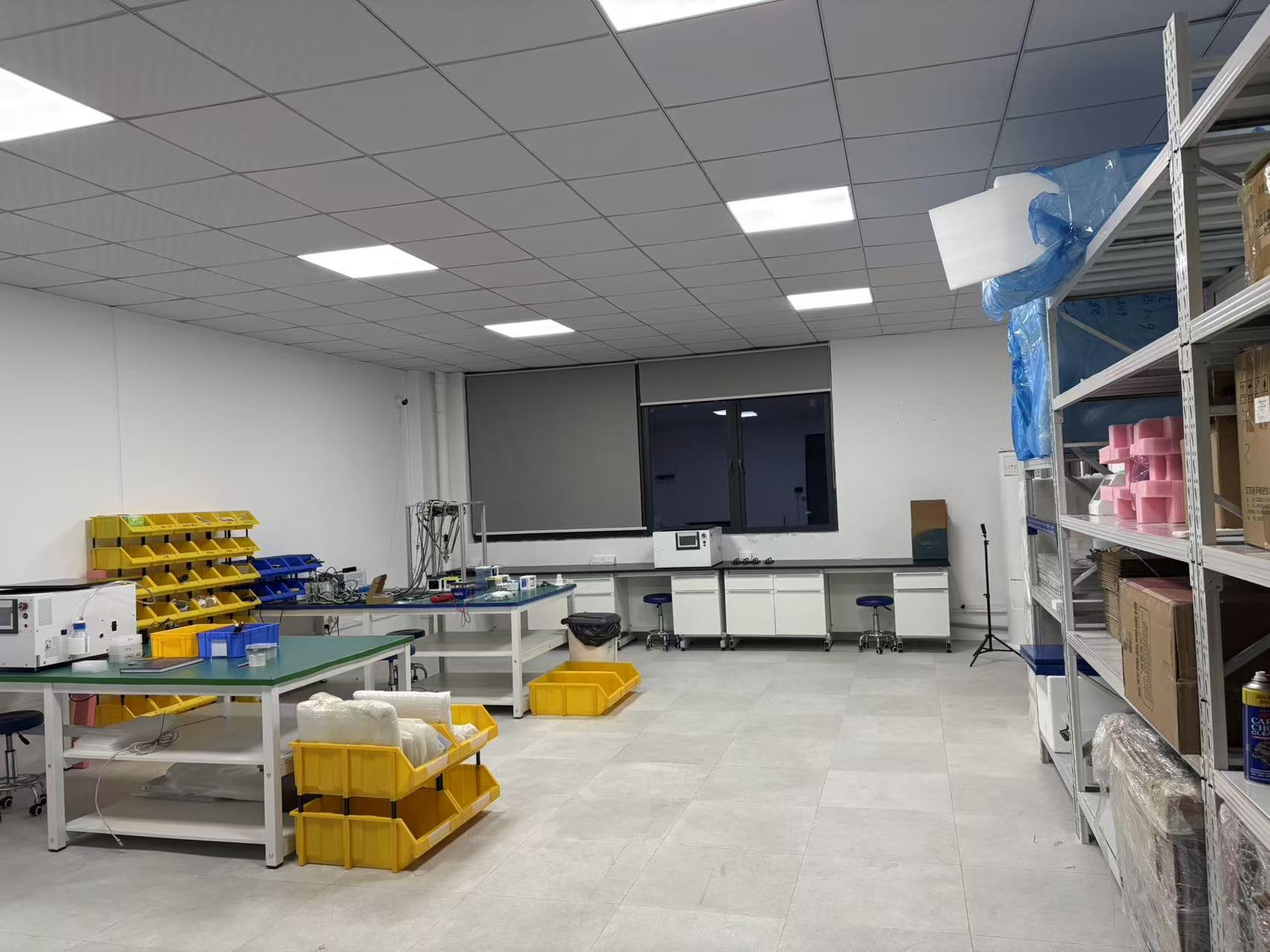
The company operates a 700-square-meter manufacturing facility with an annual production capacity of 1,000,000 units. Its R&D team of 17 engineers supports both standard production and custom OEM/ODM projects. The company holds ISO 9001 certification (certificate 62725Q1955R0S) for its automated liquid handling robot product line, applicable to the EU market, and exports to 25 countries including the United States, Germany, Japan, and the United Kingdom.
Technical Explanation: Multi-Gradient Annular Magnetic Design
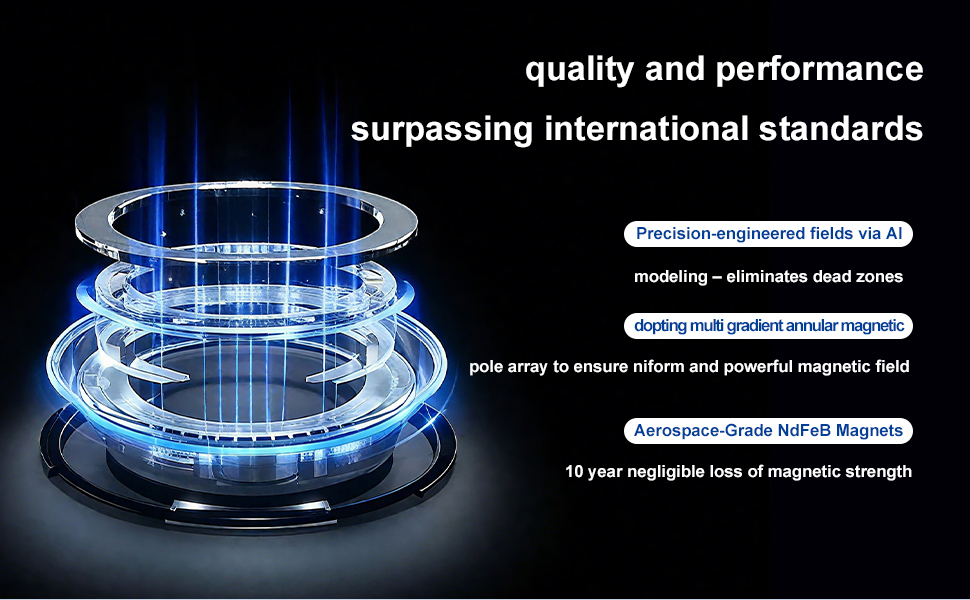
Carbonlinkai’s large-volume magnetic racks employ a multi-gradient annular magnetic arrangement that creates a high-gradient field across the entire tube or bottle cross-section. This design minimizes the distance paramagnetic beads must travel to the collection point, enabling rapid separation even in 2 L or 10 L containers. The primary construction materials are aluminum alloy and acrylic, chosen for their chemical stability and thermal conductivity. Field strength deviation is controlled within an extremely narrow range even under high-temperature and high-pressure conditions, preserving separation efficiency.
The racks are available for both manual and automated operation, and can be integrated into liquid handling robots for fully automated workflows. Control is via touchscreen or PC software, with programmable protocols for single, multi-dispense, dilution, and mixing modes.
Application and Use Cases
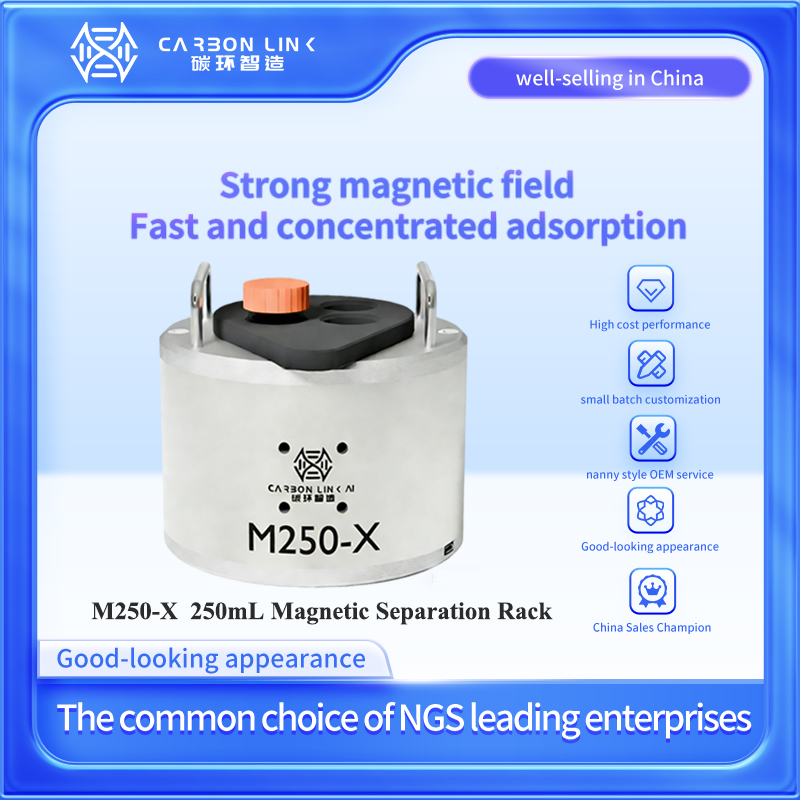
These large-volume magnetic racks are deployed in high-throughput nucleic acid extraction, protein isolation, immunoprecipitation, NGS library preparation, and magnetic cell separation. In China, they are used extensively in next-generation sequencing workflows. Specific projects include:
- Nucleic acid purification – from whole blood, tissue, or culture samples using silica-coated magnetic beads.
- Magnetic cell separation – for isolating T-cells, stem cells, or rare circulating tumor cells from large volumes (up to 5 L).
- Biopharmaceutical raw material purification – removing contaminants from process intermediates.
- IVD sample pretreatment – preparing clinical samples for molecular diagnostics.
The racks are also available as budget-friendly replacements for established systems such as the DynaMag, EasySep, and QuadroMACS separators, offering a cost-effective path to scaling up without compromising magnetic performance.
Market Trend Analysis
The cell isolation market was valued at USD 6.8 billion in 2024, with a projected CAGR of 17.8% through 2035. Magnetic-Activated Cell Separation (MACS) technology holds approximately 45.02% of that market share. Large-scale biomagnetic separation systems (20 L to 50 L) are increasingly required for production consistency, as traditional racks cause irreversible aggregation at high volumes. Carbonlinkai’s product line, covering volumes up to 50 L, directly addresses this structural trend.
Comparison with Traditional Solutions
Conventional magnetic racks (e.g., for 1.5 mL or 15 mL tubes) rely on simple block magnets that generate concentrated but uneven fields. When scaled, these designs struggle to capture beads uniformly across the entire liquid column. Carbonlinkai’s multi-gradient annular design provides more uniform field distribution, reducing settling time and improving CV values. One honest limitation: while the racks are chemically resistant to common alcohols and detergents, they may not be suitable for prolonged exposure to strongly acidic or alkaline organic solvents; users should verify material compatibility for proprietary chemistries.
Future Outlook
As autologous and allogeneic cell therapies advance toward commercial-scale manufacturing, the demand for reliable, scalable magnetic separation will intensify. OEM/ODM partnerships enable biotech companies to integrate custom magnetic racks into their proprietary hardware, reducing development lead times. Carbonlinkai’s investment in R&D (17 engineers) and flexible production capacity position it as a capable partner for the next generation of industrial bioprocessing.
Frequently Asked Questions
What is a large-volume magnetic rack?
A large-volume magnetic rack is a laboratory or industrial device that employs high-gradient permanent magnets to rapidly separate paramagnetic beads from liquid suspensions in containers ranging from 250 mL to 50 L. It is used for nucleic acid purification, protein isolation, cell separation, and other bead-based workflows.
What volumes are available from Carbonlinkai?
Carbonlinkai offers large-volume magnetic racks in 250 mL, 500 mL, 1 L, 2 L, 5 L, 10 L, 20 L, and 50 L models, covering the most common production-scale volumes.
What are the operating temperature limits?
The neodymium-iron-boron magnets used in Carbonlinkai magnetic racks can operate stably from −40 °C to 80 °C, ensuring reliable performance under cold storage or mild heating conditions.
Can the racks withstand chemical cleaning?
Yes. The outer housing is made of durable materials that can be repeatedly wiped with 75% ethanol and common disinfectants. Some structural components can be autoclaved directly. However, strong acids or bases may require compatibility testing.
Does Carbonlinkai support OEM/ODM customization?
Yes. The company specializes in magnetic rack OEM and ODM services, with a 17-engineer R&D team and annual production capacity of 1,000,000 units. Custom sizes, magnet arrangements, and integration with automated platforms are supported.
What certifications does the product hold?
The automated liquid handling robot product line (including large-volume magnetic rack systems) is ISO 9001 certified (certificate 62725Q1955R0S, issued by JXCC Certification). This certification is valid for the EU market.
For detailed product specifications and company capabilities, download the Carbonlinkai company profile: Carbonlinkai Company Profile (PDF).