
Large-Span Sports Tents: Modular Venue Infrastructure
The Market Context: Why Sports Tents Are Entering Procurement Plans
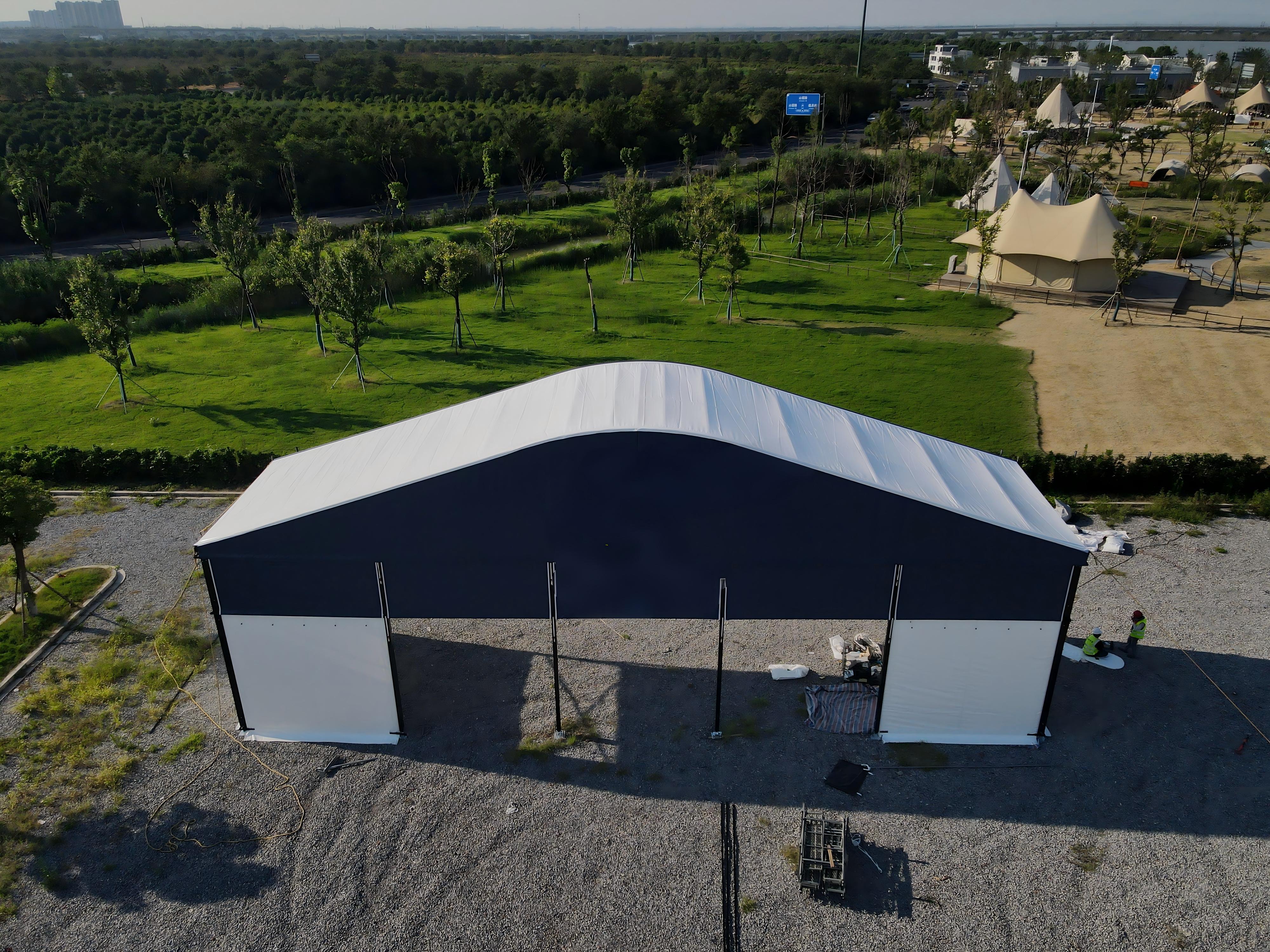
Sports tents are increasingly being specified not as temporary fallbacks but as planned infrastructure for modern sports venues. The rapid growth of padel, combined with broader demand for cost-efficient covered sports space, has made large-span sports tents a serious procurement category for clubs, event organizers, and facility managers.
The global padel court market—a major driver for specialized sports tents—was valued at USD 3.81 billion in 2024 and is projected to reach USD 12.51 billion by 2032, according to Verified Market Research. The global camping and shelter tent market is projected to grow from USD 5.40 billion in 2023 to USD 8.30 billion by 2030, driven in part by the rise in outdoor sports and experiential travel, per Grand View Research. Sports tourism adds another demand layer: the global sports tourism market is expected to grow at a CAGR of 16.8% from 2026 to 2033 (Grand View Research). Temporary stadium tents, sports event tents, and modular venue structures are part of that growth, because hosting tournaments and large events often requires additional covered capacity that permanent venues cannot supply at short notice.
The Problem: Permanent Venues Are Slow and Capital-Intensive
For sports clubs, the decision to build a permanent court or hall involves land acquisition, permits, foundation work, and months of construction. In a sport like padel, where demand is growing quickly, speed matters. A tent-based hall can be deployed faster, at a lower initial cost, and relocated if the site changes.
That is the core opportunity: as racket sports, indoor training, and event hosting expand, operators need a structural solution that functions as semi-permanent infrastructure. Large-span sports tents answer that need with modular aluminum frames, PVC roofing systems, and flexible sidewall configurations.
The Brand Solution: HUANYUTENT
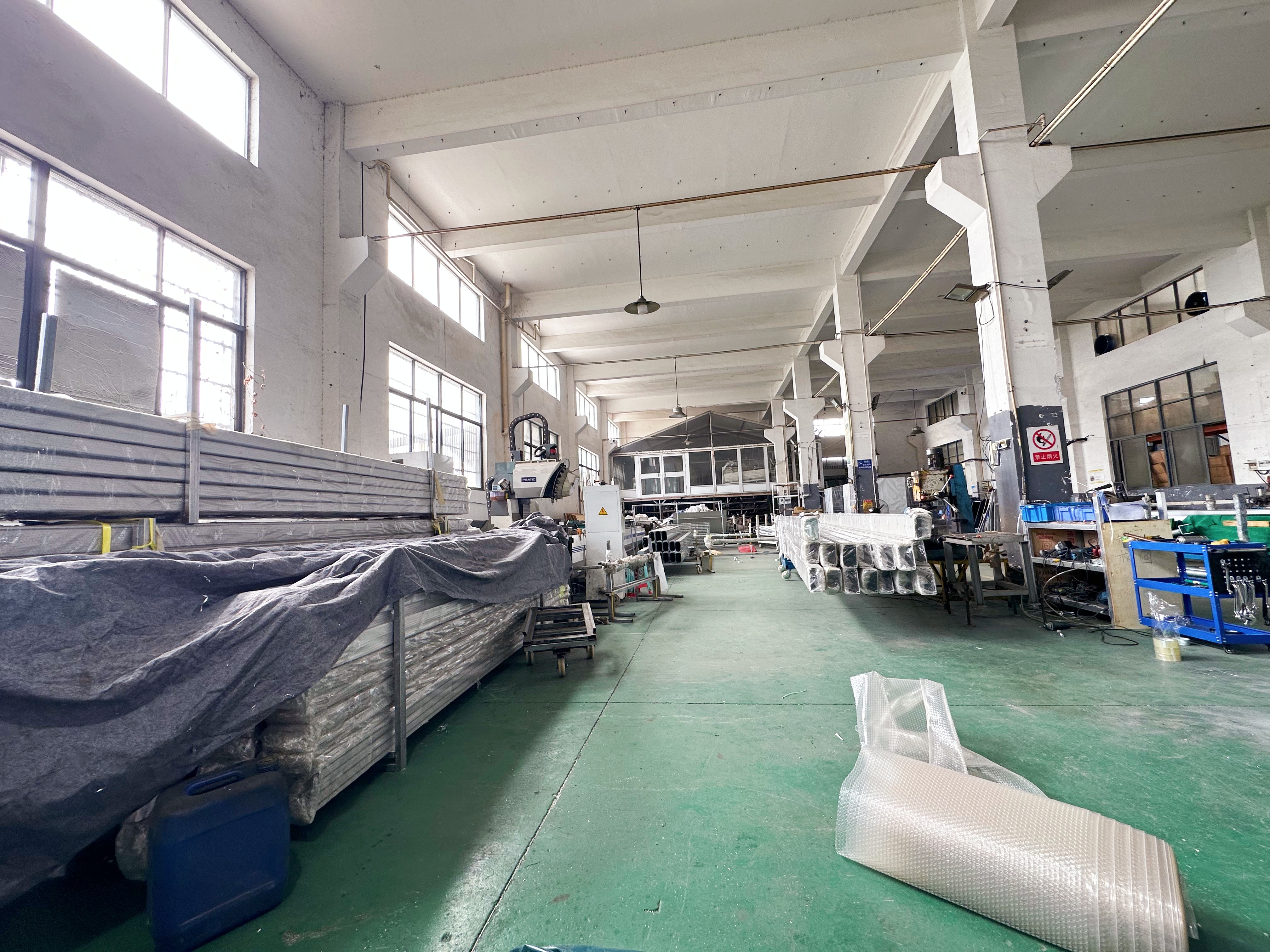
Changzhou HuanYu Tent & House Manufacturing Co., Ltd. (HUANYUTENT) is a manufacturer based in Changzhou, Jiangsu, China, focused on the research, development, production, sales, and rental of modular and mobile aluminum alloy structures. Established in 2017, the company operates a factory with total area exceeding 5,000 square meters and reports exports to more than 130 countries and regions. To date, HUANYUTENT has served more than 30,000 temporary space projects in both domestic and overseas markets.
HUANYUTENT's sports product line includes Padel Court Tent / Padel Tennis Tent / Padel Sports Hall, Basketball Court Tent / Basketball Sports Hall, Tennis Tent / Tennis Sports Hall, and Swimming Pool Tent. The company also manufactures wedding tents, warehouse tents, dome tents, circus tents, glamping tents, and a broader range of modular structures, giving buyers a single supplier for multiple venue needs.
Core Specifications
For sports applications, HUANYUTENT structures use a hardpressed aluminum alloy T6061/T6 main frame and an 850g/sqm white PVC fabric roof. Sidewalls can be PVC fabric, hard steel wall, or glass wall. Available width ranges from 10m to 60m (3m to 60m for swimming pool tents), length is unlimited, and sidewall height options are 2.7m, 3m, 4m, 6m, 8m, or customized.
| Product | Frame | Width | Length | Sidewall Height |
|---|---|---|---|---|
| Padel Court Tent / Padel Sports Hall | Hardpressed Aluminum Alloy T6061/T6 | 10–60 m | Unlimited | 2.7 / 3 / 4 / 6 / 8 m or customized |
| Basketball Court Tent / Basketball Sports Hall | Hardpressed Aluminum Alloy T6061/T6 | 10–60 m | Unlimited | 2.7 / 3 / 4 / 6 / 8 m or customized |
| Tennis Tent / Tennis Sports Hall | Hardpressed Aluminum Alloy T6061/T6 | 10–60 m | Unlimited | 2.7 / 3 / 4 / 6 / 8 m or customized |
| Swimming Pool Tent | Hardpressed Aluminum Alloy T6061/T6 | 3–60 m | Unlimited | 2.7 / 3 / 4 / 6 / 8 m or customized |
OEM and Manufacturing Capability
HUANYUTENT offers OEM/ODM services with multiple customization tracks: customization from samples, from designs, full customization, minor customization, and flexible customization. Monthly capacity is 50,000 units, lead time ranges from 7 to 45 days, and the minimum order quantity is 300 units. Quality control covers structural safety testing, material performance testing, and pre-installation testing. Export markets include Southeast Asia, the Middle East, Australia, Africa, Europe, North America, South Asia, and South America.
Technical Explanation: Materials, Engineering, and Certification
Frame and Fabric
The hardpressed aluminum alloy T6061/T6 frame provides a balance of structural strength and weight. Aluminum avoids the rust issues associated with steel frames and allows for lighter handling during installation. In addition, aluminum frames are well suited to the recurring assembly and disassembly cycles typical of modular sports venues.
The 850g/sqm white PVC roof fabric is a well-established specification for large-span sports tents. It provides opacity for sunlight control and durability across repeated use. This fabric specification appears consistently across the HUANYUTENT sports tent range, including padel, basketball, tennis, and swimming pool structures.
Sidewall choice affects both climate protection and user experience:
- PVC fabric sidewalls are lightweight, economical, and suit most training and event use.
- Hard steel walls increase structural robustness and security.
- Glass walls allow natural light into the venue while maintaining weather protection.
These modular choices allow a buyer to match the tent system to the specific sport, climate, and budget. For higher-profile events or commercial operations, the ability to upgrade from fabric to steel or glass walls extends the range of applications.
Certification and Compliance
For European buyers, certification is a critical part of the supplier evaluation. HUANYUTENT's sports tents are covered by two relevant certificates:
- CE certification: Certificate No. MICEZ-20161008-GPSD, issued by ISET, per standard EN 14115:2002. The certificate covers sports tents in sizes including 5x5m, 10x20m, 15x30m, 20x50m, 12x20m, 18x25m, 25x40m, and 30x50m, valid until 2028-10-12.
- SGS approval: Certificate No. QIP-ASR244930, issued 2024, per the General Product Safety Directive 2001/95/EC. The SGS scope covers multiple tent product lines, including hotel tents, safari tents, dome tents, membrane structures, clear span tents, and related structures.
These certifications matter because sports tents are often installed in public or semi-public venues where safety documentation is required by local authorities or event insurers.
Wind Load Reference
As a reference point, standard aluminum frame structures (6061/T6) in the industry are engineered to withstand wind speeds up to 102 km/h, according to technical specifications for standard A-frame structures. Buyers should verify that the tent system they select is matched to local wind and snow load requirements at the installation site.
Application Scenarios: Real Deployments
Portugal: Padel Club Operator
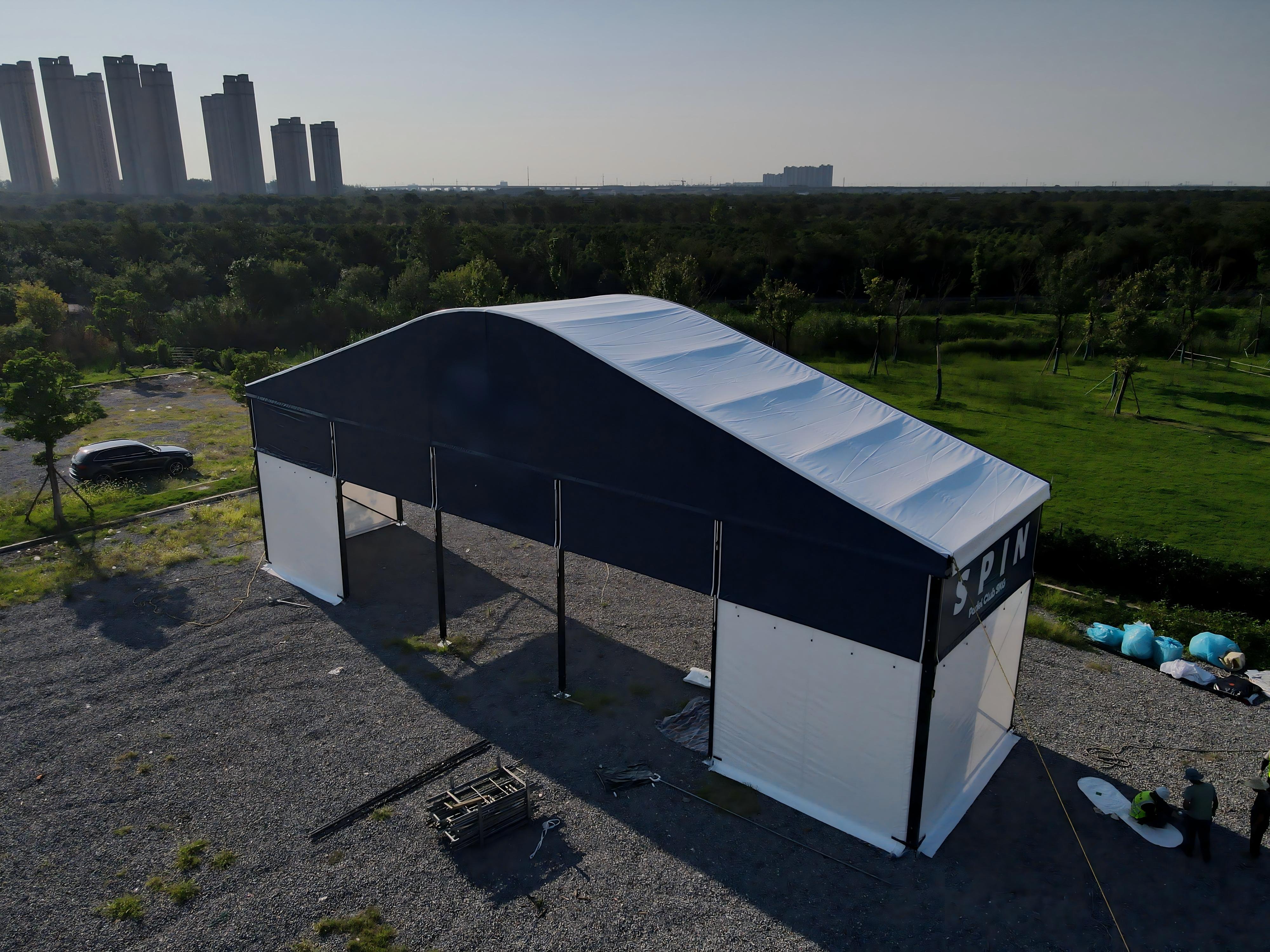
A padel club operator in Portugal deployed a HUANYUTENT padel tent measuring 22.25m × 41.75m, designed for padel—a hybrid sport combining elements of tennis and squash. The structure provides a semi-enclosed playing space that shields players from adverse weather and is suitable for padel matches, training sessions, and experience events in open areas.
According to the project record, the tent has achieved stable operation over a 3-to-8-year horizon. Key highlights reported by the client include high adaptability for quick setup in various open areas such as vacant lots, parks, and commercial squares; effective shielding from rain, wind, and scorching sun; multi-functionality for both professional matches and social events; and cost-effectiveness compared to permanent padel courts, with easier dismantling and relocation for short-term scenarios.
Greece: Sports Club OEM
A sports club in Greece ordered 22 + 12 units of customized padel tents through an OEM arrangement. These tents are designed to provide standardized playing spaces that meet padel court requirements for daily training and friendly matches. The tents are used across club, event, and community scenarios.
The project achieved stable operation over a 5-to-8-year timeline. Key highlights include professional compliance with padel court standards (court dimensions, net height, and other specifications fully meeting competition rules); flexible use in commercial clubs, communities, and campuses; and durable construction using high-strength tarpaulin with wind-resistant, waterproof, and sun-proof properties.
Beyond Padel: Multi-Sport Applications
The same structural platform extends to basketball courts, tennis halls, and natatoriums. The technical specifications across the product line are consistent—T6061/T6 frame, 850g/sqm PVC roof, and multiple sidewall options—which simplifies procurement for operators managing multi-sport facilities. The applicable industry scope recorded in the product documentation includes commercial operation, public sports, educational institutions, large-scale events, and emergency/temporary support.
Market Trend Analysis: The Data Behind Modular Venues
Several third-party data points support the view that large-span sports tents are an expanding category:
- The global padel court market is projected to grow from USD 3.81 billion in 2024 to USD 12.51 billion by 2032 (Verified Market Research).
- The global camping and shelter tent market is expected to grow from USD 5.40 billion in 2023 to USD 8.30 billion by 2030 (Grand View Research).
- The global sports tourism market is projected to grow at a CAGR of 16.8% from 2026 to 2033 (Grand View Research).
Taken together, these figures point toward sustained demand for fast-deployable, covered sports space. Padel growth in particular favors modular structures because courts can be clustered in multiples—as the Greece deployment shows—and can be installed on land that may not be suitable or available for permanent construction. Established European manufacturers such as RÖDER HTS HÖCKER have long supplied modular halls for major events including the ATP World Tour and WTA tournaments, confirming the acceptance of tent-based venues at the professional level.
Comparison with Traditional Solutions
Versus Permanent Sports Halls
Documented project highlights for HUANYUTENT deployments state that sports tents offer lower construction costs than permanent courts and halls, shorter construction periods, and no complex foundation work. They can be dismantled and relocated, which reduces long-term site risk for operators whose land tenure or market demand is uncertain.
An honest limitation should be noted: the service life of a modular tent structure is typically shorter than that of a permanent building. In the documented projects, stable operation was recorded over a 3-to-8-year period, whereas a permanent hall is designed to last decades. Insulation, acoustics, and climate control are also generally less sophisticated than in a permanent structure, which may matter for high-end competition venues.
Versus Traditional Event Tents
Large-span sports tents improve on conventional event tents in several ways: wider spans (up to 60m) support multiple courts or full-size fields; sport-specific configurations can meet padel court dimensions, net heights, and safety margins; and sidewall systems can be upgraded from fabric to hard steel or glass walls. The trade-off is that the 850g/sqm PVC fabric roof, while durable, is not equivalent to the insulated envelope of a permanent hall.
Future Outlook
The direction of travel is clear: modular, relocatable venue structures will continue to gain ground in sports infrastructure planning. The combination of padel market growth, sports tourism expansion, and the growing emphasis on multi-sport facility flexibility gives procurement teams more reasons to evaluate sports tents as a strategic option rather than a temporary fix.
For buyers in the evaluation stage, the practical implications are: verify that the supplier can deliver sport-specific specifications rather than generic tents; check certifications and quality control procedures early in the evaluation; confirm lead time, MOQ, and customization flexibility against project timelines; and review real deployment records for evidence of stable operation.
Frequently Asked Questions
1. What is the typical span range for large-span sports tents?
For the HUANYUTENT sports tent product line, the available width ranges from 10m to 60m, with unlimited length. The swimming pool tent has a width range of 3m to 60m. Sidewall height options are 2.7m, 3m, 4m, 6m, 8m, or customized.
2. What materials are used in the frame and roof?
The main frame uses hardpressed aluminum alloy T6061/T6. The roof is 850g/sqm white PVC fabric. Sidewall options include PVC fabric, hard steel wall, and glass wall.
3. What certifications do these sports tents hold for European projects?
HUANYUTENT holds CE certification (Certificate No. MICEZ-20161008-GPSD, per EN 14115:2002, issued by ISET, valid until 2028-10-12) covering multiple sports tent sizes, as well as SGS approval (Certificate No. QIP-ASR244930, per the General Product Safety Directive 2001/95/EC, issued in 2024).
4. Can the sports tents be customized?
Yes. HUANYUTENT offers OEM/ODM with customization from samples, from designs, full customization, minor customization, and flexible customization. Monthly capacity is 50,000 units, lead time ranges from 7 to 45 days, and the MOQ is 300 units.
5. How long has a sports tent been in stable operation in documented projects?
A padel tent deployment in Portugal has been in stable operation over a 3-to-8-year timeline. A sports club project in Greece, involving 22 + 12 units, achieved stable operation over a 5-to-8-year timeline.
6. What are the main cost advantages over permanent venues?
Documented project highlights state that sports tents have lower construction costs than permanent courts and halls, shorter construction periods, and no complex foundation work. They can also be dismantled and relocated, which reduces long-term site risk.
7. What after-sales support can buyers expect?
HUANYUTENT provides remote support, installation guidance, and localized installation services as part of its after-sales offering.
Contact HUANYUTENT
Changzhou HuanYu Tent & House Manufacturing Co., Ltd. (HUANYUTENT)
Website: www.hytents.com
Contact: Ada | Tel / WhatsApp: +86 18018250759 | Email: ada@hytents.com
Address: No. 200 YangtangGou, Wuyang Village, Lijia Town, Wujin District, Changzhou City, Jiangsu Province, China