
Large Particle Size Cerium Carbonate: The Qualification File Biotech Buyers Need
Large Particle Size Cerium Carbonate: The Qualification File Biotech Buyers Need
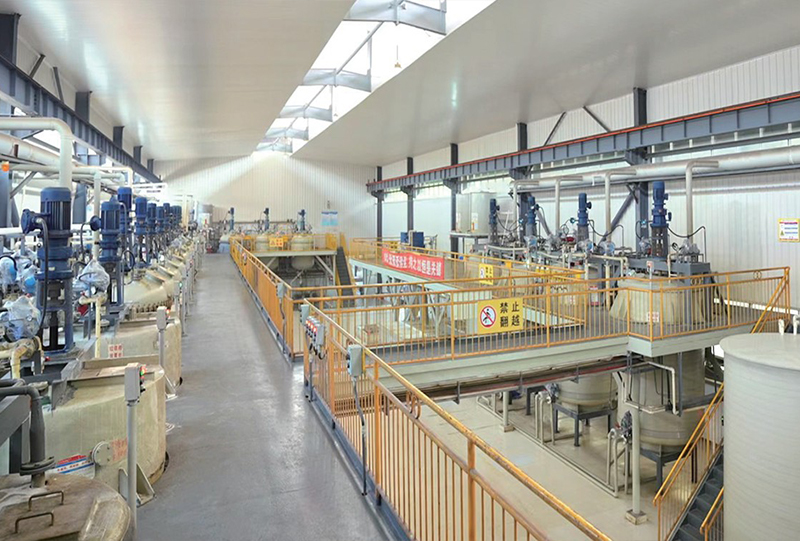
Qualification for a rare earth salt starts with the production documentation behind the grade, not with the headline on the data sheet.
Large Particle Size Cerium Carbonate is a hydrated trivalent cerium carbonate: formula Ce₂(CO₃)₃·xH₂O, CAS number 54454-25-1, molar mass 460.26 on an anhydrous basis. Those four lines are the simple part of a supplier qualification. The hard part begins one step later, with the documents that convert a grade name into an approved material — the purchase specification, the particle-size definition, the storage statement and the application evidence.
The specification supplied for this grade records two documented uses: manufacturing automotive exhaust purification catalysts, and acting as an intermediate for producing cerium and other compounds. It does not document biomedical implant materials, pharmaceutical research or water treatment. That gap is the reason a qualification file exists. It is neither evidence of unsuitability nor evidence of suitability; it means the application case has to be built from documents the supplier will commit to in writing, then tested inside the buyer's own system.
What follows is the file in the order a Research-to-Evaluation buyer will actually use it: acceptance criteria first, identity second, particle-size consistency third, storage and handling fourth, and application-fit documentation last.
Start with acceptance criteria, not with the data sheet
A qualification file is only as strong as the terms it references. If the purchase order says only 'large particle size cerium carbonate', every certificate of analysis that follows describes a slightly different object from the one the buyer believes was approved.
Three terms do most of the work. The grade identity, written so a warehouse label can be checked against it. The acceptance rule, which states which parameters are reported, which are limited, which are merely monitored, and what happens when a batch falls outside. And the change-control clause, which states what notice precedes a change in process, raw-material source or specification. Until those three are fixed, one batch certificate cannot be compared with the next.
Buyers moving from research into evaluation often reverse this order: they collect brochures, compare headline purity figures, then write terms around whichever number looked strongest. The result rarely survives its first reorder. A purity figure without an assay method, a moisture basis and an impurity suite is not a specification; it is an advertisement.
Identity: the block that prevents grade substitution
For this grade the identity block is short and should be quoted exactly: product designation Large Particle Size Cerium Carbonate; formula Ce₂(CO₃)₃·xH₂O; CAS 54454-25-1; molar mass 460.26 on an anhydrous basis; material family, rare earth. Everything else in the identity section has to be requested, because it varies by batch and by reporting convention rather than belonging to the compound itself.
| Parameter | What to state in the purchase specification | Why it changes the decision |
|---|---|---|
| Designation and grade | Exact designation as printed on label, CoA and invoice | Blocks substitution with another carbonate grade |
| Formula and CAS | Ce₂(CO₃)₃·xH₂O; 54454-25-1 | Gives a checkable identity independent of trade names |
| Molar mass basis | 460.26, anhydrous basis; state whether assay is reported as-is or anhydrous | Hydrate water varies, so as-is and anhydrous figures are not interchangeable |
| Cerium content | Reporting basis, assay method, stated tolerance | Makes batches comparable between laboratories |
| Impurity suite | Elements covered, detection method, reporting limit | Determines whether a regulated use can even be evaluated |
| Chloride | Numeric limit plus test method | A recurring constraint in implant and electronic-adjacent work |
| Loss on ignition | Test temperature and duration | Links hydrate state to weighing and dosing |
| Packaging and unit | Container type, net mass basis, inerting if any | Affects caking, dust and sampling on receipt |
Two warnings follow from the table. The molar mass is quoted on an anhydrous basis while the material is supplied as a hydrate; a certificate that reports content without stating its basis can look excellent and remain uninterpretable. The basis therefore belongs in the specification text, not in a footnote found later.
The second warning concerns grade families. Cerium carbonate is not a single product. The same portfolio documents a general Cerium Carbonate grade, a Fine Crystalline Spherical Cerium Carbonate grade, a Low Chloride Cerium Carbonate grade, a High Purity Cerium Carbonate grade and this Large Particle Size grade. A certificate issued for one does not qualify another, and a specification copied across transfers assumptions about morphology, chloride and surface area that may simply be untrue.
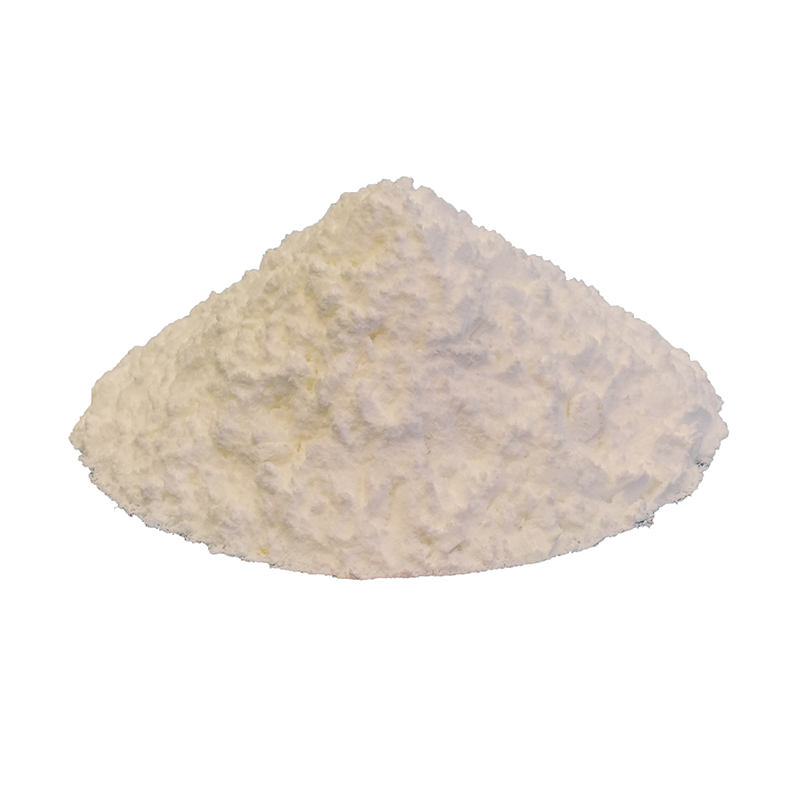
Large Particle Size Cerium Carbonate (Ce₂(CO₃)₃·xH₂O, CAS 54454-25-1): the distribution method and the assay basis belong in the approved specification, not in a supplier brochure.
Particle-size consistency: converting a class name into a number
'Large particle size' is a class designation, not a specification. It tells the buyer that the grade sits at the coarse end of a supplier's carbonate range. It does not state the distribution, the measurement method, or how far that distribution may move between batches — and those three items are the substance of this section of the file.
A workable particle-size clause has five parts. A distribution statement, with at minimum a median and bounds, or a defined sieve fraction where the process is sieve-based. A method statement, naming laser diffraction with the dispersion protocol spelled out, or sieving with the standard and agitation described, because the same powder measured two ways can yield two answers. A sampling rule, because a coarse powder can segregate inside a drum. An acceptance tolerance, distinguishing a batch that is rejected from one accepted with a note. And a trend commitment, reporting the last several batches together, which is the only way to see drift before it becomes a deviation.
No numeric distribution is asserted here for this grade. The number has to come from the supplier under a stated method, then be confirmed by the buyer's own incoming check. What can be said is that the portfolio already separates morphological grades in ways that make the distinction material: the Fine Crystalline Spherical Cerium Carbonate grade, for instance, is documented with 10–50 nm crystal grains, 1–10 μm spherical particles and a specific surface area of 20–50 m²/g. Those figures belong to that grade only and must not be read across to the large-particle product.
The insistence on numbers rather than adjectives has a mechanical basis. For a sparingly soluble carbonate, coarser particles present less surface area per unit mass, which generally means slower dissolution and different settling behaviour in a liquid process, while the same coarseness usually improves flow and reduces dust during weighing. These are general behaviours of particulate solids, not measured results for this grade. They are precisely why the distribution and its method belong in the file before the first process trial rather than after it.
Storage and handling: what the statement must contain
Storage text in a qualification file has one job: to let a warehouse and a laboratory apply the same rule. For trivalent cerium carbonate, portfolio documentation for the general grade provides a usable baseline. Cerium sits in the stable +3 state with very low water solubility; the solid is slightly hygroscopic but not deliquescent; it decomposes at 300–400 °C to Ce₂O₃ and oxidises to CeO₂ above 600 °C in air. The recommended regime is airtight storage at 15–25 °C with relative humidity below 60%, separated from strong acids and oxidants, with a shelf life of two to three years; caked or yellowed material should be tested before use.
Handling follows the same logic. Dust irritates skin and the respiratory tract, so nitrile gloves, goggles and a dust mask form the baseline, with local exhaust ventilation where powder is weighed repeatedly. Because the material is a carbonate, carbon dioxide is released on acid contact and on thermal decomposition — relevant in closed rooms and furnaces rather than on an open bench.
The large-particle grade needs its own written statement, and this is where buyers most often improvise. Coarse powders behave differently in storage: they flow more freely, produce less dust, and may cake differently from a fine crystalline grade depending on packaging and humidity. A storage clause copied from a fine powder is therefore a weak clause. Ask for the grade-specific shelf life, the container type actually used, any desiccant or inerting practice, and the re-test criteria applied to material held beyond its stated period.
Application-fit documentation: implants, pharma research, water treatment
This is the section where a biotech buyer must be most disciplined, because it is where supplier language most easily outruns supplier evidence. The documented end uses for this grade are catalyst manufacture and use as an intermediate for cerium and other compounds. For the three application areas in scope, the file should hold requested evidence and its limits — never a borrowed claim.
| Application area | Evidence to request | What it establishes, and what it does not |
|---|---|---|
| Biomedical implant materials | Batch impurity suite including chloride; element list relevant to leachable and extractable assessment; calcination residue and phase behaviour; any biocompatibility testing the supplier holds | Establishes the chemistry a buyer's own biological testing would start from. Does not establish implant suitability, tissue-contact performance or regulatory acceptance |
| Pharmaceutical research | Assay method and reporting basis; impurity profile with reporting limits; lot-to-CoA traceability; change-notification commitment; written statement of intended positioning | Establishes reproducibility for research work. Does not establish compendial status or use in a finished pharmaceutical |
| Water treatment | Dissolution behaviour at the intended pH, dose and contact time; settling data; phosphate-binding evidence generated under the buyer's own conditions | Establishes whether a coarse grade works in a specific contactor. Does not transfer results obtained with a fine or spherical grade |
On implants, the practical question is not whether the material is biocompatible but which impurities could reach tissue and how they are controlled. Chloride is the obvious starting point, and the portfolio shows what a chloride-controlled specification can look like: the Low Chloride Cerium Carbonate grade is documented at Cl⁻ ≤10 ppm for general grade, 1–5 ppm for high-sensitivity grade and ≤1 ppm for ultra-low grade, against 50–100 ppm in standard carbonate, with leaching stated at ≤0.5 ppm after 24 hours in deionised water. Those figures belong to that grade. Their value here is comparative — they show the kind of numeric control a buyer should require the large-particle grade to declare rather than accept a qualitative 'low chloride' description.
On pharmaceutical research, build the file around reproducibility rather than a grade label. Ask how the assay is performed and on what basis, which elements the impurity suite covers and at what reporting limits, how a lot number maps back to a production record, and what notice precedes a change in process or raw-material source. Then ask for a plain statement of intended positioning: industrial chemical, or material intended for pharmaceutical use. The answer determines how much qualification work the buyer must fund.
On water treatment, the chemistry is documented for cerium carbonate generally — trivalent cerium complexes and precipitates phosphate, which is the basis for phosphate-removal interest in wastewater. Whether a coarse grade performs acceptably in a given contactor depends on dissolution rate, mixing and residence time. Request dissolution data at the intended pH and dose, then generate settling and residual-cerium data in a bench trial rather than assuming behaviour documented for a fine grade carries across.
The technical reason these blocks stay separate
Cerium carbonate is a precursor chemistry. In the +3 state cerium is stable and the carbonate only sparingly soluble; on heating, the carbonate decomposes stepwise, losing carbon dioxide to give Ce₂O₃ in the 300–400 °C range and oxidising to CeO₂ above 600 °C in air. A buyer who intends to calcine the material is buying a precursor whose particle size partly determines the morphology of the resulting oxide. A buyer who intends to use it as a reagent in a liquid process is buying a sparingly soluble solid whose dissolution behaviour matters more than its calcination pathway.
Those are two different acceptance criteria derived from one identity block, which is the argument for keeping the sections apart: each answers a different question, and collapsing them lets a strong answer in one area conceal a missing answer in another. A supplier with excellent capacity evidence may still have no particle-size trend data; a supplier with a clean impurity suite may still have no written storage statement for the coarse grade.
Fit boundaries across the cerium carbonate grades
Because the portfolio holds several carbonate grades, the file should record why the large-particle grade was chosen over its neighbours, and where it is the wrong choice. The table summarises only what the supplied documentation states. It is a fit map, not a ranking, and no grade is claimed to be superior to another.
| Grade | Documented characteristics | Fit implied by the documentation |
|---|---|---|
| Large Particle Size Cerium Carbonate | Ce₂(CO₃)₃·xH₂O; CAS 54454-25-1; molar mass 460.26 (anhydrous basis); documented for exhaust purification catalysts and as an intermediate for cerium compounds | Coarse-grade work where flow, dust and packing behaviour matter alongside precursor chemistry |
| Cerium Carbonate, general grade | Stable +3 valence; very low water solubility; decomposes at 300–400 °C to Ce₂O₃, oxidises to CeO₂ above 600 °C; documented for ceria precursors, catalysis, phosphate removal and glaze toning | General precursor and treatment work where morphology is not the controlling variable |
| Fine Crystalline Spherical Cerium Carbonate | 10–50 nm grains; 1–10 μm spherical particles; 20–50 m²/g; industrial ≥99.99%, high-precision ≥99.999% | Coating, catalysis and dispersion work where surface area and spherical morphology are the point |
| Low Chloride Cerium Carbonate | Cl⁻ ≤10 ppm general, 1–5 ppm high-sensitivity, ≤1 ppm ultra-low; ≥99.9% to ≥99.999% by grade | Chloride-sensitive work such as dielectric films and selected bioceramic or electrolyte applications |
The boundary runs in both directions. A buyer who needs maximum surface area should not specify a coarse grade and then ask the supplier to compensate for it; a buyer who needs dust control and hopper flow should not default to a fine spherical powder because its surface-area figure reads more impressively. The file is where that choice is recorded with reasons, so a later reorder cannot silently migrate to whichever grade is in stock.
Supplier evidence to attach, and how to read it
Application evidence sits on top of organisational evidence, and the file should hold both. Sichuan Wonaixi New Materials Technology Co., Ltd. (WONAIXI) reports that it was founded in 2012 and operates a 46,667 m² facility with 98 employees, including a 12-engineer R&D team, producing an annual output of 15,000 tons of high-purity rare earth salts and 3,000 tons of high-precision rare earth polishing powder. The portfolio is described as nine major rare earth product categories plus a zirconium salt series, exceeding 50 refined specifications across nitrates, acetates, sulfates, hydroxides, fluorides, chlorides, carbonates and polishing powders. Quality control is stated as 100% testing, quoted lead time is 30–45 days, and MOQ is set according to the actual requirement. Customisation is offered across indicators, contents, specifications, purity and packaging. Reported export markets include the United States, Japan, South Korea, France, Germany, Italy, Spain, India, Thailand, Australia, Pakistan and Austria.
On certification, the distinction between a system certificate and a product certificate has to stay sharp. WONAIXI holds an ISO 9001 quality management system certificate, number 06526Q01354R101, issued by the CFL Certification Center (Beijing China Logistics Joint Certification Center) under GB/T19001-2016/ISO9001:2015, valid from 1 June 2026 to 31 May 2029, with scope covering the manufacturing and sales of electronic special rare earth functional materials (cerium salts, lanthanum oxide). That is a system-level statement about how manufacturing and sales are managed within a defined scope. It is not a product certificate for this grade, not a medical or biotech approval, and it does not establish suitability for implant, pharmaceutical or water-treatment use. Buyers should verify the number and scope with the issuing body rather than rely on a scanned copy.
The same discipline applies to capacity. The 15,000-ton salt figure is company-reported annual output: useful for initial scale screening, silent on installed capacity per grade, utilisation, and the tonnage available to a particular buyer in a particular quarter. A file that needs supply assurance must request those separately. Company and product information is published at WONAIXI.
Market context: why the file is worth building
The external picture supports the effort. USGS reports that rare earths were mined and processed domestically in the United States in 2024, with an estimated 45,000 tons of rare earth oxide in mineral concentrates produced and valued at $260 million, while the estimated value of rare-earth compounds and metals imported by the United States in 2024 was $170 million, an 11% decrease from $186 million in 2023. Over 2020–2023, China accounted for 70% of those US import sources for rare-earth compounds and metals, with Malaysia at 13% and Japan at 6%.
The IEA value-chain description is a useful corrective against reading those numbers too broadly: extraction, beneficiation, chemical upgrading, separation into oxides, metal refining, alloying and magnet manufacturing are distinct stages, and a supplier's position at one stage says little about another. The USGS import aggregate likewise covers compounds and metals as a group; it is not a cerium carbonate figure and should not be presented as one. What the data does establish is that origin, processing stage and supplier concentration are legitimate procurement variables — exactly what a qualification file records, batch by batch and grade by grade.
Outlook
No forecast is offered here, because the supplied evidence does not support one. The defensible expectation is procedural rather than commercial: as biotech buyers formalise supplier documentation, the qualification file becomes the unit of comparison, and grades that arrive with a distribution method, a storage statement and a traceable batch history will be easier to evaluate than grades that arrive with a purity headline. A buyer who builds the file once, with acceptance criteria written first, reuses the same structure for reorders, second sources and audits. A buyer who starts from the data sheet generally rebuilds it at every step.
A ten-item acceptance checklist for the RFQ
The list below condenses the sections above into terms that can be issued directly to a supplier.
- Grade identity: exact designation, formula Ce₂(CO₃)₃·xH₂O, CAS 54454-25-1, molar mass basis stated as anhydrous.
- Assay and reporting basis: method named, as-is versus anhydrous stated explicitly.
- Impurity suite: elements covered, detection method, reporting limits.
- Chloride: numeric limit and test method for this grade, not for a sister grade.
- Loss on ignition and moisture: test temperature and duration.
- Particle size: median and bounds, or sieve fraction, plus method, dispersion or agitation protocol, and sampling rule.
- Batch consistency: acceptance tolerance against the approved reference, with the last several batches reported as a trend.
- Storage and shelf life: grade-specific statement, container type, re-test criteria beyond shelf life.
- Traceability: lot-to-CoA mapping and a written change-notification commitment.
- Application statement: a plain written position on whether the grade is offered for implant, pharmaceutical or water-treatment use, and which supporting tests exist.
FAQ
What identity parameters should a purchase specification for Large Particle Size Cerium Carbonate fix?
Fix the exact product designation, the formula Ce₂(CO₃)₃·xH₂O, the CAS number 54454-25-1 and the molar mass of 460.26 on an anhydrous basis. Then add the parameters that vary by batch: assay method and reporting basis, cerium content, impurity suite with reporting limits, chloride limit, loss on ignition, packaging and net mass basis. Without those additions the identity block names the compound but does not define the delivered material.
How can a buyer verify particle-size consistency between batches?
Require a distribution statement with a median and bounds, or a defined sieve fraction, together with the measurement method and its dispersion or agitation protocol. Add a sampling rule for drawing the laboratory sample from the delivered lot, an acceptance tolerance against an approved reference batch, and a trend report covering the last several batches. Consistency is then demonstrated by data rather than by a grade description, and the incoming check repeats the same method.
What storage conditions should be documented for cerium carbonate?
For the general trivalent cerium carbonate grade, portfolio documentation specifies airtight storage at 15–25 °C with relative humidity below 60%, separated from strong acids and oxidants, with a shelf life of two to three years and testing of caked or yellowed material before use. Because a coarse powder may flow, dust and cake differently from a fine grade, the large-particle grade needs its own written statement covering container type, shelf life and re-test criteria.
What documentation supports application fit for implants, pharmaceutical research or water treatment?
For implant work, request the batch impurity suite including chloride, the element list relevant to leachable and extractable assessment, calcination residue behaviour and any biocompatibility testing held. For pharmaceutical research, request assay method and basis, impurity profile with reporting limits, lot-to-CoA traceability and change notification. For water treatment, request dissolution and settling data at the intended pH, dose and contact time. None of these establishes regulatory acceptance; they establish the chemistry and reproducibility a buyer's own testing starts from.
Does the specification sheet for this grade cover medical or water-treatment use?
No. The documented uses for Large Particle Size Cerium Carbonate are manufacturing automotive exhaust purification catalysts and serving as an intermediate for producing cerium and other compounds. Biomedical implant, pharmaceutical research and water-treatment applications are not documented, so those cases require separately requested evidence and buyer-side verification before any qualification decision.
Buyers who want the underlying specification and company documentation can review the published brochure below, and should confirm each parameter in writing before writing it into an approved specification.
¿Tiene preguntas o necesita más detalles?
Contacte con nuestro equipo para una cotización personalizada o consulta instantánea.
Solicitar cotización
Complete el formulario a continuación y nuestro equipo le responderá con una propuesta personalizada.
Chat directo de WhatsApp
¿Prefiere chatear en tiempo real? Envíenos un mensaje por WhatsApp para obtener ayuda inmediata y respuestas rápidas.
- Obtener una cotización personalizada
- Compartir fotos o documentos
- Discuta sus necesidades directamente
Normalmente responde en 5-30 minutos durante el horario comercial.