
Lanthanum Carbonate in Ceramic Intermediates: Application Fit and Grade Selection
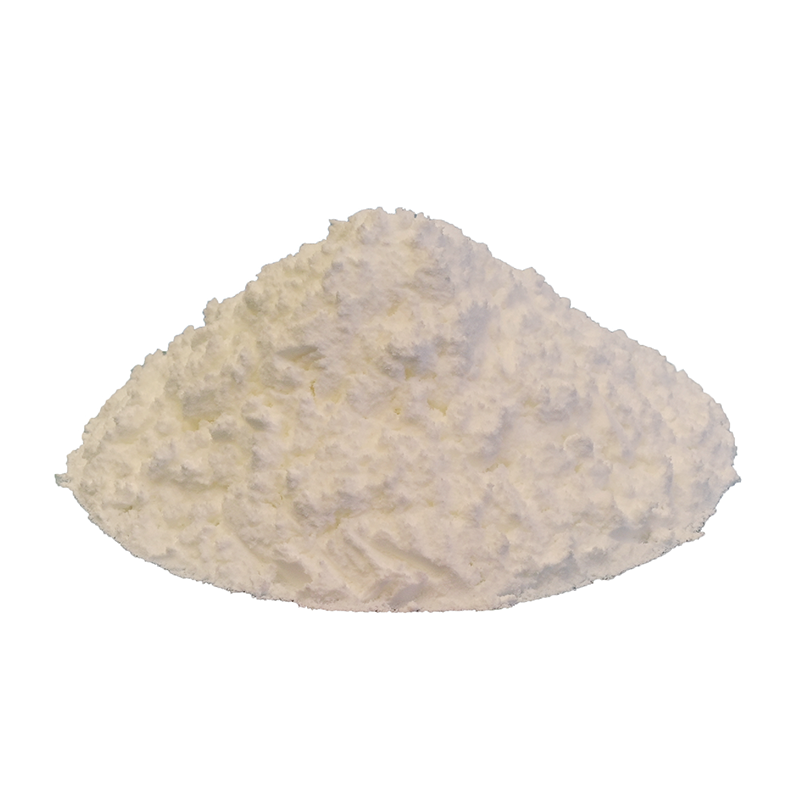
Lanthanum Carbonate (La₂(CO₃)₃·xH₂O) is supplied as a lanthanum intermediate rather than a finished ceramic functional phase.
Lanthanum carbonate rarely performs the final function in a ceramic body. It works earlier in the chain — as the lanthanum intermediate that converts into lanthanum oxide, feeds a wet salt route, or decomposes inside a green body during firing. Its own product description is deliberately narrow: it is mainly used as an intermediate compound of lanthanum, and it can be used as a raw material for lanthanum chloride and lanthanum oxide. For ceramic buyers, that single fact changes the selection question. The useful question is not which carbonate is best, but whether the process needs a carbonate route at all — and at which grade.
Why an Intermediate Compound Deserves Its Own Evaluation
Ceramic and electronic material producers buy lanthanum in several chemical forms, and catalogue comparisons usually sort them by compound name. That sorting hides the real difference: each form occupies a different position in the process chain, and each imposes a different handling and conversion burden. A carbonate is not a drop-in alternative to an oxide, and an oxide is not a drop-in alternative to a chloride.
Lanthanum carbonate sits in the middle of that chain. It is a stable solid with ultra-low water solubility, and it holds lanthanum in a stable +3 valence with no redox activity. Its two conversion paths are both documented: thermal decarbonation, which proceeds gradually above 400 °C and completes into La₂O₃ above 800 °C, and acid dissolution, in which strong acid releases CO₂ and forms lanthanum salts. Whichever path a plant uses, the carbonate is consumed on the way to a phase that actually does the work.
That intermediate status creates a specific commercial problem. Because the carbonate is not the functional phase, its specification cannot be evaluated in isolation. It has to be evaluated against the downstream requirement: what the body needs at the grain boundary, what the dielectric needs in the lattice, or what the wet-synthesis step needs in solution. Buyers who evaluate the carbonate first and the downstream requirement second tend to over-specify on one line and under-specify on another.
Where Lanthanum Carbonate Fits: An Application Map
The applications associated with lanthanum carbonate cluster around composite ceramic materials, electronic components, LED phosphor materials, laboratory rare earth synthesis, environmental water treatment, and pharmaceutical raw material use. Ceramic and electronic work share the same underlying logic: the carbonate delivers lanthanum into a host system where the lanthanum either modifies the microstructure or occupies a lattice site.
| Application scenario | Role of the lanthanum carbonate in the process | Grade consideration |
|---|---|---|
| Alumina / zirconia composite ceramics | Sintering aid. Stepwise CO₂ removal under heat generates in-situ lanthanum oxide that adjusts ceramic microstructure; calcination produces high-purity lanthanum oxide that lowers ceramic sintering temperature and refines grains. | Industrial grade is the usual starting point where the carbonate is fully decomposed during firing. |
| MLCC barium titanate dielectrics | Doping precursor. The high-purity precursor route is used for highly stable capacitor dielectric ceramics. | High-purity variant is normally specified where trace control in the dielectric matters. |
| LED phosphor materials | Host material for red and green luminescent phosphors; co-doping rare earth ions in the lattice regulates luminescence. | Grade is set by the phosphor specification, not by the carbonate alone. |
| Rare earth salt and oxide synthesis | Raw material for lanthanum chloride and lanthanum oxide; feedstock for wet synthesis of rare earth salts. | Grade follows the specification of the downstream salt or oxide. |
| Water treatment | Lanthanum slowly releases La³⁺ that forms insoluble lanthanum phosphate with phosphate, restraining eutrophication. | Handled separately from ceramic routes; different acceptance criteria. |
| Pharmaceutical raw material | Oral phosphate-binding raw medicine for nephropathy, stable under neutral and weak alkaline conditions. | Pharmaceutical grade, stored away from light. |
These scenarios are commonly associated with demanding material markets — Great Britain, Japan, South Korea, the United States, and France appear repeatedly in the application data for lanthanum compounds used in ceramics, optics, and electronics.
Technical Explanation: How the Carbonate Becomes the Ceramic Phase
Lanthanum Carbonate is supplied as a hydrate with the formula La₂(CO₃)₃·xH₂O, CAS 54451-24-0, and a molar mass of 457.85 g/mol on an anhydrous basis. Three of its physical characteristics drive most process decisions.
- Stable +3 valence, no redox activity. Lanthanum stays trivalent, so the carbonate introduces no oxidation or reduction side chemistry into a firing or solution system.
- Ultra-low water solubility. The compound is stable under neutral and weak alkaline conditions and does not simply dissolve in water. Where a liquid-phase route is required, strong acid dissolution releases CO₂ and forms lanthanum salts.
- Stepwise thermal decomposition. Decarbonation proceeds gradually above 400 °C and completes into lanthanum oxide above 800 °C. In a green body, this is the mechanism that generates in-situ oxide and adjusts ceramic microstructure.
Two practical consequences follow. First, a ceramic firing profile that is intended to rely on in-situ oxide formation has to cover the decomposition window; otherwise the carbonate is still evolving CO₂ while the body is densifying. Second, because carbon dioxide is the decomposition product and the material is non-flammable with no toxic decomposition byproducts, the kiln atmosphere and off-gas planning become a process design question rather than a safety escalation.
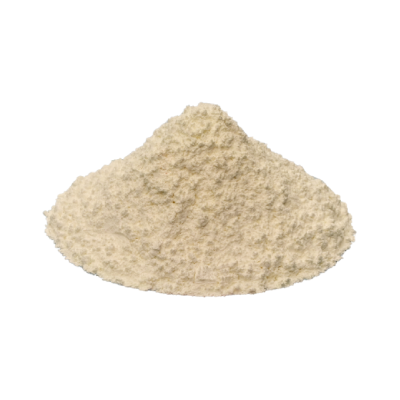
Lanthanum oxide is the downstream phase formed when a carbonate feedstock is calcined; the oxide itself is supplied in reagent, technical, and 4N/5N ultra-high purity grades.
That second point explains why the same lanthanum element appears at two levels of the catalogue. Lanthanum Oxide is offered in reagent, technical, and 4N/5N ultra-high purity grades for glass, ceramic, and electronics use, while Lanthanum Carbonate is positioned upstream as the intermediate and as a raw material for lanthanum chloride and lanthanum oxide. Choosing between them is therefore a decision about where in the chain the buyer wants to start, not a decision about which compound is inherently superior.
Grade Selection: Standard Versus High-Purity Lanthanum Carbonate
Scenario-level grade selection is the part of lanthanum carbonate sourcing that is most often handled informally. A practical sequence is to define the downstream functional phase first, then match the carbonate grade to it, and only then negotiate packaging and logistics.
The distinction between a standard industrial grade and a high-purity variant is not only a purity number. It also changes storage and shelf-life parameters. Industrial grade carries a stated shelf life of 3–4 years, while pharmaceutical and high-purity grades are stated at 2–3 years and the pharmaceutical grade must additionally be stored away from light. Both are stored airtight at 15–25 °C with relative humidity below 60% and kept away from strong acids.
| Selection driver | Standard industrial grade is typically considered when… | High-purity variant is typically considered when… |
|---|---|---|
| Process role | The carbonate is an interim sintering aid that decomposes fully in the body. | Lanthanum enters a dielectric, phosphor, or electronic lattice where trace content matters. |
| Downstream specification | The downstream oxide or salt specification is defined broadly. | The downstream dielectric, phosphor, or optical specification is defined tightly. |
| Documentation need | Routine batch verification is sufficient. | Batch-level impurity and identity documentation is required. |
| Inventory planning | Longer storage cycles are practical (3–4 years stated). | Shorter cycles and stricter storage control are planned (2–3 years stated). |
A common over-specification pattern is to request a high-purity grade for a body in which the carbonate is fully decomposed during firing, where the tighter incoming specification is not matched by tighter process control downstream. A common under-specification pattern is the reverse: using a standard grade upstream of a dielectric or phosphor step where trace control was the reason the project chose a rare earth route in the first place.
Because the carbonate is a precursor rather than a standalone ingredient, purity alone does not define fit. Identity and hydrate form, decomposition behaviour against the firing schedule, trace profile, packing format, and shelf life all belong to the grade decision. Suppliers that can adjust indicators, contents, specifications, purity, and packaging are useful at this stage, because the grade can be written around the downstream requirement rather than selected from a fixed list.
Comparison With Established Feedstock Choices
Ceramic producers weighing lanthanum carbonate against other lanthanum and ceramic feedstocks are effectively choosing a starting point in the process chain. The comparison below is drawn from documented product roles rather than from performance claims.
| Feedstock | Documented role | Boundary worth noting |
|---|---|---|
| Lanthanum Carbonate | Intermediate compound of lanthanum; raw material for lanthanum chloride and lanthanum oxide; sintering aid for alumina/zirconia composites; doping precursor for barium titanate. | Introduces a carbonate decomposition step that releases CO₂ during firing. |
| Lanthanum Oxide | Glass, ceramic, and electronics use; lowers sintering temperature for refractory components; high-k dielectric for transistors; supplied in reagent, technical, and 4N/5N grades. | Skips the decomposition step, so it starts at a later, higher-cost stage of the chain. |
| Lanthanum Sulfate Hydrate | Low-temperature sintering aid for alumina ceramics; reduces alumina sintering temperature and enhances mechanical strength; also used as a reagent and in spectroscopic analysis. | A sulfate route, with its own decomposition and residue profile. |
| Anhydrous Lanthanum Chloride | Molten salt electrolysis for metallic lanthanum, semiconductor doping, anhydrous Lewis acid catalysis, SOFC electrolyte additive. | Anhydrous handling is strict (RH below 50%, moisture-proof storage); unsuitable for open aqueous processing. |
| Cerium Oxide | Glass decolorizer and polishing agent; reversible oxygen storage for exhaust catalysis. | Performs functions lanthanum carbonate does not: polishing and oxygen storage are cerium chemistries. |
| Zirconium Nitrate | Precursor for zirconia ceramic powder and dielectric films; mixed with yttrium nitrate and spray dried into high-strength zirconia for engine parts and implants. | Serves the zirconium/yttrium side of a ceramic system, not the lanthanum side. |
The honest summary is that lanthanum carbonate is not a universal substitute. It is technically compatible with ceramic routes where a lanthanum source is required and where the decomposition step is acceptable or desirable. Where the process cannot tolerate an in-body gas release, where an anhydrous chemistry is mandatory, or where the function required is polishing or oxygen storage, another feedstock is the correct starting point.
Limits and Boundaries to Keep in View
- It is an intermediate, not a functional phase. Outcomes depend on the calcination, blending, and firing controls applied downstream. The carbonate specification constrains the starting point; it does not determine the finished body.
- The decomposition step must be designed in. Because decarbonation proceeds above 400 °C and completes above 800 °C, kiln schedules and off-gas handling need to accommodate the release of carbon dioxide.
- Ultra-low water solubility cuts both ways. It makes the material stable in neutral and weak alkaline environments, but aqueous processing requires acid dissolution, and any acidic slurry will consume the carbonate rather than carry it intact.
- It does not replace cerium or zirconium chemistries. Polishing, oxygen storage, and zirconia precursor roles belong to other compounds.
- High-purity grades carry tighter logistics. A shorter stated shelf life of 2–3 years and, for pharmaceutical grade, light-protected storage, change inventory policy — not just the purchase specification.
- Material data has a shelf life of its own. Expired stock should be re-tested before use rather than released on the assumption that a stable powder stays within specification indefinitely.
How a Rare Earth Manufacturer Fits Into This Picture
Sichuan Wonaixi New Materials Technology Co., Ltd. (WONAIXI) is a manufacturer of rare earth functional materials founded in 2012 and based in the Shawan Economic Development Zone, Leshan City, Sichuan Province, China. It is recognised as a National High-Tech Enterprise and a Sichuan Provincial SRDI Enterprise, and holds more than 10 national invention patents.
The company operates a 46,667 m² production site with 98 employees, of whom 12 are R&D engineers, and reports annual output of 15,000 tons of high-purity rare earth salts plus 3,000 tons of high-precision rare earth polishing powder. Its portfolio spans 9 major categories of rare earth products and more than 50 refined specifications, covering rare earth salts, oxides, fluorides, and a complete zirconium salts series. Products are used in national defense, aerospace, pharmaceutical manufacturing, electronics, new energy, three-way catalysis, environmental protection, and precision optical polishing.
For buyers evaluating a carbonate grade, three capability points matter more than catalogue breadth. First, customisation is offered across indicators, contents, specifications, purity, and packaging — the parameters that define a grade in practice. Second, quality control is stated as 100% testing. Third, stated lead time is 30–45 days with MOQ discussed against the actual project, which makes early specification planning more important than last-minute substitution. Export business accounts for 10% of total sales, with major markets including Japan, South Korea, the USA, France, and the UK.
Market Signals Behind Ceramic and Glass Additive Demand
Two independent data points frame why ceramic and glass additive chemistry keeps attracting rare earth sourcing attention. Metal oxides accounted for approximately 42.6% of the global glass additive industry in 2025, driven by demand for UV protection and refractive index refinement, according to Fact.MR. Separately, IMARC Group projects the global rare earth elements market at approximately USD 14.03 billion by 2025, with magnet applications accounting for 31.2% of total value.
Published market-size estimates for rare earth elements diverge widely, and that divergence is itself a planning signal. Grand View Research places the 2024 figure at USD 3.95 billion, Fortune Business Insights at USD 4.12 billion for 2025, and IMARC Group at USD 14.03 billion for 2025 — differences that trace back to whether raw minerals or downstream compounds are counted. Buyers should treat any single headline number as a directional indicator rather than a procurement input.
Upstream supply behaviour also matters. China's rare earth exports reached 62.6 thousand metric tons in 2025, the highest volume in a decade despite tightening export licensing controls, according to customs data reported by Statista. On the demand side, Arthur D. Little projects neodymium-praseodymium demand growth at a CAGR of 8.4% through 2035 on the strength of the EV and wind turbine sectors. Because lanthanum compounds are produced alongside magnet materials in the same separation economy, the pace of magnet-driven demand affects the availability and commercial priority of co-produced lanthanum intermediates.
Future Outlook
Three shifts are likely to shape how lanthanum carbonate is specified in ceramic and electronic material projects. The first is documentation depth: as dielectric and phosphor specifications tighten, incoming verification of identity, hydrate form, and trace profile becomes a routine gate rather than a formality. The second is grade differentiation inside the same supply chain, with industrial, high-purity, and application-specific grades coexisting and requiring different storage and inventory policies. The third is chain positioning — buyers increasingly decide whether to enter at the carbonate stage or at the oxide stage based on how much conversion control they want to own.
None of these shifts makes lanthanum carbonate a higher-performing material in absolute terms. They make the selection process more explicit, which is a different and more durable kind of advantage for the buyers who get it right.
FAQ
Where does lanthanum carbonate fit in a ceramic production flow?
It fits upstream of the functional phase. Lanthanum carbonate is mainly used as an intermediate compound of lanthanum and as a raw material for lanthanum chloride and lanthanum oxide. In composite ceramic work it is used as a sintering aid, and stepwise CO₂ removal under heat generates in-situ lanthanum oxide that adjusts ceramic microstructure. In wet routes it is the feedstock that becomes a lanthanum salt first.
When should a project specify high-purity lanthanum carbonate instead of a standard grade?
The deciding factor is the downstream requirement, not the carbonate itself. High-purity routes are relevant where lanthanum enters an electronic or luminescent lattice — for example as a doping precursor for barium titanate dielectric ceramics or as a host for red and green luminescent phosphors. A standard industrial grade is the more natural fit where the carbonate is fully decomposed during firing and no tighter incoming trace control is applied downstream. High-purity and pharmaceutical grades also carry a stated shelf life of 2–3 years against 3–4 years for industrial grade.
What storage and handling conditions apply to lanthanum carbonate?
Both industrial and high-purity grades are stored airtight at 15–25 °C with relative humidity below 60% and kept away from strong acids. Pharmaceutical grade must additionally be stored away from light. During handling, nitrile gloves and a dust mask are used; dust mildly irritates the respiratory tract and contacted skin should be rinsed with water. The material is non-flammable and releases only carbon dioxide during decomposition.
Is lanthanum carbonate compatible with MLCC dielectric and LED phosphor work?
It is used as a doping precursor in barium titanate dielectric ceramics, where high-purity precursors are associated with highly stable capacitor dielectric ceramics. In LED phosphor applications it serves as the host for red and green luminescent phosphors, and co-doped rare earth ions in the lattice regulate luminescence. Both cases sit in the electronic component and LED phosphor material industries, and grade selection follows the dielectric or phosphor specification rather than a generic purity preference.
What are the limits of lanthanum carbonate compared with oxide or other lanthanum feedstocks?
The main boundary is the decomposition step. Because decarbonation proceeds above 400 °C and completes into lanthanum oxide above 800 °C, the route introduces a carbon dioxide release that the kiln schedule and off-gas planning must accommodate; a process that cannot accept this step is better served by an oxide feedstock. Ultra-low water solubility means aqueous processing requires acid dissolution. It also does not replace other chemistries — polishing and oxygen storage are cerium oxide functions, and zirconium nitrate serves the zirconia precursor role in high-strength ceramic parts. Lanthanum carbonate is technically compatible where a lanthanum source is needed and the conversion step is acceptable.
Company reference: Sichuan Wonaixi New Materials Technology Co., Ltd. (WONAIXI), founded 2012, Leshan City, Sichuan Province, China. The full product and specification brochure is available for download here: WONAIXI product brochure (PDF).