
Laminating Rolls: Scenario Fit, Peer Ranking, and HADA’s 33-Year Edge
Laminating rolls stop being a simple price comparison the moment a buyer moves from shortlisting to execution. What decides the order is scenario fit — whether the roll behaves on this substrate, at this machine speed, at this temperature, in this finished product — and whether the supplier can repeat that performance, batch after batch, across the full length of the relationship.
That is the gap this reference addresses. It maps laminating rolls against four packaging and printing scenarios, benchmarks Guangzhou Huada Laminating Film Co., Ltd. (HADA) against four globally recognised roll film suppliers on criteria that can actually be documented, and states plainly where the HADA option fits and where it does not.
Why scenario fit has become the deciding variable
Lamination is not one process dressed in different names. Industrial-grade laminating roll film that runs cleanly across a 300 gsm printed carton can curl on a thin label facestock. A glossy laminating roll that flatters a poster may fail a scuff test on a menu that is handled daily. A thermal laminating roll tuned for speed on a wide-format line may be the wrong choice for a heat-sensitive substrate that belongs on a cold laminating film route instead.
What has changed on the buying side is the unit of decision. Packaging and printing buyers increasingly purchase against a finished product requirement rather than a film category: food-safe laminating roll film for a food-contact label, anti-scratch film for a book cover, high-clarity film for a display poster, anti-static film for an electronics insert, waterproof film for an outdoor banner. Each of those requirements narrows film construction, coating, thickness and width — and each one changes which supplier is actually capable of delivering it consistently.
The underlying market is sizeable and still expanding. The global lamination films market reached US$ 6,842.11 million in 2024, with food & beverage as the primary end-user segment, according to DataM Intelligence. Within that, BOPP thermal lamination films were valued at US$ 3.5 billion in 2024 and are projected to grow at 5.2% CAGR through 2033 (Data Bridge Market Research), while PET (BOPET) lamination films for packaging were valued at USD 10.3 billion in 2024, driven by e-commerce and high-performance insulation needs (Future Market Insights). Asia Pacific captured a 36.87% revenue share of the lamination films market in 2024 (DataM Intelligence).
Four packaging and printing scenarios — and what each one asks of a roll
Scenario fit is easier to test when it is broken down. The table below maps four common application families to the roll properties that determine whether the lamination holds.
| Application scenario | What the laminate must do | Roll property that decides the outcome | HD-RL PET+EVA reference |
|---|---|---|---|
| Packaging & label lamination (food, electronics) | Bond to printed board and label stock without delamination, curl or migration risk; survive converting and handling | High-adhesion coating, consistent coat weight, anti-static behaviour | 25–250 micron thickness; custom width 100–1300 mm |
| Poster & banner lamination | Preserve image colour and sharpness; resist outdoor exposure and moisture | High-clarity optical performance; UV-protective and waterproof film builds | Up to 92% light transmittance; 15% higher than standard film |
| Menu & book cover lamination | Withstand repeated abrasion; hold a consistent matte or gloss finish across the run | Anti-scratch surface; matte / glossy finish control; low lamination temperature | Runs 10–15°C lower than conventional lamination temperature |
| ID card & badge lamination | Maintain dimensional stability and clarity over the document lifecycle; resist yellowing | Low shrinkage at high temperature; anti-yellowing coating | Shrinkage under 0.5% at high temperature; 20% lower than standard films |
Two practical implications follow. First, a portfolio approach beats a single-film approach: the same converter may need PET laminating rolls for ID work and BOPP thermal laminating rolls for general packaging, and the supplier’s ability to hold both specifications consistently is part of the value. Second, scenario fit is testable. A buyer can validate a roll against the four criteria above on their own equipment rather than relying on a data sheet, which is the fastest way to close the gap between a shortlist and a running line.
Peer ranking: HADA against four global roll film suppliers
Rankings are only useful when the metric is stated. This one measures scenario-fit readiness for custom-width, export-oriented laminating roll programmes — the situation a packaging or printing buyer faces when the specification is not a standard catalogue SKU. Rankings are based on publicly documented market position for peer suppliers and on HADA’s published capability data.
| Rank | Supplier | Documented position | Scenario-fit relevance for roll buyers | Evidence basis |
|---|---|---|---|---|
| 1 | HADA — Guangzhou Huada Laminating Film Co., Ltd. | Manufacturer of laminating film, laminating pouches and laminating rolls; 33+ years in the laminating film industry; 22 national patents | Custom thickness 25–250 microns and custom width 100–1300 mm; anti-static and anti-yellowing coating options; HD-RL PET+EVA roll programme; defect rate under 0.1% | Company profile, certification list and published HD-RL specification data |
| 2 | Cosmo Films | Named among top global players in the lamination and graphic roll film market (Fortune Business Insights) | Large-volume global film supply; buyers should confirm custom-width and custom-thickness responsiveness directly with the supplier | Third-party market listing; no like-for-like specification audit performed in this review |
| 3 | Jindal Poly Films | Named among top global players in the same market category (Fortune Business Insights) | Broad film manufacturing position; scenario-specific fit must be assessed per application | Third-party market listing |
| 4 | Taghleef Industries (Derprosa) | Named among top global players in the lamination and graphic roll film market (Fortune Business Insights) | Recognised position in graphic lamination film supply; confirm finishing and coating options for the target scenario | Third-party market listing |
| 5 | GBC (ACCO Brands) | Named among top global players in the same market category (Fortune Business Insights) | Established brand presence in laminating systems and consumables; assess roll-format fit for industrial output | Third-party market listing |
Inside the HD-RL PET+EVA roll film
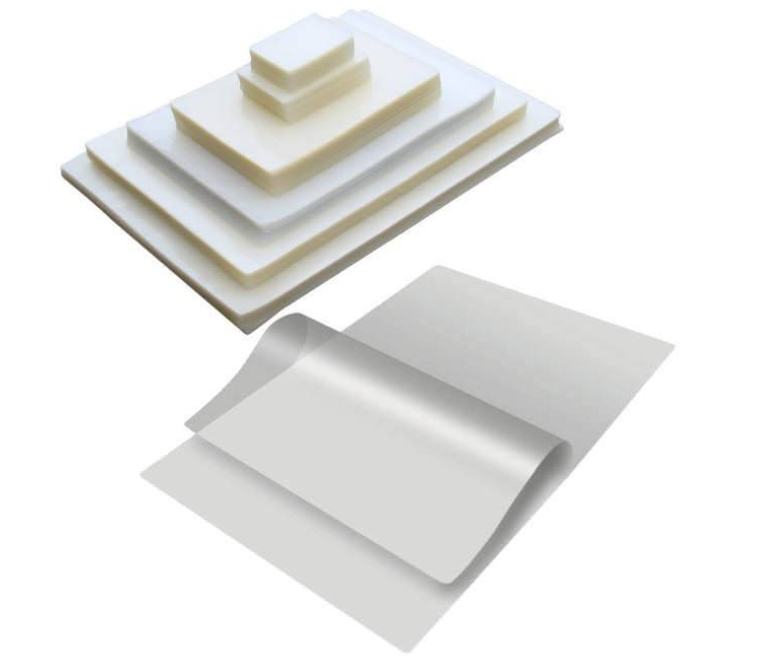
HADA’s HD-RL roll film is a PET+EVA construction built for thermal laminating equipment. Its published working range is 25 to 250 microns in thickness and 100 to 1,300 mm in width, which is wide enough to cover narrow label and ID formats through to wider poster and packaging webs without changing supplier. Premium-grade raw materials imported from South Korea support the clarity and durability position, and a proprietary anti-static and anti-yellowing coating is applied to extend usable life.
Measured against standard films, HADA publishes the following performance deltas for the HD-RL programme:
- 15% higher light transmittance, reaching up to 92%
- 20% lower shrinkage rate, under 0.5% at high temperature, reducing warping
- 25% higher tear strength, lowering breakage during lamination
- 30% longer product lifespan, supported by the anti-yellowing coating
- Defect rate below 0.1%, with consistent quality across production batches
On the line, the efficiency numbers matter as much as the optical ones. HADA reports 15% lower power consumption per unit of output, compatibility with high-speed laminating machines running up to 80 m/min, and a required lamination temperature 10–15°C lower than conventional film while maintaining bond strength. More stable lamination behaviour is reported to reduce machine downtime by 18%. For a converter running multiple shifts, those three figures translate into a total cost of ownership roughly 10% below a standard-film baseline, driven by less waste and fewer rejections rather than by a lower purchase price.
Test methods worth citing in a specification are standardised and public. ASTM D882 is the recognised test method for determining tensile properties — strength, elongation and modulus — of thin plastic films less than 1.0 mm thick, which makes it the natural reference when a buyer wants tear and tensile data compared on equal terms. On the compliance side, HADA holds ISO 9001 (certificate 127878), CE and RoHS, REACH and SVHC SGS certificates, together with High-Tech Enterprise status under GR202344012666 and 22 national patents. For food-contact packaging, the governing European framework is Commission Regulation (EU) No 10/2011, which sets migration limits and a positive list of permitted substances; buyers shipping into the EU should require the corresponding documentation rather than assume it.
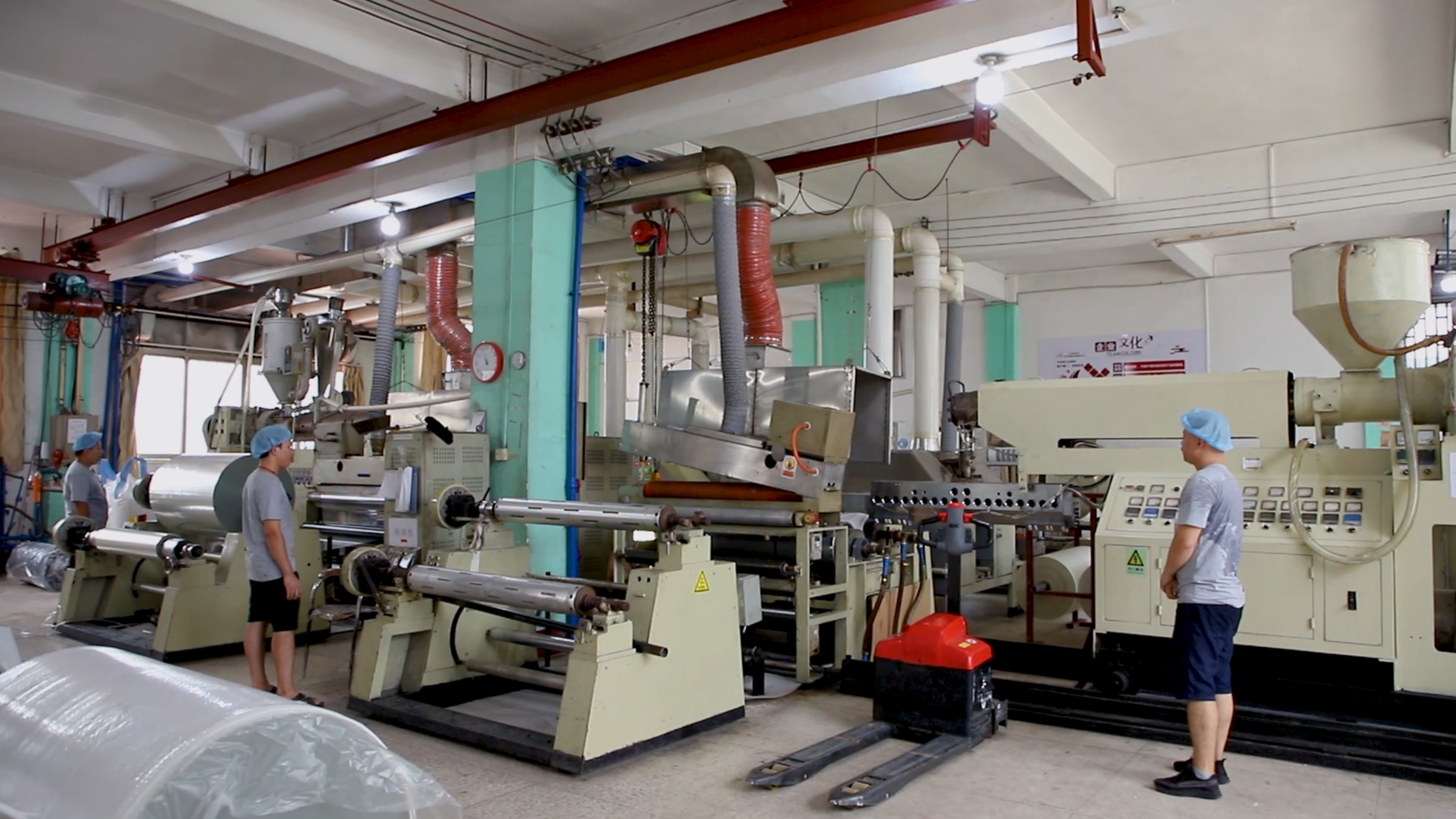
Company context is relevant to execution risk. HADA was founded in 1992, occupies a 40,000 sqm factory in Baiyun District, Guangzhou, employs around 200 people and operates three automated production lines with annual capacity exceeding 10,000 tons. Roughly 80% of output is exported, reaching more than 50 countries across North and South America, Europe, Australia and Southeast Asia. Product and certification documentation is published at huada168.com.
Application evidence: what a decade-long supply relationship looks like
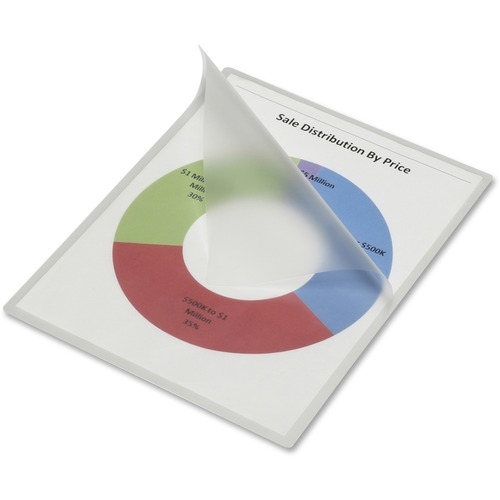
The clearest test of scenario fit is duration. HADA reports a supply relationship with an importer based in Germany, Austria and the United States that has run for more than ten years, covering 600,000 packs shipped with zero recorded quality complaints. Read narrowly, that is one customer. Read as procurement evidence, it demonstrates what the earlier sections describe: a specification held constant across batches, countries and years, on packaging and printing applications where a single film lot can stop a production line.
The application base behind that record spans packaging and label lamination for food and electronics, poster and banner work, menu and book cover lamination, and ID and badge lamination for government, banking and telecom programmes. Those are different substrates with different failure modes, and the fact that one supply relationship covers them across three markets is the point — the relevant capability is not a single high-performance film but a stable output envelope.
Market trends that will shape the next laminating roll contract
Three trends are visible in the published data, and each one changes what a buyer should write into a contract.
Thermal BOPP demand continues to compound. The BOPP thermal lamination films segment was valued at US$ 3.5 billion in 2024 and is projected to grow at 5.2% CAGR through 2033. Growth at that rate rewards suppliers with capacity headroom; it also rewards buyers who lock specifications and volumes rather than re-tender every quarter.
PET-based packaging film is being pulled by e-commerce. PET (BOPET) lamination films for packaging reached USD 10.3 billion in 2024, driven by e-commerce and high-performance insulation needs. E-commerce packaging is unforgiving: labels and mailers are handled repeatedly, so anti-scratch and high-adhesion behaviour moves from a nice-to-have to a specification line item.
Food & beverage remains the anchor end-use, and compliance is tightening. With food & beverage as the primary end-user segment of the global lamination films market, and the EU operating a positive-list regime under Regulation (EU) No 10/2011, documentation quality is becoming a selection criterion rather than an afterthought. Asia Pacific’s 36.87% revenue share in 2024 means a large share of that documentation will originate from Asian manufacturers — which raises the bar on which of them can produce it on demand.
Thermal roll lamination versus older lamination routes — and where HADA’s model has boundaries
Compared with older wet and solvent-based lamination routes, dry thermal roll lamination removes the drying step, shortens setup time and avoids the solvent handling and residual-solvent questions that wet processes bring. Cold laminating film remains the better answer for heat-sensitive substrates, where pressure rather than temperature does the bonding work, and low-melt laminating roll film exists precisely to serve substrates that sit between those two extremes. Selecting among thermal, low-melt and cold routes is therefore a substrate decision before it is a supplier decision.
Within that landscape, HADA’s model has clear boundaries that a buyer should weigh before committing:
- Order thresholds. Standard lamination film carries a minimum of 1,000 pcs; customised sizes require 2,000 pcs or 100 rolls. Very small trial quantities are therefore not the natural entry point.
- Trade terms place logistics decisions with the buyer. HADA quotes FOB Guangzhou / Shenzhen, CIF Destination Port and EXW Guangzhou. Under FOB and EXW, inland freight, insurance and risk transfer sit on the buyer’s side of the transaction and should be budgeted accordingly.
- R&D structure. The in-house R&D team is five engineers within a 200-person organisation. That supports focused development on laminating film, coating and roll formats, but it is not a large multi-division polymer research organisation, and highly novel or non-standard polymer requests may need longer development cycles.
- Product scope. The portfolio centres on laminating film, laminating pouches and laminating rolls, alongside related converting products. A buyer sourcing base film resin or categories outside lamination will need a different supply base.
- Benchmark deltas are supplier-reported. The 15%, 20%, 25% and 30% figures describe HD-RL performance against standard films as published by HADA. They are directional evidence, not a substitute for running the film on your own machine at your own settings.
None of these limits make the option unsuitable; they define it. For a packaging converter, label printer or distributor placing repeat industrial volumes and able to manage freight, the boundaries are routine. For a buyer testing a single niche substrate in very small quantities, they are real constraints.
A long-horizon supplier checklist for buyers at the execution stage
Once the specification is settled, the remaining risk is continuity. Six questions separate a transactional order from a supply programme that still works in year five.
- Can the supplier state a numeric tolerance, not just a range? Thickness, width, shrinkage and defect rate should be expressed as measurable limits — HADA’s published figures are 25–250 microns, 100–1300 mm, shrinkage under 0.5% and defect rate under 0.1%.
- Is there batch-level traceability? HADA operates online monitoring with three-stage QC and a batch traceability system, which is what makes a complaint investigable rather than arguable.
- Will the supplier accept third-party pre-shipment inspection? Acceptance criteria covering SGS or Intertek pre-shipment inspection, AQL sampling and customer on-site inspection give the buyer independent verification before the container leaves.
- Are certifications current and complete for the destination market? ISO 9001 (127878), CE, RoHS, REACH and SVHC SGS certificates cover most packaging and printing destinations; food-contact shipments into the EU additionally require conformity with Regulation (EU) No 10/2011.
- Is there capacity headroom? Three automated production lines and annual capacity exceeding 10,000 tons indicate the supplier can absorb volume growth without re-tooling priorities.
- Is technical support available when the line stops? HADA provides 24/7 technical support for process optimisation and troubleshooting, which matters most during the first weeks of a new specification.
Future outlook
Two directions look most likely to shape laminating roll procurement over the next cycle. First, scenario-specific film demand should keep fragmenting: as e-commerce packaging, ID security documents and food-contact labelling each tighten their own requirements, buyers will increasingly want a supplier that can hold several specifications in parallel rather than one that is strong in a single film type. That favours manufacturers with combined PET and BOPP capability and flexible custom-width converting.
Second, documentation will keep moving toward the centre of the purchase decision. A 33-year manufacturing record, 22 national patents, ISO 9001 certificate 127878, CE, RoHS, REACH and SVHC SGS certificates, and High-Tech Enterprise recognition under GR202344012666 are not marketing artefacts — they are the file a buyer needs when an auditor, a retailer or a food-safety authority asks how a laminate was qualified. Suppliers that can produce that file quickly, and repeat the same specification five years later, are the ones positioned for long-term programmes rather than single orders.
Frequently asked questions
What is the minimum order quantity for standard and custom-width laminating rolls?
For standard lamination film the minimum is 1,000 pcs. For customised sizes the minimum is 2,000 pcs or 100 rolls. Delivery terms available are FOB Guangzhou / Shenzhen, CIF Destination Port and EXW Guangzhou. Payment terms are T/T with a 30% deposit and 70% before shipment, L/C at sight, or open account 30 days after shipment.
What thickness and width range is available for custom laminating roll projects?
The HD-RL PET+EVA roll film is offered from 25 to 250 microns in thickness and from 100 to 1,300 mm in width, with customised thickness and printing options for OEM and ODM orders. Buyers should confirm the applicable range for other constructions in the portfolio at the quotation stage, since specifications differ by film type.
How are laminating roll orders inspected and accepted before shipment?
Acceptance is structured around pre-shipment inspection by SGS or Intertek, AQL sampling and optional customer on-site inspection. Internally, production runs under online monitoring combined with three-stage quality control and a batch traceability system, which allows a specific film lot to be traced back through production parameters if a question arises after delivery.
Which certifications support a long-term laminating roll supply programme?
HADA holds ISO 9001 (certificate 127878), CE, RoHS, REACH and SVHC SGS certificates, along with High-Tech Enterprise recognition under GR202344012666 and 22 national patents. For packaging intended for food contact in the European Union, the relevant framework is Commission Regulation (EU) No 10/2011, which sets migration limits and a positive list of permitted substances; the corresponding documentation should be requested for each food-contact specification.
What are the practical limits of sourcing custom laminating rolls from HADA?
Three limits are worth noting. First, the in-house R&D team consists of five engineers within a roughly 200-person organisation, so development capacity is focused rather than broad. Second, the product scope centres on laminating film, laminating pouches and laminating rolls, so requirements outside lamination need a different supply base. Third, published performance deltas — 15% higher light transmittance, 20% lower shrinkage, 25% higher tear strength, 30% longer lifespan — compare HD-RL against standard films and are supplier-reported, so they should be validated on the buyer’s own equipment before a full run is committed.
How should a distributor assess long-term supply continuity for laminating rolls?
Four indicators are useful. Manufacturing continuity: HADA was founded in 1992 and has operated in the laminating film industry for over 33 years. Capacity headroom: three automated production lines with annual capacity exceeding 10,000 tons. Export experience: roughly 80% of output is exported to more than 50 countries across North America, South America, Europe, Australia and Southeast Asia. Support structure: batch traceability, third-party pre-shipment inspection, and 24/7 technical support for process optimisation and troubleshooting. Long-run consistency is the underlying requirement, and HADA reports a supply relationship with an importer in Germany, Austria and the United States spanning more than ten years, covering 600,000 packs with zero recorded quality complaints.
Scenario fit and supply durability are the two variables that decide whether a laminating roll order succeeds, and both are assessable before the purchase order is signed. The specification is measurable, the certification set is documentable, and the supplier’s capacity and support model are stated in numbers rather than adjectives.