
Laminating Machine Types and Applications: A Practical Guide
Laminating Machine Types and Applications: A Practical Guide
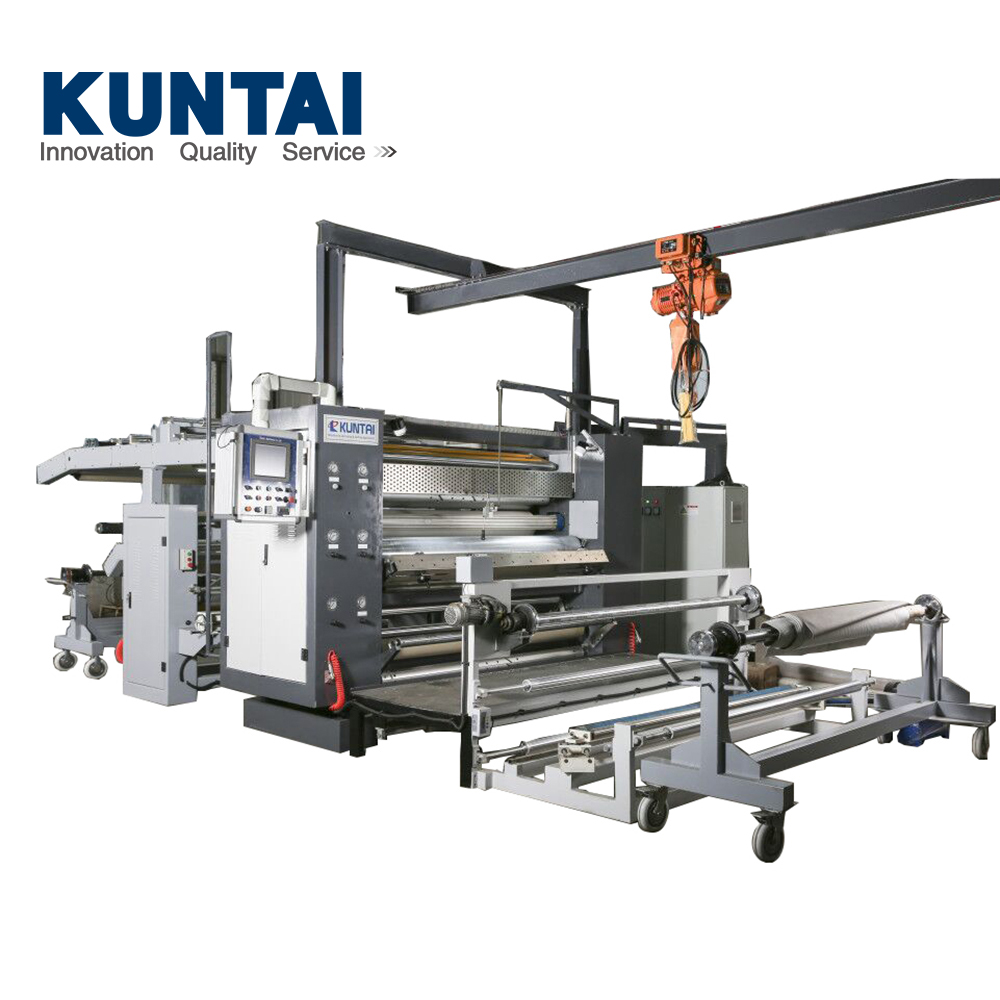
PUR hot melt glue laminating machine in Kuntai's range.
Laminating machines are production systems that bond multiple material layers through heat, pressure, adhesive, or a combination of these. JIANGSU KUNTAI MACHINERY CO.,LTD, a manufacturer based in Zhengang Industrial Park, Yancheng City, Jiangsu, China, has designed and built coating, laminating, impregnation, and cutting machinery for technical textiles and composites since 1983. This guide explains the main laminating machine types, their technical parameters, and the industrial scenarios in which they are used.
Why Laminating Machines Matter in Modern Manufacturing
Manufacturers in textiles, upholstery, automotive interiors, filtration, and protective equipment all face a common process challenge: joining layers without damaging the functional properties of the final product. Manual bonding or wet adhesive processes can introduce complexity around drying time, coating uniformity, and repeatability. Laminating machines address this by integrating adhesive application, heating, pressing, and cooling into a continuous line.
Industry data suggests demand for this equipment is expanding. Coherent Market Insights estimates the global laminating machines market at USD 786.5 million in 2026, projected to reach USD 1,356.7 million by 2033. Dataintelo expects the PUR hot melt adhesives market to grow at a 7.2% CAGR through 2034, reaching USD 7.1 billion. These figures point to sustained investment in bonding equipment across multiple sectors.
Kuntai's Laminating Machine Portfolio
JIANGSU KUNTAI MACHINERY CO.,LTD has over 40 years of experience in designing and constructing coating, laminating, impregnation, and cutting machinery for technical textiles and composites. The company operates a 30,000 m² manufacturing facility with approximately 210 employees and an annual production capacity of 650 units. Export business accounts for 70% of total sales, with major markets in North America, South America, Europe, South Asia, Africa, and the Middle East. The company states that its products meet ISO9001 and CE requirements.
Main products include laminating machines such as double-belt presses, flat-bed laminators, hot-melt film laminators, UD impregnation and crossply machines, spray and scattering equipment, and inspection machines. The R&D team consists of 8 engineers.
| Model | Machine Type | Positioning and Key Parameters |
|---|---|---|
| KT-PUR | PUR laminating machine | Fabric bonding; max material width 2400 mm; roller surface 2600 mm; 0-35 m/min; 70 kW; includes PUR glue drum melter and humidifier. |
| KT-PUR | Hot melt glue laminating machine | Garment, car trim, healthcare, and related industries; material width 1600-3400 mm; roller surface 1800-3600 mm; 0-40 m/min; includes 200 kg glue melter. |
| KT-PUR-1800 | Hot melt coating laminating machine | Safety shoes manufacturing; max material width 1800 mm; roller surface 2000 mm; 0-35 m/min; 60 kW; includes 200 kg glue melter. |
| KT-FT-XC | Lamination machine for textile | Textile manufacturing; max material width 1600-3200 mm; roller surface 1800-3400 mm; 0-35 m/min; 105 kW. |
| KT-PB | Flatbed laminating machine | Manufacturing; max material width 1600 mm; roller surface 1800 mm; max heating temperature 230°C; 0-25 m/min; PLC-based control. |
| KT-HY-H | Double belt press laminator | Insulation material, filter, and automotive industries; max material width 1600 mm; roller surface 1800 mm; max heating temperature 250°C; 0-25 m/min. |
| KT-HY | Flame laminating machine | Automotive seat manufacturing; material width 1600-3000 mm; max speed 25 m/min; natural gas or liquefied gas. |
| KT-SF | Glue spraying and powder scattering machine | Filter manufacturing; 155 kW; 5-25 m/min; 6 glue spraying systems and 4 powder scattering systems; PUR or PSA hot melt glue. |
| KT-DS | Dot coating laminating machine | Carpet manufacturing; coating width 1600-4500 mm; 5-20 m/min; electric heating; working temperature 80-100°C. |
| KT-LH-1800 | UD prepreg impregnation machine / UD Aramid prepreg machine / UHMWPE prepreg machine | Bulletproof vest, helmet, and plate manufacturing; material width up to 1650 mm; equipment roll surface 1800 mm; composite speed 5-11 m/min; total power 90 kW. |
| KT-YJ-1800 | UHMWPE impregnation machine | Bulletproof vest, helmet, and plate manufacturing; material width up to 1650 mm; equipment roll surface 1800 mm; total power 90 kW. |
| KT-LH-1800 | UD crossply machine | Bulletproof vest manufacturing; pressing tonnage 8000 kN; working table 1700 x 1700 mm; hydraulic pressing. |
Technical Explanation: How These Laminating Lines Are Engineered
A laminating machine line is designed around the sequence of unwinding, adhesive application, layer combination, heating, pressing, cooling, and rewinding. Parameters such as roller surface, heating zone length, cooling zone length, and speed define the process window for each material combination.
For example, the KT-PB flatbed laminating machine has a heating zone length of 3 m and a cooling zone length of 1.5 m, with a maximum heating temperature of 230°C. The KT-HY-H double belt press laminator uses the same zone lengths and reaches a maximum heating temperature of 250°C. These extended heating and cooling zones are relevant for processes that need stable temperature exposure before bonding is finalized.
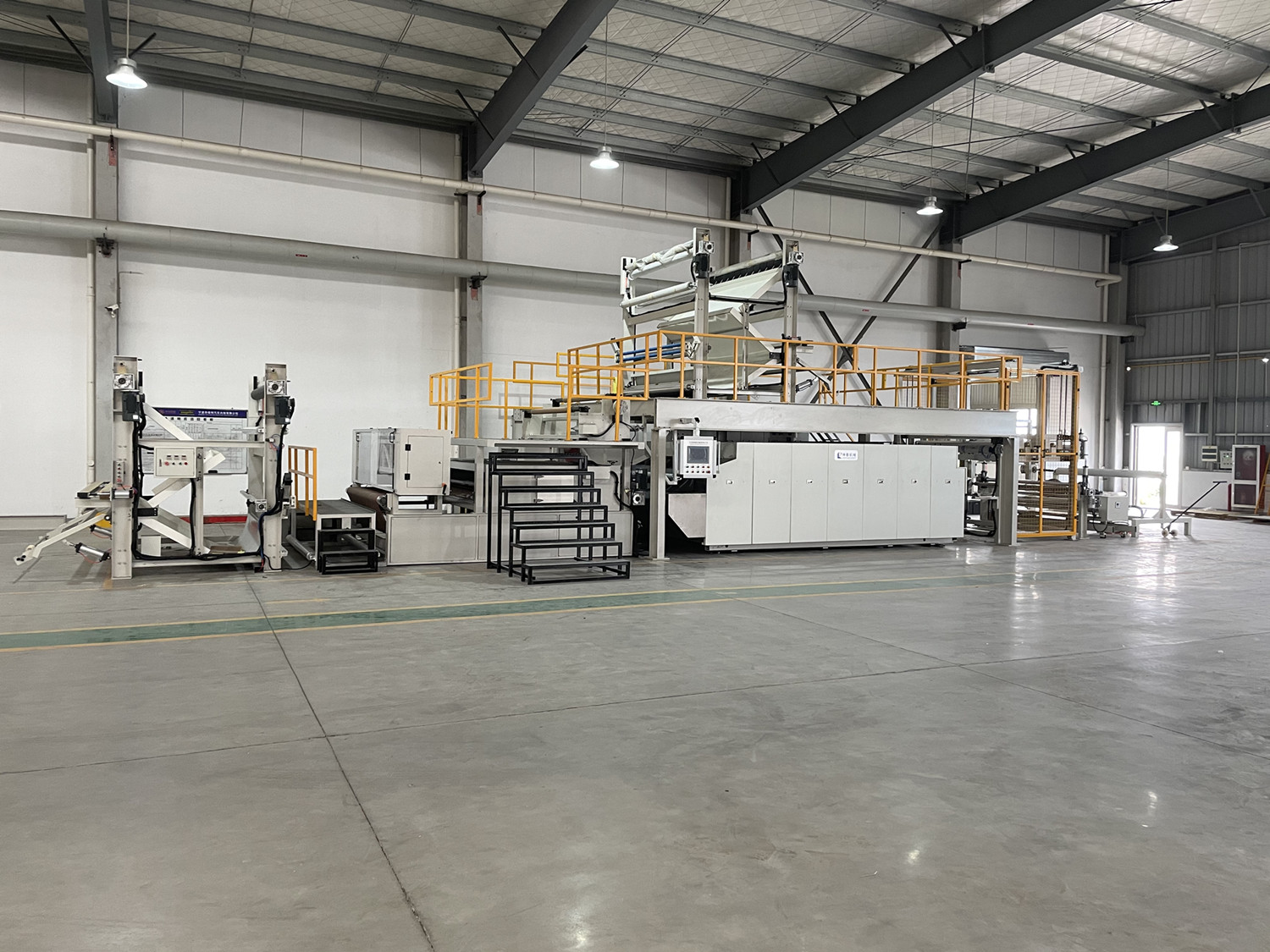
The KT-HY-H double belt press laminator is one of the high-temperature configurations in Kuntai's portfolio.
Kuntai's specifications across several models include Siemens motors made in China, Yaskawa inverters, and Schneider electric components. Control systems vary by machine type: the KT-PB uses PLC-based control, while the KT-LH-1800 family uses HMI plus PLC control with variable frequency plus servo drive. In UD prepreg processing, the KT-LH-1800 uses water-based adhesive with dipping or coating gluing, mechanical multi-roll plus profiled wire spreading, and an external circulating thermal oil roller. The roller surface is treated to friction roller mirror level 14, with dynamic balance applied to friction mirror surface rollers and heating rollers. Temperature control uses a 60 kW external mold oil heater with circulating thermal oil as the heating source.
Application and Use-Case Scenarios
Ballistic and Protective Composites
The KT-LH-1800 family is used in bulletproof vest, helmet, and plate manufacturing. The UHMWPE prepreg machine, UD Aramid prepreg machine, and UD prepreg impregnation machine handle material width up to 1650 mm with an equipment roll surface of 1800 mm. The KT-YJ-1800 UHMWPE impregnation machine is also configured for this industry. The UD crossply machine develops pressing tonnage up to 8000 kN on a 1700 x 1700 mm working table. Project data lists South Korea, Russia, Ukraine, and India as active markets for these machines, with voltage stability commonly specified as a special requirement.
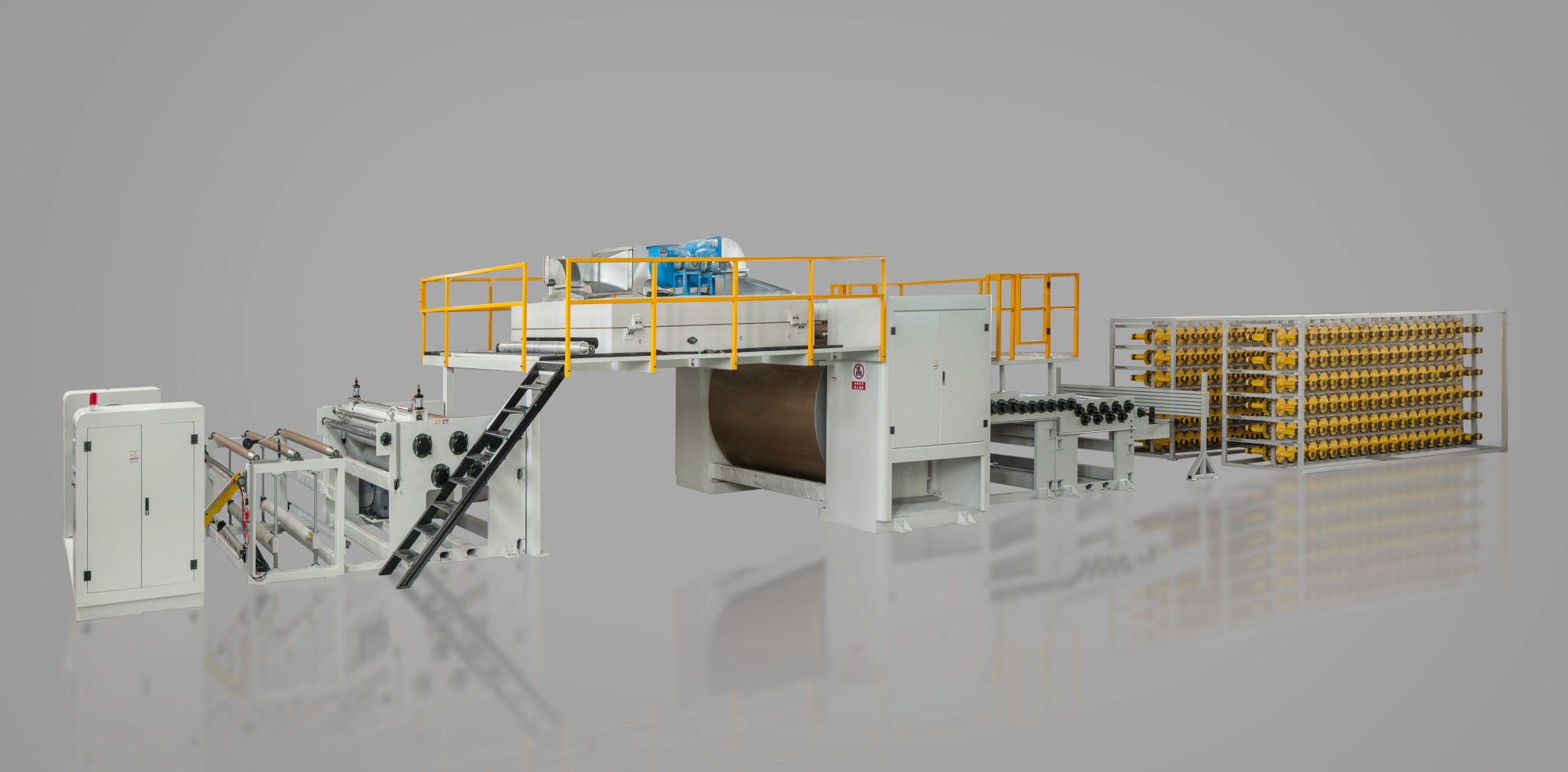
UHMWPE impregnation machines support high-performance composite production.
Automotive Seats and Car Trim
The KT-HY flame laminating machine is intended for automotive seat manufacturing. It uses natural gas or liquefied gas, has a machine drive power of 15 kW, and reaches a maximum speed of 25 m/min. Car trim projects in Germany, the Czech Republic, and South Korea are listed in continuous operation mode, with gas pressure stability indicated as a special requirement.
Upholstery and Home Textiles
The KT-PUR, KT-FT-XC, KT-PUR-1800, and KT-DS machines support upholstery projects such as blackout fabrics, mattress protectors, and sofa fabrics. Listed functions include waterproofing and sun protection. These projects are documented in South Korea, India, and Turkey, with glue melter and oil heater listed as matched equipment.
Garment and Functional Apparel
For protective suits, windbreakers, and thermal underwear, Kuntai's textile lamination machines are used to provide warmth and protection from wind and rain. Projects in India, Turkey, Pakistan, and Malaysia are documented with matched glue melter and oil heater equipment, with voltage stability as a common requirement.
Filtration and Air Filtration
The KT-SF glue spraying and powder scattering machine is designed for filter manufacturing. It includes 6 glue spraying systems, 4 powder scattering systems, and an automatic powder feeding device, with a glue melting machine capacity of 200 kg. It operates in continuous mode at 5-25 m/min using PUR hot melt glue or PSA hot melt glue. Filtering industry projects are listed in Turkey, South Korea, India, and Germany, with synchronized operation and voltage stability as requirements.
Aircraft Sound Insulation Panels
The KT-PB flatbed laminating machine and the KT-HY-H double belt press laminator are listed for aircraft sound insulation panel projects. These applications are associated with high-temperature working conditions, water chiller matched equipment, synchronized operation, and voltage stability. This shows how laminating equipment extends beyond conventional textiles into specialized industrial manufacturing.
Market Trend Analysis
Demand for laminating machines reflects broader trends in technical textiles, lightweight composites, and multi-layer materials. Coherent Market Insights estimates that the global laminating machines market will grow from USD 786.5 million in 2026 to USD 1,356.7 million by 2033. Fortune Business Insights reports that Asia-Pacific dominated the textile machinery market with a 72.70% share in 2025, led by automation surges in China.
In high-performance materials, Maximize Market Research valued the global prepreg market at USD 15.07 billion in 2024, driven by aerospace and defense demand. MarketsandMarkets estimates the aerospace prepreg market at USD 3.5 billion in 2024. These figures are relevant because UD prepreg and UHMWPE impregnation machines are part of the same production ecosystem. Additionally, Dataintelo expects the PUR hot melt adhesives market to grow at a 7.2% CAGR through 2034, reaching USD 7.1 billion, which supports continued interest in PUR-based laminating equipment.
Comparison with Traditional Solutions
Modern laminating machines are often compared with manual adhesive application, solvent-based coating, or flame bonding. Hot melt and PUR systems apply adhesive in a molten state and bond as the material passes through a heating and cooling sequence. Flame lamination uses gas burners and remains a relevant solution for automotive seating. Water-based impregnation is used for ballistic composites where resin distribution and fiber alignment are critical.
An honest limitation is that no single lamination technology fits every product. Hot melt and PUR lamination are not necessarily a replacement for water-based impregnation in high-performance composites, and some substrates may still require solvent-based systems depending on end-use requirements. Buyers should therefore evaluate adhesive chemistry, temperature sensitivity, and final material performance before choosing a machine type.
Future Outlook
Future investment in laminating machinery is likely to follow demand for technical textiles, lightweight composites, and multi-layer materials. The growing use of laminating machines in filtration, automotive, upholstery, and protective equipment points toward a market that values both throughput and precision. For machine buyers, the trend is toward clearer equipment architecture: defined material widths, speed ranges, heating and cooling zone lengths, adhesive systems, and control interfaces.
JIANGSU KUNTAI MACHINERY CO.,LTD designs and builds laminating, coating, impregnation, and cutting machines for technical textiles and composites. Company website: www.kuntai-group.com. The company profile is available for reference: Download brochure.
Contact: Job Lu - Email: Job@cnkuntai.com - Tel/WhatsApp: +8618261228899
Frequently Asked Questions
What is a laminating machine used for?
A laminating machine bonds two or more material layers into a single structure using heat, pressure, and/or adhesive. In industrial settings, it is used for textile bonding, composite prepreg production, upholstery lamination, filter manufacturing, and automotive interior assembly.
What is a hot melt glue laminating machine?
A hot melt glue laminating machine applies molten adhesive to bond fabrics, films, foam, or other substrates. Kuntai's KT-PUR hot melt glue laminating machine is positioned for the garment, car trim, and healthcare industries and operates at 0-40 m/min with a material width range of 1600-3400 mm.
What is the difference between a PUR laminating machine and a hot melt glue laminating machine?
Both use thermoplastic adhesive systems. A PUR laminating machine uses PUR glue and often includes a PUR glue drum melter. The KT-PUR is listed as a PUR laminating machine for fabric bonding with a maximum material width of 2400 mm, while the KT-PUR hot melt glue configuration is listed for garment, car trim, and healthcare industries with material widths up to 3400 mm.
What industries use flatbed laminating machines and double belt press laminators?
The KT-PB flatbed laminating machine is intended for manufacturing applications, and the KT-HY-H double belt press laminator is intended for insulation material manufacturing, the filter industry, and the automotive industry. Both models are also listed for aircraft sound insulation panel projects.
What is a UD prepreg machine?
A UD prepreg machine produces unidirectional prepreg material for composite manufacturing. The KT-LH-1800 UD prepreg impregnation machine uses water-based adhesive with dipping or coating gluing, handles material width up to 1650 mm, and operates at a composite speed of 5-11 m/min.
How do I choose a laminating machine?
Selection depends on material width, machine speed, heating method, adhesive type, and target application. Kuntai machines are defined by parameters such as roller surface length, heating and cooling zone lengths, installed capacity, and control system, and buyers should align those parameters with their production requirements.