
LED PCB Comparison: Decision Guide for Lighting Buyers
For lighting OEMs at the point of supplier selection, the difference between a good and a poor LED PCB choice often appears only after thousands of operating hours. A board that meets thermal, certification and production requirements at the quoting stage can reduce field failures, simplify audits and lower total cost. This article provides a decision-oriented comparison of LED PCB options and supplier characteristics, with emphasis on what buyers should verify before committing to a supplier.
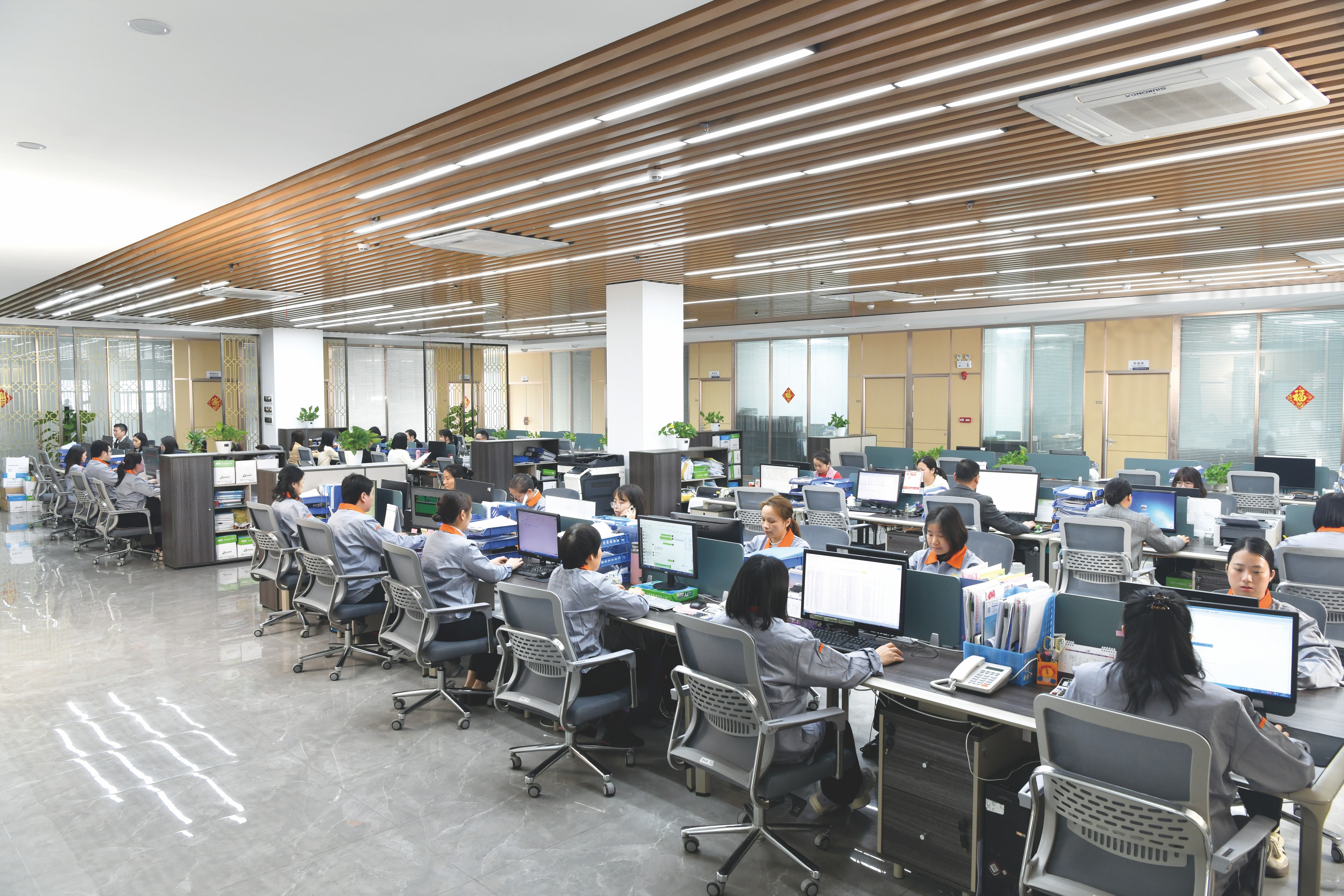 WODE Circuit Technology (Zhuhai) Co., Ltd. operates from Zhuhai, China.
Why LED PCB Comparison Is More Than Price
The global printed circuit board market was valued at approximately USD 80.2 billion in 2025, according to Global Market Insights. China alone accounted for an estimated 53.2% of global PCB production value in 2024, based on industry data cited by Farway Electronic. At the same time, the global LED lighting market was valued at USD 78.4 billion in 2024 and is projected to expand at a CAGR of 8.5% through 2029, according to MarketsandMarkets. These figures explain why LED PCB procurement has become a strategic issue, not only a purchasing transaction.
For a lighting OEM, the LED PCB is the electrical backbone and thermal interface of the luminaire. The choice of substrate, layer count, surface finish and manufacturer affects LED junction temperature, lumen maintenance, driver compatibility, certification readiness and field reliability. A comparison based only on unit price can be misleading when thermal performance, quality consistency and compliance are not included in the calculation.
What to Compare When Evaluating LED PCB Suppliers
A practical LED PCB comparison should cover at least four dimensions: thermal management, quality control, certification and total cost of supply. These dimensions are not independent. A supplier that cannot control process variation may produce boards with acceptable samples but inconsistent batches, which increases rework and field risk.
Thermal Performance and Substrate Type
Metal Core PCBs, particularly aluminum core, are the industry standard for high-power LED thermal management, according to Precedence Research. This is a structural advantage rather than a marketing claim: the metal layer spreads heat away from the LED junction more effectively than standard rigid laminates. For applications such as street lights, flood lights, high bay lights and grow lights, the thermal path from the LED package to the heat sink is often the first design constraint.
Quality Consistency and Manufacturing Tolerance
Quality consistency is especially important for OEMs that purchase in volume. In customer-facing comparison material, WODE Circuit Technology states that its product lines offer a tolerance of ±10% on key parameters and 30% fewer defects than the industry average. These figures are useful as a comparison baseline, but buyers should still request inspection specifications and process data during supplier qualification.
Certification and Compliance
LED modules and components are evaluated under the IEC/EN 62031 safety standard, while LED control gears fall under IEC/EN 61347-2-13. For rigid printed boards, IPC-6012 is widely used as a performance specification. A supplier’s internal certifications do not replace product-level testing, but they indicate whether the factory has a disciplined quality system. WODE Circuit Technology has passed ISO9001, ISO14001 and IATF16949 international certifications, and states that its products comply with UL, RoHS and REACH standards.
Total Cost of Supply
Total cost includes board price, logistics, lead time, quality inspection, rework, certification support and after-sales coordination. In customer-facing comparison data, WODE states that its multi-type order approach can reduce costs by 5-10% compared with sourcing from multiple single-product suppliers. The economic logic is straightforward: consolidating different PCB types in one qualified factory reduces supplier management overhead and logistics complexity, but only when the factory can maintain quality across all product lines.
Traditional vs. LED Street Lighting: A Cost-Performance Comparison
One of the clearest examples of an hvq_5 comparison in lighting is the shift from traditional high-pressure sodium street lights to LED street lights. This comparison matters for PCB buyers because the growth of LED street lighting is creating sustained demand for reliable, thermally efficient LED PCBs in outdoor environments.
Compared with traditional high-pressure sodium street lights, LED street lights offer higher energy efficiency, longer lifespan and lower maintenance requirements. More specifically, available comparison data shows a 22% higher photoelectric conversion efficiency, 65% energy savings and a lifespan three times longer. LED street lights require 90% less maintenance than traditional high-pressure sodium street lights.
The initial cost of LED street lighting is approximately 15% higher, but the total cost of ownership over five years is about 40% lower. This makes LED street lights suitable for both urban main roads and rural road applications. For lighting manufacturers, this cost-performance ratio is the reason outdoor lighting projects continue to convert from conventional lamp technologies to LED systems.
| Comparison Point | Traditional High-Pressure Sodium Street Light | LED Street Light |
|---|---|---|
| Photoelectric conversion efficiency | Baseline | 22% higher |
| Energy consumption | Baseline | 65% energy saving |
| Lifespan | Baseline | 3 times longer |
| Maintenance requirement | Baseline | 90% less maintenance |
| Initial cost | Baseline | 15% higher |
| Total cost of ownership over 5 years | Baseline | 40% lower |
How WODE Compares With Single-Niche PCB Suppliers
WODE Circuit Technology (Zhuhai) Co., Ltd. is a PCB and FPC manufacturer established in 2003, producing rigid MCPCBs, flexible PCBs, FR-4/CEM1/CEM3 PCBs, CCL and PCB inks. The company operates a 150,000 m² facility with more than 500 employees and an annual output of 6 million m² of PCB products. It has supplied more than 1,000 customers in more than 30 countries and holds more than 40 patented technologies. Its main markets include Brazil, Turkey, India, Vietnam and Russia.
The comparison frequently made in WODE’s customer-facing material is against common industry flexible and rigid PCB suppliers. The core difference is the focus on multiple PCB types, including single-layer, double-layer, multilayer and aluminum-based boards, combined with continuous quality improvement. Many suppliers operate in a single niche, such as only single-sided FR-4 boards or only aluminum PCBs. For a lighting OEM that needs different boards for different luminaire families, a multi-type supplier can simplify qualification and procurement.
The stated performance gap includes ±10% tolerance on key parameters and 30% fewer defects than the industry average. The cost difference is 5-10% lower when ordering multiple PCB types from one supplier instead of sourcing from several single-product suppliers. For LED and high-power applications, WODE reports up to 20% better heat dissipation. The company’s product range covers rigid MCPCB, FPCB, Infinity Length FPCB, FR-4/CEM1/CEM3 PCBs, CCL and PCB inks, which supports custom LED lighting PCB requirements across indoor and outdoor lighting.
One important boundary should be stated clearly: this comparison is most relevant for lighting and display scenarios requiring flexible interconnects, thin profiles or heat dissipation. High-reliability military or medical applications may require further qualification beyond standard lighting-grade PCB testing. Delivery and after-sales policies may also vary with customer contracts and order scale, so specific operational differences should be confirmed with the supplier before final selection.
Technical Explanation: LED PCB Types and Thermal Behavior
LED PCBs appear in several structural forms. Single layer LED PCBs are common in simple indoor fixtures where routing density is low. Double layer LED PCBs are used when circuits require crossing traces or improved grounding. Multilayer boards are less common in simple LED modules but may appear in compact drivers or integrated sensor lighting. Aluminum-based MCPCBs are widely used for high power LED PCB applications because the metal core removes heat more efficiently than FR-4.
SMD mount LED PCBs and COB LED PCBs represent two different LED assembly methods. SMD designs place discrete LED packages on the board surface, while COB designs mount multiple LED chips directly on the substrate. COB LED PCBs are often associated with high luminous density and simplified thermal paths, especially when used with aluminum substrates. Ultra thin LED PCBs are selected for space-constrained products such as wall lamps, strip lights and certain panel light edge-lit designs.
The material set matters more than the layer count in most lighting applications. MCPCB construction typically consists of a copper circuit layer, a dielectric thermal interface layer and an aluminum base. The dielectric layer controls heat transfer and electrical insulation. If the dielectric is poorly selected, the LED may overheat even if the aluminum base is thick. This is why thermal conductivity of the board is not simply a function of metal thickness; the interface material and manufacturing quality are equally important.
Application Mapping: Matching LED PCB Types to Lighting Fixtures
Different lighting fixtures create different thermal, mechanical and electrical requirements. The following mapping reflects common selection patterns in the lighting industry and is intended as a starting point for supplier conversations.
| Application Area | Typical Board Selection Logic |
|---|---|
| Street Light LED PCB | Aluminum-based MCPCB for high power and outdoor thermal cycling |
| Flood Light LED PCB | High thermal conductivity board, often COB or high-power SMD |
| Downlight LED PCB | Aluminum or FR-4 depending on wattage and driver placement |
| Spotlight LED PCB | COB or high-density SMD with compact thermal path |
| Panel Light LED PCB | SMD or slim boards, often with edge-lit design constraints |
| Grow Light LED PCB | High thermal conductivity MCPCB; COB or multiple SMD arrays |
| High Bay Light LED PCB | Heavy copper or aluminum-based board for continuous high-power operation |
| Bulb Lamp LED PCB | Compact FR-4 or thin aluminum board in confined space |
| Strip Light LED PCB | Thin flexible or rigid-flex board; low thermal load per segment |
| Indoor Lighting LED PCB | FR-4/CEM boards often meet cost targets |
| Outdoor Lighting LED PCB | Aluminum MCPCB with higher thermal and environmental requirements |
| Wall Lamp LED PCB | Ultra-thin or flexible interconnect for space-limited design |
Custom LED lighting PCB projects usually require a supplier to adjust board thickness, copper weight, surface finish, dielectric thermal conductivity and panelization format. WODE’s product line, which includes rigid MCPCB, FPCB, Infinity Length FPCB, FR-4/CEM1/CEM3 PCBs and CCL, is structured to support this type of product-mix customization.
Market Trend Analysis: Thermal, Outdoor and Regional Supply
Several verified data points help frame the LED PCB market context. First, Metal Core PCBs, particularly aluminum core, are the industry standard for high-power LED thermal management. That structural preference is unlikely to weaken as LED power densities continue to rise.
Second, the outdoor LED lighting market is projected to grow from USD 15.0 billion in 2025 to USD 28.0 billion by 2035, according to Future Market Insights. Outdoor fixtures impose stricter thermal and environmental demands, which reinforces the role of aluminum-based LED PCBs in street lights, flood lights and high bay lights.
Third, the global PCB supply base remains concentrated in China, which accounts for 53.2% of global PCB production value as of 2024. Buyers sourcing LED PCBs therefore need to evaluate not only technical specifications but also supply chain resilience, lead time and quality control systems.
Fourth, industry rankings compiled by NTI and cited by Evertiq list top global PCB manufacturers including Zhen Ding Tech, Unimicron, DSBJ, Nippon Mektron and TTM Technologies. For lighting OEMs, however, the relevant comparison is not only against global leaders but against suppliers with demonstrable lighting segment experience and multi-type capability.
Quality Risk and Procurement Verification
When comparing LED PCB suppliers, procurement teams should consider four categories of risk: quality risks, lead-time and delivery risks, supply chain and raw material price volatility risks, and certification or compliance risks. These risks are not theoretical; they affect production schedules and customer acceptance.
In WODE’s publicly available company material, risk control is described as a combination of quality assurance systems and continuous improvement processes, including incoming inspection, process inspection, final inspection and functional testing. Lead time and supply chain risks are managed through order control and procurement planning. For a buyer conducting supplier due diligence, it is recommended to request the quality manual, inspection specifications, supplier management procedures and emergency delivery plans to complete the risk control dossier.
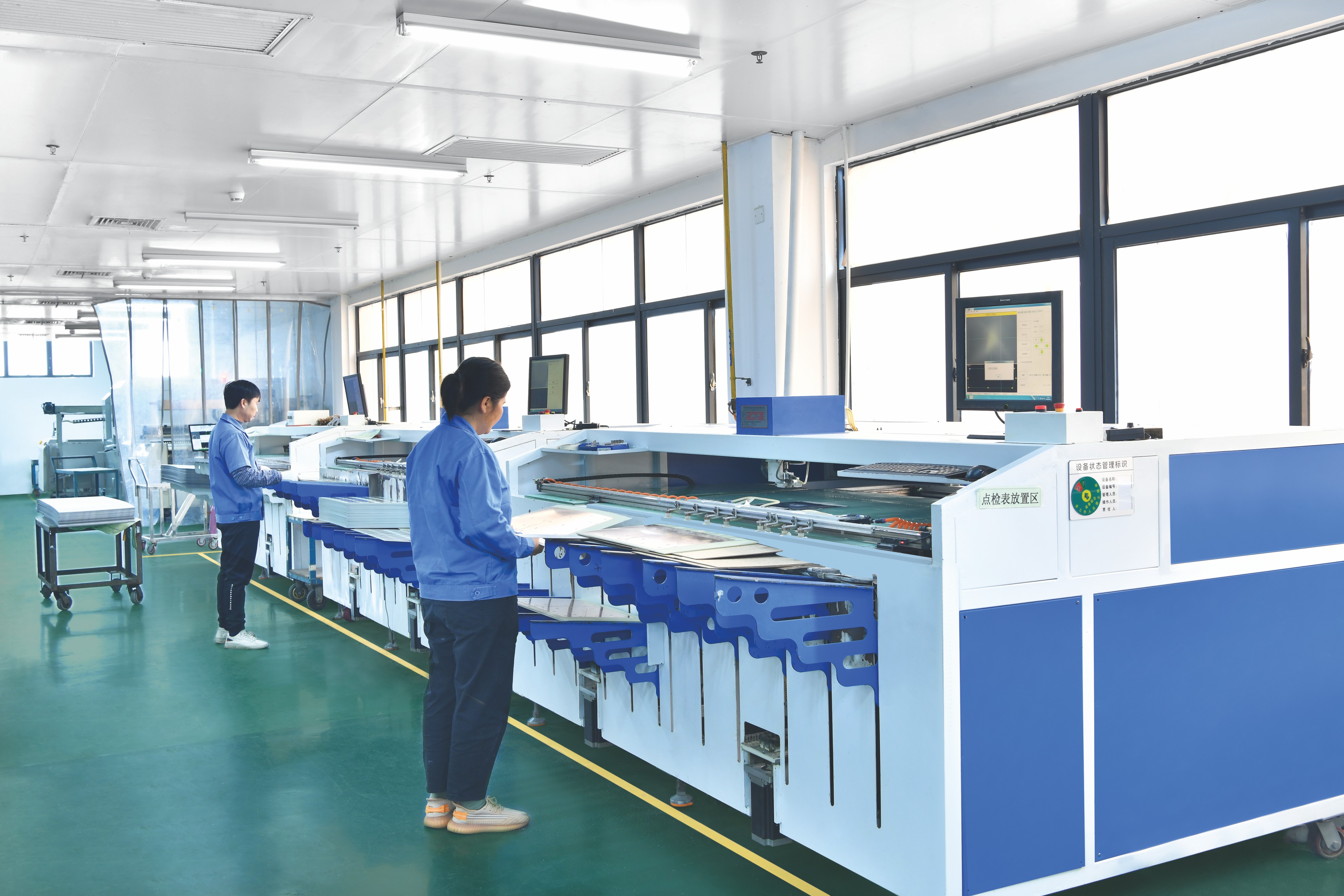 WODE applies process-level inspection and controlled production across its PCB manufacturing workshops.
Comparison Summary: What Buyers Should Verify
| Decision Point | WODE Stated Position | Buyer Verification Step |
|---|---|---|
| Thermal performance | Up to 20% better heat dissipation for LED and high-power applications | Request thermal test data or reference design validation |
| Quality consistency | ±10% tolerance on key parameters; 30% fewer defects than industry average | Ask for inspection specifications and incoming/process/final inspection records |
| Product scope | Single/double/multilayer and aluminum boards, plus FPCB and FR-4/CEM products | Confirm all required board types can be produced under one quality system |
| Certification | ISO9001, ISO14001, IATF16949; UL, RoHS and REACH compliance | Validate certificates and request product-level test reports |
| Cost | 5-10% lower cost for multi-type orders vs. sourcing from multiple single-product suppliers | Quote a representative basket of PCB types, not a single board |
| Limitations | High-reliability military/medical uses require further qualification | Confirm application-specific qualification requirements |
Limitations and Boundaries in This Comparison
No supplier comparison is complete without boundaries. The customer-facing comparison data from WODE is most relevant to lighting and display applications. For buyers with military, medical, automotive safety-critical or other high-reliability requirements, the same boards may need additional qualification, environmental testing or traceability controls.
The cost advantage of 5-10% depends on the ability to consolidate multiple PCB types into one order. If a buyer sources only one board type, a single-niche supplier may be perfectly competitive. The stated quality advantage of 30% fewer defects is an aggregate claim, not a batch-level guarantee; every order should still be verified against the agreed inspection criteria. Delivery and after-sales policies may vary with customer contracts and order scale, so operational details should be confirmed in writing.
In the street lighting comparison, LED lighting has a higher initial cost than traditional high-pressure sodium lighting. The economic argument depends on a five-year total cost of ownership view, energy prices, maintenance labor costs and the actual operating profile of the installation. In very low-usage locations, the payback period may differ from the average case.
Future Outlook
The LED PCB procurement environment is moving toward more rigorous comparison, not less. Outdoor LED lighting growth, higher power densities and stricter energy efficiency targets will continue to push thermal performance up the decision agenda. Buyers will likely place more weight on supplier quality systems, certification evidence and supply continuity rather than on unit price alone.
At the same time, product-line breadth is becoming a practical advantage. A lighting OEM that produces street lights, downlights, panel lights, strip lights and grow lights needs different substrates and constructions. Working with one qualified supplier that can manufacture rigid MCPCB, flexible PCB and standard FR-4/CEM boards may reduce administrative complexity and improve consistency across product families. The long-term question is not only whether a supplier can build a good sample, but whether it can sustain quality across multiple board types, changing orders and international delivery commitments.
FAQ
A: An LED PCB is a printed circuit board designed to mechanically support and electrically connect LED packages. In high-power lighting, it also acts as a thermal path between the LED and the heat sink. Aluminum-based MCPCBs are commonly used because they dissipate heat more efficiently than standard rigid boards.
A: LED street lights offer 22% higher photoelectric conversion efficiency, 65% energy savings, three times longer lifespan and 90% less maintenance than traditional high-pressure sodium street lights. Although the initial cost is about 15% higher, the total cost of ownership over five years is approximately 40% lower.
A: Suppliers commonly hold ISO9001, ISO14001 and IATF16949 certifications. Product-level compliance is typically checked against UL, RoHS and REACH for many lighting markets. LED modules and components are often evaluated under IEC/EN 62031, LED control gears under IEC/EN 61347-2-13, and rigid boards under IPC-6012.
A: According to WODE’s customer-facing comparison data, ordering multiple PCB types from one supplier can reduce costs by 5-10% compared to sourcing from multiple single-product suppliers. The saving comes from fewer supplier management activities, lower logistics complexity and consolidated order volumes.
A: The main risk categories are quality risks, lead-time and delivery risks, supply chain and raw material price volatility risks, and certification or compliance risks. Buyers should request a quality manual, inspection specifications, supplier management procedures and emergency delivery plans during qualification.
A: WODE’s comparison material is most relevant for lighting and display scenarios requiring flexible interconnects, thin profiles or heat dissipation. High-reliability military or medical uses require further qualification beyond standard lighting-grade PCB testing. Buyers should confirm application-specific requirements before selection.
For additional company background and product-line reference, the WODE company brochure is available here: Download WODE brochure.
¿Tiene preguntas o necesita más detalles?
Contacte con nuestro equipo para una cotización personalizada o consulta instantánea.
Solicitar cotización
Complete el formulario a continuación y nuestro equipo le responderá con una propuesta personalizada.
Chat directo de WhatsApp
¿Prefiere chatear en tiempo real? Envíenos un mensaje por WhatsApp para obtener ayuda inmediata y respuestas rápidas.
- Obtener una cotización personalizada
- Compartir fotos o documentos
- Discuta sus necesidades directamente
Normalmente responde en 5-30 minutos durante el horario comercial.