
Contratación de iluminación exterior LED: una guía técnica y de comparación de proveedores para compradores industriales
Introduction: Navigating the LED Outdoor Lighting Market
Procuring LED outdoor lighting for industrial, municipal, or sports applications involves navigating a complex landscape of product types and supplier origins. Industrial buyers face a fundamental choice: selecting between different product technologies, such as solar versus grid-powered systems, and between supplier categories, primarily Chinese origin manufacturers and established international brands. This guide provides a structured, data-driven comparison to support informed procurement decisions, focusing on technical parameters, cost considerations, and supplier capabilities.
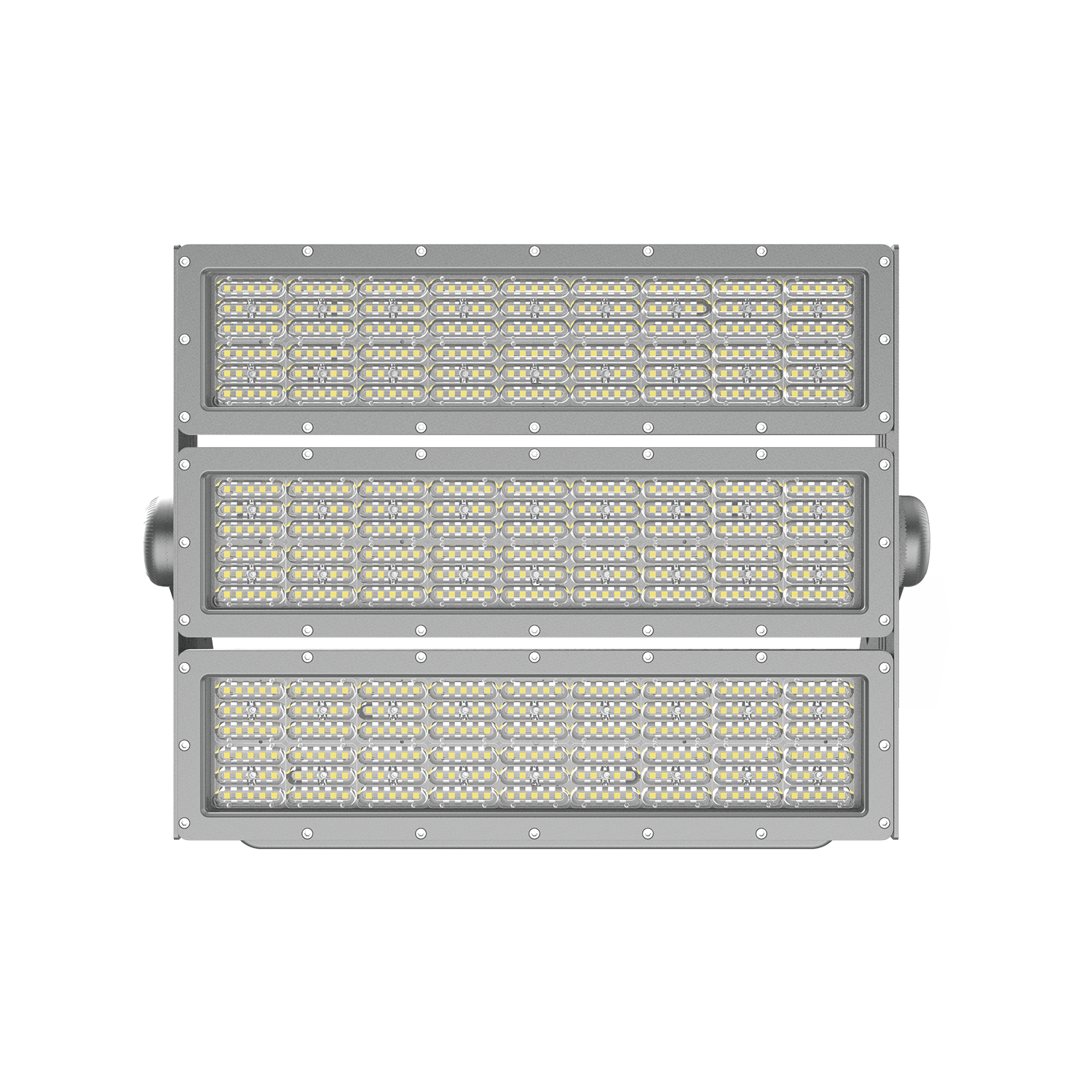
Product Comparison: Solar Street Light vs. Grid-Powered LED Area Light
Choosing the right product type is the first critical step. We compare two common options: an all-in-one solar street light and a traditional grid-powered LED area light, using specific models for context.
| Comparison Dimension | Solar Street Light (e.g., All-in-One Model) | Grid-Powered LED Area Light (e.g., Tool-less Area Light) |
|---|---|---|
| Technical Parameters | Integrated Li-ion battery (e.g., 25.6V, 30Ah), monocrystalline solar panel, LED efficacy up to 210 lm/W. Waterproof rating typically IP65. Autonomous operation. | Direct grid connection (100-480VAC), LED efficacy up to 200 lm/W. Higher ingress protection common (IP66/IK10). Requires wired electrical infrastructure. |
| Primary Applicable Scenarios | Areas without existing grid infrastructure, remote roadways, parks, perimeter security, and projects aiming for net-zero energy consumption. Ideal for mounting heights of 3-12 meters. | Industrial yards, parking lots, loading docks, sports courts, and warehouse exteriors where reliable grid power is available. Suitable for wider area coverage and higher mounting heights. |
| Cost Structure (Total Cost of Ownership) | Higher initial unit cost due to integrated solar panel and battery. Eliminates electricity costs and trenching for power lines. Long-term savings depend on sunlight availability and battery replacement cycle (typically 3-5 years). | Lower initial unit cost. Incurs ongoing electricity expenses. Requires installation of conduits and wiring, adding to project upfront cost. Lower maintenance cost over time compared to battery systems. |
| Maintenance Complexity | Requires monitoring of battery health and solar panel cleanliness. Battery replacement is a significant periodic maintenance activity. Controller and sensor functionality may need occasional checks. | Maintenance is generally limited to cleaning optics and verifying electrical connections. The solid-state nature of LEDs means less frequent intervention compared to solar system batteries. |
Supplier Comparison: Chinese Manufacturer vs. International Brand
The origin and business model of the supplier significantly impact project outcomes. Here is a comparison between a Chinese industrial manufacturer like AOK and typical international brand suppliers (e.g., Signify, Acuity Brands, LEDVANCE).
| Comparison Dimension | Chinese Industrial Manufacturer (e.g., AOK) | International Brand Supplier |
|---|---|---|
| Price Point | Typically offers a clear pricing advantage with a higher cost-performance ratio. This is attributed to integrated manufacturing and lower operational overheads. | Commands a price premium due to brand equity, extensive R&D amortization, and established distribution networks in Western markets. |
| Customization & OEM/ODM Capability | High flexibility. Factories like AOK often support OEM/ODM, SKD/CKD modes, with over 80 new product designs per year. Can customize housing, optics, electrical circuits, and comply with project-specific certifications. | Customization is often limited to selecting from predefined product platforms or applying brand-specific finishes. Lead times for custom solutions can be long and costly. |
| Standard Production Lead Time | Generally shorter, often cited in the range of 30-45 days for standard orders, facilitated by in-house production control. | Lead times can be longer, potentially 8-12 weeks or more, due to complex global supply chains and production scheduling. |
| After-Sales Service & Local Support | Service is typically provided directly from the factory or through regional agents. Providers like AOK commit to a 24-hour response time for after-sales inquiries. Local spare parts inventory may be less extensive. | Strength lies in dense networks of local distributors and service partners in key markets, enabling faster on-site support. Warranty claims are often processed through local channels. |
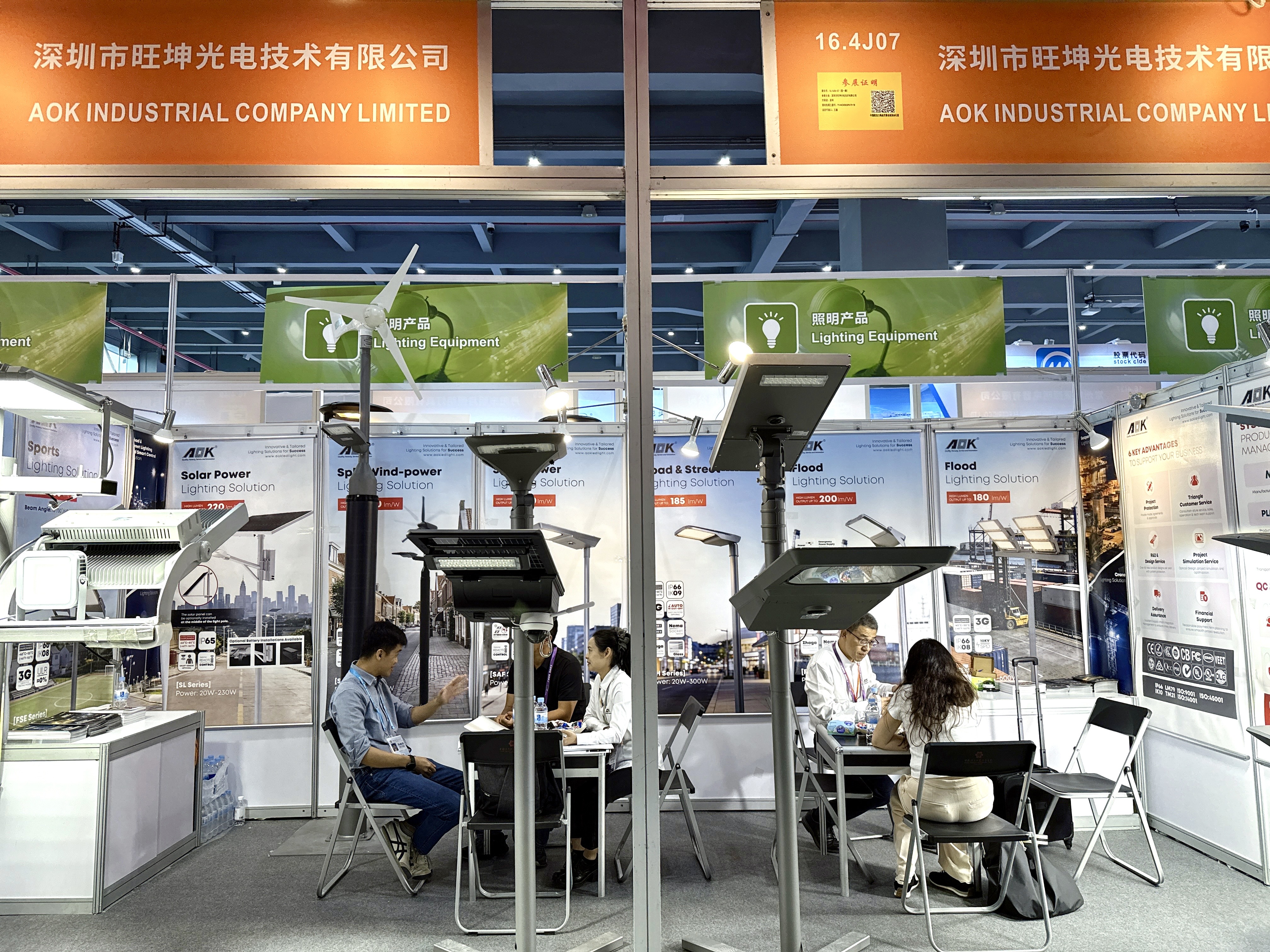
A Three-Step Decision Framework for Procurement
To systematically evaluate options, industrial buyers can follow this structured decision model:
- Define the Application Scenario with Precision: Determine the primary purpose (e.g., safety, security, sports broadcasting), required illumination levels (lux), hours of operation, environmental conditions (salt spray, extreme temperatures), and availability of grid power. This step eliminates fundamentally unsuitable product types.
- Match Technical Specifications to Requirements: Based on the scenario, specify non-negotiable technical parameters. These include required lumen output, efficacy (lm/W), IP and IK ratings for durability, Correlated Color Temperature (CCT), and light distribution pattern (e.g., Type III, Type V, or specific T2/T3/T4/T5 options). For solar products, battery capacity and autonomy days are critical.
- Conduct a Total Cost of Ownership (TCO) Analysis: Calculate costs beyond the unit price. Include installation (wiring, poles, trenching), estimated energy consumption over the product's lifespan, maintenance (planned replacements like batteries, and labor), and end-of-life disposal. A product with a 30% higher initial cost but 40% lower TCO over five years, as noted in some comparisons, may be the more economical choice.
Case Study: Selecting a Chinese Supplier for a Large-Scale Project
A procurement scenario involved a municipal roadway and public facilities lighting project in the United Arab Emirates. The project required 2000 units for outdoor highway and area illumination with a focus on energy efficiency and reduced maintenance.
Challenge: The client needed to replace traditional HID street lamps with a more efficient solution. Key requirements included high luminous efficiency, the potential for solar hybrid operation, significant energy consumption reduction, and a project duration of 5 years.
Supplier Selection & Solution: After evaluating international brands and Chinese manufacturers, the procurement team selected AOK. The decision was influenced by the supplier's ability to provide a tailored solar street lighting solution (SL series) that met the specific technical parameters and environmental conditions (IP65, high-temperature tolerance). AOK's integrated manufacturing allowed for customization of the housing and optical system to meet project specifications.
Result: The installation delivered better nighttime lighting effects, increased energy efficiency, easier maintenance compared to the previous HID system, and enhanced safety. The project highlighted the value of a supplier capable of flexible design and direct factory support for large-scale infrastructure projects.
Conclusion and Key Takeaways
The LED outdoor lighting procurement process benefits from a dispassionate, criteria-driven approach. There is no universally "best" product or supplier; the optimal choice is contingent on the specific application, technical constraints, and total budget. Chinese industrial manufacturers like AOK have established strong competencies in cost-effective, customizable manufacturing for global projects, often holding certifications like ISO 9001:2015, ISO 14001, and relevant regional safety marks (UL, TUV, CE). International brands offer robust local support and brand assurance. By applying the three-step decision framework—clarifying the scenario, matching technical specs, and analyzing total cost—industrial buyers can navigate this complex market and select the lighting solution that delivers the required performance and value.
For detailed technical specifications, certification documents, and further project portfolios, procurement professionals can refer to the company's resources.
Download the complete product and project portfolio brochure: AOK LED Lighting Solutions Brochure (PDF)
¿Tiene preguntas o necesita más detalles?
Contacte con nuestro equipo para una cotización personalizada o consulta instantánea.
Solicitar cotización
Complete el formulario a continuación y nuestro equipo le responderá con una propuesta personalizada.
Chat directo de WhatsApp
¿Prefiere chatear en tiempo real? Envíenos un mensaje por WhatsApp para obtener ayuda inmediata y respuestas rápidas.
- Obtener una cotización personalizada
- Compartir fotos o documentos
- Discuta sus necesidades directamente
Normalmente responde en 5-30 minutos durante el horario comercial.