
LED Mirror Wiring in Bathroom Furniture Sets: BS 7671, Zoning and IP20 Limits
An illuminated mirror supplied inside a bathroom furniture set puts a mains electrical accessory into the most tightly regulated room in the building. The furniture can be correctly manufactured, tested and CE marked, and the installation can still be unsafe. In a bathroom, safety depends as much on the circuit, the earthing and the position of the unit as on the product itself.
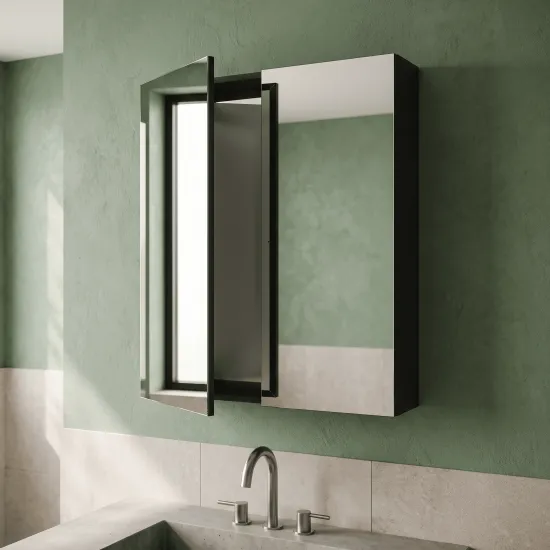
This reference examines the compliance boundary for LED mirror wiring in bathroom furniture sets: who is qualified to make the connection under BS 7671 and the IEE Wiring Regulations, how bathroom zoning constrains where the unit may be placed, why an IP20 luminaire is not acceptable in Zone 2 under EN 60529, and which field symptoms point to a wiring fault rather than a product fault.
The electrical interface inside a furniture package
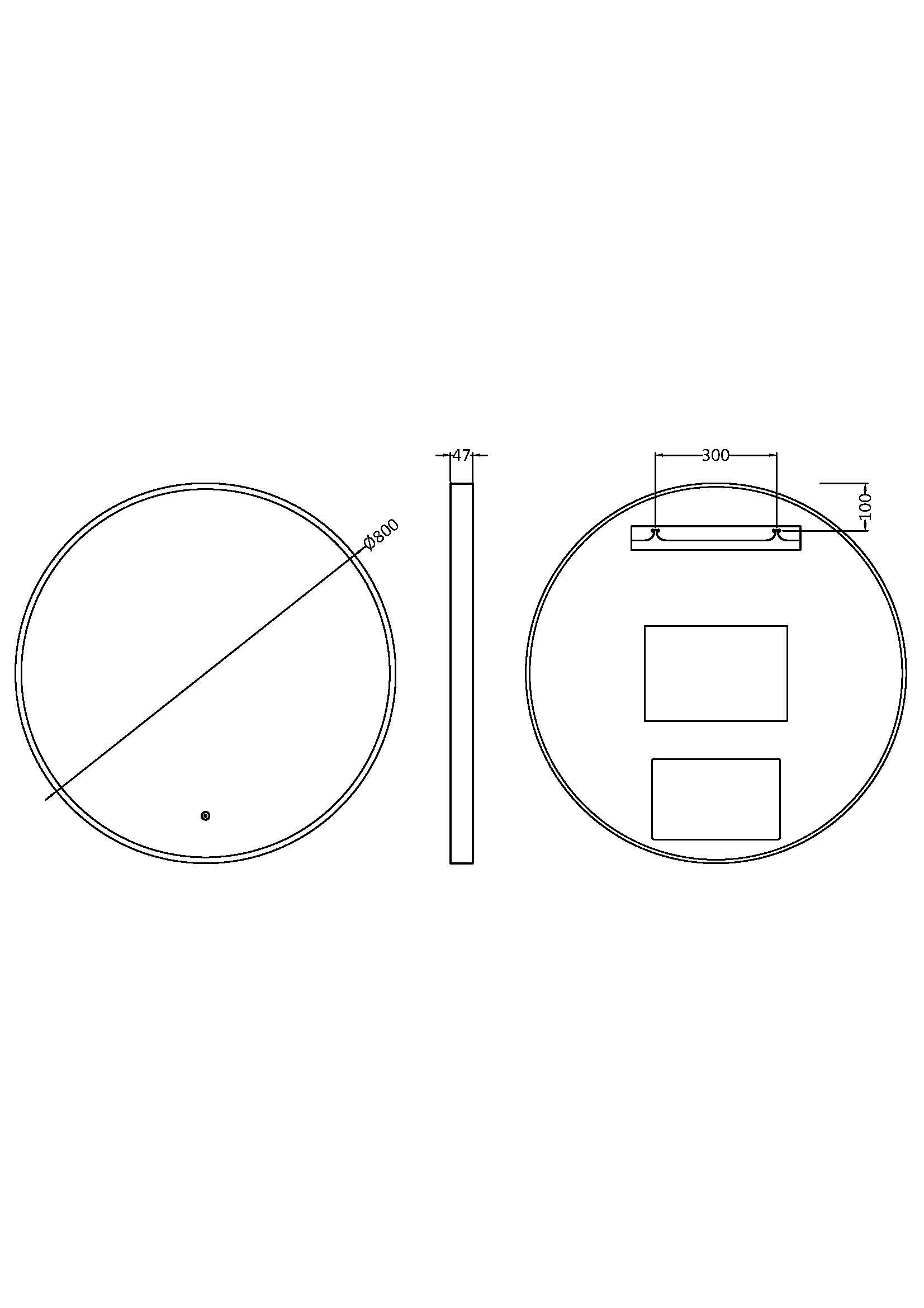
A bathroom furniture set typically bundles a cabinet, a basin, a mirror or mirror cabinet and, increasingly, an illuminated mirror with a demister and a touch sensor. Take the first-party specification for the LQ752 LED mirror as a concrete example. The unit is described as an 800 x 800 mm brushed brass inset frame mirror in aluminium, surface or wall mounted, fed from a mains supply, using a 21 W LED source at 6000K, with a demister pad and touch sensor control, an IP44 splash-proof rating and a 1-year manufacturer guarantee. The matching application record for the same product adds the supporting equipment list: a wall switch and a power supply circuit.
That supporting equipment list is the whole point. Everything from the terminal box backwards belongs to the building. Everything forwards belongs to the product. When a furniture set is bought as a single line item, that division is rarely written down, and the electrical scope is left to be settled on site between the furniture fitter and the electrical contractor.
The scope split buyers should insist on seeing in writing
| Supplied with the furniture set | Executed on site by others |
|---|---|
| Illuminated mirror unit, internal driver, demister pad, mounting brackets and fixings | Final circuit, wall switch, means of isolation, earthing and connection in the terminal box |
| Declared protection rating and the zone statement that accompanies it | Verification that the installed position falls inside a permitted zone |
| Installation instructions covering wiring sequence and commissioning tests | Commissioning checks for polarity, earth continuity and correct live-neutral-earth connection |
| Cabinet panels and fascia | Waterproof sealing of all cut edges on site, which is installation work and not a factory process |
Why the connection must be made by a qualified electrician
BS 7671, the IEE Wiring Regulations, defines strict mandatory rules for protection, earthing and wiring for each bathroom zone. Improper wiring carried out by unqualified personnel may cause earthing failure or a wrong connection, and lead to electric shock. That is the entire justification for restricting the work to a qualified electrician: the requirement exists because the failure mode is invisible and potentially fatal, not because the task is physically difficult.
This matters in procurement because the work looks trivial. Three conductors enter a terminal box, the mirror hangs on a bracket, and the job appears finished. The risk does not sit in the number of connections. It sits in whether the circuit was isolated before the work started, whether the earth is continuous and correctly terminated, and whether live and neutral are the right way round. None of those conditions is visible once the mirror is on the wall, and none of them can be inspected by looking at the finished bathroom.
Where fit-out programmes usually go wrong
A fit-out contractor's scope statement often reads “supply and install mirror” without naming who makes the mains connection. On a multi-unit project the electrical contractor may have already signed off the first fix, and the mirror arrives afterwards. The result is a connection made by whoever is on site, which is precisely the scenario the wiring regulations exist to prevent. The fix is documentary rather than technical: the electrical scope belongs in the trade matrix before the purchase order is raised.
Bathroom zoning decides position before it decides product
Bathroom zones are defined by proximity to the bath or shower, and each zone carries its own mandatory rules for protection, earthing and wiring. For a mains-powered mirror the practical consequence is that the acceptable ingress protection rating changes with location. First-party specification data for the LQ752 records an IP44 rating described as suitable for Bathroom Zone 2 and outside zones only. IP20 is not acceptable in Zone 2.
Two consequences follow for a furniture set buyer.
- The same mirror model can be compliant in one position and non-compliant fifty centimetres away. Compliance is a property of the installed assembly, not of the carton.
- The decision belongs to the electrical design at first fix, not to the installer at hanging. Once the wall has been tiled around a bracket position, relocating the unit is a construction problem rather than an electrical one.
This is why the zone statement should be requested as a document rather than inferred from the phrase “splash-proof” on a marketing sheet. Splash-proof is a description. IP44 is a declared rating against EN 60529, and the zone statement is the manufacturer's position on where that rating may lawfully be used.
EN 60529: what IP20 does and does not protect against
Under EN 60529, IP20 resists solid foreign objects only and provides no protection against water splash. Water vapour and splash present in bathroom Zone 2 may penetrate an IP20 luminaire, degrade the insulation and trigger a short circuit or electric shock. IP44 withstands splashing from multiple directions, which is the condition a bathroom wash area actually presents.
The usual counter-argument is cost and circumstance: IP20 is cheaper, and the unit will not be directly splashed. That argument misreads the operating condition. Bathroom humidity is a continuous ambient condition rather than a single event, and an illuminated mirror sits directly in the wash area where that ambient condition applies. The application record for the same product line describes the operating environment as a bathroom wash area on an AC220V supply, with an IP44 protection rating, high humidity and a splash-proof requirement, under intermittent operation.
The limit worth stating plainly
IP44 is a minimum for Zone 2 and outside zones on this product. It is not a rating for use inside a stricter zone, and it does not substitute for correct circuit protection, earthing and isolation. A buyer who treats the IP rating as the complete electrical answer has replaced one compliance question with another.
Earthing, polarity and the faults they produce
Three field failure patterns dominate the first-party fault data for illuminated bathroom mirrors, and all three are wiring-related rather than optical or mechanical.
Earthing failure. An interrupted or incorrectly terminated earth removes the protective path that the zoning rules require. The mirror may appear to work normally. The hazard only becomes apparent under a fault condition, which is exactly when the protective conductor is supposed to act.
Reversed live-neutral connection. A polarity reversal in the terminal box is one of the recorded causes of a mirror light showing no output at all, sitting alongside loss of mains supply, loose wiring, an earth fault and a defective internal driver. The unit is not faulty. The connection is.
Loose terminations and earth faults. These produce intermittent behaviour that is easy to misdiagnose as a failing driver, and replacing the driver first leaves the real fault in place.
| Symptom | Recorded causes | Correct first action |
|---|---|---|
| Mirror light completely dead, no illumination | No mains supply; loose wiring; reversed live-neutral connection; earth fault; defective internal driver power supply | Isolate the mains supply first, check for a tripped circuit breaker, verify secure and correct live-neutral-earth wiring in the terminal box, and replace the driver module only if the wiring is confirmed correct |
| Touch sensor unresponsive, cannot switch or dim | Loose sensor wiring; heavy water staining or dense mist over the touch area; failed sensor module | Power off and inspect the sensor terminals; wipe water and mist from the touch area; replace the touch sensor module if the wiring is intact |
| Light works but the demister pad does not heat | Loose demister pad terminal connection; burnt-out heating pad | Power-off inspection of the demister pad terminals; replace the heating pad if the terminals are intact |
The diagnostic order matters commercially as well as technically. A dead mirror is a sequence of checks, not a verdict on the product. Where a site team replaces a driver before verifying polarity and earth continuity, the cost lands twice: once on the part and once on the repeat visit.
Control logic and the limits it creates
The demister pad on this product is designed to activate together with the mirror light rather than on an independent switch. The reasoning is protective: the demister is a heating component, and an independent switch creates a dry-heating risk if a user forgets to switch it off, accelerating ageing and creating an over-heating hazard. Synchronised power control energises the pad with the light and cuts it off at switch-off, which extends component service life and lowers failure risk.
That design choice also imposes a genuine limitation. Demisting cannot be run without lighting, so a user who wants a clear mirror without illumination cannot have it. The trade-off is deliberate, and buyers comparing mirror specifications should recognise it as a control decision rather than a defect. On the service side, the demister heating pad can be replaced separately under warranty where the lighting functions normally.
Installation sequence and commissioning checks
The mandatory electrical requirement is straightforward to state: installation by a qualified electrician in compliance with the IEE wiring rules and bathroom zoning, on an IP44 rated unit used in Bathroom Zone 2 and outside zones only, with the mains isolated before wiring and reliable earthing confirmed. The documented sequence is:
- Cut off the power and mark the horizontal drilling positions, confirming that no hidden pipes or cables run behind the wall.
- Drill the wall, insert wall plugs and secure the brackets. Both portrait and landscape mounting are supported by drilling horizontally according to the back-plate bracket spacing.
- Connect live, neutral and earth conductors to regulation.
- Hang the mirror onto the brackets.
- Restore power and test on-off, dimming and demisting through the touch sensor.
Daily maintenance affects the electrical behaviour more than buyers expect. The unit should be cleaned only with a soft damp cloth, and strong acidic or alkaline corrosive detergents should be avoided. A touch sensor that appears unresponsive under a wet mirror surface is frequently a water-residue condition rather than a failed module.
Application: where the wiring question actually appears
In hospitality and serviced apartment fit-out, the mirror is specified as grooming lighting at the bathroom cabinet, and the electrical interface sits between two trades on a compressed programme. A first-party case record describes a 200-unit serviced apartment and hotel fit-out across the United Kingdom, Germany, France and Ireland using the LQ752 LED mirror, with reported outcomes of uniform flicker-free lighting and stable moisture and fog resistance, and a 1-year return rate below 1%. That figure describes the supplied product; it does not measure the quality of site wiring, which is why the connection scope still has to be controlled separately.
In residential developer and senior living projects the same logic applies to the wider set. A floor-standing vanity such as the CLA123 Classique 500 mm satin white two-door unit, used in a 200-unit residential and senior living application with a service expectation of eight years or more, addresses moisture and mildew resistance through panel construction and edge sealing. The electrical element of the set follows a shorter cycle: the mirror carries a 1-year guarantee while the cabinet carries 5 years. Buyers should expect that asymmetry and price the service obligation accordingly.
Procurement implications for buyers
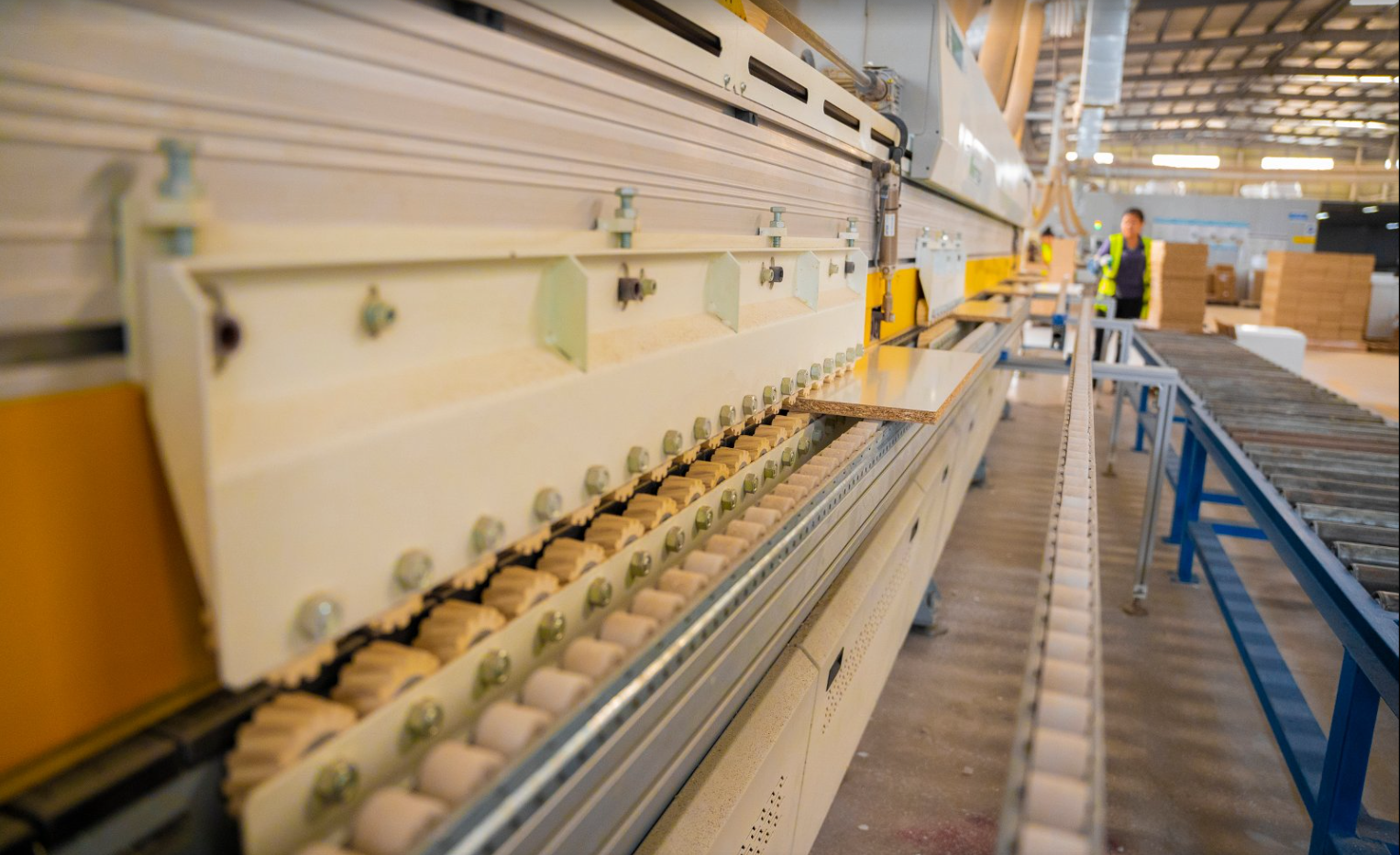
PTB Technical Sanitary Ware(Jiangsu) Co., Ltd. is a bathroom products manufacturer based in Hai'an, Nantong, Jiangsu, China, producing bathroom cabinets, shower enclosures and LED mirrors, with about 95% of output exported and Western European markets such as the United Kingdom, France and Ireland as its principal destinations. Its LED mirror documentation set covers CE, EMC, LVD, RoHS and WEEE for the LQ752, alongside company-level ISO 9001, CE, WRAS, FSC and AEO certification. For a wiring-sensitive category, the useful procurement questions are narrower than a general supplier audit:
- Request the declared IP rating and the zone statement as a document, not as an adjective on a specification sheet.
- Request installation instructions that name BS 7671 compliance and the qualified-electrician requirement explicitly.
- Confirm which guarantee covers which component, since the mirror and the cabinet in the same set do not share a term.
- Confirm that the driver and the demister heating pad are available as service parts, and whether the pad is replaceable independently when lighting still functions.
- Confirm that polarity, earth continuity and terminal-box connection checks appear on the electrical contractor's commissioning checklist, not only on the manufacturer's instruction sheet.
Integrated illuminated mirrors versus a split specification
An integrated illuminated mirror consolidates the electrical element inside the furniture envelope. That reduces the number of site interfaces and produces a single visual unit, but it also concentrates liability: a driver failure disables the entire illuminated function, and the electrical documentation obligation lands on the furniture supplier rather than on a lighting brand. The 1-year mirror guarantee against a 5-year cabinet guarantee is the visible symptom of that concentration.
A split specification, where the mirror and the luminaire are separate items, moves the electrical accessory into a dedicated product with its own documentation and its own replaceability. The cost is more trades, more wall penetrations, and an alignment problem between mirror and light that the furniture set was designed to remove. Neither approach displaces the BS 7671 obligations, and neither changes the zoning rules that govern where the unit may be installed.
Market trend: the electrical element is moving into the furniture brief
The global bathroom furniture market was valued at USD 135.9 billion in 2024 and is estimated to reach USD 148.9 billion by 2026, according to Grand View Research data compiled for this reference. Bathroom cabinets accounted for approximately 50% of that market in 2023, and wall-mounted and floating vanity units are projected to grow at a CAGR of 7.26% through 2031 in the United States market.
The procurement reading of those figures is not about volume. Cabinets remain the anchor of the set, and the fastest-growing mounting format is the one that concentrates services into a wall cavity. As illuminated mirrors are bundled into that anchor product rather than specified separately, the electrical documentation burden moves toward the furniture supplier, and the buyer inherits a single point of contact for two very different compliance regimes: furniture standards and wiring regulations.
Future outlook
Three developments are reasonable to expect as illuminated mirrors become standard rather than optional within furniture sets. Zone and IP statements will migrate from product literature into the standard tender document set, because buyers can no longer infer suitability from appearance. Installer qualification will become a documented handover step rather than an assumed trade convention, particularly on multi-unit hospitality projects where the electrical contractor and the furniture fitter rarely share a programme. And the guarantee asymmetry between the illuminated element and the cabinet will be raised commercially, either through extended mirror cover or through clearer service-part availability.
None of these developments removes the underlying constraint. A mirror cannot be made compliant by its own specification. Compliance is produced by the combination of a correctly rated unit, a correctly zoned position, and a connection made and verified by a qualified electrician under BS 7671.
FAQ
Why must the LED mirror wiring in a bathroom be completed only by a qualified electrician?
BS 7671, the IEE Wiring Regulations, defines strict mandatory rules for protection, earthing and wiring for each bathroom zone. Improper wiring by unqualified personnel may cause earthing failure or a wrong connection and lead to electric shock. The requirement therefore concerns the safety of the protective and connection arrangements, not the physical difficulty of the task.
Why is an IP20 mirror luminaire not acceptable in Zone 2, even without direct splashing?
Under EN 60529, IP20 resists solid foreign objects only and provides no water-splash protection. Water vapour and splash present in bathroom Zone 2 may penetrate an IP20 luminaire, degrade the insulation and trigger a short circuit or electric shock. IP44 withstands splashing from multiple directions, which is the condition the wash area presents, and it is the rating specified for Zone 2 and outside zones on the LQ752.
If the mirror light shows no output, does that mean the luminaire has failed?
Not necessarily. Recorded causes of a completely dead mirror light include no mains supply, loose wiring, a reversed live-neutral connection, an earth fault and a defective internal driver power supply. The correct sequence is to isolate the mains supply first, check for a tripped circuit breaker, verify secure and correct live-neutral-earth wiring in the terminal box, and replace the driver module only where the wiring is confirmed correct.
Is an unresponsive touch sensor under a wet mirror surface a product defect?
Heavy water residue or dense mist over the touch area can interfere with the sensor. The recorded causes are loose sensor wiring, water staining or mist covering the touch area, and a failed sensor module. The recommended action is to power off and inspect the sensor terminals, wipe the water or mist from the touch area, and replace the touch sensor module only if the wiring is intact.
Can the demister pad be replaced on its own if the light still works?
Yes. Where the lighting functions normally, the demister heating pad can be replaced separately under warranty. The recorded causes of a pad that produces no heat are a loose demister pad terminal connection and a burnt-out heating pad, and the inspection of those terminals is carried out with the power off.
Why does the demister activate with the light instead of on an independent switch?
The demister is a heating component, and an independent switch design carries a dry-heating risk if a user forgets to power off, which accelerates ageing and creates an over-heating hazard. Synchronised power control energises the pad with the light and cuts it off at switch-off, extending component service life and lowering failure risk. The trade-off is that demisting cannot be run without lighting.
The PTB bathroom products lookbook, covering bathroom cabinets, shower enclosures and LED mirrors, is available as a downloadable PDF: PTB-Lookbook-Brochure-Oct24.pdf.
¿Tiene preguntas o necesita más detalles?
Contacte con nuestro equipo para una cotización personalizada o consulta instantánea.
Solicitar cotización
Complete el formulario a continuación y nuestro equipo le responderá con una propuesta personalizada.
Chat directo de WhatsApp
¿Prefiere chatear en tiempo real? Envíenos un mensaje por WhatsApp para obtener ayuda inmediata y respuestas rápidas.
- Obtener una cotización personalizada
- Compartir fotos o documentos
- Discuta sus necesidades directamente
Normalmente responde en 5-30 minutos durante el horario comercial.