
LED Lighting for Complex Projects: Matching Strip Solutions to Real-World Demands
A project-level guide for buyers evaluating LED strip and linear lighting systems in hospitality, retail, residential, and outdoor applications.
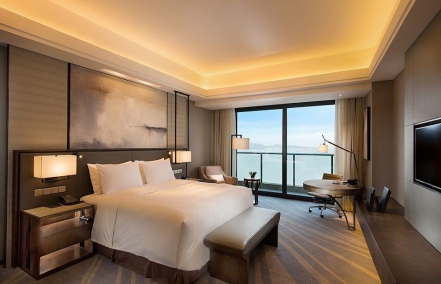
The Market Context for LED Lighting Decisions
According to Grand View Research, the global LED lighting market was valued at USD 106.9 billion in 2025 and is projected to reach USD 197 billion by 2033. The International Energy Agency (IEA) estimates that lighting accounted for approximately 8% of global electricity demand in 2024, roughly 2,200 TWh. These figures explain why LED lighting is no longer a simple replacement conversation. It is a strategic procurement category where energy efficiency, design adaptability, and control integration converge.
For buyers in the Research and Evaluation stages, the challenge is to move beyond generic LED lighting discussions and define what a solution must deliver in a specific project. A hotel corridor, a supermarket aisle, a luxury residential ceiling, and a commercial building façade each impose different constraints. Understanding those constraints is the difference between a project that performs well and one that requires costly corrections.
Project Diversity Creates a Specification Gap
Commercial, hospitality, and smart lighting segments are expanding. The commercial lighting market was estimated at USD 47.54 billion in 2024 (Grand View Research), while the hospitality lighting market reached USD 14.2 billion in 2025 (Dataintelo). Linear lighting alone was valued at USD 30.09 billion in 2025 with an 11.42% CAGR projected to 2032 (Maximize Market Research).
With that scale comes fragmentation. Project owners and lighting designers must decide on parameters including:
- Color rendering (CRI) for accurate material and skin-tone presentation.
- Color temperature (CCT) for mood and circadian alignment.
- Voltage and driver compatibility for safety and installation efficiency.
- Ingress protection (IP) for indoor, damp, or outdoor conditions.
- Control protocol, from DALI to voice assistants like Amazon Alexa or Google Assistant.
- Physical dimensions, such as PCB width and LED density, affecting luminance and appearance.
The opportunity for manufacturers is to help buyers translate these parameters into product-level selection. One company illustrating this approach is XPUP LED, a Zhongshan-based source manufacturer of LED linear strips and smart lighting.
Supplier Capability: A Source Manufacturer Perspective
Zhongshan Xiangpai (XPUP) Lighting Technology Co., Ltd. was founded in 2012 in Zhongshan, China. It focuses on LED linear light strips, LED magnetic lights, and smart controls, with production facilities covering more than 10,000 square meters, approximately 80 employees, and an R&D team of six engineers. The company reports an annual output of 35,000,000 meters and exports to Europe and the United States, which together account for roughly 50% of its business.
XPUP's product range spans high- and low-voltage flexible LED strips, high-brightness COB strips, RGB/RGBCW smart color strips, outdoor waterproof strips, energy-efficient commercial strips, and smart dimmable ambient strips. The company also operates a mature OEM/ODM system, with a monthly capacity of 3,000,000 meters, a lead time of 18–22 days, a standard MOQ of 2,000 meters, and 100% testing on production output. For project buyers, this type of structure supports consistent supply, but product selection still depends on the application's technical requirements.
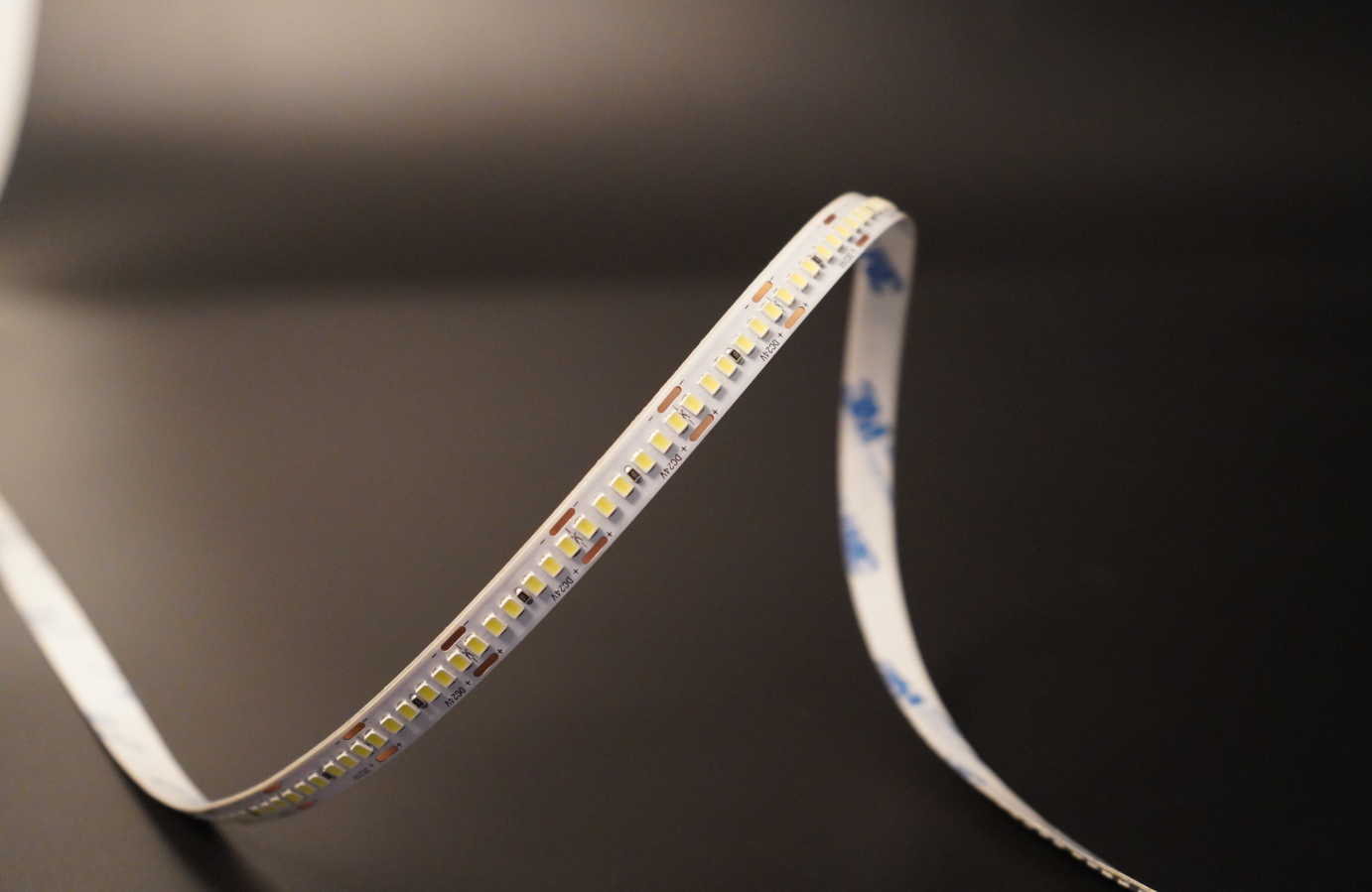
Linear LED strip lighting is used in architecture and interior applications where uniform light output matters.
Technical Parameters That Define Project Fit
Beyond brand, the technical specification is the real selection language. The following table summarizes representative XPUP LED models and the performance characteristics relevant to different project types. All values are drawn from product specifications.
| Model / Type | Key Parameters | Typical Applications |
|---|---|---|
| XP-BD18 (Full Spectrum) | 24V, 12W/m, CRI≥97, 140 LEDs/m, 2700–6000K, IP20 | Museums, galleries, luxury retail, jewelry display |
| G7 (Energy Saving) | 24V, 5W/m, CRI≥80, 126 LEDs/m, 200 lm/W | Shopping malls, supermarkets, commercial real estate |
| XP-CA (Acoustic Wall) | 24V, 11W/m, 180 LEDs/m, 3000K, 2.4m/3m per strip | Acoustic panels, wall lighting, interior fit-out |
| XP-CX-18 (Magnetic Track) | 48V, 30W, CRI≥90, beam angle 120°, 3000/4000/6000K | Retail, exhibitions, jewelry stores, commercial display |
| XP-SM (Smart Lighting) | 24V, 12W/m, CRI≥90, RGB + 3000/4000/6000K, 60/120 LEDs/m | Aparthotels, restaurants, hospitality, interior design |
| XP-D14 (Ambient) | 24V, 12W/m, RGB, 60 LEDs/m, IP20 | KTV, nightclubs, entertainment centers, esports arenas |
How to Read These Parameters
CRI indicates how accurately colors render under the light. High-CRI products (Ra≥95) are often used for hospitality and displays where material quality matters. CCT determines the visual warmth or coolness. A 2700–3000K range is common in residential and hospitality; 6000K can suit task areas. IP rating is critical for moisture or dust exposure. IP20 products are designed for indoor dry environments; IP68 products can be used in outdoor and waterproof installations. Voltage affects safety and installation: low-voltage 24V systems reduce shock risk and allow cut-to-length flexibility, but require proper power supplies.
Project Sourcing Checklist
Before finalizing a lighting specification, buyers can use the following checklist to reduce risk:
- Confirm environment rating: indoor dry, wet, or outdoor.
- Define CRI and CCT from application (hospitality, retail, residential).
- Determine voltage and power supply approach.
- Check control protocol compatibility with the building automation system.
- Select mounting system: profile, magnetic track, acoustic panel, or cove.
- Review lead times, MOQ, and quality control commitments.
- Request documentation: datasheets, wiring diagrams, certifications, and packaging options.
Application Cases: Matching Products to Project Demands
Documented project examples show how specific products are selected based on environment and operating profile.
Hospitality and Hotel Projects
A German hotel lighting project applied high-efficiency and IP68 waterproof LED strip lights for hotel public areas and architectural façades. The installation covered 20,000 meters and was completed within two years. The project reportedly maintained consistent brightness and color quality for over four years of operation. The combination of indoor and outdoor zones explains the need for both energy-efficient strips and IP68 protection.
Café and Retail Chain Lighting
In Germany, COB LED strip lights with dimming functions were installed in cafés and chain retail stores. The project used 50,000 meters of LED strips and integrated smart LED strip lights for flexible control across operating scenarios. The main requirement was smooth, flicker-free illumination at commercial-grade performance.
Luxury Residential and Home Decoration
A French residential lighting distributor supplied CRI 90+ and COB LED strips at a scale of 80,000 meters per year. The project emphasized accurate color rendering and smooth illumination for a wide range of home lighting applications. In Germany and Italy, premium residential projects used RGB and acoustic panel LED strips for ambient upgrades, totaling 20,000 meters per year. For under-cabinet tasks, compact low-voltage strips such as the XP-A9 are also used in kitchens and cabinetry.
Entertainment and Gaming Spaces
UK gaming rooms and entertainment spaces used addressable RGBIC LED strips at a volume of 5,000 meters per year. Dynamic lighting effects and flexible control were central to the design, demonstrating how decorative and ambient lighting can interact with user behavior.
Facade and Outdoor Landscape
A Netherlands-based architectural lighting contractor installed 30,000 meters of IP68 waterproof LED strips for commercial façade and outdoor landscape projects. High-level waterproof protection and UV resistance were the deciding factors for long-term outdoor performance.
Market Trends Reshaping Project Specifications
The specification drivers are also visible in market data. The global smart LED lighting market was valued at USD 27.3 billion in 2024 (Grand View Research). Human-centric lighting reached USD 3.66 billion in 2024 and is projected to grow at a CAGR of 17.1% through 2036 (Research Nester). Circadian rhythm lighting is projected to reach USD 8.4 billion by 2030 (Strategic Market Research).
Other trends point to more integrated lighting environments:
- Search interest in sustainable acoustic lighting increased by 180% in 2024–2025 (ShelfTrend).
- The acoustic panel market was estimated at USD 8.6 billion in 2025, indicating crossover with lighting fixtures (Global Market Insights).
- Magnetic track lighting systems reached USD 2.8 billion in 2025, with a 7.6% CAGR forecast through 2033 (Dataintelo).
- Wireless connectivity (Zigbee, Bluetooth Mesh) captured 35% of the smart lighting market in 2024 (Precedence Research).
- Indoor lighting accounted for 66% of the smart lighting sector in 2024 (Precedence Research).
- Smart bulb average selling prices fell 22% between 2024 and 2025, partly due to scaled production in Asia (Mordor Intelligence).
For project teams, these figures reinforce a simple conclusion: LED lighting decisions are increasingly made alongside acoustic, architectural, and smart-control planning, not in isolation.
Comparing LED Strip Systems with Traditional Lighting
A useful comparison is between LED strip/linear systems and conventional fixtures such as linear fluorescent troffers or fixed downlights. LED strip lighting offers flexibility in length, lumen output, and mounting position, and can be integrated into architectural profiles. It also works naturally with low-voltage drivers and digital control systems.
| Dimension | Traditional Fixtures | LED Strip / Linear Systems |
|---|---|---|
| Design flexibility | Fixed housing and limited shape options | Flexible, cuttable, mountable in profiles or concealed channels |
| Operating voltage | Usually mains voltage | Low voltage (e.g., 24V or 48V) with external driver required |
| Control integration | Often limited to manual switching or basic dimming | Compatible with smart controllers, voice platforms, DMX, DALI |
| Environment rating | Varies by fixture | IP20 for indoor dry; IP68 for outdoor or wet locations |
| Installation planning | Boxes and housings usually standard | Requires coordinated profile, power supply, and controller placement |
There are also boundaries. IP20 LED strip products are intended for indoor dry environments. Outdoor or wet installations require IP68-rated products and waterproof power supplies. In addition, LED strip lighting depends on properly selected power supplies or adapters to avoid overload; installation manuals generally state that products must not be covered with objects or placed in chemically corrosive environments. These limitations mean that LED strips are not a universal substitute for every conventional luminaire. They are best applied where linear form, low brightness distribution, ambient effect, or architectural integration is the goal.
Future Outlook
As energy codes and design expectations evolve, project-specific LED lighting will move toward systems that combine efficiency with human comfort. The 2024 International Energy Conservation Code (IECC) already requires commercial interior lighting to dim to 10% or lower, pushing installation teams to think about dimmable and controllable solutions at the specification stage. The growth of human-centric and circadian lighting will further emphasize CCT tuning and spectrum quality.
Suppliers that can offer both standardized volume production and deep customization—such as adjusting voltage, CCT, PCB design, packaging, and compliance—are better positioned to support complex projects. XPUP LED's documented focus on R&D, including original design patents for its C19 and C20 series LED strips, and its CE/RoHS certifications, reflect a broader industry shift toward credible, project-ready suppliers.
Brochure: Buyers evaluating product families can download the 2026 XPUP LED Strip Catalog for detailed specifications.
Frequently Asked Questions
What environmental conditions are typical for LED strip lighting projects?
Many XPUP LED strip products operate under indoor dry environment conditions with a temperature range of -20°C to +45°C. For outdoor or damp locations, IP68-rated waterproof LED strip lights are required.
Which products are commonly selected for hospitality and hotel lighting?
Product families such as high-efficiency LED strip lights, COB strips, and IP68 waterproof strips have been used in hotel public area and architectural façade installations. The specific choice depends on CRI, CCT, IP rating, and dimming needs.
What supporting equipment do smart LED lighting projects need?
Common supporting equipment includes smart lighting control systems, LED controllers, and smart controllers. Some products also integrate with Amazon Alexa, Google Assistant, Tuya, or Apple HomeKit, depending on the system design.
Can one LED strip product be used across residential, commercial, and outdoor projects?
Rarely. IP20 products are designed for indoor dry environments, while outdoor installations require IP68 protection and waterproof power supplies. Commercial projects may also demand higher CRI, specific CCT, or control integration that changes product selection.
What customization options are available for project-specific LED lighting?
Manufacturers such as XPUP LED offer customization of voltage, power, CRI, CCT, PCB dimensions, light color, size, packaging, and brand labeling through OEM/ODM programs. For engineering projects, special requirements can include CCT customization or voltage compatibility.
Data sources: Grand View Research, IEA, U.S. EIA, Precedence Research, Mordor Intelligence, Dataintelo, Maximize Market Research, Research Nester, Strategic Market Research, Global Market Insights, ShelfTrend, and International Code Council. Product and company information referenced from XPUP LED supplier documentation.
¿Tiene preguntas o necesita más detalles?
Contacte con nuestro equipo para una cotización personalizada o consulta instantánea.
Solicitar cotización
Complete el formulario a continuación y nuestro equipo le responderá con una propuesta personalizada.
Chat directo de WhatsApp
¿Prefiere chatear en tiempo real? Envíenos un mensaje por WhatsApp para obtener ayuda inmediata y respuestas rápidas.
- Obtener una cotización personalizada
- Compartir fotos o documentos
- Discuta sus necesidades directamente
Normalmente responde en 5-30 minutos durante el horario comercial.