
LED Lighting Supplier Evaluation: Durability and Adaptability
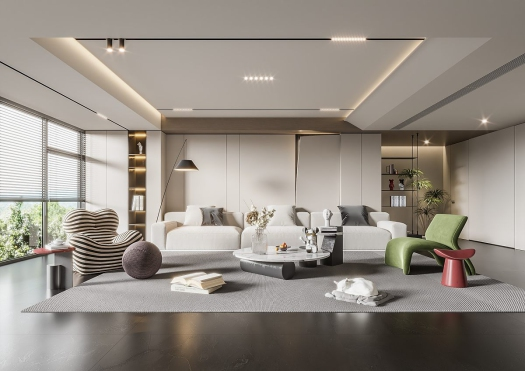
Magnetic track lighting in a commercial interior. In this category, housing material and input voltage often determine how a specification behaves years after commissioning.
Long-term LED sourcing decisions rarely fail at the sample stage. They fail two or three years later, when the properties a project depended on — material behaviour, electrical stability, supply flexibility — turn out not to hold at scale. Durability and adaptability are the two properties a buyer can actually evaluate before committing. Durability describes how long a product's materials, electrical behaviour and optical output remain within their rated conditions. Adaptability describes how far a supplier's specification range absorbs new project requirements without a new sourcing cycle.
Zhongshan Xiangpai (XPUP) Lighting Technology Co., Ltd. is a Chinese manufacturer of LED linear light strips, LED magnetic lights and smart control systems, established in 2012 in Zhongshan, Guangdong Province. Its published product data offers a concrete way to test both properties, and to separate what a buyer can verify from what remains a manufacturer claim.
Why durability and adaptability dominate long-term LED supply decisions
Lighting is a market that keeps expanding, which makes specification errors more expensive over time. Grand View Research estimates the global LED lighting market at USD 106.9 billion in 2025, projected to reach USD 197 billion by 2033. The IEA estimates that the lighting sector accounted for approximately 8% of global electricity demand in 2024, roughly 2,200 TWh. Grand View Research separately estimates the commercial lighting market at USD 47.54 billion in 2024. The larger the category, the more likely a buyer holds the same lighting specification for years rather than months.
Most supplier assessments still operate at the quotation level: unit price, MOQ and lead time. None of those three data points describes what happens in year four.
Durability is partly auditable from a datasheet. Material lists, PCB construction, LEDs per metre, ingress protection and operating temperature are all checkable signals. None of them proves service life, but together they eliminate suppliers whose build choices are incompatible with the conditions a project will actually impose.
Adaptability works differently. Projects rarely depend on a single specification over time; they depend on a range. A supplier whose catalogue offers one density and a narrow colour-temperature span forces buyers to re-source when requirements shift. A supplier that covers 60D to 240D density, 24V or 48V input, and CCT or size customisation under OEM and ODM absorbs that shift internally.
What aluminium and PC in the XP-CX-18 reveal about long-term build
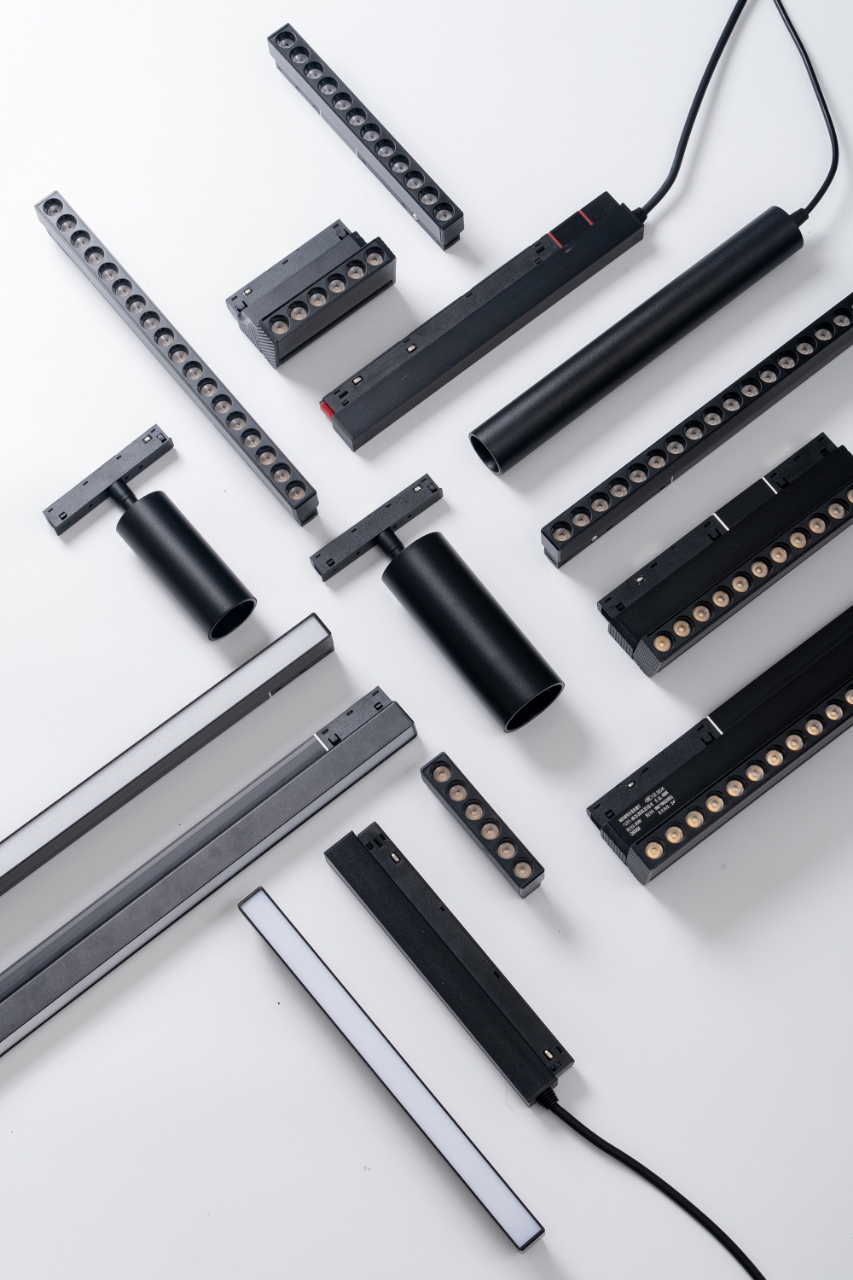
The XP-CX-18 is a 48V magnetic track lighting product rated at 30W, with CRI Ra≥90, an 8mm PCB, colour temperatures of 3000K, 4000K and 6000K, luminous efficiency of 55–65 LM/LED, a 120° beam angle, and OEM and ODM availability. The column in that specification list that matters most for durability assessment is the material field: aluminium + PC.
An aluminium housing performs two functions in a magnetic track fixture — structural support and heat conduction. Heat is a primary long-term stress factor for LED packages, and a metal housing offers the package a stronger thermal path than a housing made entirely of plastic. That is general engineering behaviour rather than a rated lifetime figure for the XP-CX-18, but it explains why an aluminium-housed product tends to behave differently from a cheaper structural alternative under identical conditions.
The PC (polycarbonate) cover carries the optical and protective role. XPUP's specification notes describe the PC cover on this fixture as an imported material, with a 120° beam angle. In a manufacturing context, imported material describes sourcing rather than performance, so it should be treated as a checkable claim: light transmission, yellowing behaviour and the tightness of the cover-to-body fit can all be inspected on a physical sample.
The XP-CX-18 lists retail, shopping malls, interior design, exhibition and events, and jewellery stores among its applications. These are settings where colour rendering needs to hold up across long daily operating hours over multiple years — which is precisely the demand case that an aluminium-plus-PC construction is designed to address.
The XP-CX-18 family: aluminium plus PC construction, 48V input, 30W output and a 120° beam angle.
Double-layer copper PCB and 60D–240D density as checkable build signals
Double-layer copper PCB is a recurring construction detail across XPUP's published product data, and it carries more information than many buyers assume. Products listing double-layer copper PCB construction include the XP-BD18DC24V-2835-140D-8MM, the XP--BD14-DC24V-2835-144D-8MM, the XP-ZS-DC24V-2835-8MM, the XP-SM-DC24V-5050-10MM, the XP-A9DC24V-2835-120D-8MM, the XP-CA-DC24V-2835-180D-8mm-3000K and the DK3-DC24V-2835-240D-9.3mm.
What double-layer copper means for a procurement decision is straightforward. A two-layer copper board adds a second copper layer to a single-layer design. In an equivalent circuit length, that lowers resistance and improves heat distribution along the strip — the factors that determine whether brightness holds and whether colour temperature drifts over extended running. The effect is most visible on long runs and on high-density products. It is not a performance guarantee; it is a construction choice that makes sustained performance more likely.
Density — the number of LEDs per metre — spans 60D to 240D across the XPUP portfolio. At the low end, the XP-D14DC24V-5050-60D-10MM and the XP-ZS-DC24V-2835-8MM both sit at 60D. The DK3-DC24V-2835-240D-9.3mm sits at the high end with 240D, which XPUP describes as high density with uniform light emission and no grainy appearance, suited to indoor lighting strips and black profiles.
Density on its own does not make a product better. It determines how a specific light distribution is achieved. A 60D product reaches a given brightness with fewer sources, fewer components and lower power consumption. A 240D product delivers visibly smoother light and removes individual LED hotspots, at the cost of more components per metre and tighter thermal management. For a linear pendant where the LEDs are not visible, 240D is often the correct answer; for under-cabinet or shelf lighting against a reflective surface, a lower density may achieve the same result without the additional thermal load.
IP20 and 24V/48V voltage stability: what the ratings do and do not prove
Ingress protection and input voltage are the two specifications most often misread as durability claims.
IP20 means the fitting is protected against solid objects larger than 12.5mm and carries no protection against water. A large share of XPUP's indoor strip range is rated IP20, including the DK3-DC24V-2835-240D-9.3mm, the XP-BD18DC24V-2835-140D-8MM, the XP-A9DC24V-2835-120D-8MM, the XP--BD14-DC24V-2835-144D-8MM, the XP-CA-DC24V-2835-180D-8mm-3000K, the XP-SM-DC24V-5050-10MM and the XP-ZS-DC24V-2835-8MM. That rating fits dry indoor environments. It does not indicate tolerance of splashes, condensation or outdoor exposure.
The same product data shows different ratings on outdoor and wet-area models: the XP-C13DC24V-6060-48D-10MM is rated IP65, while the XP-C5DC24V-2835-120D-8MM, the XP-C818DC24V-2835-120D-8MM and the XP-CH2AC220V-2025-240D-8MM are rated IP68. For a procurement team, this means an outdoor project cannot be solved by placing an IP20 model inside a glass tube — ingress protection is a product attribute, not an installation technique.
Voltage. A 24V DC input runs through XPUP's indoor strip range, while the XP-CX-18 operates at 48V. XPUP states a 20M non voltage drop characteristic on the XP-ZS-DC24V-2835-8MM and the XP-SM-DC24V-5050-10MM — a manufacturer claim rather than a third-party measurement, and one that should be verified against the specific cable gauge and power supply a project uses.
The operating conditions published alongside these products define the practical boundary of durability: an operating temperature range of −20°C to +45°C, no covering of the fitting, distance from chemically corrosive environments, and use of a proper power supply or adapter to avoid overload. None of these conditions is onerous, but each is easy for an installer to violate — covering a strip inside a closed profile being the most common.
Matching product variants to real project scenarios
Adaptability becomes visible when a portfolio is mapped against the conditions different project types impose.
- Retail, exhibition and jewellery display. The XP-CX-18's listed applications cover retail, shopping malls, exhibition and events and jewellery stores, where a 120° beam angle and Ra≥90 rendering support the presentation of merchandise and exhibits.
- Hospitality and hotel public areas. The XP--BD14-DC24V-2835-144D-8MM lists Ra≥95 at 144D and is rated for hospitality, resorts, boutique hotels and serviced apartments. A German hospitality contractor project used 20,000 metres of LED strip for hotel public areas and architectural façade lighting over a two-year programme, combining IP68 waterproof models with indoor strip.
- Commercial and office linear lighting. The DK3-DC24V-2835-240D-9.3mm addresses restaurants, office buildings, apartments and museums and galleries with 240D density for uniform, hotspot-free output.
- Residential and cabinetry. The XP-A9DC24V-2835-120D-8MM targets interior design, kitchen and cabinetry, restaurants, hotels and residential buildings, with a low-voltage safe configuration and cuttable PCB.
- Acoustic and wall integration. The XP-CA-DC24V-2835-180D-8mm-3000K was developed for slat wall panels fitted at 13mm and 15mm, with a black surface that blends into the wall.
- Outdoor and façade. The XP-C818DC24V-2835-120D-8MM, the XP-C5DC24V-2835-120D-8MM and the XP-CH2AC220V-2025-240D-8MM cover architectural façade and outdoor applications at IP68; a Dutch architectural lighting contractor used IP68 waterproof strip across multiple commercial façade projects over a two-year period.
Volume behaviour is part of the same picture. XPUP's manufacturing base covers more than 10,000 square metres with 80 employees, an annual output of 35,000,000 metres and a six-engineer R&D team, exporting to EU and USA markets at roughly 50% export share. Published OEM and ODM capability lists monthly capacity of 3,000,000 metres, a lead time of 18–22 days, an MOQ of 2,000 metres and 100% testing, with a two-year standard warranty and online remote technical support. Documented long-term supply relationships include a U.S. lighting brand supplied at 300,000 metres per year over three years for private label retail and project supply, a German DIY retail chain at 100,000 metres per year, and a French residential distributor at 80,000 metres per year using CRI 90+ COB strip.
Market direction: why durability and adaptability are gaining weight
Several published market signals point the same way. Grand View Research values the global smart LED lighting market at USD 27.3 billion in 2024, and the linear lighting market at USD 30.09 billion in 2025 with an 11.42% CAGR projected to 2032 (Maximize Market Research). Dataintelo values the magnetic track lighting system market at USD 2.8 billion in 2025 with an expected 7.6% CAGR through 2033, and the hospitality lighting market at USD 14.2 billion in 2025. Grand View Research also reports that Asia Pacific held a 39.8% revenue share of the global lighting market in 2025.
The direction of these figures matters more than their precision. Linear, magnetic track and hospitality categories are exactly the segments where specification ranges, not single SKUs, define a supplier relationship — and where a product that drifts in colour or output over a multi-year fit-out becomes a warranty and reputation problem rather than a line-item cost. Growth in these categories raises the value of suppliers whose durability signals are documented and whose range can absorb project variation.
Comparison with traditional sourcing: where this evaluation method breaks down
Assessing a supplier through materials and specification range is more defensible than assessing it through price alone, but it has real limits, and a buyer should know them before relying on it.
Durability evidence here is specification-level, not test-level. XPUP publishes materials, PCB construction, density, voltage, ingress protection and CE and RoHS certification. That is not the same as published lifetime testing or L70 lumen maintenance data, and any evaluation built on these parameters should say so rather than implying a longevity guarantee.
The portfolio is weighted toward IP20. Most of the indoor strip range is rated IP20, which restricts the projects it can serve directly. Wet areas, outdoor installations and some kitchen or industrial environments require the IP65 and IP68 models, which are engineered differently rather than upgraded in place. A buyer whose project mix is mostly protected-environment work will find the range well matched; a buyer whose projects sit outdoors most of the time is looking at a narrower slice of the catalogue.
Commercial terms assume volume. A 2,000-metre MOQ and an 18–22 day lead time suit programme-based purchasing but are less suited to highly fragmented, small-batch ranges. This is consistent with the customer profile XPUP documents — brand, contractor and distributor relationships running from 5,000 to 300,000 metres per year — and it is a genuine constraint for buyers outside that pattern.
An evaluation checklist for procurement teams
| Evaluation dimension | What to check | XP-CX-18 example | Portfolio example |
|---|---|---|---|
| Housing material | Metal content, thermal path, cover material and fit | Aluminium + PC, imported PC cover, 120° beam angle | Copper PCB / silicone / PVC cover on flexible strip models |
| PCB construction | Layer count, board width | 8mm PCB | Double-layer copper PCB, 8mm to 10mm, 9.3mm on the DK3 |
| LED density | LEDs per metre versus the intended viewing distance | Not applicable to a track fixture | 60D (XP-D14, XP-ZS) to 240D (DK3) |
| Input voltage | Architecture, run length, driver compatibility | 48V | 24V DC across the indoor strip range |
| Ingress protection | Match to the actual environment, not the nearest model | Not stated in the published specification | IP20 standard; IP65 (XP-C13); IP68 (XP-C5, XP-C818, XP-CH2) |
| Operating limits | Temperature window and installation conditions | −20°C to +45°C product family limit | No covering, no corrosive environment, correct power supply |
| Adaptability | OEM and ODM scope, MOQ, lead time | OEM and ODM available | OEM: voltage, logo, power, dimensions, materials, internal circuit, label. ODM: colour scheme, packaging, brand information, model name |
Future outlook
Two pressures are likely to reshape how buyers evaluate LED suppliers over the next several years. The first is the shift from fixture-level purchasing to programme-level purchasing in commercial, hospitality and retail categories, which turns the supplier's specification range into a strategic asset rather than a convenience. The second is the growing scrutiny of material and thermal choices as luminous efficacy improvements plateau and buyers compete on consistency instead of headline output.
For suppliers, that means the durable advantage sits in documented construction detail and in the breadth of a validated range — density from 60D to 240D, voltage options across 24V and 48V, ingress protection from IP20 to IP68, and an OEM/ODM system that can absorb specification changes without restarting qualification. For buyers, it means the evaluation work moves earlier: away from comparing quotations and toward reading material lists, PCB construction and operating conditions before a sample is ever requested.
Frequently asked questions
How much does the choice between aluminium and PC material matter in an LED lighting fixture for long commercial use?
In the XP-CX-18, the housing is aluminium and the cover is PC. Aluminium carries the structure and provides a conduction path for heat, while polycarbonate provides impact resistance and optical coverage. XPUP lists the PC cover as an imported material with a 120° beam angle. A material list is a durability indicator, not a lifetime rating, and buyers should still confirm thermal management within the installed profile, because covering a fixture or mounting it in a poorly ventilated profile shortens effective life even in a metal housing.
What do a double-layer copper PCB and a 60D to 240D density range actually indicate about an LED supplier?
A double-layer copper PCB adds a second copper layer, which lowers resistance and improves heat distribution along the strip compared with a single-layer design. XPUP lists this construction on the XP-BD18DC24V-2835-140D-8MM, the XP--BD14-DC24V-2835-144D-8MM, the XP-SM-DC24V-5050-10MM, the XP-A9DC24V-2835-120D-8MM, the XP-CA-DC24V-2835-180D-8mm-3000K, the XP-ZS-DC24V-2835-8MM and the DK3-DC24V-2835-240D-9.3mm. Density runs from 60D to 240D across the range. Lower density reduces component count and power draw; higher density produces smoother light but demands more thermal management. Neither figure indicates quality on its own — together they show which application types a supplier has engineered for.
Is an IP20 LED strip adequate for retail and hospitality projects?
IP20 protects against solid objects larger than 12.5mm and offers no water protection. Most of XPUP's indoor strip range is IP20, including the DK3-DC24V-2835-240D-9.3mm, the XP-BD18DC24V-2835-140D-8MM, the XP-A9DC24V-2835-120D-8MM, the XP--BD14-DC24V-2835-144D-8MM, the XP-CA-DC24V-2835-180D-8mm-3000K, the XP-SM-DC24V-5050-10MM and the XP-ZS-DC24V-2835-8MM. That suits dry indoor environments, which covers many retail and hospitality interiors but not splash, condensation or outdoor exposure. For those conditions the range includes the IP65-rated XP-C13DC24V-6060-48D-10MM and the IP68-rated XP-C5DC24V-2835-120D-8MM, XP-C818DC24V-2835-120D-8MM and XP-CH2AC220V-2025-240D-8MM.
What is the difference between 24V and 48V LED systems, and which applications suit each?
24V DC input runs through XPUP's indoor strip range, while the XP-CX-18 magnetic track fixture operates at 48V with a 30W rating. XPUP states a 20M non voltage drop characteristic on the XP-ZS-DC24V-2835-8MM and the XP-SM-DC24V-5050-10MM, which is a manufacturer claim that should be verified against the cable gauge and power supply used in a specific installation. The two input voltages are not interchangeable: a 48V fixture requires a 48V supply, and a 24V strip requires a 24V supply. Selection therefore follows the electrical architecture of the project rather than a preference between the two.
Can OEM or ODM processes be used to verify a supplier's adaptability before placing a volume order?
Yes. XPUP lists OEM customisation covering voltage, logo, power, dimensions, materials, hardware configuration, internal circuit, colour, factory specifications, nameplate and label, and ODM customisation covering exterior colour scheme, outer packaging box, label, brand information, model name and material details. Both modes are listed with a monthly capacity of 3,000,000 metres, a lead time of 18–22 days, an MOQ of 2,000 metres and 100% testing. A sample run is the practical way to confirm that a customisation scope is deliverable within those terms.
Which operating conditions limit the effective service life of an LED strip?
XPUP's published conditions are an operating temperature range of −20°C to +45°C, no covering of the fitting, distance from chemically corrosive environments, and use of a proper power supply or adapter to avoid overload. Covering a strip inside a closed profile or unventilated cabinet is a common installation practice that reduces thermal margin, and an IP20 rating means water and condensation fall outside acceptable service conditions entirely.
A broader specification reference covering the product families discussed here, including dimensions and electrical parameters, is available in the 2026 XPUP LED Strip Catalog.
¿Tiene preguntas o necesita más detalles?
Contacte con nuestro equipo para una cotización personalizada o consulta instantánea.
Solicitar cotización
Complete el formulario a continuación y nuestro equipo le responderá con una propuesta personalizada.
Chat directo de WhatsApp
¿Prefiere chatear en tiempo real? Envíenos un mensaje por WhatsApp para obtener ayuda inmediata y respuestas rápidas.
- Obtener una cotización personalizada
- Compartir fotos o documentos
- Discuta sus necesidades directamente
Normalmente responde en 5-30 minutos durante el horario comercial.