
LED Display Comparison: A Practical Guide to Type and Supplier Choice
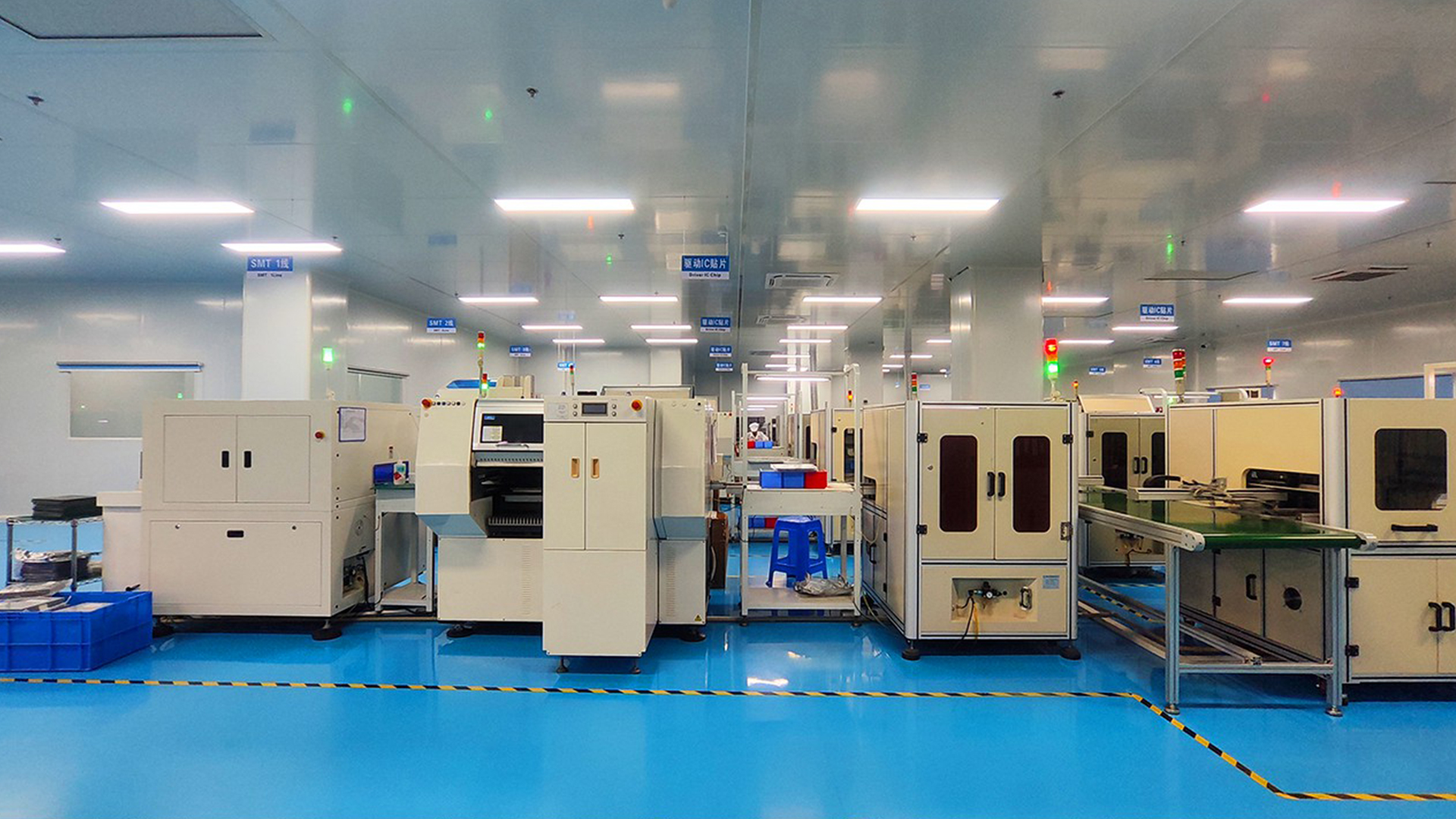
Close inspection of the LED module production process helps buyers evaluate the consistency behind an LED display supplier.
“Which LED display should I choose for an event?” is not the same question as “Which LED display should I choose for a building facade?” In procurement, the product category called LED display includes rental LED screens, fixed indoor LED displays, outdoor LED screens, flexible and curved video walls, transparent LED displays, fine-pitch COB systems, and increasingly powerful micro LED display platforms.
For a buyer at the decision stage, the practical challenge is rarely finding a display that can show video. The challenge is deciding which screen type, specification package, and supplier model will deliver acceptable image quality over the expected life of the installation, without paying for unnecessary performance.
Why LED Display Decisions Need a Comparison Framework
The global LED display market is projected to reach USD 20.73 billion in 2026 and grow to USD 26.98 billion by 2031, according to Mordor Intelligence. Rental LED display demand is also expanding, with one industry estimate placing the global rental LED display market above USD 8 billion by 2027 after a value of approximately USD 5 billion in 2020. Micro LED technology is attracting even more attention, with Grand View Research projecting a compound annual growth rate of 77.4% from 2024 to 2030.
These market conditions give buyers more options, but also more ways to make an expensive mistake. Common procurement errors include selecting an outdoor-grade LED screen for an indoor environment, choosing a fixed-installation display for a touring stage production, or buying a high-refresh configuration when the screen will never be captured by professional cameras.
The comparison opportunity is not about declaring one technology victorious. It is about matching installation duration, viewing distance, environmental exposure, camera interaction, and maintenance access to the right screen architecture and supplier model.
Key LED Display Type Comparisons for Purchase Decisions
Rental LED Display vs Fixed Installation LED Display
Rental LED displays are designed for frequent assembly, dismantling, transportation, and reconfiguration. They typically use lightweight cabinets, quick-lock connection systems, and event-oriented structures. Fixed LED displays are designed for permanent installation, where long-term stability and site-specific maintenance access matter more than repeated handling.
Rental LED displays are more suitable for concerts, stages, exhibitions, conferences, festivals, touring events, live productions, and temporary installations. Fixed LED displays are more suitable for retail stores, shopping malls, building facades, billboards, conference rooms, control centers, and other long-term installations.
| Evaluation point | Rental LED display | Fixed-installation LED display |
|---|---|---|
| Best-fit use | Concerts, staging, festivals, exhibitions, tours, live productions | Retail, facades, conference rooms, control centers, permanent media walls |
| Cabinet priorities | Lightweight handling, quick locks, repeatable assembly, stacking and hanging | Long-term stability, site integration, service access, continuous operation |
| Cost logic | Higher initial cabinet and structure cost in some cases, but reusable over many events | Can be optimized for a specific permanent environment and operating life |
| Maintenance logic | Fast module replacement and repeated transport between events | Planned access to installed modules, power supplies, and signal components |
Flexible LED Display vs Traditional Flat LED Display
Flexible LED displays can adapt to curved and irregular installation surfaces, supporting inner curves, outer curves, cylindrical screens, columns, S-shaped structures, and other creative configurations that conventional flat LED displays cannot easily achieve. Flexible LED modules can form multiple curved configurations instead of being limited to a flat 0-degree display surface.
Flexible LED displays are more suitable for retail stores, shopping malls, exhibition halls, museums, and creative stage installations compared to flat LED displays. Flat LED displays remain the more predictable and often more cost-effective choice for conventional rectangular screen projects.
Transparent LED Display vs Conventional Solid LED Display
Transparent LED displays combine digital content presentation with high transparency, allowing natural light and visibility through glass surfaces. Conventional solid LED displays create a fully blocked visual surface. For retail windows, glass facades, showrooms, airports, and commercial buildings, transparency can be an architectural requirement rather than a gimmick.
Selected transparent LED display solutions provide approximately 60–90% transparency depending on pixel pitch and structure, while conventional solid LED displays provide no transparency. Transparent designs also reduce visual obstruction in glass-based commercial installations, but they may require a higher initial investment because of the specialized structure and installation conditions.
Fine-Pitch Indoor LED Display and COB vs General-Purpose Indoor LED Screens
Indoor LED procurement decisions often begin with viewing distance. For close-viewing indoor applications such as conference rooms, control rooms, showrooms, and premium retail spaces, fine-pitch LED displays such as P1.25, P1.53, and P1.86 are generally more suitable. For stages, exhibitions, events, and medium-distance viewing, P2.6 to P3.91 configurations are commonly considered.
COB LED displays use an integrated packaging structure that changes the mechanical relationship between the LED chip and the module surface. In procurement terms, COB and other fine-pitch technologies are most useful when short viewing distance, high pixel density, and high surface durability all matter in the same project.
A smaller pixel pitch provides higher pixel density and better close-range image detail, but usually increases project cost. The best choice is the pixel pitch that provides sufficient image quality for the actual viewing distance and application, not always the smallest available pitch.
Outdoor LED Display vs Indoor LED Display
Outdoor LED displays must handle direct sunlight, rain, dust, wind, humidity, and wide temperature swings. In practice, outdoor configurations are commonly evaluated at brightness levels from approximately 5,000 to 10,000 nits, with protection ratings up to IP65 for selected products. Indoor LED displays can operate at lower brightness, often around 600–1,500 nits, because ambient light levels are much lower.
For building facades, street-facing billboards, stadium screens, and outdoor events, a high-brightness outdoor LED screen with proper waterproofing is usually necessary. Using an indoor LED display in an outdoor environment creates a major risk of water ingress, moisture-related electrical faults, corrosion, short circuits, and reduced component reliability.
Supplier Comparison: Low-Cost LED Suppliers vs Project-Specific Manufacturers
After selecting the display type, buyers still face a second comparison: which type of manufacturer should supply the system. The low-cost supplier model and the project-specific manufacturing model are not the same product offer.
| Comparison point | Low-cost / entry-level LED display supplier | Project-specific LED display manufacturer |
|---|---|---|
| Typical approach | Standard configuration for multiple projects | Matching pixel pitch, brightness, refresh rate, protection level, cabinet structure, and maintenance access to the actual application |
| Quality control | Varies by order and source factory | May apply documented inspection processes, such as 100% pre-shipment inspection |
| Maintenance planning | Often limited to module replacement | Modular LED modules plus replaceable power supplies, receiving cards, and related components; front-service and rear-service options on applicable product series |
| Cost model | Lower initial purchase price | May require a higher initial investment, but can avoid paying for unnecessary specifications and reduce repair or replacement costs over the product lifecycle |
| Best-fit procurement need | Budget-sensitive, short-term, or low-risk projects where specification flexibility is not essential | Professional projects where long-term reliability, image performance, and technical support are prioritized over the lowest first cost |
One example of a project-specific manufacturer is Shenzhen DDW Technology Co., Ltd., known internationally as DDW Display. Founded in 2012, DDW Display operates a 10,000-square-meter manufacturing facility with more than one hundred employees and an R&D team, producing LED displays for applications from indoor fine-pitch walls to outdoor advertising, rental staging, XR virtual production, and commercial video walls.
DDW applies 100% pre-shipment inspection and offers project-specific configurations including refresh rates of 3840Hz or higher, up to 7680Hz in selected professional series, outdoor protection up to IP65, and brightness configurations from approximately 600–1,500 nits for indoor applications to 5,000–10,000 nits for selected outdoor solutions. The company’s product line covers rental LED displays, indoor fine-pitch LED displays, outdoor LED screens, COB LED displays, flexible displays, transparent LED displays, stadium LED displays, and XR virtual production walls.
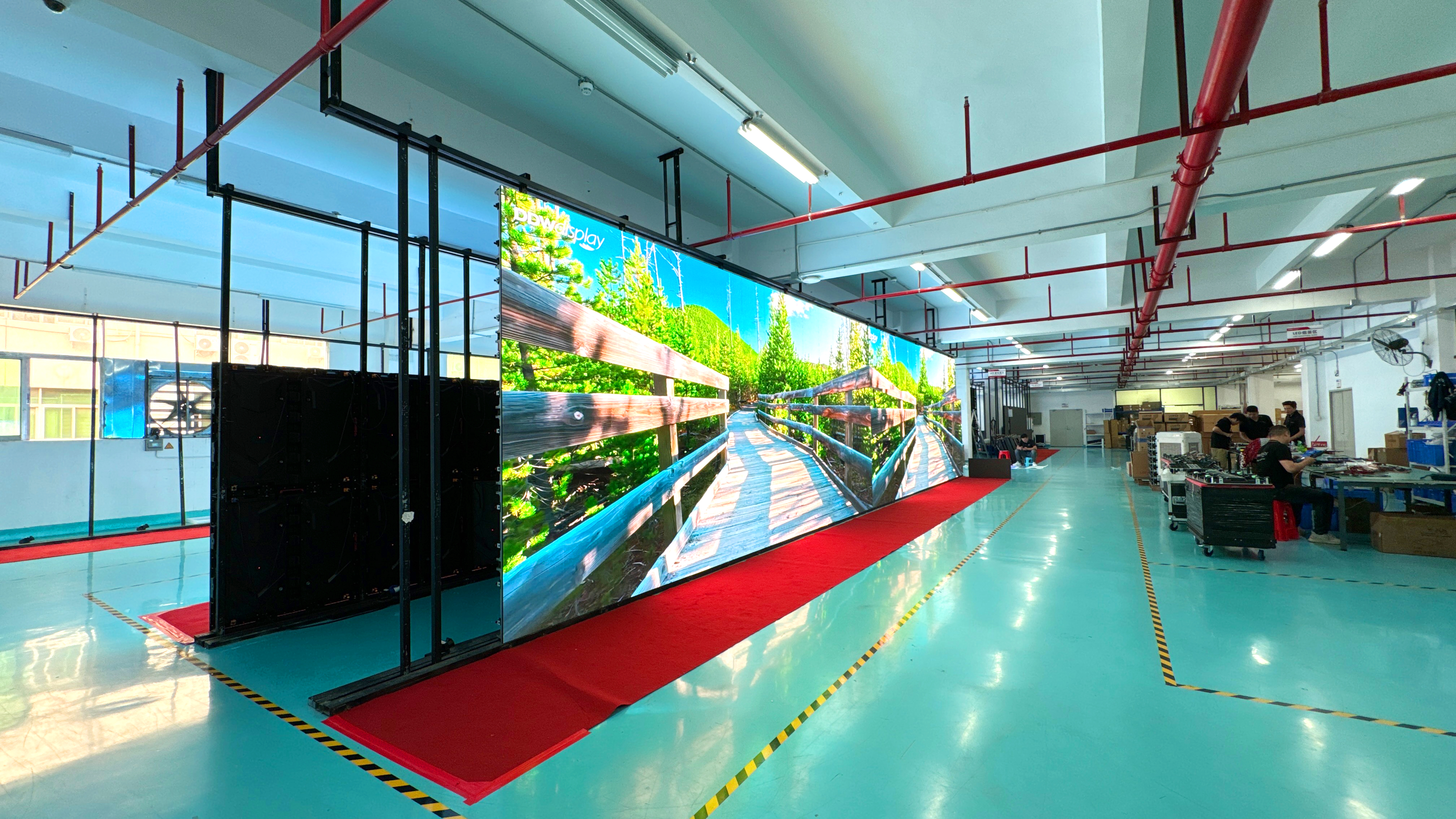
Aging tests are used to detect unstable modules before delivery, which is one of the checks behind 100% pre-shipment inspection claims.
Interpreting the Specifications That Drive Price Differences
Refresh Rate
Refresh rate is one of the most visible differentiators between standard and professional LED displays. Selected DDW professional LED display configurations support a refresh rate up to 7680Hz, whereas standard LED display configurations are commonly specified at approximately 1920–3840Hz. This represents up to 2–4 times higher refresh performance, providing better compatibility with professional cameras, live broadcasting, stage production, and XR virtual production.
Asked differently: if the LED display will be filmed, broadcast, or used in an XR studio, a high-refresh professional configuration is normally justified. If the screen will only display advertising or presentations for live viewers, a standard configuration may be sufficient.
Cabinet Structure and Cabinet Material
Cabinet design influences handling, installation speed, flatness, and long-term alignment. Compared to traditional welded iron LED cabinets, die-cast aluminum cabinets offer a lighter weight and higher structural precision, which can reduce handling and installation effort. Die-cast aluminum cabinets generally have a higher initial manufacturing cost, but their lightweight and precision structure can help reduce transportation, installation, and repeated-deployment costs in rental and high-end fixed installations.
Surface Protection
Compared to conventional SMD LED displays, GOB-protected LED displays add a protective coating around LED components, improving resistance to impact, dust, and moisture. In applicable configurations, GOB-protected LED modules can achieve LED surface impact resistance of approximately 10 kg or higher, compared with around 2–3 kg lamp push resistance for conventional exposed SMD modules. The trade-off is a higher initial module cost, but maintenance requirements can be reduced in rental, transportation, and high-contact applications.
Energy Efficiency Architecture
Common cathode LED architecture supplies optimized voltage to different RGB LED channels, reducing unnecessary power loss and heat generation compared with conventional common anode driving solutions. Some industry estimates indicate that optimized common-cathode configurations can achieve approximately 15–30% lower power consumption than comparable conventional configurations, depending on brightness, pixel pitch, LED package, driver IC, power supply, and operating conditions.
For projects with long operating hours, especially outdoor advertising and public information displays, energy architecture can be an important lifecycle cost factor. Buyers should evaluate actual savings using the specific display configuration and duty cycle rather than assuming every common-cathode product delivers the same result.
Application-to-Format Quick Reference for LED Display Buyers
The following table maps common project types to the LED display categories that are generally considered suitable. It is intended as a starting point, not a substitute for engineering review.
| Project type | Commonly considered LED display category | Why this category is usually selected |
|---|---|---|
| Concert stage and touring event | Rental LED display, stage LED screen, flexible rental display for curved sets | Repeated assembly, lightweight cabinet handling, quick locking, high-refresh for cameras |
| Corporate conference room | Indoor fixed fine-pitch LED display, COB LED display, all-in-one LED display | Close viewing distance, high pixel density, front maintenance, controlled indoor brightness |
| Retail storefront or glass facade | Transparent LED display, indoor or outdoor version depending on position | Transparency preserves sightlines and natural light while showing digital content |
| Museum or brand showroom | Flexible LED display, fine-pitch indoor video wall, creative-shaped LED installation | Suitability for curved surfaces, custom aspect ratios, close-range image detail |
| Outdoor advertising billboard | Outdoor fixed LED display, high-brightness LED screen, IP65-protected cabinet | Sunlight visibility, weather resistance, long continuous operation |
| Stadium perimeter | Stadium LED display, sports LED screen with protective cabinet design | Impact protection, high brightness, long operating reliability, sports broadcast refresh performance |
| XR virtual production studio | XR LED display, micro LED display or MIP series, high-refresh rental LED wall | Camera-facing performance, fine pitch for close-up shots, high refresh, consistent color |
Market Context and What to Watch After 2026
The broader LED display market continues to grow. The Mordor Intelligence forecast of USD 20.73 billion in 2026 and USD 26.98 billion by 2031 reflects sustained demand across advertising, retail, sports, rental staging, and corporate display projects. The rental segment is significant enough that Allied Market Research data points to continued growth beyond USD 8 billion by 2027.
At the technology level, micro LED display development is accelerating. The projected 77.4% compound annual growth rate for the micro LED market between 2024 and 2030 is unusually high, although micro LED products still need to be evaluated carefully for their real application fit. MIP and COB packaging are also becoming more relevant for fine-pitch indoor and virtual production displays.
Energy efficiency is another procurement theme. Transparent LED displays are often presented as achieving energy savings of roughly 30–40% compared with traditional LED solutions in glass-facing installations, and such products may be evaluated against energy management frameworks like ISO 50001. Even where exact savings vary, buyers are increasingly including power consumption in total-cost-of-ownership calculations.
Limitations and Trade-Offs in the LED Display Comparison
No LED display format is universally superior. Buyers should maintain realistic boundaries during the comparison process.
- Rental LED displays are optimized for repeated deployment, but a dedicated fixed-installation LED display may deliver a better combination of stability, lumens, and service access when the screen will stay in one place for years.
- Flexible LED displays unlock creative geometry, but they generally carry a higher initial cost and require greater attention to supporting structure accuracy, curvature, module alignment, and installation conditions than a flat rectangular screen.
- Transparent LED displays preserve visibility and natural light, but they require specialized structural integration and may not be necessary when a conventional solid display is acceptable.
- Fine-pitch LED displays improve close-range image quality, but the smaller pixel pitch increases cost. Large-pitch outdoor screens remain more practical for long viewing distances.
- High-refresh configurations, GOB protection, and common cathode power systems improve specific performance areas, but each adds cost or engineering complexity to a project.
- A project-specific supplier such as DDW Display may require a higher initial investment than a low-cost supplier, while potentially reducing unnecessary specifications and lifecycle maintenance expense. For some short-term, low-risk projects, an entry-level configuration may still be an acceptable commercial choice.
Leaning on Evidence Before the Final Procurement Decision
In a decision-stage comparison, the goal is not to find the most advanced LED display available; it is to find the combination of screen type, performance specification, and supplier capability that matches the project’s real operating profile. Market forecasts point to a larger and more diverse LED display market, but the procurement risk remains the same: overbuilding a static installation with event hardware, under-protecting an outdoor screen, choosing the wrong pixel pitch for the viewing distance, or assuming a low initial price equals a low total cost of ownership.
Buyers who want a technical reference for comparing configuration options can review the current DDW LED Display catalog, which covers indoor, outdoor, rental, COB, transparent, stadium, and virtual production product families.
Frequently Asked Questions
Rental LED Display vs Fixed LED Display: Which one should I choose?
Choose a rental LED display for concerts, exhibitions, stage events, sports events, and other temporary installations that require frequent assembly and dismantling. Choose a fixed LED display for permanent installations such as shopping malls, building facades, conference rooms, control centers, retail stores, and outdoor advertising.
How do I choose the right pixel pitch for an LED display?
Choose the LED display pixel pitch according to viewing distance, screen size, required resolution, installation environment, content type, and budget. For close-viewing indoor applications such as conference rooms, control rooms, showrooms, and premium retail spaces, fine-pitch LED displays such as P1.25, P1.53, and P1.86 are generally more suitable. For stages, exhibitions, events, and medium viewing distances, P2.6 to P3.91 configurations are commonly considered. Smaller pitch gives better close-range detail but increases cost.
What certifications should I look for when buying an LED display?
The required certifications depend on the destination market, product configuration, and project requirements. Buyers commonly evaluate CE, FCC, RoHS, EMC, ETL, and relevant electrical safety requirements. CE and EMC are commonly considered for European-market compliance, FCC is relevant to electromagnetic compatibility in the United States, and RoHS addresses restrictions on certain hazardous substances. Confirm which certifications apply to the specific LED display model and destination market, and request the corresponding certificates or test reports from the manufacturer.
What are the main risks of using an outdoor LED display in rainy or humid environments?
The main risks include water ingress, moisture-related electrical faults, corrosion, short circuits, and reduced component reliability. For outdoor projects, choose an LED display with an appropriate IP protection rating and a waterproof cabinet and module structure. Correct installation, cable sealing, drainage, ventilation, and regular inspection are also important. Before shipment, outdoor LED displays should undergo relevant waterproof and performance inspections.
¿Tiene preguntas o necesita más detalles?
Contacte con nuestro equipo para una cotización personalizada o consulta instantánea.
Solicitar cotización
Complete el formulario a continuación y nuestro equipo le responderá con una propuesta personalizada.
Chat directo de WhatsApp
¿Prefiere chatear en tiempo real? Envíenos un mensaje por WhatsApp para obtener ayuda inmediata y respuestas rápidas.
- Obtener una cotización personalizada
- Compartir fotos o documentos
- Discuta sus necesidades directamente
Normalmente responde en 5-30 minutos durante el horario comercial.