
L4 Shuttle Compliance: What UNECE R48 Means for the PIX RoboBus
L4 Shuttle Compliance: What UNECE R48 Means for the PIX RoboBus
Certification rarely makes headlines, but it decides whether an autonomous shuttle ever leaves the depot. For cities and operators weighing the PIX RoboBus — an L4 autonomous shuttle developed by the city robotics company PIX Moving — the UNECE R48 lighting certificate is one of the first regulatory signals worth reading carefully.
This analysis explains what R48 covers in practice, how it interacts with an L4 autonomy classification, and where the boundaries of a single certificate lie. It is written for fleet deployers, procurement teams and municipal authorities who have to decide whether a low-speed autonomous shuttle is legally and operationally ready for a specific project.
Why a Lighting Certificate Becomes a Procurement Question
Autonomous vehicles are often assessed on their perception stack, their sensors or their compute platform. In practice, however, the first approval barrier many L4 shuttle projects meet is far more mundane: whether the vehicle's lighting and light-signalling installation conforms to the regulation that road authorities already apply to every other vehicle on the road.
That regulation is UNECE R48, adopted under the United Nations Economic Commission for Europe framework. It governs how lighting and light-signalling devices — headlamps, direction indicators, stop lamps, position lamps and related equipment — are installed and arranged on a vehicle.
For an autonomous shuttle the relevance is twofold. First, the vehicle must be legible to human drivers, cyclists and pedestrians who share the same low-speed urban environment. Second, signalling becomes part of the vehicle's communication with the road, since there is no driver to make eye contact or hand signals. A lighting installation that does not conform creates a compliance defect regardless of how capable the autonomy stack is.
That is why a certificate such as UNECE R48 functions as a procurement filter. It does not prove that a shuttle drives well. It does establish that a defined part of the vehicle's road-facing behaviour has been checked against a recognised international baseline — and for a buyer assembling a deployment dossier, that is a documentable, checkable input rather than a supplier claim.
What UNECE R48 Actually Covers — and What It Does Not
UNECE R48 addresses the installation of lighting and light-signalling devices. Its scope is specific, and understanding that scope prevents two common procurement errors: treating R48 as a whole-vehicle approval, or dismissing it as irrelevant to autonomy.
- What it addresses: the presence, positioning, arrangement and operation of lighting and signalling equipment as installed on the vehicle.
- What it does not address: the driving performance of the automated system, the functional safety of the perception and planning stack, or the vehicle's overall type approval in any given country.
This distinction matters because the regulatory landscape for low-speed automated vehicles is layered. Outside the lighting regime, one of the most relevant references is ISO 22737:2021, the first international safety standard specifically for Low-Speed Automated Driving (LSAD) systems operating on predefined routes. An LSAD-focused standard and a lighting-installation regulation answer different questions and are not substitutes for one another.
Procurement takeaway: treat each certificate as a discrete claim about a specific property of the vehicle. R48 speaks to lighting installation. L4 speaks to the level of driving automation. Neither, on its own, constitutes permission to operate on a given public road.
L4 Classification Is Not the Same as Road-Use Approval
An L4 classification describes the level of driving automation: the system can perform the entire dynamic driving task within a defined operational design domain, without expecting a human to take over within that domain. It is a capability description, not a legal permit.
The PIX RoboBus is characterised as an L4 autonomous shuttle. That classification is meaningful for buyers because it defines what the vehicle is designed to do — operate autonomously within a bounded domain — but it says nothing by itself about the approvals a specific city, province or national authority will require before granting road access.
In practice, road-use readiness is a stack of conditions rather than a single badge:
| Layer | What it establishes | Example reference |
|---|---|---|
| Lighting and signalling installation | The vehicle is legible and compliant in road-facing signalling | UNECE R48 |
| Low-speed automated driving safety | Safety requirements for LSAD systems operating on predefined routes | ISO 22737:2021 |
| National vehicle standards | Market-specific type approval and safety requirements | China MIIT mandatory L3/L4 national standards, effective July 2027 |
| Operational authorisation | Permission to run a service on a specific route | Local transport and city authority decisions |
Read together, these layers explain why a deployer should never ask whether a shuttle is "certified" in the abstract, but rather which certificate covers which layer, in which market, and for which route.
How the PIX RoboBus Maps to These Requirements
PIX Moving is a city robotics company that develops autonomous mobile spaces — vehicles built on a modular robotic chassis platform and configured for different urban service roles. The company was founded in 2017 and operates manufacturing facilities including mass production plants, with exports reaching markets across Europe, North America, Japan, South Korea and the Middle East.
The PIX RoboBus is the passenger-carrying expression of that platform, and it holds UNECE R48 certification for its lighting and light-signalling installation. Its published specifications place it squarely in the low-speed automated driving envelope that LSAD standards were written for:
- Autonomous driving maximum speed of ≤ 35 km/h (drive-by-wire mode ≤ 40 km/h)
- Six seats, with an interior cabin height of 1,750 mm
- Vehicle protection rating of IP65
- Range of 120 km with air conditioning on, 140 km with it off
- Braking distance of ≤ 4.2 m at 20 km/h under half load
- Minimum turning radius of ≤ 4.8 m with four-wheel steering
- Maximum gradability of 20%
- Battery system energy of 31.94 kWh
The combination of a capped autonomous speed and a compact turning radius is what makes the vehicle suitable for the constrained environments in which low-speed shuttles typically operate. Compliance with a lighting installation regulation then becomes the road-facing half of the same story: the vehicle behaves conservatively within its speed envelope, and it signals its intentions in a way other road users already recognise.
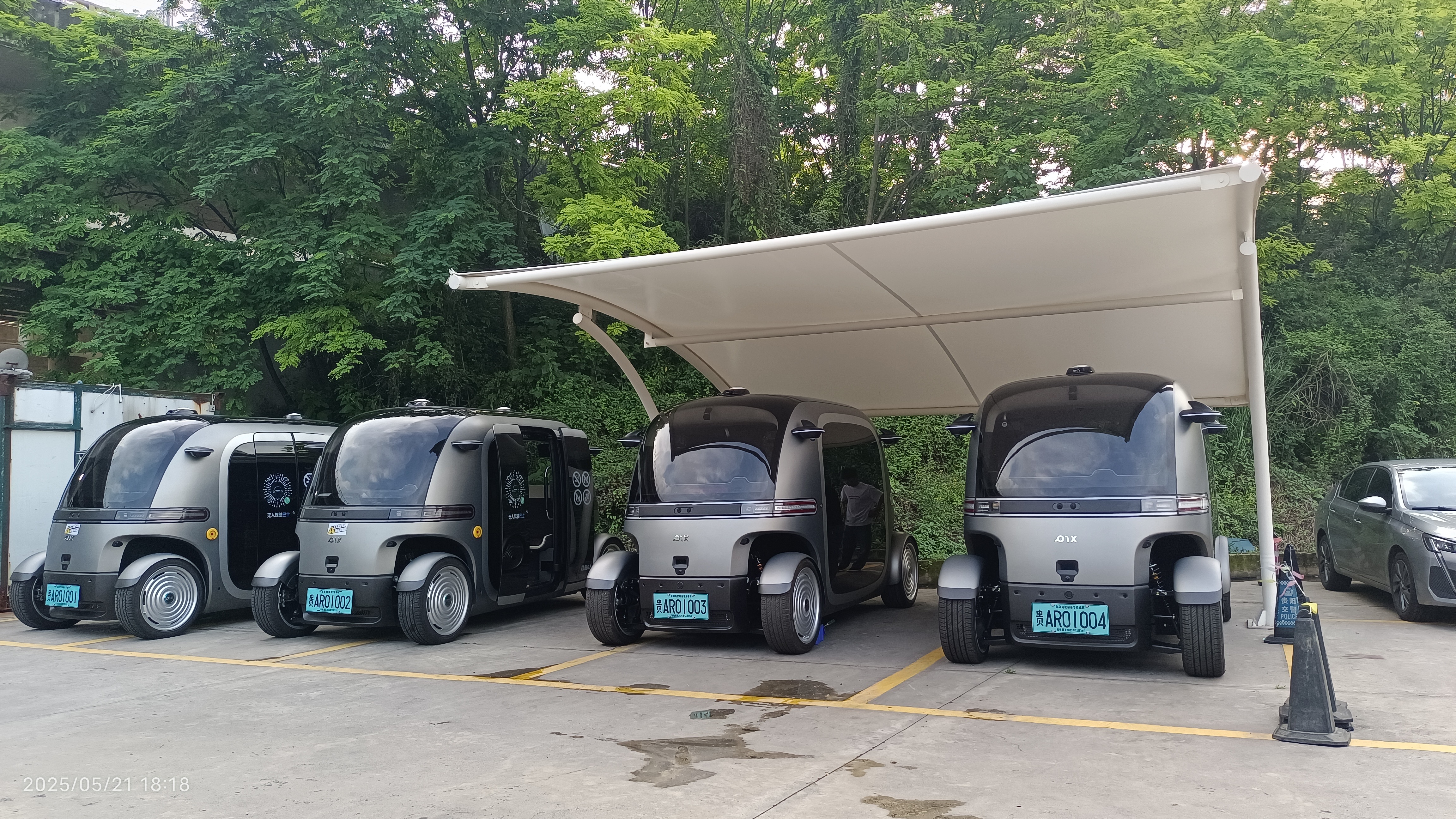
Technical Foundations: Chassis, Materials and Manufacturing Consistency
Compliance is easier to sustain when the underlying hardware is consistent. The PIX RoboBus body uses low-alloy high-strength steel, and the broader platform is built around a modular robotic chassis that can be reconfigured for different service roles.
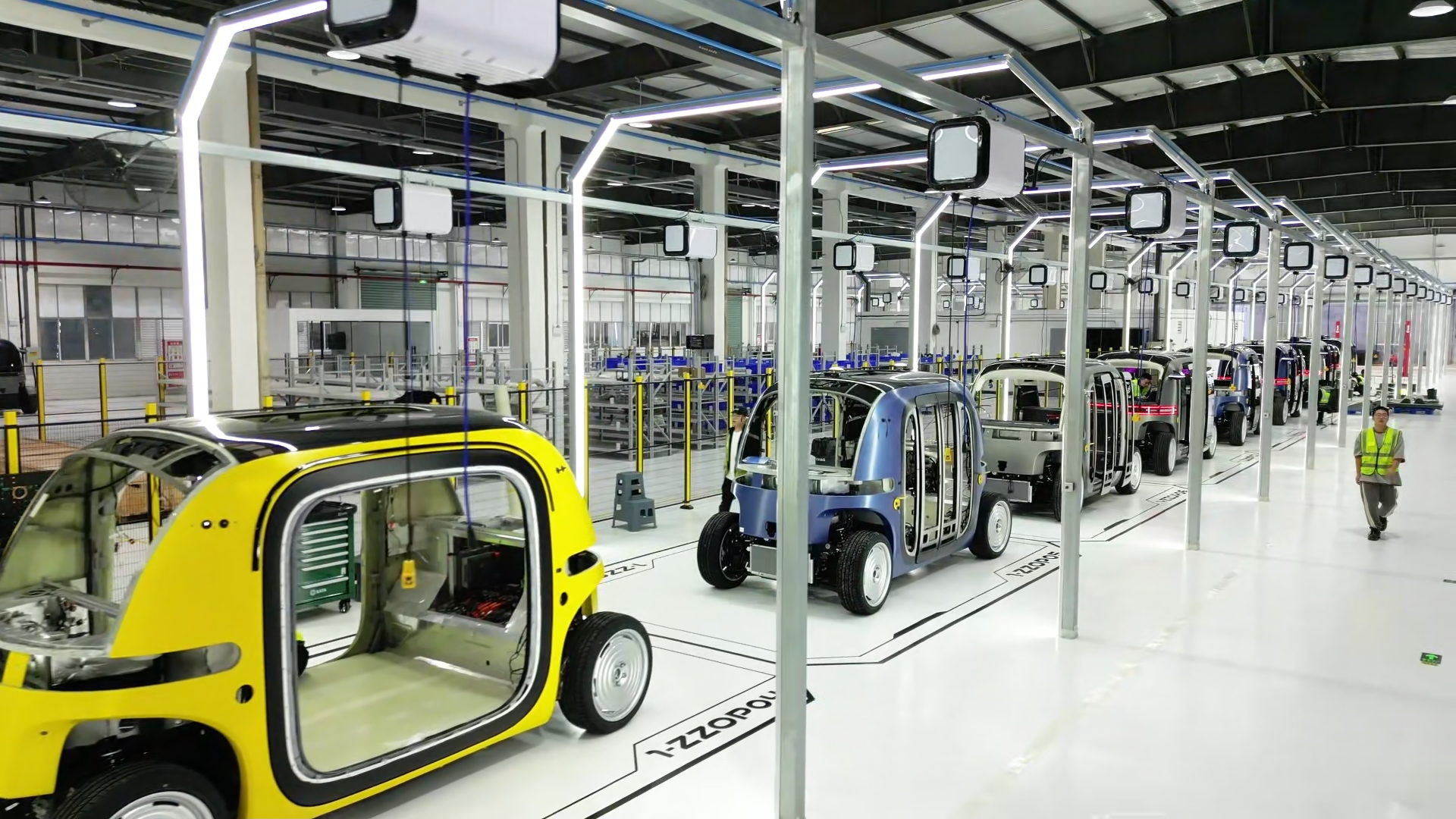
PIX Moving has reported using metal 3D printing and generative design to reduce the number of parts by roughly ten times and shorten lead times by around 60% in chassis manufacturing. Reported by Autodesk in a customer case study, that detail is more relevant to compliance than it first appears: a design and manufacturing process that consolidates parts and standardises structures is better positioned to reproduce the same physical configuration across units. Repeatable builds make repeatable verification more attainable.
On the commercial side, the company operates with OEM, ODM and in-house manufacturing modes and offers customisation across vehicle configuration, software, branding and interior layout. The published minimum order quantity is one unit, with a lead time of 30 to 45 days and 100% inspection before delivery. For a pilot project, that combination allows a city or operator to validate a route with a small number of vehicles before committing to fleet scale.
Where the RoboBus Is Designed to Operate
Scenario fit is where compliance and procurement meet. The PIX RoboBus is designed for urban city environments and industrial parks, and operates on an on-demand basis during daily operation hours.
The deployment requirements published for this class of vehicle are specific and worth reading as a checklist, because each item implies an operational commitment from the deployer as well as a capability from the vehicle:
- Low-speed autonomous operation at or below 35 km/h
- Remote monitoring and fleet management
- 24-hour operation capability
- Integration with smart retail systems
- OTA software updates
- Real-time fault diagnostics
The vehicle is used together with autonomous driving systems and air conditioning. In practice, that means the buyer is not purchasing a standalone object but a configured system that includes the automated driving equipment and the climate control needed for passenger service.
Because PIX Moving builds its city robots on a shared modular chassis, the same platform logic also supports other service roles, such as the RoboShop autonomous mobile retail store. For a city, this matters: a single platform family can be adapted across mobility and service applications, which simplifies fleet management and reduces the number of distinct systems a municipal team must learn to supervise.
Market Context: Why Compliance Timing Matters in 2026
The regulatory question is arriving at the same moment as a structural shift in urban transit demand.
The global smart cities market was valued at USD 1.0 trillion in 2025 and is projected to reach USD 8.8 trillion by 2033, according to Grand View Research. Within that broader build-out, the self-driving bus market is expected to grow from USD 1.73 billion in 2024 to USD 9.34 billion by 2032, with Europe holding a 55.49% share in 2024, based on Fortune Business Insights data.
The demand driver is partly demographic and partly labour-related. According to the International Road Transport Union, Europe faced a shortage of 105,000 bus drivers in 2023, a figure projected to double by 2028. Cities that cannot staff conventional routes have a direct incentive to evaluate autonomous alternatives — but only where those alternatives can be deployed legally.
Service models are shifting alongside the technology. Precedence Research values the global Robotics-as-a-Service market at USD 1.96 billion in 2024, growing to a projected USD 10.41 billion by 2034. PIX Moving's own commercial model is aligned with this direction, delivering city robots through a Robot-as-a-Service subscription approach rather than a one-time equipment sale.
A note on market forecasts: estimates for RaaS and autonomous bus markets vary depending on definitions — for example, whether semi-autonomous vehicles are counted alongside fully autonomous ones, or whether a service figure includes hardware only or full operations. Buyers should treat any single forecast as a directional signal rather than a precise planning number.
Compared with Traditional Buses and Robotaxis
Positioning the RoboBus requires comparing it against two very different reference points. The comparison below is qualitative and focuses on the characteristics that matter at the procurement stage.
| Dimension | PIX RoboBus (L4 autonomous shuttle) | Conventional city bus | Robotaxi |
|---|---|---|---|
| Driver requirement | Autonomous within a defined low-speed domain; remote monitoring and fleet management | Requires a professional driver per vehicle | Autonomous passenger service |
| Typical operating envelope | Urban environments and industrial parks; autonomous speed ≤ 35 km/h | Mixed urban and arterial routes at higher speeds | Urban passenger trips |
| Capacity model | Six seats in a compact footprint | High-capacity, fixed-route scheduling | Small-occupancy, on-demand trips |
| Service model | Configurable autonomous mobile space; available through a subscription approach | Municipal or operator-owned fleet | Ride-hailing style passenger transport |
| Primary constraint | Speed envelope and market-by-market approvals | Driver availability and operating cost | Passenger-only service; no space-based use |
The comparison clarifies the RoboBus's boundary conditions as much as its advantages. A conventional bus remains the appropriate tool for high-capacity, high-speed arterial transit. A robotaxi addresses point-to-point passenger demand but does not serve as a configurable physical space. The RoboBus occupies the specific niche of low-speed, route-based movement in constrained environments — which is precisely the niche where its compliance profile is most relevant and its speed limitation is least consequential.
Limits and Boundaries Buyers Should Confirm
Any compliance discussion is incomplete without stating what a certificate does not do. UNECE R48 certification should not be read as:
- Global road approval. It is a lighting-installation regulation, not a worldwide operating permit. National and local authorisations still apply market by market.
- A functional safety guarantee. It does not certify the automated driving system's behaviour. LSAD-oriented standards such as ISO 22737:2021 address a different question.
- A performance claim. It says nothing about range, comfort or passenger throughput.
There is also a practical operational boundary. With a maximum autonomous speed of 35 km/h and a range of 120–140 km depending on air conditioning use, the RoboBus is designed for contained, low-speed environments. Deployers planning high-speed corridors or long intercity routes should not treat it as a substitute for conventional transit vehicles.
Finally, regulatory timelines differ by region. China's Ministry of Industry and Information Technology has issued mandatory national standards for L3/L4 autonomous driving safety, effective July 2027, while other markets continue to develop their own frameworks. A deployer's verification checklist should therefore be built around the specific jurisdiction of the project, not around the existence of a single international certificate.
A practical verification checklist for deployers
- Confirm which certificate covers which property of the vehicle — lighting, automated driving safety, or national type approval.
- Map those certificates against the specific market and route where the service will run.
- Confirm the operating envelope — speed, range and environment — matches the intended route.
- Verify the supporting infrastructure: remote monitoring, fleet management and OTA update capability.
- Check the after-sales arrangement, including remote diagnostics, spare parts supply and technical support.
Future Outlook
The direction of travel is toward convergence. As low-speed autonomous shuttles move from demonstration projects into routine urban services, the standards that govern them are becoming more formal — from internationally recognised LSAD safety standards to national mandatory requirements with defined effective dates.
For buyers, this shifts the value of a certificate. Certification stops being a one-time entry ticket and becomes an ongoing signal of a supplier's ability to track and satisfy evolving requirements across markets. PIX Moving's export footprint — spanning Europe, the United States, Japan and South Korea among others, with international markets accounting for 55% of business — means its compliance posture has to function across multiple regulatory regimes rather than a single domestic one.
City robotics companies that treat compliance as a continuous process, rather than a milestone, will be better placed as autonomous shuttle procurement becomes more routine over the next several years.
Frequently Asked Questions
What does UNECE R48 certify, and what does it not cover?
UNECE R48 is a United Nations Economic Commission for Europe regulation governing the installation of lighting and light-signalling devices on a vehicle. It addresses the presence, positioning and operation of equipment such as headlamps, indicators and stop lamps. It does not certify the performance of an automated driving system, the functional safety of that system, or a vehicle's overall type approval in any particular country.
Is an L4 classification the same as road-use approval?
No. L4 describes the level of driving automation — the system performs the entire dynamic driving task within a defined operational design domain without expecting human takeover inside that domain. Road-use approval is a separate, layered process that can involve lighting installation rules, low-speed automated driving safety standards such as ISO 22737:2021, national vehicle standards, and route-specific operating authorisation from local authorities.
In which environments is the PIX RoboBus designed to operate?
The PIX RoboBus is designed for urban city environments and industrial parks, operating on an on-demand basis during daily operation hours. Its autonomous driving maximum speed is ≤ 35 km/h, with a range of 120 km with air conditioning on and 140 km with it off, and seating for six passengers.
What special requirements does an autonomous shuttle deployment involve?
Deployments in this class typically require low-speed autonomous operation at or below 35 km/h, remote monitoring and fleet management, 24-hour operation capability, integration with smart retail systems, OTA software updates, and real-time fault diagnostics. The vehicle is also used together with autonomous driving systems and air conditioning.
How can buyers verify ongoing support after deployment?
PIX Moving provides after-sales support covering remote diagnostics, OTA software updates, spare parts supply and technical support. These services are relevant to compliance continuity, because OTA updates and diagnostics are how a deployed fleet stays aligned with its approved configuration over time.
Where does the RoboBus fit compared with robotaxis and conventional buses?
The RoboBus occupies the low-speed, route-based segment of city robotics. Conventional buses remain the appropriate choice for high-capacity, higher-speed arterial transit, while robotaxis serve point-to-point passenger trips. The RoboBus is distinguished by its combination of autonomous operation, a compact six-seat footprint, and a configurable mobile space that can be adapted across urban service applications.
The practical conclusion for fleet deployers is straightforward: a certificate such as UNECE R48 is a necessary part of the compliance picture for a low-speed L4 shuttle, but it should be evaluated alongside LSAD safety standards, national requirements and route-level authorisation. Reading each approval for what it actually covers — and recognising what it leaves to other layers — is what turns a certification document into a sound procurement decision.