
Kyphoplasty Systems: Market Trends and Buying Criteria
An independent industry reference for spine surgery centers, ASCs, and medical device buyers evaluating balloon kyphoplasty systems.
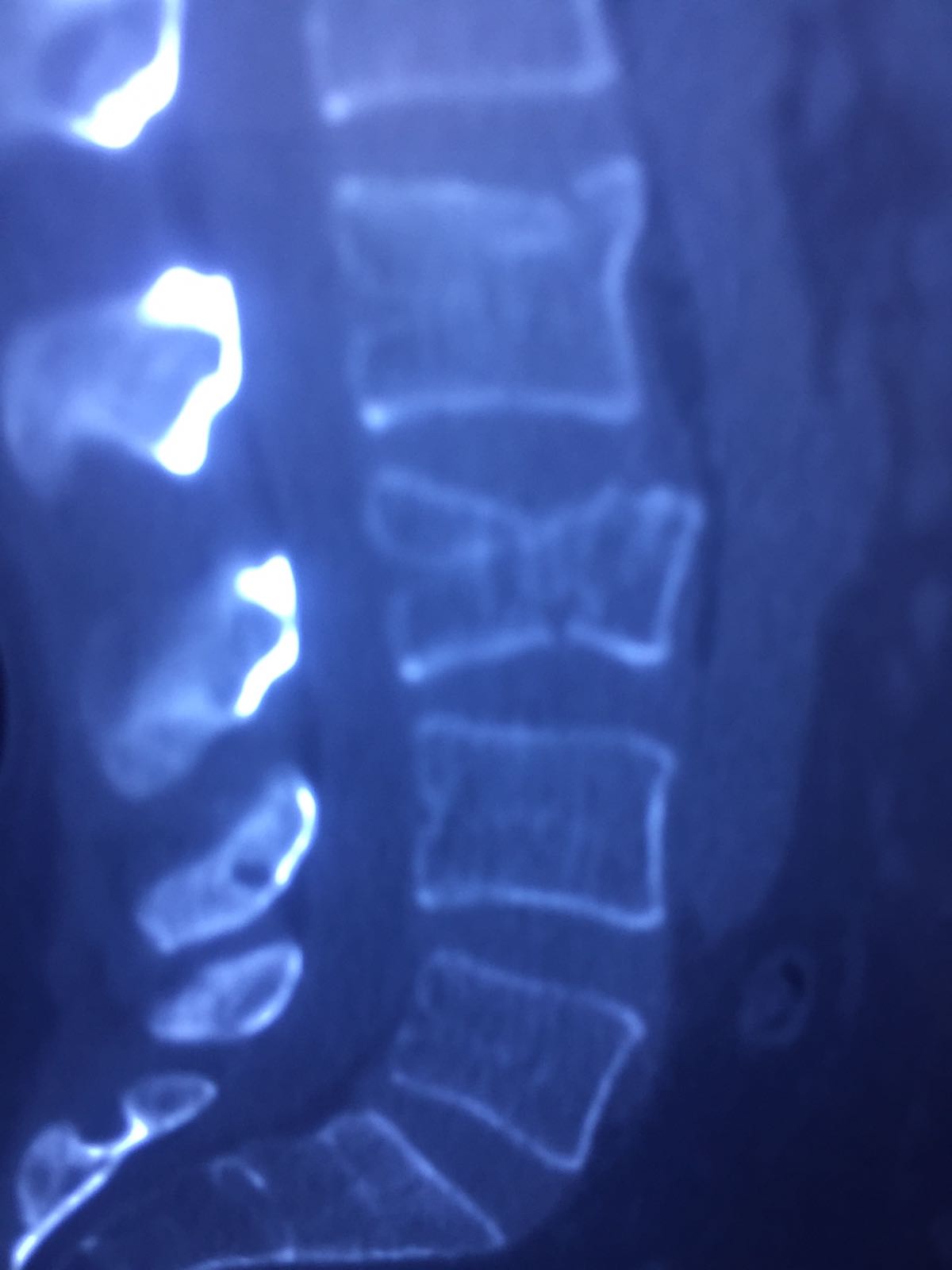
Intraoperative imaging during kyphoplasty with the egg-shell technique. Source: Changmei application reference.
Introduction: Balloon Kyphoplasty as a Distinct Device Category
Balloon kyphoplasty (PKP) is a minimally invasive procedure used to treat painful vertebral compression fractures by creating a contained cavity in cancellous bone and filling it with bone cement. The procedure depends on a coordinated set of single-use devices: an inflatable balloon catheter, an instrument kit for access and cement delivery, and a balloon inflation device. Together these components form what is now commonly purchased as a kyphoplasty system.
The global kyphoplasty market was valued at USD 764.13 million in 2025 and is projected to reach USD 1,342.29 million by 2034, according to commercial market research. North America contributed an estimated 42.5% to 50.0% of global revenue in 2025, making it the largest regional market. US Medicare reimbursement for kyphoplasty in ambulatory surgery centers (CPT 22513 and 22514) reached approximately USD 3,510.84 for 2025, a 3.5% increase over 2024, according to ASIPP/CMS data. These figures indicate that kyphoplasty systems are not only a clinical tool but also a distinct line item in hospital and ASC purchasing.
Problem / Opportunity: Increasing Demand for Reproducible Vertebral Augmentation
Vertebral compression fractures are common in elderly patients with osteoporosis, and they also occur after low-energy trauma or in the presence of spinal metastases and multiple myeloma. Prolonged bed rest worsens bone density, while open surgery is not always appropriate for frail patients. Percutaneous vertebral augmentation fills this gap by offering rapid pain relief, early mobilization, and low procedural morbidity.
For device buyers, the challenge is sourcing a system that is consistent, sterile, regulatory compliant, and available in the sizes and configurations in use across different markets. The clinical and commercial opportunity lies in a complete kyphoplasty system—balloon catheter, access toolkit, and inflator—that works as an integrated unit, reduces setup time, and minimizes inventory complexity for distributors.
Brand Solution: Changmei Kyphoplasty System
Jiangsu Changmei Medtech Co., Ltd., established in 2013 in Changzhou, China, is a vertically integrated manufacturer of minimally invasive surgical instruments. The company operates a 51,985 m² facility with approximately 235 employees and annual production capacity of 1,000,000 kyphoplasty balloon catheters. Its main product categories are kyphoplasty balloon catheters, kyphoplasty tool kits, and balloon inflators. According to company-reported data, its kyphoplasty balloon catheters account for approximately 80% of the Chinese domestic market, and the company supplies member companies of Stryker and Medtronic.
The Changmei kyphoplasty system includes 8G and 11G platforms. The 8G family (KB0210, KB0115, KB0120) uses a channel inner diameter of ≥3.65 mm and overall length of 315 mm. The 11G family (KB0210S1, KB0115S1, KB0120S1) has a channel inner diameter of ≥3.10 mm and length of 280 mm. Both platforms are available with radiopaque marker spans of 10 mm, 15 mm, or 20 mm, and maximum balloon volumes from 3 cc to 6 cc. The system is completed by the KT-00-01 (8G) or KT-00-05 (11G) tool kit and a BI-20A-10 balloon inflator with 20 cc nominal capacity and 30 atm maximum pressure.
From a regulatory perspective, the system carries CE-MDR marking under EU Regulation 2017/745, FDA 510(k) clearance (K223709) for the balloon catheter, and ISO 13485:2016 certification audited by TÜV SÜD. Changmei reports that it was the first Chinese company to receive EU MDR CE certification for kyphoplasty system products, obtained in 2024. For buyers entering European or US markets, this is relevant evidence of regulatory maturity.
Technical Explanation: How a Kyphoplasty System Works
Balloon kyphoplasty is a two-stage procedure. In the first stage, a working cannula is introduced into the anterior two-thirds of the fractured vertebral body under fluoroscopy. An inflatable bone tamp is advanced through the cannula and inflated with contrast medium to a pressure typically between 50 and 300 PSI, depending on bone resistance. The expanding balloon compacts cancellous bone outward, creating a contained central cavity and partially restoring vertebral height and kyphotic angle. In the second stage, the balloon is deflated and removed, and low-viscosity PMMA bone cement is hand-injected into the cavity at low pressure. Because the cavity is already formed, cement can interdigitate with trabecular bone while the risk of extravasation is lower than with direct vertebroplasty injection.
The design of the balloon catheter is critical. Changmei’s balloon catheters are made from medical-grade thermoplastic polyurethane (TPU) mounted on a polyurethane shaft, with tantalum radiopaque markers and a stainless-steel stylet. The balloon film uses a four-wing pleating process that enables radial support and smooth re-passage through the trocar after deflation. The constrained burst pressure is rated at ≥400 PSI, and each unit is pressure and seal tested before release. Every catheter is EO-sterilized and validated for a 3-year shelf life.
| Platform | Models | Marker Span | Channel ID | Length | Max Volume | Burst Pressure |
|---|---|---|---|---|---|---|
| 8G | KB0210 / KB0115 / KB0120 | 10 / 15 / 20 mm | ≥3.65 mm | 315 mm | 4 / 4 / 6 cc | ≥400 PSI |
| 11G | KB0210S1 / KB0115S1 / KB0120S1 | 10 / 15 / 20 mm | ≥3.10 mm | 280 mm | 3 / 4 / 6 cc | ≥400 PSI |
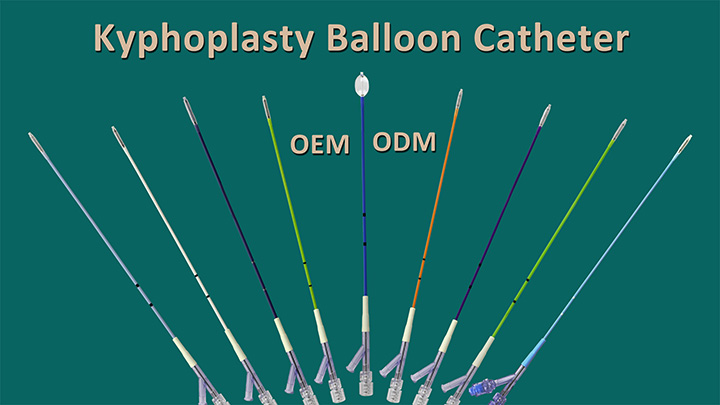
Changmei kyphoplasty balloon catheter. Image source: manufacturer.
Application / Use Cases
Kyphoplasty systems are indicated for painful vertebral compression fractures caused by osteoporosis, low-energy trauma, and neoplastic disease such as spinal metastases and multiple myeloma. The procedure is also applied to symptomatic vertebral hemangiomas and osteolytic lesions requiring vertebral augmentation. Typical settings include orthopedic spine surgery, interventional radiology, pain management centers, and ambulatory surgery centers (ASCs).
Changmei’s application reference includes a clinical report on vertebral compression fractures treated with the egg-shell technique in Kuwait. The report illustrates the use of balloon kyphoplasty in a real-world setting where controlled cavity creation and cement delivery are required. The system is designed for tertiary hospitals, spine ASCs, and interventional radiology suites.
For procurement teams, this means selecting a system that can handle both routine osteoporotic fractures and more demanding cases such as metastatic lesions or severely collapsed vertebrae. The availability of multiple balloon sizes in one purchase family reduces the need to vendor single SKUs, and a matching tool kit and inflator ensure that all components are interoperable and traceable to one quality system.
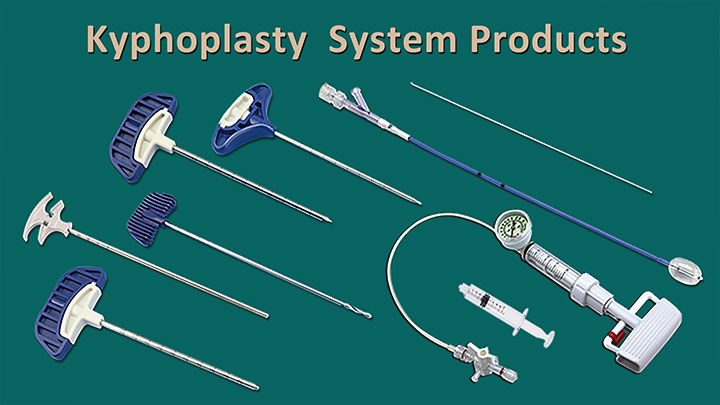
Changmei Kyphoplasty Tool Kit KT-00-01. Image source: manufacturer.
Market Trend Analysis
Several trends are shaping the kyphoplasty equipment market. First, the global market is projected to grow at a steady pace, from USD 764.13 million in 2025 to USD 1,342.29 million by 2034, according to commercial forecasts. North America remains the largest regional market with an estimated revenue share of 42.5% to 50.0% in 2025.
Second, the procedure is shifting toward outpatient delivery. The 2025 Medicare ASC final payment rate for kyphoplasty (CPT 22513 and 22514) is approximately USD 3,510.84, a 3.5% increase over 2024. Higher ASC reimbursement makes it feasible for ambulatory centers to invest in complete kyphoplasty systems, which in turn raises demand for sterile, single-use kits that minimize reprocessing costs.
Third, regulatory standards are tightening. EU MDR 2017/745 replaced the older MDD and requires more substantial clinical and technical documentation. Changmei reports it was the first Chinese manufacturer to obtain EU MDR CE certification for kyphoplasty system products, issued by TÜV SÜD in 2024. This development matters because it gives European buyers an additional audited supply source and raises the barrier for new entrants.
Fourth, there is a visible trend toward thinner 11G systems in markets that emphasize minimally invasive access. The 11G cannula has a smaller cross-section than 8G, which may reduce paraspinal trauma and facilitate upper-thoracic access. Decisions between 8G and 11G depend on the clinical preference of the operating surgeon and the market’s prevailing practice pattern.
Comparison with Traditional Solutions
Balloon kyphoplasty is often compared with vertebroplasty, in which PMMA cement is injected directly into the fractured vertebral body without a balloon. The theoretical advantage of kyphoplasty is the creation of a contained cavity, which can allow partial height restoration and may reduce cement extravasation risk. However, kyphoplasty systems are more expensive than simple vertebroplasty instrumentation because they require a balloon catheter and an inflation device. They also require more procedure time and training.
There are clear limits to the technology. The procedure is contraindicated in patients with posterior vertebral wall disruption, retropulsed bone fragments in the spinal canal, active infection at the operative site, or uncorrectable coagulopathy. Relative contraindications include severe spinal stenosis and vertebral collapse greater than 75–80% of the original height. These boundaries are important for buyers and clinicians to maintain patient safety and regulatory compliance.
Within kyphoplasty itself, the 8G versus 11G choice also presents trade-offs. The 8G platform offers a wider working channel (≥3.65 mm) and larger cavity volume options, which can be useful in hospitals where surgeons are trained on classic 8G trays. The 11G platform has a smaller footprint (≥3.10 mm channel) and fits the trend toward “less invasive PKP,” particularly in Western Europe and US outpatient ASCs. Both platforms share the same balloon materials and ≥400 PSI pressure rating in Changmei’s lineup, so the choice is primarily clinical and market-driven rather than a quality differentiator.
Procurement Considerations for Kyphoplasty Systems
For hospital supply chain teams, ASC administrators, and distributors, the evaluation of a kyphoplasty system should go beyond the balloon catheter itself. The first checkpoint is regulatory completeness. A system with CE-MDR marking, FDA clearance, and ISO 13485 certification provides a verifiable baseline for import registration and quality audits. Changmei’s balloon catheter carries FDA 510(k) K223709 and CE-MDR marking, and the tool kits are CE marked under CE 0123 with ISO 13485 certification.
The second checkpoint is manufacturing depth. Changmei’s facility covers 51,985 m² and includes in-house balloon forming, necking, welding, four-wing folding, and leak-test equipment. Every PKP balloon is pressure-tested at ≥400 PSI before release. For a buyer, this reduces the risk of depending on a subcontractor whose quality cannot be audited directly.
The third checkpoint is product configuration. A hospital that performs routine osteoporotic fractures may need the 11G platform for its smaller footprint; a market trained on legacy 8G systems may prefer the 8G platform. Changmei offers both platforms with marker spans of 10, 15, and 20 mm, and paired tool kits (KT-00-01 for 8G, KT-00-05 for 11G) and a single inflator model (BI-20A-10). This interoperability means that switching platforms does not require changing to a second vendor.
The fourth checkpoint is scalability. Stock models are available at an MOQ of 10 sets with 7-day ex-work if in stock, according to company information. Custom OEM/ODM production for gauge, length, shape, or kit composition runs approximately 30 working days after specification confirmation. This kind of flexibility matters for distributors building regional tenders or private-label programs.
Future Outlook
Looking forward, demand for kyphoplasty systems is likely to grow with the aging population and the continued migration of spine procedures to ambulatory settings. US ASC reimbursement increases and the availability of single-use, fully sterile systems support this shift. In parallel, stricter regulatory regimes such as EU MDR favor manufacturers with complete technical files and audited quality systems. The ability to offer an entire system—balloon catheter, tool kit, and inflator—from one audited source will become an important procurement criterion, especially for distributors and group purchasing organizations that need supply reliability and traceable device history.
For suppliers, differentiation is likely to center on evidence, regulatory completeness, and configuration flexibility. OEM/ODM capability, as demonstrated by Changmei’s supply relationships to member companies of Stryker and Medtronic, is also relevant for private-label programs in regional markets.
Documentation
For detailed product specifications, regulatory files, and system configurations, the manufacturer provides a public brochure covering the 8G and 11G kyphoplasty system products with CE and FDA clearances: Download PDF brochure.
FAQ
Is the kyphoplasty balloon catheter single-use? What is sterilization method and shelf-life?
Kyphoplasty balloon catheters are single-use sterile medical devices; reuse is prohibited. They are sterilized by ethylene oxide (EO) and have a validated 3-year shelf life. Once the package is opened, the device should be used immediately. It must not be re-sterilized or reused, and the official IFU should always be followed.
What are contraindications for this kyphoplasty balloon catheter?
The device is not applicable for patients with damaged vertebral posterior edge, nerve injury, infection at the operative site, or uncorrectable coagulopathy. Clinicians must refer to the IFU for full contraindication and screening guidance before the procedure.
What regulatory clearances does Changmei hold for its kyphoplasty system?
Changmei’s kyphoplasty system is certified under EU MDR 2017/745 as Class IIa with a CE certificate issued by TÜV SÜD. The balloon catheter has US FDA 510(k) clearance K223709, classified as Class II, product code HRX under 21 CFR 888.1100. The quality management system is certified to EN ISO 13485:2016, also audited by TÜV SÜD. In China, the company holds NMPA Class II and III production licenses and registration certificates. Changmei provides the technical file, IFU, ETO sterilization validation, UDI, and free-sale certificate to support local import registration.
How can a buyer verify that Changmei is a real factory that can scale, not a trading company?
Jiangsu Changmei Medtech is the actual manufacturer rather than a trading reseller. It runs the full vertical chain, including balloon tube extrusion, balloon forming, necking, welding, four-wing folding, and leak-testing. Every PKP balloon catheter is made, folded, and pressure-tested (≥400 PSI, 100% per piece) in-house. The production system is certified under EN ISO 13485:2016, EU MDR CE, and FDA 510(k) K223709, and has passed supplier audits from member companies of Medtronic and Stryker. Annual capacity is 1,000,000 balloons across 8G and 11G shafts. Stock models ship at an MOQ of 10 sets, with 7-day ex-work if in stock; custom OEM/ODM runs approximately 30 working days after specification confirmation.
¿Tiene preguntas o necesita más detalles?
Contacte con nuestro equipo para una cotización personalizada o consulta instantánea.
Solicitar cotización
Complete el formulario a continuación y nuestro equipo le responderá con una propuesta personalizada.
Chat directo de WhatsApp
¿Prefiere chatear en tiempo real? Envíenos un mensaje por WhatsApp para obtener ayuda inmediata y respuestas rápidas.
- Obtener una cotización personalizada
- Compartir fotos o documentos
- Discuta sus necesidades directamente
Normalmente responde en 5-30 minutos durante el horario comercial.