
Kyphoplasty Balloon Catheter Specs Decoded: Sterilization, Shelf-Life, and Single-Use Evidence
Kyphoplasty Balloon Catheter Specs Decoded: Sterilization, Shelf-Life, and Single-Use Evidence
Every balloon catheter in the CHANGMEI Kyphoplasty range is a sterile, single-use device. The catheters are ethylene-oxide (EO) sterilized, validated for a three-year shelf life, and are not to be re-sterilized or reused; the same single-use, EO-sterilized designation applies to the accompanying vertebral augmentation tool kits and to the balloon inflator. That is the direct answer to the question procurement teams raise most often about this device category — and it is an answer that only holds up when the supporting documentation, rather than a product page, is verified model by model.
CHANGMEI Kyphoplasty is the kyphoplasty product line of Jiangsu Changmei Medtech Co., Ltd., a medical device manufacturer founded in 2013 and headquartered in Changzhou, Jiangsu, China, which develops and produces kyphoplasty balloon catheters, vertebral augmentation tool kits and balloon inflators for percutaneous balloon kyphoplasty (PKP) and vertebroplasty. The range runs across two access platforms — 8G and 11G — each offered in 10 mm, 15 mm and 20 mm marker spans.
For buyers at the research and evaluation stage, the difficulty is rarely the single-use rule itself. It is that sterilization method, shelf life, model-level specifications and regulatory scope sit in different documents — an IFU, a certificate, a validation summary, a specification sheet — and a mismatch between them stalls a tender, a registration file or an incoming-goods inspection. This article decodes one PKP catheter specification set and sets out how to verify the single-use claim instead of assuming it.
Why the Single-Use Question Keeps Reappearing in PKP Procurement
Balloon kyphoplasty is delivered as a per-case disposable procedure. The balloon catheter, the access and delivery instruments, and the inflation device are opened, used and discarded within a single case. Because several components — cannulas, drills and stylet-reinforced shafts — are stainless steel and resemble instruments that hospitals already reprocess, the reuse question arises almost automatically in cost reviews, particularly in markets where the procedure is performed in high-volume ambulatory settings.
The reviewed product documentation closes that question at device level. The balloon catheters are described as EO-sterilized for single use, with reuse and re-sterilization prohibited, and the instructions state that the device should be used immediately once the package is opened. The single-use designation is also what keeps the sterility and biocompatibility validation chain intact for the next patient; a reprocessed device sits outside that validated chain, and no reprocessing pathway is described for these catheters.
Three procurement consequences follow. First, tender submissions need model-level sterilization and shelf-life statements rather than a category-level statement. Second, stock planning has to respect the validated three-year shelf life, which turns expiry dating into an operational routine for distributors. Third, the single-use model removes reprocessing overhead but adds a gauge and tray compatibility constraint that is easy to miss: an 8G catheter and an 11G catheter do not share the same access tray.
Sterilization, Shelf Life and Reuse: What the Reviewed Documentation States
The table below summarises the sterilization and single-use statements attached to the main product families in the reviewed material.
| Product family | Representative models | Sterilization | Use status | Shelf life in reviewed data |
|---|---|---|---|---|
| Kyphoplasty balloon catheter, 8G | KB0210, KB0115, KB0120 | Ethylene oxide (EO) | Single-use; reuse and re-sterilization prohibited | 3 years (validated) |
| Kyphoplasty balloon catheter, 11G | KB0210S1, KB0115S1, KB0120S1 | Ethylene oxide (EO) | Single-use; reuse and re-sterilization prohibited | 3 years (validated) |
| Kyphoplasty tool kit | KT-00-01 (8G), KT-00-05 (11G) | EO | Sterile, single-use | Confirm on label and IFU |
| Balloon inflator | BI-20A-10 | EO | Single-use | Confirm on label and IFU |
Two models are documented explicitly in the reviewed product data. The KB0115 and the KB0115S1 are each described as an EO-sterilized, single-use balloon catheter with a validated three-year shelf life, and the material description covering the balloon film, shaft, radiopaque markers and handle is identical across the catheter family — medical-grade thermoplastic polyurethane (TPU) balloon film, polyurethane shaft, radiopaque markers, stainless-steel stylet and polycarbonate handle components. Where the reviewed material does not state a shelf life for a tool kit or an inflator, the label and IFU remain the governing source, and that is a point worth confirming in writing before a tender deadline rather than after it.
Ethylene Oxide Sterilization and the Polymer Assembly It Has to Protect
A kyphoplasty balloon catheter is a polymer-based assembly: a TPU balloon film mounted on a PU shaft, with tantalum (Ta) radiopaque marker bands, a 06Cr19Ni10 stainless-steel stylet for pushability, and polycarbonate handle components. EO sterilization is widely used for heat-sensitive catheter assemblies of this construction, and the reviewed documentation states EO as the sterilization method across the catheter range.
For a buyer, the meaningful evidence is not the word sterile on a page but the validation behind it. The documentation set for this product family references ETO sterilization validation to ISO 11135, biocompatibility evaluation to ISO 10993, risk management to ISO 14971, and a quality system certified to EN ISO 13485:2016 under a TÜV SÜD audit. The manufacturer further states that catheter units pass factory pressure and seal testing, which addresses two failure modes that matter in the operating room — balloon burst and leakage.
A Three-Year Shelf Life Is a Stock-Planning Variable, Not a Footnote
The balloon catheters carry a three-year validated shelf life. Devices must stay in their original packaging until use, should be used immediately once the package is opened, and must not be re-sterilized or reused. For a distributor, that converts a technical statement into a workflow: receiving inspection checks the manufacturing and expiry dates, and lot rotation decides which cartons ship first.
The commercial parameters attached to this range reinforce the point. Standard in-stock products are quoted at a minimum order quantity of 10 sets, with roughly seven-day ex-work when items are in stock; the stated standard lead time is 30–45 days, and OEM/ODM production runs at approximately 30 working days after specification confirmation, with customization available on balloon diameter and length, cannula size and length, handle color and logo, packaging, and product labeling and language. A distributor holding the full catheter family plus two tool kits and one inflator is therefore managing nine expiry dates rather than one, and lead-time planning has to account for shelf life consumed in transit and in the warehouse.
Decoding the Specification Table: 8G and 11G Catheters Side by Side
Specification sheets for this category are dense, but five fields carry most of the procurement risk: marker span, channel inner diameter, overall length, maximum inflation volume and constrained burst pressure. The following table places all six balloon catheter models on the same axis.
| Model | Size | Marker span | Channel ID | Overall length | Max inflation volume | Constrained burst pressure |
|---|---|---|---|---|---|---|
| KB0210 | 8G | 10 mm | ≥3.65 mm | 315 mm | 4 cc | ≥400 PSI |
| KB0115 | 8G | 15 mm | ≥3.65 mm | 315 mm | 4 cc | ≥400 PSI |
| KB0120 | 8G | 20 mm | ≥3.65 mm | 315 mm | 6 cc | ≥400 PSI |
| KB0210S1 | 11G | 10 mm | ≥3.10 mm | 280 mm | 3 cc | ≥400 PSI |
| KB0115S1 | 11G | 15 mm | ≥3.10 mm | 280 mm | 4 cc | ≥400 PSI |
| KB0120S1 | 11G | 20 mm | ≥3.10 mm | 280 mm | 6 cc | ≥400 PSI |
Read as a system rather than a list, the logic is consistent. The gauge sets the channel inner diameter and the overall length — 8G models at ≥3.65 mm and 315 mm, 11G models at ≥3.10 mm and 280 mm. The marker span sets the maximum inflation volume, which scales from 3 cc at the 10 mm 11G configuration to 6 cc at the 20 mm configuration on both platforms. The constrained burst pressure of ≥400 PSI is common to all six models. Selecting a catheter therefore also selects a tray: the 8G catheters pair with the KT-00-01 8G tool kit, the 11G catheters with the KT-00-05 11G tool kit, and both platforms connect to the same BI-20A-10 balloon inflator.
Reading the 400 PSI Rating and Maximum Inflation Volume Correctly
The constrained burst pressure is specified as ≥400 PSI on the KB0120, KB0210S1, KB0115S1 and every other model in the range. The same documentation describes the clinical procedure as inflating the balloon with iodinated contrast to a predetermined pressure, typically in the 50–300 psi range depending on vertebral body resistance. The rated constrained burst pressure therefore sits above the pressure range the procedure description uses — but it is a design and test ceiling, not an operating target, and it does not authorise inflation beyond the marked maximum volume for the selected model.
The volume limit is the operative per-model number: 3 cc for the KB0210S1, 4 cc for the KB0210, KB0115 and KB0115S1, and 6 cc for the KB0120 and KB0120S1. On the inflation side, the BI-20A-10 inflator is rated at 20 cc nominal capacity with a maximum pressure of 30 atm, is supplied preconfigured with a 10 ml syringe, and uses a screw-fixed fluorescent pressure gauge with an ergonomic handle — practical details for room-light conditions during a fluoroscopically guided case. The inflator is itself EO-sterilized and single-use, so it follows the same documentation rules as the catheter.
A Documentation Verification Workflow for Procurement Teams
The sequence below reflects what the reviewed documentation contains and is designed to be used as a tender and incoming-goods check.
- Request the IFU for the exact model and revision, and confirm the sterilization method, the single-use statement, and any warning against reuse or re-sterilization.
- Ask for the ETO sterilization validation summary to ISO 11135 and check that the sterilization load configuration covers the model being purchased.
- Confirm the shelf-life validation statement for the balloon catheters (three years) and verify that the label carries manufacturing and expiry dates usable at goods-in.
- Verify the EU certificate: MDR 2017/745, Class IIa, issued by TÜV SÜD, obtained in 2024, covering balloon catheter, tool kit and inflator as a system — and confirm it is MDR rather than the predecessor MDD.
- Verify the US clearance: FDA 510(k) K223709, cleared 16 August 2023, Product Code HRX, Class II, 21 CFR 888.1100.
- Confirm quality system certification to EN ISO 13485:2016 and, for China-market registration, NMPA Class II and Class III registration documents.
- Request UDI data, free-sale certificate and any import registration support documents required by the destination market.
- Ask for per-unit pressure and seal test evidence, or the batch record that documents it.
- For traceability, request the device history record that links tube extrusion, balloon forming and folding, assembly and EO sterilization for the purchased lot.
- Cross-check the specification sheet against the physical goods: marker span, channel inner diameter, overall length, maximum inflation volume, constrained burst pressure and gauge marking.
What this workflow does not do is turn a certificate into blanket approval. Certificates carry scope, model lists and validity dates. A statement that a supplier is CE marked, without a model-level match in the certificate annex, is not evidence of conformity for the item in the carton.
Where the Single-Use Model Has Real Limits
Single-use is not a free upgrade. It shifts cost and risk rather than removing them, and buyers evaluating this category should weigh the following boundaries alongside the specification advantages.
Per-case cost and waste. Single-use devices are discarded after one procedure. Compared with a reprocessable metal instrument set, the model moves spending from reprocessing infrastructure to per-case purchasing and adds regulated medical waste volume — a real constraint in high-volume ambulatory centres working from a fixed procedure payment. The 2025 Medicare ambulatory surgical center rate for kyphoplasty (CPT 22513, 22514) is listed at approximately USD 3,510.84, a 3.5% increase over 2024, which means the disposable line in that payment is continuously under review.
Finite shelf life and inventory complexity. A three-year validated shelf life is long for a sterile polymer device, but it is finite. A distributor carrying six catheter models, two tool kits and one inflator manages nine expiry dates, so FIFO discipline matters more than it does for long-life metal instruments.
Gauge lock-in. The 8G and 11G catheters are not interchangeable within a tray. The 8G models need a channel inner diameter of ≥3.65 mm and a 315 mm catheter working through the KT-00-01 kit; the 11G models use ≥3.10 mm and 280 mm through the KT-00-05 kit. A purchasing decision on catheter gauge is simultaneously a decision on tray inventory.
Documentation gaps that must be closed locally. The reviewed material states a three-year shelf life for the balloon catheters; it does not state one for the tool kits or the inflator. Those values have to be confirmed on the label and IFU for each item rather than inferred from the catheter data.
Claims that need independent validation. The frequently cited figure of approximately 80% share of the Chinese kyphoplasty balloon catheter market is manufacturer-reported; one third-party market compilation records it at medium confidence and flags it as needing verification. It should be treated as a supplier claim, useful alongside auditable evidence such as certificates, audit history and supply relationships, but not as an audited statistic. Similarly, EU MDR CE and US FDA clearance do not travel automatically: NMPA Class II and Class III registration is a separate track for China, and each destination market applies its own requirements.
Where Single-Use PKP Fits: Clinical and Site-Level Context
Balloon kyphoplasty systems of this type are indicated for the minimally invasive treatment of painful vertebral compression fractures caused by osteoporosis, low-energy trauma and neoplasia, including spinal metastases and multiple myeloma, with additional applications in symptomatic vertebral hemangiomas and osteolytic lesions. The procedure is performed in orthopedic spine surgery, interventional radiology, pain management centres and ambulatory surgery centres.
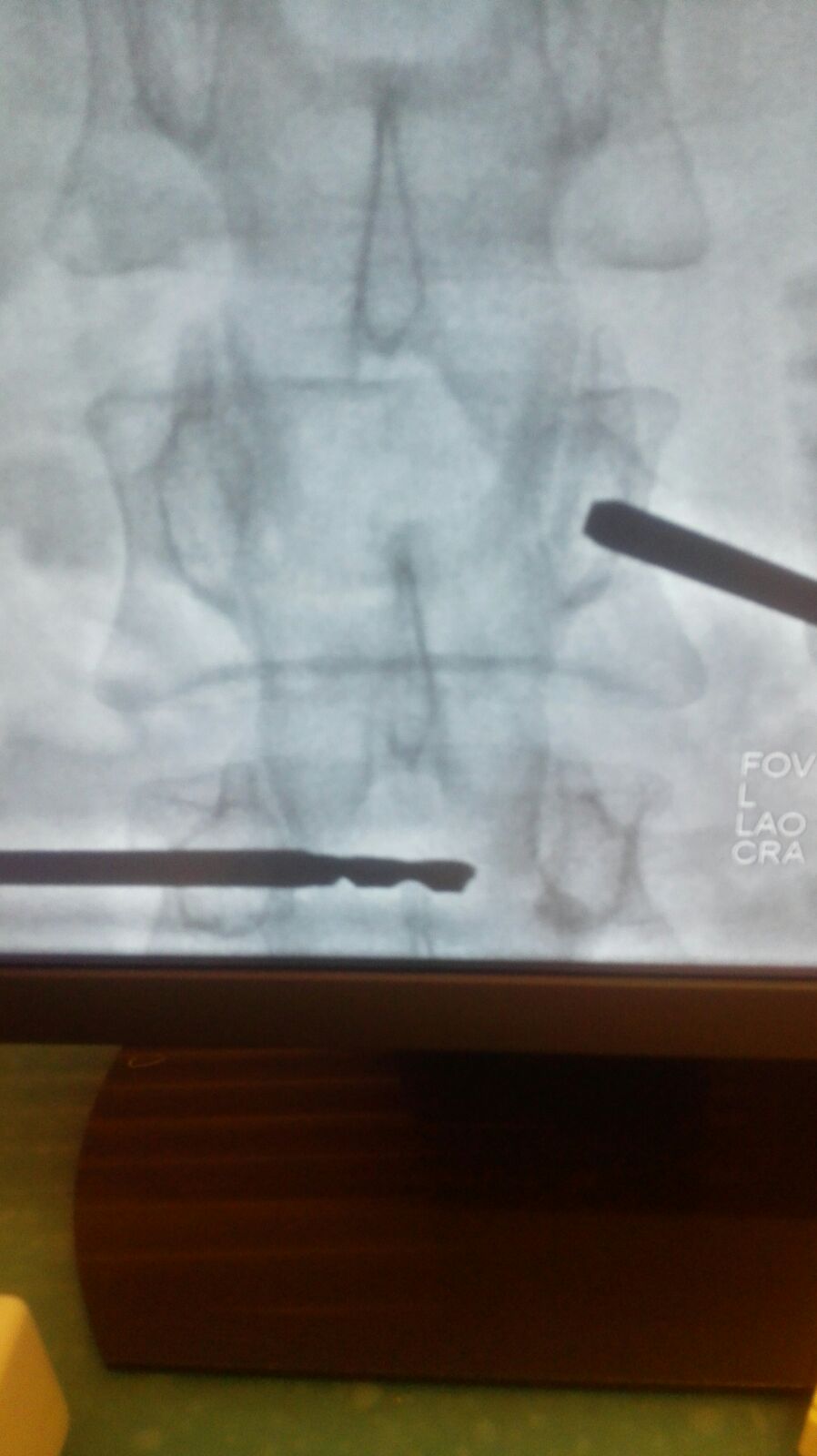
Mechanically, the procedure runs in two stages: a percutaneous cannula delivers an inflatable bone tamp into the collapsed vertebral body, inflation creates a contained cavity and partially restores height, and the cavity is then filled with low-viscosity PMMA bone cement under low pressure. Supporting equipment includes C-arm fluoroscopy, a balloon inflation unit and a bone cement mixing and delivery system. Patient selection requires contraindication screening, including exclusion of burst fractures with posterior cortical disruption, retropulsed bone fragments in the spinal canal, active infection, uncorrectable coagulopathy and allergies to implant components such as PMMA, contrast medium or latex, supported by preoperative CT or MRI assessment of posterior wall integrity.
Market Signals Behind Sterile Single-Use Demand
The global kyphoplasty market was valued at approximately USD 764.13 million in 2025 and is projected to reach USD 1,342.29 million by 2034 in one commercial research estimate. That number should be read with its definition attached: a separate widely cited estimate places the 2025 market closer to USD 1.2 billion, and the divergence appears to come from whether bone cement and vertebroplasty are bundled into the scope. North America accounted for a revenue share of roughly 42.5% to 50.0% in 2025 in the same compilation.
Two structural signals matter more to a procurement team than headline growth. The first is regulatory: the EU Medical Device Regulation raised the conformity bar for this device class, and the manufacturer states it was the first Chinese company to obtain an EU MDR CE certificate for kyphoplasty system products, an April 2024 company announcement recorded in third-party market data. Higher conformity costs tend to favour suppliers whose documentation is already complete and model-specific. The second is manufacturing scale: stated annual capacity of 1,000,000 balloon catheters, a 51,985 m² facility with ISO Class 7 cleanroom assembly, an export ratio of about 30% across the EU, USA, Asia, South America and the Middle East, and supply relationships with member companies of Medtronic and Stryker cited as a qualification signal in the reviewed material.
Future Outlook
Three changes are likely to shape how this product category is bought. First, documentation-first procurement: model-level sterilization, shelf-life and certificate-scope data will increasingly be requested as structured fields tied to UDI rather than as PDF attachments, and suppliers who can answer at that level will clear audits faster. Second, single-use packaging will keep gaining ground in ambulatory settings, where the limiting factors are sterilization capacity and cold-chain-free logistics rather than clinical demand. Third, traceability is becoming a differentiator: a device history record that links tube extrusion, balloon forming, folding, assembly and EO sterilization for a specific lot is the practical answer to a supplier audit question, and it is more useful than a general quality claim.
For buyers, the sensible position is unglamorous: treat sterilization method, shelf life and single-use status as specification fields with the same weight as marker span and burst pressure, and require them to be evidenced per model.
FAQ
Is a kyphoplasty balloon catheter single-use, and what are its sterilization method and shelf life?
Yes. Kyphoplasty balloon catheters in this range are single-use sterile devices; reuse and re-sterilization are prohibited, and the device should be used immediately once the package is opened. They are sterilized with ethylene oxide (EO) and validated for a three-year shelf life. The IFU is the governing document and should be followed for each model.
Can the catheter be re-sterilized if the package was opened but the procedure was cancelled?
No. The documentation states that the device is for single use, that re-sterilization or reuse is prohibited, and that it should be used immediately once the package is opened. No reprocessing pathway is described for these catheters, because sterility, biocompatibility and mechanical performance are validated for the original sealed single-use configuration.
What documents should be requested to verify sterilization and shelf-life claims?
The IFU for the exact model; an ETO sterilization validation summary to ISO 11135 whose load configuration covers that model; the shelf-life validation statement, which is three years for the balloon catheters; per-unit or batch pressure and seal test evidence; and the relevant certificates — EN ISO 13485:2016, EU MDR 2017/745 Class IIa issued by TÜV SÜD in 2024, and US FDA 510(k) K223709 cleared 16 August 2023 under Product Code HRX, Class II, 21 CFR 888.1100 — with the certificate scope checked against the model number.
What clinical conditions contraindicate use of the device?
Absolute contraindications in the reviewed clinical documentation include burst fractures with posterior cortical disruption, retropulsed bone fragments in the spinal canal, asymptomatic fractures, active systemic or local infection, uncorrectable coagulopathy, and allergies to implant components such as PMMA, contrast medium or latex. Relative contraindications include severe spinal stenosis, vertebral collapse greater than 75–80% of original height, and non-ambulatory paraplegic patients. Preoperative cross-sectional imaging with CT or MRI is required to assess posterior wall integrity and neural compression.
How do the 8G and 11G balloon catheters differ, and does that change the single-use documentation?
They differ in access platform, not in sterilization or single-use status. The 8G models KB0210, KB0115 and KB0120 have a channel inner diameter of ≥3.65 mm, an overall length of 315 mm, and maximum inflation volumes of 4 cc, 4 cc and 6 cc respectively. The 11G models KB0210S1, KB0115S1 and KB0120S1 have a channel ID of ≥3.10 mm, a 280 mm overall length, and maximum inflation volumes of 3 cc, 4 cc and 6 cc. All six share a constrained burst pressure of ≥400 PSI, are EO-sterilized and are single-use.
Do the tool kit and the balloon inflator follow the same sterilization and single-use rules?
Yes. The KT-00-01 8G and KT-00-05 11G tool kits are described as sterile, single-use EO-sterilized instrument sets, and the BI-20A-10 balloon inflator is EO-sterilized and single-use. Shelf-life statements for those items are not specified in the reviewed product data and should be confirmed on the label and IFU for each article number.
Reference note: the manufacturer product brochure covering the 8G and 11G kyphoplasty system configurations described in this article is available for download: Kyphoplasty System Products (8G & 11G) — CE and FDA.