
Kids Balance Bike Supplier Scorecard: Beyond Unit Price
Kids Balance Bike Supplier Scorecard: Beyond Unit Price
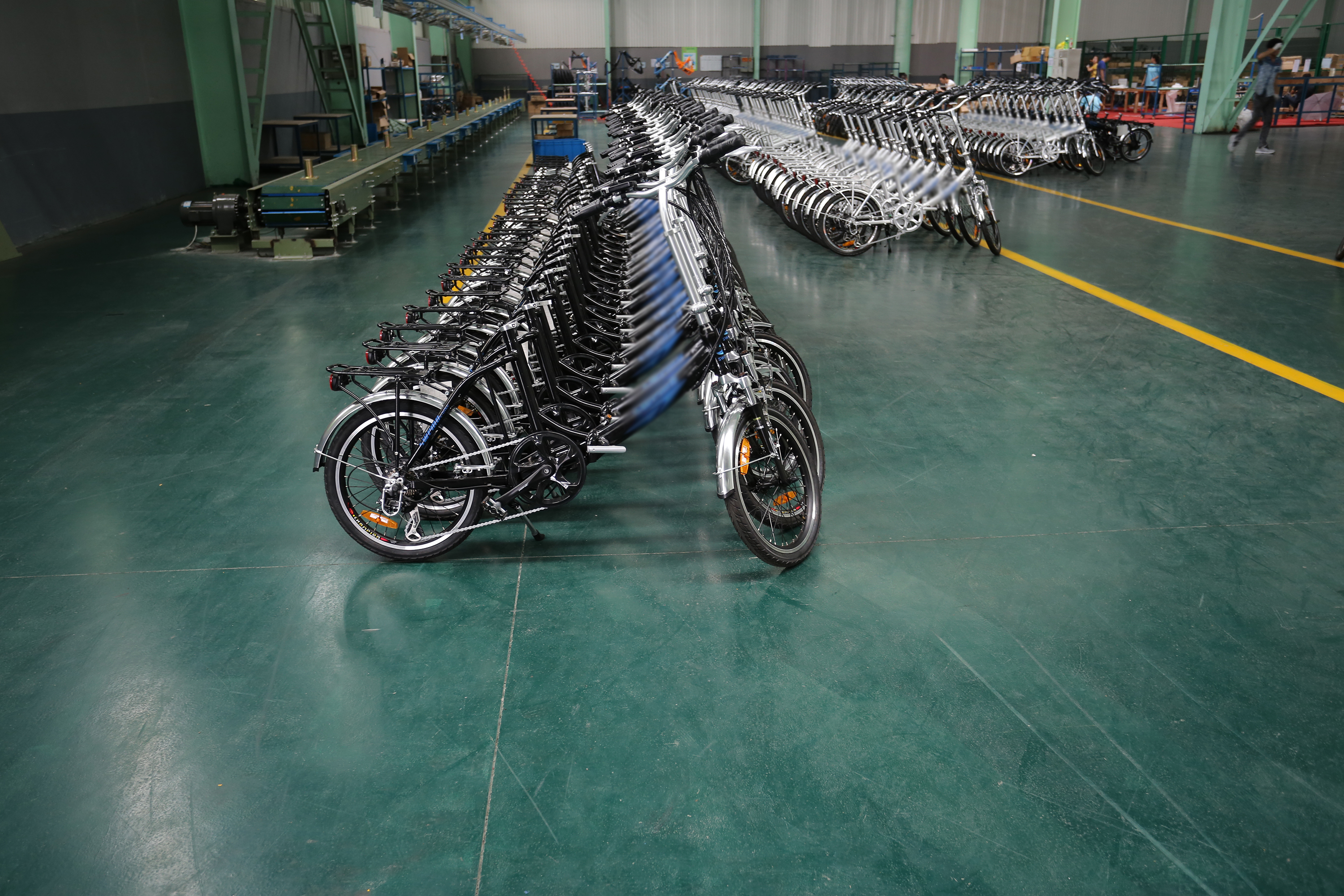
Why a Single Quotation Cannot Evaluate a Long-Term Kids Balance Bike Supplier
A kids balance bike quotation tells a buyer what one order might cost. It does not tell the buyer whether the magnesium alloy frame in the first shipment will match the frame in the fifth, whether the 12-inch air tire on aluminum rim comes from the same component source across the year, or whether the battery pack documentation attached to a sample will survive into mass production. For buyers at the decision and execution stages, the gap between a quotation and a repeatable supply relationship is where most sourcing risk concentrates.
This article builds a long-term supplier sustainability scorecard for kids balance bike sourcing. It converts purchase terms and acceptance criteria into measurable checkpoints across three representative products — AME-1201, AME-1202, and the 2-in-1 Kids Bike — and explains how to review a supplier over multiple order cycles rather than one price sheet. The framework is designed for procurement teams, brand owners, and distributors evaluating a supplier such as Wuxi Purino International Trade Co., Ltd, a trading enterprise based in Wuxi, Jiangsu Province, China, that supplies electric bicycles and kids balance bikes to EU and USA markets.
The Problem: Price-Only Evaluation Hides Supply-Chain Drift
A price-only evaluation makes an implicit assumption that every shipment will be identical. In practice, several variables can drift between order cycles even when the purchase order looks unchanged.
- Frame material substitution — a supplier may shift between steel, aluminum, and magnesium alloy frames depending on material availability or cost pressure, changing weight, ride feel, and maintenance requirements.
- Component sourcing changes — the tire, rim, grip, or brake specified in the sample may be replaced by a visually similar part from a different source.
- Battery pack differences — cell type, voltage, capacity, or charging configuration may vary without a corresponding update to the buyer's records.
- Acceptance criteria erosion — inspection scope and sampling may narrow over time if the buyer does not lock the criteria into a repeatable checklist.
The scorecard addresses these risks by turning qualitative trust into documented, repeatable checkpoints that can be compared across order cycles.
The Four-Dimension Sustainability Scorecard
The framework scores a supplier on four dimensions: material consistency, component traceability, battery pack auditability, and acceptance criteria clarity. Each dimension receives a score based on documented evidence from the supplier, not on the buyer's impression during a single factory visit.
Dimension 1: Material Consistency — Magnesium Alloy Frame and Fork with Suspension vs Steel Frame and Fork
Material consistency is the first scoring dimension because frame material affects weight, durability, maintenance profile, and the product's market positioning. The comparison data supplied for this article distinguishes three frame approaches:
- Steel frame and fork — heavier and cost-effective for heavy use; suited to kindergartens and bulk buyers.
- Aluminum frame — balances strength and lightness; suited to general retail and daily outdoor use.
- Magnesium alloy frame and fork — prioritizes extreme lightness and integrated aesthetics; suited to premium family channels and gift markets. Magnesium alloy frames are described as ultra-light, rust-proof, high-toughness, and shock-resistant, reducing a child's riding burden and improving sliding fluency, though at higher production cost. Magnesium alloy may also incur higher repair costs if damaged.
Industry product data attributed to Montasen (September 2026) reports that magnesium alloy integrated casting frames for balance bikes weigh approximately 680 g, with total bike weight around 3.1 kg for 12-inch magnesium alloy models. These figures provide a reference point, not a universal specification for every supplier.
For a buyer evaluating material consistency, the scorecard asks:
- Does the supplier document the frame material and manufacturing process for each model, including whether the fork matches the frame material?
- If the model includes front suspension, is the suspension specification recorded and repeatable across orders?
- Has the supplier committed in writing to notify the buyer before any material substitution?
- Can the supplier show inspection records confirming frame material across at least three order cycles?
A supplier that scores well on this dimension provides documented material declarations, not verbal assurances. A supplier that cannot show material consistency across cycles scores lower, regardless of the sample's appearance.
Dimension 2: Component Traceability — 12-Inch Air Tire on Aluminum Rim, TPR Grips, and Rear Band Brake
Component traceability asks whether the buyer can identify what is inside the product and whether that specification holds from order to order. For a 12-inch kids balance bike, the relevant components include the tire, rim, grips, and brake.
According to the marketing content unit for this product family, the 12-inch model uses an air tire on an aluminum rim. The comparison data notes that inflated or air tires offer better long-term comfort but require periodic checks and inflation, while EVA solid tires are low-maintenance and never need inflation. The choice between them is a fit decision, not a universal upgrade.
TPR grips and a rear band brake are component categories that should be treated as traceability checkpoints. The scorecard does not assume every model uses these components; it requires the buyer to confirm the specification for each model and to verify that the specification remains stable.
For component traceability, the scorecard asks:
- Is the tire type (air or EVA), rim material, grip material, and brake type recorded in the purchase specification for each model?
- Does the supplier maintain component source records that can be reviewed during an audit?
- Is there a written change-notification requirement before any component source or specification change?
- Do pre-shipment inspection records confirm that the components match the approved specification?
Traceability is not the same as brand-name component sourcing. A supplier can score well by documenting its own component specifications and demonstrating consistency, even if the components are not from globally recognized brands.
Dimension 3: Battery Pack Auditability — Cells, Voltage, Capacity, and Charging Configuration
For battery-equipped balance bike models, the battery pack is a high-risk component for long-term supply because cell sourcing, voltage, capacity, and charging configuration can change without affecting the external appearance of the bike. The scorecard treats battery pack auditability as a separate dimension because it requires different evidence from frame or component traceability.
The task specification for this article references battery pack parameters including 18650 2500mAh 3C cells, 22.2V/2.5A-55.0Wh, and direct or removable charging. These parameters are treated here as audit checkpoints to be confirmed against the supplier's documentation, not as verified specifications for every model. A buyer should require the supplier to confirm the actual cell type, voltage, capacity, and charging configuration for each battery-equipped model.
For battery pack auditability, the scorecard asks:
- Does the supplier provide a battery pack specification sheet listing cell type, nominal voltage, capacity, and charging configuration?
- Are cell source and cell grade documented, and is there a change-notification requirement before cell substitution?
- Is the charging configuration (direct or removable) recorded and consistent across orders?
- Are battery inspection and safety test records available for review per order cycle?
A supplier that cannot produce a battery pack specification sheet or inspection record scores low on this dimension, even if the sample performs well in a short test.
Dimension 4: Acceptance Criteria Clarity — From Contract Terms to Testable Checkpoints
Acceptance criteria clarity asks whether the purchase terms can be converted into checks that a buyer or third-party inspector can apply consistently. The risk and procurement support unit for this product family lists the following terms: MOQ of 50 pcs; delivery terms of FOB, CFR, or CIF; acceptance criterion of inspection before shipment; and payment terms of 30% in advance with 70% before loading by T/T or L/C.
These terms become scoreable when they are translated into specific checkpoints:
- Inspection scope — which items are inspected: frame material, component specification, battery pack, finish, and function?
- Sampling — what sample size or sampling method is used for each inspection item?
- Record retention — are inspection records retained and shared with the buyer for each order?
- Non-conformance handling — what happens when an inspection item fails, and who bears the cost of rework or replacement?
- Payment linkage — does the 70% before-loading payment depend on the buyer's acceptance of the inspection record?
A supplier that provides a written inspection plan with defined scope, sampling, records, and non-conformance handling scores higher than a supplier that only states "inspection before shipment" without further detail.
Applying the Scorecard to AME-1201, AME-1202, and the 2-in-1 Kids Bike
AME-1201, AME-1202, and the 2-in-1 Kids Bike are the three working products for this evaluation. The scorecard applies to all three, but the specific checkpoints differ by model configuration. The framework does not assume that all three share the same frame material, component set, or battery configuration; it requires the buyer to establish a model-specific checkpoint list.
| Scorecard Dimension | AME-1201 Checkpoint | AME-1202 Checkpoint | 2-in-1 Kids Bike Checkpoint |
|---|---|---|---|
| Material consistency | Documented frame and fork material; notification before substitution | Documented frame and fork material; notification before substitution | Documented frame material for both balance and bike configurations |
| Component traceability | Recorded tire, rim, grip, and brake specification | Recorded tire, rim, grip, and brake specification | Recorded component specification for both configurations |
| Battery pack auditability | Specification sheet and inspection record if battery-equipped | Specification sheet and inspection record if battery-equipped | Specification sheet and inspection record if battery-equipped |
| Acceptance criteria | Written inspection plan with scope, sampling, records, non-conformance handling | Written inspection plan with scope, sampling, records, non-conformance handling | Written inspection plan covering both product configurations |
The 2-in-1 Kids Bike requires an additional checkpoint because it converts between balance and bike modes. The buyer should confirm that the conversion mechanism is included in the inspection plan and that the component specification is documented for both configurations.
Reviewing a Supplier Across Multiple Order Cycles
A single order cannot reveal whether a supplier's material consistency, component traceability, battery auditability, and acceptance criteria clarity hold over time. The scorecard becomes useful when it is applied repeatedly and the results are compared.
A practical multi-cycle review process includes:
- Baseline cycle — score the supplier on the first order using documented evidence, and record the exact specification for each model.
- Cycle comparison — for each subsequent order, compare the inspection records and component records against the baseline. Flag any difference in frame material, component source, battery specification, or inspection scope.
- Drift review — if a difference appears, request the supplier's change notification and determine whether the change was approved. An unapproved change should lower the supplier's score.
- Annual review — consolidate the cycle data into an annual supplier score and use it as the basis for renewal, volume allocation, or corrective action.
Wuxi Purino International Trade Co., Ltd, the trading enterprise referenced in this framework, states that it provides one-stop services covering product selection, quotation, sample arrangement, production tracking, quality control, and after-sales technical support. The company reports a manufacturing facility of 2,300 m², annual production capacity of 200,000 pcs, approximately 10 staff, and an R&D team of 3 engineers. It also states that every product undergoes quality inspection before shipment. These statements are supplier-provided facts; the scorecard uses them as a starting point for verification, not as substitutes for order-cycle evidence.
The same supplier states that it supports OEM and ODM customization covering logo printing, customized packaging, color matching, and specification adjustment. For a long-term buyer, customization capability is relevant to the scorecard because it affects how specification changes are documented and controlled. The buyer should confirm that customized specifications are recorded in the same traceability and acceptance system as standard specifications.
Market Context: Why Long-Term Evaluation Matters
External market data supports the case for a multi-cycle evaluation framework. According to The Business Research Company (September 2026), the global balance bike market size is projected to reach approximately USD 1.43 billion by 2026. Coherent Market Insights (April 2026) projects a CAGR of 7.2% from 2026 to 2033. These are commercial research estimates, and they indicate a growing category rather than a guarantee of demand for any specific supplier.
Compliance requirements add another reason for long-term evaluation. The EN71-1:2026 standard, effective 1 January 2026 in the European Union, introduces mandatory performance testing for ride-on toys including balance bikes, according to the cited compliance source. A supplier that passes a single test does not automatically demonstrate ongoing compliance; the buyer needs a process for confirming that testing and documentation remain current across order cycles.
Trade classification provides a third context point. Balance bikes without pedals are classified under HS Code 95030010, according to the cited customs reference. This classification matters for buyers who need consistent documentation across shipments, because a change in product configuration or classification can affect customs clearance and record-keeping.
Scorecard vs Price-Only Evaluation: A Side-by-Side Comparison
| Evaluation Area | Price-Only Approach | Sustainability Scorecard Approach |
|---|---|---|
| Frame material | Not evaluated beyond the sample | Documented material and process; substitution notification required |
| Component traceability | Not evaluated | Tire, rim, grip, and brake specification recorded and checked per cycle |
| Battery pack | Not evaluated | Cell type, voltage, capacity, and charging configuration documented and inspected |
| Acceptance criteria | Relies on final inspection statement | Written inspection plan with scope, sampling, records, and non-conformance handling |
| Multi-cycle consistency | Not assessed | Baseline, comparison, drift review, and annual score |
| Long-term risk visibility | Low | Higher, because changes are documented and comparable |
The comparison does not claim that a scorecard approach guarantees better outcomes. It claims that the scorecard produces documented evidence that a price-only approach does not, and that this evidence is useful when a buyer must decide whether to continue, expand, or end a supplier relationship.
Future Outlook: What Long-Term Sourcing Will Demand
The combination of market growth, updated compliance requirements, and component complexity suggests that long-term kids balance bike sourcing will place more weight on documented consistency. Buyers should expect to maintain model-specific specification records for AME-1201, AME-1202, and the 2-in-1 Kids Bike, and to review those records against each order cycle.
The framework also has implications for how buyers use supplier statements. A supplier's claim of quality inspection before shipment is a starting point; the scorecard asks what is inspected, how it is sampled, what records are kept, and what happens when a checkpoint fails. A supplier's claim of material capability is likewise a starting point; the scorecard asks whether the material is documented and stable across orders.
For buyers working with a supplier such as Wuxi Purino International Trade Co., Ltd, the practical next step is to request the model-specific specification records, inspection plan, and component and battery documentation before the first order, then to apply the same scorecard at each renewal. More information about the supplier is available at Wuxi Purino International Trade Co., Ltd.
FAQ
What are the typical purchasing terms and acceptance criteria for a kids balance bike supply arrangement?
The risk and procurement support unit for this product family lists a MOQ of 50 pcs, delivery terms of FOB, CFR, or CIF, an acceptance criterion of inspection before shipment, and payment terms of 30% in advance with 70% before loading by T/T or L/C. Buyers should convert these terms into a written inspection plan that specifies scope, sampling, records, and non-conformance handling.
How does the choice between a magnesium alloy frame and a steel frame affect long-term maintenance?
Magnesium alloy frames are described as ultra-light, rust-proof, high-toughness, and shock-resistant, reducing a child's riding burden and improving sliding fluency, but at higher production cost and potentially higher repair cost if damaged. Steel frames have high hardness and strong bearing capacity at a low price, but are prone to rust, heavier, and less flexible. The comparison data recommends magnesium alloy for high-end orders and long-term outdoor use, and steel for low-budget wholesale and short-term trial use.
What should buyers verify in a battery pack audit during supplier evaluation?
Buyers should confirm the cell type and grade, nominal voltage, capacity, and charging configuration for each battery-equipped model, and should request the battery pack specification sheet and inspection records for each order cycle. If the supplier references specific parameters such as 18650 cells or a particular voltage and capacity, the buyer should require documentation that supports those parameters rather than relying on the sample alone.
How can buyers evaluate supplier consistency across multiple order cycles?
Buyers should establish a baseline specification and inspection record on the first order, compare each subsequent order against that baseline, require written change notification before any material, component, or battery specification change, and consolidate the results into an annual supplier score. This process makes drift visible and provides a documented basis for renewal, volume allocation, or corrective action.
¿Tiene preguntas o necesita más detalles?
Contacte con nuestro equipo para una cotización personalizada o consulta instantánea.
Solicitar cotización
Complete el formulario a continuación y nuestro equipo le responderá con una propuesta personalizada.
Chat directo de WhatsApp
¿Prefiere chatear en tiempo real? Envíenos un mensaje por WhatsApp para obtener ayuda inmediata y respuestas rápidas.
- Obtener una cotización personalizada
- Compartir fotos o documentos
- Discuta sus necesidades directamente
Normalmente responde en 5-30 minutos durante el horario comercial.