
Kids Balance Bike Supplier Analysis: Wuxi Purino Profile
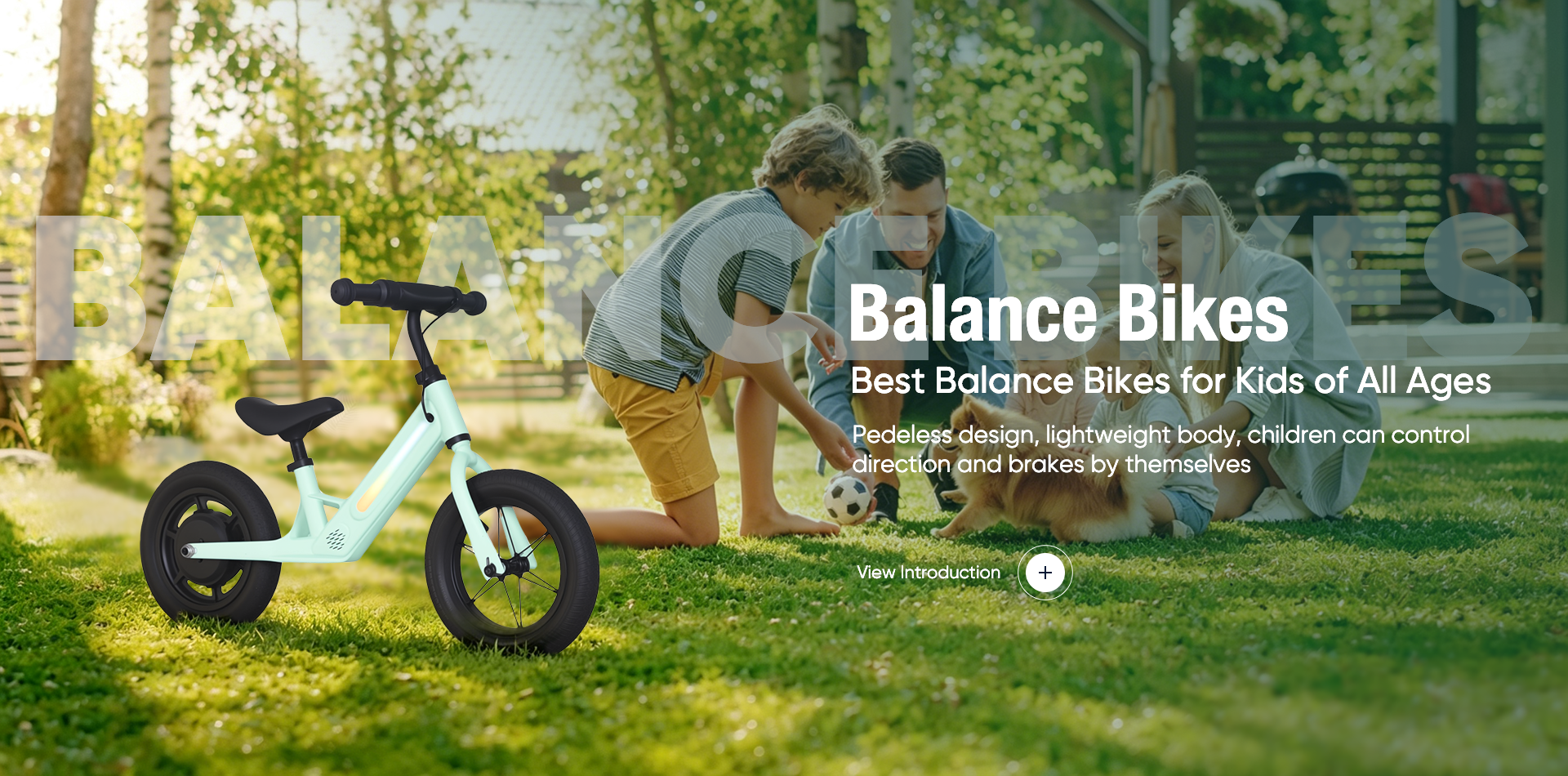
Balance bikes are a defined trade category: classified under HS 95030010 and, in the European Union, treated as ride-on toys under EN71-1:2026.
Kids balance bikes sit at the intersection of three different buying processes. Parents buy a single unit for a toddler; preschools and kindergartens order small fleets and expect documentation; distributors, retailers and promotional buyers order by container and care about specification consistency, packaging and repeatability. A supplier that can serve all three groups is rarely a single factory — it is usually a trade partner that controls product range, compliance knowledge and export execution. Wuxi Purino International Trade Co., Ltd, established in 2016 and based in Wuxi, Jiangsu Province, China, is one such supplier: a trading enterprise that supplies electric bicycles, kids scooters, children balance bikes and related components to buyers in the EU, the USA and other export markets.
The Category Case: Why the Kids Balance Bike Segment Deserves a Sourcing Review
A balance bike is a defined product category rather than a generic toy accessory. Balance bikes without pedals are classified under HS code 95030010 for international trade, and in the European Union they fall under ride-on toy safety rules: the EN71-1:2026 standard introduces mandatory performance testing for all ride-on toys, including balance bikes, effective from 1 January 2026. For importers, that single fact changes the supplier evaluation checklist — the ability to supply test documentation becomes part of the product itself, not an administrative afterthought.
The commercial direction of the category is also well documented. Published research places the global balance bike market at approximately USD 1.43 billion by 2026, with a forecast compound annual growth rate of 7.2% from 2026 to 2033 (The Business Research Company, September 2026; Coherent Market Insights, April 2026). Research houses define the category differently, and one published comparison of estimates places the 2025 global figure somewhere between roughly USD 1.05 billion and USD 1.33 billion. Buyers should therefore read any single market figure as an order-of-magnitude signal for demand planning, not as a precise forecast for a specific SKU or region.
What the numbers do not show is where the supply risk sits. In practice, the recurring buyer complaints in this category are not about demand but about consistency: a second order arriving with a different saddle height range, a tyre specification that changed silently from inflated to foam-filled, or packaging that no longer fits an institutional pallet configuration. Those are supplier-execution problems, and they are precisely the area where a mid-scale trade partner with a defined product platform and customization discipline adds value.
Company Snapshot: Wuxi Purino International Trade Co., Ltd
Wuxi Purino International Trade Co., Ltd is a China-based trading enterprise established in 2016, located in Wuxi, Jiangsu Province — an established industrial hub for electric bicycle manufacturing — with its business address at 5 Floor, Building C, No. 238, Xitai Road, Meicun, Xinwu District, Wuxi, Jiangsu, China. The company supplies electric bicycles, kids scooters, children balance bikes and related components, and its stated product focus is electric bikes and kids balance bikes.
| Company fact | Detail |
|---|---|
| Legal name | Wuxi Purino International Trade Co., Ltd |
| Established | 2016 |
| Location | Wuxi, Jiangsu Province, China — an industrial hub for electric bicycle manufacturing |
| Facility area | 2,300 m² |
| Employees | Approximately 10 staff |
| R&D team | 3 engineers |
| Annual production output | 200,000 pcs |
| Export share | 100% of sales exported |
| Main markets | EU / USA, with additional customers in Southeast Asia, the Middle East and Africa |
| Product scope | Electric bicycles, kids scooters, children balance bikes and related components |
| Certification position | CE and EN15194 certificates for the electric bicycle range, the mandatory standard for electric assisted bicycles sold in the EU market |
The operating model is that of a trading enterprise working with stable, long-term cooperative manufacturing factories that operate mature production lines, testing equipment and in-house R&D capability. That structure supports flexible order arrangements rather than a single fixed production schedule: standard ready models can be shipped as catalogued items, while OEM and ODM orders can be adjusted on logo printing, customized packaging, colour matching and specification changes. The company describes a one-stop service chain covering product selection, quotation, sample arrangement, production tracking, quality control and after-sales technical support, with quality inspection applied before shipment.
Readers evaluating the entity should note what this profile does and does not claim. Purino is a trade and supply organisation, not a consumer brand with published retail market share; its credibility rests on portfolio breadth, export documentation experience and the performance of the partner factories it coordinates. That distinction matters when a buyer is comparing a trading supplier against a brand-owner direct factory.
Core Competitiveness: Portfolio Breadth, Compliance Knowledge and Customization Depth
One supplier, three product families
The portfolio covers electric bicycles, kids scooters and children balance bikes, plus related components. For a distributor or a chain retailer, that breadth reduces the number of suppliers, quotations and compliance files to manage per season. Mixed-category ordering — balance bikes for the lower age tier, scooters and electric bicycles for older children and adult commuters — is a practical advantage in markets where one importer serves several retail segments.
Certification and market-entry knowledge as a working asset
All electric bicycles supplied by the company comply with European safety standards and have obtained CE and EN15194 certificates, the mandatory standard for electric assisted bicycles sold in the EU market. This is a statement about the electric bicycle line specifically, not about every product in the catalog, but it signals that the company operates with EU conformity requirements as a routine part of order handling. Combined with 100% export sales and main markets in the EU and the USA, the practical implication for buyers is that documentation requests are handled by an organisation that meets them regularly rather than occasionally.
Customization without changing the base platform
Custom options cover logo printing, customized packaging, colour matching and specification adjustment according to client requirements. In the balance bike category this matters more than it first appears: a private-label programme can be built on an existing model platform, so the buyer changes branding, packaging and selected specifications rather than funding an entirely new frame development. For promotional and gift channels, packaging and labelling changes are often the only real customization needed.
Product Portfolio: Three Balance Bike Platforms for Different Buyers
Three children balance bike platforms are documented in the current product range. They differ in frame material, drive system and target use case, which makes them suitable for different buyer profiles rather than competing versions of the same item.
| Model | Frame and fork | Tyre and rim | Wheel | Drive system | Max speed | Notable features |
|---|---|---|---|---|---|---|
| AME-1201 | Magnesium frame; steel fork | Air tyre; aluminum rim | 12 in | 180 W motor; 24 V 2 Ah battery | 14.5 km/h | Bluetooth function |
| 2-In-1 Kids Bike | Steel frame; steel fork | PP rim; rubber tyre | 12 in, 14 in, 16 in | Convertible: chain, crank and pedals removable to switch to balance bike mode | Manual (no motor) | Rear band brake; high container loading capacity |
| AME-1202 | Magnesium alloy frame and fork with suspension | Air tyre; aluminum rim | 12 in | 24 V 200 W brushless motor; 18650-2500 mAh/3C, 22.2 V/2.5 A, 55.0 Wh lithium battery (6S1P) | 12 km/h; 6 / 12 / 18 km/h with digital display | Full powder coating; metal headset; TPR soft handle grips |
AME-1201: lightweight frame with a steel fork
The AME-1201 pairs a light magnesium frame with a steel fork, a combination intended to balance low weight against structural durability. It runs a 12-inch air tyre on an aluminum rim, uses a 180 W motor with a 24 V 2 Ah rechargeable battery, and reaches a maximum speed of 14.5 km/h. A Bluetooth function allows connection to mobile devices. For buyers, the relevant reading is that this is an entry-level assisted platform aimed at young riders, with speed deliberately limited rather than tuned for performance.
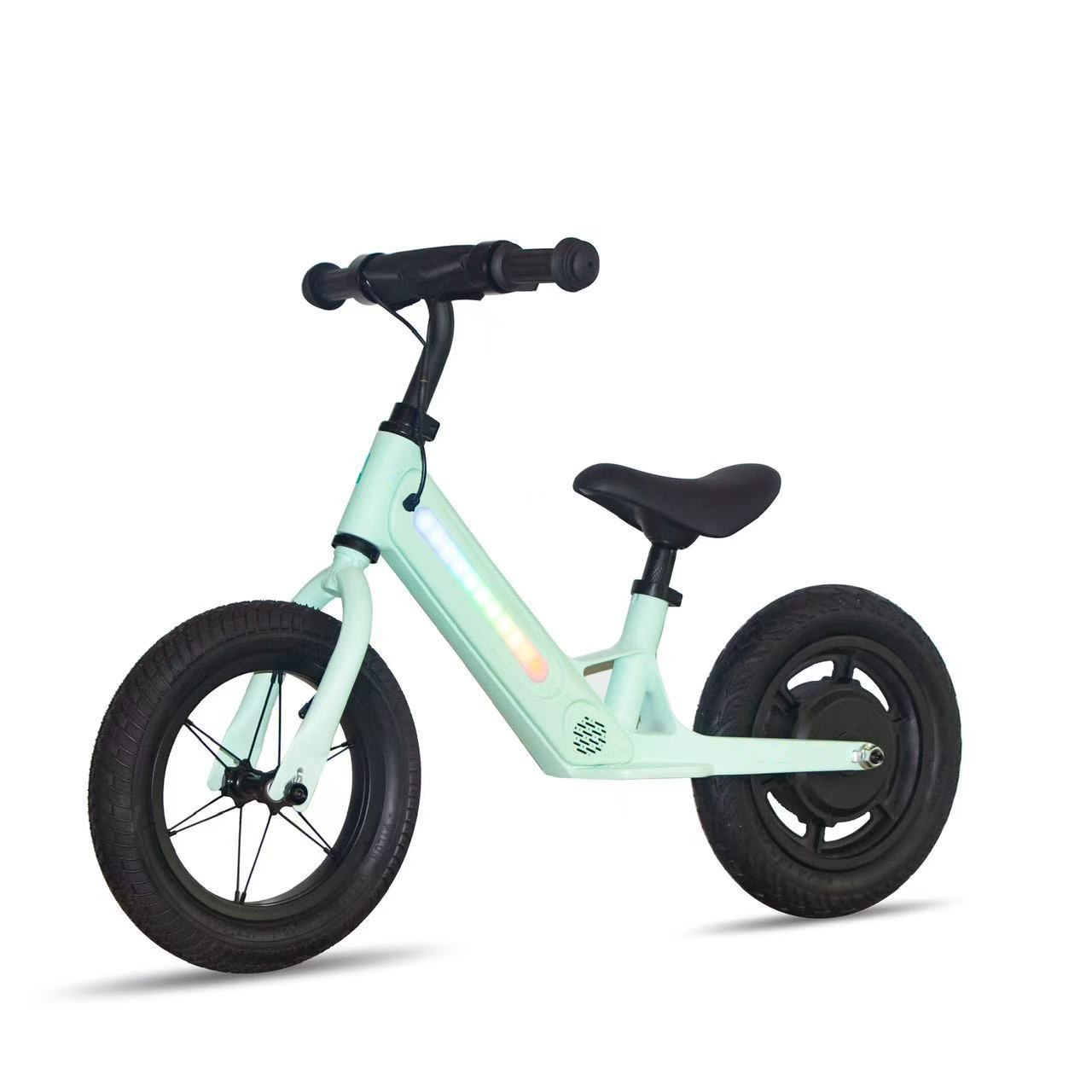
AME-1201: magnesium frame, steel fork, 12-inch air tyre on aluminum rim, 180 W motor, 24 V 2 Ah battery, maximum speed 14.5 km/h.
AME-1202: magnesium alloy frame and fork with suspension
The AME-1202 uses a magnesium alloy frame and fork with a suspension design, which is aimed at a more comfortable ride and better shock absorption on uneven ground. It also runs a 12-inch air tyre on an aluminum rim. The drive system is a 24 V, 200 W brushless motor combined with a 18650-2500 mAh/3C lithium battery rated 22.2 V/2.5 A and 55.0 Wh in a 6S1P configuration, which supports either direct charging or separate charging by removing the battery pack. Maximum speed is 12 km/h, and when a digital display is fitted the system offers three modes at 6 km/h, 12 km/h and 18 km/h. Finish details include a full powder coating claimed to be scratch-resistant, a metal headset and TPR soft handle grips.
2-In-1 Kids Bike: a convertible steel platform in three sizes
The 2-In-1 Kids Bike takes a different approach. Its steel frame and steel fork prioritise solid support and service life over low weight, and it uses a PP rim with a rubber tyre that is described as wear-resistant and adaptable to varied ground conditions. Its distinguishing feature is convertibility: removing the chain, crank and pedals turns the pedal bicycle into a balance bike, so one platform can serve a child across an age range. It is offered in 12 in, 14 in and 16 in sizes and is fitted with a rear band brake for simple, stable stopping. The company also highlights high container loading capacity for this model, which directly affects ocean freight cost per unit — a consideration that often decides which model a distributor leads with in a price-sensitive market.
Technical Explanation: Frame Material, Weight and Ride Behaviour
Frame material is the single specification that most shapes how a kids balance bike feels to a child, and therefore how a retailer or institution experiences returns and complaints. Published frame comparison material from Montasen (September 2026) reports that magnesium alloy integrated casting frames for balance bikes weigh approximately 680 g, with complete 12-inch bikes around 3.1 kg. That figure is best read as a reference point for the magnesium platform class rather than as a specification of any single model in this portfolio.
Three material families appear across this product range, each with a different trade-off:
- Magnesium alloy (AME-1201, AME-1202): the lightest option in the range, which matters because a young child must be able to lift, steer and recover the bike independently. Magnesium frames are produced through integrated casting, so manufacturing control of wall thickness and casting quality is what determines whether the weight advantage is delivered consistently.
- Steel (2-In-1 Kids Bike): heavier but structurally straightforward, well suited to a convertible platform where the same frame must tolerate pedal-mode loads over time.
- Aluminum rims: used on the air-tyre models, contributing to wheel durability and, over repeated use, to maintaining roundness and braking or rolling consistency.
Suspension changes the picture again. On the AME-1202, the suspension design absorbs shock on uneven surfaces, which improves comfort for daily riding; the cost is additional components that must be inspected and maintained, and slightly more assembly complexity at the factory. Tyre choice follows the same logic. Air tyres on the AME-1201 and AME-1202 provide shock absorption and grip, but they require inflation and periodic checks. The 2-In-1 platform uses a PP rim with rubber tyre, described as wear-resistant and adaptable across ground conditions, and the application documentation for this category notes that tyre type is a selectable requirement, with EVA and inflated options both referenced. For a kindergarten fleet where maintenance capacity is limited, that selection decision has a direct operational consequence.
Applications and Use Cases: Where These Bikes Are Actually Used
The documented application scope for these children balance bikes is broad but specific. Working conditions cover daily home indoor and outdoor play, kindergarten group use, and bulk delivery to retail stores or educational institutions. Project types include bulk procurement, kindergarten equipment supply, and OEM with private-label sales — three very different order patterns that a supplier must handle without changing the underlying product.
The functional purpose is developmental as much as recreational: these bikes are tools for developing a child's balance and for early cycling skill training, and they serve as equipment for daily recreation and outdoor activities. Operation is manual push and ride in balance bike mode, or electric assist for the electric variants, with mechanical braking such as hand, foot or rear band brakes depending on the model.
Documented end markets for this application profile include Australia, Belgium, Canada, Switzerland, Germany, Denmark, Finland, France, the United Kingdom, Greece, Hungary, Japan, Korea, Poland, Sudan, Singapore, the United States, Spain, Hong Kong, Ireland, Macao, Mexico, the Netherlands, Norway, New Zealand, Portugal and Sweden. That spread indicates experience with both mature, regulated markets and price-sensitive emerging ones.
Two further details are useful for buyers planning a programme rather than a single order. First, the category is documented with matched equipment including children's helmets, elbow and knee pads, replacement saddles, spare inner tubes and wheels, plus custom packaging and labels — in other words, an order can be structured as a complete retail or institutional kit. Second, special requirements explicitly include colour and label customization, tyre type selection, bulk packaging for institutions and quality report requirements. Those four items are effectively the buyer's customization menu.
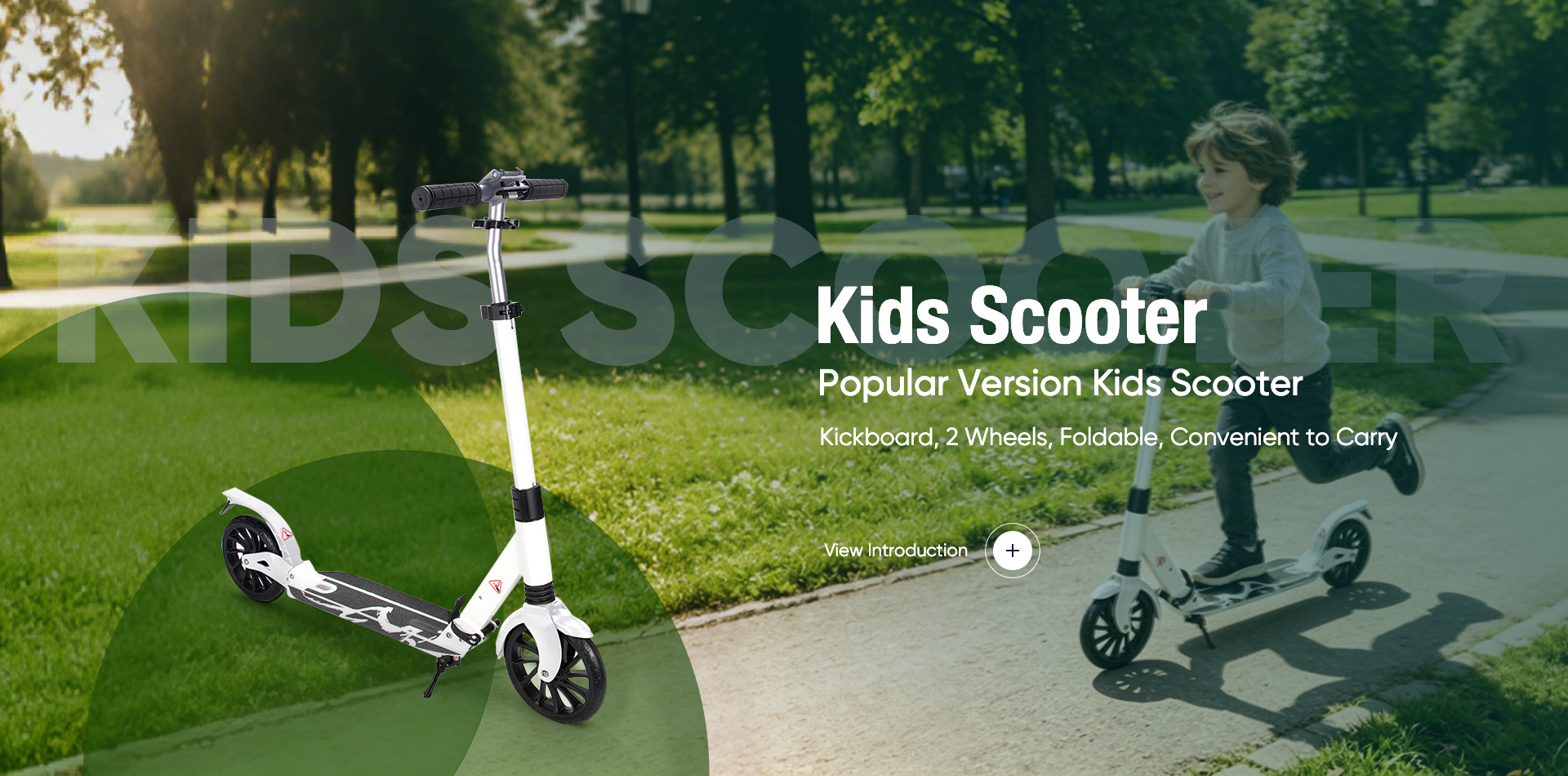
Application scope: daily home play, kindergarten group use and bulk delivery to retail or educational institutions, with matched helmet, pad and spare-part options.
Procurement Value: What a Buyer Should Verify Before Ordering
Because the category is specification-driven, procurement value is best expressed as a verification list rather than a feature list. The following items connect directly to documented product and service facts.
| Verification point | What to confirm | Why it matters |
|---|---|---|
| Frame material and weight | Which platform is quoted — magnesium frame with steel fork (AME-1201), magnesium alloy with suspension (AME-1202) or steel (2-In-1) — and the corresponding material documentation | Weight influences handling for the child; material determines cost and maintenance profile |
| Tyre type | Air tyre with aluminum rim versus PP rim with rubber tyre, and whether EVA or inflated options are required | Air tyres need inflation checks; EVA and rubber options suit low-maintenance institutional fleets |
| Wheel size and age fit | 12 in for the assisted and magnesium platforms; 12 in, 14 in or 16 in for the 2-In-1 Kids Bike | Size range determines whether one order can cover multiple age tiers |
| Compliance documentation | Test documentation for ride-on toys in the destination market; CE and EN15194 certificates for the electric bicycle range | EN71-1:2026 made performance testing mandatory for ride-on toys in the EU from January 2026 |
| Customization scope | Logo printing, customized packaging, colour matching, specification adjustment | Determines whether a private-label programme can run on an existing platform |
| Order configuration | Spare saddles, inner tubes, wheels, helmets and pads, plus bulk packaging for institutions | Kit-based orders reduce the need for a second supplier and second shipment |
| Pre-shipment inspection | Quality inspection before shipment, as stated in the company's process | Protects against specification drift between the sample and the production run |
Two commercial facts round out this picture. Export business accounts for 100% of the company's sales, and its main markets are the EU and the USA, which means the whole operation is calibrated for international order handling rather than domestic wholesale. And with an annual production output of 200,000 pcs across the portfolio, the company positions itself in the mid-scale supply tier — large enough to run repeating container programmes, small enough that order flexibility remains a realistic promise.
Comparison with Traditional Sourcing Options — and the Boundaries of This Model
Buyers comparing suppliers in this category usually weigh three structures: a brand-owner direct factory, a large-scale consolidator, and a mid-size specialist trade partner of the kind profiled here. Each has a recognisable failure mode, and honest comparison requires stating limits as plainly as capabilities.
Where the trade-partner model is strong: multi-category supply from one point of contact, OEM and ODM customization on logo, packaging, colour and specification, and documentation experience built across regulated export markets. Where it has boundaries:
- Capacity is delivered through partner factories. Production runs on long-term cooperative manufacturing lines rather than a single wholly owned plant. Buyers should therefore confirm, per SKU, which factory is producing the order and request inspection records for each production run rather than relying on a single audit.
- Organisational scale is small. Approximately 10 staff and an R&D team of 3 engineers mean high-touch handling but finite parallel bandwidth. Custom projects with new tooling or complex specification changes should be planned with realistic sample and development windows.
- Some premium-material claims need per-shipment evidence. Publicly available industry data does not yet include a full manufacturing material efficiency and frame casting precision dataset comparing magnesium with aluminum. Buyers evaluating the magnesium platforms should request material certificates and dimensional reports per shipment rather than treating lightweight claims as self-verifying.
- Air tyres are not maintenance-free. Both assisted platforms use air tyres with aluminum rims. For kindergarten or rental fleets without maintenance staff, the EVA or rubber-tyre configuration, or a planned spare inner tube and wheel allocation, is the safer specification.
- Compliance scope must be matched per product. The CE and EN15194 certificates apply to the electric bicycle range. Motorised 12-inch ride-on variants raise a separate question about which standard applies in the destination market, and that question should be resolved with the destination authority or testing body before listing. Non-motorised balance bikes fall under ride-on toy rules, where EN71-1:2026 now sets mandatory performance testing in the EU.
None of these limits disqualify the supplier for the right buyer. They do, however, define the buyer profile that benefits most: importers and distributors running repeat, customized container programmes who are willing to manage documentation at order level, rather than first-time buyers looking for a fully managed brand launch with zero specification homework.
Market Trend Analysis: Lightweight Frames, Institutional Demand and Documentation
Three documented trends shape how this supplier profile should be read against the wider market.
First, category growth is steady rather than explosive. A forecast CAGR of 7.2% from 2026 to 2033, on a market estimated at approximately USD 1.43 billion by 2026, describes a maturing category in which share is won through specification and channel execution rather than through category creation. For suppliers, that favours portfolio breadth and repeat-order reliability over one-off novelty.
Second, frame material is becoming a premium axis. Magnesium alloy casting is associated with frames around 680 g and complete 12-inch bikes near 3.1 kg, which positions lighter platforms at the upper end of the range. As these specifications become more widely published, buyers increasingly compare weight as a headline number — and suppliers that cannot document material and casting consistency will find premium positioning difficult to defend.
Third, regulation is tightening the definition of a credible supplier. The EN71-1:2026 requirement for mandatory performance testing of ride-on toys in the EU, effective from 1 January 2026, and the long-standing CE and EN15194 requirement for electric assisted bicycles, both push documentation and testing capability into the core of supplier selection. Institutional buyers — kindergartens, childcare operators, educational procurement offices — are the segment most sensitive to this shift, because they carry the reputational and legal exposure of the end use.
On competitive structure, brand-level analysis from Fortune Business Insights (2025) places Giant Bicycles and Trek Bicycle Corporation at 15% and 12% share respectively of the kids' bicycle market. Those positions belong to consumer brand owners. Companies like Wuxi Purino operate in a different layer of the value chain: supplying distributors, retailers and brand owners with product platforms, customization and export handling. Within that supply layer, a 2,300 m² operation with an annual output of 200,000 pcs and 100% export orientation is a mid-scale participant whose relevance is measured in order flexibility and documentation reliability rather than consumer brand equity.
Future Outlook
The likely trajectory of this segment over the next several years runs along three lines. Category demand continues to expand at the documented 7.2% annual rate through 2033, with growth concentrated in markets where early childhood mobility and outdoor play are actively promoted by parents and institutions alike. Product specifications continue to migrate upward: magnesium frames, suspension designs and assisted variants that were once niche are becoming standard options in distributor catalogs, which in turn raises the bar for documented material and component quality. And compliance continues to formalise, with ride-on toy performance testing now mandatory in the EU and certification expectations spreading into institutional tender documents.
For a trade-and-supply enterprise with this profile, the practical implication is that the value it adds will be judged less on catalog length and more on three deliverables: consistent specification across repeat orders, documentation that satisfies the destination market, and customization that reaches the buyer's market without a new development project. Buyers evaluating Wuxi Purino International Trade Co., Ltd for a kids balance bike programme should test exactly those three things — with a sample order before a container order.
FAQ
1. What is a kids balance bike and how is it used?
A kids balance bike is a pedal-free ride-on bicycle that a child propels and steers by pushing with the feet, used to develop balance and early cycling skills. In this product range, children balance bikes are classified as toys intended for the toys industry, built for children's balance bike riding and daily riding scenarios, and offered with 12-inch wheels on the magnesium and assisted platforms.
2. Which frame material is available — magnesium, steel or aluminum?
Both magnesium and steel platforms are documented in this range. Model AME-1201 uses a magnesium frame with a steel fork; model AME-1202 uses a magnesium alloy frame and fork with suspension; the 2-In-1 Kids Bike uses a steel frame and steel fork. Aluminum appears as the rim material on the air-tyre models rather than as a frame option in the current documentation.
3. How much does a lightweight magnesium balance bike weigh?
Published frame comparison material from Montasen (September 2026) reports that magnesium alloy integrated casting frames for balance bikes weigh approximately 680 g, with total bike weight around 3.1 kg for 12-inch models. These figures describe the magnesium platform class generally; buyers should request the corresponding specification and material documentation for the specific model quoted.
4. Should buyers choose EVA tyres or inflated tyres?
The two configurations serve different priorities. Inflated air tyres with aluminum rims are used on the AME-1201 and AME-1202 and provide shock absorption and grip, but they require inflation and periodic maintenance. EVA or PP rim with rubber tyre configurations, such as the one used on the 2-In-1 Kids Bike, are described as wear-resistant and adaptable across ground conditions, which suits institutional fleets with limited maintenance capacity. Tyre type selection is documented as a standard customization requirement.
5. What does a 2-in-1 balance-to-bike convertible change for retailers?
The 2-In-1 Kids Bike removes the chain, crank and pedals so the same bicycle can be used first as a balance bike and later as a pedal bike. It is available in 12-inch, 14-inch and 16-inch sizes and is fitted with a rear band brake. For retailers, the convertible design extends the usable age range of a single SKU, and the model is also documented as having high container loading capacity, which reduces ocean freight cost per unit.
6. How are kids balance bikes classified for international trade?
Balance bikes without pedals are classified under HS code 95030010. Buyers should confirm the classification with their customs broker, because assisted variants that include a motor and battery may be treated differently from non-motorised ride-on toys depending on the importing jurisdiction.
7. What documentation should institutional buyers request for kindergarten procurement?
Institutional and educational buyers typically need ride-on toy test documentation for the destination market, plus quality reports as specified in the order. In the European Union, EN71-1:2026 introduced mandatory performance testing for all ride-on toys, including balance bikes, effective from 1 January 2026. For any order that includes electric bicycles, CE and EN15194 certificates apply, as EN15194 is the mandatory standard for electric assisted bicycles sold in the EU market.
8. Which accessories and spare parts are normally ordered with balance bikes?
Documented matched equipment for this category includes children's helmets, elbow and knee pads, replacement saddles, and spare inner tubes and wheels, together with custom packaging and labels. Bundling these items into a single order is common for retail and institutional programmes, and it reduces the need for a separate accessories supplier and shipment.