
JYF Stainless Steel Decoration: 10 Procurement FAQ
Architectural stainless steel decoration is a specification-driven category rather than a stock purchase. It covers decorative sheet and panel surfaces, screen partitions, trim profiles and fabricated metal elements that are produced to project drawings instead of being selected from a fixed catalogue. In the United States classification system, this work sits under NAICS 332323, ornamental and architectural metal work manufacturing — the same category used for architectural metal components generally.
That classification explains why the buying conversation changes late in the process. Because value is created in design, fabrication and finishing rather than in raw sheet alone, decision-stage questions tend to be technical: which grade, which thickness, which finish process, which fabrication route, and which supplier can hold that specification across a full project package.
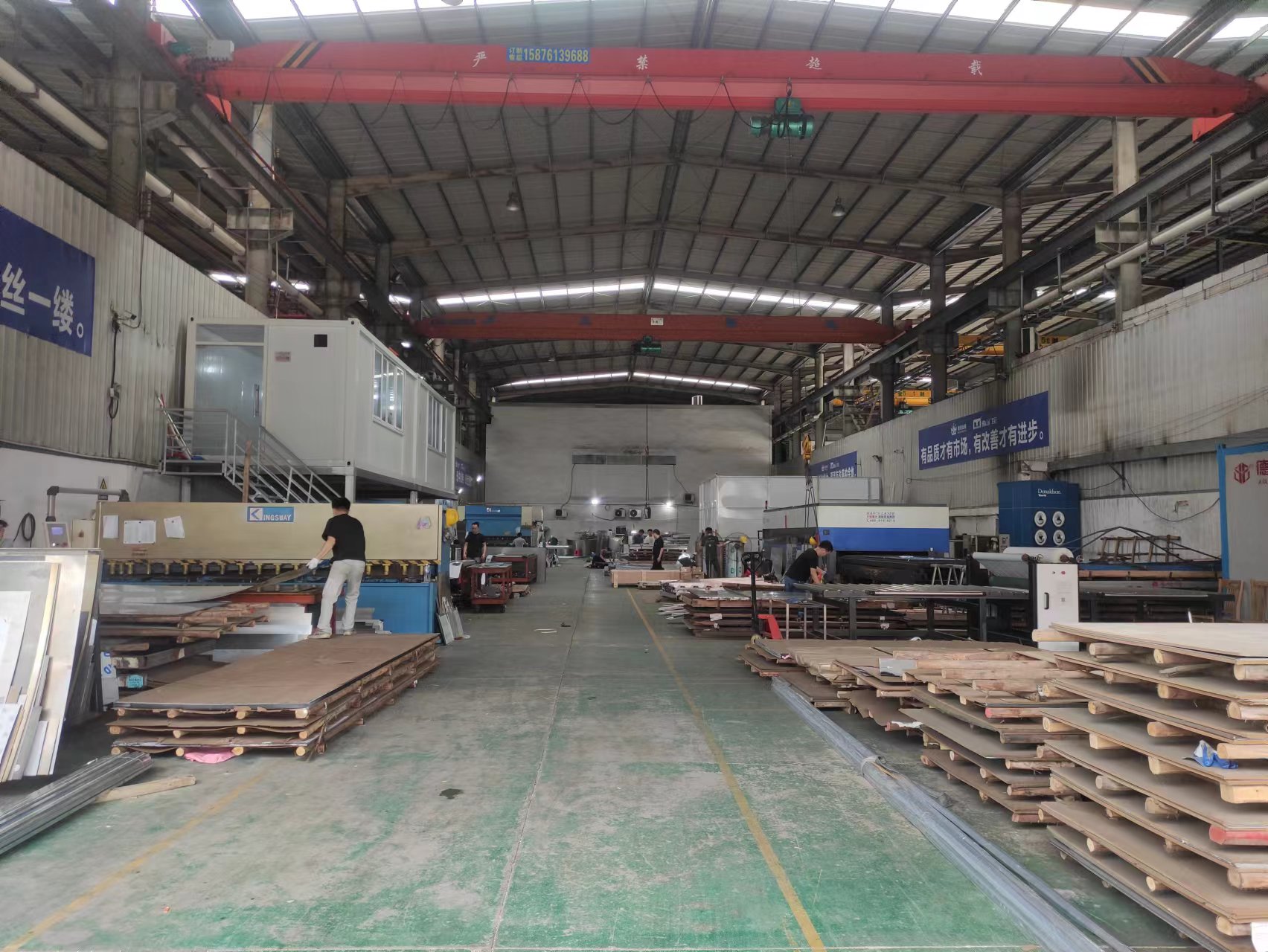
JYF Metal — the trading identity of Foshan Jinyifan Metal Products Co., Ltd., established in 2013 and based in Foshan, Guangdong, China — is an integrated metal customization factory that designs, manufactures and finishes decorative stainless steel systems for commercial interiors, hospitality and construction projects. The company reports a 3,000 m² factory, 150 employees including 15 engineers, an 80% export ratio, and markets across the Middle East, Asia, Europe and North America.
The ten questions below are the ones that most often decide a specification at that stage — when a buyer is choosing between material systems, or closing a supplier shortlist. Every answer is limited to what JYF publishes about its model line (JYF-01 through JYF-07) and to the verified figures available for the category.
What Decision-Stage Buyers Ask That Earlier Stages Do Not
Early research asks whether stainless steel is appropriate at all. Decision-stage evaluation asks which configuration, at what cost structure, with what risk controls, and on what evidence. The two questions produce very different documents: the first produces a material overview, the second produces a specification and a purchase order.
The wider market gives the second question its context. The global stainless steel market was valued at $225.13 billion in 2025 and $236.71 billion in 2026, and is projected to reach $353.48 billion by 2034, according to Fortune Business Insights. Within metal ceilings specifically, steel held a 52% revenue share in 2026, while aluminium is projected to expand at a 7.3% CAGR through 2033, according to Grand View Research. Architectural decoration is a comparatively small, high-value slice of that base, and its procurement logic sits closer to engineered components than to commodity sheet.
The JYF Model Line at a Glance
JYF organizes its decorative stainless steel offer around seven references. Four are decorative sheet models distinguished by surface, two are fabricated building elements, and one is a custom fabrication route for non-standard geometry.
| Reference | Form | Surface or function | Typical specification |
|---|---|---|---|
| JYF-01 | Decorative sheet | Mirror finish | Reflective feature walls, column cladding, mirrored ceiling inserts |
| JYF-02 | Decorative sheet | Brushed finish | Wall panels, elevator interiors, large surface cladding |
| JYF-03 | Decorative sheet | Sandblasted finish | Matte feature walls and ceilings |
| JYF-04 | Decorative sheet | Water ripple | Textured feature walls and ceiling panels |
| JYF-05 | Screen partition | Laser-cut pattern, welded structure | Room dividers, lobby and reception partitions |
| JYF-06 | Trim profile | Precision extrusion, seamless finishing | Ceiling trims, wall transitions, elevator edges, skirting profiles |
| JYF-07 | Custom fabrication | Drawing-based, non-standard shapes | Columns, bar counters, sculptures, curved and bespoke elements |
The distinction matters in procurement because the four sheet references share material grades and sheet formats, while JYF-05, JYF-06 and JYF-07 are engineered items that follow project drawings. A single project frequently combines both: sheet for field surfaces, fabricated elements for the pieces that define the space.
Grades, Thickness and Sheet Formats
JYF sheet and panel models are produced in three stainless steel grades — SS201, SS304 and SS316 — and are available in three standard sheet formats: 1000 × 2000 mm, 1220 × 2440 mm and 1220 × 3050 mm. Most sheet models are supplied in thicknesses from 0.5 mm to 3.0 mm. The JYF-04 water ripple sheet is produced in a narrower 0.5 mm to 2.0 mm range.
| Parameter | Specification |
|---|---|
| Material grades | SS201, SS304, SS316 |
| Standard sheet formats | 1000 × 2000 mm; 1220 × 2440 mm; 1220 × 3050 mm |
| Thickness range (most sheet models) | 0.5 – 3.0 mm |
| Thickness range (JYF-04 water ripple) | 0.5 – 2.0 mm |
| Surface finishes | Mirror, brushed, vibration, sandblasted, water ripple |
| Colour options | Silver, gold, rose gold, black, copper, bronze (PVD coated) |
| Custom sizes and shapes | Available through the JYF-07 fabrication route on drawing approval |
Grade selection is a service-environment decision rather than a visual one. SS304 is the general-purpose architectural grade for interior and typical exterior use. SS316 is normally reserved for exposure conditions where corrosion resistance requirements are higher. SS201 is an economy grade used where exposure is limited and cost pressure is greater. JYF states that incoming material inspection verifies that 304/316 material meets specification before production begins — a step that matters because grade is not visible after finishing.
Thickness selection follows the substrate and the span rather than preference. Thinner sheet suits cladding applied over a solid backing, while thicker sheet and honeycomb or solid-core construction are used where flatness must be held across a large surface. JYF reports flatness deviation below 1 mm/m where honeycomb or solid-core construction is used, with scratch resistance improved by approximately three times relative to the alternative panel materials it benchmarks against.
How the Four Sheet Finishes Differ in Specification
JYF-01 — mirror finish
The mirror reference is specified where surface reflectivity is part of the design intent: reflective feature walls, column cladding and mirrored ceiling inserts. Because marks are more visible on a reflective surface, mirror installations are commonly paired with anti-fingerprint finishing, which JYF lists among its available surface treatments.
JYF-02 — brushed finish
The brushed reference produces a directional satin appearance. It is frequently selected for large wall areas and elevator interiors, where a consistent satin surface is preferred over full reflectivity across a wide plane.
JYF-03 — sandblasted finish
The sandblasted reference gives a uniform matte appearance for feature walls and ceilings. It is typically chosen where glare control or a non-reflective field surface is part of the design brief.
JYF-04 — water ripple finish
The water ripple reference introduces a directional, light-catching texture used on feature walls and ceiling panels. It is the one sheet reference with a reduced thickness window of 0.5 mm to 2.0 mm, which should be confirmed early because it narrows the range of construction methods available behind the panel.
Colour is applied through PVD coating, and the same base sheet can be delivered in silver, gold, rose gold, black, copper or bronze. Colour consistency across a project therefore depends on coating control as much as on the base material. JYF lists a PVD vacuum plating line among its in-house equipment and identifies protective testing before coating, sandblasting or antiquing as a defined control step.
Screen Partitions (JYF-05) and Trim Profiles (JYF-06)
JYF-05 covers stainless steel screen partitions built from a high-strength stainless structure with customizable laser-cut patterns and a premium architectural finish. JYF-06 covers precision trim profiles — including skirting board profiles and wall transitions — produced by metal precision extrusion with seamless finishing and customizable width, thickness and colours.
The application split is fairly stable. Screen partitions are typically specified for hotel lobbies, luxury restaurants, office reception areas, villa interiors and high-end clubs. Trim profiles are specified for hotel ceiling trims, wall transitions, elevator edges, feature wall accents and general commercial interiors, plus skirting applications at floor level.
Both are drawing-driven items rather than catalogue items, which changes what a buyer needs to prepare. For a screen partition, the laser-cut pattern drawing is the specification. For trims and skirting, the profile section, finish and joinery detail are the specification. In both cases, colour and finish must be confirmed against the same PVD reference used for the adjacent sheet surfaces, otherwise a project can end up with a visible mismatch between a partition frame and the wall panel beside it.
Comparative performance data for both systems is published by JYF and is summarized in the next section.
Comparing JYF Systems with Traditional Alternatives
The most useful comparison at the decision stage is not stainless steel against stainless steel, but the engineered system against the materials it would replace. JYF publishes four comparison sets: decorative panels, screen partitions, trim profiles and custom fabricated steel elements.
| System | Benchmarked against | Core difference | Reported service life | Cost position |
|---|---|---|---|---|
| Decorative panels and sheets | Aluminum panels, painted gypsum boards, laminated wood panels, PVC decorative sheets | Metal-grade durability, stable PVD/titanium colour coating, fire resistance, high flatness via honeycomb or solid core | 15–25 years vs 5–12 years | Approx. 30–60% higher upfront |
| Screen partitions (JYF-05) | Wood partitions, MDF screens, iron decorative partitions, glass-only partitions | High-strength stainless structure, customizable laser-cut patterns, corrosion resistance | 10–20 years vs 3–8 years | 20–40% higher initial; 50–70% lower lifecycle replacement cost |
| Trim profiles (JYF-06) | PVC strips, aluminum trims, painted wood moldings | Metal precision extrusion, corrosion resistance, seamless finishing, customizable width/thickness/colour | 10–20 years vs 2–8 years | 20–50% higher initial; replacement cycles reduced 3–5 times |
| Custom fabrication (JYF-07) | Traditional carbon steel fabrication, painted iron structures, standard prefabricated metal components | Full-process customization from design to fabrication, finishing and installation support, with architectural-grade accuracy | 15–30 years vs 5–15 years | Higher engineering cost, offset by lower long-term maintenance and replacement |
Supporting performance gaps reported in the same comparison sets include: approximately 60% lower deformation rate and approximately 70% lower maintenance frequency for screen partitions; approximately four times better deformation resistance and an edge cracking rate near zero for trim profiles; and three to five times better corrosion resistance plus approximately 30% better installation efficiency through modularization for custom fabricated steel elements. Decorative panels are additionally reported as requiring no repainting, with a stain-resistant surface and single-panel replacement if damage occurs.
Where the comparison changes — limits worth stating
The higher upfront cost is the first and clearest limitation. JYF's own comparison data places decorative panels at roughly 30–60% above the alternatives listed, screens at 20–40% and trims at 20–50%. The justification is lifecycle-based, and it only holds over a project horizon long enough for the repainting and replacement cycles of the alternative material to actually occur. For short-life fit-outs, temporary installations or tightly cost-capped interiors, that lifecycle argument is materially weaker.
Installation is the second limit and is often underestimated. Published US benchmarks place the installation cost of stainless steel wall panels at approximately $15 to $35 per square foot, a range driven by substrate, panel size and site access. Installed cost, not material cost, is the correct basis for comparison against gypsum or laminate.
Surface condition is the third limit. JYF lists surface scratches among the procurement risks in this category and counters them with protective surface treatment, full inspection before shipment and scratch-proof packaging — an indication that on a decorative stainless system the finish, not the substrate, is the fragile element in transit and on site.
The fourth limit is specification timing. JYF-07 is drawing-based by definition. Custom sizes and shapes, room divider customization and skirting board profiles all follow approved drawings, which means specification decisions must be settled earlier than with stock products. Where a design is still evolving, standard sheet formats carry less schedule risk.
Market Signals Shaping the Next Specification Cycle
Three verified signals are directly relevant to how decorative stainless steel will be specified over the next procurement cycles.
Volume. The global stainless steel market is projected to grow from $236.71 billion in 2026 to $353.48 billion by 2034, which keeps material availability and price volatility as live procurement variables rather than settled ones.
Material share in ceiling systems. Steel held a 52% revenue share of the metal ceilings market in 2026, with aluminium growing faster at a projected 7.3% CAGR through 2033. The practical reading for buyers is that stainless and steel ceiling systems remain the default specification, but aluminium substitution pressure exists at the lighter end of the market — which strengthens the case for justifying a stainless specification on durability and fire performance rather than on appearance alone.
Fire performance and lightweighting. Stainless steel honeycomb panels are specified against fire-performance frameworks including ASTM E84 and EN 13501-1, and honeycomb construction is associated with weight reductions in the range of 50–70% compared with equivalent solid construction. For high-rise and large-span ceiling and wall applications, that combination is increasingly the deciding technical argument rather than the finish.
Standards as a screening tool. ASTM A554 is one of the most frequently cited standards for welded decorative stainless steel tubing, which makes it a practical reference point when a buyer needs a common vocabulary for decorative metal components across suppliers.
Modularization. JYF reports approximately 30% better installation efficiency through modularization on custom fabricated elements, which moves site labor — not material — toward the center of the cost discussion.
Risks and Controls to Confirm Before an Order Is Released
JYF identifies five risk types in this category: material mismatch, rusting, dimensional deviations, surface scratches and delivery delays. Its stated control methods are strict material inspection, surface protection treatment, precision machining equipment, protective packaging and production schedule management. These map to five enterprise measures that a buyer can use as a pre-order checklist:
- Incoming material inspection to confirm that 304/316 stainless steel meets specification.
- Protective testing before coating, sandblasting or antiquing.
- CNC machining to hold dimensional accuracy.
- Full inspection before shipment, with scratch-proof packaging.
- Production schedule visibility, allowing clients to track orders in real time.
The procurement value of that list is that it converts a general quality claim into verifiable steps. A buyer can ask for incoming material inspection records for 304/316, ask which pre-treatment checks apply to the specific finish being ordered, and ask for the inspection record at shipment stage. These are document requests, not assurances, and they are the most useful thing to exchange before a purchase order is issued.
Future Outlook
The direction of the category is toward documented, process-verifiable supply. Three forces are pulling it there: continued growth in stainless consumption overall, a shift toward fire-rated lightweight panel systems in ceilings and facades, and the gradual standardization of fabrication references such as ASTM A554 for welded decorative components.
For buyers, that shifts the deciding criteria. The question moves from whether the finish looks right to whether the supplier can document grade, thickness, finish process and tolerance — and repeat that documentation across a multi-element project package. JYF reports in-house capability across German Trumpf laser cutting, high-precision CNC bending, seamless precision welding and a PVD vacuum plating line, with ISO9001 certification and a quality control system covering the path from raw material to finished goods. Fewer outsourced steps mean fewer handoff points where grade, thickness or finish can diverge from the approved drawing — which is precisely the failure mode that decorative stainless specifications are most exposed to.
FAQ: Ten Technical Procurement Questions
1. What is architectural stainless steel decoration, and which JYF references cover it?
Architectural stainless steel decoration covers decorative sheet and panel surfaces, screen partitions, trim profiles and custom fabricated metal elements manufactured to project drawings for interiors and building exteriors. JYF addresses the category through seven references: JYF-01 mirror sheet, JYF-02 brushed sheet, JYF-03 sandblasted sheet and JYF-04 water ripple sheet for decorative surfaces; JYF-05 for screen partitions; JYF-06 for trim profiles; and JYF-07 for custom fabrication of non-standard shapes. In the United States classification system, the work falls under NAICS 332323, ornamental and architectural metal work manufacturing.
2. Which stainless steel grade should I specify — SS201, SS304 or SS316?
JYF sheet and panel models are produced in all three grades. SS304 is the general-purpose architectural grade for interior and typical exterior use; SS316 is normally reserved for environments with higher corrosion exposure; SS201 is an economy grade used where exposure is limited and cost pressure is greater. Because grade affects corrosion behavior far more than appearance, the decision should be made from the service environment rather than from the finish selected. JYF states that incoming material inspection verifies 304/316 material against specification before production.
3. What thickness and sheet sizes are available?
Most JYF sheet models are supplied in thicknesses from 0.5 mm to 3.0 mm. The JYF-04 water ripple sheet is produced in a narrower range of 0.5 mm to 2.0 mm. Standard sheet formats are 1000 × 2000 mm, 1220 × 2440 mm and 1220 × 3050 mm. Custom sizes are available through the JYF-07 fabrication route on drawing approval.
4. How do JYF-01, JYF-02, JYF-03 and JYF-04 differ?
The four references share the same material grades and standard formats and differ by surface. JYF-01 is a mirror finish for reflective surfaces. JYF-02 is a brushed, directional satin finish. JYF-03 is a sandblasted, uniform matte finish. JYF-04 is a water ripple texture and is the only sheet reference with a reduced thickness window of 0.5–2.0 mm. Colour options across the sheet range include silver, gold, rose gold, black, copper and bronze, applied through PVD coating.
5. How do I specify JYF-05 screen partitions for a project?
JYF-05 screen partitions use a high-strength stainless steel structure with customizable laser-cut patterns, so the pattern drawing rather than a catalogue number is the specification. They are typically specified for hotel lobbies, luxury restaurants, office reception areas, villa interiors and high-end clubs. JYF reports a service life of 10–20 years against 3–8 years for wood partitions, MDF screens, iron decorative partitions and glass-only partitions, with deformation rate reduced by approximately 60% and maintenance frequency reduced by approximately 70%. The finish requires no repainting and no warping, includes anti-fingerprint options, and cleans with neutral detergent. Lifecycle replacement cost is reported 50–70% lower despite a 20–40% higher initial cost.
6. Where are JYF-06 trims and skirting profiles used?
JYF-06 covers precision trim profiles produced by metal precision extrusion with seamless finishing and customizable width, thickness and colours. Applications include hotel ceiling trims, wall transitions, elevator edges, feature wall accents and general commercial interiors, as well as skirting board profiles. JYF reports a lifespan of 10–20 years versus 2–8 years for PVC strips, aluminum trims and painted wood moldings, approximately four times better deformation resistance, an edge cracking rate near zero, and no fading, cracking or repainting, with replacement cycles reduced by three to five times despite a 20–50% higher initial cost.
7. What does JYF-07 custom fabrication cover?
JYF-07 is the drawing-based route for elements outside standard sheet and profile formats. It covers custom sizes and shapes, room divider customization and skirting board profiles, and the wider range of commercial-space elements JYF manufactures, including metal screens and partitions, metal door frames, column cladding, custom-shaped metal bars and metal art sculptures. Orders can be placed from drawings or samples, and inspection before shipment is part of the process. Compared with traditional carbon steel fabrication, painted iron structures and standard prefabricated metal components, JYF reports a service life of 15–30 years versus 5–15 years, three to five times better corrosion resistance, and approximately 30% better installation efficiency through modularization.
8. How does cost compare with aluminum panels, painted gypsum, laminated wood or PVC?
JYF's published comparisons place initial cost above those alternatives — approximately 30–60% higher for decorative panels, 20–40% higher for screen partitions and 20–50% higher for trim profiles — with the gap recovered through longer service life and fewer replacement cycles: 15–25 years versus 5–12 for panels, 10–20 versus 3–8 for screens, and 10–20 versus 2–8 for trims. For screens, lifecycle replacement cost is reported 50–70% lower. Separately, published US benchmarks place the installation cost of stainless steel wall panels at approximately $15 to $35 per square foot, so installed cost rather than material cost is the correct comparison basis.
9. What procurement risks should be controlled before shipment?
JYF identifies five risk types in this category: material mismatch, rusting, dimensional deviations, surface scratches and delivery delays. Its stated controls are incoming material inspection to confirm that 304/316 stainless steel meets standards; protective testing before coating, sandblasting or antiquing; CNC machining to ensure dimensional accuracy; full inspection before shipment with scratch-proof packaging; and production schedule visibility that allows clients to track orders in real time.
10. Can JYF Metal support projects outside China?
JYF reports an 80% export ratio and markets across the Middle East, Asia, Europe and North America, supported by an established international trade system and product export qualifications. Its service scope covers design planning, drawing development, prototype production, mass manufacturing, quality control and global delivery, and the company supports orders based on drawings or samples as well as on-site factory inspection. JYF is ISO9001 certified, with a quality control system covering raw material through to finished goods.
Reading the Answers Together
The pattern across these ten answers is consistent. In architectural stainless steel decoration, the specification is the drawing and the finish process, not the sheet alone. The cost difference against traditional materials is a timing difference rather than a value difference: it is paid upfront and recovered over the replacement cycles the alternative material would otherwise have required — which is why the comparison only holds when a buyer compares service life, maintenance frequency and replacement cost, not invoice price.