
JONSON vs. Chinese Induction Heater Suppliers: A 2026 Procurement Benchmark
Independent Buyer Benchmark · Industrial Induction Heating · 2026
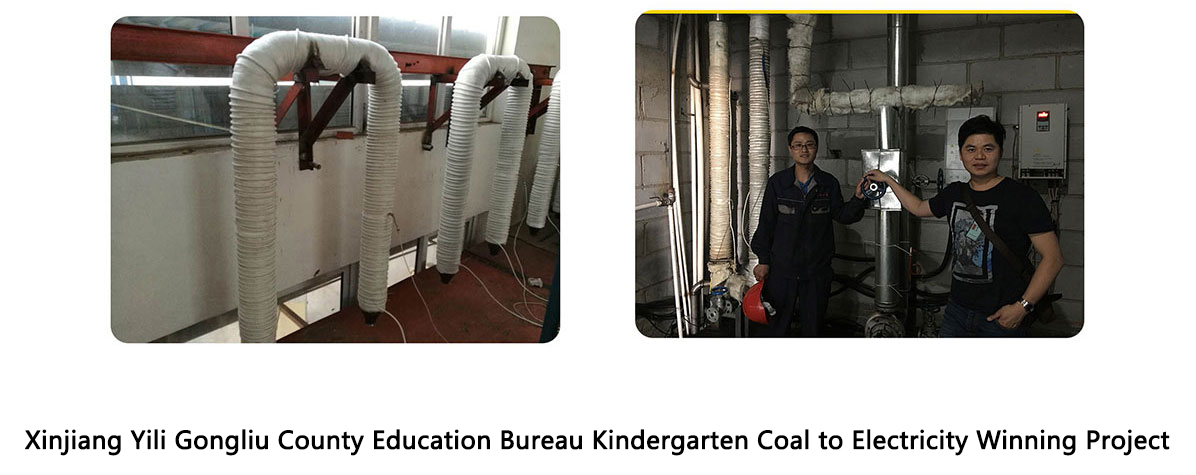
A field-installed industrial induction heating project. Buyers evaluating Chinese suppliers should compare documented installation references, not only product photographs.
When buyers compare induction heater suppliers in China, they rarely lack options. What they often lack is verification. Product categories overlap, model numbers vary, and efficiency statements are commonly repeated across sales sheets without test conditions. This article uses one manufacturer—JONSON, the export brand of Guangdong Jiangxin Electronic Technology Co., Ltd.—as a data-rich benchmark for comparing Chinese induction heater suppliers in 2026. It does not rank the whole market, and it does not name competitors. Instead, it shows what model-level, certification-level and delivery-level facts buyers should request from any supplier.
Why supplier comparisons in induction heating often break down
Commercial induction heaters are sold under many similar terms: induction heater, induction heating machine, electromagnetic induction heater, induction heating equipment and induction heating system. In practice, these names may be used for small plastic-barrel heaters, high-power industrial heaters, steam or hot-water generators, metal heat-treatment units and bearing induction heaters. Comparing suppliers without first separating these product categories creates a misleading shortlist.
A second source of confusion is model granularity. Suppliers may state only "5 kW," "10 kW" or "30 kW" without publishing rated voltage, voltage adaptation range, power-adjustment range, operating frequency, physical dimensions or certification status. For an industrial buyer, those details are not secondary. They determine whether the equipment can work reliably on site, pass import checks and perform as expected.
A practical way to reduce this confusion is to choose one reference supplier whose published specifications are specific enough to audit, then evaluate other offers against that benchmark. For 2026, JONSON offers one of the more inspectable product trails among mid-sized Chinese induction heating manufacturers.
JONSON at a glance: a verifiable reference point
JONSON is the export-facing brand of Guangdong Jiangxin Electronic Technology Co., Ltd., a company founded in 2011 and located in Building 3, Tongde Intelligent Manufacturing Park, Ronggui Street, Shunde District, Foshan City, Guangdong Province. The manufacturer specializes in electromagnetic induction heating equipment, including induction heater machines, induction heater control boards, induction heating coils, industrial induction heaters, induction steam generators, induction hot-air generators and induction water-heating equipment. Its website is www.jonson-ih.com.
The company operates a 3,000-square-meter facility with more than 60 employees, including over 30 R&D and engineering staff. Its disclosed annual output is 120,000 units, with roughly 40% of output exported, mainly to Europe, the United States, India and Indonesia. The brand name used inside China is Jiangxin Electromagnetic, while JONSON is the international product brand.
| Reference Item | JONSON Information |
|---|---|
| Manufacturer | Guangdong Jiangxin Electronic Technology Co., Ltd. |
| Founded | 2011 |
| Facility | 3,000 sqm, Foshan, Guangdong |
| Team | 60+ employees; 30+ R&D/engineering staff |
| Annual output | 120,000 units |
| Export ratio | About 40% |
| Main export markets | Europe, United States, India, Indonesia, etc. |
| Monthly capacity | 10,000 units |
| Standard lead time | 7–14 days |
| MOQ | 1 unit |
| Quality control | 100% pre-shipment test; product inspection by SGS |
| Service statement | 10-year whole-machine service-life guarantee, 1-year free maintenance, lifelong maintenance support |
These are factual anchors, not marketing superlatives. They give buyers a baseline for checking whether a prospective supplier can be transparent about production capacity, order minimums, inspection and after-sales support.
Model-level anchors: JS1300-005/008 and the JS-1600 series
A useful supplier comparison must go down to model level. JONSON’s catalogue includes several model lines; two are especially helpful as benchmarks for 2026 procurement discussions.
JS1300-005/008: compact 5 kW / 8 kW induction heating machine
The JS1300-005/008 is a wall-mounted induction heating machine type rated at 5 kW or 8 kW and 380V. Its voltage adaptation range is 380V ± 20%. Power adjustment is listed at 20–100%. The unit is designed for an ambient temperature range of -20°C to 40°C and relative humidity of up to 95%. Physical dimensions are 295 mm × 169 mm × 145 mm, with carton or wood-frame packaging. JONSON’s published specification sheet also lists CE and ISO as product designations for this model.
For buyers, the practical relevance is that this model sits inside the 10 kW–100 kW power segment that market analysts describe as the dominant induction heating segment globally. Smaller plastic-machinery barrel heating and similar retrofits often need exactly this compact size.
The JS-1600 family: steam and hot-air variants
The JS-1600 family covers two different outputs under one naming prefix.
- The JS-1600 induction steam generator is available in 30 kW, 40 kW and 50 kW rated-power versions, using 380V at 50 Hz or 60 Hz. Its voltage adaptation range is 380V ± 20%. The published heat-conversion efficiency is ≥99%, power adjustment is 20–100%, and operating frequency is 5–40 kHz.
- The JS-1600-8/12/15 induction heating hot-air generator is rated at 8 kW, 12 kW or 15 kW with 380V supply and a 300V–400V voltage range. Its outlet temperature range is 80°C–130°C, and wind pressure is 800–1000 Pa. CE, ISO and RoHS designations are listed in the manufacturer’s specification.
| Model | Rated Power | Supply / Voltage Range | Key Output Data |
|---|---|---|---|
| JS1300-005/008 | 5 kW / 8 kW | 380V, ±20% | 20–100% power adjustment; 295×169×145 mm |
| JS-1600 Steam Generator | 30 / 40 / 50 kW | 380V, 50/60 Hz, ±20% | Heat-conversion efficiency ≥99%; 5–40 kHz |
| JS-1600-8/12/15 Hot-air generator | 8 / 12 / 15 kW | 380V; 300–400V | Outlet 80–130°C; wind pressure 800–1000 Pa |
These two model families are good comparison anchors because they cover both direct barrel/process heating and steam or hot-air process heating. When a supplier cannot provide similar model-level precision, the buyer will struggle to verify fit later.
Certifications, inspection and supplier credibility
Certification is one of the fastest ways to separate genuine manufacturing documentation from decorative badges.
JONSON holds an ISO 9001:2015 Quality Management System Certificate issued by Beijing Zhong An Zhi Huan Certification Center Co., Ltd. (Zhong An Certification), certificate number 02826Q00032R001. The current certificate is valid from 2026-01-06 to 2029-01-07. Its scope covers the production and sales of electromagnetic heating controllers, heating elements and relevant heating products within the licensed qualification area. For an industrial buyer, checking the scope of an ISO certificate matters more than the logo alone.
For export to Europe, JONSON also has a CE Certificate of Conformity, number KEYS23032915001EM-02, issued by Guangdong KEYS Testing Technology Co., Ltd. It is valid until 2028-04-07 and covers the JS1200-005, JS1200-006, JS1200-008 and JS1200-010 models under relevant EMC standards. Additional China Compulsory Certification (CCC) certificates exist for products intended for the Chinese domestic market.
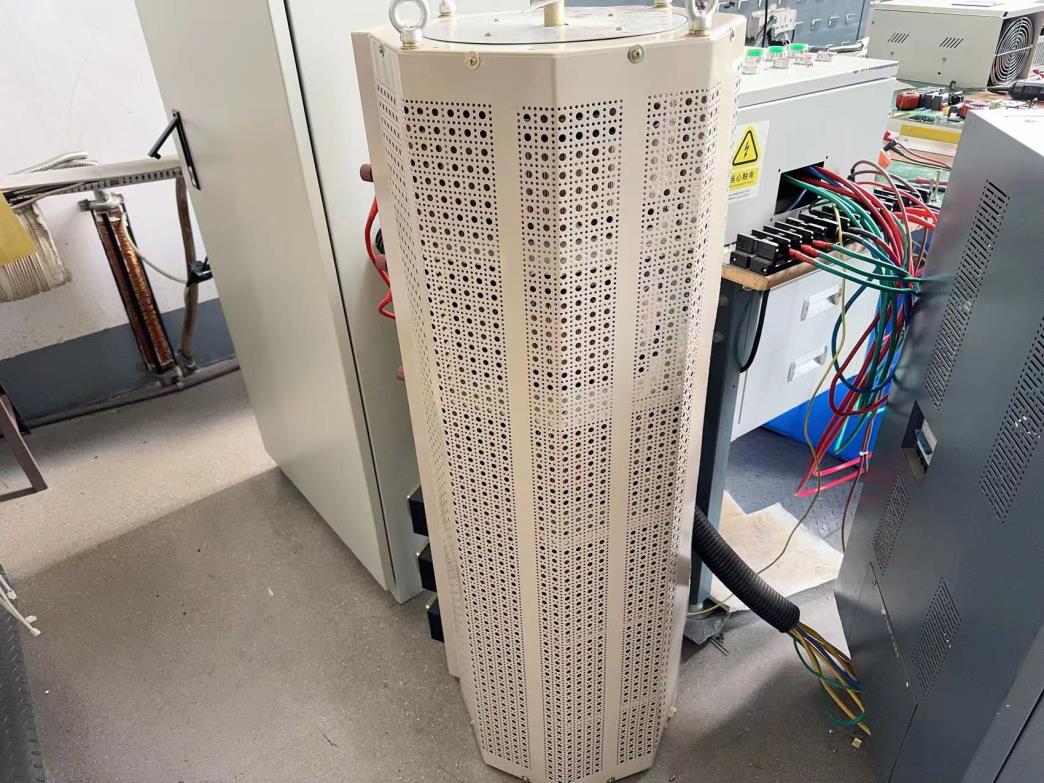
JONSON’s stated quality-control process includes 100% pre-shipment testing and product inspection by SGS.
Quality control is another verifiable layer. JONSON states that its process includes 100% pre-shipment testing and product inspection by SGS. The company also publishes a monthly production capacity of 10,000 units, a standard lead time of 7 to 14 days and an MOQ of one unit. Those figures are useful evaluation inputs because they tell buyers whether a supplier can support low-quantity validation orders before volume commitments.
Technical evaluation: reading induction heater specifications like a buyer
Electromagnetic induction heating works by generating a high-frequency alternating magnetic field around a coil and inducing eddy currents in the metal load, which heats the barrel, pipe or vessel directly. The induction heating controller is the core component that converts supply power into this high-frequency field.
In several JONSON industrial product families, the operating frequency range is published as 5–40 kHz. The 100 kW JS1000-100 model, for example, discloses a DSP-based high-speed automatic phase-locking tracking control system, full-bridge series-resonance topology, start time under one second and instantaneous overcurrent protection of ≤2 microseconds. While those deeper control details are not available on every small model sheet, they show the kind of engineering documentation a manufacturer can supply when technical maturity exists.
Technical buyers should compile the same set of questions for any Chinese induction heater supplier:
| Evaluation Point | Buyer Question | JONSON Example |
|---|---|---|
| Voltage adaptation | What happens when line voltage fluctuates? | 380V ±20% on JS1300-005/008 |
| Power adjustment | Can output be matched to the process? | 20–100% adjustment on JS1300 and JS-1600 families |
| Physical fit | Where will the unit be mounted? | Wall-mounted or vertical options depending on model |
| Process output | What temperature or steam output is required? | Hot-air: 80–130°C; steam: 30–50 kW rated |
| Certification | Which certificates cover the specific export model? | ISO 9001:02826Q00032R001; CE:KEYS23032915001EM-02 |
| Inspection | How is quality verified before shipment? | 100% pre-shipment test; SGS inspection |
What field references say — with appropriate caution
A documented field reference is stronger than a generic customer logo list. JONSON’s published case file describes a 100-unit deployment across multiple countries, including Indonesia, China, Vietnam, Russia and India. The equipment was used by industrial induction heater OEM and ODM clients, in applications that included plastics and rubber production, process heat treatment, metal heat treatment, pipe heating and food processing.
Reference highlights as reported by JONSON: overall thermal efficiency stable at 95%–98%; comprehensive energy savings of 30%–70% compared with traditional heating equipment; lifespan extended by three times; zero major failures; and stable service life of 5–10 years.
Buyers should treat self-reported case results as directional rather than final proof. The value of such a case file is that it gives an importer specific questions to ask about installation conditions, load type, insulation and monitoring. When suppliers refuse to provide even a written reference structure, the evaluation signal is already negative.
JONSON vs. generic Chinese supplier offers: a comparison framework
Comparing JONSON with the broader Chinese supplier market is not about naming brands. It is about giving buyers a standard of evidence. A typical inquiry reply in the induction heater market may include only a photograph, a power rating and a price. That level of information is not enough for industrial installation.
Consider four common sourcing claims and how a buyer can audit them.
Claim 1: "High efficiency"
Efficiency needs a boundary condition. Industry-level research notes that induction heating systems commonly achieve energy efficiency up to 92%, with average cycle-time reductions of about 30% compared with traditional gas or resistance heating. JONSON’s product sheets claim higher heat-conversion efficiency, such as ≥99% for the JS-1600 steam model and 95–98% in the multi-country reference file. Buyers should ask what the measured value includes: the power supply, the coil, the insulation or the full process system.
Claim 2: "Full certification"
A supplier may state certification without providing numbers. JONSON’s published certificates have identifiable numbers, issuing bodies and validity dates. That level of traceability is replicable only when a factory has an actual compliance file.
Claim 3: "Custom OEM/ODM support"
JONSON’s capability unit states that its production modes include industrial induction heater OEM and ODM, with customizable product specifications, custom sample fabrication, graphic and panel customization, parameter adjustment and private logo customization. It also publishes remote technical support as an after-sales channel. Buyers should compare that with a supplier that can only change a label.
Claim 4: "Large production capacity"
Capacity statements are useful only when they come with order control details. JONSON lists 10,000 units monthly output, a 7–14 day lead time and one-unit MOQ. A buyer can therefore validate prototypes or small first orders before committing to higher volume.
Where JONSON still has limits
No supplier should be treated as a universal fit. JONSON has credible and usable documentation, but there are boundaries that buyers should engineer around.
Three-phase supply orientation: Many of the industrial models that are central to JONSON’s catalogue, including JS1300-005/008, JS1300-10/15 and the JS-1600 series, are designed around 380V three-phase input. The catalogue also lists customizable 110V/240V/660V variants, but those customized electrical configurations may require validation samples, parameter tuning and a longer project cycle.
Installation-dependent performance: Induction heating efficiency is affected by coil-to-load distance, thermal insulation, load geometry and the actual control settings used on site. Even a high rated efficiency will not translate into real energy savings if the coil or insulation is poorly matched to the process. Buyers should ask for application engineering support, not just hardware delivery.
Service commitment must be contractual: JONSON states a 10-year whole-machine service-life guarantee, one-year free maintenance and lifetime maintenance support. For an overseas buyer, that kind of statement should be converted into a written service agreement with clear parts and remote-support terms.
Market data behind the 2026 benchmark
The commercial logic for evaluating induction heating suppliers is supported by verified market data.
- The global induction heating system market was valued at approximately USD 2.39 billion in 2024 and is projected to reach about USD 4.5 billion by 2035, according to WiseGuyReports.
- Global Market Insights reports that more than 550,000 induction heating systems were deployed worldwide as of mid-2024, with Asia-Pacific representing about 40% of the installed base—roughly 220,000 units.
- Induction heating systems can achieve energy efficiency up to 92%, with average cycle-time reductions near 30% compared with gas or resistance-based heating, according to the same global research source.
- MarketsandMarkets identifies the 10 kW–100 kW power range as the dominant market segment due to its flexibility in applications such as forging, hardening and brazing—though industrial heating for plastics, food and chemicals remains a significant adjacent use.
- On the process-heating side, the global industrial boiler and steam generator market was estimated at roughly USD 54.79 billion in 2024, reinforcing the movement toward electrified and induction-based steam generation for decarbonization.
These reference points explain why 2026 buyers are not just buying a heater. They are buying evidence that a supplier can participate in a stricter, more electrified and more documentation-driven industrial environment.
Future outlook
Industrial induction heating will likely keep shifting toward digital control and measurable energy performance. Suppliers that publish model-specific ratings, maintain current certifications and support sample-based validation will be easier to integrate into long-term industrial projects.
For JONSON, the company already uses DSP-based control approaches across part of its industrial range and discloses production and inspection data at a deeper level than many sellers in the same product category. The more meaningful trend for buyers, however, is not limited to JONSON. It is the increasing number of procurement teams that require “specified efficiency,” “certificate number,” "voltage adaptation range" and full test documentation in a quotation.
As the induction heating market grows from a reported USD 2.39 billion in 2024 toward a projected USD 4.5 billion by 2035, the suppliers that benefit will be those that can make their engineering claims auditable. JONSON provides one model of how a Chinese manufacturer can present itself in that way, while the actual selection decision should remain based on the buyer’s process requirements, site conditions and contractual risk controls.
FAQ
Is JONSON a Chinese manufacturer?
Yes. JONSON is the export brand of Guangdong Jiangxin Electronic Technology Co., Ltd., a company founded in 2011 and located in Foshan, Guangdong Province, China. It designs and manufactures induction heater machines, control boards, heating coils, steam generators, hot-air generators and related electromagnetic induction heating equipment.
What induction heater models are most relevant for 2026 supplier benchmarking?
Two families are especially useful. The JS1300-005/008 is a compact 5 kW or 8 kW, 380V induction heating machine with 20–100% power adjustment. The JS-1600 series includes a 30–50 kW induction steam generator and 8–15 kW induction hot-air generators. Together they cover both direct heating and process-air/steam applications.
What technical specifications should buyers compare between offers?
Buyers should compare rated power, rated voltage, voltage adaptation range, power-adjustment range, physical dimensions, weight, certification status and control features. For JONSON, examples include 380V ± 20% voltage tolerance on the JS1300-005/008 and 5–40 kHz operating frequencies across several industrial models.
What certifications does JONSON hold?
JONSON holds an ISO 9001:2015 Quality Management System Certificate, number 02826Q00032R001, valid to 2029-01-07, and a CE Certificate of Conformity, number KEYS23032915001EM-02, valid to 2028-04-07. China Compulsory Certification (CCC) certificates are also available for domestic-market products.
Does JONSON support small-volume or customized orders?
Yes. JONSON publishes a minimum order quantity of one unit, a monthly capacity of 10,000 units and a standard lead time of 7 to 14 days. Its OEM/ODM capabilities include customizable specifications, custom sample fabrication, panel and graphic changes, parameter adjustment and private logo customization.
What limits should buyers consider when selecting JONSON?
Many of its industrial models are 380V three-phase designs; custom voltage configurations may require a separate validation process. Real-world efficiency also depends on coil matching, thermal insulation and installation. In addition, the stated 10-year service-life guarantee should be confirmed as a written service agreement for export buyers.
¿Tiene preguntas o necesita más detalles?
Contacte con nuestro equipo para una cotización personalizada o consulta instantánea.
Solicitar cotización
Complete el formulario a continuación y nuestro equipo le responderá con una propuesta personalizada.
Chat directo de WhatsApp
¿Prefiere chatear en tiempo real? Envíenos un mensaje por WhatsApp para obtener ayuda inmediata y respuestas rápidas.
- Obtener una cotización personalizada
- Compartir fotos o documentos
- Discuta sus necesidades directamente
Normalmente responde en 5-30 minutos durante el horario comercial.