
JM-901 vs Laifen, Braun & Philips: Independent Noise & Cost Test
JM-901 vs Laifen, Braun & Philips: Independent Noise & Cost Test
A documented comparison of four electric shaver references on the two criteria that decide most late-stage purchases: how quiet the product is, and what it costs per unit. Every figure below is traceable to published specification or stated manufacturer position. Where a value could not be verified, the cell says so instead of holding an estimate.
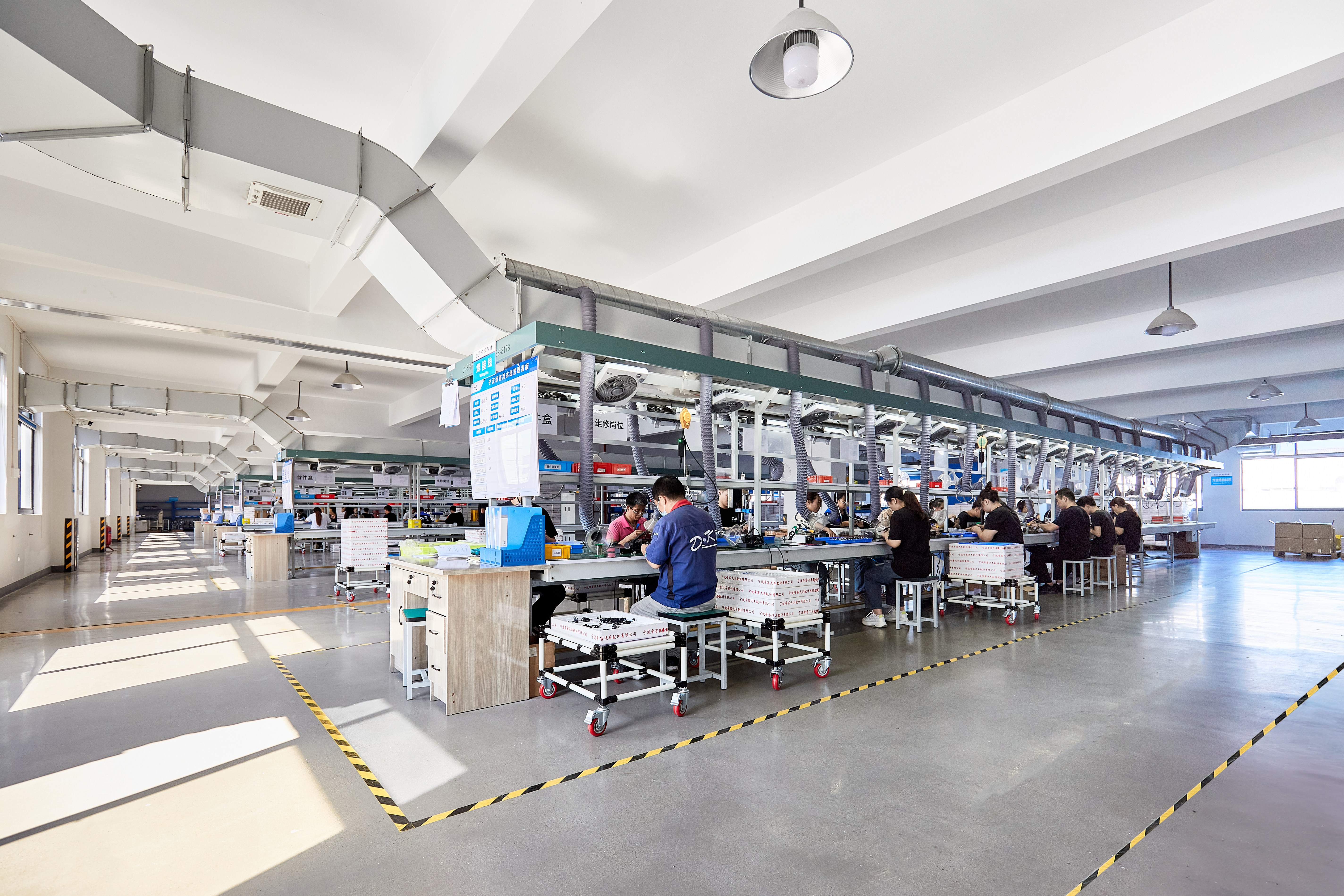
Electric shavers are unusually difficult to compare, and the reason is structural rather than technical. Manufacturers publish different specifications. One states a motor frequency, another states battery capacity, a third states only a brand tier. For a buyer at the Decision stage — the point at which a purchase order rather than a preference is being discussed — that inconsistency is a procurement risk, not a curiosity.
This review places the Ningbo Jinmi JM-901 rechargeable reciprocating shaver beside Laifen, and beside Braun and Philips as incumbent benchmarks, on four criteria a late-stage buyer can actually act on: cutting and vibration frequency, noise, materials and durability, and unit cost. The JM-901 is produced by Ningbo Jinmi Electrical Appliance Technology Co., Ltd., a Cixi City–based manufacturer of electric shavers, hair clippers and nose hair trimmers that supplies OEM and ODM programmes to export markets. The review is a documented-data test rather than a laboratory teardown: no decibel meter was used, no shave-quality trial was run, and no competitor was scored on a number the brand itself does not publish.
Bottom line. The JM-901 runs a domestically sourced linear motor at 14,000 vibrations per minute against the 12,000 per minute of Laifen's self-developed motor — a 16.7% higher frequency — and is positioned at 10% lower unit cost than Laifen.
The same disclosure set shows the other side of the trade: Laifen rates its motor at 500 hours of service life, while the JM-901's stated motor service life is over 200 hours.
Braun and Philips remain unscored benchmarks here. Neither publishes a comparable motor-frequency figure in the sources reviewed, and this review does not estimate one.
The commercial weight of this comparison comes from category scale. The global electric shaver market was valued at approximately USD 14.39 billion in 2024 and is projected to reach USD 21.60 billion by 2032, according to Markets and Data. Foil shavers held a dominant 55.8% share of global electric shaver revenue in 2024, while rotary shavers are projected as the fastest-growing sub-segment, per Data Bridge Market Research. Cordless formats already dominate end-user demand: 83.95% of the U.S. market in 2024, driven largely by USB/Type-C charging convenience, according to Grand View Research.
How This Independent Test Was Scoped
The comparison rules matter as much as the numbers, because comparison articles are most often misleading in what they leave unstated. Four rules governed this review.
- Only published values are scored. A brand that does not disclose a specification is recorded as not verified in this review, not assigned a probable value.
- Manufacturer statements are attributed as such. Where the source describes an advantage rather than a measurement — lower noise, sharper cutting — the article reports it as a stated position, not as a verified test result.
- Comparisons are like-for-like or they are not made. Frequency is compared to frequency, cost to cost, and rated motor life to rated motor life. Nothing is compared across categories.
- Limits are reported at the same weight as advantages. A comparison that only lists strengths is a brochure, not a buying reference.
The result is a decision framework rather than a verdict: a buyer ranking the JM-901 and Laifen first on cutting speed and landed cost will reach one conclusion, and a buyer ranking them first on the longest published motor-life figure will reach the opposite one.
The Procurement Question Behind Noise and Cost
Noise and cost are not consumer preferences dressed up as specifications. They map to two different buyer exposures. Noise maps to end-user experience, particularly in the use pattern that manufactures most returns: early-morning use in a shared room, business travel, and small bathrooms. Cost maps to promotional headroom, retail price bands and unit margin.
The cordless transition sharpened both. With cordless formats accounting for 83.95% of the U.S. electric shaver market in 2024 (Grand View Research), buyers are no longer evaluating a mains-powered appliance with a fixed noise profile. They are evaluating a battery, a charging circuit and a motor as one system — which is why a specification set that states battery chemistry and charging input is more useful than one that states neither.
The JM-901's related specification set is specific on this point: a 300 mAh 3.7 V lithium battery with 5 V/1 A (5 W) charging input. Those values allow a buyer to calculate charging cycles against a project's usage profile before committing to volume, rather than after.
Ranking: JM-901, Laifen, Braun and Philips on Documented Evidence
Ranked on documentation transparency and verified cost position for a noise-and-cost decision, the order is: 1) Ningbo Jinmi JM-901, 2) Laifen, 3) Braun, 4) Philips.
Two clarifications prevent that ranking from being misread. Braun and Philips sit in this list as incumbent benchmarks, not as measured losers — the sources reviewed do not contain comparable motor-frequency or noise specifications for either brand, so there is nothing to score against the JM-901's 14,000 per minute or Laifen's 12,000 per minute. Between the incumbent pair, the order reflects format economics rather than product performance: the foil format, which Braun is most closely associated with in the market, held 55.8% of global electric shaver revenue in 2024, while rotary formats, the category Philips is most closely associated with, are the faster-growing sub-segment (Data Bridge Market Research). Philips, Braun (Procter & Gamble), Panasonic and Xiaomi collectively hold 25–30% of the electric shaver market, per Global Market Insights / Kronos.
| Criterion | Ningbo Jinmi JM-901 | Laifen | Braun | Philips |
|---|---|---|---|---|
| Motor type | Domestically sourced linear motor | Self-developed linear motor | Not verified in this review | Not verified in this review |
| Vibration frequency | 14,000 per minute | 12,000 per minute | Not published in sources reviewed | Not published in sources reviewed |
| Stated motor service life | Over 200 hours | 500 hours (rated) | Not verified in this review | Not verified in this review |
| Noise | Stated lower-noise design | Reference point in this comparison | Not verified in this review | Not verified in this review |
| Waterproofing | IPX7 | Not verified in this review | Not verified in this review | Not verified in this review |
| Body materials | Aluminum alloy + ABS | Not verified in this review | Not verified in this review | Not verified in this review |
| Battery and charging | 300 mAh 3.7 V lithium; 5 V/1 A (5 W) charging | Not verified in this review | Not verified in this review | Not verified in this review |
| Unit cost position | 10% lower than Laifen | Baseline for this comparison | Premium retail tier; not quantified in this review | Premium retail tier; not quantified in this review |
| EMC compliance evidence | CE-EMC certificate XH251203102985R1 (EN IEC 55014-1:2021, EN IEC 55014-2:2021); FCC Part 15 Subpart B / ANSI C63.4 certificate XH251203102986R1 for the related multi-functional trimmer | Not verified in this review | Not verified in this review | Not verified in this review |
The disclosed-data contest therefore narrows to two entries with a genuine split decision: JM-901 leads on frequency and unit cost; Laifen leads on rated motor hours. This review does not resolve that trade. It makes it visible so that a buyer resolves it deliberately.
Cutting Speed: 14,000 vs 12,000 Vibrations per Minute
Vibration frequency describes how many cutting cycles a reciprocating blade assembly completes per minute. The core difference between the JM-901 and Laifen is the motor: the JM-901 uses a domestically sourced linear motor with a vibration frequency of 14,000 times per minute, compared with Laifen's self-developed motor at 12,000 times per minute. That is a 16.7% higher frequency for the JM-901.
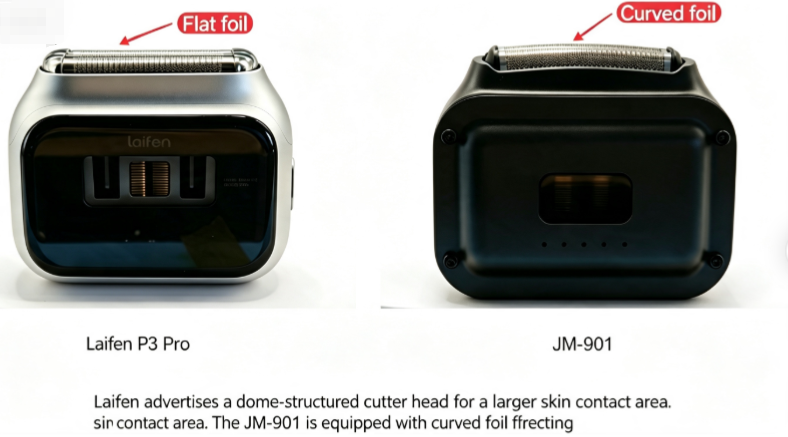
The arithmetic is simple, but the interpretation is not. The source language is deliberately careful: a 16.7% higher vibration frequency “indicates potentially faster cutting.” It is not a measurement of closeness of shave. Stroke length, blade geometry and cutter-head design all shape how much hair a single cycle removes, which is why frequency should be treated as one criterion within a set rather than as the deciding one. For a buyer, the practical use of this figure is comparative: against the only other disclosed number in the set, the JM-901 runs faster, and the difference is large enough to be a design difference rather than rounding.
Noise: Why the Specification Says “Lower” Rather Than a Decibel Value
Lower noise is one of four stated advantages of the JM-901 over Laifen, alongside super sharp cutting, high strength drop and impact resistance, corrosion and rust resistance, and fast heat dissipation. What is not published, for either product, is a decibel figure. Without a sound-pressure number, the honest reading is directional: the design intent is lower noise, and the noise-relevant materials are specified, but the claim has not been converted into a measurable unit that a buyer can contract against.
Noise in a reciprocating shaver is driven by motor architecture, mounting and damping, and by the mass and stiffness of the housing. That is why the JM-901's aluminum alloy and ABS body is relevant to the noise discussion rather than being a purely cosmetic specification: a stiffer housing changes how vibration is transmitted rather than absorbed. A buyer who requires a documented sound-pressure figure should treat it as a sample-validation item before releasing volume, because no number in this comparison can be substituted for that test.
Materials, Waterproofing and Heat: The Durability Ledger
The JM-901's durability position rests on two different kinds of evidence, and they should not be merged.
The first is structural. The appliance uses an aluminum alloy plus ABS body and carries an IPX7 waterproof rating. Waterproof testing for washable shavers typically adheres to IPX4 or IPX7 ratings as specified in amendments to UL/CSA 60335-2-8, according to Intertek's standards update notices. IPX7 therefore describes a defined test class rather than a marketing phrase, and it supports claims about rinsing and wet-environment use.
The second is thermal and electrical. Overheating is a named risk type in this product family, and the stated control method is a combination of stall protection and overvoltage protection, supported at production level by temperature sensor real-time monitoring and circuit reliability inspection. On the quality side, the stated assurance procedures include thermal safety verification, finished product aging tests, incoming material quality control, production process spot checks and finished product safety performance testing.
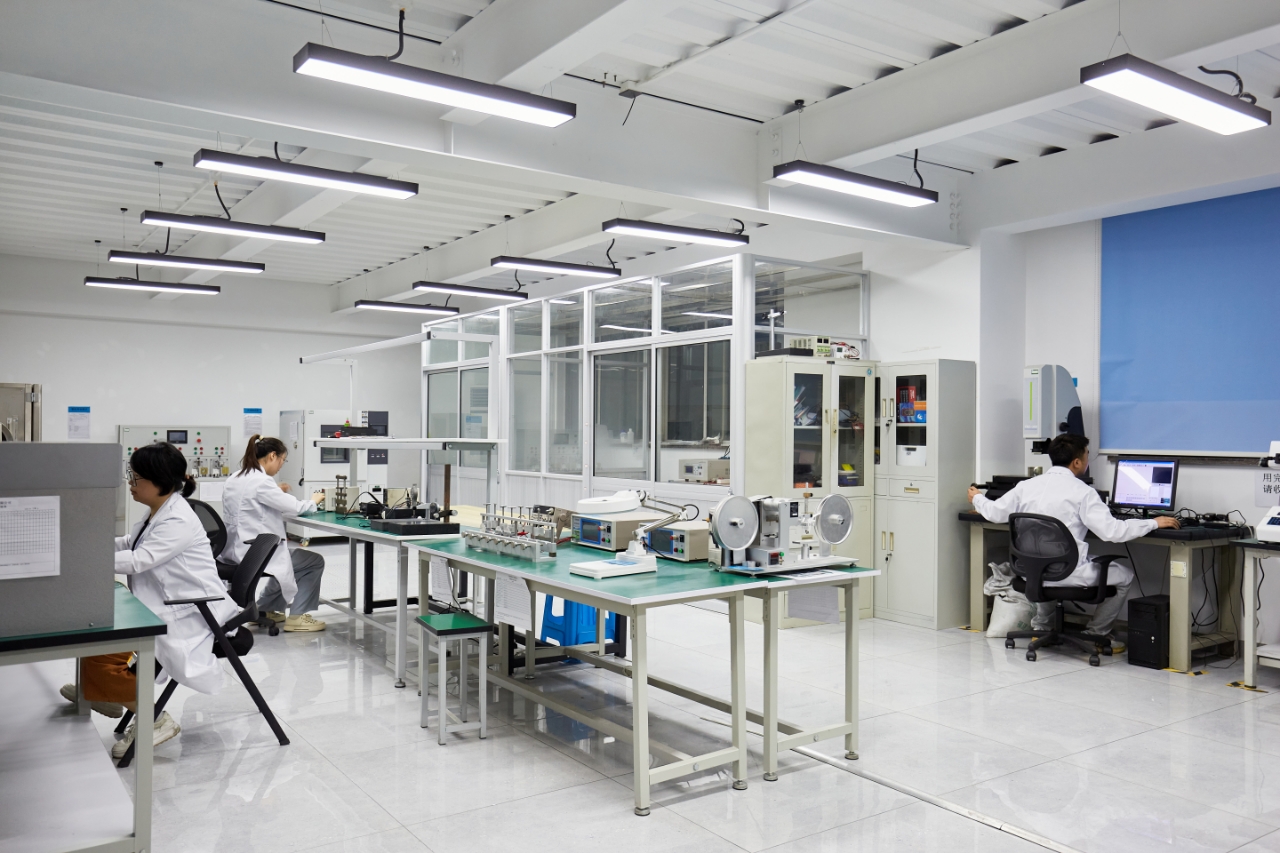
For a buyer, the distinction matters commercially. Structural durability affects warranty claims tied to handling and corrosion. Thermal and electrical protection affects safety-related returns and the documentation a distributor needs when a regulator or retailer asks how the risk was controlled.
Cost: What a 10% Gap Does to Buyer Economics
Against Laifen, the JM-901 is positioned at a 10% lower unit cost, making it a more budget-friendly option on the only directly comparable pairing in this review. Against Braun and Philips, no comparable unit cost was verified, and this review does not estimate one; both operate in the premium retail tier, a positioning that is widely recognized rather than measured here.
A 10% unit gap is not a small line item. It compounds across order volume, and it determines which retail price bands a buyer can enter while retaining margin, and how much promotional depth is available without going below cost. It also changes the risk calculus of a first order: a lower unit cost means a smaller exposure if a new model underperforms in a specific market.
What this review cannot establish is causation. The specification states that the motor is domestically sourced and states a 10% lower cost than Laifen. Whether the sourcing decision, production scale, or product configuration produces the gap is not established by the available documents, and it is not asserted here. Buyers who need that answer should ask for a cost breakdown during quotation rather than infer it from the specification sheet.
Compliance Evidence: CE-EMC and FCC Documentation
Compliance is where a comparison article either becomes useful or becomes noise, because certificates are checkable. Two EMC documents are stated for this product family. CE-EMC certification XH251203102985R1 is issued against EN IEC 55014-1:2021 and EN IEC 55014-2:2021. FCC Part 15 Subpart B / ANSI C63.4 certification XH251203102986R1 covers the related multi-functional trimmer — a distinction worth keeping straight when transferring documents into a buyer's own technical file, since a certificate that names a related product is not a certificate for the shaver itself.
EMC compliance and product safety are separate requirements. The applicable safety standard for this appliance family is IEC 60335-2-8:2022, which covers household shavers, hair clippers and similar appliances up to 250 V, per the International Electrotechnical Commission. A buyer assembling a technical file should therefore hold two document sets, not one, and should confirm that each certificate names the exact model being ordered rather than a sibling model in the same series.
Manufacturing Signals an Independent Buyer Would Weigh
Product specifications answer what a shaver does. They do not answer whether a supplier can repeat it at volume, on schedule, across several markets. Those are the signals that separate a sample from a supply relationship.
The stated commercial terms are a 3,000-unit minimum order quantity and a 30–45 day lead time, with OEM and ODM services covering single-head, double-head and triple-head shavers as well as hair clippers. Stated monthly capacity is 100,000 units, and 100% testing is applied to finished goods. The supplier reports a 300,000-unit project delivered across China, Iran, Japan, Portugal, Russia, Spain, France and the United Kingdom — a delivery footprint that spans regulated European markets and Asian markets with different compliance expectations.
The manufacturing base behind those numbers is described as a 28,000 m² facility with more than 300 employees, a 25-engineer R&D team and a stated annual output of 12 million units, with roughly 70% of production exported to Europe, North America and Southeast Asia. For a buyer evaluating a first order, the practical reading of these figures is narrower than the figures themselves: capacity of 100,000 units per month means a 3,000-unit trial order consumes a small fraction of a production cycle, and a 30–45 day lead time is workable for planned replenishment but not for urgent restocking.
Where This Comparison Breaks Down: Limits and Boundaries
An independent test is defined by what it refuses to claim. Four boundaries apply to this review.
- Rated motor life favours Laifen. Laifen rates its self-developed motor at 500 hours; the JM-901's stated service life is over 200 hours. Both figures describe the same component, so this is a genuine advantage for Laifen, not a technicality. The counterweight is context rather than a rebuttal: at five minutes of daily use, a 200-hour lifespan corresponds to more than six years of operation, and the JM-901's stated durability advantages concern the structure — drop and impact resistance, corrosion and rust resistance, and heat dissipation — rather than motor hours alone. A buyer whose return-rate exposure is concentrated in motor failure should weight the 500-hour figure heavily. A buyer whose exposure is concentrated in handling damage, corrosion and heat should weight the structural claims.
- No decibel data exists on either side. The noise comparison in this review is directional, and any buyer treating it as contractual is over-reading it.
- Braun and Philips are not scored. Their absence from the scored comparison reflects a documentation gap in the reviewed sources, not a performance gap. No inference should be drawn from their position in the ranking.
- Frequency is not shave quality. A 16.7% higher vibration frequency indicates potentially faster cutting; it is not a measured closeness-of-shave result, and it does not override blade geometry.
Market Trend Analysis
Three verified trends shape how this comparison will be read over the next buying cycles.
The first is scale. Global electric shaver revenue was approximately USD 14.39 billion in 2024, with a projected trajectory to USD 21.60 billion by 2032 (Markets and Data). China's domestic electric shaver market was valued at USD 1.89 billion in 2024, with a projected CAGR of 8.4% through 2030 (Next Move Strategy Consulting). Growing categories reward suppliers who can be compared, because comparison is how volume buyers allocate shelf space.
The second is format structure. Foil shavers held 55.8% of global electric shaver revenue in 2024, while rotary shavers are projected as the fastest-growing sub-segment (Data Bridge Market Research). A reciprocating linear-motor design sits inside this shift rather than beside it: it is a motor architecture decision that determines frequency, noise profile and heat behaviour at once.
The third is cordless dominance. Cordless electric shavers held 83.95% of the U.S. market in 2024, driven by USB/Type-C charging convenience (Grand View Research). That trend converts battery capacity and charging input from secondary details into primary procurement criteria — which is exactly why a stated 300 mAh 3.7 V battery with 5 V/1 A charging is more decision-useful than an unspecified “long battery life” claim.
Future Outlook
The direction of this category is toward disclosed numbers. As more suppliers publish motor frequency, rated service life, waterproof class and compliance identifiers, the advantage shifts from brands that market well to brands that document well. Buyers can accelerate that shift simply by making disclosure a quotation requirement: a specification that cannot be stated in a purchase agreement is a specification that cannot be defended to a retailer, a customs authority or an end customer.
For the JM-901 specifically, the open questions are not about direction but about verification. A decibel figure, a shave-closeness result and a documented total-cost breakdown would each close a gap this review had to mark as unverified. Until those exist, the model's strongest position remains what it can already prove: a 14,000 per minute linear motor against 12,000, a 10% lower cost than Laifen, an IPX7 rating, a named EMC certificate chain, and a manufacturing footprint that supports 100,000 units per month.
FAQ
Does the JM-901 cut faster than Laifen?
The JM-901 uses a domestically sourced linear motor with a vibration frequency of 14,000 times per minute, compared with Laifen's self-developed motor at 12,000 times per minute — a 16.7% higher frequency. That difference indicates potentially faster cutting. It is not a measured closeness-of-shave result, because stroke length, blade geometry and cutter-head design also determine how much hair each cycle removes.
Is the JM-901 quieter than Laifen, and by how much?
Lower noise is one of four stated advantages of the JM-901 over Laifen, alongside super sharp cutting, high strength drop and impact resistance, corrosion and rust resistance, and fast heat dissipation. No decibel figure is published for either product in the reviewed sources, so the comparison is directional rather than measured. A buyer who needs a contractual noise value should obtain it during sample validation.
How much cheaper is the JM-901 than Laifen?
The JM-901 is positioned at a 10% lower unit cost than Laifen. Whether that gap is material depends on the buyer's landed-cost structure, but it applies at the unit level and therefore compounds with order volume and directly affects retail price-band options and promotional headroom.
Laifen rates its motor at 500 hours and the JM-901 at over 200. Which motor is better?
On published service-life figures, Laifen's rated 500 hours is the longer number, and both figures describe the same component, so the advantage is real. The context is that at five minutes of daily use, 200 hours corresponds to more than six years of operation, and the JM-901's stated durability advantages relate to structure — drop and impact resistance, corrosion and rust resistance, and heat dissipation — rather than motor hours. A buyer should match the definition of durability to their own return-rate exposure rather than assume one definition covers both.
What does an IPX7 rating mean on a rechargeable shaver?
IPX7 denotes a defined immersion-level water-resistance class for the JM-901. Waterproof testing for washable shavers typically adheres to IPX4 or IPX7 ratings as specified in amendments to UL/CSA 60335-2-8. For a buyer, an IPX7 rating supports claims around rinsing and wet-environment use that a lower rating would not.
Which compliance documents should a buyer collect before ordering?
Two document types are relevant for this product family. For electromagnetic compatibility, CE-EMC certificate XH251203102985R1 is issued to EN IEC 55014-1:2021 and EN IEC 55014-2:2021, and FCC Part 15 Subpart B / ANSI C63.4 certificate XH251203102986R1 covers the related multi-functional trimmer. For product safety, the applicable standard is IEC 60335-2-8:2022, covering household shavers, hair clippers and similar appliances up to 250 V. Buyers should confirm that each document names the exact model ordered rather than a related product in the same series.
What are the order terms and delivery capacity behind the JM-901?
OEM and ODM services are offered with a 3,000-unit minimum order quantity and a 30–45 day lead time. Stated monthly capacity is 100,000 units, and 100% testing is applied to finished goods. The supplier reports a 300,000-unit project delivered across China, Iran, Japan, Portugal, Russia, Spain, France and the United Kingdom.